

OBD-II Code P1955: Glow Plug Control Module 2 Communication Error
What P1955 means, why it triggers, and how to fix it
- P1955 indicates a communication failure between the engine computer and the Glow Plug Control Module, preventing diesel engines from starting in temperatures below 40°F.
- Replacing the Glow Plug Control Module resolves this code in 70% of cases, costing between $275 and $550 for parts and labor.
- On 2006-2018 Sprinter vans, a $10 leaking throttle body O-ring frequently triggers a false P1955 code by forcing the van into limp mode.
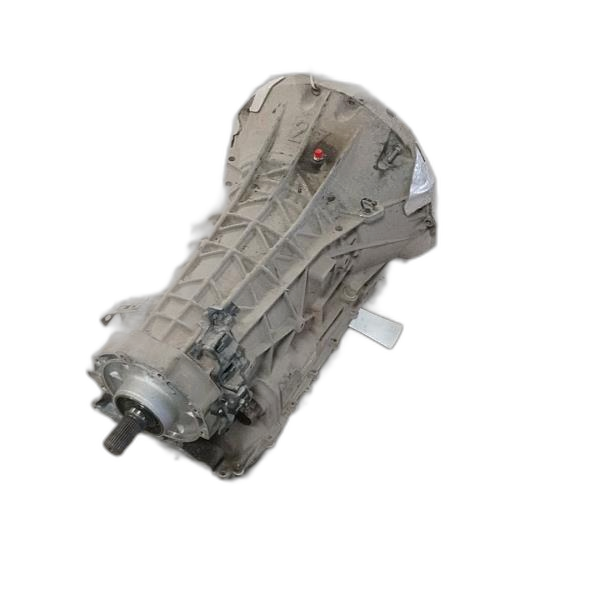
- For 2020-2024 C8 Corvettes, P1955 signals a fatal internal transmission failure requiring a complete $10,000+ assembly replacement under TSB 23-NA-139.
- Driving with an active P1955 code dumps unburnt fuel into the exhaust, which clogs the Diesel Particulate Filter (DPF) and causes $1,500 to $4,000 in secondary damage.
What Does P1955 Mean?
Code P1955 indicates the Powertrain Control Module (PCM) lost communication with Glow Plug Control Module 2. This module heats the engine's cylinders to ignite diesel fuel during cold starts.
Technical definition: SAE/ISO defines P1955 as "Glow Plug Control Module 2 to PCM Communication Circuit Range/Performance." The PCM detects an abnormal or missing signal from the second Glow Plug Control Module (GPCM). Generic aftermarket scanners often misreport this code on Mercedes-Benz and Sprinter vans instead of the standard P0684. On 2020-2024 General Motors vehicles (specifically the C8 Corvette), GM repurposed this code to indicate a severe internal transmission fault.
Can I Drive With P1955?
Yes, But With Caution. Yes, but you will experience hard starting or no-starts in cold weather. Forcing cold starts without functional glow plugs dumps unburnt fuel into the exhaust, clogging the Diesel Particulate Filter (DPF) and causing $1,500 to $4,000 in damage. On 2020-2024 C8 Corvettes, this code indicates a fatal transmission issue requiring an immediate tow to avoid catastrophic failure.
Common Causes
- Failed Glow Plug Control Module (GPCM) (Very Common) — Internal electronic components burn out or short, causing a complete loss of communication with the PCM or creating a parasitic battery drain.
- Blown Fuse or Faulty Relay (Common) — A short circuit blows the high-amperage GPCM fuse, cutting all power to the module and instantly dropping communication.
- Wiring Harness or Connector Issues (Common) — Wires connecting the GPCM to the PCM degrade, corrode, or short due to high engine heat and vibration.
- Intake Air Leaks (Sprinter Vans) (Common) — An unmetered air leak from a degraded throttle body O-ring puts Mercedes-Benz Sprinter vans into limp mode, triggering a false P1955 code.
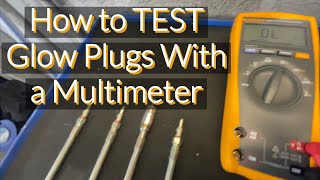
- One or More Failed Glow Plugs (Less Common) — A shorted glow plug overloads the module's circuitry, causing it to overheat 🎬 Learn how to test glow plugs using a multimeter. and drop communication with the PCM.
- Poor Battery Connections or Low System Voltage (Less Common) — Corroded battery terminals or a failing alternator drop system voltage, disrupting digital communication between modules.
- Internal Transmission Failure (C8 Corvette) (Rare) — On C8 Corvettes, TSB 23-NA-139 defines P1955 as a non-serviceable internal transmission fault requiring complete assembly replacement.
- Faulty Powertrain Control Module (PCM) (Rare) — The main engine computer fails internally or requires a software update. This is the absolute last component to suspect.
Symptoms
- Check Engine Light or Glow Plug Light is On/Flashing — The PCM illuminates the Malfunction Indicator Lamp (MIL) or flashes the glow plug indicator on the dashboard.
- Hard Starting or No Start in Cold Weather — The engine requires extended cranking or fails to start entirely in temperatures below 40°F (4°C). 🎬 See this helpful video on how to test a glow plug.
- Rough Idle After Starting — The engine runs unevenly for the first few minutes until cylinder friction generates enough heat to stabilize combustion.
- Reduced Engine Performance / Limp Mode — The vehicle restricts engine power, throttle response, and top speed to prevent damage.
- White or Black Smoke from Exhaust on Startup — Unburnt fuel dumps into the exhaust and burns off as thick white or black smoke immediately after startup.
- Service Transmission Message (GM) — Affected GM models display a 'Service Transmission' warning on the dashboard, indicating a critical transmission fault.
- Failed Emissions Test (also visible on scanner) — The vehicle automatically fails OBD-II emissions testing due to disabled DPF regeneration.
Diagnostic Flowchart
Tap your situation to follow the diagnostic path that matches what you're seeing on this code.
Common Fixes & Costs
- Replace the Glow Plug Control Module (GPCM) — Parts: $175-$350, Labor: $100-$200, ~1 hr book time (Intermediate)
- Replace Intake Manifold Gasket/O-Ring (Sprinter) — Parts: $5-$20, Labor: $75-$150, ~0.8 hr book time (DIY)
- Replace All Glow Plugs — Parts: $120-$250, Labor: $200-$450, ~2.5 hr book time (Intermediate)
- Repair Damaged Wiring or Connectors — Parts: $20-$75, Labor: $150-$400, ~3 hr book time (Professional)
- Replace Transmission Assembly (Specific GM Models) — Parts: $7,500-$12,000, Labor: $2,500-$4,000, ~16.5 hr book time (Professional)
DIY vs Professional
- Replace GPCM Fuse — Beginner:
- Replace Intake Gasket/O-Ring (Sprinter) — Beginner:
- Replace Glow Plug Control Module (GPCM) — Beginner:
- Replace Glow Plugs — Beginner:
- Repair Damaged Wiring — Beginner:
- Replace Transmission Assembly (GM) — Beginner:
Used vs. New Parts: Buying Guide
When a used part is worth it: A used Glow Plug Control Module (GPCM) from a reputable salvage yard is cost-effective for older, high-mileage vehicles. It makes sense if the donor vehicle has low mileage and was scrapped for non-electrical reasons.
Donor-vehicle mileage cap: roughly under 100000 miles for the part to have meaningful remaining life.
Donor quality checklist:
- Verify the part number matches exactly.
- Check the donor vehicle's VIN for any history of electrical problems.
- Inspect the connector pins for corrosion, melting, or damage.
Decision logic:
- If The vehicle is under 100,000 miles and the new part is under $250 → Buy a new OEM or reputable aftermarket part for reliability and warranty.
- If The vehicle is over 150,000 miles and budget is a primary concern → A used module is an acceptable risk, provided it comes with a 30-90 day warranty.
- If The part is for a Ford 6.0L Power Stroke → Favor a new or professionally remanufactured unit with upgraded components, as used parts carry the same inherent design flaws.
Warranty tradeoff: Used parts offer a 30-90 day warranty. New aftermarket parts come with a 1-year to limited lifetime warranty. A new OEM part offers the best guarantee at the highest cost.
Worst-case if a used part fails: $150 - $300 if a used module fails shortly after the warranty period, requiring repeat labor costs.
What Happens If You Wait — Timeline
- 0-1 month: Check engine light illuminates. In cold weather (<40°F), engine cranking time extends and a puff of white smoke appears on startup. (MPG impact: 0-2%% · Added cost: $0)
- 1-4 months: Cold starts become very difficult. The engine runs rough for the first 1-3 minutes. Incomplete combustion increases soot loading on the DPF, causing frequent regeneration cycles. (MPG impact: 3-8%% · Added cost: $50-$150 in wasted fuel and strain on the starter/battery.)
- 4-9 months: The DPF cannot regenerate effectively due to low combustion temperatures. The DPF warning light illuminates, and the vehicle enters limp mode. (MPG impact: 10-20%% · Added cost: $750 - $3,500 (for professional DPF cleaning or replacement).)
- 9+ months: The DPF becomes completely blocked, creating extreme exhaust backpressure that damages the turbocharger. For C8 Corvettes, continued driving leads to complete transmission failure. (MPG impact: >20%% · Added cost: $4,000 - $20,000+ (for combined DPF and turbo replacement, or complete transmission replacement).)
Cost of Not Fixing It
- Immediate to 1 Month: Hard starting in cold weather strains the battery and starter. White or black smoke on startup. Immediate risk of being stranded for GM transmission issues. (Added cost: $0 - $250 (for a prematurely worn battery).)
- 1 to 6 Months: Incomplete combustion during DPF regeneration cycles clogs the Diesel Particulate Filter (DPF). Reduced fuel economy due to inefficient cold-engine operation. (Added cost: $500 - $1,500 (for DPF cleaning or diagnostics).)
- 6+ Months: Severe clogging of the DPF requires complete replacement. For GM transmission issues, catastrophic failure of the transmission occurs, causing unsafe driving conditions. (Added cost: $2,000 - $20,000+ (for DPF replacement or complete transmission replacement out of warranty).)
Diagnosis Steps
- Scan for All Trouble Codes
Use a professional-grade OBD-II scanner to read all codes. Codes related to specific glow plugs (P0671-P0678), MAF sensors (P0101), or transmission (P0867 on GM) dictate the diagnostic path. Clear them to see which return immediately.
Tools: Professional OBD-II Scanner (Beginner) - Check the GPCM Fuse
Locate the high-amperage fuse (typically 50A to 80A) for the Glow Plug Control Module in the fuse box. Remove it and verify the internal filament is intact.
Tools: Owner's Manual, Fuse Puller (Beginner) - Visual Inspection of Wiring and Grounds
Inspect the wiring harness going to the GPCM for burnt, chafed, or corroded wires. Check the connector for bent pins. Verify the main battery terminals and engine-to-chassis ground strap are tight and corrosion-free.
Tools: Flashlight, Mirror (Beginner) - Test Power and Ground at the Module
With the ignition on, use a multimeter to confirm the GPCM receives battery voltage (12.0-12.6V) on its main power wire and has a solid ground connection (less than 0.1V).
Tools: Multimeter, Vehicle Wiring Diagram (Intermediate) - Test the Glow Plugs
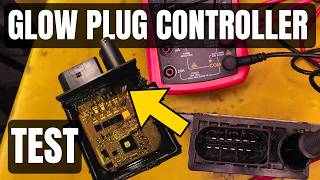
Disconnect the wiring harness from the glow plugs. Set a multimeter to Ohms (Ω). A healthy glow plug reads between 0.4 and 2.0 ohms. 'OL' means the plug is open; zero ohms means it is shorted.
Tools: Multimeter, Socket Set (Intermediate) - Perform a Voltage Drop Test
Connect the positive multimeter lead to the battery positive post and the negative lead to the GPCM power pin. Activate the glow plugs. The reading must be under 0.5 volts. Repeat for the ground side. Higher readings indicate excessive wiring resistance.
Tools: Multimeter, Wiring Diagram, Scan Tool (Advanced) - Test the Communication Circuit
Check for continuity on the communication wire (LIN or CAN bus) between the GPCM connector and the PCM connector. Resistance must be less than 1 ohm.
Tools: Multimeter, Vehicle Wiring Diagram (Advanced) - Scope and Analyze the Communication Line
Back-probe the communication signal wire at the GPCM connector with an oscilloscope. A healthy LIN bus signal shows a clean square wave switching between 0V and battery voltage. A flat line or distorted waveform confirms a module or PCM failure.
Tools: Oscilloscope, Wiring Diagram (Professional) - Check Scan Tool Live Data PIDs (GM Transmission)
For C8 Corvettes, monitor Transmission Fluid Pressure (TFP) Switch PIDs. Any deviation from the expected 'High', 'Low', or 'On/Off' states for a given gear confirms an internal hydraulic leak, requiring transmission replacement.
Tools: Professional GM-compatible Scan Tool (Professional)
When This Code Triggers (Freeze-Frame Conditions)
- Fault Priority: 2-6 (Indicates a non-critical but required-for-operation fault. The code logs during the initial key-on pre-start cycle when the module fails to report back to the PCM.)
- Engine RPM: 0 RPM or 700-900 RPM (The fault logs with Key On, Engine Off (KOEO) during the pre-start check, or immediately after startup when post-heating is commanded but the module is unresponsive.)
- Engine Coolant Temp: < 104°F (40°C) (The code sets during a cold start, the primary condition under which the glow plug system operates.)
- Control Module Voltage: 11.8V - 14.5V (Freeze frame shows normal system voltage, ruling out a primary power supply failure.)
Related Codes
- P0684 — The generic SAE equivalent of P1955. A basic scanner shows P1955 on a Sprinter, while an advanced tool shows P0684 for the identical issue.
- P0670 — Indicates a general 'Glow Plug Control Module Circuit Malfunction', while P1955 points specifically to a communication circuit fault. They often appear together.
- P0671-P0678 — Identifies a fault in a specific glow plug circuit (e.g., P0671 for cylinder 1). If present with P1955, the individual glow plug failure likely damaged the module.
- P0101 — A Mass Air Flow (MAF) sensor code that appears with P1955 on Sprinters. An air intake leak triggers limp mode and secondary communication codes. Fix the P0101 fault first.
- P0867 — On GM vehicles (C8 Corvette), this Transmission Control Module code is a direct companion to P1955. Together, they signal a fatal internal transmission error requiring assembly replacement.
Climate & Environmental Factors
- Cold Weather: Cold temperatures make a P1955 fault noticeable. A diesel engine relies heavily on glow plugs for startup below 40°F (4°C). In warm climates, a driver will not notice a glow plug system failure for months.
- High Humidity: Sustained high humidity accelerates corrosion on electrical connectors, pins, and ground points. Moisture ingress disrupts communication signals between the PCM and GPCM, triggering a P1955 code.
- High Altitude: Thinner air at high altitudes reduces compression temperatures, making it harder for a diesel engine to start. A functional glow plug system is critical at altitude, making a P1955 fault far more severe.
How to Talk to a Mechanic About This Code
Say this: "I have a P1955 code on my [Vehicle Make/Model]. I know this points to a communication error with the Glow Plug Control Module, but it can also be wiring or a specific quirk for this model. I'd like to schedule a diagnostic appointment to test for power, ground, and communication at the module connector."
This directs the technician to perform specific electrical tests rather than just swapping the most expensive part. It alerts them that you understand the potential causes, reducing the chance of an inaccurate 'shotgun' diagnosis.
Avoid saying:
- 'My glow plugs are bad.' (The code points to the control circuit, not necessarily the plugs.)
- 'My check engine light is on, can you just fix it?' (This invites unnecessary diagnostic time.)
- 'I have a P1955, just replace the glow plug module.' (This prevents proper diagnosis of a simple wiring fault.)
Questions to ask before authorizing the repair:
- What were the specific voltage and resistance readings you found during testing?
- Did you find consistent power and ground at the module's connector?
- If you recommend a module replacement, how did you rule out a wiring issue between the module and the PCM?
- For my Sprinter, did you check for intake air leaks around the throttle body before condemning the module?
- For my C8 Corvette, have you confirmed this isn't the transmission issue covered by TSB 23-NA-139?
Where to Take It: Dealer vs Independent vs Chain
- Dealer:
Required for GM transmission-related P1955. Strongly recommended for in-warranty or complex European models.
Best for: C8 Corvettes, as the P1955 code requires TSB-specific knowledge and a transmission replacement under warranty., Vehicles still under powertrain or emissions warranty., Complex electrical issues on newer Mercedes-Benz, Audi, or VW models requiring specialized diagnostic tools.
Downsides: Highest labor rates, often 1.5x to 2x more than independent shops., May default to replacing an entire assembly when a smaller component repair suffices. (Typical cost: +75% vs. baseline) - Independent Shop:
Best fit for most common diesel truck and older TDI repairs, provided the shop has strong diesel and electrical diagnostic experience.
Best for: Out-of-warranty diesel trucks and VW/Audi TDIs where P1955 is a well-understood fault., Sprinter vans, especially if the shop knows to check for intake leaks first., Owners seeking a better price on straightforward module or glow plug replacements.
Downsides: Shop quality and diesel expertise vary widely., May lack updated scan tools to diagnose the newest models or perform module programming. (Typical cost: +0% vs. baseline) - Chain Shop:
AVOID. This code requires diagnostic expertise beyond the scope of most chain repair shops.
Best for: Selling you a battery or other unrelated services.
Downsides: Technicians lack the specialized diesel and advanced electrical diagnostic skills required for this code., High pressure to upsell leads to misdiagnosis and unnecessary parts replacement., Unaware of manufacturer-specific quirks like the Sprinter intake leak or GM transmission TSB. (Typical cost: -10% vs. baseline)
When to Walk Away From the Repair
If the estimated repair cost exceeds 50% of the car's current private-party value, seriously consider selling or trading it in.
- Car worth $8000, fix is $650: Fix it. This is a standard repair cost and is well below the 50% threshold.
- Car worth $4500, fix is $2500: Walk away. The repair cost is over 55% of the vehicle's value. The risk of other age-related failures is high.
- Car worth $52000, fix is $18000: Walk away if out of warranty. This applies to the C8 Corvette transmission failure. The repair cost is a significant portion of the car's value.
What Scan Tool You Need for This Code
Minimum: A code reader that reads manufacturer-specific codes and views live data.
A basic $20 scanner only shows a generic P0684 code or no code at all. You must see the manufacturer-specific P1955 and accompanying codes (like P0867 on a GM). Viewing live data for module voltage is critical.
Budget: BlueDriver Pro (~$120) — Reads manufacturer-specific codes for GM, Ford, and Chrysler/Dodge. Displays live data and freeze-frame data to see the conditions under which the code was set.
Mid-range: Foxwell NT510 Elite (~$180) — Offers OE-level diagnostics for a specific brand. Provides bidirectional control, allowing you to command the glow plug module to turn on for testing purposes.
Professional: Autel MaxiCOM MK808 / iCarsoft MB V3.0 (~$200-500) — Offers full bidirectional control and deep system access. For a Sprinter, the iCarsoft accesses all proprietary Mercedes modules. For a C8 Corvette, a GM-specific tool views proprietary transmission data PIDs.
Rent vs buy: Auto parts stores read codes for free, but given the complexity and potential for misdiagnosis, buying a capable scanner like the BlueDriver is a smart investment.
How to Clear the Code After You Fix It
- Use a compatible OBD-II scan tool to erase the P1955 and any related fault codes.
- Do not disconnect the battery, as it clears readiness monitors.
- Perform a complete drive cycle to allow the vehicle's onboard diagnostics to run self-checks.
Drive cycle (~20 minutes): Cold start the engine and idle for 2-3 minutes. Drive in mixed city/highway conditions for 15-20 minutes, including steady-state cruises and accelerations. Allow the vehicle to sit and cool down completely.
Readiness monitors affected: Comprehensive Component Monitor (CCM), Catalyst Monitor, EGR System Monitor
Before emissions retest: drive at least 50 miles to fully set monitors.
Watch out for:
- Clearing the code without performing a drive cycle results in a 'Not Ready' status at an emissions test, causing an automatic failure.
- If the underlying fault is not repaired, the code returns immediately upon the next cold start.
- On GM vehicles, clearing the code does not fix the transmission issue; it returns as soon as the internal pressure fault is detected again.
Will This Fail Emissions / State Inspection?
Yes — this code typically fails an OBD-II emissions inspection.
- California: An active Check Engine Light results in an automatic failure. A full drive cycle must be completed to set the readiness monitors before a retest.
- New York: A vehicle with an illuminated Check Engine Light automatically fails the emissions portion of the NYS inspection. The code must be cleared and readiness monitors set to 'Ready'.
- Texas: An active P1955 code causes an automatic failure. Texas allows for one 'Not Ready' monitor (or two for vehicles model year 1996-2000) to pass after clearing the code.
Most Commonly Affected Vehicles
- Mercedes-Benz Sprinter (W906) (2006-2018) — Frequently triggered by an intake air leak (missing throttle body O-ring) which forces limp mode and logs a secondary P1955 code.
- Chevrolet Corvette (C8) (2020-2024) — Per GM TSB 23-NA-139, P1955 on non-E-Ray models indicates a non-serviceable internal transmission fault requiring complete transmission replacement. For the 2024+ E-Ray Hybrid, it points to a clogged transmission filter (TSB 25-NA-278).
- Audi A3, A4, Q7 (TDI) (2009-2016) — Defined as 'Glow plug control unit 2-J703: incorrect signal'. A single failure of their fragile pressure-sensing glow plugs overloads the control module.
- Volkswagen Jetta, Golf, Touareg (TDI) (2004-2015) — Pre-2007 models suffer from brittle plastic glow plug harnesses. Newer models experience control module or direct glow plug failures.
- Ford F-250/F-350 Super Duty (6.0L Power Stroke) (2003-2007) — The GPCM is highly sensitive to voltage spikes from a failing Fuel Injection Control Module (FICM), leading to repeat failures.
- Chevrolet / GMC Silverado/Sierra 2500HD/3500HD (Duramax LLY/LBZ) (2004-2007) — The GPCM is a widely recognized failure item, often logging P0670, but P1955 is reported by generic scanners for the identical fault.
- Dodge Sprinter (2003-2009) — Shares identical electrical systems with the Mercedes-Benz Sprinter and is prone to the same intake leak triggers.
- Renault / Nissan Master, Trafic, Interstar (3.0 dCi) (2003-2010) — P1955 is defined as 'incorrect mass air flow value.' Diagnosis must focus entirely on the MAF sensor and intake system, not glow plugs.
Manufacturer-Specific Notes
- Mercedes-Benz / Dodge (Sprinter): Code P1955 is notorious for being triggered by a faulty throttle body gasket causing an unmetered air leak and limp mode. Recalls exist for 2013-2018 models regarding faulty glow plug relays posing fire risks.
- General Motors: Per TSB 23-NA-139, on 2020-2024 C8 Corvettes, P1955 indicates non-serviceable internal transmission faults. The only fix is complete transmission replacement, usually covered under the 5-year/60,000-mile powertrain warranty.
- Volkswagen / Audi: Older TDI models feature brittle plastic wiring harnesses that fail frequently. Newer TDIs use sensitive pressure-sensing glow plugs where a single failure destroys the control module.
- Ford: On the 6.0L Power Stroke, the GPCM is easily damaged by voltage spikes from a failing Fuel Injection Control Module (FICM). You must fix the FICM to prevent repeat GPCM failures.
Real Owner Stories
2022 Chevrolet Corvette C8 at 13,000 miles
Check Engine Light illuminated with a 'Service Transmission' message and intermittent shifting problems.
What they tried:
- Took the car to the dealer. Scan revealed codes P1955 and P0868.
Outcome: The dealer identified P1955 as an internal transmission malfunction per GM TSB 23-NA-139. GM approved a full transmission replacement covered under the powertrain warranty.
Lesson: On a C8 Corvette, P1955 is a critical transmission code. Do not delay dealer service, as the only fix is a complete transmission replacement.
2007 Mercedes-Benz Sprinter 313 CDI with Limp Mode
Engine light came on, vehicle went into limp mode, and scanner showed code P1955.
What they tried:
- Owner replaced the Mass Airflow (MAF) sensor, but the code and limp mode persisted.
Outcome: Forum members advised that P1955 is frequently a secondary code triggered by an intake air leak. The owner replaced a leaking throttle body gasket, resolving the issue.
Lesson: For Sprinter vans, always inspect for intake air leaks around the throttle body before replacing the expensive Glow Plug Control Module.
2011 Land Rover Discovery 4 with 68,000 km
Constant glow plug light, black smoke on acceleration, difficult cold starts, and DPF regeneration failure.
What they tried:
- Owner suspected glow plugs but was wary of mechanics.
Outcome: A mechanic diagnosed two failed glow plugs. All six were replaced preventively, and the DPF was cleaned for €700. Performance was fully restored.
Lesson: Multiple symptoms like hard starts, smoke, and DPF issues strongly indicate glow plug failure. Replace all glow plugs at once to prevent repeat failures.
2006 Sprinter W906 with intermittent P1955 code
After sitting for 6 months, the van threw a P1955 code but started and ran perfectly.
What they tried:
- Owner posted on a forum seeking advice since there were no drivability issues.
Outcome: The owner cleaned all battery and ground connections and checked the GPCM wiring harness. Clearing the code resolved the transient voltage drop issue.
Lesson: If P1955 appears without symptoms after storage, check battery connections and wiring integrity before replacing parts.
How to Prevent This Code From Triggering
- Replace Glow Plugs Proactively (Every 60,000 to 80,000 miles) — Replacing glow plugs before they fail prevents them from overloading the expensive control module and reduces the chance of them seizing in the cylinder head.
- Use High-Quality Diesel Fuel (Every fill-up) — High-quality fuel burns cleaner, reducing carbon buildup that insulates the glow plug and causes it to seize.
- Apply Anti-Seize Compound During Glow Plug Replacement (During any glow plug replacement) — High-temperature anti-seize lubricant prevents galvanic corrosion between the steel plug and aluminum cylinder head, preventing breakage during future removal.
- Ensure Sufficient Highway Driving (At least once a month) — Highway driving allows the engine to reach optimal temperature, burning off carbon deposits and ensuring the DPF performs regeneration cycles.
- Periodically Clean Engine and Battery Ground Connections (Every 2-3 years or during major service) — Corrosion on battery terminals and ground straps creates electrical resistance, causing intermittent low voltage and communication errors.
Frequently Asked Questions
Can a bad battery cause a P1955 code?
Yes. A weak battery causes low system voltage, disrupting communication between the PCM and GPCM. This logs a P1955 code even if the glow plug system is perfectly functional. Always verify battery health before starting complex diagnostics.
How does P1955 affect DPF regeneration?
Modern diesels use glow plugs to raise exhaust temperatures during DPF regeneration. If a P1955 fault disables the glow plugs, the DPF cannot regenerate and quickly clogs with soot. This creates severe exhaust backpressure requiring a $1,500+ DPF replacement.
What is a 'Glow Plug Control Module 2'?
On large V8 or V10 engines, the glow plug system splits into two banks, each with a dedicated control module. 'Module 2' controls the second bank of cylinders. However, generic scan tools frequently use this term erroneously on engines with only one module.
My scanner shows P1955 but my truck has a gasoline engine. What does that mean?
This indicates a software error with your generic scan tool. Gasoline engines use spark plugs, not glow plugs. Scan the vehicle with a professional-grade, manufacturer-specific tool to retrieve the actual fault code.
Is it better to replace one bad glow plug or all of them?
Always replace all glow plugs simultaneously. They wear at identical rates, meaning if one fails, the others will follow shortly. Replacing the entire set prevents repeat teardowns and ensures balanced cylinder combustion.
My truck has a P1955 code but the glow plugs seem fine. What else could it be?
If you drive a 2020-2024 GM vehicle (like a C8 Corvette), check TSB 23-NA-139 immediately. GM repurposed P1955 to indicate a fatal, non-serviceable transmission error requiring a complete transmission replacement. In this specific context, the code has absolutely nothing to do with glow plugs.
What are the most common misdiagnoses for P1955?
The most common mistake is replacing the GPCM without checking for a blown fuse or a leaking Sprinter throttle body gasket. The second mistake is trusting a cheap generic scanner that misreports P0684 as P1955. Always verify power, ground, and intake integrity before buying a $300 module.
Key Takeaways
- P1955 indicates a communication failure between the engine computer and the Glow Plug Control Module, preventing diesel engines from starting in temperatures below 40°F.
- Replacing the Glow Plug Control Module resolves this code in 70% of cases, costing between $275 and $550 for parts and labor.
- On 2006-2018 Sprinter vans, a $10 leaking throttle body O-ring frequently triggers a false P1955 code by forcing the van into limp mode.
- For 2020-2024 C8 Corvettes, P1955 signals a fatal internal transmission failure requiring a complete $10,000+ assembly replacement under TSB 23-NA-139.
- Driving with an active P1955 code dumps unburnt fuel into the exhaust, which clogs the Diesel Particulate Filter (DPF) and causes $1,500 to $4,000 in secondary damage.
Helpful Videos

Shop the Parts Behind P1955
Below are the parts most often responsible for code P1955, ranked by how frequently each one is the actual culprit (per the diagnosis above). Tap any to see what we have for your vehicle.

The information in this article is provided for general reference and educational purposes only. Vehicle specifications, procedures, and part compatibility can vary by production date, trim level, and region. Always consult your vehicle's factory service manual and verify part numbers before purchasing or performing repairs. Safety-critical components such as airbags, seat belts, and braking systems should be installed by a qualified professional.
- 🧭 Diagnostic Flowchart
- 🎬 Helpful Videos
- 🛍️ Shop This Part
- What Does P1955 Mean?
- Can I Drive With P1955?
- Common Causes
- Symptoms
- Common Fixes & Costs
- DIY vs Professional
- Used vs. New Parts: Buying Guide
- What Happens If You Wait — Timeline
- Cost of Not Fixing It
- Diagnosis Steps
- When This Code Triggers (Freeze-Frame Conditions)
- Related Codes
- Climate & Environmental Factors
- How to Talk to a Mechanic About This Code
- Where to Take It: Dealer vs Independent vs Chain
- When to Walk Away From the Repair
- What Scan Tool You Need for This Code
- How to Clear the Code After You Fix It
- Will This Fail Emissions / State Inspection?
- Most Commonly Affected Vehicles
- Manufacturer-Specific Notes
- Real Owner Stories
- 2022 Chevrolet Corvette C8 at 13,000 miles
- 2007 Mercedes-Benz Sprinter 313 CDI with Limp Mode
- 2011 Land Rover Discovery 4 with 68,000 km
- 2006 Sprinter W906 with intermittent P1955 code
- How to Prevent This Code From Triggering
- Frequently Asked Questions
- Can a bad battery cause a P1955 code?
- How does P1955 affect DPF regeneration?
- What is a 'Glow Plug Control Module 2'?
- My scanner shows P1955 but my truck has a gasoline engine. What does that mean?
- Is it better to replace one bad glow plug or all of them?
- My truck has a P1955 code but the glow plugs seem fine. What else could it be?
- What are the most common misdiagnoses for P1955?
- Key Takeaways
- 🎟️ Get 5% Off