

OBD-II Code P1967: Forward Piston Control Circuit/Open
The Ultimate 2026 Guide to Diagnosing and Fixing Trouble Code P1967
- P1967 indicates an open electrical circuit in the forward clutch control, primarily affecting 2002-2010 Ford, Lincoln, and Jaguar vehicles with 5R55 series transmissions.
- Expect immediate drivability issues, including harsh shifting, a locked 3rd gear (limp mode), or a complete loss of forward movement.
- Replacing the transmission solenoid pack resolves the code in over 70% of cases, costing between $400 and $800 at an independent shop.
- Test the external wiring harness for 16-45 Ohms of resistance before authorizing internal transmission repairs to avoid wasting money on misdiagnosis.
- Limit driving to under 50 miles; operating in limp mode overheats transmission fluid and escalates a $500 electrical repair into a $3,000 mechanical rebuild.
What Does P1967 Mean?
P1967 is a manufacturer-specific code indicating the Powertrain Control Module (PCM) detects an open electrical circuit in the forward piston control solenoid. This computer-controlled valve directs hydraulic pressure to engage the forward clutch pack, which is required for all forward gears.
Technical definition: For Ford, Lincoln, and Jaguar vehicles, P1967 is defined as 'Forward Piston Control Circuit/Open', indicating a lack of electrical continuity in the forward clutch solenoid circuit. On 2020 Chevrolet Corvettes, it indicates a known Transmission Control Module (TCM) software glitch rather than a physical circuit failure.
Can I Drive With P1967?
Yes, But With Caution. You can drive, but it risks severe damage. The transmission defaults to limp mode (locking into a single gear) or fails to engage forward gears entirely. Driving in limp mode for over 50 miles overheats the transmission fluid, accelerating wear on clutches and seals. This escalates a $500 electrical repair into a $3,000 transmission rebuild. Diagnose it immediately.
Common Causes
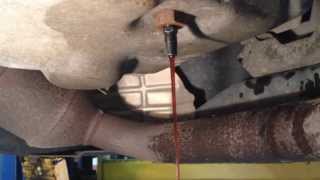
- Faulty Forward Piston Control Solenoid / Solenoid Pack (Very Common) — The solenoid fails electrically (open coil) or mechanically (stuck valve). On Ford 5R55 series transmissions, this solenoid is integrated into a larger block; a single failure requires replacing the entire solenoid pack. 🎬 Watch: Step-by-step guide to replacing the 5R55S solenoid pack.
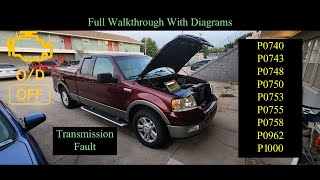
- Damaged External Wiring or Connectors (Common) — The external wiring harness chafes against the chassis or exhaust, severing the wire. The main bulkhead connector at the transmission case also corrodes or fills with fluid if the seal fails, breaking electrical continuity. 🎬 See how a corroded bulkhead connector causes multiple transmission codes.
- Corroded Internal Transmission Harness (Common) — Submerged in hot transmission fluid, the internal wiring harness insulation becomes brittle and flakes off over time. This causes wires to short against the transmission case or break entirely.
- Low or Degraded Transmission Fluid (Common) — Low fluid causes overheating and pressure loss. Dirty fluid contains abrasive clutch material that clogs solenoid valves, triggering electrical fault codes as the solenoid struggles to operate.
- TCM Software Anomaly (Less Common) — On 2020 Chevrolet Corvettes, a known software misalignment falsely triggers this code. The required fix is reprogramming the TCM with updated software per GM service bulletin N202316880.
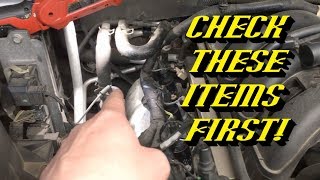
- Low System Voltage / Poor Ground (Uncommon) — A failing battery or corroded ground strap starves the TCM of stable voltage, causing erroneous codes. This is highly prevalent on the 2003-2006 Lincoln LS 🎬 Watch: Check this common wiring issue before replacing parts. due to its trunk-mounted battery.
- Faulty PCM or TCM (Rare) — The internal driver circuit within the control module that sends power to the solenoid fails. Diagnose this only after definitively ruling out the wiring, connectors, and solenoid.
Symptoms
- Check Engine Light On — The PCM illuminates the Malfunction Indicator Lamp (MIL) immediately upon detecting the open circuit.
- Harsh or Delayed Forward Engagement — A noticeable slam or long delay occurs when shifting from Park or Reverse into Drive.
- Transmission in Limp Mode — The transmission locks into a single gear (often 3rd) to prevent damage, resulting in sluggish acceleration and high RPMs at highway speeds.
- No Forward Gears — The vehicle fails to move forward when placed in Drive, though Reverse continues to function normally.
- Erratic Shifting — The transmission hunts for gears or shifts at inappropriate times as the computer struggles to control hydraulic pressure.
Diagnostic Flowchart
Tap your situation to follow the diagnostic path that matches what you're seeing on this code.
Common Fixes & Costs
- Replace Transmission Solenoid/Solenoid Pack
— Parts: $150-$350, Labor: $250-$450, ~3 hr book time
(Intermediate)
Ford Explorer / Mustang (5R55S): OEM 9L2Z-7G391-A (Alt: Sonnax (56954L), Dorman (926-128))
Ford F-150 (4R75E): OEM F8AZ-7G484-AA (Alt: TC Remanufacturing (56843A)) - Repair External Wiring Harness
— Parts: $10-$50, Labor: $150-$300, ~2 hr book time
(Intermediate)
Ford Explorer / Mustang (5R55S/W/N): OEM N/A (Alt: Rostra (350-0165 Pigtail)) - Replace Internal Transmission Wiring Harness
— Parts: $50-$150, Labor: $250-$450, ~3 hr book time
(Intermediate)
Ford F-150 (4R70W/4R75E): OEM F8AZ-7G276-BA (Alt: Rostra (350-0062)) - Transmission Fluid and Filter Change — Parts: $50-$120, Labor: $100-$200, ~1.5 hr book time (DIY)
- Reprogram TCM — Parts: $0, Labor: $150-$250, ~1 hr book time (Professional)
DIY vs Professional
- Replace Transmission Solenoid/Solenoid Pack 🟢 Beginner
Tools: Metric socket set, inch-pound torque wrench, drain pan, fluid pump, new fluid, gasket. - Repair External Wiring Harness 🟢 Beginner
Tools: Wire strippers, crimpers, heat shrink tubing, soldering iron, multimeter. - Replace Internal Transmission Wiring Harness 🟢 Beginner
Tools: Metric socket set, inch-pound torque wrench, drain pan, fluid pump. - Transmission Fluid and Filter Change 🟢 Beginner
Tools: Socket set, drain pan, fluid pump, funnel. - Reprogram TCM 🟢 Beginner
Tools: OEM-level diagnostic scan tool, programming subscription, battery maintainer.
Used vs. New Parts: Buying Guide
When a used part is worth it: Only for extremely tight budgets on high-mileage vehicles where the owner accepts the risk of paying for repeat labor.
Donor-vehicle mileage cap: roughly under 60000 miles for the part to have meaningful remaining life.
Donor quality checklist:
- Verify the exact part number, as updated solenoid designs are not interchangeable.
- Avoid parts from salvage yards without a clear history.
- Purchase remanufactured units from reputable suppliers (like Sonnax) instead of raw used parts.
Decision logic:
- If The cost of a new OEM part is less than 50% of the labor cost for installation → buy new. The savings from a used part do not justify the risk of repeat labor.
- If Vehicle is over 150,000 miles and you plan to sell it soon → buy a tested, remanufactured part with a warranty.
- If The part is a critical electronic component requiring pan removal → always buy new OEM or top-tier aftermarket parts to ensure longevity.
Warranty tradeoff: Salvage yard parts offer 30-day functional warranties that exclude labor. New OEM parts offer 1-2 year warranties.
Worst-case if a used part fails: $400-$800 for repeat labor and a second replacement part if the used solenoid fails.
What Happens If You Wait — Timeline
- 0-2 weeks: Check Engine Light illuminates. Driver notices a harsh clunk shifting into Drive, but city shifting remains normal. (MPG impact: 0-5%% · Added cost: $0)
- 2 weeks - 3 months: Transmission frequently enters limp mode. Poor acceleration and high RPMs degrade fluid rapidly. (MPG impact: 10-15%% · Added cost: $50-$150)
- 3-6 months: Excessive heat wears the forward clutch pack. Contaminated fluid clogs valve body passages. (MPG impact: 15-20%% · Added cost: $800-$1800)
- 6+ months: Catastrophic failure. Forward clutch pack is destroyed, requiring a complete transmission rebuild. (MPG impact: N/A% · Added cost: $2500-$4500)
Cost of Not Fixing It
- 0-1 month: Harsh shifting, frequent limp mode engagement, and a 5-10% decrease in fuel economy. High risk of being stranded. (Added cost: $0)
- 1-6 months: Slipping generates excessive heat, accelerating wear on clutches and contaminating fluid with abrasive friction material. (Added cost: $500-$1500)
- 6+ months: The electrical fault cascades into major mechanical failure. The forward clutch pack is destroyed, requiring a complete transmission rebuild. (Added cost: $2500-$4500)
Diagnosis Steps
- Scan for Codes and Check TSBs
Use an OBD-II scanner to confirm P1967. Check for Technical Service Bulletins (TSBs) for your specific vehicle before physical work. A known software update (like on the 2020 Corvette) prevents hours of wasted diagnosis.
Tools: OBD-II Scanner, Online access (Beginner) - Check Transmission Fluid Level and Condition
Inspect the fluid on the dipstick. Low, dark, or burnt-smelling fluid requires immediate replacement and indicates excessive heat that damages solenoids.
Tools: Rag, gloves (Beginner) - Visual Inspection of External Wiring
Inspect the external wiring harness from the TCM to the transmission case. Look for chafed or melted wires. Disconnect the main transmission connector and check for green corrosion or pushed-out pins.
Tools: Flashlight, mirror (Intermediate) - [PRO TIP] Solenoid Resistance Check at Connector
Test the solenoid without dropping the transmission pan. Using a wiring diagram, measure resistance across the forward solenoid pins at the main harness connector. Ford 5R55 transmissions should read 16-45 Ohms. A reading of 'OL' (Over Limit) confirms an open circuit in the internal wiring or solenoid.
Tools: Multimeter, vehicle-specific wiring diagram (Advanced) - [PRO TIP] Commanded Voltage Check at TCM
If resistance is normal, verify the TCM is sending power. Back-probe the forward solenoid control pin at the TCM. With the engine running in Drive, verify a 12V signal. No voltage indicates a failed TCM driver circuit.
Tools: Multimeter, back-probe kit, wiring diagram (Advanced) - [PRO TIP] Live Data PID Analysis
Monitor transmission PIDs with an advanced scan tool. Verify the forward solenoid is commanded 'ON' in forward gears. If commanded ON but gear ratio codes (P0731) appear, the electrical command is failing to actuate the mechanical clutch.
Tools: Advanced OBD-II Scan Tool (Advanced) - Inspect Internal Components
If external checks pass but resistance is 'OL', remove the transmission oil pan. Inspect the internal wiring harness for brittle wires and the solenoid pack for physical cracks or discoloration.
Tools: Socket set, drain pan, new gasket, new fluid (Advanced) - [PRO TIP] Solenoid Activation 'Click' Test
With the solenoid pack removed, apply 12V power to the forward solenoid pins for one second. A healthy solenoid produces a sharp, audible 'click'. Silence confirms internal mechanical failure.
Tools: 12V power source, test leads, wiring diagram (Advanced)
When This Code Triggers (Freeze-Frame Conditions)
- Engine Coolant Temp: 180-200°F (The fault logs when the transmission fluid and engine reach full operating temperature.)
- RPM: 1500-2500 (Occurs during steady-state cruising or light acceleration when the TCM commands a gear shift.)
- Engine Load: 30-60% (Sets under moderate engine load, rarely during heavy acceleration or idle.)
- Vehicle Speed: 35-55 mph (Triggers at city or highway speeds when shifting into or out of an overdrive gear.)
Related Codes
- P0700 — Generic Transmission Control System Malfunction. This informational code directs you to check the TCM for specific faults like P1967.
- P1968 — Reverse Piston Control Circuit/Open. Appearing alongside P1967 indicates a shared failure point, such as the main connector or a TCM software bug.
- P0731 — Gear 1 Incorrect Ratio. P1967 (electrical open) prevents clutch engagement, causing the mechanical slip that triggers P0731. Fix P1967 first.
- P0706 — Transmission Range Sensor Circuit. A faulty TRS sends incorrect gear data, causing erratic shifting alongside circuit codes.
Climate & Environmental Factors
- High Humidity / Road Salt: Salt-laden moisture accelerates corrosion on external transmission connector pins, eating through wires and creating open circuits.
- Extreme Cold: Freezing temperatures make older plastic wiring insulation and connector locking tabs brittle, causing them to crack under normal engine vibration.
- Extreme Heat: Proximity to exhaust components melts external wiring harness insulation, exposing bare copper and causing shorts or open circuits.
How to Talk to a Mechanic About This Code
Say this: "I have code P1967. Please test the solenoid's resistance and check the external harness for damage before recommending internal repairs."
Directs technicians to logical diagnostic steps and prevents immediate default to expensive solenoid replacements.
Avoid saying:
- 'My transmission is acting weird.'
- 'I think I need a new transmission.'
- 'Just do whatever it takes to fix it.'
Questions to ask before authorizing the repair:
- What were the resistance test results at the main connector?
- Did you find external wiring damage or corrosion?
- Why rule out external wiring if recommending a solenoid pack?
- What is the warranty on parts and labor?
- Is there a software update available for my TCM?
Where to Take It: Dealer vs Independent vs Chain
- Dealer:
Recommended only for warranties or dealer-only software fixes.
Best for: Vehicles under warranty., Specific software updates (2020 Corvette).
Downsides: 40-50% higher labor and parts costs., Quicker to replace entire assemblies rather than diagnose wiring faults. (Typical cost: +40% vs. baseline) - Independent Shop:
Best fit for most vehicles. An independent transmission specialist provides accurate diagnosis and cost-effective repair.
Best for: Out-of-warranty vehicles., Transmission specialists with deep experience on Ford 5R55 units., Cost-effective parts and labor.
Downsides: Quality varies; requires finding a trusted, ASE-certified shop., Lacks access to niche manufacturer software updates. (Typical cost: +0% vs. baseline) - Chain Shop:
AVOID. This code requires specialized electrical knowledge lacking at general service chains.
Best for: Basic maintenance like oil changes.
Downsides: Lacks specialized electrical and transmission knowledge., High pressure to upsell unnecessary transmission replacements., Outsources transmission rebuilds, adding delays. (Typical cost: -10% vs. baseline)
When to Walk Away From the Repair
If repair costs exceed 50% of the vehicle's value, consider selling.
- Car worth $5000, fix is $800: Fix it. The repair cost is well below the 50% threshold.
- Car worth $4000, fix is $2200: Walk away. The repair cost exceeds 50% of the car's value.
- Car worth $15000, fix is $2500: Fix it. A worthwhile investment to maintain a higher-value vehicle.
What Scan Tool You Need for This Code
Minimum: OBD-II scanner capable of reading manufacturer-specific transmission codes and live data PIDs.
$20 readers only show generic P0700 codes and lack live data needed to verify solenoid commands.
Budget: BlueDriver Pro (~$100) — Reads specific codes and displays live transmission data to verify TCM commands.
Mid-range: Foxwell NT510 Elite (~$170-350) — Offers deeper system access and basic bidirectional controls to test the solenoid circuit.
Professional: Autel MaxiCheck MX808S (~$450-600) — Provides full bidirectional control to command solenoids on/off without removing parts.
Rent vs buy: Auto parts stores offer free basic scanning, but lack live data. Buy a mid-range tool for DIY repairs.
How to Clear the Code After You Fix It
- Clear all diagnostic trouble codes using an OBD-II scan tool.
- Perform a complete transmission adaptive learning drive cycle.
- Verify the code does not return after the drive cycle.
Drive cycle (~30 minutes): Perform a cold start, idle for 5 minutes, drive 15 minutes in mixed city traffic, and cruise for 10 minutes on the highway at 50-60 mph.
Readiness monitors affected: Catalyst Monitor, Evaporative System Monitor, O2 Sensor Monitor
Before emissions retest: drive at least 100 miles to fully set monitors.
Watch out for:
- Clearing the code without fixing the open circuit causes the MIL to illuminate immediately upon shifting into Drive.
- Disconnecting the battery resets all OBD-II readiness monitors, guaranteeing an emissions test failure.
- Skipping the transmission adaptive relearn procedure results in continued harsh shifting even after a successful repair.
Will This Fail Emissions / State Inspection?
Yes — this code typically fails an OBD-II emissions inspection.
- California: An illuminated MIL causes an automatic smog check failure. A full drive cycle must be completed post-repair to set readiness monitors.
- New York: NYVIP3 automatically fails vehicles with an active MIL. Only one non-continuous readiness monitor can be 'Not Ready'.
- Texas: Active MIL is an automatic failure in emissions counties. Requires driving 50-100 miles post-repair to reset monitors.
Most Commonly Affected Vehicles
- Ford Explorer (2002-2010) — Solenoid pack failures are highly prevalent on 5R55W/S/N transmissions, making it the leading cause of P1967.
- Ford F-150 (2004-2008) — Bulkhead connector seals frequently fail on 4R70W/4R75E transmissions, allowing fluid to corrode pins and create open circuits.
- Ford Mustang (2005-2010) — 5R55S transmissions frequently experience solenoid pack failure, identical to the Explorer.
- Ford Ranger (2001-2011) — Shares the vulnerable solenoid pack design in 5R44E and 5R55E transmissions.
- Chevrolet Corvette (2020-2020) — TCM software misalignment falsely sets P1967. Requires a software update per TSB N202316880, not hardware replacement.
- Lincoln LS (2003-2006) — Trunk-mounted batteries cause severe voltage drops over time, triggering erroneous TCM codes. Verify battery health first.
- Lincoln Town Car (2004-2011) — Susceptible to the same 4R70/75 series solenoid and wiring failures as the F-150.
- Jaguar S-Type (2000-2002) — Uses the Ford-designed 5R55N transmission. Diagnosis and repair are identical to Ford models.
Manufacturer-Specific Notes
- Ford: Forward piston solenoids are integrated into a single block on 5R55 transmissions. A single solenoid failure requires replacing the entire $200+ block.
- Chevrolet/GM: Extremely rare on GM vehicles, except for the 2020 Corvette software glitch requiring a dealer-only TCM reflash.
- Lincoln: Trunk-mounted batteries on the LS cause voltage drops. Always verify battery health and ground connections before diagnosing transmission components.
- Jaguar: Early S-Types use Ford transmissions. Technicians must follow Ford diagnostic procedures, not standard Jaguar protocols.
Real Owner Stories
2006 Ford Explorer at 135K miles - The Classic Solenoid Failure
Check engine light illuminated with harsh shifting from Park to Drive. The transmission frequently locked into 3rd gear.
What they tried:
- Checked fluid, which was full but dark.
- A local shop quoted $1200 for a solenoid pack replacement.
- Owner decided to DIY the repair.
Outcome: Purchased an aftermarket solenoid pack for $150. Replaced the solenoid block and internal wiring harness. Total cost was $250. The code cleared and shifting returned to normal.
Lesson: Solenoid pack failure is the leading cause of P1967 on Ford 5R55 transmissions. DIY replacement saves over $700 in labor.
2004 Ford F-150 at 180K miles - The Misdiagnosis Story
Vehicle lost all forward gears but Reverse worked perfectly. Code P1967 was active.
What they tried:
- A shop replaced the solenoid pack for $800, but the problem persisted.
- The shop replaced the internal wiring harness with no change.
- A detailed inspection finally revealed a severed wire in the external harness.
Outcome: The actual fix was repairing a single broken wire in the external harness for $150. The owner spent $1000 on unnecessary parts due to incomplete diagnosis.
Lesson: Always test wiring harness continuity from the main connector before authorizing expensive internal transmission work.
2020 Chevrolet Corvette at 15K miles - The Software Glitch
Check Engine Light illuminated with no noticeable driving symptoms.
What they tried:
- Owner took the car to the dealership, scanning codes P1967 and P1968.
Outcome: Following GM Service Bulletin #PIP5757A, the technician reprogrammed the TCM. The codes cleared permanently with zero hardware replacement.
Lesson: For a 2020 Corvette, P1967 is a software issue. Do not replace hardware; request a TCM reflash at a dealership.
2003 Lincoln LS at 110K miles - The Unusual Cause
Intermittent harsh shifting, flickering dash lights, and code P1967. Symptoms worsened in damp weather.
What they tried:
- Mechanic recommended solenoid replacement.
- Owner tested voltage and found a significant drop at the TCM.
Outcome: The root cause was a corroded main ground strap near the trunk-mounted battery. Cleaning the connection stabilized voltage, resolving all codes.
Lesson: On vehicles with trunk-mounted batteries, verify battery health and main ground connections before diagnosing transmission codes.
How to Prevent This Code From Triggering
- Regular Transmission Fluid and Filter Changes (Every 30,000-60,000 miles.) — Clean fluid lubricates solenoids and prevents overheating. Degraded fluid clogs solenoid valves.
- Install an External Transmission Cooler (One-time installation.) — Reduces heat, extending the life of fluid, seals, and sensitive electronics.
- Inspect and Protect External Wiring (Every 15,000 miles.) — Securing loose sections prevents chafing. Applying dielectric grease to connectors prevents moisture intrusion.
- Address Fluid Leaks Immediately (As soon as noticed.) — Prevents fluid starvation, overheating, and accelerated wear on solenoids.
Frequently Asked Questions
Can I fix a P1967 code myself?
Most fixes require dropping the transmission pan, suited only for intermediate DIYers with proper tools. Software updates require a dealership.
How much does it cost to fix P1967?
Costs range from $100 for a DIY fluid change to $800 for a professional solenoid pack replacement. This includes parts, labor, a new filter, and fluid.
What are the most common misdiagnosis mistakes for P1967?
The biggest mistake is replacing the solenoid pack without testing the wiring. A chafed wire or corroded connector is often the true cause. Ignoring software updates on 2020 Corvettes also wastes money.
What's the difference between P1967 and a gear ratio code like P0731?
P1967 is an electrical fault indicating a broken wire to the solenoid, while P0731 is a functional fault indicating transmission slip. P1967 directly causes P0731. Fix the electrical problem first to resolve the functional issue.
Why did P1967 appear after changing the battery or jump-starting my car?
Voltage surges during jump-starts damage sensitive TCM electronics. They also expose pre-existing weaknesses in circuits, triggering latent faults.
Will clearing the code fix the problem?
No. Clearing the code only turns off the light temporarily. The PCM detects the hard-set open circuit immediately, returning the code.
Is P1967 a sign of a failing transmission?
Not necessarily. It usually points to a replaceable electronic component. However, ignoring it causes severe internal mechanical damage over time.
Key Takeaways
- P1967 indicates an open electrical circuit in the forward clutch control, primarily affecting 2002-2010 Ford, Lincoln, and Jaguar vehicles with 5R55 series transmissions.
- Expect immediate drivability issues, including harsh shifting, a locked 3rd gear (limp mode), or a complete loss of forward movement.
- Replacing the transmission solenoid pack resolves the code in over 70% of cases, costing between $400 and $800 at an independent shop.
- Test the external wiring harness for 16-45 Ohms of resistance before authorizing internal transmission repairs to avoid wasting money on misdiagnosis.
- Limit driving to under 50 miles; operating in limp mode overheats transmission fluid and escalates a $500 electrical repair into a $3,000 mechanical rebuild.
Helpful Videos
Shop the Parts Behind P1967
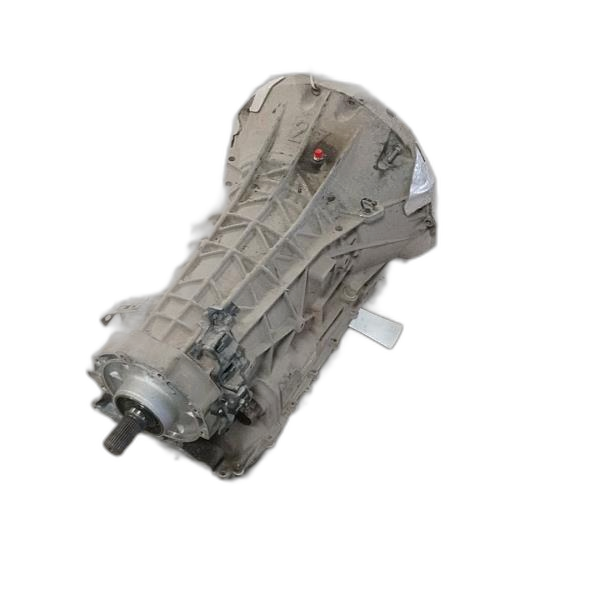
Below are the parts most often responsible for code P1967, ranked by how frequently each one is the actual culprit (per the diagnosis above). Tap any to see what we have for your vehicle.

The information in this article is provided for general reference and educational purposes only. Vehicle specifications, procedures, and part compatibility can vary by production date, trim level, and region. Always consult your vehicle's factory service manual and verify part numbers before purchasing or performing repairs. Safety-critical components such as airbags, seat belts, and braking systems should be installed by a qualified professional.
- 🧭 Diagnostic Flowchart
- 🎬 Helpful Videos
- 🛍️ Shop This Part
- What Does P1967 Mean?
- Can I Drive With P1967?
- Common Causes
- Symptoms
- Common Fixes & Costs
- DIY vs Professional
- Used vs. New Parts: Buying Guide
- What Happens If You Wait — Timeline
- Cost of Not Fixing It
- Diagnosis Steps
- When This Code Triggers (Freeze-Frame Conditions)
- Related Codes
- Climate & Environmental Factors
- How to Talk to a Mechanic About This Code
- Where to Take It: Dealer vs Independent vs Chain
- When to Walk Away From the Repair
- What Scan Tool You Need for This Code
- How to Clear the Code After You Fix It
- Will This Fail Emissions / State Inspection?
- Most Commonly Affected Vehicles
- Manufacturer-Specific Notes
- Real Owner Stories
- 2006 Ford Explorer at 135K miles - The Classic Solenoid Failure
- 2004 Ford F-150 at 180K miles - The Misdiagnosis Story
- 2020 Chevrolet Corvette at 15K miles - The Software Glitch
- 2003 Lincoln LS at 110K miles - The Unusual Cause
- How to Prevent This Code From Triggering
- Frequently Asked Questions
- Can I fix a P1967 code myself?
- How much does it cost to fix P1967?
- What are the most common misdiagnosis mistakes for P1967?
- What's the difference between P1967 and a gear ratio code like P0731?
- Why did P1967 appear after changing the battery or jump-starting my car?
- Will clearing the code fix the problem?
- Is P1967 a sign of a failing transmission?
- Key Takeaways
- 🎟️ Get 5% Off