

OBD-II Code P1968: Transmission Control Module Communication Failure
What P1968 means, why it triggers, and how to fix it
- Code P1968 indicates a total communication failure between the engine computer (PCM) and transmission computer (TCM) over the CAN bus network.
- Stop driving immediately; operating in 'limp mode' (stuck in 2nd or 3rd gear) for more than a few days causes catastrophic transmission damage exceeding $3,000.
- Before replacing a $500+ TCM, test the module's power supply, as a blown $5 fuse or corroded ground wire is the root cause in over 30% of cases.
- On 1996-2008 Dodge and Chrysler minivans, cracked solder joints on the instrument cluster disrupt the data network and trigger this code, requiring a $200 cluster repair rather than a transmission fix.
What Does P1968 Mean?
Trouble code P1968 is a manufacturer-specific code (common on Dodge and GM) indicating the engine's main computer (PCM) lost communication with the Transmission Control Module (TCM). When this Controller Area Network (CAN bus) link fails, the transmission cannot receive shift commands, causing severe drivability issues.
Technical definition: P1968 is defined as "No Message From Transmission Control Module". It indicates a complete loss of data communication between the Powertrain Control Module (PCM) and the Transmission Control Module (TCM) over the CAN bus. The PCM sets this code when expected status messages from the TCM are absent for a specified period.
Can I Drive With P1968?
No — Do Not Drive. It is not safe to drive. The transmission shifts erratically, gets stuck in one gear ('limp mode'), or causes the engine to stall, creating a serious safety hazard. Continuing to drive destroys the transmission's internal components, leading to repairs exceeding $3,000.
Common Causes
- Blown Fuse or Faulty Power/Ground Supply (Very Common) — The TCM requires a stable power and ground source. A blown fuse, faulty relay, or a corroded ground connection prevents the module from powering on, making communication impossible.
- Damaged Wiring or Poor Connections (Common) — Wires connecting the TCM to the CAN bus and power supply frequently chafe against chassis components or melt near exhaust parts. Water intrusion also causes severe corrosion on connector pins, interrupting data flow.
- Faulty Transmission Control Module (TCM) (Common) — The TCM fails internally due to electrical surges, excessive heat, vibration, or age, permanently taking it offline from the vehicle's network. 🎬 Watch: How to diagnose and fix lost communication with the TCM.
- TCM Software Anomaly / Corruption (Common) — The software within the TCM corrupts, leading to communication failures even if the hardware is functional. This is a known issue on specific GM models, resolved by reprogramming the module.
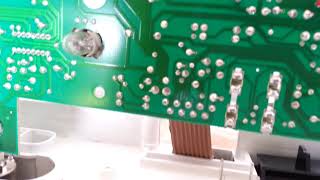
- Cracked Solder Joints on Instrument Cluster (Less Common) — On 1996-2008 Chrysler/Dodge minivans, cracked solder joints on the back of the instrument cluster disrupt the entire data network. The cluster acts as a gateway, and its failure triggers a P1968 or P1698 code.
- Faulty Powertrain Control Module (PCM) (Rare) — The main engine computer (PCM) is occasionally the source of the communication problem. If the PCM's internal CAN transceiver fails, it cannot send or receive messages from the TCM.
Symptoms
- Vehicle is Stuck in 'Limp Mode' — The transmission defaults to a single gear (usually 2nd or 3rd) to prevent damage. This causes poor acceleration, high RPMs at moderate speeds, and a maximum speed of 30-50 mph.
- Erratic, Harsh, or No Shifting — The transmission shifts violently, delays shifts, slips between gears, or fails to shift entirely.
- Engine Stalls or Car Won't Start — Communication failures cause the engine to stall unexpectedly during shifts. The vehicle often refuses to start because the PCM cannot confirm the transmission is in Park or Neutral.
- Inaccurate or Blank Gear Display — The gear indicator (PRNDL) on the dashboard goes blank, illuminates all segments simultaneously, or displays the wrong gear.
- Service StabiliTrak / Traction Control Warning — A loss of communication with the TCM disables traction and stability control systems, illuminating their respective dashboard warning lights.
- Check Engine Light is On (also visible on scanner) — The PCM illuminates the Malfunction Indicator Lamp (MIL) immediately upon detecting the communication loss.
- Scan Tool Cannot Communicate with TCM (scan-tool only — no driver-felt sign) — A professional scan tool communicates with the PCM but reports 'No Communication' with the TCM, confirming the module is offline.
Diagnostic Flowchart
Tap your situation to follow the diagnostic path that matches what you're seeing on this code.
Common Fixes & Costs
- Replacing a Blown Fuse
— Parts: $1-$10, Labor: $0-$50, ~0.1 hr book time
(DIY)
: OEM Varies by vehicle (Alt: {"brand": "Bussmann", "price_comparison": "Standard"}, {"brand": "Littelfuse", "price_comparison": "Standard"}) - Repairing Damaged Wiring or Connectors — Parts: $10-$50, Labor: $150-$400, ~2.5 hr book time (Intermediate)
- Reprogramming or 'Flashing' the TCM/PCM — Parts: $0, Labor: $150-$300, ~0.8 hr book time (Professional)
- Replacing the Transmission Control Module (TCM)
— Parts: $200-$900, Labor: $150-$300, ~2.5 hr book time
(Professional)
Dodge Grand Caravan (2005-2007): OEM Mopar 04727535 (Alt: {"brand": "Cardone Remanufactured", "price_comparison": "Lower"}, {"brand": "Dorman OE Solutions", "price_comparison": "Varies"})
Jeep Grand Cherokee (WJ, 2004): OEM Mopar (Part number varies by engine/options) (Alt: {"brand": "Cardone Industries", "price_comparison": "Lower"}, {"brand": "Standard Motor Products", "price_comparison": "Similar"}) - Replacing the Powertrain Control Module (PCM)
— Parts: $800-$1,400, Labor: $100-$200, ~2 hr book time
(Professional)
Jeep Grand Cherokee (WJ, 4.0L, 2004): OEM Mopar P56044563AG (Alt: {"brand": "Cardone (A1 Cardone)", "price_comparison": "Lower"}, {"brand": "Flashmasters", "price_comparison": "Similar"})
DIY vs Professional
- Replacing a Blown Fuse 🟢 Beginner
Tools: Fuse puller, owner's manual. - Repairing Damaged Wiring or Connectors 🟢 Beginner
Tools: Multimeter, wire strippers, crimping tool, heat shrink tubing, soldering iron. - Replacing the Transmission Control Module (TCM) 🟢 Beginner
Tools: Basic hand tools, professional-grade scan tool for post-installation programming. - Reprogramming or 'Flashing' the TCM/PCM 🟢 Beginner
Tools: Manufacturer-specific diagnostic software and a J2534 Pass-Thru device.
Used vs. New Parts: Buying Guide
When a used part is worth it: For older vehicles (15+ years) where a used TCM is 'plug-and-play' without programming, or if the vehicle's value is low and you accept the risk of a shorter lifespan.
Donor-vehicle mileage cap: roughly under 80000 miles for the part to have meaningful remaining life.
Donor quality checklist:
- Match the part number exactly. Slight variations mean incompatibility.
- Ask for the donor vehicle's VIN to verify compatibility.
- Prefer sellers offering a 30-90 day warranty.
- Avoid modules from flood-damaged or heavily corroded vehicles.
Decision logic:
- If Vehicle is modern (less than 10 years old) → Favor new or professionally remanufactured. A used module requires expensive programming that negates savings.
- If The part is known for a high failure rate → A used part likely has the same flaw. Buy a new or updated remanufactured part.
- If Budget is the primary concern on an older, low-value vehicle → A used part from a reputable salvage yard is viable, but carries the risk of early failure.
Warranty tradeoff: Used parts have a 30-90 day warranty covering only the part. Remanufactured parts carry a 1-year to lifetime warranty. New OEM parts have a 1-2 year warranty.
Worst-case if a used part fails: $400-800 if a used part fails shortly after installation, requiring a second round of diagnostic and replacement labor.
What Happens If You Wait — Timeline
- 0-1 week: Vehicle immediately enters 'limp mode'. Transmission is locked in 2nd or 3rd gear, resulting in poor acceleration and high RPMs. The car is unsafe to drive. (MPG impact: 20-40%% · Added cost: $100-$300 (Cost for a tow to a repair shop))
- 1 week - 1 month: Continued driving in limp mode causes excessive heat buildup in the transmission fluid and places extreme stress on the engaged clutch packs. Fluid smells burnt. (MPG impact: 20-40%% · Added cost: $500-$1,500 (Cost to replace burnt fluid, damaged solenoids, and torque converter))
- 1-3 months: High-stress operation destroys clutch packs. Metal shavings circulate through the transmission, damaging the valve body. (MPG impact: 20-40%% · Added cost: $1,800-$3,500 (Cost escalates to a full transmission rebuild))
- 3+ months: Catastrophic transmission failure. Sustained overheating destroys planetary gear sets or shafts. The transmission no longer moves the vehicle. (MPG impact: 100% (Vehicle is undrivable)% · Added cost: $4,000-$7,000+ (Cost of a complete transmission replacement))
Cost of Not Fixing It
- Immediate (0-1 month): Vehicle enters 'limp mode,' limiting speed to 30-50 mph with poor acceleration and erratic shifting. The car is unsafe and unpredictable to drive. (Added cost: Potential towing costs ($100-$300))
- Short-Term (1-3 months): Continued driving places extreme stress on transmission clutches by forcing operation in a single gear. This causes premature wear and overheats the transmission fluid. (Added cost: $500 - $1,500 (for internal damage short of complete failure))
- Long-Term (3+ months): Catastrophic transmission failure. Cumulative stress from limp mode destroys internal components, requiring a complete transmission rebuild or replacement. (Added cost: $2,500 - $7,000+)
Diagnosis Steps
- Perform a Full Vehicle Code Scan
Use a professional OBD-II scanner to check all modules. P1968 is often accompanied by U0101 or power-related codes. Note if the ABS or BCM modules are also offline, indicating a broader network crash.
Tools: Professional OBD-II Scanner (Beginner) - Inspect TCM Power and Ground Fuses
Locate all fuses and relays related to the TCM and PCM using the owner's manual. Replace any blown fuses. If a new fuse blows immediately, stop replacing them; you have a dead short in the wiring.
Tools: Owner's Manual, Fuse Puller (Beginner) - Visually Inspect Wiring and Connectors
Examine the TCM wiring harness. Look for chafed wires, melted insulation near the exhaust, or green/white corrosion on the connector pins indicating water damage.
Tools: Flashlight, Inspection Mirror (Intermediate) - Test TCM Power and Ground at the Module
Disconnect the TCM. Using a multimeter and wiring diagram, probe the harness connector. Verify the power pin receives battery voltage (12.0-12.6V) and the ground pin shows less than 0.5 Ohms resistance to the chassis. A module cannot communicate without power.
Tools: Multimeter, Vehicle-Specific Wiring Diagram (Advanced) - Scan Tool Live Data Analysis
If the module has power, reconnect it and view the TCM live data stream on a scanner. Look for 'TCM Input Voltage'. If it reads 0V or significantly lower than battery voltage, the internal circuitry is failing.
Tools: Professional OBD-II Scanner (Advanced) - Check Communication Bus Resistance
Disconnect the battery. Measure resistance at the OBD-II port between Pin 6 (CAN High) and Pin 14 (CAN Low). A healthy bus reads 60 ohms. 120 ohms indicates an open circuit; near 0 ohms indicates a short.
Tools: Multimeter (Advanced) - PRO TIP: Check CAN Bus Voltages (Key On)
Turn the ignition on (engine off). Measure DC voltage on the CAN lines. CAN High (Pin 6) should be ~2.6V; CAN Low (Pin 14) should be ~2.4V. If both are 2.5V, they are shorted together. If one is 0V, it is shorted to ground.
Tools: Multimeter (Professional) - Isolate the Faulty Module
If the CAN bus is shorted, disconnect modules one by one. Re-check resistance after each. When the reading returns to 60 ohms, the last module disconnected contains the internal short.
Tools: Multimeter, Basic Hand Tools (Professional) - PRO TIP: Analyze CAN Bus Waveform
Connect an oscilloscope to CAN High and CAN Low. A healthy waveform shows clean, mirror-image signals switching between 1.5V and 3.5V. Distorted signals confirm wiring faults or a failing module dragging the network down.
Tools: Automotive Oscilloscope, Probes (Professional)
When This Code Triggers (Freeze-Frame Conditions)
- Condition: Any (P1968 is a communication failure code, not a performance code. It triggers anytime the ignition is on and the PCM misses expected signals from the TCM for a few seconds.)
- Engine RPM: Varies (The fault occurs at idle, during acceleration, or at steady cruise. It is independent of engine speed.)
- Vehicle Speed: Varies (Communication loss happens when the vehicle is stationary or moving at any speed.)
- TCM Power Status: Offline (The fundamental condition is that the TCM is not communicating, usually due to a loss of power, a bad ground, or a severed data bus line.)
Related Codes
- U0101 — The generic SAE equivalent of P1968, meaning 'Lost Communication With TCM'. Diagnostically identical, pointing to a failure in the TCM's CAN bus communication.
- P0700 — A general 'gateway' code indicating the TCM detected a fault and requested the Check Engine Light. P1968 is the specific underlying fault causing the P0700 request.
- P1698 — A Chrysler/Dodge specific code for 'No CCD/J1850 Message from TCM'. Functionally identical to P1968, often pointing to instrument cluster solder joints or wiring problems.
- P0600 — Indicates a 'Serial Communication Link Malfunction'. Seeing P0600 with P1968 reinforces that a network communication fault is the core issue.
Climate & Environmental Factors
- High Humidity / Water Ingress: Moisture leads to corrosion on TCM connector pins, wiring, and internal circuit boards, causing short circuits. This is common on vehicles where the TCM is mounted in exposed areas like fender wells.
- Extreme Heat: Prolonged exposure to high engine or ambient heat accelerates the degradation of electronic components. Thermal stress weakens and cracks solder joints over time, leading to intermittent communication failures.
- Cold Weather: Cold temperatures cause existing cracks in solder joints to contract and separate, triggering a P1968 code that disappears once the vehicle warms up and the metal expands.
- Road Salt: Salt-laden moisture is highly corrosive and severely damages wiring harnesses, ground connections, and module connectors exposed to road spray during winter.
How to Talk to a Mechanic About This Code
Say this: "I have a P1968 code and the car is in limp mode. Please start by verifying power and ground at the TCM connector and checking the CAN bus for integrity before recommending a module replacement."
This signals you understand the cause is often wiring or power-related. It directs the technician to perform a proper diagnosis instead of jumping to the most expensive conclusion.
Avoid saying:
- 'My transmission is broken.'
- 'My check engine light is on, can you just fix it?'
- 'I think I need a new transmission computer.'
Questions to ask before authorizing the repair:
- Did you find good power and ground at the TCM connector?
- What were the resistance and voltage readings on the CAN bus?
- If the TCM needs replacement, does the quote include programming and calibration?
- Is there a Technical Service Bulletin (TSB) for this issue on my vehicle?
- What is the warranty on the proposed repair, including parts and labor?
Where to Take It: Dealer vs Independent vs Chain
- Dealer:
Recommended if a known software flash is the fix or if the vehicle is under warranty. Out-of-warranty diagnostics are expensive.
Best for: Vehicles under warranty., Known manufacturer-specific software issues (like the Corvette C8 TSB)., Complex programming requirements.
Downsides: Highest labor rates and part costs., May default to module replacement rather than in-depth wiring diagnostics. (Typical cost: +50% vs. baseline) - Independent Shop:
Best fit, provided you choose a shop with ASE-certified technicians and positive reviews for electrical diagnostics. Verify they can program modules.
Best for: Out-of-warranty vehicles where cost is a factor., Shops with a strong reputation for electrical diagnostics., Common failures on older vehicles (e.g., Chrysler minivan cluster repair).
Downsides: Diagnostic skill varies widely., May lack the latest manufacturer-specific programming tools (J2534 pass-thru). (Typical cost: +0% vs. baseline) - Chain Shop:
AVOID for diagnosing a P1968 code. They lack the skills and tools to trace CAN bus or module power issues correctly.
Best for: Checking for simple causes like a blown fuse or a bad battery.
Downsides: Technicians are rarely equipped for complex network diagnostics., High pressure to sell parts leads to misdiagnosis. (Typical cost: -10% vs. baseline)
When to Walk Away From the Repair
If the estimated repair cost exceeds 50% of the car's current private-party value, seriously consider selling the car as-is or for scrap.
- Car worth $3000, fix is $1600: Walk away. The repair cost is over 50% of the car's value. The risk of other age-related failures is high.
- Car worth $10000, fix is $1500: Fix it. The repair is 15% of the vehicle's value and restores its primary function.
- Car worth $5000, fix is $2200: Borderline. The cost is 44% of the value. Get a second opinion and assess the car's overall condition before proceeding.
What Scan Tool You Need for This Code
Minimum: A scanner that reads manufacturer-specific codes and accesses the Transmission (TCM) and other network modules (ABS, BCM).
A basic $20 code reader only shows the generic U0101 code and cannot confirm if the TCM is truly offline or if other modules are affected.
Budget: BlueDriver Pro (~$100) — Connects to a smartphone app, reads transmission codes, views live data, and confirms which modules are communicating on the network.
Mid-range: XTOOL A30M / D7 or Foxwell NT510 Elite (~$150-350) — Offers full system diagnostics and bidirectional controls, allowing you to command a module to perform a self-test to confirm it is alive.
Professional: Autel MaxiCOM MK808 / MK906BT or Launch X431 Series (~$500-1200) — Provides full bidirectional control, live data graphing, network topology maps, and the ability to perform programming required after a module replacement.
Rent vs buy: Buying a capable mid-range scanner is a better investment than renting. Diagnosing P1968 is iterative, requiring you to re-scan after checking fuses, testing wires, and unplugging modules.
How to Clear the Code After You Fix It
- Ensure all wiring and modules are securely reconnected.
- Reconnect the vehicle's battery if disconnected during repair.
- Use an OBD-II scan tool to erase P1968 and related fault codes.
- Perform a complete drive cycle to run readiness monitors and confirm the fix.
Drive cycle (~20 minutes): A generic drive cycle includes a cold start, 2-3 minutes of idling, 10 minutes of steady highway driving (55 mph), followed by 5-10 minutes of stop-and-go city driving.
Readiness monitors affected: Comprehensive Component Monitor, Misfire Monitor, Catalyst Monitor, Evaporative System Monitor
Before emissions retest: drive at least 100 miles to fully set monitors.
Watch out for:
- Clearing the code without fixing the root cause results in the code returning immediately.
- Disconnecting the battery clears the code but resets all readiness monitors to 'Not Ready', causing an automatic emissions test failure.
- Failing to drive under varied conditions prevents readiness monitors from resetting before an inspection.
Will This Fail Emissions / State Inspection?
Yes — this code typically fails an OBD-II emissions inspection.
- California: An illuminated Check Engine Light is an automatic failure. A drive cycle of 50-100 miles is needed to set readiness monitors after repair.
- New York: An active Check Engine Light causes an automatic emissions inspection failure.
- Texas: In emissions-testing counties, an illuminated Check Engine Light is an automatic fail. Clearing the code right before the test results in a 'Not Ready' failure.
Most Commonly Affected Vehicles
- Dodge Grand Caravan (1996-2008) — Extremely common. Often caused by cracked solder joints on the instrument cluster (P1698) or corrosion on the fender-mounted TCM.
- Chrysler Town & Country (1996-2007) — Shares the same platform and electronics as the Grand Caravan, making it susceptible to identical instrument cluster and TCM faults.
- Jeep Grand Cherokee (WJ) (1999-2004) — A faulty TCM or wiring causes codes like P0700 and prevents shifting. Swapping the TCM from a compatible year resolves the issue, though programming is required.
- Chevrolet Corvette (C8) (2020-2022) — Technical Service Bulletin PIP5757A/B addresses a TCM software anomaly causing P1968. The fix is a software reprogram at the dealer.
- Ford F-150 (2017-2021) — Communication codes like U0101 or P0600 appear due to a faulty lead frame inside the 10R80 transmission or PCM software issues needing a TSB update.
- Subaru Forester, Outback (2014-2018) — Multiple simultaneous 'lost communication' codes (U0101, U0100, U0122) point to a failing battery or bad ground rather than a specific module failure.
- Dodge Ram (2nd/3rd Gen) (1998-2007) — Known for 'No Bus' messages (P1698), which are functionally identical communication failures caused by bad wiring, grounds, or a faulty PCM.
- Chrysler Sebring (1998-2004) — Code P1968 is frequently linked to wiring issues or a failed TCM/PCM unit, consistent with other Chrysler products of the era.
- Plymouth Voyager (1996-2000) — A direct sibling to the Grand Caravan, sharing the same potential for TCM communication errors due to instrument cluster or wiring faults.
Manufacturer-Specific Notes
- Dodge / Chrysler: On minivans from the late 1990s and early 2000s, the instrument cluster acts as a critical data bus node. Cracked solder joints on the cluster's circuit board interrupt the network, causing P1698/P1968 and a no-start condition. Re-soldering these joints is the fix.
- General Motors (Chevrolet): GM issued TSB #PIP5757B for the 2020-2022 Corvette, stating a 'TCM Software anomaly' falsely sets P1968. The fix is a simple TCM reprogram with updated software at a dealership, not hardware replacement.
- Ford: On F-150s with the 10R80 transmission, communication issues are caused by a faulty internal lead frame. This mimics an external wiring fault but requires internal transmission service to correct.
- Subaru: A sudden flurry of communication loss codes (U0101, U0100, U0122) appearing at once frequently points to a failing battery providing unstable voltage or a corroded main ground, rather than multiple failed modules.
Real Owner Stories
1998 Dodge Grand Caravan with intermittent P1698
Dash gauges intermittently went dead while driving, triggering a P1698 'No Bus' code and causing hard shifts. The cluster eventually failed completely.
What they tried:
- Inspected all visible wiring harnesses under the dash and in the engine bay.
- Unplugged and re-plugged connectors with dielectric grease.
- Considered replacing the TCM or PCM.
Outcome: The root cause was cracked solder joints on the instrument cluster's main connector. Re-soldering the pins restored communication, fixed the gauges, and cleared the code.
Lesson: On older Chrysler/Dodge minivans, P1698/P1968 is frequently caused by the instrument cluster, not the TCM. Intermittent gauge failure is the key symptom.
2015 Jeep Wrangler Rubicon with U0101
The dash displayed a 'Hot Oil' message, the check engine light flashed, and the scanner showed U0101. The vehicle intermittently refused to crank.
What they tried:
- Inspected the wiring harness for damage.
- Cleaned the TCM connectors and ground cables.
- Replaced the battery and upgraded battery cables.
Outcome: The problem was a faulty K5 relay in the fuse box supplying power to the TCM. Swapping it with an identical radiator fan relay immediately resolved the no-start issue.
Lesson: Check simple items first. A faulty relay mimics a catastrophic module failure. Swapping a suspect relay with a known-good one is a fast, free diagnostic step.
2000 Dodge Dakota with persistent P1698
Vehicle had hard shifts, a rough idle, and a blank gear indicator display. Code P1698 was constantly present.
What they tried:
- Replaced the Transmission Control Module (TCM).
- Replaced the Powertrain Control Module (PCM).
- Replaced the battery and checked main grounds.
Outcome: After replacing both expensive modules without success, the issue was traced to a fault in the CCD Bus wiring itself—an open circuit in the twisted pair connecting the modules.
Lesson: Do not replace expensive modules without proving the wiring is good. Throwing parts at a communication problem is the most expensive way to diagnose it.
How to Prevent This Code From Triggering
- Apply Dielectric Grease to Connectors (During any repair involving electrical connectors) — Dielectric grease seals out moisture and salt, preventing corrosion on connector pins which is a primary cause of communication failures.
- Inspect and Clean Main Ground Connections (Every 30,000 miles or during battery replacement) — Corroded ground straps create unstable voltage for electronics. Cleaning them to bare metal ensures a solid connection.
- Secure Wiring Harnesses (During any under-hood or under-vehicle service) — Ensuring harnesses are clipped away from sharp edges and exhaust prevents chafing and melting that cause CAN bus shorts.
- Regularly Test Battery Health (Annually, especially before winter) — A weak battery provides unstable voltage during startup, causing random communication codes as modules fail to initialize.
Frequently Asked Questions
Can I just replace the TCM to fix P1968?
Replacing the TCM might fix the problem, but it is not guaranteed. The issue is frequently damaged wiring, a blown fuse, or a software glitch. Perform a proper diagnosis before spending $500+ on a new module that requires expensive programming.
What are common misdiagnosis pitfalls for P1968?
A common mistake is immediately replacing the TCM without testing its power supply. Overlooking a simple blown fuse, a bad ground connection, or a failing battery leads to unnecessary module replacements. On older Dodge/Chrysler vehicles, the root cause is often cracked solder joints on the instrument cluster.
Can a software update fix a P1968 code?
Yes. GM released a Technical Service Bulletin for the 2020-2022 Corvette where code P1968 is caused by a software anomaly. The official fix is to reprogram the TCM, which is significantly cheaper than replacing it.
What does 'Limp Mode' actually do?
Limp mode is a safety feature where the computer limits engine power and locks the transmission in a single gear (usually 2nd or 3rd). This prevents catastrophic damage when a serious fault is detected, allowing you to drive to a safe location at 30-50 mph.
How much does it cost to fix code P1968?
A simple fuse costs under $10, while a wiring repair ranges from $150-$400. Reprogramming the TCM costs between $150 and $300. If the TCM requires replacement, the total cost including parts, labor, and programming ranges from $500 to over $1,500.
Will clearing the code make it go away?
Clearing the code with a scanner turns off the light temporarily, but it returns immediately if the communication problem persists. Disconnecting the battery is not a reliable fix and resets all emissions monitors.
Is P1968 the same as U0101?
Yes, they indicate the exact same problem. P1968 is a manufacturer-specific code (used by Dodge and GM), while U0101 is the standardized generic code for 'Lost Communication with TCM'. Diagnostically, they are treated identically.
Can a bad battery cause a P1968 code?
Yes. A weak battery causes low or unstable voltage, disrupting communication between modules and triggering P1968 or U0101. Always ensure your battery and charging system are healthy before beginning complex wiring diagnostics.
Key Takeaways
- Code P1968 indicates a total communication failure between the engine computer (PCM) and transmission computer (TCM) over the CAN bus network.
- Stop driving immediately; operating in 'limp mode' (stuck in 2nd or 3rd gear) for more than a few days causes catastrophic transmission damage exceeding $3,000.
- Before replacing a $500+ TCM, test the module's power supply, as a blown $5 fuse or corroded ground wire is the root cause in over 30% of cases.
- On 1996-2008 Dodge and Chrysler minivans, cracked solder joints on the instrument cluster disrupt the data network and trigger this code, requiring a $200 cluster repair rather than a transmission fix.
Helpful Videos
![How To Test CAN BUS With A Multimeter [CAN Bus Resistance Check] Mechanic Mindset](https://img.youtube.com/vi/JPE42HSJxAk/mqdefault.jpg)
Shop the Parts Behind P1968
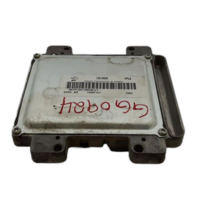
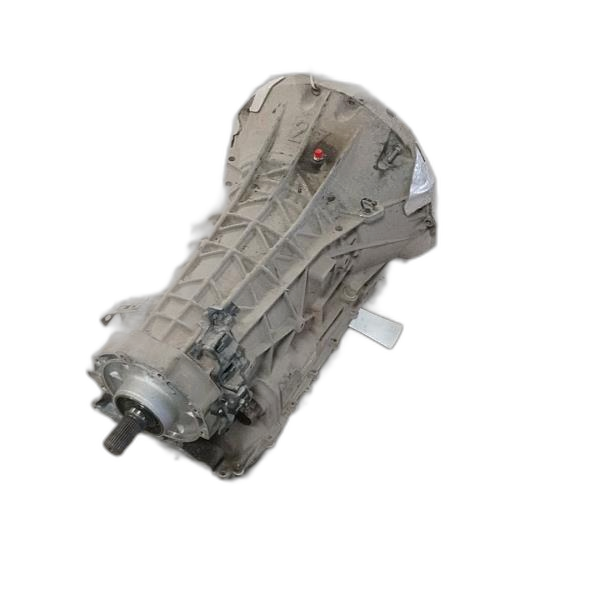
Below are the parts most often responsible for code P1968, ranked by how frequently each one is the actual culprit (per the diagnosis above). Tap any to see what we have for your vehicle.


The information in this article is provided for general reference and educational purposes only. Vehicle specifications, procedures, and part compatibility can vary by production date, trim level, and region. Always consult your vehicle's factory service manual and verify part numbers before purchasing or performing repairs. Safety-critical components such as airbags, seat belts, and braking systems should be installed by a qualified professional.
- 🧭 Diagnostic Flowchart
- 🎬 Helpful Videos
- 🛍️ Shop This Part
- What Does P1968 Mean?
- Can I Drive With P1968?
- Common Causes
- Symptoms
- Common Fixes & Costs
- DIY vs Professional
- Used vs. New Parts: Buying Guide
- What Happens If You Wait — Timeline
- Cost of Not Fixing It
- Diagnosis Steps
- When This Code Triggers (Freeze-Frame Conditions)
- Related Codes
- Climate & Environmental Factors
- How to Talk to a Mechanic About This Code
- Where to Take It: Dealer vs Independent vs Chain
- When to Walk Away From the Repair
- What Scan Tool You Need for This Code
- How to Clear the Code After You Fix It
- Will This Fail Emissions / State Inspection?
- Most Commonly Affected Vehicles
- Manufacturer-Specific Notes
- Real Owner Stories
- 1998 Dodge Grand Caravan with intermittent P1698
- 2015 Jeep Wrangler Rubicon with U0101
- 2000 Dodge Dakota with persistent P1698
- How to Prevent This Code From Triggering
- Frequently Asked Questions
- Can I just replace the TCM to fix P1968?
- What are common misdiagnosis pitfalls for P1968?
- Can a software update fix a P1968 code?
- What does 'Limp Mode' actually do?
- How much does it cost to fix code P1968?
- Will clearing the code make it go away?
- Is P1968 the same as U0101?
- Can a bad battery cause a P1968 code?
- Key Takeaways
- 🎟️ Get 5% Off