

P2002 on 2010-2016 Audi A3 2.0L TDI: DPF Efficiency Causes and Fixes
On a 2010-2016 Audi A3 TDI, code P2002 almost always points to a faulty DPF differential pressure sensor or its hoses, not a failed DPF. On 2014-2016 models with the EA288 engine, a clogged Low-Pressure EGR cooler is a very common cause that mimics DPF failure. Always diagnose the sensor, its hoses, and the EGR system before considering a costly DPF replacement. Check for coverage under the 'Dieselgate' extended emissions warranty.
- Do not assume P2002 means you need a new DPF. The most likely cause is a much cheaper part.
- Start your diagnosis with the DPF differential pressure sensor and its hoses. This is the most common and least expensive fix.
- If you have a 2014-2016 model (8V), and the sensor/hoses are good, a clogged EGR cooler is a very strong possibility.
- Check your vehicle's VIN for any remaining 'Dieselgate' Extended Emissions Warranty coverage, as this entire repair could be covered by Audi.
- Driving habits matter. Ensure the car gets regular highway driving to allow the DPF to complete its automatic cleaning (regeneration) cycles.
What's Unique About the 2010-2016 Audi A3
The 2010-2016 A3 TDI spans two generations (8P and 8V) with different emissions systems. While all models are prone to DPF pressure sensor failures, the later 8V models (2014-2016) feature a more complex EA288 engine with a low-pressure EGR system. On these later models, a clogged EGR cooler frequently causes pressure backups that the ECU misinterprets as a DPF fault, making P2002 a common but misleading code. Many of these vehicles were part of the 'Dieselgate' settlement, which included an extended emissions warranty covering the entire DPF and EGR system. Owners should check their VIN with an Audi dealer, as this warranty could cover the entire repair for free.
Generation note: Yes, this range covers two generations. The 2010-2013 models are the 8P generation with the CJAA engine. 🎬 Watch: Diagnosing P2002 and P0401 codes on CJAA engines The 2014-2016 models are the 8V generation with the EA288 engine (engine code CRUA in North America). The primary difference regarding this code is the emissions system. The 8V models use a more complex low-pressure EGR cooler that is a very common failure point leading to P2002, a problem less prevalent on the earlier 8P models.
Symptoms You May Notice
- Check Engine Light is on
- Flashing glow plug light on the dashboard
- Vehicle enters 'limp mode' with reduced power and acceleration
- Increased fuel consumption
- Engine fan running for a long time after shutting the car off
- Visible black smoke or soot from the tailpipe (indicates a cracked DPF)
- Engine may cut out if the DPF is severely blocked
- Replacing the entire Diesel Particulate Filter (DPF) assembly. This is an extremely expensive repair that is often unnecessary. The fault is much more likely to be a faulty sensor, a clogged EGR cooler (on 8V models), or a simple cracked hose.
Most Likely Causes
- Faulty DPF Differential Pressure Sensor (G450) 🔴 High Probability The sensor is a known weak point on VAG TDI engines and is exposed to harsh exhaust conditions, leading to internal failure. The Ross-Tech Wiki specifically notes that these sensors were sometimes defective from the factory. 🎬 See why P2002 faults keep returning and how to fix them
How to confirm: Using a VAG-specific scan tool (like VCDS), monitor the pressure sensor readings. If the readings are flat, erratic, or show negative soot mass, the sensor is likely bad. A mechanic may also tap the sensor to see if it causes the reading to fail. At idle, pressure should be low (e.g., <10 hPa); it should rise with RPM.
Typical fix: Replace the DPF pressure sensor and perform a sensor adaptation using a scan tool like VCDS. This 're-learn' procedure is critical.
Est. part cost: $40-$100 - Clogged Low-Pressure EGR Cooler 🔴 High Probability Primarily affects 2014-2016 (8V/EA288) models. The cooler's small passages get clogged with soot and crystallized AdBlue deposits. The ECU misinterprets the resulting backpressure during EGR cycles as a DPF efficiency issue. Technicians on forums state this is an extremely common cause for P2002 on this engine.
How to confirm: This is difficult to confirm without disassembly. If the DPF, pressure sensor, and hoses are all confirmed good, the EGR cooler is the next logical suspect, especially if code P0401 is also present. A specialist shop will recognize this pattern immediately.
Typical fix: The EGR cooler needs to be professionally cleaned or, more commonly, replaced. This is a labor-intensive job. An updated cooler design with rectangular slots instead of round holes is less prone to clogging.
Est. part cost: $300-$600 - Cracked or Leaking DPF Pressure Sensor Hoses 🟡 Medium Probability Rubber hoses become brittle from heat and age, leading to cracks and vacuum leaks that cause inaccurate pressure readings. They can also become clogged with soot internally.
How to confirm: Visually inspect the rubber hoses running to and from the DPF pressure sensor for cracks, splits, or loose connections. A smoke test can also identify leaks. Check that the hose nipples are not blocked with soot or debris.
Typical fix: Replace the damaged hoses. Ensure they are not swapped during reinstallation.
Est. part cost: $20-$50 - DPF Soot Level Too High (Needs Regeneration) 🟡 Medium Probability A lifestyle of short, low-speed trips prevents the exhaust from getting hot enough for automatic DPF regeneration, causing soot to build up.
How to confirm: Use a scan tool to check the 'soot mass calculated' and 'soot mass measured' values. If they are high, a regeneration is needed.
Typical fix: Perform a forced regeneration. This can be done with a scan tool or by driving at a sustained highway speed 🎬 Watch: How to perform a forced DPF regeneration using VCDS (e.g., 60 mph for 20-30 minutes) until the process completes.
Est. part cost: $0 - ECM Software Issue ⚪ Low Probability A specific software calibration issue can cause the ECM to inaccurately detect a momentary rise in DPF backpressure, triggering a false soot overload fault.
How to confirm: This is confirmed by a dealer referencing TSB 2041944 / 01 15 44. It applies if DTC P246300 is also present and specific ambient data conditions are met (e.g., measured soot >40g, calculated soot ~30g).
Typical fix: Update the Engine Control Module (ECM) software at an Audi dealership.
Est. part cost: $0 (if under warranty) or $150-$300 (dealer labor)
Rare But Worth Checking
- Cracked Diesel Particulate Filter (DPF): → Shop Diesel Particulate Filter (DPF) While not the most common cause, it's a possibility. A cracked DPF allows soot to pass through unfiltered. The easiest way to check is to wipe the inside of your tailpipe. If it's covered in black soot, the DPF is likely cracked and needs replacement. This can happen even with low mileage.
- Exhaust Leak Before DPF: A leak in the exhaust system before the DPF can throw off the pressure differential readings, tricking the sensor. This can be diagnosed with a smoke test of the exhaust system.
Diagnosis Steps
- Check for other stored fault codes to get a complete picture. Codes like P0401 are a strong clue.
- Inspect the tailpipe. Is it clean or covered in black soot? Soot indicates a cracked DPF that needs replacement.
- Visually inspect the rubber hoses connected to the DPF pressure sensor for any cracks, brittleness, or loose fittings. Ensure the metal pipes they connect to are not clogged.
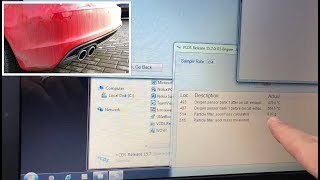
- Connect a VAG-specific scan tool (like VCDS). Check live data for 'Particle filter, soot mass measured' and 'Particle filter, soot mass calculated'. A large discrepancy or a negative measured value points to a sensor or system issue.
- While monitoring live data, check the DPF pressure sensor readings at idle and at 2500 RPM. The pressure should increase with RPMs. If it's flat, negative, or gives illogical readings, the sensor is likely faulty.
- If soot levels are high, attempt a forced regeneration by driving at a sustained highway speed or using the scan tool's function. If regeneration fails or the code returns quickly, proceed with further diagnosis.
- If a new DPF pressure sensor is installed, perform the 'Adaptation' or 'Basic Setting' for the sensor in the scan tool. This step is mandatory.
- If the sensor, hoses, and DPF soot levels appear normal (especially on a 2014-2016 model), the suspicion shifts to a clogged low-pressure EGR cooler. This is a known pattern and typically requires professional diagnosis and replacement.
Parts You'll Likely Need
- DPF Differential Pressure Sensor
(OEM #076906051B (CJAA/8P), 04L906051L (CRUA/8V))— This is the most common failure point that triggers a false P2002 code. It's a relatively inexpensive and accessible part to replace.
Trusted brands: Bosch, Febi Bilstein, Genuine VW/Audi
OEM price range: $70-$120
Aftermarket price range: $40-$80 - EGR Cooler
(OEM #04L131512D (or newer revision))— On 2014-2016 (8V) models, this is the second most likely culprit. It clogs with soot, causing a backpressure issue misinterpreted as a DPF fault. Replacement is a very involved job.
Trusted brands: Mahle, Genuine VW/Audi
OEM price range: $450-$650
Aftermarket price range: $300-$500 - DPF Pressure Sensor Hoses
Related Codes That Often Appear With This One
- P2463 — This code means 'Diesel Particulate Filter - Soot Accumulation'. It often appears with P2002 when the filter is genuinely clogged and unable to regenerate. TSB 2041944 specifically addresses when these two codes appear together due to a software glitch.
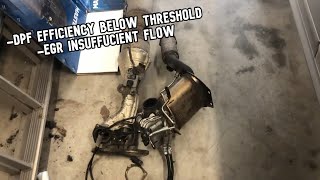
- P0401 — 'Exhaust Gas Recirculation (EGR) Flow Insufficient'. This can appear alongside P2002, especially on 8V models, pointing strongly towards a clogged EGR cooler or faulty EGR valve.
Technical Service Bulletins (TSBs) & Recalls
- TSB 2041944 / 01 15 44: Addresses an issue where the ECM software does not accurately detect a momentary rise in DPF backpressure, resulting in false P2002 and P2463 fault codes. The solution is a software update.
Platform-Specific Known Issues
- Dieselgate Extended Emissions Warranty: Many of these vehicles were subject to the VW/Audi emissions scandal recall. As part of the settlement, an extensive warranty was placed on the entire emissions system, including the DPF, EGR system, and all related sensors. Owners should check their VIN on the Audi diesel information website to see if any warranty coverage remains, as this repair could be free.
- Software Glitch (TSB 2041944): An official Technical Service Bulletin exists for an issue where the ECM software is too sensitive, causing P2002 and P2463 codes to be set incorrectly. The fix is a software update at the dealer.
Mechanic-Grade Diagnostic Values
- DPF Differential Pressure Sensor (G450) Reading at Idle — expected: 5-10 mbar. Failure: A reading of 0, a negative value, or a value significantly higher than 10 mbar at idle suggests a faulty sensor, clogged hoses, or a blocked DPF.
- DPF Differential Pressure Sensor (G450) Reading at 2500 RPM — expected: 15-40 mbar (for a clean DPF). Failure: Readings that do not rise with RPM, are erratic, or are excessively high can indicate a sensor or blockage issue.
- DPF Differential Pressure Sensor (G450) Reading with Ignition On, Engine Off — expected: Near 0 hPa / mbar. Failure: A non-zero reading indicates a faulty sensor that has an incorrect offset.
- VCDS 'Soot Mass Measured' vs. 'Soot Mass Calculated' — expected: The values should be relatively close to each other.. Failure: A large discrepancy, especially a negative value for 'Soot Mass Measured' (e.g., -7.3g), points directly to a system fault where pressure fluctuations from the EGR system are confusing the sensor, rather than an actual DPF blockage.
Hidden / Shadow Codes Worth Checking
- P200200: This is an extended or 'shadow' version of the P2002 code often seen on dealer-level or advanced scan tools. Mechanics report that when this specific code is present, it almost invariably points to a clogged low-pressure EGR cooler on the EA288 engine, not a DPF or sensor fault. The issue is that during low-pressure EGR operation, a flap closes the main exhaust outlet, forcing gas through the cooler. If the cooler is blocked, the backpressure spikes, which the ECU misinterprets as a DPF efficiency problem. (see via VCDS, ODIS, or other advanced VAG-compatible scan tools.)
Scan Tool Commands That Help
- VCDS (or equivalent VAG tool): Exhaust Gas Differential Pressure Sensor (G450) Adaptation — This is a mandatory procedure after replacing the G450 sensor. The ECU needs to learn the baseline 'zero' reading of the new sensor. Failure to perform this adaptation will cause the P2002 code to return. The specific procedure (CAN vs. UDS protocol) varies by model year, but VCDS typically provides on-screen instructions.
- VCDS (or equivalent VAG tool): Basic Setting: 'Resetting of learned values of difference pressure sensor' — This function, found under Basic Settings in the Engine module, should also be performed after a G450 sensor replacement. It clears the old offset values stored by the ECU. After running, the ignition must be turned off for at least 10-60 seconds for the new values to be saved.
- VCDS (or equivalent VAG tool): Adaptation: 'Carbon Mass (DPF Replacement)' or 'Particle filter initialization' — This should only be used after installing a brand new DPF. It resets the calculated ash load value in the ECU to zero. Setting this to 1 and saving tells the ECU a new filter is installed. Using this function without replacing the DPF can lead to improper regeneration cycles.
Wiring & Ground Locations
- Exhaust Pressure Sensor 1 (G450) Location (CJAA Engine) — On the 2010-2013 A3 with the CJAA engine, factory repair manuals may show the incorrect location. The sensor is actually located in a silver foil pouch just behind the oil filler cap in the engine bay.. Technicians relying on incorrect documentation may waste time searching for the sensor or replace the wrong component. Knowing its actual, easily accessible location simplifies diagnosis and replacement.
Real Owner Repair Stories
- Audi-Sport.net forum user 'Mmcfly' (2015 Audi A3 TDI) — Car going into limp mode with flashing glow plug light and P2002 code, especially when driven hard.
❌ Tried (didn't work) A garage replaced the EGR cooler, but the fault returned almost immediately.
✅ What actually fixed it The owner suspected the initial diagnosis was wrong. The actual fix was a two-part process: 1) Replacing the faulty DPF differential pressure sensor (the EGR-side sensor). 2) Performing a harsh chemical DPF clean because the faulty sensor had caused the DPF to become genuinely blocked over time. After replacing the sensor, cleaning the filter, and resetting adaptations with a scan tool, the code did not return after a 100-mile trip. - Ross-Tech Forums user (Audi A4 B7 (similar TDI system)) — P2002 code and limp mode.
❌ Tried (didn't work) Replacing the G450 sensor with an incorrect aftermarket part number (BOSCH 0 281 006 005 instead of the correct 076906051A)., Cleaning the EGR valve., Performing the G450 adaptation procedure with the wrong sensor installed.
✅ What actually fixed it The owner discovered via parts catalog that the previously installed replacement sensor was the wrong part number for the vehicle, even though it physically fit. Installing the correct OEM-spec sensor (076906051A) and performing the adaptation finally resolved the issue. This highlights the criticality of using the exact correct part number for the G450 sensor.
OEM Part Supersession History
03G906051G, 03G906051J→076906051B— Updated design for improved reliability and accuracy. The original sensors were known for premature failure.
Heads up: While other sensors may physically fit the connector, using a part number not specified for the vehicle's ECU can result in incorrect pressure readings and persistent P2002 codes, even after adaptation.04L131512 (and early revisions)→04L131512D (or newer)— The design of the low-pressure EGR cooler for the EA288 engine was updated to be less prone to clogging from soot and AdBlue crystallization.
Heads up: When replacing, it is critical to use the latest available revision to prevent the P2002 issue from recurring. Some aftermarket replacements may require a software update to work correctly.
Model Year Variations Within This Range
- 2010-2013 (8P, CJAA Engine): The primary cause for P2002 is almost always the G450 differential pressure sensor (PN 076906051B) or its hoses. The EGR system is less complex and not a common cause of this specific code. The G450 sensor is located in a foil pouch behind the oil cap.
- 2014-2016 (8V, CRUA Engine): While the G450 sensor can still fail, a clogged low-pressure EGR cooler (PN 04L131512D) is an extremely common cause of P2002. The ECU logic is more sensitive to backpressure during low-pressure EGR cycles, leading to misdiagnosis. The presence of shadow code P200200 is a strong indicator of a clogged cooler.
Diagnostic Flowchart
Other Known Issues on This Vehicle
Issues unrelated to this code that are worth knowing about as an owner of this generation:
- High-Pressure Fuel Pump (HPFP) Failure 🔴 High — More common on the 2010-2013 (CJAA) engine. Can occur without warning, often before 100,000 miles. Failure sends metal debris through the entire fuel system, requiring a very expensive repair. (Ref: No recall, but was a major subject of lawsuits and covered under the 'Dieselgate' extended warranty for many vehicles.)
- DSG Mechatronic Unit Failure 🔴 High — Can affect S-Tronic (DSG) transmissions across all years. Symptoms include jerky shifting, loss of gears, or a flashing gear indicator on the dash. Typically occurs between 60,000-120,000 miles. (Ref: Various TSBs exist for specific shifting complaints, but full failure often requires replacement of the mechatronic unit.)
- Clogged Heater Core (EA288 Engine) 🟠 Medium — Common on 2014-2016 models with the EA288 engine. Debris from the cooling system (often attributed to the EGR cooler) clogs the heater core, resulting in poor or no heat in the cabin. (Ref: An extended warranty was issued for this specific problem on many affected VW/Audi models.)
- Intercooler Icing / Hydro-locking (CJAA Engine) 🔴 High — In cold climates, condensation from the EGR system can freeze inside the intercooler, blocking airflow and causing a no-start condition. When it thaws, the water can be ingested by the engine, causing catastrophic hydro-lock. (Ref: VW released a 'cold climate intercooler' kit to mitigate this issue.)
- Dual-Mass Flywheel (DMF) Failure 🟠 Medium — Affects manual and DSG models. The flywheel wears out, causing a rattling or knocking noise at idle that may disappear when the clutch is pressed. Failure typically occurs between 80,000-130,000 miles.
Used vs. New Parts: Buying Guide for This Vehicle
When a used part is the smart pick: Given the low cost of new sensors and the high failure rate of used ones, sourcing used electronic sensors is generally not recommended. A used DPF assembly from a very low-mileage, verified rear-end collision donor vehicle could be a cost-effective alternative to a new DPF, but it carries significant risk.
Donor-vehicle mileage cap: roughly under 50000 miles for the part to have meaningful remaining life.
What to inspect on the donor part:
- For a used DPF: Ask for the donor vehicle's VIN to check its history and confirm it's not from a flood or fire-damaged car. Inspect the filter matrix with a borescope for any signs of cracking, melting, or missing chunks. Ensure the tailpipe of the donor car is free of soot.
- For a used EGR Cooler: Not recommended. Internal clogging is impossible to see without disassembly, making a used part a huge gamble.
OEM-only on this vehicle (don't cheap out):
- DPF Differential Pressure Sensor (G450): While OEM-branded parts like Bosch are good, avoid generic, unbranded sensors. Forum stories frequently report issues with incorrect readings from cheap aftermarket sensors, causing the code to return immediately.
- Diesel Particulate Filter (DPF): Aftermarket DPFs often lack the precious metal loading of the OEM units, leading to failed regenerations, repeat clogging, and failure to meet emissions standards.
Aftermarket brands forum-validated for this vehicle:
- Bosch (for DPF Pressure Sensor)
- Mahle (for EGR Cooler)
Brands owners have reported issues with on this vehicle:
- Unbranded, 'white-box' electronic sensors from online marketplaces.
Real Owner Stories
Aggregated from forums and TSBs cited above. Mileages and costs reflect what owners reported in those sources.
2015 Audi A3 1.6 TDI
Symptoms: The P2002 code kept returning even after the owner replaced sensors and attempted to clean the DPF.
What fixed it: The owner described it as an 'impossible solution' where standard sensor replacement and cleaning failed to resolve the root cause.
Source hint: Audi-Sport.net: P2002 Code - Impossible Solution - HELP
2015 Audi A3 (8V)
Symptoms: P2002 fault code appeared immediately after a dealership had already replaced the EGR cooler.
What fixed it: A combination of a harsh DPF clean and resetting system adaptations.
Source hint: Audi A3 (8V) Forum: Particulate trap bank 1 code P2002 - Help required
2012 Audi A3 TDI
Symptoms: Intermittent appearance of P2002 along with P0401 (EGR Flow Insufficient).
What fixed it: Diagnosis pointed toward EGR system issues, as the combination of these two codes is a classic indicator of EGR failure.
Source hint: Reddit r/tdi: Intermittent P2002 and P0401
Related OBD-II Codes
Frequently Asked Questions
Does TSB 2041944 apply to my Audi A3 if I have both P2002 and P2463 codes?
Will the 'Dieselgate' extended emissions warranty cover a P2002 repair on my 2010-2016 Audi A3?
I replaced the G450 DPF pressure sensor on my A3 but the code is still there. What did I miss?
My 2015 Audi A3 has a P2002 code and the tailpipe is covered in black soot. Does this mean I just need a cleaning?
Why is my engine fan running for a long time after I shut off my Audi A3 TDI?
Is the EGR cooler a common failure point for the P2002 code on the 2014-2016 (8V) models?
Helpful Videos
Used OEM Parts in Stock
New Aftermarket Parts Available

The information in this article is provided for general reference and educational purposes only. Vehicle specifications, procedures, and part compatibility can vary by production date, trim level, and region. Always consult your vehicle's factory service manual and verify part numbers before purchasing or performing repairs. Safety-critical components such as airbags, seat belts, and braking systems should be installed by a qualified professional.
- Audi A3:
- 🧭 Diagnostic Flowchart
- 🎬 Helpful Videos
- 🛍️ Shop This Part
- What's Unique About the 2010-2016 Audi A3
- Symptoms You May Notice
- Most Likely Causes
- Rare But Worth Checking
- Diagnosis Steps
- Parts You'll Likely Need
- Related Codes That Often Appear With This One
- Technical Service Bulletins (TSBs) & Recalls
- Platform-Specific Known Issues
- Mechanic-Grade Diagnostic Values
- Hidden / Shadow Codes Worth Checking
- Scan Tool Commands That Help
- Wiring & Ground Locations
- Real Owner Repair Stories
- OEM Part Supersession History
- Model Year Variations Within This Range
- Other Known Issues on This Vehicle
- Used vs. New Parts: Buying Guide for This Vehicle
- Real Owner Stories
- 2015 Audi A3 1.6 TDI
- 2015 Audi A3 (8V)
- 2012 Audi A3 TDI
- Related OBD-II Codes
- Frequently Asked Questions
- 🎟️ Get 5% Off