

P2002 on 2007-2016 Audi A5 2.0L TDI: DPF Efficiency Causes and Fixes
This code means the Diesel Particulate Filter (DPF) isn't working efficiently. The most common causes are a failed DPF differential pressure sensor (G450) or a clogged low-pressure EGR cooler, not necessarily the expensive DPF itself. A sensor replacement is around $50-$100 for the part, while an EGR cooler is a much more intensive job.
- Do not assume the expensive DPF needs replacement. The cause is very often a much cheaper sensor or a clogged EGR cooler.
- Start your diagnosis by checking the differential pressure sensor and its connecting hoses; this is the easiest and most common fix.
- If you primarily drive short distances, try a 30-minute highway drive at a steady speed to allow the DPF to regenerate before pursuing costly repairs.
- A sooty, black tailpipe is a clear sign of a physically damaged DPF that must be replaced.
What's Unique About the 2007-2016 Audi A5
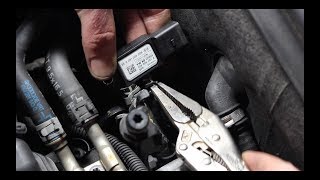
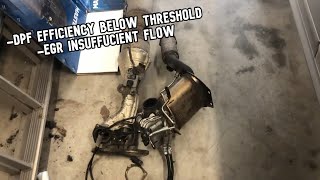
On the Audi 2.0L TDI engine (part of the EA189 family), the P2002 code is frequently triggered by issues upstream or downstream of the DPF, rather than a failure of the DPF itself. A faulty differential pressure sensor (often called the G450 sensor) is a very common weak point. Furthermore, on later models within this year range (especially Euro 6 compliant engines), a clogged low-pressure EGR cooler can disrupt 🎬 See why this DPF fault keeps coming back exhaust flow and pressure readings, leading to a P2002 code even when the DPF is functioning correctly. This happens because crystallized AdBlue and soot can build up in the cooler, which is located after the DPF, confusing the secondary pressure sensor that monitors EGR flow.
Symptoms You May Notice
- Check Engine Light is on
- DPF or glow plug warning light may be illuminated
- Noticeable reduction in engine power (limp mode)
- Increased fuel consumption
- Vehicle may fail to perform DPF regeneration
- Excessive black or white smoke from the exhaust
- Engine running hotter than usual
- Replacing the entire DPF assembly when the fault is a much cheaper differential pressure sensor, a leaking hose, or a clogged EGR cooler.
Most Likely Causes
- Failed DPF Differential Pressure Sensor (G450) 🔴 High Probability This sensor is a widely documented failure point on many Volkswagen Auto Group (VAG) TDI engines from this era. It is exposed to harsh conditions and the internal diaphragm can fail, leading to incorrect pressure readings sent to the ECU.
How to confirm: Using a diagnostic tool like VCDS, check the sensor's pressure readings at idle and while revving the engine. Readings that are static, negative, or implausibly high suggest sensor failure. With the engine off, the reading should be 0 mbar. A common failure mode is the sensor getting stuck on a high or low reading regardless of engine RPM.
Typical fix: Replace the differential pressure sensor. After replacement, the new sensor must be adapted or calibrated using a diagnostic tool like VCDS. This process involves logging into the Engine control module and performing a basic setting to zero out the new sensor.
Est. part cost: $50-$120 - Clogged or Leaking EGR Cooler 🟡 Medium Probability On later Euro 6 versions of this engine, the low-pressure EGR cooler is positioned after the DPF and is prone to clogging with soot and crystallized AdBlue, which confuses the DPF monitoring system. They can also develop internal coolant leaks.
How to confirm: This is difficult to confirm without significant disassembly. A large discrepancy between the 'measured' and 'calculated' soot values in diagnostic live data can be an indicator. A technician may also use a borescope to visually inspect the inside of the cooler for blockages. In many forum cases, this is diagnosed after all other cheaper options (sensor, hoses) have been exhausted.
Typical fix: The EGR cooler must be removed and either professionally cleaned or, more commonly, replaced. This is a very labor-intensive job due to its location, buried deep in the engine bay next to the DPF and chassis leg.
Est. part cost: $300-$700 - Cracked or Split Pressure Sensor Hoses 🟡 Medium Probability The rubber hoses connecting the DPF to the pressure sensor are exposed to extreme heat and vibrations. Over time, they become brittle and can crack, split, or perish, causing a pressure leak that results in inaccurate sensor readings.
How to confirm: Visually inspect the entire length of the two hoses that run from the DPF housing to the differential pressure sensor. Check for cracks, holes, and ensure they are securely attached at both ends. A user on the Ross-Tech forums noted that a frayed hose end was enough to cause intermittent issues.
Typical fix: Replace the damaged hoses. This is often an inexpensive fix and should be done whenever the G450 sensor is replaced as a preventative measure.
Est. part cost: $20-$50 - DPF Clogged Due to Driving Habits ⚪ Low Probability Like all modern diesels, these vehicles require regular highway driving to allow the DPF to 'regenerate' (burn off soot). Frequent short trips prevent the exhaust from reaching the necessary temperature, causing the filter to clog with soot.
How to confirm: Check the DPF soot loading values with a scan tool like VCDS. Look for 'Particle filter: soot mass calculated' and 'Particle filter: soot mass measured'. If the calculated value is high (e.g., over 25g), a regeneration is needed. A successful highway drive (e.g., 20-30 minutes at a steady 50-60 mph in 4th or 5th gear) may clear the light.
Typical fix: Perform an extended highway drive to initiate a passive regeneration. If that fails, a forced regeneration can be initiated with a diagnostic tool like VCDS, but only if soot levels are not critically high (typically <45g), as it can be a fire risk.
Est. part cost: $0
Rare But Worth Checking
- Cracked Diesel Particulate Filter: → Shop Diesel Particulate Filter (DPF) A physical crack in the DPF's internal ceramic structure will allow soot to pass through, directly causing an efficiency fault. A key symptom is a visibly sooty tailpipe, which should normally be clean on a DPF-equipped car. This is a last-resort diagnosis after all other components have been verified.
- Faulty Exhaust Gas Temperature (EGT) Sensor: → Shop Exhaust Gas Temperature (EGT) Sensor The DPF system relies on several EGT sensors to manage regeneration. If one fails, the system may not be able to reach or maintain the correct temperature for regeneration, leading to clogging and eventually this code.
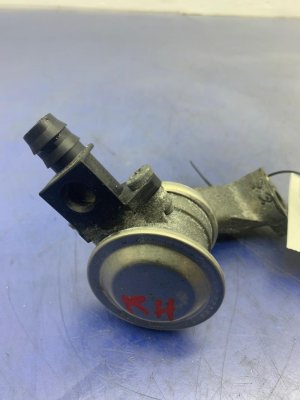
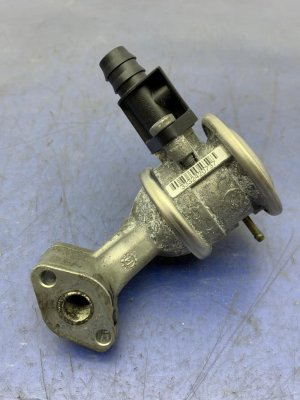
- Faulty Anti-Shudder Valve (ASV): One owner on Audi-Sport.net reported that a malfunctioning ASV, which works in conjunction with the EGR system, was the root cause of their recurring P2002. Replacing the ASV allowed for proper DPF regeneration.
Diagnosis Steps
- Read all fault codes from the ECU. Note if P2002 is alone or present with other codes like P2463 or P2453.
- Using a diagnostic tool (VCDS is preferred), view live data from the Engine module. Check 'Particle filter: soot mass calculated' and 'Particle filter: soot mass measured'. A large discrepancy can point to sensor issues. Also, monitor the differential pressure sensor readings at idle and 2,500 RPM.
- With the engine off, key on, check the differential pressure sensor reading. It should be 0.0 mbar. If it shows a significant value, the sensor is faulty or needs adaptation.
- Thoroughly inspect the rubber hoses leading from the DPF to the differential pressure sensor for any cracks, splits, loose connections, or blockages.
- If sensor readings are illogical (e.g., stuck at one value, or negative), the G450 sensor is the primary suspect. Replace it and perform the adaptation procedure.
- If soot levels are high (e.g., >25g) but not critical (<45g), and all sensors/hoses appear fine, attempt an extended highway drive (20-30 mins at steady speed >50mph in a lower gear to keep revs up) to trigger a passive regeneration.
- If a passive regen fails, a forced regeneration can be initiated via VCDS (Security Access code may be required, then via Basic Settings). Follow Ross-Tech procedures carefully.
- If the code persists after addressing sensor/hose issues and confirming the DPF is not critically full, the next step is to investigate the low-pressure EGR cooler for blockages. This is an involved, labor-intensive process.
- As a final check, inspect the inside of the tailpipe. Any black, sooty residue indicates a physically failed (cracked) DPF that needs replacement.
Parts You'll Likely Need
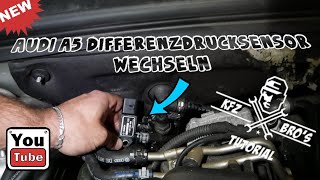
- DPF Differential Pressure Sensor
(OEM #076906051A (supersedes 03G906051A))— This is the most common electronic failure point for this code on the 2.0L TDI engine.
Trusted brands: Bosch, Hella, NTK, Genuine Audi/VW
OEM price range: $80-$150
Aftermarket price range: $40-$90 - EGR Cooler — A common cause of P2002 on later models, as a blockage here disrupts the pressure readings that monitor the DPF. Replacement is a high-labor job.
Trusted brands: Mahle, Wahler, Genuine Audi/VW
OEM price range: $500-$800
Aftermarket price range: $300-$600
Related Codes That Often Appear With This One
- P2463 — This code means 'DPF Restriction - Soot Accumulation'. It often appears with P2002, indicating the filter is both clogged and inefficient.
- P2453 — This code indicates a fault with the 'Diesel Particulate Filter Differential Pressure Sensor Circuit'. It points more directly to an electrical problem with the G450 sensor or its wiring, and often accompanies P2002.
Technical Service Bulletins (TSBs) & Recalls
- Audi TPI 2050077/7 is mentioned in a Ross-Tech forum thread as relating to P2002 being caused by a blocked EGR Cooler, though the full TSB text was not available.
Mechanic-Grade Diagnostic Values
- DPF Differential Pressure Sensor (G450) Reading, Key On Engine Off (KOEO) — expected: 0 mbar. Failure: Any value significantly different from 0 mbar indicates a faulty sensor or one that needs adaptation.
- DPF Differential Pressure Sensor (G450) Reading, Engine at Idle — expected: A few mbar (e.g., 3-10 mbar). Failure: A static, negative, or excessively high reading that doesn't change with RPM.
- DPF Soot Mass Calculated vs. Soot Mass Measured — expected: The values should be relatively close to each other. 'Calculated' is an ECU estimate, while 'Measured' is derived from the differential pressure sensor.. Failure: A large discrepancy, such as a high 'calculated' value (e.g., 20g) and a very low 'measured' value (e.g., 1g), can point to a clogged EGR cooler on later models, as the ECU's model is no longer accurate due to the downstream blockage.
- DPF Soot Mass Calculated Thresholds for Regeneration (2.0L TDI) — expected: Below 18g: Passive regeneration occurs automatically. 18g-25g: Active regeneration should initiate. 25g-40g: DPF warning light illuminates, driver-initiated regeneration needed. >40-45g: Limp mode may activate, forced regeneration required.. Failure: Soot mass exceeding 45g is often considered the limit for safely performing a forced regeneration due to fire risk.
- G450 Sensor Signal Wire Voltage — expected: 0.5V - 1.5V while running, changing with RPM. The sensor operates on a 5V reference.. Failure: A constant 5V or 0V on the signal wire suggests a wiring issue or internal sensor failure.
Hidden / Shadow Codes Worth Checking
- P200200: This is an extended format of the P2002 code often seen on dealer-level scan tools like ODIS and some versions of VCDS. It means the same thing ('Particulate Trap Efficiency Below Threshold') but is often specifically associated with the clogged low-pressure EGR cooler issue on later Euro 6 engines. (see via VCDS, ODIS, or other advanced VAG-specific diagnostic tools.)
Scan Tool Commands That Help
- VCDS (VAG-COM): Engine -> Coding-II -> Enter '30605' — This is the adaptation procedure for the DPF Differential Pressure Sensor (G450) on many CAN-based controllers. It must be performed after replacing the sensor to reset its learned offset value. After entering the code, cycle the ignition off for at least 30-45 seconds.
- VCDS (VAG-COM): Engine -> Security Access -> Basic Settings — To initiate a forced DPF regeneration (either standing or while driving). A security access code (e.g., 27971, 12233) is often required first. This should only be done after confirming the root cause of the P2002 is not a faulty sensor and that soot levels are not critically high (<45g).
- VCDS (VAG-COM): Engine -> Adv. Meas. Values — To monitor live data blocks for DPF diagnosis. Key blocks include 'Particle filter soot mass calculated', 'Particle filter soot mass measured', and 'Particle filter differential pressure'.
Wiring & Ground Locations
- G450 Sensor Connector — On the 2.0L TDI, the G450 sensor is typically located on the firewall, often in a foil pouch just behind the oil cap.. This is the main sensor for this fault. The 3-pin connector provides 5V reference, ground, and the signal output. Checking for voltage at this connector is a key diagnostic step.
- ECM Ground Point (e.g., G12) — On the B8 platform, a primary ECM ground is located at the center of the firewall. Other engine bay grounds are near the alternator and on the chassis rails.. A poor engine or ECM ground can cause erratic sensor readings, including from the G450 sensor, leading to false fault codes. Ensuring these grounds are clean and tight is a crucial, though often overlooked, step.
Real Owner Repair Stories
- Ross-Tech Forums User (Audi A4 B7 Cabriolet 2.0 TDI) — P2002 code, limp mode, and excessive smoking (blue and black).
❌ Tried (didn't work) Replacing the G450 sensor with an aftermarket Bosch part (0 281 006 005)., Performing the VCDS adaptation procedure., Cleaning the EGR valve.
✅ What actually fixed it The user discovered via a parts catalog that the aftermarket sensor they used, while physically fitting, was the incorrect part number for the vehicle. Replacing it with the correct OEM part number (076906051A) completely resolved the smoking and the P2002 code. - Reddit user r/CarTalkUK (2016 Audi A5 with recent timing belt and water pump replacement.) — P2002 code appeared 500-600 miles after major service. Also noted some coolant loss after the service.
❌ Tried (didn't work) Attempting a highway regeneration drive.
✅ What actually fixed it The user was advised by forum members that the combination of P2002 and recent coolant loss on this specific engine strongly points to a clogged or internally leaking low-pressure EGR cooler, a known issue on these models. The resolution is EGR cooler replacement.
OEM Part Supersession History
03G906051A→076906051A— Improved design/reliability. The original sensors were known for premature failure.
Heads up: While the newer 076906051A is generally backward compatible, some VAG models use a 'B' revision (076906051B) which is NOT interchangeable with the 'A' revision. Installing the wrong letter revision can cause persistent fault codes even after adaptation. Always verify the required part number by VIN.
Model Year Variations Within This Range
- 2007-2011 (Pre-Facelift): These earlier models primarily use EA189 engines like the CAGA (143 PS) and CAHA (168 PS). For P2002 faults on these, the primary suspects are the G450 sensor and its hoses, or a genuinely full DPF from driving habits. The complex low-pressure EGR cooler issue is less common.
- 2012-2016 (Post-Facelift): The A5 received a facelift for the 2012 model year, which included engine updates. Later engines in this range (e.g., CGLC - 177 PS) have more complex Euro 6 emissions systems, including a low-pressure EGR cooler located after the DPF. On these engines, a clogged EGR cooler becomes a very common cause for the P2002 code, often more so than the G450 sensor itself.
Diagnostic Flowchart
Other Known Issues on This Vehicle
Issues unrelated to this code that are worth knowing about as an owner of this generation:
- Oil Pump / Balance Shaft Module Failure 🔴 High — Primarily affects earlier PD (Pumpe Düse) 2.0 TDI engines, but some early Common Rail (CR) EA189 engines before ~2010 can still be at risk. The failure is caused by a small hexagonal drive key rounding off, leading to a sudden loss of oil pressure and catastrophic engine failure, typically between 60k-100k miles.
- Timing Belt Replacement Interval 🟠 Medium — This is a critical maintenance item. The official interval is very long, cited as 130,000 miles (210,000 km) with no time limit by Audi. However, many independent specialists and owners recommend a more conservative interval of 5-7 years or 75,000-100,000 miles, especially if the water pump is also being replaced. Failure is catastrophic for the engine.
- EGR Valve and Cooler Clogging (General) 🟠 Medium — Separate from the P2002-specific issue, the high-pressure EGR valve itself is prone to clogging with carbon deposits, especially on cars used for frequent short trips. This can lead to rough idling, poor acceleration, and increased smoke.
- VW 'Dieselgate' Emissions Scandal 🟡 Low — The EA189 engine is the engine at the heart of the VW emissions scandal. Vehicles in this range were subject to a recall for a software update ('fix') to make them emissions-compliant. Some owners reported that the fix led to more frequent DPF regenerations, clogged EGRs, and reduced fuel economy. It is important to know if a vehicle has had the fix applied. (Ref: Emissions Recall (often referred to as '23Q7' in the US))
- Multitronic CVT Gearbox Failure 🔴 High — This applies only to front-wheel-drive (FWD) models equipped with the Multitronic (CVT) transmission. These gearboxes are known for a high failure rate, with symptoms including shuddering, jerking, and total loss of drive. Quattro models use the more reliable S tronic (DCT) or Tiptronic (traditional automatic) transmissions.
Used vs. New Parts: Buying Guide for This Vehicle
When a used part is the smart pick: For this repair, buying used parts is generally not recommended for the key components. Sensors and electronic modules have a finite life, and a used DPF or EGR cooler carries a high risk of being just as clogged or worn as the part you are replacing.
Donor-vehicle mileage cap: roughly under 60000 miles for the part to have meaningful remaining life.
What to inspect on the donor part:
- If considering a used DPF, demand to see photos of the inlet and outlet faces; they should be light gray with no black soot stains or visible cracks.
- For any used part, verify the donor vehicle's mileage and ask if it had any fault codes before being dismantled.
OEM-only on this vehicle (don't cheap out):
- Diesel Particulate Filter (DPF): Aftermarket DPFs for this platform have a poor reputation for causing recurring codes or failing prematurely. The complex monitoring system is calibrated for the OEM filter's specific flow characteristics.
- DPF Differential Pressure Sensor (G450): Given the documented issues with incorrect aftermarket versions causing persistent faults, using a Genuine VW/Audi or a trusted OEM supplier like Bosch is highly recommended to avoid repeat work.
Aftermarket brands forum-validated for this vehicle:
- Bosch (for G450 sensor, ensure correct part number)
- Mahle / Wahler (for EGR Cooler)
Brands owners have reported issues with on this vehicle:
- Unbranded, no-name sensors from online marketplaces. Many forum posts detail issues with cheap sensors that are improperly calibrated and fail quickly or do not work at all.
Real Owner Stories
Aggregated from forums and TSBs cited above. Mileages and costs reflect what owners reported in those sources.
2016 Audi A5 2.0L TDI
Symptoms: Reported a P2002 code shortly after having other maintenance work performed on the vehicle.
What fixed it: The issue was identified as a P2002 code, though the specific final repair was part of an ongoing diagnostic thread.
Source hint: reddit.com/r/CarTalkUK
2012 Audi A5 2.0L TDI
Symptoms: Persistent P2002 code; user initially replaced the wrong G450 sensor before identifying the correct one.
What fixed it: Replaced the differential pressure sensor with the correct part (076906051A) and performed the adaptation/basic setting procedure using VCDS.
Source hint: Ross-Tech Forums - 'How to do G450 adaptation correctly'
2014 Audi A5 2.0L TDI
Symptoms: Persistent P2002 'Diesel Particulate Filter Efficiency Below Threshold Bank 1' and engine running hotter than usual.
What fixed it: Replacing a faulty Anti-Shudder Valve (ASV), which had been preventing the vehicle from completing a DPF regeneration.
Source hint: Audi-Sport.net - 'P2002 Diesel Particulate Filter Efficiency Below Threshold Bank 1'
2019 Audi A5 2.0L TDI — ~120000 miles
Symptoms: High-mileage vehicle triggered a P2002 error code.
What fixed it: The EGR cooler was identified by the community as the primary suspect after sensors were already replaced, due to the labor-intensive nature of the blockage issue.
Source hint: Audi Owners Club - 'A5 2019 2.0TDI - P2002 error'
Related OBD-II Codes
Frequently Asked Questions
Is there an Audi TPI or TSB for the P2002 code on my A5?
Which specific G450 sensor part number should I use for my Audi A5 2.0 TDI?
Can a faulty Anti-Shudder Valve (ASV) cause the P2002 code on an Audi A5?
What diagnostic values should I look for in VCDS to confirm a bad DPF sensor?
How much soot is too much to perform a forced DPF regeneration on my A5?
Why is the EGR cooler often suspected on the A5 2.0 TDI Ultra models?
Helpful Videos
We Have This Part in Stock

The information in this article is provided for general reference and educational purposes only. Vehicle specifications, procedures, and part compatibility can vary by production date, trim level, and region. Always consult your vehicle's factory service manual and verify part numbers before purchasing or performing repairs. Safety-critical components such as airbags, seat belts, and braking systems should be installed by a qualified professional.
- Audi A5:
- 🧭 Diagnostic Flowchart
- 🎬 Helpful Videos
- 🛍️ Shop This Part
- What's Unique About the 2007-2016 Audi A5
- Symptoms You May Notice
- Most Likely Causes
- Rare But Worth Checking
- Diagnosis Steps
- Parts You'll Likely Need
- Related Codes That Often Appear With This One
- Technical Service Bulletins (TSBs) & Recalls
- Mechanic-Grade Diagnostic Values
- Hidden / Shadow Codes Worth Checking
- Scan Tool Commands That Help
- Wiring & Ground Locations
- Real Owner Repair Stories
- OEM Part Supersession History
- Model Year Variations Within This Range
- Other Known Issues on This Vehicle
- Used vs. New Parts: Buying Guide for This Vehicle
- Real Owner Stories
- 2016 Audi A5 2.0L TDI
- 2012 Audi A5 2.0L TDI
- 2014 Audi A5 2.0L TDI
- 2019 Audi A5 2.0L TDI — ~120000 miles
- Related OBD-II Codes
- Frequently Asked Questions
- 🎟️ Get 5% Off