

P2002 on 2011-2018 Audi A6 2.0L TDI: DPF Efficiency Causes and Fixes
On the Audi A6 2.0L TDI, code P2002 is most often caused by a clogged low-pressure EGR cooler, not the DPF itself. While checking the DPF pressure sensor is a wise first step, expect the EGR cooler to be the ultimate, and very labor-intensive, fix. Owners on forums strongly advise that replacing the EGR cooler is the only permanent solution after wasting money on other parts.
- Code P2002 on an Audi A6 2.0L TDI almost always points to a problem upstream of the DPF, not the filter itself.
- The most likely culprit is a clogged low-pressure EGR cooler, a known issue with this engine.
- Do not rush to replace the expensive DPF. A proper diagnosis must rule out the EGR cooler, DPF pressure sensor, and outdated software first.
- Repairing the most common cause (EGR cooler) is a highly complex job requiring many hours of labor and is not suitable for a typical DIY mechanic.
- Check for visible black soot in the tailpipe, which would indicate a cracked DPF, a less common but possible failure.
What's Unique About the 2011-2018 Audi A6
For the C7 generation Audi A6 with the 2.0L TDI Ultra engine (and its platform mates), the P2002 code has a notorious and specific root cause: a design issue with the low-pressure Exhaust Gas Recirculation (EGR) cooler. This cooler is prone to clogging with a mixture of soot, AdBlue crystals, and water vapor, which disrupts exhaust flow and pressure readings, tricking the system into thinking the DPF has failed. Owners and specialist mechanics report that replacing the DPF or its sensors often fails to solve the problem, as the recurring code is a symptom of the blocked EGR cooler upstream. The repair is known to be extremely labor-intensive, with mechanics quoting up to 20 hours, due to the cooler's location buried at the back of the engine.
Symptoms You May Notice
- Check Engine Light (MIL) is on
- Glow plug light may be flashing
- Vehicle enters 'limp mode' with significant loss of power
- DPF or emissions warning light is illuminated on the dashboard
- Reduced fuel economy
- Difficulty or failure of the DPF to perform regeneration cycles
- Car fails emissions test
- Replacing the Diesel Particulate Filter (DPF) without addressing the underlying EGR cooler blockage. The new DPF will likely clog again quickly, and the P2002 code will return.
- Repeatedly performing forced regenerations. If the EGR cooler is blocked or a sensor is faulty, regeneration will not fix the root cause and can put extra stress on the system.
Most Likely Causes
- Clogged Low-Pressure EGR Cooler 🔴 High Probability The design of the low-pressure EGR system on this engine allows soot, and in some cases a mixture of AdBlue crystals and vapor, to accumulate in the cooler, leading to a blockage. This blockage prevents the expected pressure drop when the EGR valve opens, which the ECU misinterprets as a DPF efficiency problem.
How to confirm: Visual inspection is the only definitive confirmation, but this is extremely difficult due to its location. A specialist mechanic will typically rule out all other causes first. A key diagnostic clue is that DPF differential pressure readings do not drop as expected when the EGR valve is commanded open during a test.
Typical fix: Replacement of the low-pressure EGR cooler. Cleaning is generally not recommended or effective long-term. Some specialists note that revised coolers with larger passages are available. The job is estimated to take up to 20 hours of labor.
Est. part cost: $300-$500 - Faulty DPF Differential Pressure Sensor (G450) 🟡 Medium Probability These sensors operate in a harsh environment and can fail over time, sending incorrect pressure readings to the ECM. It's a common first step in diagnosis due to its low cost.
How to confirm: Use a diagnostic tool (like VCDS) to monitor the sensor's pressure readings at idle and under load. Readings should be near zero at idle and increase with RPM. A sensor that is stuck high or low is faulty. A user on the Briskoda forums changed their sensor but the P2002 fault returned, pointing back to the EGR cooler.
Typical fix: Replace the DPF differential pressure sensor and perform an adaptation using a diagnostic tool. 🎬 See: How to replace and adapt the pressure sensor
Est. part cost: $50-$100 - Outdated ECM Software ⚪ Low Probability An official Audi TSB (01 15 44 / 2041944/1) notes that on 2014-2015 models, the original software can be too sensitive, falsely triggering P2002, especially when soot mass is measured above 40g but calculated soot is lower.
How to confirm: An Audi dealer or specialist with access to the SVM (Software Version Management) system can check if the vehicle's ECM software is up to date and if the freeze frame data matches the TSB criteria.
Typical fix: Update the Engine Control Module (ECM) software. However, forum users caution that if the EGR cooler is truly blocked, a software update will not fix the issue.
Est. part cost: $0 (if covered), otherwise 1-2 hours of dealer labor - DPF at End of Service Life (High Ash Load) ⚪ Low Probability All DPFs have a finite lifespan as they accumulate non-combustible ash. At high mileage (typically over 120,000 miles), the filter can be full of ash, preventing proper function. A Ross-Tech forum user with 150k+ miles considered this as a cause.
How to confirm: Use a diagnostic tool to check the 'oil ash volume' or 'ash load' value. A value at or near the specified limit (e.g., 80g or 0.175L) indicates the DPF is full.
Typical fix: The DPF must be professionally cleaned by a specialist or replaced entirely.
Est. part cost: $500-$2000+
Rare But Worth Checking
- Cracked Diesel Particulate Filter: → Shop Diesel Particulate Filter (DPF) Physical damage to the filter's internal structure can allow soot to pass through instead of being trapped. A tell-tale sign is visible black soot on the inside of the tailpipe, a check recommended by mechanics on forums before proceeding with other expensive repairs.
- Exhaust Leak: A leak in the exhaust system between the engine and the DPF, or in the sensor's own hoses, can alter the pressure readings and trigger the code.
Diagnosis Steps
- Read fault codes with a VAG-compatible scanner (like VCDS) and save the freeze-frame data.
- Check if the vehicle is eligible for the ECM software update mentioned in TSB 2041944/1 by comparing freeze frame data to the TSB criteria.
- Monitor live data: Check the DPF differential pressure sensor (G450) readings at idle and while driving. Check the calculated and measured soot mass, and the oil ash volume.
- If sensor readings are suspect, inspect the sensor and its rubber hoses for cracks or blockages. Replace the sensor if necessary, as it is a relatively low-cost part.
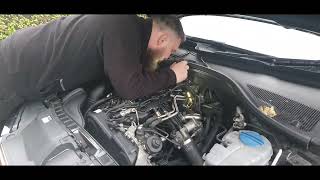
- If the sensor is good and the code returns, the clogged low-pressure EGR cooler is the most likely cause. This requires removal for inspection and replacement, a job documented in detail by mechanics on YouTube. 🎬 Watch: Detailed video walkthrough of the EGR cooler swap
- If oil ash volume is at its limit (e.g., >80g), the DPF requires professional cleaning or replacement.
- Inspect the tailpipe for black soot, which would indicate a physically cracked DPF requiring replacement.
Parts You'll Likely Need
- Low-Pressure EGR Cooler
(OEM #04L131512A)— This is the most common root cause of P2002 on this platform due to a design that allows it to clog with soot. Multiple forum threads and mechanic videos confirm this is the definitive fix.
Trusted brands: Audi Genuine, Valeo, NRF
OEM price range: $300-$500
Aftermarket price range: $150-$400 - DPF Differential Pressure Sensor
(OEM #059906051C / 076906051B)— This sensor can fail, providing incorrect data. It's a common first part to replace due to its low cost and relative ease of access compared to the EGR cooler. Part number can vary, so VIN confirmation is essential.
Trusted brands: Bosch, Audi Genuine, VEMO, Febi Bilstein
OEM price range: $80-$120
Aftermarket price range: $40-$70
Related Codes That Often Appear With This One
- P2463 — This code means 'Diesel Particulate Filter - Soot Accumulation'. It often appears with P2002, indicating the DPF is both restricted and inefficient. An Audi TSB specifically addresses these two codes appearing together.
Technical Service Bulletins (TSBs) & Recalls
- Audi TSB 01 15 44 (2041944/1): Addresses P2002 and P2463 on 2014-2015 models. Specifies that this TSB only applies if freeze frame data shows measured soot mass over 40g and calculated soot mass around 30g. The fix is a software update, but it will not solve a physically clogged EGR cooler.
Platform-Specific Known Issues
- A known issue on 2.0L TDI engines (CNHA, CNHC, etc.) is the clogging of the low-pressure EGR cooler, which directly leads to the P2002 fault code by disrupting the DPF system's pressure balance.
Mechanic-Grade Diagnostic Values
- DPF Differential Pressure at Idle (after cleaning/good DPF) — expected: < 10 hPa, with an ideal target of < 5 hPa. Failure: A reading of 30-40 hPa or higher at idle indicates a significant blockage.
- DPF Oil Ash Volume Limit — expected: 80.0g (or 0.175L). Failure: When the 'Particle filter: oil ash volume' value meets or exceeds this limit, the DPF is considered full and requires professional cleaning or replacement. Some ECUs may use a 70.0g limit.
- Soot Mass Calculated vs. Soot Mass Measured (VCDS) — expected: The values should be relatively close to each other.. Failure: A calculated soot mass significantly higher than the measured soot mass (e.g., calculated 9g vs. measured 0.9g) is a strong indicator that the low-pressure EGR cooler is clogged, creating backpressure that the ECU misinterprets as high soot load.
Hidden / Shadow Codes Worth Checking
- P200200: This is not a separate shadow code, but the full fault code format displayed by many professional diagnostic tools like VCDS. The '00' suffix provides additional detail but the primary fault is P2002. (see via VCDS, ODIS, and other professional-grade VAG diagnostic scanners.)
Scan Tool Commands That Help
- VCDS/ODIS (UDS Protocol): Basic Settings: 'IDE01772 - Adaptation of differential pressure sensor for particle filter' — This procedure must be performed after replacing the DPF differential pressure sensor (G450) to calibrate the new sensor to the ECU.
- VCDS/ODIS (UDS Protocol): Basic Settings: 'IDE00468 - Resetting of learned values of differential pressure sensor' — Used in conjunction with the adaptation procedure to clear old calibration data from the ECU before learning the new sensor's values.
- VCDS (CAN Protocol): Security Access (12233), then Coding II (30605) — On older CAN-based engine controllers, this sequence is used to adapt a new G450 sensor. This is less common on the C7 A6 but may apply to early models.
- VCDS: Engine (01) -> Output Tests (03) -> Exhaust Gas Recirculation (EGR) Valve — To functionally test the EGR valve's movement. A technician can visually inspect the valve (if accessible) to see if it opens and closes as commanded, helping to rule out a stuck valve.
Wiring & Ground Locations
- Engine Ground Point (e.g., Point 13) — In the engine compartment on the right side (passenger side in LHD vehicles), near the alternator.. A poor engine ground can cause erratic voltage and incorrect readings from various engine sensors, including the DPF pressure sensor (G450). Verifying this ground is clean and tight is a crucial step in diagnosing any electronic fault.
- Harness Earth Connection (e.g., Point 85) — This is a designated earth connection within the main engine compartment wiring harness itself.. The G450 sensor is part of this harness. A fault at this internal ground point can affect multiple sensors and is difficult to trace without a wiring diagram.
Real Owner Repair Stories
- AudiWorld Forums user 'Duki-A5' (2014 Audi A6 2.0 TDI Ultra (190 hp) CNHC engine) — P2002 code, Check Engine Light. Car drove normally with good power.
❌ Tried (didn't work) Replacing the DPF differential pressure sensor and performing adaptation., Clearing the code (it would return, sometimes faster when in Sport mode).
✅ What actually fixed it Replacement of the low-pressure EGR cooler (part number 04L131512A). The user described the old cooler as 'really blocked with soot' and noted the repair took almost 20 hours. - Ross-Tech Forums user 'Marius A6' (2015 Audi A6 C7 CNHA) — Persistent P2002 error code for 2-3 months. Car performed regenerations frequently (every 150-200 miles).
❌ Tried (didn't work) Replacing the low-pressure EGR cooler valve., Replacing the intake manifold (on garage advice)., Replacing one of the G450 sensors., A single forced regeneration.
✅ What actually fixed it Performing two consecutive forced DPF regenerations, followed by adapting the DPF sensor using VCDS. This combination finally cleared the P2002 code.
"I Checked Everything" — The Actual Cause
- This fault pattern is not typically diagnosed with a smoke test. The equivalent scenario is when all DPF sensor data appears plausible (e.g., low pressure at idle) but the code persists. The hidden cause is the clogged low-pressure EGR cooler, which creates a flow restriction that the ECU's software logic misinterprets as a DPF efficiency problem, even if the DPF itself is not blocked.
When the Usual Fixes Don't Work
- While a clogged low-pressure EGR cooler is the cause in the vast majority of cases, it is not the guaranteed culprit. One owner on a Ross-Tech forum had already replaced the EGR cooler and a G450 sensor, but the P2002 code remained. The issue was only resolved after performing two forced DPF regenerations and then re-adapting the DPF sensor, suggesting a complex software or sensor calibration issue can mimic the symptoms of a clogged cooler.
OEM Part Supersession History
04L131512A→N/A for this specific vehicle— This is the correct part number for the longitudinal 2.0 TDI engine (CNHA, CNHC) in the A6 C7.
Heads up: Do not use EGR coolers with part numbers like 04L131512D, 04L131512BH, or 04L131512BQ. While they are for 2.0 TDI engines, they are designed for the transverse engine layout (Audi A3, VW Golf) and are physically different and will not fit the longitudinal A6 engine bay.059906051C / 076906051B→Multiple revisions exist (e.g., 076906051A)— Sensors are updated over time for reliability.
Heads up: Multiple DPF pressure sensors were used across the VAG line. Using the wrong part number, even if it fits physically, will result in incorrect pressure readings and recurring faults. Always confirm the correct part number with the vehicle's VIN.
Model Year Variations Within This Range
- 2014-2015: An ECM software update was issued via TSB 2041944/1 to correct overly sensitive monitoring logic that could falsely trigger P2002. This only applies if specific freeze frame criteria are met and does not fix a physical blockage.
- 2011-2013: Parts catalogs suggest the DPF pressure sensor part number 059906051C was primarily used on models up to 2013, indicating a potential part change for the 2014+ facelift models.
Diagnostic Flowchart
Other Known Issues on This Vehicle
Issues unrelated to this code that are worth knowing about as an owner of this generation:
- S-Tronic (DL501/0B5) Mechatronic Unit Failure 🔴 High — Common on pre-2015 models, especially those with higher torque TDI engines. Symptoms include harsh/jerky shifting, loss of reverse gear, and transmission warnings. (Ref: A redesigned mechatronic unit was introduced around 2015. No formal recall, but it's a widely acknowledged problem.)
- Timing Belt and Water Pump Failure 🔴 High — The water pump, driven by the timing belt, is a known weak point. The plastic impeller can degrade or the bearings can fail, causing coolant leaks or overheating. It is critical to replace both the timing belt and water pump at the recommended interval (approx. 120,000 km / 75,000 miles) or sooner if leaks/noises appear.
- Excessive Oil Consumption 🟠 Medium — More common in higher mileage examples. Can be caused by failing piston rings or various oil seals and gaskets hardening over time.
- AdBlue System Failures 🟠 Medium — Issues with the AdBlue heater, pump, or injectors can occur, leading to emissions warnings and a no-start condition if the tank is run empty. Crystallization of the fluid is a common problem.
Used vs. New Parts: Buying Guide for This Vehicle
When a used part is the smart pick: For this specific P2002 fault, using used parts is generally not recommended for the primary components. A used DPF pressure sensor from a verified low-mileage vehicle could be considered, but the low cost of new aftermarket parts makes it a questionable saving.
Donor-vehicle mileage cap: roughly under 50000 miles for the part to have meaningful remaining life.
What to inspect on the donor part:
- For a sensor, ensure the donor vehicle had no emission-related fault codes.
- Verify the part number on the used component is an exact match for the one being replaced.
- Inspect sensor housings for cracks and electrical connectors for corrosion.
OEM-only on this vehicle (don't cheap out):
- Low-Pressure EGR Cooler: This part fails due to a design flaw causing internal blockage. A used part has a high probability of being partially or fully clogged already, making it a very poor investment, especially given the extreme labor cost to install it.
- Diesel Particulate Filter (DPF): A used DPF has an unknown remaining service life due to ash accumulation. The risk of installing a filter that is already near its ash limit or is internally cracked is too high. Professional cleaning of the original DPF is a better option if it's not cracked.
Aftermarket brands forum-validated for this vehicle:
- Bosch (for DPF Pressure Sensor)
- Valeo (for EGR Cooler)
- NRF (for EGR Cooler)
Brands owners have reported issues with on this vehicle:
- Unbranded, no-name EGR coolers and DPFs from online marketplaces. These often use inferior materials and construction, leading to premature failure.
Real Owner Stories
Aggregated from forums and TSBs cited above. Mileages and costs reflect what owners reported in those sources.
2015 Audi A6 2.0 TDI Ultra (190 HP) CNHA/CNHC
Symptoms: The owner experienced a P2002 error and attempted various fixes that were described as a waste of time and money before finding the definitive solution.
What fixed it: Replacement of the EGR cooler using part number 04L131512A; the job required almost 20 hours of labor.
Source hint: AudiWorld Forums - 'PL: Error P2002 - AUDI A6 2.0 TDI ULTRA (190 HP)'
2015 Audi A6 2.0L TDI
Symptoms: P2002 fault code present; owner was advised that the EGR cooler was the 100% fix for the issue.
What fixed it: Replacement of the EGR cooler (noted as a roughly 20-hour job).
Source hint: Ross-Tech Forums - 'Audi A6 2015 P2002'
Audi A6 2.0L TDI — 270000 miles
Symptoms: Recurring P2002 codes over the life of the vehicle.
What fixed it: The owner had the EGR cooler replacement performed three separate times to resolve the recurring P2002 issue.
Source hint: vehicle_specific_issues section citing an owner with 270k miles
2015 Audi A6 2.0L TDI — ~150000 miles
Symptoms: P2002 code triggered; owner investigated if the DPF had reached its end of service life due to high mileage.
What fixed it: Checking the 'oil ash volume' to determine if the DPF was full (limit of 80g or 0.175L).
Source hint: Ross-Tech Forums - 'Audi A6 2015 P2002'
Related OBD-II Codes
Frequently Asked Questions
Does Audi TSB 01 15 44 (2041944/1) apply to my 2014-2015 Audi A6?
Can I just clean the low-pressure EGR cooler on my 2.0L TDI Ultra to save on costs?
Is there a revised part for the EGR cooler to prevent P2002 from returning?
How long does the EGR cooler replacement take on the Audi A6 C7 platform?
What should the DPF differential pressure sensor (G450) read at idle?
At what mileage does the DPF typically reach its ash load limit on this vehicle?
Helpful Videos

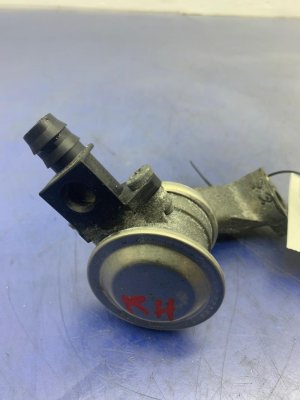
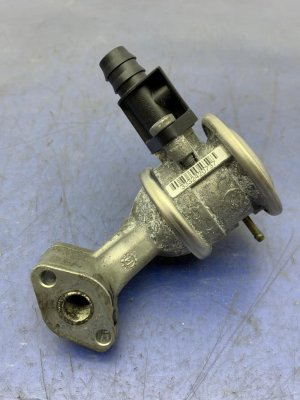
Used OEM Parts in Stock
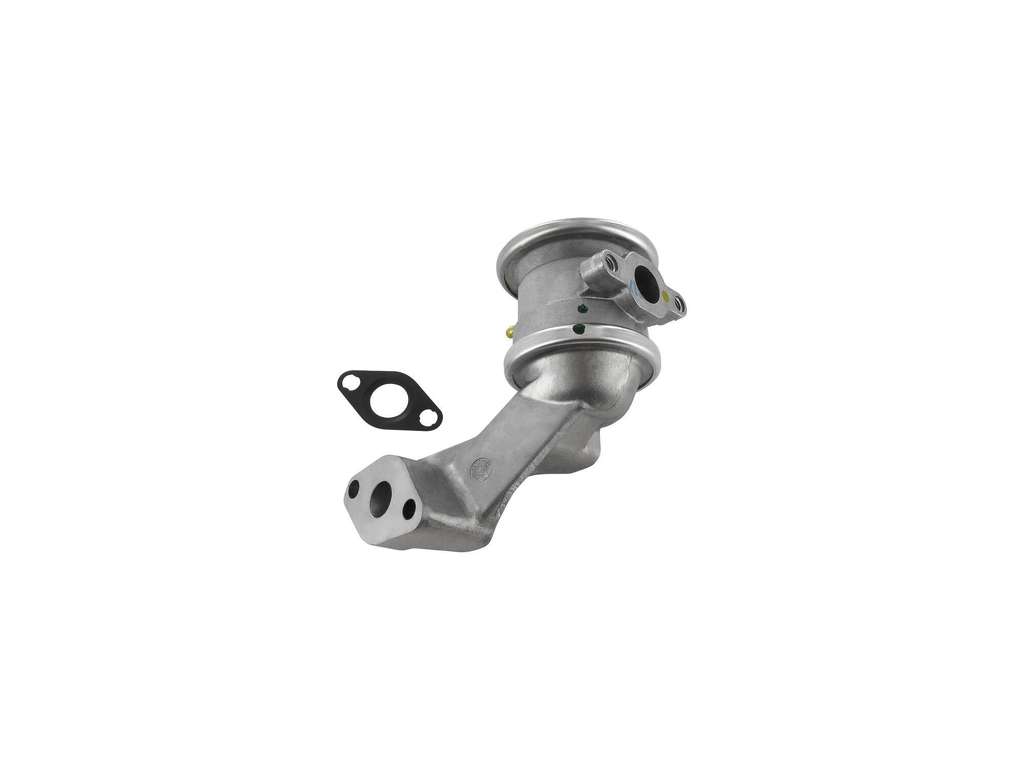
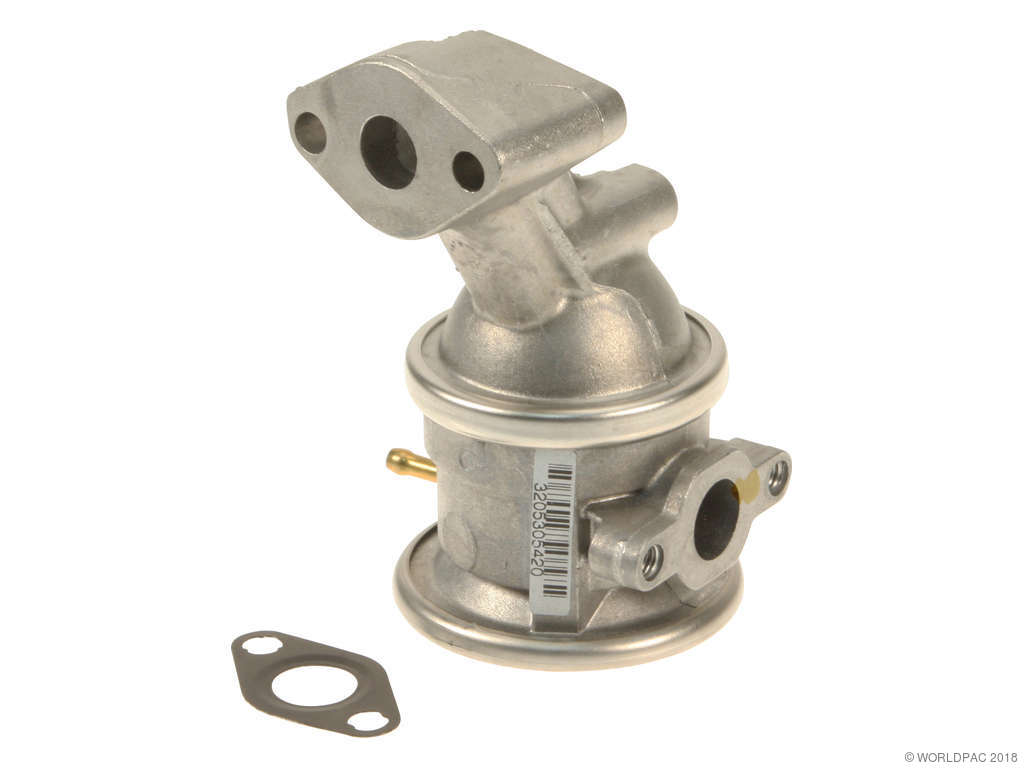
New Aftermarket Parts Available

The information in this article is provided for general reference and educational purposes only. Vehicle specifications, procedures, and part compatibility can vary by production date, trim level, and region. Always consult your vehicle's factory service manual and verify part numbers before purchasing or performing repairs. Safety-critical components such as airbags, seat belts, and braking systems should be installed by a qualified professional.
- Audi A6:
- 🧭 Diagnostic Flowchart
- 🎬 Helpful Videos
- 🛍️ Shop This Part
- What's Unique About the 2011-2018 Audi A6
- Symptoms You May Notice
- Most Likely Causes
- Rare But Worth Checking
- Diagnosis Steps
- Parts You'll Likely Need
- Related Codes That Often Appear With This One
- Technical Service Bulletins (TSBs) & Recalls
- Platform-Specific Known Issues
- Mechanic-Grade Diagnostic Values
- Hidden / Shadow Codes Worth Checking
- Scan Tool Commands That Help
- Wiring & Ground Locations
- Real Owner Repair Stories
- "I Checked Everything" — The Actual Cause
- When the Usual Fixes Don't Work
- OEM Part Supersession History
- Model Year Variations Within This Range
- Other Known Issues on This Vehicle
- Used vs. New Parts: Buying Guide for This Vehicle
- Real Owner Stories
- 2015 Audi A6 2.0 TDI Ultra (190 HP) CNHA/CNHC
- 2015 Audi A6 2.0L TDI
- Audi A6 2.0L TDI — 270000 miles
- 2015 Audi A6 2.0L TDI — ~150000 miles
- Related OBD-II Codes
- Frequently Asked Questions
- 🎟️ Get 5% Off