

P2002 on 2014-2018 BMW X5 3.0L Diesel: DPF Efficiency Causes and Fixes
On a 2014-2018 BMW X5 diesel, code P2002 almost always means the Diesel Particulate Filter (DPF) isn't cleaning itself. The most likely cause is a failed engine thermostat preventing the engine from getting hot enough for regeneration. A faulty DPF pressure sensor is the next most common culprit. Expect to pay $700-$900 for a shop to replace the thermostat.
- Do not immediately assume you need a new DPF, which is a multi-thousand dollar part. The P2002 code is most often caused by a much cheaper component.
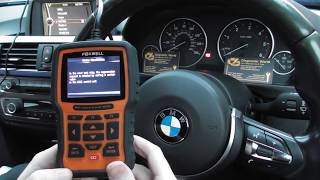
- The first and most important diagnostic step is to check the engine's operating temperature with a scan tool. If it doesn't reach ~88-90°C, the thermostat is almost certainly the problem.
- Driving habits matter. Frequent short trips prevent the DPF from getting hot enough to clean itself. Ensure the vehicle gets a steady 20-30 minute highway drive regularly.
- If you replace the DPF pressure sensor, use a high-quality OEM or OEM-supplier part (like Bosch or Hella) as forums report issues with cheaper aftermarket sensors.
- After any repair, the DPF adaptations should be reset using a capable diagnostic tool.
What's Unique About the 2014-2018 BMW X5
On the N57 diesel engine, the P2002 code is frequently a secondary fault caused by another component failing, rather than the expensive DPF itself. The cooling system is a particularly common culprit; the main engine thermostat is prone to failing in the open position. This prevents the engine from reaching the minimum 75-88°C (167-190°F) coolant temperature required for the DDE to initiate a DPF regeneration cycle, leading to a soot-clogged filter over time.
Symptoms You May Notice
- Check Engine Light (CEL) illuminated
- iDrive message regarding emissions or drivetrain malfunction
- Reduced engine power or 'limp mode'
- Noticeable decrease in fuel economy
- Visible smoke from the exhaust during acceleration
- Sooty or black residue inside the tailpipe, which can be an indicator of a cracked DPF.
- Immediately replacing the DPF. The DPF is extremely expensive and its failure is almost always a symptom of another, cheaper component failing (like the thermostat or a sensor). Always diagnose the supporting components first.
Most Likely Causes
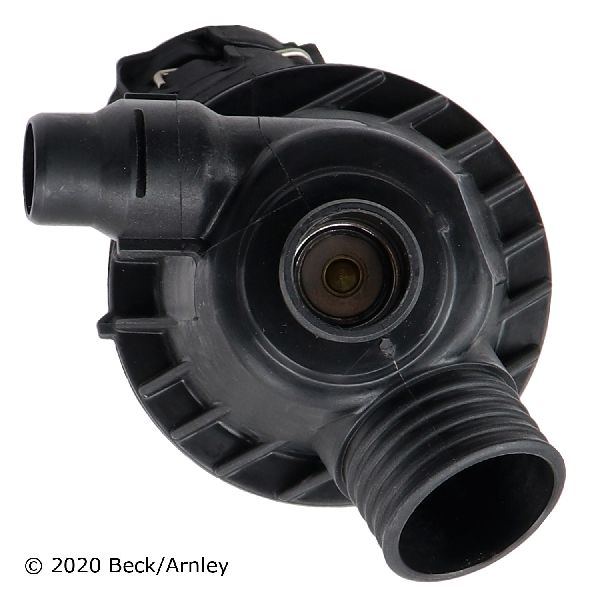
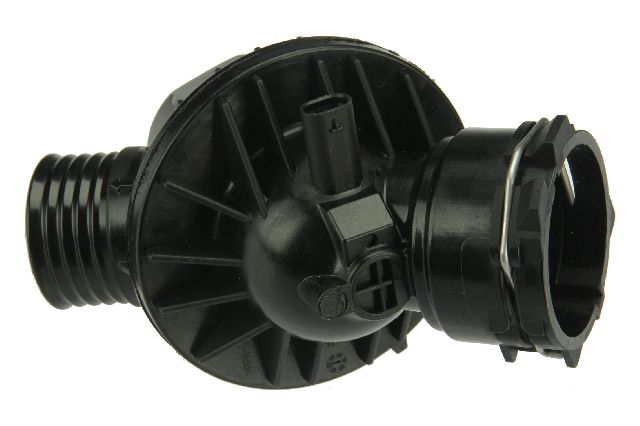
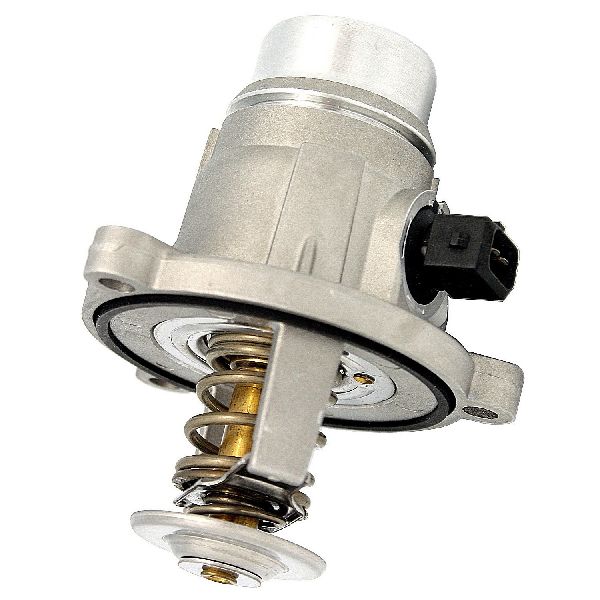
- Failed Engine Coolant Thermostat 🔴 High Probability The thermostat on the N57 engine commonly fails in the 'open' position, over-cooling the engine and preventing it from reaching the minimum temperature required for DPF regeneration. The DDE requires a coolant temperature of at least 75°C to start a regeneration cycle.
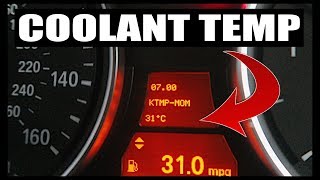
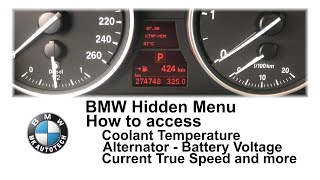
How to confirm: Use a capable OBD-II scan tool or the vehicle's hidden menu to monitor live coolant temperature during a 15-20 minute drive. The temperature should reach and hold steady at approximately 88°C (190°F). If it stays in the 60-75°C range, the thermostat is likely bad.
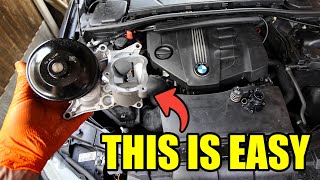
Typical fix: Replace the engine coolant thermostat and 🎬 See this N57 thermostat replacement walkthrough its gasket. It is also advisable to replace the EGR thermostat at the same time, as it can also contribute to under-cooling issues.
Est. part cost: $75-$120 - Faulty DPF Differential Pressure Sensor 🟡 Medium Probability This sensor provides critical data for DPF regeneration. It can fail electronically or its readings can become skewed, providing false information to the engine computer about DPF backpressure. A forum user reported their sensor was stuck reading 950mbar at all times, which is a clear sign of failure.
How to confirm: Using a diagnostic tool like ISTA or a capable scanner, check the DPF pressure readings. With the engine off, it should read near 0 mbar. At idle, it should be low (<20 mbar). If the sensor reads a high, fixed value, or shows negative or implausible values, it has failed. A physical test with a pressure gauge can also verify if the sensor's electronic output matches the actual pressure being applied.
Typical fix: Replace the DPF differential pressure sensor. 🎬 Watch: How to replace a DPF sensor It is highly recommended to use a genuine BMW or OEM-supplier (e.g., Bosch) part to ensure accurate readings.
Est. part cost: $60-$110 - Clogged or Saturated DPF 🟡 Medium Probability This is often a symptom of another problem (like a bad thermostat) or a result of a driving cycle with too many short trips and not enough sustained highway speed to allow for automatic regeneration. Over time, the DPF also accumulates non-combustible ash, which cannot be burned off and requires professional cleaning or replacement.
How to confirm: With a scan tool, check the calculated soot and ash mass in the DPF. High soot mass can indicate a regeneration failure, while high ash mass indicates the DPF is at the end of its service life. Very high backpressure readings under load (>100 mbar) also point to a clog.
Typical fix: If caused by a separate issue, fix that first, then perform a forced (stationary) regeneration with a diagnostic tool. If the DPF is at its service life limit with ash, it will need professional off-car cleaning or replacement.
Est. part cost: $500-$1000 for cleaning, $1200+ for aftermarket replacement, $3000+ for OEM replacement. - Cracked or Leaking DPF Pressure Hoses ⚪ Low Probability The rubber hoses connecting the DPF to the pressure sensor are exposed to heat and can become brittle and crack over time, causing pressure leaks and incorrect sensor readings.
How to confirm: Visually inspect the hoses for cracks, brittleness, or signs of melting. A smoke test of the DPF pressure system can reveal small, hard-to-see leaks.
Typical fix: Replace the faulty hoses.
Est. part cost: $40-$80
Rare But Worth Checking
- Faulty Exhaust Gas Temperature Sensor: → Shop Exhaust Gas Temperature (EGT) Sensor The DDE relies on accurate temperature readings before, during, and after the DPF to control regeneration. A failed sensor can block the process. Check sensor readings with a scan tool to ensure they are plausible.
- Leaking Fuel Injector: A forum user theorized that a leaking injector could cause excessive soot, overwhelming the DPF. This is not a primary cause but could be a contributing factor if other symptoms like fuel in oil are present. Another owner reported that a bad injector led to a cascade of emissions system problems, ultimately requiring DPF replacement.
- Leaking EGR Cooler: A known issue on the N57 engine, a leaking EGR cooler can introduce coolant into the intake, which mixes with soot to form a sludge that can clog the intake manifold and DPF. This is subject to a recall (NHTSA 21V-907). Symptoms include coolant loss and white smoke.
Diagnosis Steps
- Read Fault Codes: Use a BMW-capable scanner (like ISTA) to read all codes. Look for BMW-specific codes like 480A or 481A alongside the generic P2002, and check for any thermostat or sensor-related codes.
- Check Coolant Temperature: The most crucial first step. Using your scanner's live data function, monitor the engine coolant temperature on a 15-20 minute drive. It MUST stabilize around 88-90°C (190-194°F). If it hovers between 60-75°C, the thermostat has failed and is the most likely cause. Stop here and replace the thermostat.
- Check DPF Pressure Sensor: If the temperature is correct, check the DPF differential pressure sensor readings. With the engine off, it should be 0 mbar. At idle, it should be low (e.g., 5-15 mbar). At 2,500 RPM, it should rise but typically remain below 100 mbar on a healthy filter. If readings are stuck, nonsensical, or extremely high at idle (e.g., > 50 mbar), suspect the sensor or its hoses.
- Inspect Sensor Hoses: Visually and physically inspect the rubber hoses going to the DPF pressure sensor for any cracks, melting, or loose connections.
- Check DPF Soot & Ash Levels: In your scanner's DDE module, check the calculated soot mass and ash mass. High soot points to a regeneration failure. High ash means the DPF has reached the end of its service life.
- Check for Pre-requisites for Regeneration: Before attempting a forced regen, ensure all conditions are met: no low fuel warnings, no relevant engine fault codes are present, and coolant/exhaust temperatures are sufficient.
- Attempt Forced Regeneration: If the thermostat and sensors are good and soot levels are high, attempt a forced regeneration using your scan tool. This requires meeting specific conditions (fuel level, no other relevant faults). Monitor backpressure during the process to see if it drops.
- Inspect DPF: If regeneration fails and backpressure remains critically high, the DPF may be physically clogged with ash or damaged. It will need to be removed for professional cleaning or replacement.
Parts You'll Likely Need
- Engine Coolant Thermostat
(OEM #11518512234)— This is the most common failure point on the N57 engine that prevents DPF regeneration and triggers code P2002.
Trusted brands: Genuine BMW, Mahle, Wahler
OEM price range: $75-$100
Aftermarket price range: $50-$80 - DPF Differential Pressure Sensor
(OEM #13627805758)— This sensor provides the primary data for DPF status. It's a common failure item that directly causes incorrect DPF function and code P2002.
Trusted brands: Genuine BMW, Bosch, Pierburg
OEM price range: $85-$110
Aftermarket price range: $60-$90
Related Codes That Often Appear With This One
- P2453 — This code specifically points to a problem with the DPF Differential Pressure Sensor circuit, often appearing with P2002 when the sensor itself is the root cause.
- 480A / 481A — These are the BMW-specific fault codes for 'Particulate filter system, heavily clogged' and 'Particulate filter system, heavily clogged (exhaust back pressure high)'. P2002 is the generic equivalent that is often stored alongside these more descriptive manufacturer codes.
- P0128 — This code for 'Coolant Temperature Below Thermostat Regulating Temperature' is a strong indicator that a failed-open thermostat is the root cause of the P2002, as the engine cannot get hot enough to perform a DPF regeneration.
Platform-Specific Known Issues
- BMW of North America has issued extended warranties for other related emissions components on these diesel engines, such as the NOx sensors (SIB 01 19 18) and the Diesel Particulate Sensor (SIB 01 04 18). While these do not directly cover the P2002 code's most common causes (thermostat, pressure sensor), it indicates a sensitivity in the overall emissions system. It is worth checking with a dealer for any open recalls or warranty extensions on your specific VIN.
Mechanic-Grade Diagnostic Values
- DPF Backpressure at Idle — expected: < 20 mbar (A perfectly clean filter may show 3-5 mbar). Failure: A reading consistently above 30 mbar, with readings over 50 mbar indicating a significant blockage. One owner reported a reading of 93 mbar at idle on a heavily clogged filter.
- DPF Backpressure at ~2500 RPM (No Load) — expected: < 100 mbar. Failure: Readings significantly above 150 mbar suggest a blockage that may prevent successful regeneration.
- DPF Soot Mass (Calculated) — expected: Regeneration is typically requested by the DDE between 20-32 grams.. Failure: If soot mass exceeds 40-45 grams, the DDE may block regeneration requests, requiring a forced/service regeneration. A DPF warning light may appear on the dash around 30-35 grams.
- DPF Ash Mass (Calculated) — expected: Accumulates over the life of the filter. A new filter starts at 0g.. Failure: There is no hard failure limit, but values approaching 50-60g indicate the filter is nearing the end of its service life and will cause more frequent regenerations. One source suggests a service limit of 80g on similar VAG systems.
Hidden / Shadow Codes Worth Checking
- 480A: Particulate filter system, heavily clogged. This is the primary BMW-specific code that corresponds to the generic P2002, indicating high backpressure. (see via BMW-specific diagnostic software like ISTA, INPA, or capable aftermarket scanners (Foxwell, Autel).)
- 481A: Particulate filter system, heavily clogged (exhaust back pressure above maximum). This is a more severe version of 480A, indicating the backpressure has exceeded the upper threshold and the DPF is critically blocked. (see via BMW-specific diagnostic software like ISTA, INPA, or capable aftermarket scanners.)
Scan Tool Commands That Help
- ISTA: Call Up ECU Functions -> DDE -> Diagnosis Scan -> Exhaust emission system — This is the primary path for viewing live data related to the DPF system, including backpressure, exhaust temperatures at various points, and calculated soot and ash mass.
- ISTA: Vehicle Management -> Service Functions -> Power train -> Diesel electronics -> Register the replacement of the particulate filter — This function MUST be run after replacing or professionally cleaning the DPF. It resets the calculated ash mass to zero, allowing the DDE to correctly manage the new or cleaned filter's lifespan.
- ISTA: Vehicle Management -> Service Functions -> Power train -> Diesel electronics -> Diesel particulate filter: request regeneration — Used to perform a forced (stationary or driving) regeneration after a repair has been made (e.g., new thermostat) but the DPF is still full of soot. The tool will guide the technician through the required preconditions (coolant temp, fuel level, no other faults).
- ISTA: Vehicle Management -> Service Functions -> Power train -> Engine Electronics -> Adjustment functions -> Delete engine adaptation values — This is a more drastic reset used after major component replacements (like injectors or MAF sensor) that affect engine management. It forces the DDE to relearn fuel trims and other parameters. It should be used with caution.
Wiring & Ground Locations
- DPF Differential Pressure Sensor — Visible from the passenger side of the engine bay after removing the engine cover. It is a small black sensor with a 3-pin connector, often clipped into a plastic bracket located above the primary EGR cooler.. This sensor's physical location makes it susceptible to heat from the exhaust manifold. The plastic bracket or the sensor itself can become brittle. Its wiring and connector should be inspected for damage.
- Engine Ground Strap — On similar BMW platforms (E90), the main engine-to-chassis ground strap is located on the driver's side, connecting the engine mount bracket to the chassis frame rail. Access requires getting under the car and removing undertrays.. This strap provides the primary ground path for the engine block and all sensors mounted to it. Corrosion on this strap creates high resistance, causing erratic and incorrect readings from sensors like the DPF pressure sensor, exhaust temp sensors, and others. The DDE may interpret these faulty signals as a component failure, when the root cause is a bad ground. It is a frequently overlooked cause of complex electronic issues.
Real Owner Repair Stories
- Bimmerpost user 'brianwregan' (BMW F30 3-series diesel (N47/N57 family)) — P2002 warning light appeared one day after having a faulty fuel injector replaced. No noticeable change in performance.
❌ Tried (didn't work) Replacing the exhaust temperature sensor, Replacing the NOx sensor(s)
✅ What actually fixed it The P2002 code was resolved by replacing the entire DPF. However, this was likely a symptom of a larger issue. The owner theorized that the original bad injector had spewed raw diesel into the exhaust, contaminating and damaging the DPF and other downstream components over time. Three months after the DPF replacement, new codes related to the catalytic converter (P20EE, P207F) appeared, supporting the contamination theory.
OEM Part Supersession History
13627805758→13627805758— No supersession found. This part number appears to be stable and consistent for the entire F15 X5 diesel model run.
Heads up: While the part number is stable, it is also used on a wide variety of BMW diesel models (328d, 535d, etc.). Ensure the supplier confirms fitment for the F15 X5 specifically.
Diagnostic Flowchart
Other Known Issues on This Vehicle
Issues unrelated to this code that are worth knowing about as an owner of this generation:
- EGR Cooler Internal Leak 🔴 High — Common enough to warrant a major safety recall (NHTSA 21V-907). Can occur at various mileages. (Ref: NHTSA Recall 21V-907)
- Timing Chain Wear/Failure 🔴 High — While less common than on the N47 four-cylinder, the N57's rear-mounted timing chain can stretch or fail, typically after 100,000 miles. Failure is catastrophic and repair is very labor-intensive.
- Transfer Case (VTG) Judder/Failure 🟠 Medium — A common issue on F15 X5s. Symptoms include shuddering or jerking on low-speed turns or under acceleration. Often caused by worn fluid and can sometimes be fixed with a fluid change and recalibration.
- Oil Filter Housing Gasket Leak 🟡 Low — A very common oil leak point on many BMW engines, including the N57. Typically occurs on higher mileage vehicles.
Used vs. New Parts: Buying Guide for This Vehicle
When a used part is the smart pick: A used part is generally not recommended for the key components in this repair (thermostat, sensors, DPF). The risk of receiving a part that is already failing or near the end of its life is too high. The only exception might be for simple hardware like mounting brackets or undamaged sections of hose.
Donor-vehicle mileage cap: roughly under 60000 miles for the part to have meaningful remaining life.
What to inspect on the donor part:
- For a DPF: Ask for the donor vehicle's VIN to check its history. Visually inspect the filter matrix for cracks, melting, or signs of oil saturation. Avoid any DPF that has been sitting outside exposed to the elements.
- For sensors/hoses: Check for intact connectors, no brittle or cracked plastic/rubber, and no signs of heat damage or melting.
OEM-only on this vehicle (don't cheap out):
- DPF Differential Pressure Sensor: This sensor provides critical data. Inaccurate readings from cheap, unbranded aftermarket sensors can prevent the DPF system from ever working correctly, even if all other parts are good. Stick to Genuine BMW or a known OEM supplier.
- Engine Coolant Thermostat: Given that a failed thermostat is the most common cause of the problem, installing a cheap, unreliable aftermarket unit is a recipe for repeating the repair. Use OEM or OEM-equivalent brands.
Aftermarket brands forum-validated for this vehicle:
- Pierburg (for DPF pressure sensor)
- Bosch (for DPF pressure sensor)
- Mahle (for thermostat)
- Wahler (for thermostat)
Brands owners have reported issues with on this vehicle:
- Unbranded, low-cost electronic sensors from online marketplaces. While no specific brand names were cited as problematic, the consensus on forums is to avoid sensors that are significantly cheaper than the OEM or known OEM-supplier parts.
Real Owner Stories
Aggregated from forums and TSBs cited above. Mileages and costs reflect what owners reported in those sources.
2015 BMW X5 35d N57
Symptoms: Owner reported a DPF plugged issue and the vehicle running rich with code P0172.
What fixed it: The owner investigated the DPF pressure sensor and potential plugging issues related to the DPF.
Source hint: f15.bimmerpost.com thread titled 'F15 X5 35d P0172 running rich, P2002 DPF plugged'
2014-2018 BMW X5 35d
Symptoms: DPF p2002 error code with no noticeable performance issues.
What fixed it: Diagnosis focused on the pressure sensor before the DPF.
Source hint: f30.bimmerpost.com thread titled 'DPF p2002 error code with no performance issues?'
2014-2018 BMW X5 35d
Symptoms: Differential pressure sensor was stuck reading 950mbar at all times.
What fixed it: Replacement of the DPF differential pressure sensor.
Source hint: Article context section 'Faulty DPF Differential Pressure Sensor' citing forum user report
Related OBD-II Codes
Frequently Asked Questions
Why does my BMW X5 N57 need to reach 75°C for the DPF to work?
Is there a recall for emissions issues on the 2014-2018 BMW X5 diesel?
How can I check my coolant temperature without a professional scan tool?
Can I just clean the DPF on my X5 instead of replacing it?
What brand of differential pressure sensor should I use for the N57 engine?
Helpful Videos


![[EN] How to replace a DPF sensor | Masters of Motion](https://img.youtube.com/vi/rX9WGUP7p7c/mqdefault.jpg)
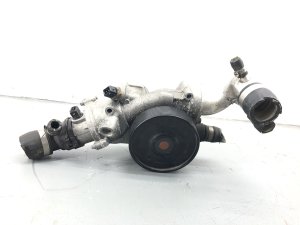
Used OEM Parts in Stock
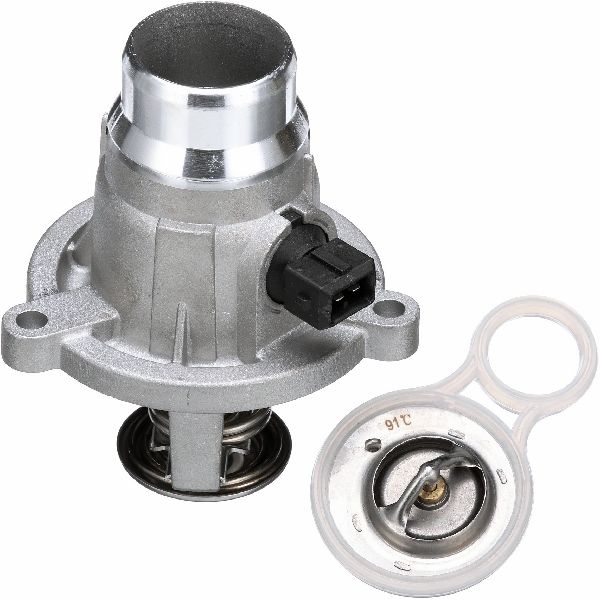
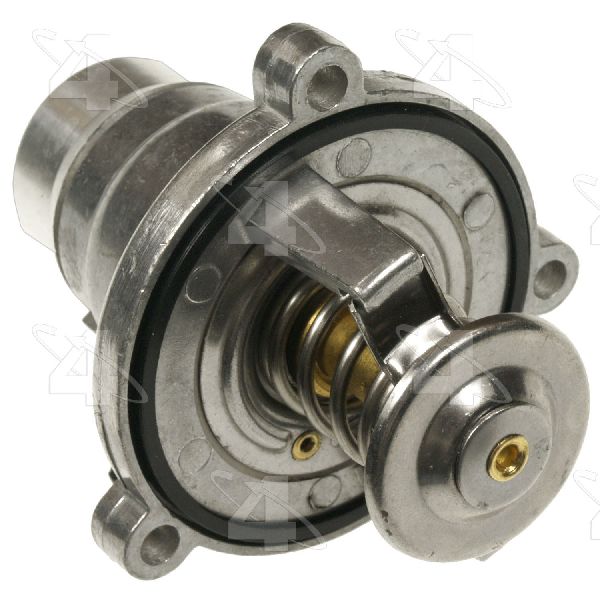
New Aftermarket Parts Available


The information in this article is provided for general reference and educational purposes only. Vehicle specifications, procedures, and part compatibility can vary by production date, trim level, and region. Always consult your vehicle's factory service manual and verify part numbers before purchasing or performing repairs. Safety-critical components such as airbags, seat belts, and braking systems should be installed by a qualified professional.
- BMW X5:
- 🧭 Diagnostic Flowchart
- 🎬 Helpful Videos
- 🛍️ Shop This Part
- What's Unique About the 2014-2018 BMW X5
- Symptoms You May Notice
- Most Likely Causes
- Rare But Worth Checking
- Diagnosis Steps
- Parts You'll Likely Need
- Related Codes That Often Appear With This One
- Platform-Specific Known Issues
- Mechanic-Grade Diagnostic Values
- Hidden / Shadow Codes Worth Checking
- Scan Tool Commands That Help
- Wiring & Ground Locations
- Real Owner Repair Stories
- OEM Part Supersession History
- Other Known Issues on This Vehicle
- Used vs. New Parts: Buying Guide for This Vehicle
- Real Owner Stories
- 2015 BMW X5 35d N57
- 2014-2018 BMW X5 35d
- 2014-2018 BMW X5 35d
- Related OBD-II Codes
- Frequently Asked Questions
- 🎟️ Get 5% Off