

P2002 on 2015-2019 Ford Transit 3.2L Diesel: Cracked DPF Causes and Fixes
On a 2015-2019 Ford Transit with the 3.2L diesel, code P2002 almost always means the Diesel Particulate Filter (DPF) has cracked internally. Before paying for repairs, contact a Ford dealer with your VIN to check for coverage under Customer Satisfaction Program 23M01, which extends the DPF warranty to 11 years or 120,000 miles. If out of warranty, this is an expensive repair, but is critical for engine performance and passing emissions tests.
- Before starting any repairs for P2002, call a Ford dealer with your VIN to check for coverage under Customer Satisfaction Program 23M01.
- The most reliable diagnostic check you can do is to wipe the inside of your tailpipe. Black soot almost guarantees the DPF has failed internally.
- A forced regeneration will not fix this code. The problem is a physical crack, not just a clog.
- The correct fix is a complete replacement of the DPF assembly, followed by a PCM update by a qualified technician.
What's Unique About the 2015-2019 Ford Transit
Unlike many diesel vehicles where P2002 might point to a simple clog or a bad sensor, on the 3.2L Power Stroke engine in the Transit, this code is strongly associated with a physical failure of the DPF itself. Ford has acknowledged a widespread issue where the internal ceramic substrate of the DPF cracks due to thermal stress from regeneration cycles. This allows soot to pass through unfiltered, triggering the efficiency code. The problem is so prevalent that Ford issued Technical Service Bulletin 21-2332 and Customer Satisfaction Program 23M01 specifically for this failure.
Symptoms You May Notice
- Check Engine Light is on
- Black soot visible inside the tailpipe (a key indicator of a cracked DPF).
- Engine may enter a reduced power or 'limp mode'.
- Reduced fuel economy.
- Vehicle will fail an emissions test.
- Difficulty starting the engine.
- Poor acceleration.
- Replacing the DPF pressure sensor without first checking the tailpipe for soot. 🎬 See why swapping the sensor often fails to fix this code. A bad sensor won't cause soot, but a cracked DPF will.
- Performing a forced DPF regeneration. This process is designed to clear a clogged (restricted) filter (Code P2463), but it cannot fix a physically cracked filter that has lost its efficiency (Code P2002).
- Replacing the DPF with a non-OEM part. A user on JustAnswer reported that a dealership attributed the return of the P2002 code to the installation of a cheaper, poorer quality aftermarket DPF.
Most Likely Causes
- Cracked Diesel Particulate Filter (DPF) 🔴 High Probability → Shop Diesel Particulate Filter (DPF) Ford has documented this failure in TSB 21-2332. The DPF's internal ceramic substrate is prone to cracking from the thermal stress of repeated heating and cooling during regeneration cycles. This is a known systemic issue across several Ford diesel platforms of this era.
How to confirm: Wipe the inside of the exhaust tailpipe with your finger or a clean rag. If it comes out covered in black soot, the filter is cracked and not trapping particles. A healthy DPF system should have a clean tailpipe. A technician on a Ford Truck Enthusiasts forum noted that even with a cracked DPF, a code may not be thrown until the failure reaches a certain threshold.
Typical fix: The entire DPF assembly must be replaced 🎬 Watch: A mechanic's guide to replacing the DPF the easy way., followed by a PCM reprogram as per Ford's TSB 21-2332. Check for warranty coverage under Ford's Customer Satisfaction Program 23M01 before paying for this repair. The OEM part number is GK4Z-5H270-A, which supersedes CK4Z-5H270-A.
Est. part cost: $2800-$4500 - Failed DPF Pressure Sensor or Hoses ⚪ Low Probability The rubber hoses connected to the DPF pressure sensor can degrade, crack, split, or become detached over time due to heat and vibration, leading to incorrect pressure readings. While less common than a cracked DPF for this specific code on this van, it is a frequent failure point on many Ford diesel vehicles.
How to confirm: Visually inspect the sensor's hoses for any cracks, splits, or loose connections. With a diagnostic scan tool, monitor the DPF pressure sensor readings; 🎬 Watch: How to properly test the DPF differential pressure sensor. a reading of zero or erratic values points to a sensor or hose issue. A technician in a YouTube video noted that the hoses can develop cracks that only open up under flex, making them hard to spot.
Typical fix: Replace the faulty DPF pressure sensor (OEM Part # GK4Z-9J460-A / Motorcraft DPFE-29) and/or its connecting hoses. Aftermarket silicone hose repair kits are available.
Est. part cost: $40-$150 - Upstream Exhaust Leak ⚪ Low Probability Leaks in the exhaust system between the engine and the DPF can alter the pressure readings seen by the DPF sensors, leading the PCM to miscalculate the filter's efficiency.
How to confirm: Perform a visual inspection of the exhaust system for soot trails indicating a leak. A professional smoke test is the most reliable method to find small leaks. A case was noted where a crack in the DPF inlet pipe, not the filter itself, was the root cause.
Typical fix: Repair the exhaust leak by replacing the gasket or damaged pipe section.
Est. part cost: $50-$300
Rare But Worth Checking
- Failed DPF Fuel Vaporizer:
Diagnosis Steps
- Check for Ford Customer Satisfaction Program 23M01: Before any diagnosis, contact a Ford dealership with your vehicle's VIN. This program provides a no-cost DPF replacement for 11 years or 120,000 miles. Even if you are over the limits, the repair is covered through January 31, 2025.
- Inspect the Tailpipe: This is the most important initial step. Wipe the inside of the tailpipe. If you find black soot, the DPF is almost certainly cracked and needs replacement.
- Scan for Other Codes: Check if other codes, such as P2463 (DPF Restriction), P242F (Ash Accumulation), or P2453 (DPF Pressure Sensor Circuit), are present, as they can provide additional context.
- Inspect DPF Pressure Sensor Hoses: Visually check the rubber hoses going to the DPF pressure sensor for cracks, splits, or loose connections. These are a known failure point.
- Check for Exhaust Leaks: Inspect the exhaust system from the engine to the DPF for any signs of leaks. A professional smoke test is the most effective method.
- Confirm DPF Failure: If the tailpipe is sooty and all other potential causes (sensors, hoses, leaks) have been ruled out, the DPF assembly has failed and requires replacement per TSB 21-2332.
Parts You'll Likely Need
- Diesel Particulate Filter (DPF) Assembly
(OEM #GK4Z-5H270-A (supersedes CK4Z-5H270-A))— This is the most common failure point for a P2002 code on this platform, due to a known issue of the internal filter substrate cracking.
Trusted brands: Motorcraft
OEM price range: $2800-$4500
Aftermarket price range: $2500-$3500 - DPF Pressure Sensor
(OEM #GK4Z-9J460-A (Motorcraft DPFE-29))— Though less likely to be the root cause of P2002 on this van than a cracked DPF, this sensor or its hoses can fail and provide false readings.
Trusted brands: Motorcraft
OEM price range: $40-$80
Aftermarket price range: $25-$60
Related Codes That Often Appear With This One
- P2463 — This code means 'DPF Restriction - Soot Accumulation.' A severely clogged filter can lead to excessive heat and pressure during regeneration, which can cause the filter to crack and subsequently trigger P2002.
- P242F — This code means 'DPF Restriction - Ash Accumulation.' Ash is the non-burnable byproduct of regeneration. Over time, ash buildup can clog the filter, leading to efficiency problems and potential cracking.
- P2453 — This code for 'DPF Differential Pressure Sensor Circuit Range/Performance' points directly to a problem with the sensor itself or its wiring/hoses, which could be the root cause instead of the DPF.
Technical Service Bulletins (TSBs) & Recalls
- TSB 21-2332: Supersedes TSB 20-2272. Confirms that a cracked DPF substrate is the likely cause for P2002 on 2015-2019 Transit 3.2L, requiring DPF replacement and a PCM reprogram. It also applies to F-150 3.0L and Super Duty 6.7L diesels.
- Customer Satisfaction Program 23M01: A warranty extension program by Ford that covers the replacement of the DPF for this specific issue for 11 years or 120,000 miles from the warranty start date. The official notice states the cause is that "unmetered exhaust hydrocarbons and/
Platform-Specific Known Issues
- Known Cracked DPF Substrate: Ford TSB 21-2332 confirms that P2002 on the 2015-2019 Transit 3.2L is very likely due to a crack in the DPF, requiring replacement and a PCM reprogram.
- Ford Customer Satisfaction Program 23M01: This program extends the warranty coverage for the DPF to 11 years or 120,000 miles for vehicles presenting with code P2002. For vehicles that have already exceeded the limits, the free repair is available through January 31, 2025. The program is transferable to subsequent owners.
Mechanic-Grade Diagnostic Values
- DPF Differential Pressure (DPF_DP) at idle, engine off — expected: 0 kPa / 0 mbar. Failure: Any reading other than zero indicates a faulty sensor or a pressure differential that has not equalized.
- DPF Differential Pressure (DPF_DP) at idle, clean filter — expected: Near 0.7 mbar (0.01 psi). Failure: A significantly higher reading at idle suggests a clog or restriction.
- DPF Pressure Sensor Signal Voltage — expected: 0.5V to 4.5V is the typical operating range.. Failure: A reading stuck at the high end (e.g., 4.99V) or low end, or one that is erratic and doesn't correspond to engine RPM, points to a sensor or circuit fault.
- DPF Pressure Sensor Supply Voltage — expected: 5V. Failure: No voltage or significantly lower voltage at the sensor connector indicates a wiring or PCM issue.
Scan Tool Commands That Help
- Ford IDS or FORScan: DPF Parameter Reset / Reset Particulate Filter Learned Values — This is mandatory after replacing the DPF assembly or the DPF pressure sensor. It clears the PCM's stored data for soot/ash accumulation and allows it to establish a new baseline for the new component. Failure to do this can cause the P2002 code to return.
- Ford IDS or FORScan: DPF Manual Regeneration / Operator Commanded Regeneration (OCR) — Used to initiate a stationary, high-temperature cleaning cycle of the DPF. This is for clearing a soot clog (P2463), not for fixing a cracked, inefficient filter (P2002). Running this on a P2002 code will not fix the issue and may subject the cracked filter to further thermal stress.
Wiring & Ground Locations
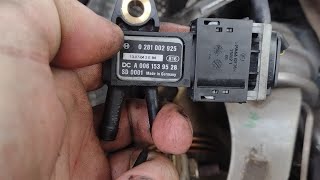
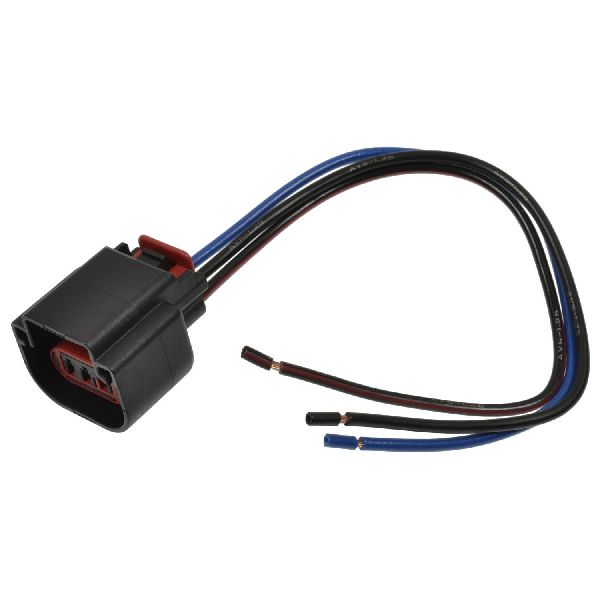
- DPF Pressure Sensor Connector — The sensor is typically mounted on a bracket near the top of the engine or on the firewall, with two rubber hoses running down to metal pipes on the DPF.. The connector plug has a clip that can break, leading to a poor connection. Technicians have found corroded pins or poor pin grip at this connector, causing erratic sensor readings that can mimic a DPF fault.
- DPF Pressure Port (Metal Pipe) — The metal pipe on the DPF where the rubber hose from the pressure sensor attaches.. This port can become completely blocked with solid carbon and soot. This blockage prevents the sensor from reading any pressure change, leading to sensor circuit codes (like P2455) or incorrect efficiency calculations (P2002). The blockage must be physically drilled or cleaned out.
- Battery Ground Strap (WC96357) — Connects the battery negative terminal to the chassis and/or engine block.. While not a direct cause, a corroded or failing main ground strap can cause a host of electrical issues and erratic sensor readings across the vehicle. Ensuring all main grounds are clean and secure is a foundational step in diagnosing any electronic fault code.
Real Owner Repair Stories
- YouTube channel O'Riley's Autos UK (2016 Ford Transit Custom 2.0L EcoBlue (similar DPF system)) — Multiple warning lights, including AdBlue warnings. Fault code for particulate filter pressure sensor.
❌ Tried (didn't work) Owner had taken the van to 4-5 other garages who refused to work on it due to the AdBlue/DPF warnings.
✅ What actually fixed it The metal port on the DPF where the pressure sensor hose connects was completely blocked with solid carbon. The technician had to drill out the carbon plug, clean the port with fluid, and then replace the DPF pressure sensor which had been damaged by the previous incorrect readings and attempts at repair (silicone sealant, cable ties). After clearing the physical blockage and replacing the sensor, a 'Diesel Particulate Filter Parameter Reset' was performed with a scan tool. - JustAnswer user (Ford vehicle (model not specified, but common issue)) — P2002 code returns after 20 minutes of motorway driving.
❌ Tried (didn't work) Replacing the DPF with an aftermarket unit., Refilling the additive., Replacing the DPF pressure sensor.
✅ What actually fixed it The final resolution was not posted by the user, but the responding Ford technician stated that the likely cause was the use of a 'cheaper/poorer quality' aftermarket DPF that did not have the correct flow characteristics, a common issue. The recommendation was to first inspect the pressure sensor hoses and wiring for integrity, and if they were good, the aftermarket DPF was the culprit.
OEM Part Supersession History
CK4Z-5H270-A→GK4Z-5H270-A— The supersession is likely due to improvements in the DPF's internal substrate material or construction to better withstand the thermal stress that caused the original parts to crack. This is a common practice for parts with known design flaws.
Model Year Variations Within This Range
- 2015-2019: There are no significant documented changes to the 3.2L diesel engine's DPF system, part numbers, or the P2002 failure mode within this model year range. The issue is consistent across the entire production run for this engine in North America.
Diagnostic Flowchart
Used vs. New Parts: Buying Guide for This Vehicle
When a used part is the smart pick: For this specific failure (P2002), a used DPF is almost never a smart choice. The primary cause of failure is cumulative thermal stress leading to internal cracks. A used DPF from a junkyard has an unknown history and is likely already partway through its stress-cycle lifespan, making it a high-risk purchase.
Donor-vehicle mileage cap: roughly under 20000 miles for the part to have meaningful remaining life.
What to inspect on the donor part:
- Verify the donor vehicle was not in a front-end collision that could have damaged the exhaust.
- Inspect the inlet and outlet for any visible signs of melting or large chunks of missing substrate (though internal cracks are invisible).
- Ask for the VIN to check if the donor vehicle had any open recalls or DPF-related service history.
OEM-only on this vehicle (don't cheap out):
- Diesel Particulate Filter (DPF) Assembly
Brands owners have reported issues with on this vehicle:
- Generic/unbranded aftermarket DPFs. A technician on JustAnswer noted that a non-Ford DPF was the likely cause of a persistent P2002 code, as they often have different flow characteristics and lower quality substrates that the Ford PCM cannot adapt to.
Real Owner Stories
Aggregated from forums and TSBs cited above. Mileages and costs reflect what owners reported in those sources.
2016 Ford Transit — 100000 miles
Symptoms: Check engine warning light illuminated.
What fixed it: Dealer diagnosed a faulty diesel particulate filter (DPF) that needed to be replaced. The vehicle was not repaired at the time of the complaint.
Source hint: NHTSA Complaint ID Number: 11499311
2016 Transit 3.2L — 52000 miles
Symptoms: Code P2002 appeared. Previous mechanics had repeatedly changed the sensor without fixing the root cause.
What fixed it: The owner reported the dealer was unsure about warranty coverage, and the final fix was not stated in the post.
Source hint: r/Diesel - 'Should I neglect to fix my DPF?' (2020)
2018 F350
Symptoms: Code P2002 and black soot in the tailpipes.
What fixed it: The dealer replaced the cracked DPF under warranty, which resolved the issue as described in TSB 21-2332.
Source hint: Ford Truck Enthusiasts - 'DPF Clogged' (2024)
Related OBD-II Codes
Frequently Asked Questions
Is the P2002 code and DPF replacement covered by a special warranty on my 2015-2019 Transit?
What does Ford's TSB 21-2332 say about the P2002 code on my van?
How can I quickly check if my Transit's DPF is cracked?
My mechanic wants to replace the DPF pressure sensor. Is this the correct fix?
What is the OEM part number for the replacement DPF on my 3.2L Transit?
I have a Ford F-150 diesel with a P2002 code. Does this information about a cracked DPF apply to my truck?
Helpful Videos
We Have This Part in Stock


The information in this article is provided for general reference and educational purposes only. Vehicle specifications, procedures, and part compatibility can vary by production date, trim level, and region. Always consult your vehicle's factory service manual and verify part numbers before purchasing or performing repairs. Safety-critical components such as airbags, seat belts, and braking systems should be installed by a qualified professional.
- Ford Transit:
- 🧭 Diagnostic Flowchart
- 🎬 Helpful Videos
- 🛍️ Shop This Part
- What's Unique About the 2015-2019 Ford Transit
- Symptoms You May Notice
- Most Likely Causes
- Rare But Worth Checking
- Diagnosis Steps
- Parts You'll Likely Need
- Related Codes That Often Appear With This One
- Technical Service Bulletins (TSBs) & Recalls
- Platform-Specific Known Issues
- Mechanic-Grade Diagnostic Values
- Scan Tool Commands That Help
- Wiring & Ground Locations
- Real Owner Repair Stories
- OEM Part Supersession History
- Model Year Variations Within This Range
- Used vs. New Parts: Buying Guide for This Vehicle
- Real Owner Stories
- 2016 Ford Transit — 100000 miles
- 2016 Transit 3.2L — 52000 miles
- 2018 F350
- Related OBD-II Codes
- Frequently Asked Questions
- 🎟️ Get 5% Off