

P2002 on 2018-2020 GMC Sierra 3500: DPF Efficiency Causes and Fixes
P2002 on a 2018-2020 GMC Sierra 3500 with the 6.6L Duramax engine indicates the Diesel Particulate Filter (DPF) is not working efficiently. The most common cause is a clogged DPF due to insufficient highway driving, but it can also be caused by faulty sensors, exhaust leaks, or a physically cracked filter. A forced regeneration may fix it, but if the code returns, diagnosis of the DPF system, including sensors and upstream engine components, is required to avoid costly repeat failures.
- P2002 means your truck's Diesel Particulate Filter (DPF) is not cleaning the exhaust properly.
- The most common cause is a clogged filter from too much city driving. Try a long highway drive to allow the truck to perform a regeneration cycle.
- Do not immediately replace the DPF. Faulty sensors or exhaust leaks are cheaper, common causes that must be ruled out first.
- On this specific truck, P2002 can be linked to other problems like rough running and harsh shifting, as documented in official GM service bulletins.
- This is not a simple DIY fix. Professional diagnosis is recommended to avoid replacing a very expensive DPF unnecessarily.
What's Unique About the 2018-2020 Gmc SIERRA 3500

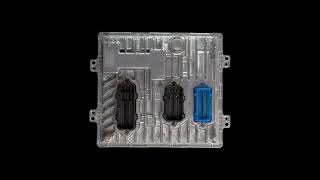
For the 2018-2020 Sierra 3500, equipped with the 6.6L L5P Duramax, the P2002 code is often part of a larger pattern of issues. Manufacturer Technical Service Bulletins (TSBs) frequently link P2002 with other DPF codes like P2463 (soot accumulation) and P2459 (regeneration frequency). Crucially, TSB 21-NA-214 explicitly connects these emissions codes to unexpected symptoms like harsh or delayed transmission shifts, shuddering, and vibrations, and recommends reprogramming both the ECM and TCM 🎬 Watch: How to safely remove and reinstall your ECM. (Transmission Control Module) as a potential fix. This indicates that on this platform, a DPF efficiency issue can have cascading effects on drivability that might not seem directly related to the exhaust system.
Diagnostic Flowchart


Tap your situation to follow the diagnostic path that matches what you're seeing on this vehicle.
Generation note: The 2018-2020 model years span two generations of the Sierra 3500. The 2018 and 2019 models are the end of the third generation (K2XX platform), while the 2020 model is the first year of the fourth generation (T1XX platform), which was a complete redesign. While both generations use a 6.6L L5P Duramax engine, the 2020 model introduced a 10-speed Allison transmission, a larger radiator and fan, and a larger oil cooler. There are also differences in the exhaust system layout and sensor part numbers between the K2XX and T1XX platforms. However, the function of the DPF and the meaning of the P2002 code remain the same. TSBs like PIP5468F apply to the 2017-2019 models, while 21-NA-214 is specific to the 2020 model year, highlighting that some issues are generation-specific.
Symptoms You May Notice

- Check Engine Light is on
- Message on the dash indicating "Exhaust Filter Full," "Cleaning Exhaust Filter Keep Driving," or a similar warning
- Reduced engine power or the vehicle entering 'limp mode'
- Noticeable decrease in fuel economy
- Excessive black smoke from the exhaust
- Engine may run rough, shudder, or vibrate, sometimes accompanied by harsh or delayed transmission shifts.
- Hesitation or reduced throttle response.
- Replacing the DPF without diagnosing the root cause. If an upstream issue like a faulty injector, a charge air cooler leak, or a coolant leak is causing excessive soot, the new DPF will also clog and fail in a short amount of time.
- Assuming the DPF is clogged when it is actually a faulty pressure sensor or a small leak in one of its hoses giving a false reading.
Most Likely Causes
- Clogged or Overloaded DPF 🔴 High Probability These heavy-duty trucks are often used for short trips or extended idling, which prevents the exhaust from reaching the high temperatures needed for automatic DPF regeneration. This driving style is a primary contributor to frequent regeneration issues.
How to confirm: Use a diagnostic scan tool (like Edge CTS3 or a dealer GDS2) to check the 'DPF Soot Accumulation' percentage. On L5P engines, the ECM will not attempt a regeneration until the soot level reaches approximately 100%. A "continue driving" message appears at 115%, and DTC P2463 will set at 140%, requiring a service regeneration.
Typical fix: Perform a forced 'Service Regeneration' using a scan tool. If that fails, the DPF may need to be professionally cleaned ('baked and blown') or, in severe cases, replaced.
Est. part cost: $1500-$3000 for a new DPF - Faulty DPF Pressure Sensor(s) 🟡 Medium Probability These sensors and their rubber hoses operate in a harsh, high-heat environment and can fail, crack, or get blocked over time, providing inaccurate pressure readings to the ECM. GM notes that improperly routed differential pressure lines without a continuous downward slope can trap moisture and cause issues.
How to confirm: Monitor the DPF pressure sensor data with a scan tool. With the key on and engine off, the pressure should be 0 kPa. One user reported seeing 0.22 volts at 0 psi. The voltage should change with engine RPM. If the reading is stuck, does not change, or is illogical (e.g., high pressure at idle), the sensor, its wiring, or its hoses are likely faulty.
Typical fix: Replace the faulty DPF pressure sensor and its associated hoses. The sensor may require a reset/relearn procedure using a scan tool.
Est. part cost: $50-$150 - Exhaust System Leaks 🟡 Medium Probability Vibrations and heat cycles can cause gaskets to fail or pipes to crack. TSB PIP5468F specifically points to loose connections in the charge air cooler ductwork as a cause for P2002 and other codes, as it affects air/fuel mixtures and creates more soot.
How to confirm: Visually inspect the exhaust system from the engine to the DPF for any signs of black soot streaks, which indicate a leak. Per TSB PIP5468F, pay close attention to charge air cooler ductwork connections, as a static visual inspection may not be enough; leaks can occur under engine torque. A smoke test is the most effective method.
Typical fix: Tighten clamps on charge air cooler pipes, replace leaking gaskets, or repair/replace the cracked exhaust component.
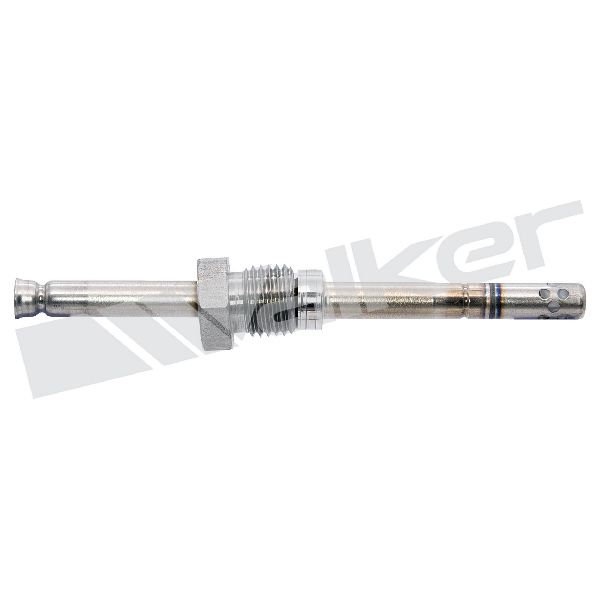
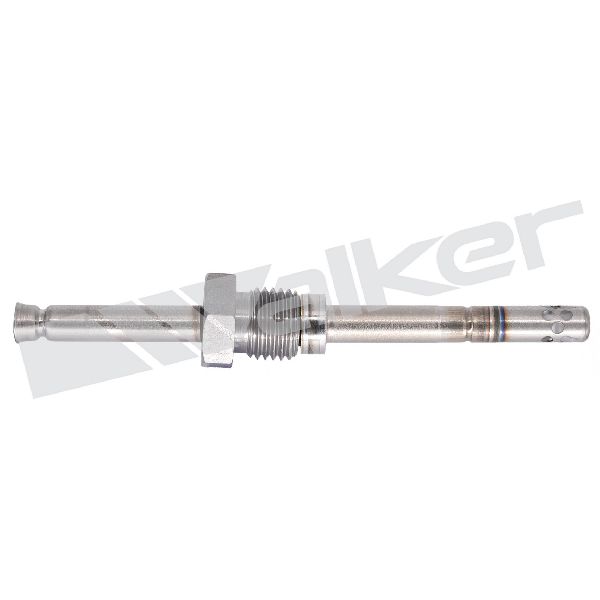
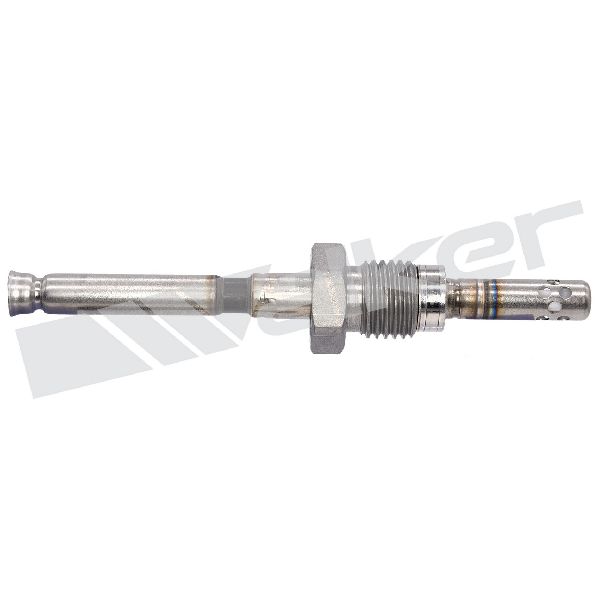
Est. part cost: $20-$200 - Failed Exhaust Gas Temperature (EGT) Sensors ⚪ Low Probability → Shop Exhaust Gas Temperature (EGT) Sensor Like other sensors in the exhaust, EGT sensors can fail due to extreme temperatures. A faulty EGT sensor can prevent the system from entering or completing a regeneration cycle because the ECM cannot verify the required temperatures are being met.
How to confirm: Use a scan tool to monitor the readings from all EGT sensors. When the vehicle is cold, all temperature sensors should read close to each other and ambient temperature. A sensor that gives erratic, illogical, or unchanging readings is faulty.
Typical fix: Replace the failed EGT sensor. The L5P has multiple EGT sensors; the scan tool should identify which one is malfunctioning.
Est. part cost: $70-$200
Rare But Worth Checking
- Cracked or Internally Damaged DPF: A physical failure inside the DPF (cracked or melted substrate) can cause it to lose efficiency even if it's not clogged. GM has a specific 'cheese cloth test' detailed in bulletin 16-NA-380. An assistant revs the engine multiple times while a cheese cloth is held over the tailpipe. If soot particles are present on the cloth, it confirms the filter has failed internally and is allowing soot to pass through. A user on a forum confirmed a cracked DPF by wiping the inside of the tailpipe and finding it black with soot.
- Upstream Engine Issues: Problems like leaking fuel injectors, a failing turbocharger, incorrect engine oil (non-low-ash oil), or even a cracked cylinder head leaking coolant can produce excessive soot or contaminants, overwhelming the DPF and causing it to clog prematurely. A collapsed engine air filter can also cause a rich condition, creating excess soot and leading to DPF codes like P2463 and P2002. These are often the root cause when a new DPF fails quickly.
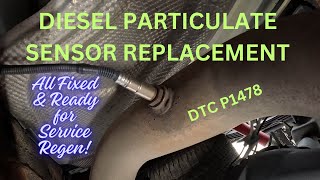
- Faulty Exhaust Particulate Sensor: The L5P engine uses a dedicated Exhaust Particulate Sensor (soot sensor) to diagnose a cracked or broken DPF. If this sensor itself is faulty, it can incorrectly trigger a P2002 code. A technician noted that if there is no soot present at the tailpipe but a P2002 code is active, the particulate sensor is likely reading incorrectly and should be replaced. The OEM part number for the 2017-2019 models is GM 12685369.
Diagnosis Steps
- Check for all stored DTCs to see if P2002 is accompanied by other codes like P2463, P2459, or P0101, which can provide clues to the root cause.
- Using a scan tool, check the DPF soot level percentage. On an L5P, levels approaching 100% are required before a normal regeneration occurs, and a code may not set until 140%.
- Inspect the entire intake and exhaust system for any signs of leaks, cracks, or damage, particularly the charge air cooler ductwork as specified in TSB PIP5468F.
- Monitor live data from the DPF pressure sensor(s) and all Exhaust Gas Temperature (EGT) sensors. Check for plausible values at idle and while driving. A stuck or unresponsive sensor is a clear sign of failure.
- If soot levels are high, attempt a 'Service Regeneration' using a capable scan tool. Follow safety procedures carefully: park outdoors away from flammable materials, ensure fuel is above 1/4 tank, and open the hood for cooling. Note that a service regeneration is not as effective as a regeneration enable followed by a drive cycle.
- If P2002 persists and the DPF is not clogged, perform the 'cheese cloth test' by holding a cheese cloth over the tailpipe while an assistant revs the engine. Soot on the cloth confirms an internally cracked DPF requiring replacement.
- If no soot is present at the tailpipe but P2002 is active, suspect a faulty Exhaust Particulate Matter sensor giving a false reading.
Parts You'll Likely Need
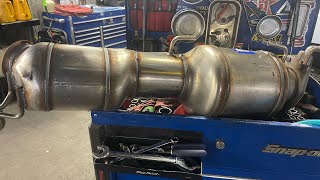
- Diesel Particulate Filter (DPF) — If the filter is cracked, melted, or clogged with ash, it must be replaced. This is the most common high-cost repair for this code.
Trusted brands: ACDelco, Walker, Dorman
OEM price range: $2000-$3000
Aftermarket price range: $800-$1800 - DPF Pressure Sensor
(OEM #Cross-references include 12630257, 213-3854)— This sensor provides the primary data for the ECM to determine DPF efficiency. A faulty sensor or its hoses can trigger P2002 even if the filter is fine.
Trusted brands: ACDelco, Bosch, Walker
OEM price range: $80-$150
Aftermarket price range: $40-$90 - Exhaust Particulate Sensor
(OEM #12685369 (for 2017-2019 models))— This sensor is specifically used to detect a cracked or broken DPF. If it malfunctions, it can falsely trigger code P2002.
Trusted brands: ACDelco (GM Genuine)
OEM price range: $250-$300 - Exhaust Gas Temperature (EGT) Sensor — A failed EGT sensor can prevent the ECM from initiating or completing a DPF regeneration cycle, leading to soot buildup.
Trusted brands: ACDelco, Bosch, NTK
OEM price range: $100-$200
Aftermarket price range: $50-$120
Related Codes That Often Appear With This One
- P2463 — Stands for 'Diesel Particulate Filter Soot Accumulation'. This code often appears with P2002 because a filter that is overly full of soot (P2463) will also be inefficient (P2002). They are two symptoms of the same core problem.
- P2459 — Stands for 'Diesel Particulate Filter Regeneration Frequency'. The ECM will set this code when it has to run the cleaning (regeneration) cycle too often. This is a direct consequence of the DPF being inefficient or constantly clogging.
- P0101 — Stands for 'Mass Air Flow (MAF) Sensor Circuit Range/Performance'. As noted in TSB #PIP5468F, this can appear alongside P2002. The TSB suggests this combination often points to un-metered air entering the system via loose charge air cooler ductwork.
- P20EE — Stands for 'SCR NOx Catalyst Efficiency Below Threshold'. This code can appear with P2002 as part of a broader emissions system problem, as noted in TSB 21-NA-214, sometimes requiring an ECM reprogram.
Technical Service Bulletins (TSBs) & Recalls
- 21-NA-214: Links P2002 and other DTCs to transmission shudder/vibration on 2020 models and recommends reprogramming the ECM and TCM.
- PIP5468F: For 2017-2019 models, points to loose charge air cooler ductwork as a potential cause for P2002 when seen with codes like P0101.
- 16-NA-380: Provides the diagnostic procedure for the 'cheese cloth test' to confirm an internally failed (cracked/broken) DPF across many GM diesel vehicles.
Platform-Specific Known Issues
- Transmission Shudder Linked to Emissions Faults: TSB 21-NA-214 specifically for the 2020 model year indicates that DPF-related codes, including P2002, can be accompanied by significant transmission performance issues like shudder, harsh shifts, and vibration. The recommended fix is often a software update for both the engine and transmission control modules, not a mechanical transmission repair.
- Charge Air Cooler Duct Leaks: On 2017-2019 models, TSB PIP5468F highlights that loose clamps or connections on the charge air cooler piping are a known cause for a group of DTCs that includes P2002. This allows unmetered air to enter the engine, leading to incorrect combustion and excessive soot production that overloads the DPF.
Mechanic-Grade Diagnostic Values
- DPF Differential Pressure Sensor Voltage (Key On, Engine Off) — expected: ~0.22 V. Failure: Voltage is stuck high or low and does not correspond to 0 pressure.
- DPF Differential Pressure Sensor Supply Voltage — expected: 5V. Failure: Voltage significantly lower than 5V indicates a wiring issue or problem with the ECM's 5V reference circuit.
- DPF Differential Pressure Sensor Signal Circuit Resistance — expected: Below 10.0 ohms between the sensor connector and the ECM connector.. Failure: Resistance above 10.0 ohms indicates an open or high resistance in the signal wire.
- DPF Differential Pressure Sensor 5V Supply Circuit Resistance to Ground — expected: Above 1000 ohms.. Failure: Resistance below 1000 ohms indicates a short to ground in the supply circuit.
- EGT Sensors (Cold Soak) — expected: All EGT sensors should read within a few degrees of ambient temperature and each other.. Failure: One sensor reading is significantly different from the others, indicating a faulty sensor.
Scan Tool Commands That Help
- GDS2 (GM Dealer Scan Tool): Service Regeneration — To manually command the DPF to clean itself when soot levels are high (e.g., at 140%) and a P2463 is set. This is a controlled, stationary process.
- GDS2 (GM Dealer Scan Tool): Regeneration Enable — This function enables the system to perform a regeneration during a subsequent drive cycle. GM states this is more effective at cleaning the DPF than a stationary Service Regeneration.
- GDS2 (GM Dealer Scan Tool): View DTC Info — To check the status of a code and the conditions under which it was set. This provides critical context for diagnosis.
Wiring & Ground Locations
- E41 Engine Control Module (ECM) — Located on the driver's side of the engine bay, below the upper coolant hose.. The ECM receives inputs from all DPF-related sensors (pressure, temperature, particulate) and controls the regeneration process. Checking for corrosion or damage at its connectors is a key diagnostic step.
- ECM Connectors — The L5P ECM has multiple large connectors with locking clamps (e.g., a small blue one and two larger ones with green clips on 2017-2019 models).. These are the termination points for the sensor wiring. Testing for continuity, shorts, or high resistance for the DPF pressure sensor and EGT sensor circuits happens between these connectors and the sensor connectors themselves.
- Chassis Ground (General) — Various points on the frame and engine block.. The ECM and various sensor modules rely on clean chassis grounds. A poor ground can cause erratic sensor readings and incorrect diagnostic codes. Wires that are black with a white stripe are typically chassis grounds on GM vehicles.
Real Owner Repair Stories
- YouTube channel 'Rainman Ray's Repairs' (2019 Duramax L5P) — Reduced Engine Power message, 'Cleaning Exhaust Filter' message, DTCs P2463 and P2459 stored. Scan tool showed a soot load of 231%.
❌ Tried (didn't work) Initial assumption was a standard clogged DPF from idling.
✅ What actually fixed it The technician found a collapsed engine air filter that was severely restricting airflow. This caused the engine to run rich, creating excessive soot. Replacing the air filter and then performing a service regeneration successfully cleared the codes. - Reddit user r/Duramax (2019 L5P) — P2002 code, along with a known bad pigtail for the #4 fuel injector.
❌ Tried (didn't work) The user was asking if the injector issue could cause the P2002 before proceeding.
✅ What actually fixed it A responding technician advised that while a misfiring injector can reduce DPF efficiency, the P2002 code on an L5P most often means the DPF itself is cracked internally. The definitive test is to wipe the inside of the tailpipe; if it's black with soot, the DPF has failed and must be replaced.
OEM Part Supersession History
55591380→12685369— Part update/revision by GM.
Heads up: Part 12685369 is the correct replacement for 55591380 for 2017-2019 models.12672685→12683525— Part update/revision by GM for an Exhaust Gas Temperature (EGT) sensor.
Heads up: Part 12683525 replaces 12672685. It is listed for multiple positions (e.g., Position 3, 5).12685369 (Particulate Sensor for 2017-2019)→12696927 (Particulate Sensor for 2020-2022)— Chassis and system redesign for the T1XX platform starting in 2020.
Heads up: The particulate matter sensor for a 2018-2019 (K2XX) truck is different from the one used on a 2020 (T1XX) truck. They are not interchangeable.
Model Year Variations Within This Range
- 2020: The 2020 model year marked the switch to the new T1XX platform. For the Duramax powertrain, this included the introduction of the 10-speed Allison transmission, a larger radiator and fan, and a larger oil cooler compared to the 2018-2019 models. Part numbers for emissions components, like the Particulate Matter Sensor, also changed for the 2020 model year.
- 2018-2019: These models are part of the K2XX platform and use the 6-speed Allison transmission. While the L5P engine is fundamentally the same, some owners and reviewers noted the 2020 model with the 10-speed felt like it had more initial lag from a stop, possibly due to different gearing (3.42) and the transmission's rotating mass.
Helpful Videos
Used OEM Parts in Stock
New Aftermarket Parts Available


The information in this article is provided for general reference and educational purposes only. Vehicle specifications, procedures, and part compatibility can vary by production date, trim level, and region. Always consult your vehicle's factory service manual and verify part numbers before purchasing or performing repairs. Safety-critical components such as airbags, seat belts, and braking systems should be installed by a qualified professional.
- Gmc SIERRA 3500:
- 🧭 Diagnostic Flowchart
- 🎬 Helpful Videos
- 🛍️ Shop This Part
- What's Unique About the 2018-2020 Gmc SIERRA 3500
- Symptoms You May Notice
- Most Likely Causes
- Rare But Worth Checking
- Diagnosis Steps
- Parts You'll Likely Need
- Related Codes That Often Appear With This One
- Technical Service Bulletins (TSBs) & Recalls
- Platform-Specific Known Issues
- Mechanic-Grade Diagnostic Values
- Scan Tool Commands That Help
- Wiring & Ground Locations
- Real Owner Repair Stories
- OEM Part Supersession History
- Model Year Variations Within This Range
- 🎟️ Get 5% Off