

P2002 on 2010-2019 Volkswagen Golf 2.0L TDI: DPF Causes and Fixes
P2002 on a VW Golf TDI most often means there is a problem with the Diesel Particulate Filter (DPF) system. The most common causes are a failed DPF differential pressure sensor (G450) or a clogged/cracked DPF. A sensor replacement is relatively inexpensive, while a new DPF can cost over $1,300. Any soot in the tailpipe is a definitive sign of a cracked DPF.
- P2002 means the DPF is not working efficiently on your Golf TDI.
- First, check your tailpipe for soot. If it's sooty, your DPF is cracked and needs replacement.
- If the tailpipe is clean, the most likely culprit is the much cheaper DPF differential pressure sensor or its hoses.
- Avoid a pattern of frequent, short trips to allow the DPF to perform its self-cleaning (regeneration) cycles.
- Check with a VW dealer to see if your vehicle's emissions warranty has been extended, as it might cover this expensive repair.
What's Unique About the 2010-2019 Volkswagen Golf

On the 2.0L TDI engines (like the Mk6's CJAA and Mk7's EA288 family) used in these Golf models, the P2002 code is notoriously complex. While it points to the DPF, the root cause is often a faulty DPF differential pressure sensor (G450), which was known to be problematic and has had multiple part number revisions. Furthermore, a cracked DPF is a very common failure, which not only triggers the P2002 code but can also lead to a secondary code, P0401, by allowing soot to pass through and clog the downstream low-pressure EGR filter. The driving habits of the owner, particularly frequent short trips, significantly contribute to DPF clogging because the system cannot get hot enough to perform a regeneration cycle. Many of these vehicles were also subject to the 'Dieselgate' emissions modification, and some owners report recurring DPF issues after the fix was applied. On later Euro 6 engines, the low-pressure EGR cooler is located after the DPF and is a common point of blockage, which increases pressure in the DPF and triggers a P2002 code, even if the DPF itself is not the primary cause.
Generation note: This range covers the Mk6 (2010-2014) and Mk7 (2015-2019) Golf generations. The Mk6 primarily used the EA189 (CJAA) engine, while the Mk7 used the updated EA288 engine (CRUA, CVCA). While the P2002 code applies to both, part numbers for sensors and the DPF assembly differ. The underlying causes—DPF clogging, sensor failure, and cracked filters—are common to both generations. The extended emissions warranty from the 'Dieselgate' settlement covered DPF replacement for many of these vehicles, so it's worth checking if a specific vehicle is still covered. The CJAA is considered a 'CR140' (140 horsepower) engine, while the Mk7's CRUA/CVCA are 'CR150' (150 horsepower) engines, with different emissions system components.
Symptoms You May Notice

- Check Engine Light is on
- DPF or glow plug light may be on or flashing
- Reduced engine power or "limp mode"
- Increased fuel consumption
- Visible black soot inside the tailpipe (a definitive sign of a cracked DPF)
- Failed emissions test
- Hesitation when accelerating, especially when cold
- Engine may cut out if the DPF is severely clogged
- Replacing the DPF when only the differential pressure sensor is faulty. Always test the sensor and its hoses first, as it is a much cheaper and easier repair.
- Performing a DPF cleaning or forced regeneration when the filter is cracked. Cleaning will not fix a crack, and the P2002 code will return quickly. The tailpipe soot test is the key differentiator.
Most Likely Causes

- Failed DPF Differential Pressure Sensor (G450) 🔴 High Probability This sensor is a known weak point on many VW TDI models and has undergone several revisions. It can fail by providing incorrect pressure readings or through an electrical fault like a short to ground, falsely triggering the P2002 code.
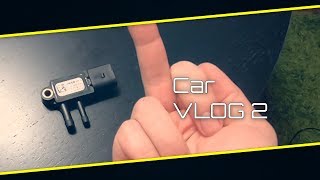
How to confirm: Use a diagnostic tool (like VCDS) to monitor the pressure sensor readings. With the engine off, the reading should be near 0 hPa/mbar. If it shows a significant value, the sensor is bad. Readings should rise smoothly with RPM. A scan may also explicitly state a short circuit to ground for the sensor. The sensor receives a 5V reference, has a ground, and a signal wire that should read between 0.5V (at 0 pressure) and 4.5V.
Typical fix: Replace the DPF differential pressure sensor. The new sensor must be adapted or 'zeroed out' using a capable scan tool like VCDS for it to read correctly.
Est. part cost: $40-$100 - Cracked or Clogged Diesel Particulate Filter (DPF) 🔴 High Probability → Shop Diesel Particulate Filter (DPF) A driving style with many short trips prevents the DPF from reaching the high temperatures needed for regeneration (burning off soot), leading to clogging. Over time, the filter media can also crack from thermal stress and age, a very common failure on these TDIs. Even a hairline crack is sufficient to trigger the P2002 code.
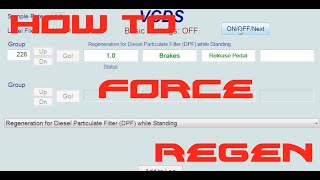
How to confirm: The definitive test is to wipe the inside of the exhaust tailpipe. Any black, sooty residue means the filter is cracked and allowing particulate matter to pass through. A diagnostic scan can reveal high soot/ash loading values (e.g., in VCDS measuring blocks). If a forced regeneration fails to clear the code or if soot is present, the DPF is compromised. Soot mass values exceeding 45g often mean the DPF is beyond regeneration and must be replaced. 🎬 See how to perform a forced DPF regeneration using VCDS
Typical fix: The DPF must be replaced. Cleaning is not effective for a cracked filter. Some owners attempt off-car chemical cleaning for clogged (but not cracked) filters, with mixed results. DPF replacement is often done alongside cleaning or replacing the low-pressure EGR filter, which gets clogged as a result of the cracked DPF.
Est. part cost: $1300-$2500 - Leaking or Clogged DPF Sensor Hoses 🟡 Medium Probability The rubber hoses connected to the differential pressure sensor are exposed to intense heat and can become brittle, cracked, or clogged with soot over time, leading to inaccurate pressure readings.
How to confirm: Visually inspect the entire length of the hoses running from the DPF to the pressure sensor. Look for cracks, brittleness, or loose connections. Remove the hoses and blow compressed air through them to check for blockages.
Typical fix: Replace the damaged or clogged hoses. This is an inexpensive and simple repair.
Est. part cost: $20-$50 - Clogged Low-Pressure EGR Cooler/Filter ⚪ Low Probability This is almost always a consequence of a cracked DPF. Soot bypasses the broken DPF and clogs the downstream EGR cooler/filter. This restricts exhaust flow and can contribute to both P2002 and P0401 codes. On some later engines, a blocked EGR cooler can cause backpressure that the ECU misinterprets as a DPF fault, triggering P2002 even if the DPF is functional.
How to confirm: This is difficult to inspect directly. It is usually diagnosed when a P2002 code is accompanied by a P0401 (EGR Insufficient Flow) code after a cracked DPF has been confirmed. The filter itself can be removed and inspected for heavy soot contamination. A temporary cleaning with degreaser and a garden hose can restore flow to confirm the diagnosis, though replacement is the long-term fix.
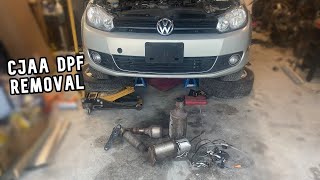
Typical fix: The EGR cooler/filter must be removed and cleaned or replaced. This is a labor-intensive job. 🎬 Watch this walkthrough for removing the CJAA DPF and catalytic converter Some owners have had success cleaning the filter with a degreaser and pressure washing it.
Est. part cost: $300-$600
Rare But Worth Checking
- Exhaust Leak: An exhaust leak upstream of the DPF can alter the pressure differential and trigger the code. This should be checked before replacing expensive components.
- Faulty Exhaust Gas Temperature (EGT) Sensor: → Shop Exhaust Gas Temperature (EGT) Sensor If an EGT sensor provides incorrect readings, the ECU may not be able to initiate or sustain a DPF regeneration cycle, leading to a clogged filter. A blown EGT sensor can be a consequence of high backpressure from a clogged DPF.
- Boost Leak: A leak in the charge air system (a boost leak) can cause an overly rich condition, creating excess soot that can overwhelm and clog the DPF faster than normal. Some owners report this as a precursor to DPF failure.
Diagnosis Steps

- Read all fault codes using an OBD-II scanner. Note if P0401, P240F, or other related codes are present.
- Perform the 'soot test': wipe the inside of the exhaust tailpipe with a finger or a clean cloth. Any black soot is a definitive sign of a cracked/failed DPF, and diagnosis can stop here as the DPF will need replacement.
- If the tailpipe is clean, visually inspect the rubber hoses going to the DPF differential pressure sensor for any cracks, perishing, or loose connections.
- Using a VW-specific scan tool (like VCDS), check the live data for the DPF differential pressure sensor (G450). The reading should be close to 0 hPa/mbar with the engine off. If it shows a significant reading, the sensor is faulty.
- Check the DPF soot and ash loading values in the ECU. In VCDS, this can be found in Engine -> Adv. Meas. Values, looking for 'Particle filter: soot mass calculated' and 'Particle filter: soot mass measured'. Values over 25g may trigger a dash light, and values over 40g often require a forced regeneration. If soot mass exceeds 45g, regeneration is often disabled by the ECU.
- If the sensor and hoses are good and there is no soot in the tailpipe, attempt a forced (service) regeneration of the DPF using the scan tool.
- If the code returns quickly after a successful regeneration, or if the regeneration fails to run, the DPF is likely clogged with non-combustible ash beyond recovery and requires replacement.
Parts You'll Likely Need
- DPF Differential Pressure Sensor
(OEM #076906051B (supercedes 076906051A for CJAA))— This sensor is a very common failure point and is often the root cause of a P2002 code when the DPF itself is still functional. It is located in a foil pouch behind the oil cap on CJAA engines.
Trusted brands: Bosch, Hella, Genuine VW/Audi
OEM price range: $80-$120
Related Codes That Often Appear With This One
- P0401 — Stands for 'Exhaust Gas Recirculation (EGR) Flow Insufficient'. This code often appears with P2002 because a cracked DPF allows soot to pass through and clog the low-pressure EGR filter, restricting flow.
- P2463 — Stands for 'Diesel Particulate Filter Restriction - Soot Accumulation'. This code is more specific about the DPF being clogged, while P2002 points to a general efficiency problem. They often appear together.
- P240F — Stands for 'EGR Slow Response'. This is often seen with P2002 and P0401, indicating the entire low-pressure EGR circuit is struggling due to soot contamination originating from a failed DPF.
Technical Service Bulletins (TSBs) & Recalls
- Ross-Tech Wiki Note (re: TSBs): The Ross-Tech Wiki, a primary resource for VCDS users, notes that TSBs were issued for other VW models (Skoda Superb, VW Passat) for faulty G450 Exhaust Pressure Sensors being defective from the factory. This corroborates the G450 sensor as a known systemic issue across the VAG brand for this era.
- TT 26-14-01: While this specific TSB is for a Touareg AdBlue reset procedure, it is an example of a VW technical document. A specific TSB for the Golf P2002 was not found, but the issue is widely acknowledged in the community and via documents for similar engines.
Platform-Specific Known Issues
- A VW Technical Service Bulletin (TSB) for other models with similar engines noted that early versions of the G450 Exhaust Pressure Sensor were defective from the factory, leading to incorrect DPF load calculations and failed regenerations. While not for the Golf specifically, it highlights the known issue with this part.
- On CJAA engines, the Ross-Tech VCDS Wiki notes that factory repair documentation can sometimes show the incorrect location for the G450 sensor. The correct location is in a foil pouch just behind the oil cap.
Mechanic-Grade Diagnostic Values
- DPF Differential Pressure Sensor (G450) Signal Voltage — expected: Approx. 0.5V with engine off (0 pressure differential). The signal operates on a 0.5V to 4.5V range.. Failure: A significant voltage reading with the engine off, or a constant 5V, indicates a faulty sensor or wiring issue.
- DPF Differential Pressure Sensor (G450) Supply Voltage — expected: 5V at Pin 1 of the sensor connector.. Failure: No voltage or incorrect voltage points to a wiring or ECU problem.
- VCDS - DPF Soot Mass Measured vs. Calculated — expected: Values should be relatively close. Regeneration is typically requested above 18g and forced regeneration may be needed above 24g.. Failure: Soot mass exceeding 45g will likely prevent regeneration and require DPF replacement. A negative reading for 'measured soot' can indicate a sensor or system fault.
- VCDS - DPF Differential Pressure at Idle — expected: Around 4-5 mbar on a clean filter after regeneration.. Failure: Sustained high pressure (e.g., above 10 mbar at idle) indicates a clog.
Scan Tool Commands That Help
- VCDS (VAG-COM): Service Regeneration while Driving — To initiate a forced DPF regeneration when a normal driving cycle is not sufficient or possible. Found under [Engine-01] -> [Security Access - 16] -> [Adaptation - 10], select the channel and change value to 1.
- VCDS (VAG-COM): Service Regeneration while Standing — To perform a stationary forced regeneration. Requires specific prerequisites like coolant temp > 70°C and fuel level > 1/4 tank. Found under [Engine-01] -> [Security Access - 16] -> [Basic Settings - 04].
- VCDS (VAG-COM): DPF Differential Pressure Sensor (G450) Adaptation — This is mandatory after replacing the G450 sensor to zero out its readings. For UDS controllers, go to [Engine-01] -> [Basic Settings - 04] and select 'Adaption of diff pressure sensor particulate filter'.
- VCDS (VAG-COM): Reset learned values of differential pressure sensor — On some newer (UDS protocol) engines, this function must be run before the adaptation. Found under [Engine-01] -> [Basic Settings - 04] using IDE00468.
Wiring & Ground Locations
- G450 Sensor Connector — On CJAA engines, the sensor is in a foil pouch just behind the oil cap.. This is the primary sensor for the P2002 code. Pin 1 is 5V supply, Pin 2 is Ground, and Pin 3 is the signal wire. Testing voltage here is a key diagnostic step.
- G1 / G12 / G13 — Ground points located in the engine compartment, on the left side, below or near the battery tray.. These are primary engine and chassis ground points. A corroded or loose ground here can cause erratic behavior from various sensors, including the G450 and ECU.
- G640 — Ground point 2 in the engine compartment on the left side.. This ground point is used by the Engine Control Module (ECM) on some models. Poor grounding can lead to incorrect sensor readings and fault codes.
Real Owner Repair Stories
- BRISKODA forum user Jon_67 (2019 Skoda Superb 2.0 TDI, 77k miles) — P2002 fault code appearing every 100 miles or so. DPF seemed fine, regenerating normally with low differential pressure at idle (5m/bar).
❌ Tried (didn't work) Replacing and adapting the G450 differential pressure sensor., Using DPF cleaner additives in the fuel tank.
✅ What actually fixed it The low-pressure EGR cooler was found to be blocked with soot. Replacing the EGR cooler and EGR valve resolved the P2002 code. The user noted the EGR valve itself was likely fine and only the cooler needed replacement.
OEM Part Supersession History
076906051A (or 03G906051A)→076906051B— Revision for improved reliability and accuracy.
Heads up: The 'A' and 'B' revision sensors are not interchangeable. Using the wrong sensor will cause an immediate P0471 (Implausible Signal) fault code. The CJAA engine (MY 2010+) requires the 'B' version.
Model Year Variations Within This Range
- 2010-2014 (Mk6 Golf - CJAA Engine): Uses the EA189 engine family. The DPF differential pressure sensor (G450) is part number 076906051B. The thermostat housing design is also a known issue that can fail open, preventing the engine from reaching proper temperature for DPF regeneration.
- 2015-2019 (Mk7 Golf - EA288 Engine Family, e.g., CRUA/CVCA): Uses the updated EA288 engine. The emissions system is more complex, featuring a water-cooled charge air cooler integrated into the intake manifold and a more complex cooling circuit. The low-pressure EGR cooler is a more common failure point leading to P2002 on these models compared to the Mk6.
Diagnostic Flowchart
Used vs. New Parts: Buying Guide for This Vehicle
When a used part is the smart pick: Used parts are generally not recommended for the core components of this repair. A used DPF is a major gamble, as its remaining life (ash capacity) is unknown and it could be cracked. A used differential pressure sensor is a small cost savings for a part known to fail. Used hoses or pipes are acceptable if they are in excellent physical condition with no cracks or brittleness.
Donor-vehicle mileage cap: roughly under 50000 miles for the part to have meaningful remaining life.
What to inspect on the donor part:
- For a DPF: Only consider if from a very low-mileage, rear-end collision vehicle. Inspect the inlet and outlet for any signs of melting or visible cracks in the ceramic substrate.
- For sensors/hoses: Check for physical damage, corrosion on connectors, and ensure rubber is still pliable and not hardened or cracked.
OEM-only on this vehicle (don't cheap out):
- Diesel Particulate Filter (DPF): Aftermarket DPFs have a very poor reputation in the TDI community for failing prematurely or not meeting the ECU's strict efficiency monitoring, causing the P2002 code to return. OEM or a high-quality remanufactured unit from a reputable specialist is strongly advised.
- DPF Differential Pressure Sensor (G450): While reputable aftermarket brands like Bosch are the OEM supplier and are excellent, avoid cheap, unbranded sensors as they often have incorrect calibration and fail quickly.
Aftermarket brands forum-validated for this vehicle:
- Bosch (for DPF pressure sensor)
Brands owners have reported issues with on this vehicle:
- Unbranded, low-cost DPFs from online marketplaces.
- Generic, no-name DPF pressure sensors.
Real Owner Stories
Aggregated from forums and TSBs cited above. Mileages and costs reflect what owners reported in those sources.
Volkswagen Golf Mk7 2.0L TDI
Symptoms: The P2002 code was present. Using VCDS, the owner noticed the DPF pressure sensor was showing a pressure reading even with the engine completely off.
What fixed it: Replacing the faulty DPF differential pressure sensor (G450) resolved the issue.
Source hint: r/tdi: 'So it's the pressure sensor after all!'
Volkswagen Golf 2.0L TDI
Symptoms: Owner found black, sooty residue inside the exhaust tailpipe while investigating a P2002 code.
What fixed it: The community confirmed this was a classic sign of a cracked DPF, which required replacement.
Source hint: r/tdi: 'P2002 - cracked DPF or something else?'
Volkswagen Jetta 2.0L TDI
Symptoms: Vehicle had both P2002 (DPF Efficiency) and P0401 (EGR Insufficient Flow) fault codes stored.
What fixed it: The diagnosis concluded that a cracked DPF was the root cause of the P2002, which then allowed soot to clog the EGR system and trigger the P0401 code.
Source hint: Ross-Tech Forums: 'Any chance I don’t need a new DPF (P2002, P0401)?'
Related OBD-II Codes
Frequently Asked Questions
I wiped the inside of my Golf's tailpipe and found black soot. What does this mean?
My mechanic suspects the DPF is bad, but I've heard the G450 sensor is a common problem. How can I check it myself?
I have both P2002 and P0401 codes on my TDI. Are they related?
My scan tool shows a DPF soot mass over 45g. Can I still perform a forced regeneration?
After replacing the DPF differential pressure sensor (G450), is there any special procedure I need to follow?
Are there any official VW Technical Service Bulletins (TSBs) for the P2002 code on the 2010-2019 Golf?
Helpful Videos

The information in this article is provided for general reference and educational purposes only. Vehicle specifications, procedures, and part compatibility can vary by production date, trim level, and region. Always consult your vehicle's factory service manual and verify part numbers before purchasing or performing repairs. Safety-critical components such as airbags, seat belts, and braking systems should be installed by a qualified professional.
- Volkswagen Golf:
- 🧭 Diagnostic Flowchart
- 🎬 Helpful Videos
- What's Unique About the 2010-2019 Volkswagen Golf
- Symptoms You May Notice
- Most Likely Causes
- Rare But Worth Checking
- Diagnosis Steps
- Parts You'll Likely Need
- Related Codes That Often Appear With This One
- Technical Service Bulletins (TSBs) & Recalls
- Platform-Specific Known Issues
- Mechanic-Grade Diagnostic Values
- Scan Tool Commands That Help
- Wiring & Ground Locations
- Real Owner Repair Stories
- OEM Part Supersession History
- Model Year Variations Within This Range
- Used vs. New Parts: Buying Guide for This Vehicle
- Real Owner Stories
- Volkswagen Golf Mk7 2.0L TDI
- Volkswagen Golf 2.0L TDI
- Volkswagen Jetta 2.0L TDI
- Related OBD-II Codes
- Frequently Asked Questions
- 🎟️ Get 5% Off