

P2004 on 2015-2019 Subaru WRX: Tumble Generator Valve (TGV) Stuck Open Causes and Fixes
On a 2015-2019 WRX, P2004 almost always means the passenger side (Bank 1) Tumble Generator Valve (TGV) is stuck open. This is often due to corrosion on the valve shaft caused by condensation from the EGR system, a problem Subaru addressed in a Technical Service Bulletin (TSB 02-182-19). The fix is typically to replace the entire TGV assembly, as the individual components (motor, sensor, valve body) are not sold separately by Subaru.
- P2004 on a 2015-2019 WRX points directly to a problem with the passenger side Tumble Generator Valve (TGV).
- The most likely cause, especially on 2015 models, is a mechanically stuck valve due to corrosion, an issue Subaru officially recognized in a TSB.
- The standard repair is to replace the entire TGV assembly, as the motor and sensor are not typically sold separately.
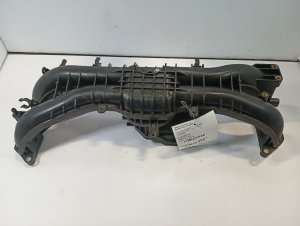
- Repair requires removing the intake manifold, making it a moderately difficult DIY job (4/5). It's wise to replace the intake gaskets at the same time.
- Because the cause often affects both sides, consider inspecting or replacing both TGV assemblies (Bank 1 and Bank 2) while the manifold is off.
What's Unique About the 2015-2019 Subaru WRX

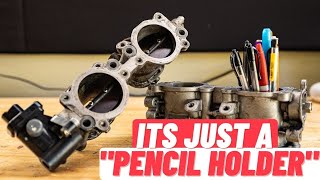
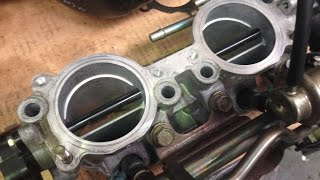
The FA20DIT engine in the 2015-2019 WRX relies on the TGV system for cold start emissions control. 🎬 Watch: How the TGV system works and common modifications. Early models in this generation were particularly susceptible to this code due to a specific design issue. Subaru issued a Technical Service Bulletin (TSB #02-182-19) acknowledging that condensation from the EGR system could enter the bearing area and cause corrosion on the TGV shaft, leading it to bind and get stuck. The TSB states the shaft material was updated to stainless steel to prevent this problem, and the new parts were used in production starting with VIN K9817040. The enthusiast community often performs "TGV deletes," which involves removing the butterfly valves to improve airflow, but this requires a specific ECU tune to disable the resulting check engine light codes.
Diagnostic Flowchart

Tap your situation to follow the diagnostic path that matches what you're seeing on this vehicle.
Symptoms You May Notice
- Check Engine Light is on
- Flashing cruise control light (a common Subaru feature when a CEL is present)
- Brake light may flash along with the CEL and cruise control light.
- Rough or unstable idle, especially when the engine is cold.
- Reduced engine power or hesitation
- A 'whooshing' or vacuum leak sound from the engine bay
- Inability to pass emissions inspection
- Replacing only the TGV motor when the valve shaft itself is seized due to corrosion.
- Assuming a vacuum leak is the root cause without checking the TGV system's electronic and mechanical components first.
- Performing an intake cleaning service when the issue is a failed motor or sensor. A cleaning may provide a temporary fix for minor sticking but often the code returns.
Most Likely Causes

- Sticking or Corroded TGV Assembly 🔴 High Probability As documented in Subaru TSB #02-182-19, condensation from the EGR system can enter the bearing area and corrode the TGV shaft, causing it to bind. This was more common on earlier models (pre-VIN K9817040) before the shaft material was changed to stainless steel for better corrosion resistance.
How to confirm: Use a bidirectional scan tool to command the TGV actuator. If it doesn't move or struggles, the valve is likely stuck. Physical inspection after removing the intake manifold is the definitive confirmation. You can also sometimes remove the actuator motor and try to move the valve linkage by hand to feel for binding.
Typical fix: Replace the entire Tumble Generator Valve assembly for Bank 1. Since the intake manifold must be removed, it is often recommended to replace both Bank 1 and Bank 2 assemblies at the same time, as the other side may fail soon after.
Est. part cost: $200-$400 per assembly - Failed TGV Actuator Motor 🟡 Medium Probability The electric motor that drives the valve can fail over time. In some cases, lubricant from the actuator can leak and cause erratic operation, as noted in another Subaru TSB (11-203-20R) for different models but a similar system. Forum users report that the motors can simply wear out and fail electrically.
How to confirm: With the engine off, command the TGV motor with a scan tool and listen for it to operate. If there's no sound, disconnect the motor and test for power and ground at the connector when commanded. If power is present but the motor doesn't run, the motor has failed. Some owners have had temporary success by tapping on the motor housing to un-stick it.
Typical fix: On FA20DIT engines, the motor is not sold separately from the TGV assembly by Subaru. Therefore, the fix is to replace the entire TGV assembly. Some owners have sourced used motors or found an updated Denso part number (e.g., 012010-6111) online to replace just the motor, but this is not an official Subaru repair path.
Est. part cost: $200-$400 (for the full assembly) - Failed TGV Position Sensor ⚪ Low Probability The sensor that reports the valve's position to the ECU is integrated into the assembly and can fail, sending an incorrect signal that the valve is stuck open when it is not. This is less common than mechanical binding or motor failure.
How to confirm: Use a scan tool to monitor the TGV position sensor voltage for Bank 1 while commanding the valve open and closed. If the valve motor can be heard operating but the sensor voltage does not change or is erratic, the sensor is likely faulty.
Typical fix: Like the motor, the position sensor is integrated into the TGV assembly and not sold separately by Subaru, requiring replacement of the entire unit.
Est. part cost: $200-$400 (for the full assembly)
Rare But Worth Checking
- Wiring Harness Damage: Rodents can chew on wiring, or the harness can be damaged during other engine repairs, leading to a short or open circuit for the TGV motor or sensor. It's always wise to inspect the 5-pin harness connector leading to the TGV assembly at the back of the intake manifold.
- Carbon Buildup: On higher mileage direct-injection engines, carbon can build up on the intake valves and TGV flaps, potentially causing them to stick. While less common than the corrosion issue, some owners attempt a chemical cleaning (like Subaru's Upper Engine Maintenance Kit) as a first step, though success is often temporary if the root cause is mechanical or electrical.
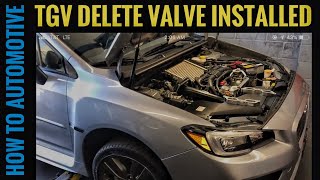
- Failed TGV Delete Tune: If a previous owner installed TGV deletes (removing the internal butterfly valves), the corresponding CEL codes must be disabled in the ECU via a tune. Due to EPA regulations, companies like COBB Tuning have restricted the ability for users to disable these codes on modern 🎬 See this walkthrough on installing TGV delete valves. Accessports, which can lead to issues if the hardware is removed without a proper tune.
Diagnosis Steps
- Connect an OBD-II scanner and confirm the presence of P2004 and any other related codes.
- Clear the code, start the engine, and see if the code returns immediately. Sometimes it can be an intermittent fluke.
- Use a bidirectional scan tool to access live data. Monitor the 'TGV Position Sensor Bank 1' and 'TGV Commanded Position Bank 1'.
- With the engine off (key on), command the TGV for Bank 1 to open and close using a function like the 'Compulsory Valve Operation Check Mode' on the Subaru Select Monitor. Observe the live data to see if the actual position matches the commanded position and listen for the actuator motor running near the back of the intake manifold.
- If the motor makes noise but the position doesn't change or changes slowly, the valve is mechanically stuck or the linkage is broken. This points to the common corrosion issue.
- If the motor does not make any noise, inspect the wiring and 5-pin connector for power and ground when the motor is commanded.
- If power and ground are good but the motor doesn't run, the motor itself has failed.
- If the valve appears to operate correctly but the code persists, the position sensor may be faulty, providing incorrect readings to the ECU.
- As a temporary measure for a 'stuck closed' code (P2006/P2007), one user reported removing the actuator and manually setting the valve to the open position to restore power until the part could be replaced.
Parts You'll Likely Need
- Tumble Generator Valve (TGV) Assembly, Bank 1 (Right/Passenger Side)
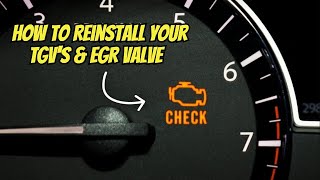
(OEM #14111AA041)— This is the most common failure point, addressed by TSB #02-182-19. The entire assembly contains the valve, shaft, motor, and sensor, which are not typically sold separately by Subaru. This part number is for the updated assembly with a corrosion-resistant stainless steel shaft. 🎬 Watch: Step-by-step guide to reinstalling your TGV and EGR.
Trusted brands: Subaru (OEM)
OEM price range: $250-$400
Aftermarket price range: $180-$300 - Tumble Generator Valve (TGV) Assembly, Bank 2 (Left/Driver Side)
(OEM #14111AA051)— It is highly recommended to replace both TGV assemblies at the same time, as they are the same age and subject to the same conditions. The labor to access them is significant, so replacing both prevents a repeat job in the near future. This is the updated part number for the left side per TSB #02-182-19.
Trusted brands: Subaru (OEM)
OEM price range: $250-$400
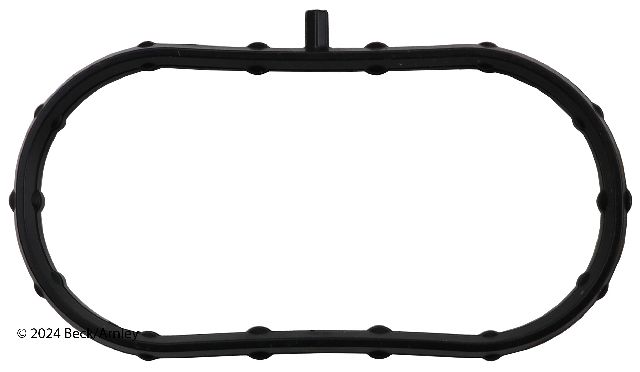
Aftermarket price range: $180-$300 - Intake Manifold Gaskets — These are one-time use gaskets that must be replaced anytime the intake manifold is removed to access the TGV assemblies.
Trusted brands: Subaru (OEM), Fel-Pro, Mahle
OEM price range: $20-$40
Aftermarket price range: $15-$30
Related Codes That Often Appear With This One
- P2005 — This is the same 'Stuck Open' code but for Bank 2 (driver's side). The underlying cause, like corrosion or age, often affects both sides, so it's common to see both codes together or for the second code to appear shortly after the first.
- P2006 — This is for 'TGV Stuck Closed, Bank 1'. If the actuator or valve is failing erratically, it may get stuck in either the open or closed position at different times, sometimes throwing both codes intermittently.
- P2007 — This is for 'TGV Stuck Closed, Bank 2'. Similar to P2006, it indicates a failure on the opposite bank.
Technical Service Bulletins (TSBs) & Recalls

- 02-182-19: Addresses corrosion of the TGV shaft causing it to bind and set codes P2004, P2005, P2006, or P2007. Specifies the cause as EGR condensation and the fix as a new stainless steel shaft.
- 11-203-20R: While for different models (Impreza/Crosstrek), this TSB is relevant as it addresses similar TGV-related codes caused by lubricant leaking from the actuator motor, showing another potential failure mode for the same type of component.
Platform-Specific Known Issues
- Subaru Technical Service Bulletin #02-182-19 directly addresses DTCs P2004, P2005, P2006, and P2007 on 2015-2019 WRX and 2014-2018 Forester XT models. It states that condensation from the EGR system can cause corrosion on the TGV shaft, impeding movement. The fix was to change the shaft material to stainless steel. The change was implemented in WRX production starting with VIN K9817040.
Mechanic-Grade Diagnostic Values
- TGV Position Sensor Voltage — expected: Diagnosis on this platform relies on functional testing rather than specific voltage or resistance values, which are not published in service literature. The ECU expects to see the sensor's voltage change in response to the motor being commanded.. Failure: A static or erratic voltage reading when the TGV motor is commanded (and can be heard running) indicates a failed position sensor.
Scan Tool Commands That Help
- Subaru Select Monitor (or equivalent bidirectional scanner): Compulsory Valve Operation Check Mode — This function is used with the key on, engine off to directly command the TGV actuator motor to open and close. It is the primary method for determining if the failure is mechanical (valve stuck), electrical (motor/wiring), or a sensor issue.
- Subaru Select Monitor (or equivalent bidirectional scanner): Current Data Display: 'TGV Signal' and 'TGV Drive' — While performing the compulsory operation check, monitoring these data PIDs allows the technician to see if the ECU is sending the 'TGV Drive' command and if the 'TGV Signal' (from the position sensor) is changing as expected.
Wiring & Ground Locations
- TGV Connector — On the TGV assembly itself, at the rear of the intake manifold near the firewall.. The 2015-2019 WRX uses a single 5-pin connector for each TGV assembly, which integrates the motor control and position sensor signals. Damage or corrosion at this connector can cause P2004 by interrupting power to the motor or the feedback signal from the sensor.
Real Owner Repair Stories
- Reddit user on r/subaru (2014 Subaru Outback (with similar TGV system)) — Check engine light, flashing brake and cruise control lights with codes P2004 and P2007.
❌ Tried (didn't work) A 'Subaru Upper Engine Maintenance Kit' chemical cleaning performed by the dealer. The fix only lasted for two weeks before the codes returned.
✅ What actually fixed it Replacing both the left and right TGV assemblies. The mechanic confirmed the old parts were not stuck due to carbon, but that the electric motors had failed. The total cost was just under $1,000. - Reddit user on r/subaru (2017 Subaru Forester XT (FA20DIT engine)) — TGV codes (P2004, P2005, P2006, or P2007).
❌ Tried (didn't work) Searching for an OEM replacement for only the TGV motor, which is not sold separately by Subaru.
✅ What actually fixed it The user found that a newer Denso part, number 012010-6111, is an updated TGV motor that fits and functions correctly. They purchased this motor on eBay and replaced only the motor, which resolved the code without needing to buy the entire TGV assembly. - Reddit user on r/subaru (2015 Impreza) — P2004 code, intake manifold runner stuck open.
❌ Tried (didn't work) Preparing to replace the part.
✅ What actually fixed it As a temporary fix, while the car was running, the user gave the TGV motor housing 'a few taps with the end of a Phillips head' screwdriver. The check engine light immediately went out, suggesting the motor was intermittently stuck and the vibration freed it.
When the Usual Fixes Don't Work
- While carbon buildup is a possible cause, it should not be the first assumption. One owner's detailed account shows that a professional upper engine chemical cleaning provided only a temporary two-week fix before the P2004/P2007 codes returned. The final, successful repair was the replacement of both TGV assemblies, as the electric motors themselves had failed internally. This suggests that while cleaning may help with minor sticking, it is unlikely to resolve an underlying mechanical (corrosion) or electrical (motor failure) problem.
OEM Part Supersession History
Various (pre-2019 parts)→14111AA041 (Right), 14111AA051 (Left)— The original TGV shaft was prone to corrosion from EGR system condensation. The updated part assemblies use a stainless steel shaft for improved corrosion resistance, as detailed in TSB 02-182-19.Denso 0120109-1091 (TGV Motor)→Denso 012010-6111 (TGV Motor)— This is an unofficial, non-Subaru parts path. Owners have found that the Denso motor part number 012010-6111 is an updated, compatible replacement for the original motor, allowing for replacement of just the motor instead of the entire TGV assembly.
Heads up: This is not an official Subaru-supported repair. It requires separating the motor from the TGV assembly, which is not standard procedure.
Model Year Variations Within This Range
- 2015-2019 (pre-facelift): Models built prior to VIN K9817040 are equipped with the original TGV assemblies that have shafts prone to corrosion. Models built after this VIN have the updated assemblies with stainless steel shafts, making them significantly less likely to experience this specific failure.
Helpful Videos
Used OEM Parts in Stock
New Aftermarket Parts Available


The information in this article is provided for general reference and educational purposes only. Vehicle specifications, procedures, and part compatibility can vary by production date, trim level, and region. Always consult your vehicle's factory service manual and verify part numbers before purchasing or performing repairs. Safety-critical components such as airbags, seat belts, and braking systems should be installed by a qualified professional.
- Subaru WRX:
- 🧭 Diagnostic Flowchart
- 🎬 Helpful Videos
- 🛍️ Shop This Part
- What's Unique About the 2015-2019 Subaru WRX
- Symptoms You May Notice
- Most Likely Causes
- Rare But Worth Checking
- Diagnosis Steps
- Parts You'll Likely Need
- Related Codes That Often Appear With This One
- Technical Service Bulletins (TSBs) & Recalls
- Platform-Specific Known Issues
- Mechanic-Grade Diagnostic Values
- Scan Tool Commands That Help
- Wiring & Ground Locations
- Real Owner Repair Stories
- When the Usual Fixes Don't Work
- OEM Part Supersession History
- Model Year Variations Within This Range
- 🎟️ Get 5% Off