

OBD-II Code P2005: Intake Manifold Runner Control Stuck Open (Bank 2)
The Ultimate Guide to Diagnosing and Fixing P2005
- P2005 indicates the intake runner flaps on engine bank 2 are physically stuck open, causing a 5-10% drop in fuel economy and sluggish acceleration from a stop.
- Carbon buildup jamming the flaps and broken plastic actuator linkages account for over 80% of P2005 failures, particularly on direct-injection engines.
- Driving with P2005 is safe for trips under 15 miles, but ignoring it for months risks a $1,200+ catalytic converter failure due to a constant rich or lean air-fuel imbalance.
- Proper diagnosis requires a bidirectional scan tool to command the actuator; blindly replacing the $200 actuator when the $800 intake manifold is cracked or jammed wastes money.
What Does P2005 Mean?
The P2005 code means your car's Powertrain Control Module (PCM) detects the intake manifold runner flaps for engine bank 2 are physically stuck in the open position. These flaps, part of the Intake Manifold Runner Control (IMRC) system, control airflow inside the intake manifold to optimize engine power and fuel efficiency. At low RPMs, the flaps close to increase air velocity, creating a swirl effect that improves torque and fuel atomization. At high RPMs, they open to maximize airflow for horsepower. When stuck open, the disrupted air-fuel mixture causes poor torque, rough idling, and hesitation at lower RPMs.
Technical definition: The official SAE/OBD-II definition is "Intake Manifold Runner Control Stuck Open Bank 2". This indicates the powertrain control module (PCM) commanded the intake manifold runner control (IMRC) system for bank 2 to close, but the position sensor reports the runners remain in the open position.
Can I Drive With P2005?
Yes, But With Caution. You can drive safely for trips under 15 miles, but repair it immediately. You will experience poor low-speed performance and a 5-10% drop in gas mileage. Ignoring the code causes engine strain, failed emissions tests, and destroys the catalytic converter (an $800-$2500 repair) due to a constant air-fuel imbalance. In severe cases, broken internal flap components get ingested by the engine, causing catastrophic damage.
Common Causes
- Carbon buildup on intake manifold runner flaps (Very Common) — Over time, carbon deposits build up inside the intake manifold, physically jamming the runner flaps. This is the primary cause on direct-injection engines.
- Failed IMRC actuator or solenoid (Very Common) — The electric motor or vacuum solenoid that moves the flaps fails internally due to worn brushes, seized gears, or electrical faults.
- Broken or binding IMRC linkage (Common) — The plastic or metal linkages connecting the actuator to the flaps break or bind. Engine heat makes plastic levers brittle, causing them to snap (a notorious issue on Mercedes-Benz).
- Leaking or disconnected vacuum lines (Less Common) — On vacuum-operated systems, cracked or disconnected hoses prevent the actuator from getting the suction required to move the flaps.
- Wiring or connector issues (Less Common) — The wiring harness for the actuator or position sensor suffers heat damage, causing poor connections, corrosion, or short circuits.
- Faulty IMRC position sensor (Rare) — The sensor reporting flap position to the PCM fails, sending incorrect data that tricks the computer into believing the flaps are stuck.
- Damaged or cracked intake manifold (Rare) — A crack in the intake manifold housing causes vacuum leaks or misaligns the runner assembly, causing it to bind.
- PCM software or command failure (Very Rare) — The Powertrain Control Module (PCM) suffers a software glitch or a failed output driver, sending a constant 'open' command. Requires a reflash or replacement.
Symptoms
- Check Engine Light is on — The Malfunction Indicator Lamp illuminates immediately after the PCM detects the stuck open condition.
- Poor engine performance at low speeds — The engine feels sluggish, hesitates, or lacks torque when accelerating from a stop, creating a noticeable 'flat spot'.
- Rough or uneven idle — The engine idles erratically, with RPMs fluctuating or surging because airflow is not optimized for idle.
- Reduced fuel economy — The vehicle consumes 5-10% more fuel because the air-fuel mixture is incorrect for low engine loads.
- Rattling noise from the engine bay — A rattling noise from the intake manifold indicates a broken, loose linkage or a detached internal flap.
- Failed emissions test (also visible on scanner) — The incorrect air-fuel ratio causes high hydrocarbon (HC) and carbon monoxide (CO) emissions, resulting in an automatic test failure.
Diagnostic Flowchart
Tap your situation to follow the diagnostic path that matches what you're seeing on this code.
Common Fixes & Costs
- Replacing the IMRC actuator/solenoid — Parts: $70-$250, Labor: $150-$250, ~1.5 hr book time (Intermediate)
- Replacing broken IMRC linkage clips/levers — Parts: $30-$100, Labor: $400-$800, ~4.5 hr book time (Professional)
- Cleaning the intake manifold and runner flaps — Parts: $20-$50, Labor: $300-$600, ~4.0 hr book time (Professional)
- Replacing the entire intake manifold assembly — Parts: $400-$1200, Labor: $400-$1000, ~4.5 hr book time (Professional)
- Repairing damaged wiring or vacuum lines — Parts: $10-$50, Labor: $100-$200, ~1.5 hr book time (Intermediate)
DIY vs Professional
- Replacing the IMRC actuator/solenoid 🟢 Beginner
Tools: Basic hand tools, socket set, pliers, inspection mirror. - Replacing broken IMRC linkage clips/levers 🟢 Beginner
Tools: Extensive socket set, torque wrench, fuel line disconnect tools, T30 Torx bit. - Cleaning the intake manifold and runner flaps 🟢 Beginner
Tools: Extensive socket set, torque wrench, scrapers, chemical cleaners, new gaskets, shop vacuum. - Replacing the entire intake manifold assembly 🟢 Beginner
Tools: Extensive socket set, torque wrench, fuel line disconnect tools, new gaskets, coolant. - Repairing damaged wiring or vacuum lines 🟢 Beginner
Tools: Multimeter, wire strippers, soldering iron, heat shrink tubing, vacuum pump.
Used vs. New Parts: Buying Guide
When a used part is worth it: For simple, all-metal intake manifolds on older vehicles, a used part is acceptable after inspecting for cracks. For modern composite (plastic) manifolds with integrated IMRC systems, buying used is highly risky as they fail from heat and age.
Donor-vehicle mileage cap: roughly under 60000 miles for the part to have meaningful remaining life.
Donor quality checklist:
- Verify the part number matches exactly; visual similarities are not enough.
- Inspect plastic manifolds for hairline cracks around seams and mounting points.
- Ensure the seller provides high-resolution photos and a return policy.
- Avoid parts from vehicles scrapped due to engine failure or fire.
Decision logic:
- If The failure is a known design flaw (e.g., Mercedes' plastic lever) → Buy a new aftermarket 'OE Fix' part that uses improved materials (e.g., billet aluminum instead of plastic).
- If The vehicle has over 100,000 miles and requires a complex plastic manifold assembly → Buy new (OEM or quality aftermarket) to avoid repeating a 4-hour labor job when the used part fails.
- If The part is a simple, non-moving component and new parts are prohibitively expensive → A low-mileage used part is a reasonable budget option.
Warranty tradeoff: Used parts carry a 30-90 day warranty covering only the part. New aftermarket parts often include a limited lifetime warranty. OEM parts carry a 1-2 year warranty that includes labor if installed by a dealer.
Worst-case if a used part fails: $400-$1500 if a used intake manifold fails, primarily due to the cost of repeating 4+ hours of labor.
What Happens If You Wait — Timeline
- 0-1 month: Check Engine Light illuminates. A slight rough idle occurs on cold starts. No other major symptoms perceived by most drivers. (MPG impact: 0-5%% · Added cost: $0-40 in wasted fuel)
- 1-3 months: Noticeable hesitation or 'flat spot' when accelerating. Rough idle becomes consistent. Fuel economy drops measurably. Vehicle fails emissions tests. (MPG impact: 5-10%% · Added cost: $50-150 in wasted fuel)
- 3-9 months: The constant incorrect air-fuel mixture stresses the catalytic converter, causing it to overheat and degrade. Plastic linkages experience accelerated wear. (MPG impact: 10-15%% · Added cost: $800-$2500 (risk of catalytic converter failure))
- 9+ months: Catastrophic failure risk increases. Weakened plastic runner flaps break off and get ingested into a cylinder, destroying the piston and valves. (MPG impact: 10-20%% · Added cost: $3000-$8000+ (risk of major engine damage))
Cost of Not Fixing It
- 0-1 month: Noticeable drop in fuel economy (5-10%), poor low-speed acceleration, and rough idle. Failed emissions test is guaranteed. (Added cost: Negligible, other than increased fuel costs.)
- 1-6 months: The imbalanced air-fuel ratio forces the catalytic converter to operate at extreme temperatures, leading to degradation and failure. (Added cost: $1200-$2800 for catalytic converter replacement.)
- 6+ months: Weakened plastic runner flaps or linkages break off and get ingested by the engine, causing catastrophic damage to valves, pistons, and cylinder walls. (Added cost: $3000-$8000+ for major engine repair or replacement.)
Diagnosis Steps
- Scan for Codes and Review Freeze Frame Data
Use an OBD-II scanner to confirm P2005 is active. Check for related codes (e.g., P2004, P2007). Review freeze frame data to identify the exact RPM and engine load when the code triggered, providing critical context.
Tools: OBD-II Scanner (Beginner) - Visually Inspect the IMRC System
Locate the IMRC actuator and linkage on bank 2. Look for broken plastic linkage arms, disconnected vacuum lines, or damaged wiring. On Ford V8s, this is at the back of the manifold near the firewall, requiring a mirror.
Tools: Flashlight, Inspection Mirror (Beginner) - Command the Actuator with a Scan Tool
Use a bidirectional scan tool to command the IMRC actuator open and closed. Watch the live data PID for 'IMRC Position'. If the command is sent but the position doesn't change, you have confirmed a failure in the actuator, linkage, or flaps.
Tools: Advanced Bidirectional OBD-II Scanner (Intermediate) - Test the Linkage and Flap Movement
With the engine off, manually move the runner flap linkage. It must move smoothly without binding. Gritty resistance indicates carbon buildup. Free movement with no internal resistance means the internal linkage or flap is broken.
Tools: Hands, Protective Gloves (Intermediate) - Monitor Live Data PIDs
Monitor 'IMRC Commanded Position' and 'IMRC Actual Position' while raising engine RPM from idle to 3000 RPM. A discrepancy where 'Commanded' changes but 'Actual' stays at 100% (open) confirms the fault.
Tools: Advanced OBD-II Scanner (Advanced) - Test Vacuum Lines (If Applicable)
If the system is vacuum-operated, connect a handheld vacuum pump to the actuator. It must hold vacuum and move the linkage through its full range. Test the supply lines for leaks.
Tools: Handheld Vacuum Pump with Gauge (Intermediate) - Test the Actuator Circuit
Disconnect the actuator's electrical connector. Use a multimeter to check for 12V power and ground with the key on. Check the resistance of the actuator motor (typically 2-5 Ω). Infinite resistance means a dead motor.
Tools: Digital Multimeter, Vehicle-specific Wiring Diagram (Advanced) - Check Position Sensor Voltage
Back-probe the position sensor's signal wire. Manually sweep the linkage from closed to open. You must see a smooth voltage sweep (e.g., 0.5V to 4.5V). Dropouts, dead spots, or voltages outside the manufacturer's specified range indicate a faulty sensor.
Tools: Digital Multimeter, Vehicle-specific Repair Data (Advanced) - Perform a Smoke Test for Leaks
If a vacuum leak is suspected but invisible, force low-pressure smoke into the intake system. Smoke escaping from the manifold, gaskets, or hoses pinpoints the leak.
Tools: Automotive Smoke Machine (Advanced)
When This Code Triggers (Freeze-Frame Conditions)
- Engine Coolant Temp: 170-200°F (Fully warmed up. The IMRC monitor runs after the engine reaches operating temperature.)
- RPM: 600-1200 RPM (At idle or during deceleration. The code triggers when the PCM commands the flaps closed at low RPM but the sensor reports they are open.)
- Engine Load: 15-40% (Low load conditions, such as idling or steady-state cruising, where flaps must be closed to improve air velocity.)
- Vehicle Speed: 0-20 mph (During idle or slow coast-down maneuvers where the PCM commands the runners closed.)
Related Codes
- P2004 — Indicates 'Intake Manifold Runner Control Stuck Open Bank 1'. This is the identical mechanical problem occurring on the opposite engine bank.
- P2007 — Indicates 'Intake Manifold Runner Control Stuck Closed Bank 2'. The same system has failed, but the flaps are jammed in the closed position. If P2005 and P2007 appear together, the linkage is broken or the sensor is sending erratic data.
- P2006 — Indicates 'Intake Manifold Runner Control Stuck Closed Bank 1'. This is the 'stuck closed' counterpart to P2004 on the opposite bank.
- P2008 / P2009 — Indicates an electrical fault in the IMRC actuator control circuit ('Circuit Open' or 'Circuit Low'). These point specifically to a broken wire or dead motor, not a mechanical jam.
- P2015 — Indicates a problem with the position sensor's range or performance. A failing sensor triggers P2005 by falsely reporting the flaps are stuck when they are actually moving fine.
Climate & Environmental Factors
- Cold Weather: Cold temperatures make plastic linkages and vacuum lines brittle, causing them to snap. Carbon buildup binds more severely when cold, preventing flap movement and triggering the code on startup.
- High Humidity: Sustained humidity promotes corrosion on electrical connectors for the IMRC actuator and position sensor, increasing electrical resistance and disrupting signals to the PCM.
How to Talk to a Mechanic About This Code
Say this: "I have an active P2005 code and I'd like to schedule a diagnostic. I want to confirm if the cause is a bad actuator, a broken linkage, or carbon buildup before authorizing a full intake manifold replacement."
This signals you understand the common failure points. It encourages the shop to perform a thorough diagnosis rather than defaulting to the most expensive repair, setting the expectation that you want proof of the specific failure.
Avoid saying:
- 'Just fix whatever's wrong'
- 'My check engine light is on, can you look at it?'
- 'Whatever you recommend'
Questions to ask before authorizing the repair:
- Were you able to visually inspect the IMRC linkage for breaks or binding?
- Did you test the actuator by commanding it open and closed with a scan tool? Did it move?
- If you are recommending a full intake manifold replacement, why is a targeted repair (like a new actuator or cleaning) not a viable option?
- What is the warranty on the recommended repair, for both parts and labor?
Where to Take It: Dealer vs Independent vs Chain
- Dealer:
Recommended for in-warranty vehicles or complex, brand-specific issues where dealer knowledge is critical. Otherwise, it is the most expensive option.
Best for: Vehicles still under powertrain or emissions warranty., Complex, known manufacturer-specific failures (e.g., Mercedes M272 lever, newer Subarus with integrated TGV).
Downsides: Highest labor rates., Defaults to replacing the entire intake manifold assembly even if a smaller component failed. (Typical cost: +50% vs. baseline) - Independent Shop:
Best overall fit for out-of-warranty repairs. A well-equipped independent shop diagnoses and fixes P2005 effectively at a significant savings over the dealer.
Best for: Most out-of-warranty vehicles., Vehicles with common versions of this code (e.g., Ford, GM).
Downsides: Diagnostic capability varies; ensure they have a modern bidirectional scan tool. (Typical cost: +0% vs. baseline) - Chain Shop:
Avoid for diagnosis. The risk of misdiagnosis (e.g., selling a costly and unnecessary intake manifold) is high. Only use if the problem is already precisely identified.
Best for: Simple, pre-diagnosed repairs like an easily accessible actuator replacement.
Downsides: High pressure to upsell unnecessary services., Technician skill varies widely; complex diagnosis of P2005 leads to misdiagnosis. (Typical cost: -10% vs. baseline)
When to Walk Away From the Repair
If the estimated repair cost exceeds 50% of the car's private-party market value, seriously consider selling or trading in the vehicle instead of repairing it.
- Car worth $12000, fix is $850: Fix it. The repair cost is a small fraction of the car's value.
- Car worth $4000, fix is $2100: Walk away. The repair cost is over 50% of the car's value. It is not a sound financial decision.
- Car worth $5500, fix is $2500: Borderline. Get a second opinion on the repair cost. If it cannot be reduced, walk away.
What Scan Tool You Need for This Code
Minimum: A scanner that reads live data PIDs for IMRC commanded vs. actual position and offers bidirectional control to command the actuator.
A basic $20 code reader only tells you the P2005 code exists. It cannot show if the computer is commanding the flaps to move or what the position sensor reports. Without live data and bidirectional control, you are guessing at the point of failure and will waste money on unnecessary parts.
Budget: Kingbolen Ediag Elite (~$75) — Provides app-based full system diagnostics and limited bidirectional control, sufficient to test the IMRC actuator on some vehicles.
Mid-range: Foxwell NT510 Elite / Autel MaxiCOM MK808 (~$180-450) — Offers robust bidirectional control to command the IMRC actuator open and closed, definitively testing its function. Provides advanced live data graphing to check the position sensor's response.
Professional: XTOOL D8S / Autel MK906BT (~$700-1200) — Provides full OEM-level bidirectional control, advanced ECU coding functions, and topology mapping to quickly diagnose related electrical issues.
Rent vs buy: Auto parts stores offer free loaner scanners, but they lack the bidirectional control needed for a proper P2005 diagnosis. Investing in a mid-range scanner pays for itself by avoiding a single misdiagnosis.
How to Clear the Code After You Fix It
- Use an OBD-II scan tool to clear the P2005 code.
- Perform a drive cycle to allow the vehicle's readiness monitors to run.
- Reconnect battery (only if required by the repair procedure, as this clears all monitors).
Drive cycle (~30 minutes): A standard drive cycle includes a cold start (engine temp below 122°F), a 3-minute idle, 15 minutes of steady highway driving (55-60 mph), followed by 15 minutes of stop-and-go city driving. This allows the onboard diagnostics to re-run the IMRC tests.
Readiness monitors affected: Catalyst Monitor, Oxygen (O2) Sensor Monitor, Evaporative (EVAP) System Monitor
Watch out for:
- Clearing the code resets readiness monitors to 'Not Ready'. Taking the car for an emissions test before they are 'Ready' results in an automatic failure.
- The code returns immediately if the underlying mechanical jam or electrical fault is not repaired.
Will This Fail Emissions / State Inspection?
Yes — this code typically fails an OBD-II emissions inspection.
- California: A P2005 code is an automatic smog check failure. All OBD readiness monitors must be set to 'Ready'. After repair, a full drive cycle is required before re-testing.
- New York: An active Check Engine Light and a code like P2005 results in an automatic NYS DMV emissions inspection failure.
- Texas: An illuminated Check Engine Light results in an automatic failure. After clearing the code, you can have at most one monitor 'Not Ready' to pass.
Most Commonly Affected Vehicles
- Ford F-150, Mustang, Explorer (2005-2018) — Commonly affects 4.6L and 5.0L V8s. The issue is a broken plastic linkage arm on the actuator at the rear of the manifold. 2015-2017 F-150s frequently require full manifold replacement.
- Mercedes-Benz C-Class, E-Class, ML-Class (M272/M273 engines) (2006-2012) — Extremely prone to failure of the plastic actuator lever on the intake manifold. Aftermarket billet aluminum levers permanently fix the issue without replacing the entire manifold.
- Audi/Volkswagen A4, A6, Passat, Tiguan (FSI/TSI engines) (2005-2016) — Heavy carbon buildup is the primary cause, requiring intake manifold removal and walnut blasting. Actuator motor failure is also common.
- Subaru Legacy, Outback, Forester, Impreza (2013-2019) — Subaru calls this the Tumble Generator Valve (TGV). On 2017+ models, the TGV is integrated into the manifold, requiring full replacement. Earlier models allow separate motor replacement.
- Dodge/Chrysler/Jeep Charger, 300, Grand Cherokee (3.6L/5.7L engines) (2007-2018) — Caused by a failed actuator motor or binding flaps due to carbon and oil buildup from the PCV system.
- BMW 3-Series, 5-Series (N52/N55 engines) (2006-2013) — Triggered by issues with the DISA (Differentiated Air Intake) valve. Plastic components fail, causing the flap to break or jam.
- Hyundai/Kia Sonata, Santa Fe, Optima, Sorento (2011-2019) — The Variable Charge Motion Actuator (VCMA) fails frequently. Related code P200A (IMRC Performance) often accompanies this issue.
- Chevrolet Malibu, Equinox, Traverse (2010-2017) — Triggered by a faulty actuator or carbon buildup on both 4-cylinder and V6 models. Visual inspection easily identifies broken external linkages.
Manufacturer-Specific Notes
- Mercedes-Benz: On M272/M273 engines, the failure is almost always a small plastic lever on the manifold's actuator mechanism. Aftermarket billet aluminum repair kits (e.g., URO Parts) provide a permanent fix, avoiding a $1,000 manifold replacement.
- Ford: On 5.0L V8s, the IMRC actuator is located on the back of the intake manifold against the firewall, making access extremely difficult. Broken internal linkages often force a complete manifold replacement.
- Subaru: Subaru refers to this as Tumble Generator Valves (TGV). If a valve is stuck closed, a temporary emergency workaround is to remove the TGV motor and zip-tie the valve open to restore power until repaired.
- Audi/VW: Direct injection FSI/TSI engines suffer severe carbon buildup. Walnut blasting the intake ports and manifold is mandatory during this repair to prevent the issue from immediately returning.
Real Owner Stories
2016 Ford F-150 5.0L at 44k miles
Check Engine Light appeared. The engine ran at higher RPMs than usual at highway speeds and felt sluggish from a stop.
What they tried:
- Scanned codes at an auto parts store, returning P2005 and P2007 (stuck open and stuck closed on the same bank).
- Dropped the truck off at the dealer for diagnosis.
Outcome: Dealer diagnosed a mechanical failure in the bank 2 IMRC linkage and replaced the entire intake manifold assembly under warranty.
Lesson: On Ford 5.0L engines, getting P2005 and P2007 simultaneously points to a broken linkage or actuator arm, as the computer gets conflicting position signals. This is a known issue in the 40-50k mileage range.
2018 Subaru Outback 2.5i at 96k miles
Check Engine Light with code P2005 came on one week after purchasing the vehicle.
What they tried:
- Attempted an intake cleaning with Seafoam, which cleared the code for an hour before it returned.
- Removed the manifold and confirmed the Tumble Generator Valves (TGV) were physically jammed.
Outcome: Owner replaced the entire intake manifold assembly for $500, permanently resolving the code.
Lesson: On modern Subarus, TGVs are integrated into the plastic intake manifold. Chemical cleaners fail to unjam them, making full manifold replacement the only solution.
2010 Mercedes-Benz GL350 (OM642 Diesel)
Vehicle had a P2005 code. An independent shop attempted a repair but broke the intake assembly.
What they tried:
- Replaced the swirl flap motor, but the code returned.
- Used a resistor 'simulator plug' to trick the ECU, causing new codes (P2006, P2007).
Outcome: A dealer found the first shop broke the wiring harness and intake box. The issue was traced to a broken swirl flap mechanism, requiring a $4,400 manifold replacement.
Lesson: Misdiagnosis is costly. Throwing parts at complex systems or using bypass resistors without a full diagnosis leads to cascading failures. A mechanical break in the linkage is the most common underlying cause.
2017 Subaru Forester with TGV motor failure
Vehicle had a TGV stuck code causing significant power loss.
What they tried:
- Searched for a replacement TGV motor but only found used parts.
- Discovered a newer Denso part number (012010-6111) was an updated, compatible replacement for the original motor.
Outcome: Purchased the new-generation Denso motor, installed it in 30 minutes, and cleared the codes. The fix was completely successful.
Lesson: On some Subarus, the TGV motor is a separate, easily replaceable part. Always research updated part numbers, as manufacturers release improved versions that fix original flaws.
How to Prevent This Code From Triggering
- Use TOP TIER certified gasoline (Every fill-up) — Higher levels of detergents prevent carbon deposit formation on intake valves and runners, the primary cause of jammed flaps.
- Perform a professional intake system cleaning service (Every 50,000-60,000 miles) — On direct injection engines, fuel doesn't wash over the intake valves. A professional multi-step cleaning removes carbon deposits before they jam the runner flaps.
- Replace engine air filter at recommended intervals (Every 15,000-30,000 miles) — A dirty air filter restricts airflow, altering air-fuel ratios and accelerating carbon buildup within the intake system.
- Maintain the PCV system (Inspect every 30,000 miles, replace as needed) — A faulty PCV system allows excess oil vapor into the intake manifold. This oil bakes onto the hot runners, creating sticky carbon buildup that binds the flaps.
- Ensure electrical grounds are clean and tight (During battery service or engine work) — The IMRC actuator relies on stable voltage. Corroded ground straps cause erratic voltage, leading the PCM to misinterpret runner position and set false codes.
Frequently Asked Questions
What is 'Bank 2'?
Bank 2 is the side of the engine that does not contain the number 1 cylinder. On a V6 or V8 engine, it is the cylinder head opposite the one with cylinder #1. Inline-4 engines only have one bank, so P2005 does not apply to them.
What are common misdiagnosis mistakes for P2005?
A common mistake is replacing the IMRC actuator without testing it, only to find the flaps are jammed with carbon. Another pitfall is replacing the entire $1,000 intake manifold when only a $50 plastic linkage clip failed. Always use a bidirectional scanner to command the actuator before buying parts.
Can I just clean the intake manifold to fix P2005?
Yes, if carbon buildup jams the flaps, a thorough cleaning restores function. However, this requires removing the manifold from the engine, as aerosol sprays are ineffective. If the actuator motor or linkage failed, cleaning will not solve the problem.
Will a P2005 code clear itself?
If the issue is intermittent, the code may clear temporarily, but it will return once the fault is detected again. The underlying mechanical or electrical problem must be fixed for a permanent solution.
Why is replacing the whole intake manifold a common fix?
On many modern cars, the runner flaps, linkage, and position sensor are integrated into the plastic intake manifold as a single, non-serviceable assembly. If any internal component breaks, the entire manifold must be replaced.
Can I 'delete' or tune out the IMRC system to get rid of the code?
While custom tuners can disable the IMRC system in the software, it is not recommended for daily drivers. Doing so permanently compromises low-RPM torque, ruins fuel economy, and causes emissions test failures.
How can I prevent code P2005?
Use TOP TIER certified gasoline to reduce carbon buildup. Perform periodic professional intake system cleaning services every 50,000 miles. Maintain your PCV system to prevent oil vapor from baking onto the runner flaps.
Key Takeaways
- P2005 indicates the intake runner flaps on engine bank 2 are physically stuck open, causing a 5-10% drop in fuel economy and sluggish acceleration from a stop.
- Carbon buildup jamming the flaps and broken plastic actuator linkages account for over 80% of P2005 failures, particularly on direct-injection engines.
- Driving with P2005 is safe for trips under 15 miles, but ignoring it for months risks a $1,200+ catalytic converter failure due to a constant rich or lean air-fuel imbalance.
- Proper diagnosis requires a bidirectional scan tool to command the actuator; blindly replacing the $200 actuator when the $800 intake manifold is cracked or jammed wastes money.
Helpful Videos
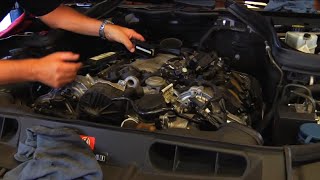
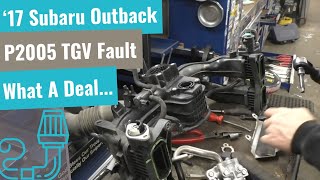
Shop the Parts Behind P2005
Below are the parts most often responsible for code P2005, ranked by how frequently each one is the actual culprit (per the diagnosis above). Tap any to see what we have for your vehicle.

The information in this article is provided for general reference and educational purposes only. Vehicle specifications, procedures, and part compatibility can vary by production date, trim level, and region. Always consult your vehicle's factory service manual and verify part numbers before purchasing or performing repairs. Safety-critical components such as airbags, seat belts, and braking systems should be installed by a qualified professional.
- 🧭 Diagnostic Flowchart
- 🎬 Helpful Videos
- 🛍️ Shop This Part
- What Does P2005 Mean?
- Can I Drive With P2005?
- Common Causes
- Symptoms
- Common Fixes & Costs
- DIY vs Professional
- Used vs. New Parts: Buying Guide
- What Happens If You Wait — Timeline
- Cost of Not Fixing It
- Diagnosis Steps
- When This Code Triggers (Freeze-Frame Conditions)
- Related Codes
- Climate & Environmental Factors
- How to Talk to a Mechanic About This Code
- Where to Take It: Dealer vs Independent vs Chain
- When to Walk Away From the Repair
- What Scan Tool You Need for This Code
- How to Clear the Code After You Fix It
- Will This Fail Emissions / State Inspection?
- Most Commonly Affected Vehicles
- Manufacturer-Specific Notes
- Real Owner Stories
- 2016 Ford F-150 5.0L at 44k miles
- 2018 Subaru Outback 2.5i at 96k miles
- 2010 Mercedes-Benz GL350 (OM642 Diesel)
- 2017 Subaru Forester with TGV motor failure
- How to Prevent This Code From Triggering
- Frequently Asked Questions
- What is 'Bank 2'?
- What are common misdiagnosis mistakes for P2005?
- Can I just clean the intake manifold to fix P2005?
- Will a P2005 code clear itself?
- Why is replacing the whole intake manifold a common fix?
- Can I 'delete' or tune out the IMRC system to get rid of the code?
- How can I prevent code P2005?
- Key Takeaways
- 🎟️ Get 5% Off