

P2008 on 2008-2017 Audi S5 3.0L V6: Intake Runner Control Circuit Causes and Fixes
On the Audi S5 3.0T, code P2008 almost always means the intake manifold runner control solenoid for Bank 1 has failed or its wiring is damaged. This is an electrical fault, not a mechanical one. The solenoid is a ~$40-$80 part, but replacing it is labor-intensive as it requires removing the supercharger. Due to the significant labor involved, it is critical to also replace the PCV valve, thermostat, and water pump as preventative measures.
- P2008 on your S5 3.0T is an electrical fault in the Bank 1 (passenger side) intake runner control circuit, not a mechanical problem with the flaps.
- The most probable cause is a failed control solenoid, which is located under the supercharger.
- Repair is a major job (DIY 5/5) because the supercharger must be removed to access the part.
- While the supercharger is off, it is highly recommended to proactively replace other 'while you're in there' parts like the PCV valve, thermostat, and both IMRC solenoids to save on future labor.
- Do not confuse this with P2006/P2007, which indicate mechanically stuck flaps, often due to carbon buildup or incorrect reassembly.
What's Unique About the 2008-2017 Audi S5
On the 3.0L TFSI engine, the entire intake runner system, including the control solenoids and vacuum actuators, is buried underneath the supercharger. This makes diagnosis and repair significantly more involved than on many other engines where these components are accessible. While the P2008 code points to a simple electrical part, getting to it is a complex job. Owners often discover this fault while addressing other common 3.0T issues like a failed PCV valve, thermostat, or water pump, which also live under the supercharger and are common failure points.
Generation note: The 2008-2017 Audi S5 spans the B8 and B8.5 generations. The 3.0L TFSI Supercharged V6 engine was NOT used in the 2008-2012 S5 Coupe, which had a 4.2L V8. This guide specifically applies to the S5 models equipped with the 3.0L V6: the 2010-2017 Cabriolet and the 2013-2017 Coupe.
Symptoms You May Notice
- Check Engine Light is on
- Rough or unstable idle
- Noticeable loss of power, especially at low RPMs
- Hesitation during acceleration
- Reduced fuel economy
- Engine surging
- Hard starting or no-start condition in some cases
- Replacing the intake manifold for a P2008 code. P2008 is an electrical fault. The manifold itself, with its flaps, is a mechanical part. Replacing it will not fix an open circuit unless the actuator (which may be part of the assembly) was the true cause, which is less likely for this specific code.
- Performing a carbon cleaning. While carbon buildup is a common issue on the 3.0T engine that can cause intake runner flaps to stick and trigger codes P2006 or P2007, it will not cause an electrical open circuit code like P2008.
Most Likely Causes
- Failed Intake Manifold Runner Control Solenoid (Bank 1) 🔴 High Probability → Shop Engine Intake Manifold The solenoid, also called a change-over valve, is an electro-mechanical part that operates in a high-heat environment under the supercharger. Over time, the internal coil can break from heat cycles, creating the 'open circuit' condition detected by the P2008 code.
How to confirm: After removing the supercharger to gain access, disconnect the solenoid's electrical connector. Test the resistance across the two pins with a multimeter; a healthy solenoid should measure between 25 and 35 ohms. An infinite resistance reading (OL) indicates an open circuit and a failed solenoid. Alternatively, apply a 12V power source to the pins; a healthy solenoid will make an audible 'click'.
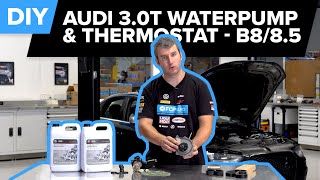
Typical fix: Replace the Bank 1 intake runner control solenoid (Part No. 037906283C). Since the supercharger must be removed, it is highly recommended to also replace the Bank 2 solenoid, PCV valve, thermostat, water pump, and all associated gaskets at the same time to prevent redundant future labor. 🎬 See how to replace the water pump and thermostat while inside.
Est. part cost: $40-$80 - Damaged Wiring or Connector 🟡 Medium Probability Engine bay wiring, particularly the harness under the supercharger, can become brittle from constant heat cycles. Rodents are also known to chew on wiring harnesses. A connector could also be damaged or left unplugged during a previous repair, such as a carbon cleaning or PCV valve replacement.
How to confirm: Visually inspect the wiring leading to the Bank 1 solenoid for any signs of breaks, melting, or rodent damage. Ensure the connector is securely plugged in and the pins are clean and free of corrosion. Check for continuity from the ECU to the solenoid connector if a break is suspected.
Typical fix: Repair the damaged section of wire or replace the connector pigtail. If the connector was simply unplugged, reconnect it.
Est. part cost: $5-$30 - Leaking Vacuum Actuator Diaphragm (Bank 1) ⚪ Low Probability The rubber diaphragm inside the vacuum actuator can perish over time, causing a vacuum leak. While this typically causes a 'stuck closed' code (P2006), it is a common failure point in the same system and worth inspecting.
How to confirm: With the supercharger removed, connect a hand-held vacuum pump to the actuator's vacuum port. If it fails to hold vacuum, the diaphragm is torn.
Typical fix: Replace the intake manifold actuator. An AudiWorld forum member confirmed this part can be ordered separately from the dealer under part number 06E133159D or 06E133159E, avoiding the need to replace the entire lower intake manifold. Aftermarket repair kits are also available from suppliers like Airshox.eu.
Est. part cost: $80-$150 for actuator/kit, $600+ for manifold assembly
Rare But Worth Checking
- Failed Engine Control Module (ECM): → Shop Engine Control Module (ECM) This is extremely rare. The ECM's internal driver for the IMRC circuit can fail, but all other more likely causes should be exhaustively ruled out before condemning the ECM.
Diagnosis Steps
- Confirm the vehicle is a 2010-2017 S5 with the 3.0L Supercharged V6 engine.
- Scan the ECM for fault codes. Confirm P2008 is present for Bank 1. Note if P2006 is also present.
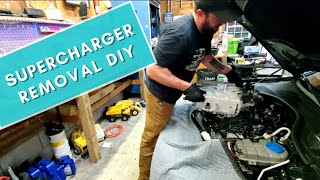
- Plan for supercharger removal. 🎬 Watch: Step-by-step guide to removing the 3.0T supercharger. This is required for access and is a multi-hour job. Gather all necessary replacement gaskets and 'while-you're-in-there' parts like the PCV, thermostat, and water pump.
- Once the supercharger is removed, locate the Bank 1 (passenger side) IMRC solenoid.
- Inspect the solenoid's electrical connector and wiring harness for any visible damage, looseness, or corrosion.
- Disconnect the solenoid and test it with a multimeter for resistance. A healthy solenoid should read 25-35 Ohms. An open circuit (OL) confirms failure. Alternatively, use a 12V source to listen for a click.
- If the solenoid tests good, check for voltage at the harness connector with the ignition on to verify the ECM is sending a signal.
- While the system is accessible, it is wise to also test the vacuum actuator for Bank 1 using a hand-held vacuum pump to ensure it holds vacuum.
Parts You'll Likely Need
- Intake Manifold Runner Control Solenoid / Change-over Valve
(OEM #037906283C)— This is the most common failure point for an electrical 'open circuit' P2008 code. It's an electronic valve that controls vacuum to the actuator. This part is widely used across many VW/Audi applications.
Trusted brands: Pierburg, Bosch, URO Parts, Audi Genuine
OEM price range: $60-$150
Aftermarket price range: $25-$80 - Supercharger Gaskets
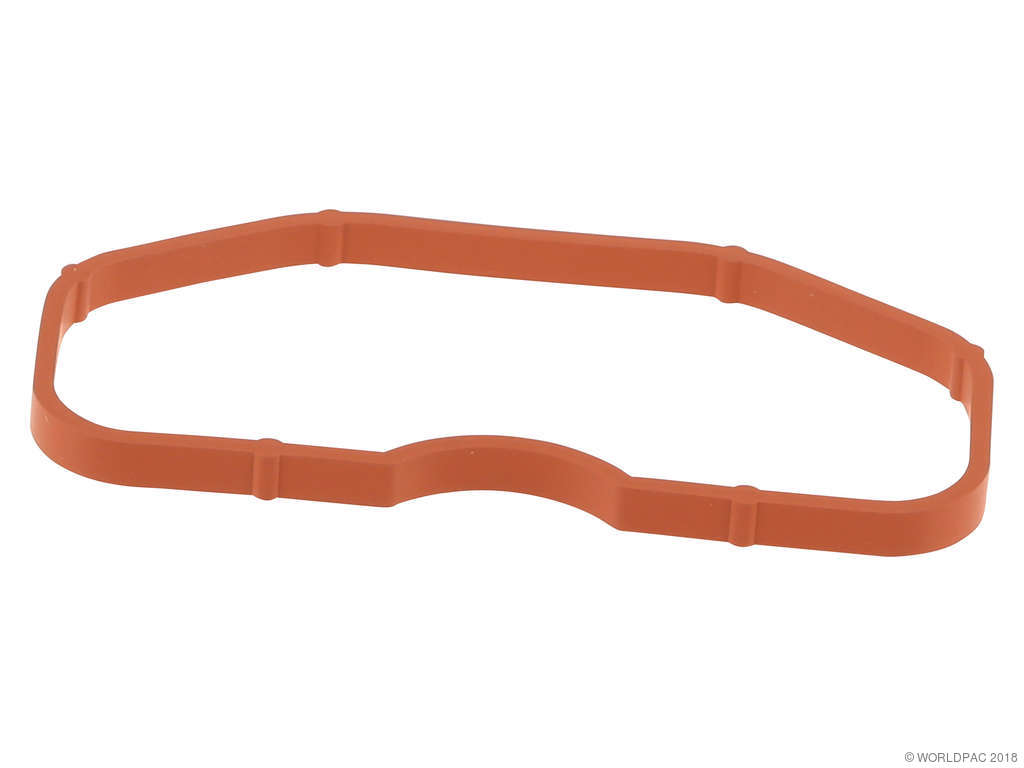
(OEM #06E129717F (x2))— These are single-use gaskets required for re-installing the supercharger, which must be removed to access the IMRC solenoids.
Trusted brands: Elring, Victor Reinz, Audi Genuine
OEM price range: $50-$80
Aftermarket price range: $30-$50 - PCV / Oil Separator Assembly
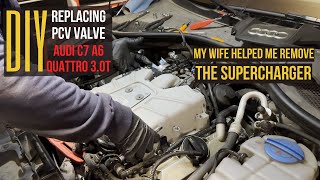
(OEM #06E103547H (or latest revision))— CRITICAL 'while-you're-in-there' part. The PCV is located under the supercharger and is a very common failure item, causing oil consumption, vacuum leaks, 🎬 Watch: Detailed walkthrough for replacing the PCV valve assembly. and rough idle. Failure is common around 60-80k miles. Replacing it during a P2008 repair prevents costly redundant labor.
Trusted brands: Audi Genuine
OEM price range: $150-$250 - Thermostat Assembly
(OEM #06E121111AL (or latest revision))— CRITICAL 'while-you're-in-there' part. Also located under the supercharger, the original plastic thermostats are prone to sticking open or closed, causing P0128, P2181, or overheating codes. Replacing it is a must-do preventative measure.
Trusted brands: Mahle, Wahler, Audi Genuine
OEM price range: $120-$200
Aftermarket price range: $80-$150
Related Codes That Often Appear With This One
- P2006 — If the P2008 electrical fault prevents the solenoid from activating, the runner flaps will fail to open and remain in their default closed position, triggering the 'Intake Manifold Runner Control Stuck Closed' code as a direct result.
- P2007 — Similar to P2006, this indicates 'Intake Manifold Runner Control Stuck Closed' but for Bank 2. If both solenoids or their wiring fail simultaneously, or if there's a shared power/ground issue, both codes can appear together.
Technical Service Bulletins (TSBs) & Recalls
- TSB 17-13-37 / 2030267: Addresses excessive oil consumption on 2009-2012 3.0T engines due to the PCV valve. The fix involves replacing the PCV with an updated part (06E103547H) and performing an ECM software update.
Platform-Specific Known Issues
- A very common mistake made during reassembly after a carbon cleaning or thermostat replacement is misaligning the intake runner flaps, causing them to be mechanically jammed. The flaps must be held in the 'down' or 'open' position while the lower intake manifold is seated, otherwise they get caught on the divider plates. This will cause P2006/P2007 codes immediately on startup, not P2008, but is a critical issue for anyone working in this area.
Mechanic-Grade Diagnostic Values
- IMRC Solenoid (N316) Coil Resistance — expected: 25 - 35 Ohms. Failure: Infinite resistance (OL) indicates an open circuit (P2008 fault). Readings outside the specified range indicate a faulty solenoid.
- Wiring continuity from ECU to IMRC Solenoid connector — expected: Max 1.5 Ohms. Failure: Higher resistance or an open circuit (OL) indicates a break in the wiring harness.
- Voltage at IMRC Solenoid connector — expected: Battery voltage (approx. 12V) on one pin with ignition on, and a switching ground signal from the ECU on the other pin when activated.. Failure: Absence of 12V power points to a fuse or power supply issue. Absence of the ECU's ground signal during an output test points to a wiring or ECU driver issue.
Scan Tool Commands That Help
- VCDS (Ross-Tech): Engine -> Output Tests -> Intake Manifold Runner Control — This command directly actuates the IMRC solenoid, allowing a technician to listen for the 'click' of a working solenoid without having to apply external voltage. It's a crucial step to confirm if the solenoid is receiving the command from the ECU and is capable of functioning.
- VCDS (Ross-Tech): Engine -> Basic Settings -> Group 142 (Intake Manifold Runner Adaptation) — After replacing any component in the intake runner system (solenoid, actuator, or manifold), this procedure should be run. It allows the ECU to relearn the end-stops (fully open and fully closed positions) of the flaps. Failure to do this can result in incorrect operation and may set mechanical fault codes like P2006/P2007.
Wiring & Ground Locations
- N316 — The IMRC solenoid for Bank 1 is located under the supercharger, on the passenger side of the engine valley.. This is the specific component that P2008 refers to. Its location under the supercharger is the primary reason for the high labor cost of this repair.
- T94 Connector — This is the large 94-pin electrical harness connector for the Motronic Engine Control Module (ECM/J623).. When diagnosing a persistent P2008 where the solenoid and its local wiring test good, technicians may need to check for continuity from the solenoid connector all the way back to the corresponding pins on this ECU connector to rule out a harness break.
- Engine Block Ground Points — There are several primary ground points on the engine block and chassis. A key ground point for engine electronics is often located on the left side of the engine compartment.. While a bad ground typically causes multiple, widespread issues, a corroded or loose main engine ground can introduce electrical gremlins, including intermittent circuit faults like P2008. Verifying grounds are clean and tight is a fundamental step in any electrical diagnosis.
Real Owner Repair Stories
- Ross-Tech Forums user 'Banishwrx' (2011 Audi Q5 2.0T (CAEB engine, but same solenoid and similar diagnostic principle)) — After a major service including turbo replacement and carbon cleaning, the engine ran rough and threw P2008 along with misfire codes.
❌ Tried (didn't work) Clearing codes (P2008 returned immediately), Manually moving the actuator arm to ensure it wasn't mechanically stuck.
✅ What actually fixed it The electrical connector for the IMRC solenoid (N316) was not plugged in after reassembly. The user found the unplugged connector tucked behind the intake manifold, plugged it in, cleared codes, and the fault was resolved. - Ross-Tech Forums user (2011 Audi A4 (similar system)) — P2008 (Electrical Malfunction) and P2017 (Intake Manifold Runner Position Sensor Circuit Short to Plus) codes present.
❌ Tried (didn't work) Replacing the intake manifold with a new unit., Replacing the intake manifold with a used, tested unit.
✅ What actually fixed it A bad electrical connector/pigtail for the intake manifold assembly. While testing, a friend wiggled the connector and the system began to work. The problem was not the solenoid or the manifold, but the physical connection point itself.
OEM Part Supersession History
06E103547F, 06E103547Q→06E103547H, 06E103547AC, 06E103547AH— The PCV / Oil Separator, a critical 'while-you're-in-there' part, has undergone numerous revisions. Early versions used a diaphragm prone to tearing, causing major vacuum leaks. Later revisions use more durable materials and different internal pressure regulation values (e.g., 30 mbar vs 150 mbar).
Heads up: It is critical to match the PCV part number to the vehicle's VIN and engine code. Using a PCV with the wrong pressure rating for your ECU's software can lead to incorrect crankcase vacuum, potentially causing oil consumption or seal damage.06E121111S, 06E121111T→06E121111AL— The original plastic thermostat housings were known to become brittle and crack from heat cycles, leading to coolant leaks or thermostat failure. The latest revisions aim to improve material durability.
Heads up: Aftermarket billet aluminum housings are available to permanently solve the plastic cracking issue, but some early versions had issues with overcooling in cold climates which were later corrected.
Model Year Variations Within This Range
- 2010-2017: While the P2008 fault is consistent, the specific revision of the 'while-you're-in-there' parts like the PCV and thermostat will vary. B8.5 models (2013+) generally came with more robust revisions from the factory than early B8 models (2010-2012), but all are susceptible to failure. Always confirm part numbers via VIN.
Diagnostic Flowchart
Other Known Issues on This Vehicle
Issues unrelated to this code that are worth knowing about as an owner of this generation:
- PCV / Oil Separator Failure 🔴 High — Very common, typically between 60,000 and 80,000 miles. Can cause high oil consumption, rough idle, whistling noises, and check engine lights. (Ref: TSB 17-13-37 / 2030267 for oil consumption on early models.)
- Thermostat Failure (Stuck Open) 🟠 Medium — Common failure. The original plastic housing becomes brittle. Leads to the engine not reaching operating temperature and codes like P0128 or P2181.
- Water Pump Failure 🔴 High — A well-known weak spot, especially on 2010-2012 models before an updated part was introduced. Failure leads to coolant leaks and potential overheating. (Ref: Subject of multiple class-action investigations.)
- Intake Valve Carbon Buildup 🟠 Medium — Inevitable on all direct-injection engines. Requires manual cleaning (walnut blasting) every 50,000-70,000 miles to restore performance and prevent misfires.
- Upper Timing Chain Cover Oil Leaks 🟡 Low — The gaskets and covers for the upper timing chains at the rear of the engine can leak oil over time. It is often recommended to replace the covers along with the gaskets.
- Failing Flex Pipes 🟠 Medium — The flexible sections of the exhaust downpipes can crack or split with age and mileage, causing a loud exhaust leak noise.
Used vs. New Parts: Buying Guide for This Vehicle
When a used part is the smart pick: For this repair, using used parts is generally not recommended due to the high labor cost. If the job has to be repeated because a used part fails, all labor savings are lost. A used IMRC solenoid could be considered if it's from a verified low-mileage (<50,000 miles) donor vehicle and the cost savings are significant.
Donor-vehicle mileage cap: roughly under 50000 miles for the part to have meaningful remaining life.
What to inspect on the donor part:
- For a solenoid, inspect electrical pins for any corrosion or damage.
- Ensure there are no cracks in the plastic housing.
- If possible, test the resistance with a multimeter before purchase; it should be 25-35 ohms.
OEM-only on this vehicle (don't cheap out):
- PCV / Oil Separator: This is a mission-critical emissions and engine regulation part. Aftermarket versions have a poor reputation for premature failure or incorrect pressure regulation, leading to repeat repairs or oil consumption issues. Given the labor to access it, OEM is the only safe choice.
- Supercharger Gaskets: These are single-use items and must be purchased new. Using old gaskets will cause a massive vacuum/boost leak.
Aftermarket brands forum-validated for this vehicle:
- IMRC Solenoid: Pierburg is the original equipment manufacturer (OEM) for this part and is a trusted brand.
- Thermostat: Mahle and Wahler are reputable OEM suppliers for Audi cooling system components.
- Gaskets: Elring and Victor Reinz are trusted OEM gasket suppliers.
Brands owners have reported issues with on this vehicle:
- Unnamed/white-box PCV valves: Forum consensus strongly advises against using cheap, unbranded oil separators due to high failure rates.
- Generic, low-cost solenoids: While they may work initially, their longevity under the high heat of the supercharger is questionable. Sticking with the OEM supplier (Pierburg) is a safer bet.
Real Owner Stories
Aggregated from forums and TSBs cited above. Mileages and costs reflect what owners reported in those sources.
2012 Audi S4 3.0L TFSI — ~70000 miles
Symptoms: Check Engine Light on, rough or unstable idle, and a noticeable loss of power, especially at low RPMs.
What fixed it: Replacement of the IMRC solenoid (Part No. 037906283C) located under the supercharger. The owner also replaced the PCV, thermostat, and water pump while the supercharger was removed to prevent future labor costs.
Source hint: AudiWorld Forum
2010 Audi A6 3.0L TFSI — ~65000 miles
Symptoms: High oil consumption and a whistling noise from the engine bay, accompanied by a check engine light.
What fixed it: Replacement of the PCV valve with updated part 06E103547H and an ECM software update as per TSB 17-13-37.
Source hint: TSB 17-13-37 / 2030267
Related OBD-II Codes
Frequently Asked Questions
Does TSB 17-13-37 apply to my 2012 Audi S5 with the 3.0T engine?
I'm getting P2008 on my S5; can I just replace the intake manifold actuator instead of the whole manifold?
Why is the P2008 solenoid failure so common on the Audi 3.0L TFSI engine?
What part number do I need to fix the Bank 1 'Open Circuit' for the intake runner control?
I just finished a carbon cleaning and now I have P2006/P2007 codes, but not P2008. What happened?
Since I have to remove the supercharger to fix P2008, what else should I replace?
Helpful Videos
We Have This Part in Stock


The information in this article is provided for general reference and educational purposes only. Vehicle specifications, procedures, and part compatibility can vary by production date, trim level, and region. Always consult your vehicle's factory service manual and verify part numbers before purchasing or performing repairs. Safety-critical components such as airbags, seat belts, and braking systems should be installed by a qualified professional.
- Audi S5:
- 🧭 Diagnostic Flowchart
- 🎬 Helpful Videos
- 🛍️ Shop This Part
- What's Unique About the 2008-2017 Audi S5
- Symptoms You May Notice
- Most Likely Causes
- Rare But Worth Checking
- Diagnosis Steps
- Parts You'll Likely Need
- Related Codes That Often Appear With This One
- Technical Service Bulletins (TSBs) & Recalls
- Platform-Specific Known Issues
- Mechanic-Grade Diagnostic Values
- Scan Tool Commands That Help
- Wiring & Ground Locations
- Real Owner Repair Stories
- OEM Part Supersession History
- Model Year Variations Within This Range
- Other Known Issues on This Vehicle
- Used vs. New Parts: Buying Guide for This Vehicle
- Real Owner Stories
- 2012 Audi S4 3.0L TFSI — ~70000 miles
- 2010 Audi A6 3.0L TFSI — ~65000 miles
- Related OBD-II Codes
- Frequently Asked Questions
- 🎟️ Get 5% Off