

P2008 on 2015-2022 Chevrolet Colorado 3.6L V6: Intake Manifold Runner Control Circuit Causes
P2008 indicates an electrical problem with the intake manifold runner control (IMRC) circuit on Bank 1. This is most often a faulty IMRC solenoid/actuator or a wiring issue. On the LGZ V6, the actuator is located under the intake manifold, requiring its removal for replacement. A common cause is also chafing of the engine wiring harness.
- P2008 is an electrical fault, not a mechanical one. Focus diagnosis on wiring, connectors, and the IMRC solenoid.
- On the 3.6L LGZ V6, the IMRC actuator (Part #12677353) is located under the upper intake manifold, making replacement a labor-intensive job.
- Before replacing the actuator, thoroughly inspect the engine wiring harness for chafing, as this is a known GM issue that can cause a P2008 code.
- An open circuit P2008 will often lead to a secondary P2006 (Stuck Closed) code, since the actuator cannot receive the signal to open the flaps. Fix the P2008 electrical fault first.
What's Unique About the 2015-2022 Chevrolet Colorado
While P2008 is a generic code, on the LGZ 3.6L V6 in the Colorado and its platform mates, the IMRC actuator is located underneath the upper intake manifold, making access for diagnosis and replacement more involved than on engines where it is externally mounted. The actuator itself is a known failure point. Additionally, GM has issued multiple Technical Service Bulletins (like 21-NA-173) regarding engine wiring harness chafing on various models, which can cause a P2008 code. This makes a thorough harness inspection critical before replacing parts.
Generation note: The 2015-2022 Chevrolet Colorado is part of the second generation. The LGZ 3.6L V6 engine was introduced for the 2017 model year, replacing the LFX V6. This guide applies to all second-generation Colorados with the LGZ engine, as well as the LFX which can experience similar issues.
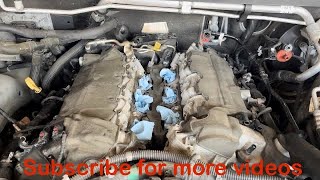
🎬 Watch: 3.6L LFX intake manifold removal and cleaningSymptoms You May Notice
- Check Engine Light illuminated
- Rough or uneven idle
- Hesitation or stumbling during acceleration
- Noticeable loss of engine power, especially at low RPMs
- Reduced fuel economy
- Engine may feel less responsive when climbing hills or passing.
- Replacing the entire intake manifold when only the bolt-on solenoid/actuator is bad.
- Replacing VVT (Variable Valve Timing) solenoids, which are a more common failure on the 3.6L V6 but are unrelated to the P2008 code and will set different DTCs (e.g., P0017).
- Assuming the runner flaps are stuck (P2006) without first diagnosing the P2008 electrical fault. The electrical fault is often the root cause of the mechanical one.
Most Likely Causes
- Faulty Intake Manifold Runner Control (IMRC) Solenoid / Actuator 🔴 High Probability → Shop Engine Intake Manifold The actuator is located in the high-heat environment under the intake manifold, which can lead to electrical failure of the internal coil over time, creating an open circuit. This is a common failure part for this system.
How to confirm: The actuator is located under the intake manifold, so confirmation requires removing the manifold. Once accessed, test its internal resistance with a multimeter (an open circuit will show infinite resistance). A capable scan tool can also command the actuator to move, which can be observed before removal.
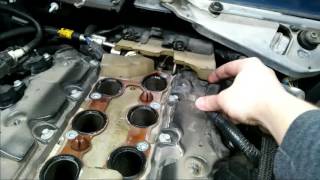
Typical fix: Replace the faulty IMRC solenoid/actuator. This requires removing the upper intake manifold to access the part. The OEM part is ACDelco #12677353. 🎬 See this LGZ V6 intake manifold removal walkthrough
Est. part cost: $50-$100 - Wiring Harness or Connector Issue 🟡 Medium Probability Wires can become brittle and break from heat cycles, or connectors can be damaged or left unplugged during other maintenance, like spark plug changes. Rodent damage is also a possibility. A GM TSB (#21-NA-173) addresses potential wiring harness chafing on some GM vehicles, which could cause this code by creating an open circuit.
How to confirm: Visually inspect the engine wiring harness, particularly where it may rub against brackets, the chassis, or other components. Check for continuity and proper voltage at the IMRC actuator connector (under the intake) with the key on.
Typical fix: Repair the damaged section of the wiring harness or clean/re-secure the connector. If chafing is found, repair the wires and protect the harness with loom or tape to prevent recurrence.
Est. part cost: $5-$50
Rare But Worth Checking
- Powertrain Control Module (PCM) Fault: → Shop Engine Control Module (ECM) This is a rare cause. The PCM's internal driver circuit for the IMRC solenoid can fail, but all other possibilities (wiring, actuator) should be exhausted before considering PCM replacement.
Diagnosis Steps
- Verify the P2008 code is present using an OBD-II scanner.
- Inspect the engine bay for any obvious disconnected electrical connectors, especially if other repairs like spark plug replacement were recently performed.
- Thoroughly inspect the engine wiring harness for signs of damage, such as chafing against brackets, melting, or rodent damage. Pay close attention to areas mentioned in GM TSBs, like near shock towers or on top of the generator.
- If a capable scan tool is available, command the IMRC solenoid on and off to see if it actuates. You may not hear a click due to its location under the intake manifold.
- To access the actuator and its connector, the upper intake manifold must be removed. This is a multi-hour job. 🎬 Watch: Step-by-step guide to removing the intake manifold
- Once the manifold is off, disconnect the actuator. Check for voltage at the connector's power supply wire with the ignition on (engine off). You should have battery voltage.
- If voltage is present, check the resistance of the actuator itself. An out-of-spec or infinite reading (OL) indicates a failed actuator coil.
- If the actuator tests good, check the continuity of the control wire from the actuator connector back to the PCM to rule out a break in the wire.
Parts You'll Likely Need
- Intake Manifold Runner Control Solenoid/Actuator
(OEM #12677353)— This is the most likely component to fail electrically, causing the 'open circuit' fault. Its location under the intake manifold subjects it to significant heat.
Trusted brands: ACDelco (GM Original Equipment), Dorman
OEM price range: $60-$100
Aftermarket price range: $40-$80 - Upper Intake Manifold Gaskets — These must be replaced anytime the intake manifold is removed to access the IMRC actuator. Reusing old gaskets will cause vacuum leaks.
Trusted brands: ACDelco, Fel-Pro
OEM price range: $20-$40
Aftermarket price range: $15-$30
Related Codes That Often Appear With This One
- P2006 — P2006 means 'Intake Manifold Runner Control Stuck Closed'. If the P2008 electrical fault prevents the solenoid from activating, the runner flaps will remain in their default (closed) position, which can trigger P2006 as a secondary code.
- P2009 — P2009 indicates 'Intake Manifold Runner Control Circuit Low Bank 1'. This is another electrical fault code related to the same system and can appear due to similar wiring problems or a short circuit instead of an open.
- P2010 — P2010 indicates 'Intake Manifold Runner Control Circuit High Bank 1'. This points to a short to voltage in the control circuit, often caused by the same wiring harness issues that could cause P2008.
Technical Service Bulletins (TSBs) & Recalls
- 21-NA-173 / 21-NA-149: Addresses multiple DTCs, including P2008, that can be caused by engine wiring harness chafing. Specific chafe points are identified near the driver's side shock tower and on top of the generator on related platforms.
Platform-Specific Known Issues
- A General Motors TSB (21-NA-173, also referenced as 21-NA-149) was issued for a wide range of DTCs, including P2008, caused by the engine wiring harness chafing against various components. While the Colorado is not explicitly named in all versions, the issue is prevalent across GM platforms using similar wiring routing and should be a primary suspect.
- The location of the IMRC actuator under the intake manifold makes this repair more labor-intensive than on many other vehicles, increasing the cost and difficulty of the fix.
Mechanic-Grade Diagnostic Values
- IMRC Actuator (Solenoid) Resistance — expected: A low resistance value, typically in the 20-40 Ohm range (based on similar solenoids).. Failure: An infinite resistance or 'OL' (Open Loop) reading on a multimeter indicates a broken internal coil and a failed actuator.
- IMRC Actuator Connector - Power Supply Pin Voltage — expected: Approximately 12 Volts (battery voltage) with the Key On, Engine Off.. Failure: 0 Volts indicates a problem upstream, such as a blown fuse or a break in the power supply wire from the fuse block.
- IMRC Actuator Connector - Control Wire — expected: The ECM supplies a ground to this pin to activate the solenoid. When commanded ON with a scan tool, this pin should show continuity to ground.. Failure: No ground signal when commanded indicates a break in the control wire back to the ECM or a faulty ECM driver.
Scan Tool Commands That Help
- GDS2 (GM Dealer Tool): Intake Manifold Tuning (IMT) Valve Control — This is a bidirectional output control that allows a technician to command the IMRC actuator on and off from the scan tool. It is the definitive test to see if the actuator clicks when commanded, which confirms the integrity of the wiring, ECM driver, and the actuator's coil in a single step.
- Professional Aftermarket Scanners (e.g., Autel, iCarsoft): Active Test / Actuation Test for 'Intake Manifold Runner Control (Bank 1)' — Used for the same purpose as the GDS2 command. Activating the solenoid and listening for a click can quickly isolate the problem. If it clicks, the issue may be intermittent. If it doesn't click, it confirms a hard fault in the circuit or actuator.
- GDS2 / G-scan: Intake manifold Runner Control Valve Learn — This function may be required after replacing the intake manifold or actuator assembly to allow the ECM to learn the new component's position and travel limits. It should be performed after the repair is complete to prevent future performance issues or codes.
Wiring & Ground Locations
- G103 — On the cowl in the engine compartment, typically located above the brake booster.. This is a critical ground point for the Engine Control Module (ECM). A poor connection here due to corrosion or looseness can cause erratic behavior from ECM drivers, potentially leading to false codes like P2008 or preventing the IMRC actuator circuit from being properly controlled.
- G102 — Typically located at the left rear of the engine block.. This ground point often serves the ignition coils and other engine sensors. While not the primary ECM ground, electrical noise from a poor G102 connection can sometimes interfere with other engine management signals, making it a good location to check and clean while diagnosing any electrical fault in the engine bay.
- IMRC Actuator Connector — On the IMRC actuator itself, which is bolted to the intake manifold, underneath the upper intake plenum. Access requires removing the upper intake.. This 2-pin connector is where the final voltage and ground signals are delivered. It's the primary point for testing. One pin should have ~12V power (Key On), and the other is the control wire that the ECM grounds to activate the solenoid.
Model Year Variations Within This Range
- 2015-2016: These model years used the previous generation 3.6L LFX V6 engine. While the IMRC system is functionally similar, some part numbers and specific locations for sensors or grounds may differ slightly from the 2017-2022 LGZ engine.
- 2017-2022: These model years use the updated 3.6L LGZ V6 engine paired with an 8-speed automatic transmission. The information in this guide is most specific to this powertrain combination.
Diagnostic Flowchart
Other Known Issues on This Vehicle
Issues unrelated to this code that are worth knowing about as an owner of this generation:
- 8-Speed (8L45) Transmission Shudder 🔴 High — Very common on 2017-2019 models. Feels like driving over rumble strips at light throttle. (Ref: TSB 18-NA-355: Prescribes a specific transmission fluid exchange procedure with an updated fluid (Mobil 1 Synthetic LV ATF HP).)
- Loss of Power Steering Assist 🔴 High — Primarily affects 2015-2016 models due to a poor electrical connection. (Ref: NHTSA Campaign 16V054000: A recall was issued to fix the poor electrical connection in the power steering torque sensor.)
- Carbon Buildup on Intake Valves 🟠 Medium — A long-term issue common to all Direct Injection (GDI) engines, including the LGZ. Becomes noticeable after 60,000-100,000 miles, causing misfires or rough idle. (Ref: No specific TSB, but a known characteristic of GDI engines requiring periodic intake cleaning (walnut blasting).)
- Random Misfires (P0300) from VVT Solenoids 🟠 Medium — Fairly common failure item on the 3.6L V6 family. Can cause rough idle and poor performance. (Ref: Special Coverage N232430470 may apply to some models for faulty camshaft actuators.)
- Frame Rust 🔴 High — More prevalent on first-generation (2004-2012) models but still a concern for second-gen trucks used in salt-belt states. Requires diligent inspection.
Used vs. New Parts: Buying Guide for This Vehicle
When a used part is the smart pick: For this specific repair, using a used part is NOT recommended. The IMRC actuator is located in a high-heat area under the intake manifold and is a known failure point. The significant labor required to access the part (2.5-4.0 hours) means a premature failure of a used part would be very costly in terms of repeated labor.
What to inspect on the donor part:
- Not applicable as used part is not recommended.
OEM-only on this vehicle (don't cheap out):
- Intake Manifold Runner Control Solenoid/Actuator (ACDelco #12677353)
Aftermarket brands forum-validated for this vehicle:
- ACDelco (GM Original Equipment) is the most trusted brand for this part.
- Fel-Pro is a well-regarded brand for the required Upper Intake Manifold Gaskets.
Brands owners have reported issues with on this vehicle:
- While brands like Dorman offer a replacement, general sentiment among professional technicians and on forums suggests that for difficult-to-access electronic parts, the potential for premature failure often outweighs the initial cost savings compared to OEM.
Real Owner Stories
Aggregated from forums and TSBs cited above. Mileages and costs reflect what owners reported in those sources.
2017 Chevrolet Colorado LGZ V6
Symptoms: The owner experienced both P2008 and P2006 codes simultaneously.
What fixed it: The dealership replaced the 'intake manifold tuning valve' (IMRC actuator) under warranty.
Source hint: https://www.coloradofans.com/threads/p2008-and-p2006-codes.409899/
2018 Chevrolet Colorado LGZ V6
Symptoms: Check engine light with code P2008; discussion noted the difficulty of access due to the solenoid being under the intake manifold.
What fixed it: Identification of the intake manifold runner control solenoid as the culprit.
Source hint: https://www.coloradofans.com/threads/p2008-code.429188/
Related OBD-II Codes
Frequently Asked Questions
Does GM TSB 21-NA-173 apply to my Chevrolet Colorado if I have a P2008 code?
Where is the IMRC actuator located on the 3.6L LGZ V6 engine?
What is the specific replacement part number for the IMRC solenoid on my Colorado?
Can I use a used IMRC actuator to save money on this repair?
Could a recent spark plug change be related to my P2008 code?
Are there other common issues on the 2017-2019 Colorado I should look out for while fixing this?
Helpful Videos
![[HOW TO] Install a Ported Intake Manifold & Replace Spark Plugs on 2017-2022 Colorado/Canyon LGZ V6](https://img.youtube.com/vi/9uUB9O86pVY/mqdefault.jpg)

We Have This Part in Stock


The information in this article is provided for general reference and educational purposes only. Vehicle specifications, procedures, and part compatibility can vary by production date, trim level, and region. Always consult your vehicle's factory service manual and verify part numbers before purchasing or performing repairs. Safety-critical components such as airbags, seat belts, and braking systems should be installed by a qualified professional.
- Chevrolet Colorado:
- 🧭 Diagnostic Flowchart
- 🎬 Helpful Videos
- 🛍️ Shop This Part
- What's Unique About the 2015-2022 Chevrolet Colorado
- Symptoms You May Notice
- Most Likely Causes
- Rare But Worth Checking
- Diagnosis Steps
- Parts You'll Likely Need
- Related Codes That Often Appear With This One
- Technical Service Bulletins (TSBs) & Recalls
- Platform-Specific Known Issues
- Mechanic-Grade Diagnostic Values
- Scan Tool Commands That Help
- Wiring & Ground Locations
- Model Year Variations Within This Range
- Other Known Issues on This Vehicle
- Used vs. New Parts: Buying Guide for This Vehicle
- Real Owner Stories
- 2017 Chevrolet Colorado LGZ V6
- 2018 Chevrolet Colorado LGZ V6
- Related OBD-II Codes
- Frequently Asked Questions
- 🎟️ Get 5% Off