

P2008 on 2005-2011 Ford Focus: Intake Manifold Runner Control Causes and Fixes
On a 2005-2011 Ford Focus with the 1.8L or 2.0L Duratec engine, code P2008 is almost always caused by a failed intake manifold runner control (IMRC) solenoid. This is an easy DIY fix involving a dual-solenoid pack on top of the engine. The failure is specifically an 'open circuit' within the solenoid windings, often due to heat and vibration. The part costs between $30 and $110 and can be replaced in under 30 minutes.
- P2008 on a 2005-2011 Focus points directly to an electrical failure ('open circuit') in the IMRC control solenoid, not the intake flaps themselves.
- The most common cause is the solenoid pack failing due to heat and vibration.
- Diagnosis is straightforward: test the solenoid's resistance with a multimeter. An 'Open Loop' or infinite reading confirms failure. A good one reads ~33-34 Ohms.
- The repair is simple, cheap, and can be done in under 30 minutes with basic tools.
- A rattling noise from the intake is a separate mechanical problem with the swirl flaps themselves, which requires a more involved repair (manifold replacement or deletion).
What's Unique About the 2005-2011 Ford Focus

The 2.0L Duratec engine in this generation of Focus uses a vacuum-operated system to move the runner flaps, but the vacuum is controlled by an electronic solenoid pack. This solenoid assembly is mounted directly on the engine where it is exposed to significant heat and vibration, causing the internal coil windings to fail and create an 'open circuit'. This specific solenoid failure is the overwhelmingly common cause for P2008 on this vehicle, making diagnosis more straightforward than on other cars where wiring or the flaps themselves might be the primary issue. The failure often manifests when the engine is hot (e.g., in city driving) and may disappear when it cools down.
Generation note: This guide covers the second-generation Ford Focus (Mk2), including the 2005-2007 original and the 2008-2011 facelift. The 1.8L and 2.0L Duratec-HE engines and their IMRC system design remained consistent, and this fault is common across the entire year range.
Symptoms You May Notice

- Noticeable lack of power below 3,000 RPM, followed by a sudden surge of power.
- Check Engine Light is on.
- Rough or uneven idle.
- Reduced fuel economy, with some owners reporting as low as 17 MPG.
- Hesitation during acceleration.
- Engine may feel sluggish or 'bogged down' when taking off from a stop.
- Replacing the entire intake manifold. While the plastic runner flaps inside the manifold can break (often causing a distinct rattling or ticking noise), this is a separate mechanical problem. The P2008 code is electrical and almost always related to the control solenoid, which is a much cheaper and easier fix. If you hear rattling, the manifold may also be bad, but it won't be the cause of the P2008 code itself.
Most Likely Causes

- Failed Intake Manifold Runner Control (IMRC) Solenoid Pack 🔴 High Probability → Shop Engine Intake Manifold The solenoid assembly is mounted in a high-heat, high-vibration area on the engine, which leads to thermal stress. A metal plate under the assembly acts as a heat sink, accumulating engine heat and transferring it directly to the solenoids, causing the fine copper wire in the solenoid's coil to break over time. This creates an 'open circuit' that the PCM detects as P2008. The failure is often intermittent at first, occurring only when the engine bay is hot.
How to confirm: Use a multimeter set to Ohms (Ω) to test the resistance across the two pins of the suspect solenoid (typically the one closer to the firewall/bulkhead). A good, new solenoid should read around 32-34 Ohms. A failed one will show infinite resistance or 'OL' (Open Loop), confirming the open circuit. 🎬 Watch: A professional mechanic's guide to diagnosing the P2008 code. A popular and simple field test is to swap the electrical connectors and vacuum hoses between the two solenoids in the pack; if the code changes to P2009 or the drivability issue is resolved, the solenoid is confirmed bad.
Typical fix: Replace the entire dual-solenoid assembly. It is sold as a single part mounted on a metal plate and is held on by two 8mm bolts or T25 Torx screws.
Est. part cost: $30-$110 - Damaged Wiring or Electrical Connector ⚪ Low Probability Wires can become brittle from heat cycles, and the connector can be dislodged, damaged, or have its pins corrode. This is especially common if other work like spark plug changes has been performed recently, as the harness is often moved.
How to confirm: Visually inspect the wiring harness leading to the IMRC solenoid for any signs of fraying, melting, or rodent damage. Check that the connector is securely plugged in and that the pins inside are not corroded or bent. Use a multimeter to check for voltage at the connector with the key on.
Typical fix: Repair the broken wire or clean/replace the connector pigtail.
Est. part cost: $5-$25
Rare But Worth Checking
- Cracked Vacuum Hose: While a vacuum leak is a common issue on this engine, it typically throws a P2004 (stuck open) or P0171 (lean) code. However, a visual inspection of all small vacuum lines connected to the solenoid is still a wise step, as a split hose can cause related drivability issues. The hoses can become brittle and crack where they connect to the solenoid nipples.
- Failed Powertrain Control Module (PCM): → Shop Engine Control Module (ECM) In very rare cases, the driver circuit inside the PCM that sends the signal to the solenoid can fail. This should only be considered after the solenoid and wiring have been definitively ruled out as the cause.
Diagnosis Steps

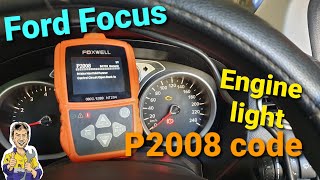
- Read the code with an OBD-II scanner to confirm P2008 is present.
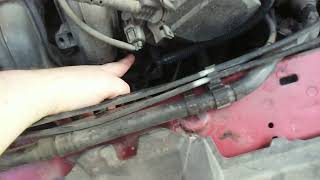
- Open the hood and locate the IMRC solenoid pack. It's on the top-right side of the engine (near the transmission dipstick) with two electrical connectors and four small vacuum hoses attached.
- Inspect the electrical connectors and wiring for any obvious damage, corrosion, or looseness. Ensure they are fully seated.
- Have a helper start the engine while you watch the IMRC actuator arm on the driver's side end of the intake manifold (it has a small blue or black plastic end). The arm should move/retract when the engine starts. If it doesn't move, the control system has failed.
- To confirm a bad solenoid, turn the engine off. Unplug the electrical connector from the solenoid closest to the firewall (this is the one for the swirl flaps).
- Set a multimeter to measure resistance (Ω) and touch the probes to the two metal pins on the solenoid itself. A reading of infinite resistance or 'OL' indicates an open circuit and a failed solenoid. A good solenoid should read approximately 32-34 Ohms.
- As an alternative test, swap the electrical plugs and corresponding vacuum lines between the front and rear solenoids. Clear the codes and run the engine. If the solenoid is bad, the fault code will likely change from P2008 to P2009, confirming the solenoid pack needs replacement.
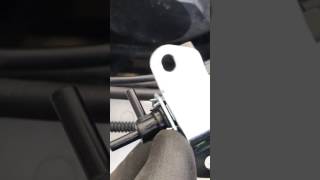
- If the solenoid tests bad, replace the entire solenoid assembly. It is held on by two T25 Torx or 8mm bolts. 🎬 Watch: Step-by-step walkthrough for replacing the IMRC solenoid assembly.
Parts You'll Likely Need
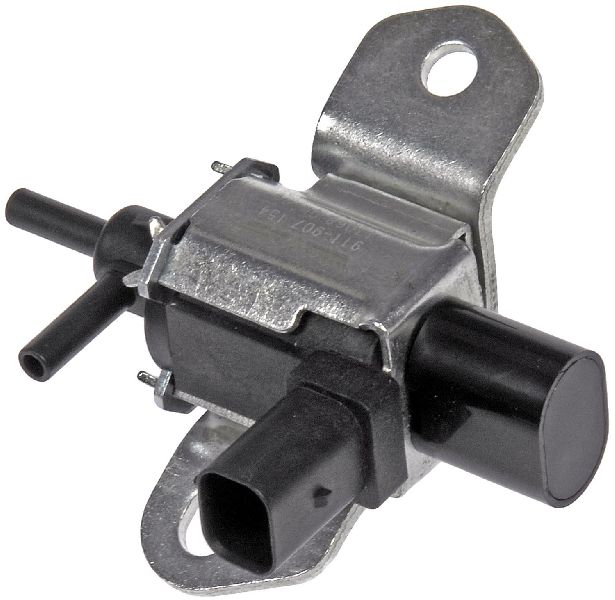
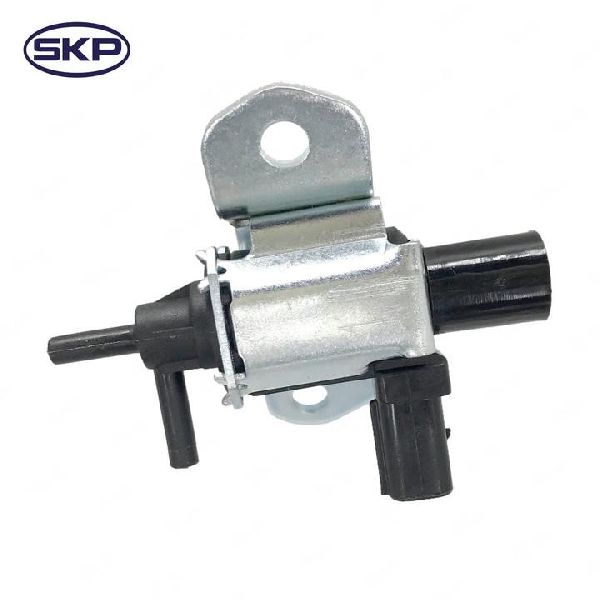
- Intake Manifold Runner Control Solenoid
(OEM #3S4Z-9J559-AA)— This is the component that almost always fails, causing the P2008 electrical open circuit code. It is sold as a complete assembly with both solenoids.
Trusted brands: Motorcraft (3S4Z-9J559-AA), Dorman (911-907), Standard Motor Products (RCS102), URO Parts (URO-011364)
OEM price range: $80-$150
Aftermarket price range: $30-$110
Related Codes That Often Appear With This One
- P2004 — P2004 means 'Intake Manifold Runner Control Stuck Open'. If the P2008 electrical fault prevents the solenoid from activating, the vacuum-operated flaps will remain in their default (open) position, which the computer may then flag as being 'stuck'.
- P0171 — P0171 means 'System Too Lean'. This can occur if a vacuum line related to the IMRC system is cracked or disconnected. The vacuum leak introduces unmetered air, causing a lean condition alongside the IMRC fault.
Technical Service Bulletins (TSBs) & Recalls
- While no TSB is directly for P2008, TSB 07-15-4 for the 2.3L engine addresses a P2004 code (IMRC Stuck Open) on some Ford/Mercury models, which can be caused by a faulty IMRC actuator (the vacuum diaphragm on the end of the manifold), a related component in the same system.
Platform-Specific Known Issues
- Swirl Flap Mechanical Failure (Rattling Noise): The plastic intake manifold on the Duratec engine is also known for having its internal swirl flaps break or the actuator rod bushings wear out, causing a distinct rattling or ticking noise, especially at idle. This is a separate mechanical problem from the P2008 electrical code. If you hear rattling, the entire intake manifold may need replacement (or a 'swirl flap delete') in addition to fixing the P2008 code. Ignoring the rattle can lead to pieces of the flap mechanism falling into the engine, causing catastrophic damage. 🎬 See how to check if your engine rattle is the flaps.
- Swirl Flap Delete Modification: Some owners, when faced with a rattling or broken intake manifold, choose to perform a 'swirl flap delete'. This involves removing the manifold, pulling out the flap assemblies and their connecting rod, and plugging the actuator hole. This permanently prevents the risk of engine damage from broken flaps, but may result in a slight decrease in fuel economy and a minor change in low-RPM engine characteristics. This does not fix a P2008 code, which is caused by the external solenoid.
Mechanic-Grade Diagnostic Values
- IMRC Solenoid Coil Resistance — expected: 32-34 Ohms (Ω). Failure: Infinite resistance ('OL' on a multimeter), indicating an open circuit.
- IMRC Solenoid Voltage Supply — expected: Battery voltage (approx. 12V) on one pin of the connector with Key On, Engine Off.. Failure: No voltage indicates a problem with the power supply wire or a blown fuse.
Scan Tool Commands That Help
- FORScan: IMRC Solenoid On/Off Command (Bidirectional Control) — This allows a technician to command the solenoid on and off directly from the scan tool. While observing the actuator arm or listening for a click from the solenoid, this test can definitively confirm if the solenoid is capable of functioning when commanded, separating a bad solenoid from a wiring or PCM driver issue.
Wiring & Ground Locations

- IMRC Solenoid Connector (C145 and C146) — Located on top of the IMRC solenoid pack, on the top-right side of the engine near the transmission dipstick.. This is the primary connection point for testing. The P2008 code refers to the solenoid for the swirl flaps (Bank 1), which is typically the one closer to the firewall/bulkhead. Checking for power, ground signal, and pin integrity here is a key diagnostic step.
- PCM Connector — The Powertrain Control Module (PCM) is located in the engine bay, typically near the firewall or battery.. If voltage/signal tests at the solenoid connector fail, a continuity test between the solenoid connector pin and the corresponding pin at the PCM connector is necessary to rule out a broken wire in the harness.
Real Owner Repair Stories
- Australian Ford Forums user 'Skwid' (2006 Ford Focus) — Engine light on, noticeable power loss.
❌ Tried (didn't work) A user in the same thread tried swapping the electrical plugs on the solenoids, which did not fix the problem but is a valid diagnostic step.
✅ What actually fixed it Replacing the dual solenoid kit fixed the problem completely. The user waited several weeks to confirm the fix was permanent before reporting back. - Ford Owners Club user 'leesheffield' (2008-2011 Ford Focus Mk2.5 1.8L Duratec) — Intermittent EML, significant power loss below 3000 RPM followed by a sudden power surge.
❌ Tried (didn't work) Cleaning the throttle body and intake manifold with carb cleaner., Checking for vacuum leaks using carb cleaner along the hoses.
✅ What actually fixed it The user resorted to buying and fitting a new 'air shut off assy' (the IMRC solenoid pack), which resolved all symptoms. - Reddit user r/FordFocus (Mk2 Ford Focus Zetec) — P2008 code, poor fuel economy (17 MPG), car requires significant accelerator input to move.
❌ Tried (didn't work) Replacing the IMRC solenoid pack with a cheap ($25) aftermarket part did not solve the issue; the code returned immediately after being cleared.
✅ What actually fixed it The thread did not have a final resolution posted by the original author, highlighting a potential pitfall of using very low-cost, no-name aftermarket parts which may be defective out of the box.
OEM Part Supersession History
1S7Z-9J559-BA→3S4Z-9J559-AA— Part revision by the manufacturer. The newer part is the current service replacement.
Heads up: The parts are interchangeable. 3S4Z-9J559-AA is the correct replacement for vehicles that originally came with 1S7Z-9J559-BA.
Model Year Variations Within This Range
- 2008-2011 (Facelift): While the IMRC system and the P2008 fault are consistent across the 2005-2011 range, the facelift models (2008+) feature different exterior and interior styling. More significantly for diagnostics, the 2008-2011 models use an electronically controlled throttle body, whereas the 2005-2007 models used a cable-controlled unit. This does not directly affect the IMRC diagnosis but is a key difference in the overall engine management system.
Diagnostic Flowchart
Used vs. New Parts: Buying Guide for This Vehicle
When a used part is the smart pick: For the IMRC solenoid pack, buying a used part is generally not recommended. The failure mode is due to heat and vibration over time, so a used part from a junkyard has an unknown number of heat cycles and could fail soon after installation. Given the low cost of new aftermarket parts, a used part offers poor value.
Donor-vehicle mileage cap: roughly under 40000 miles for the part to have meaningful remaining life.
What to inspect on the donor part:
- If buying used is unavoidable, test the part with a multimeter before purchase. Both solenoids should show resistance in the 32-34 Ohm range.
- Avoid parts with any cracks in the plastic housing or corroded electrical pins.
- Look for a donor vehicle with the lowest possible mileage.
OEM-only on this vehicle (don't cheap out):
- While not strictly 'OEM-only', using the Ford/Motorcraft part (3S4Z-9J559-AA) is the safest bet for a first-time fix. Some forum users have reported immediate failure or unresolved codes after installing cheap, unbranded aftermarket solenoids.
Aftermarket brands forum-validated for this vehicle:
- Dorman (911-907) is a widely available aftermarket alternative that is generally considered acceptable, though some mechanics express concerns about long-term durability compared to OEM.
- Standard Motor Products (RCS102)
Brands owners have reported issues with on this vehicle:
- Unbranded, extremely low-cost parts from online marketplaces like eBay or Amazon should be treated with caution, as quality control can be non-existent and they may be dead on arrival.
Real Owner Stories
Aggregated from forums and TSBs cited above. Mileages and costs reflect what owners reported in those sources.
2008 Ford Focus 1.8L Duratec (mk2.5)
Symptoms: Intermittent engine management light, losing power low down the revs, very little power until about 3000 revs then a sudden pickup in power.
What fixed it: Replaced the 'air shut off assy' (the dual solenoid pack for the IMRC).
Source hint: Ford Owners Club
2005-2011 Ford Focus 1.8L/2.0L Duratec-HE
Symptoms: Car was 'bogging down below 3000 revs' and had a P2008 code.
What fixed it: Successfully fixed the issue by replacing the solenoid pack.
Source hint: Ford Owners Club - Thread 'P2008 Fix Worked!'
Related OBD-II Codes
Frequently Asked Questions
I have a P2008 code and hear a rattling noise from the engine. Are they related?
What is the 'solenoid swap test' for a P2008 code on my Focus?
What resistance should a good IMRC solenoid have on a 2005-2011 Focus?
Will a 'swirl flap delete' fix my P2008 code?
My P2008 code only appears when the engine is hot. Is this normal for this failure?
Can I use an IMRC solenoid from a Mazda 3 on my Ford Focus?
Helpful Videos


Used OEM Parts in Stock
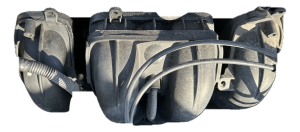
New Aftermarket Parts Available


The information in this article is provided for general reference and educational purposes only. Vehicle specifications, procedures, and part compatibility can vary by production date, trim level, and region. Always consult your vehicle's factory service manual and verify part numbers before purchasing or performing repairs. Safety-critical components such as airbags, seat belts, and braking systems should be installed by a qualified professional.
- Ford Focus:
- 🧭 Diagnostic Flowchart
- 🎬 Helpful Videos
- 🛍️ Shop This Part
- What's Unique About the 2005-2011 Ford Focus
- Symptoms You May Notice
- Most Likely Causes
- Rare But Worth Checking
- Diagnosis Steps
- Parts You'll Likely Need
- Related Codes That Often Appear With This One
- Technical Service Bulletins (TSBs) & Recalls
- Platform-Specific Known Issues
- Mechanic-Grade Diagnostic Values
- Scan Tool Commands That Help
- Wiring & Ground Locations
- Real Owner Repair Stories
- OEM Part Supersession History
- Model Year Variations Within This Range
- Used vs. New Parts: Buying Guide for This Vehicle
- Real Owner Stories
- 2008 Ford Focus 1.8L Duratec (mk2.5)
- 2005-2011 Ford Focus 1.8L/2.0L Duratec-HE
- Related OBD-II Codes
- Frequently Asked Questions
- 🎟️ Get 5% Off