

P2008 on 2019-2024 Genesis G70 3.3T: Intake Runner Control Circuit Causes and Fixes
P2008 indicates an electrical fault with the intake manifold runner control (IMRC) actuator on Bank 1 (passenger side). The most likely cause is a failed actuator, which is difficult to access, making the repair labor-intensive and costly. A Reddit user with a 2023 G70 reported this code at 56,000 miles. Expect shop costs to be significant due to the need to remove the intake manifold.
- P2008 points to an electrical failure in the intake runner control system for the passenger-side cylinder bank.
- The repair is not beginner-friendly due to the location of the actuator, which requires removing the entire upper intake manifold.
- The high labor cost is the main factor; the part itself (OEM PN 28321-3L100) is relatively inexpensive.
- While the intake manifold is off, it's a critical opportunity to inspect for and clean carbon buildup, a common issue on GDI engines.
What's Unique About the 2019-2024 Genesis G70
On the Genesis G70's 3.3T V6 engine, Bank 1 is the passenger side, with its three cylinders positioned against the firewall. Any components on this bank, including the IMRC actuator, are notoriously difficult to access. Service procedures for other components in this location, like spark plugs and ignition coils, require the complete removal of the upper intake manifold. This significantly increases labor time and cost for what might be a simple component failure, turning a potentially small part replacement into a multi-hour job. While some skilled mechanics have documented methods for changing the rear spark plugs without removing the manifold using special tools, this is a difficult 🎬 Watch: Changing spark plugs without removing the manifold workaround and may not be possible for the IMRC actuator.
Symptoms You May Notice
- Check Engine Light is on
- Reduced engine power and torque, particularly at low RPMs
- Engine hesitation or stumbling during acceleration
- Rough or unstable idle
- Decreased fuel economy
- Inconsistent throttle response
- Replacing spark plugs or ignition coils. While these are common maintenance items and can cause similar performance symptoms, they will not fix a P2008 circuit code.
- Replacing the entire intake manifold when only the actuator has failed. The actuator is a separate, serviceable part.
Most Likely Causes
- Failed Intake Manifold Runner Control (IMRC) Actuator 🔴 High Probability → Shop Engine Intake Manifold The actuator is an electronic motor subject to failure from heat and vibration over time. Its location on Bank 1 against the firewall exposes it to significant heat, which can degrade its internal electronics. This is the most common cause of an open circuit code like P2008.
How to confirm: A technician would use a bi-directional scan tool to command the actuator to open and close. If it doesn't move, and the wiring is confirmed to be good after gaining access, the actuator has failed.
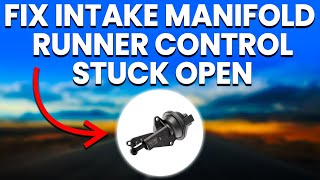
Typical fix: Replace the IMRC actuator for Bank 1. This requires removing the upper intake manifold to gain access. The actuator itself is often referred to 🎬 Watch: Diagnostic guide for intake manifold runner control issues as a 'Fitting Assembly-Solenoid' by Hyundai/Genesis.
Est. part cost: $50-$150 - Damaged Wiring or Loose Connector 🟡 Medium Probability Engine vibrations and high heat in the area behind the engine can cause wiring to become brittle, or connectors to loosen over time. Rodents can also chew on wiring harnesses, causing an open circuit.
How to confirm: After gaining access by removing the intake manifold, visually inspect the wiring harness leading to the IMRC actuator for any signs of damage, melting, or corrosion. Test for power, ground, and continuity at the actuator's electrical connector with a multimeter.
Typical fix: Repair the damaged section of the wiring harness or clean/replace the connector.
Est. part cost: $10-$50 - Stuck or Binding Intake Runner Flaps ⚪ Low Probability As a direct-injection (GDI) engine, the 3.3T is prone to carbon buildup on the intake valves and ports. Excessive carbon can cause the runner flaps within the manifold to become sticky or completely stuck, preventing the actuator from moving them. This typically throws a performance code (like P200A) but can stress the actuator motor, leading to an electrical failure.
How to confirm: With the intake manifold removed, manually actuate the runner flap linkage to see if it moves freely without binding. Significant resistance indicates a mechanical problem inside the manifold.
Typical fix: The intake manifold needs to be thoroughly cleaned (e.g., via walnut blasting of the ports) or, in 🎬 Watch: How to use Seafoam on the 3.3T engine severe cases, replaced entirely. This should be done whenever the manifold is removed for another repair.
Est. part cost: $300-$800 for cleaning service; $1000+ for a new manifold
Rare But Worth Checking
- Faulty Powertrain Control Module (PCM): → Shop Engine Control Module (ECM) This is extremely rare. The PCM should only be considered after all other possibilities, including the actuator and its entire circuit, have been exhaustively tested and ruled out.
Diagnosis Steps
- Use an OBD-II scanner to confirm P2008 is present and check for any other codes like P200A. Note the freeze frame data.
- Clear the code and test drive the vehicle to see if the code returns immediately, which suggests a hard electrical fault.
- Locate Bank 1 (passenger side, against the firewall). A visual inspection without disassembly is difficult but check for any obvious signs of rodent damage to visible harnesses.
- Use a bi-directional scan tool to command the Bank 1 IMRC actuator on and off. Listen for a click or watch for movement in the actuator linkage (if visible, which is unlikely).
- If the actuator does not respond, the next step is to test its electrical circuit. This will require removing the upper intake manifold for access.
- Once the actuator connector is accessible, disconnect it and test for proper voltage and ground from the PCM side of the harness with a multimeter. Check for continuity on the signal wire.
- If the wiring and connector are confirmed to be good, the IMRC actuator itself is the culprit and should be replaced.
- While the intake manifold is off, manually check that the runner flaps move freely to rule out a mechanical blockage from carbon buildup. This is a critical preventative step.
- After replacing the part, reassemble the intake manifold using a new gasket to prevent vacuum leaks.
- Clear all codes and perform an idle relearn procedure if necessary.
Parts You'll Likely Need
- Intake Manifold Runner Control Actuator (Bank 1)
(OEM #28321-3L100)— This is the electric motor that controls the intake runner flaps. It is the most common point of failure for a P2008 circuit code. The OEM part is sometimes listed as 'Fitting Assembly-Solenoid'.
Trusted brands: Hyundai/Kia Genuine Parts
OEM price range: $50-$150
Aftermarket price range: $40-$100 - Upper Intake Manifold Gasket
(OEM #29215-3L100)— This gasket must be replaced any time the intake manifold is removed to prevent vacuum leaks upon reassembly.
Trusted brands: Hyundai/Kia Genuine Parts
OEM price range: $20-$40
Aftermarket price range: $15-$30
Related Codes That Often Appear With This One
- P200A: Intake Manifold Runner Performance (Bank 1) - This code often appears alongside P2008, indicating the flaps are not in the commanded position, which can be caused by the same failed actuator or binding flaps.
Platform-Specific Known Issues
- Owner Report of P2008: A user on the r/GenesisG70 subreddit reported a P2008 code on their 2023 G70 with 56,000 miles, confirming the issue occurs on this platform.
- Access Difficulty Confirmed by Owners: Forum discussions for the G70 and its platform-mate, the Kia Stinger, frequently mention the difficulty of accessing any component on the rear (Bank 1) of the 3.3T engine, with many confirming the intake manifold must be removed for jobs like spark plug changes. This directly applies to accessing the Bank 1 IMRC actuator.
Mechanic-Grade Diagnostic Values
- IMRC Actuator Command Voltage (Live Data) — expected: 0-5 V, changing based on engine RPM and load. Failure: A steady 0V or no change when the PCM should be commanding the valve to open indicates a circuit fault or failed PCM driver.
- Wiring Harness Continuity Check — expected: Less than 1 Ω. Failure: Infinite resistance or 'OL' on a multimeter indicates an open circuit in the harness between the PCM and the actuator connector.
- Actuator Motor Bench Test — expected: Audible click or whirring sound as the motor actuates.. Failure: No sound or movement when voltage is applied indicates a failed internal motor.
Hidden / Shadow Codes Worth Checking
- P200A: Intake Manifold Runner Performance (Bank 1). This is a critical companion code, not a hidden one. While P2008 indicates an electrical open circuit, P200A confirms the flaps are not in the correct position. Both are often triggered simultaneously by a failed actuator. (see via Standard OBD-II scanner)
- P2017: Intake Manifold Runner Position Sensor/Switch Circuit High (Bank 1). This code points to a fault in the feedback sensor side of the IMRC system. It can appear with P2008 if the actuator assembly (which includes the sensor) has failed electrically. (see via Standard OBD-II scanner)
Scan Tool Commands That Help
- Genesis GDS (GDSM): Actuation Test > VCM Motor or Intake Manifold Runner Control (Bank 1) — This is the primary diagnostic step to confirm actuator failure. It directly commands the actuator motor to run, allowing a technician to listen for operation without needing to access the part. No sound confirms a circuit or motor failure.
- Genesis GDS (GDSM): Special Function > Reset Adaptive Values — After replacing the actuator and clearing codes, resetting the engine's adaptive memory can help the PCM relearn the new component's operational parameters and ensure smooth idle and performance.
Wiring & Ground Locations
- IMRC Actuator Connector — On the actuator itself, located on the passenger side (Bank 1) of the engine, underneath the upper intake manifold against the firewall.. This connector is the primary point for electrical testing. Based on similar Hyundai/Kia systems, it is likely a 5-pin connector. Two pins control the DC motor, and three pins are for the position sensor (5V reference, ground, and signal). An open circuit in the motor pins will cause P2008.
- Engine Ground Points — Multiple locations on the engine block and chassis. Consult the factory service manual or wiring diagram for the specific ground point (e.g., G###) for the IMRC circuit.. A corroded or loose ground connection for the engine sensor group can cause a variety of electrical faults, including an open circuit code like P2008. This should be checked if direct wiring tests are inconclusive.
OEM Part Supersession History
28321-3L100→N/A— No supersession history found.
Heads up: Be cautious when ordering. Part numbers for other Hyundai/Kia engines, such as 28321-3F000 (older V8) or 28321-2G700 (4-cylinder), may look similar but are not compatible with the 3.3T Lambda II engine. Always verify the part number with the vehicle's VIN.
Model Year Variations Within This Range
- 2019-2024: The Genesis G70 received a significant facelift for the 2022 model year, which included updated styling and interior technology. However, the core 3.3T Lambda II V6 engine and its intake system were not changed. Therefore, the causes, diagnostic procedures, and parts for a P2008 code are identical across the entire 2019-2024 model range.
Diagnostic Flowchart
Other Known Issues on This Vehicle
Issues unrelated to this code that are worth knowing about as an owner of this generation:
- Cracked Left Turbocharger Oil Feed Pipe 🔴 High — Common enough to trigger a safety recall (NHTSA #24V191000 / Genesis Recall 019G) for 2019-2022 models. Leaking oil can drip onto the hot exhaust manifold, creating a fire risk. (Ref: NHTSA #24V191000 / TSB #24-01-032G)
- Failing Electronic Wastegate Actuator (EWGA) 🟠 Medium — A widely documented failure point on the 3.3T platform, often causing underboost code P0299. Owners frequently report a distinct squeaking or rattling noise from the engine bay upon shutdown as a key symptom.
- Paint Peeling and Clear Coat Failure 🟡 Low — Multiple owner complaints on forums regarding paint peeling, especially around wheel wells and bumpers, and premature clear coat oxidation on early models. Warranty claims can be difficult, with some owners resorting to BBB complaints to get coverage.
- Oxidizing/Tarnishing Window Trim 🟡 Low — The chrome or dark chrome window trim is known to oxidize and develop a milky or tarnished appearance. This is a common cosmetic complaint, and there is a TSB for the issue. Many owners have successfully had it replaced under warranty. (Ref: TSB exists (number not specified in search results))
- Intake Valve Carbon Buildup 🟠 Medium — As with most GDI (Gasoline Direct Injection) engines, the Lambda II 3.3T does not have port injectors to wash oil vapors off the intake valves, leading to carbon accumulation over time. This typically becomes a concern after 60,000+ miles and can cause reduced performance and misfires.
Used vs. New Parts: Buying Guide for This Vehicle
When a used part is the smart pick: Using a used IMRC actuator is strongly discouraged. The part is an electronic motor exposed to high heat, and its failure is due to wear and thermal stress. The primary cost of this repair is the 3-5 hours of labor to remove the intake manifold. A used part carries a high risk of premature failure, which would require repeating the expensive labor.
Donor-vehicle mileage cap: roughly under 20000 miles for the part to have meaningful remaining life.
What to inspect on the donor part:
- Verify the part number is exactly 28321-3L100.
- Inspect the plastic housing for any cracks or signs of extreme heat exposure.
- Ensure the electrical connector pins are straight and free of corrosion.
- If possible, bench test the actuator with a 12V source to confirm the motor operates.
OEM-only on this vehicle (don't cheap out):
- Intake Manifold Runner Control Actuator (28321-3L100)
- Upper Intake Manifold Gasket (29215-3L100)
Brands owners have reported issues with on this vehicle:
- Unbranded or no-name parts from online marketplaces. Given the high labor cost, the risk of using a low-quality aftermarket part is not worth the small price savings.
Real Owner Stories
Aggregated from forums and TSBs cited above. Mileages and costs reflect what owners reported in those sources.
2023 Genesis G70 3.3T — 56000 miles
Symptoms: Check engine light came on.
What fixed it: The owner sought advice on the P2008 (Intake Manifold Runner Control Circuit open) code; a technician/commenter noted that an 'open' status typically indicates a failed sensor, broken wire, or disconnected plug.
Source hint: Reddit thread titled '2023 G70 Code P2008' on r/GenesisG70
Related OBD-II Codes
Frequently Asked Questions
Is there a recall for the P2008 code on my 2019-2024 Genesis G70 3.3T?
Why is the Bank 1 IMRC actuator so expensive to labor-diagnose on the G70 3.3T?
Can carbon buildup cause a P2008 code on my G70?
What is the specific Genesis part name for the IMRC actuator?
Does the Kia Stinger GT share this IMRC issue with the G70?
Is there a TSB for the tarnished window trim I noticed while fixing my engine code?
Helpful Videos


We Have This Part in Stock

The information in this article is provided for general reference and educational purposes only. Vehicle specifications, procedures, and part compatibility can vary by production date, trim level, and region. Always consult your vehicle's factory service manual and verify part numbers before purchasing or performing repairs. Safety-critical components such as airbags, seat belts, and braking systems should be installed by a qualified professional.
- Genesis G70:
- 🧭 Diagnostic Flowchart
- 🎬 Helpful Videos
- 🛍️ Shop This Part
- What's Unique About the 2019-2024 Genesis G70
- Symptoms You May Notice
- Most Likely Causes
- Rare But Worth Checking
- Diagnosis Steps
- Parts You'll Likely Need
- Related Codes That Often Appear With This One
- Platform-Specific Known Issues
- Mechanic-Grade Diagnostic Values
- Hidden / Shadow Codes Worth Checking
- Scan Tool Commands That Help
- Wiring & Ground Locations
- OEM Part Supersession History
- Model Year Variations Within This Range
- Other Known Issues on This Vehicle
- Used vs. New Parts: Buying Guide for This Vehicle
- Real Owner Stories
- 2023 Genesis G70 3.3T — 56000 miles
- Related OBD-II Codes
- Frequently Asked Questions
- 🎟️ Get 5% Off