

P2008 on 2010-2012 Hyundai Santa Fe 3.5L V6: Intake Runner Control Circuit Causes and Fixes
P2008 on your Santa Fe 3.5L indicates an electrical fault in the Variable Intake System (VIS) for Bank 1. This system uses flaps to optimize airflow for better power and efficiency. While the code points to a failed control solenoid or wiring, this specific engine is notorious for the internal plastic flaps of the lower intake manifold breaking. This is a much more complex and expensive repair that often presents with a P200A (performance) code as well.
- P2008 on the 2010-2012 Santa Fe 3.5L points to an electrical problem with the Variable Intake System for Bank 1 (firewall side).
- While the cause could be a simple wiring issue or a failed $50 solenoid, be prepared for the possibility of broken internal intake manifold flaps, a repair that can exceed $1000.
- Diagnosis is key. Don't replace parts without confirming the failure. A scan tool that can command the system is highly valuable.
- Due to the difficult access to Bank 1 and the potential need to remove the entire intake manifold, this is a challenging DIY repair (4/5 difficulty) and professional diagnosis is recommended.
What's Unique About the 2010-2012 Hyundai Santa Fe
Unlike the 4-cylinder models where a faulty external actuator is the most common fix, the 3.5L Lambda II V6 has a more significant known issue. There are widely documented cases of the internal plastic runner flaps or their linkage inside the lower intake manifold itself becoming brittle and breaking. This results in a much more labor-intensive and costly repair that requires replacing the entire lower intake manifold assembly, not just an external component. An initial P2008 code can sometimes be a precursor to discovering this more serious mechanical failure, which may also trigger a P200A performance code.
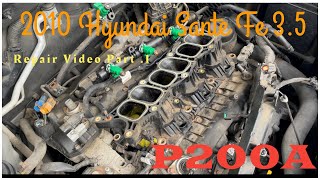
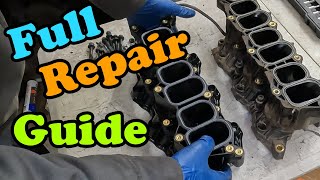
🎬 Watch this step-by-step lower intake manifold repairSymptoms You May Notice
- Check Engine Light is on
- Reduced engine power, especially at low or high RPMs
- Hesitation during acceleration
- Rough or unstable idle
- Poor fuel economy
- A rattling, buzzing, or clicking noise from the intake manifold area, especially on startup or when RPMs change
- Replacing the VIS actuator (the vacuum diaphragm) when the actual problem is the electronic control solenoid or the wiring.
- Replacing only the solenoid when the internal manifold flaps are broken. The problem will return, often with a P200A performance code.
- Mistaking a vacuum leak from a cracked hose for a failed electronic component.
Most Likely Causes
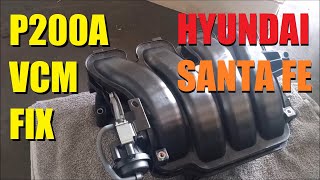
- Broken Internal Intake Manifold Runner Flaps 🔴 High Probability → Shop Engine Intake Manifold The plastic flaps and linkage inside the lower intake manifold can become brittle and break over time, a known failure on this platform and its Kia Sorento platform-mate. The failure is often at the linkage point. 🎬 Watch this video on fixing the variable control motor linkage
How to confirm: After ruling out the external solenoid and actuator, the upper and lower intake manifolds must be removed for visual inspection of the flaps and their linkage. A technician may use a scan tool to command the system; if the actuator moves but a rattling is heard or performance doesn't change, broken flaps are likely. Sometimes the broken pieces can be seen by looking into the intake ports with the upper manifold removed.
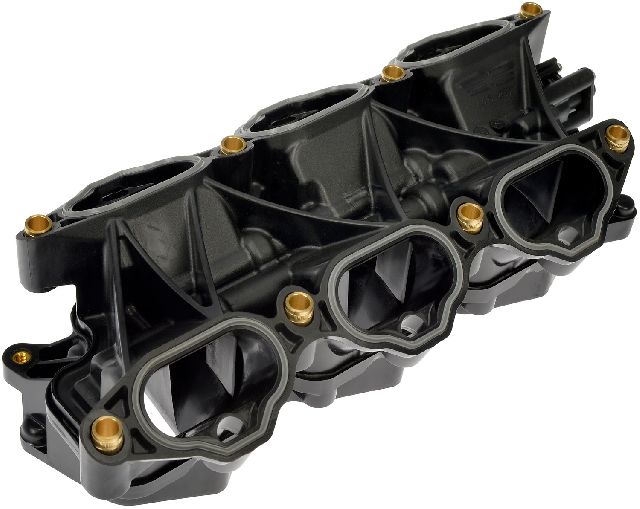
Typical fix: Replacement of the entire lower intake manifold assembly. The OEM part number is likely 28310-3C750, though verification with VIN is critical.
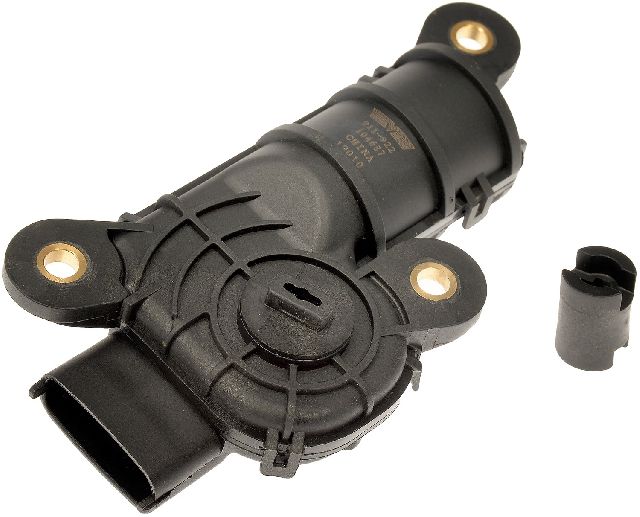
Est. part cost: $350-$550 - Failed Variable Intake System (VIS) Control Solenoid 🟡 Medium Probability This electronic solenoid is the direct electrical interface for the P2008 code. It can fail internally from heat and vibration, creating the 'open circuit' the PCM detects.
How to confirm: Locate the solenoid for Bank 1 (firewall side). Test for resistance across its terminals; a good solenoid should have a specific resistance (e.g., 15-25 ohms is a common range for similar parts, but check service manual for exact spec). An open circuit will read infinite resistance. Check for 12V power and a ground signal at the connector with the key on. You can also apply 12V directly to the solenoid to listen for a click.
Typical fix: Replace the VIS control solenoid. The likely part number is 39461-3C500, but some applications may use 39461-3C400.
Est. part cost: $40-$90 - Wiring Harness or Connector Damage 🟡 Medium Probability The wiring to the Bank 1 solenoid is in a hot, tight space near the firewall, making it susceptible to heat damage, chafing, or rodent damage over time. Connectors can also become brittle and break.
How to confirm: Perform a pin-to-pin continuity test on the wiring between the PCM and the solenoid connector. Visually inspect the harness for any signs of melting, chafing, or breaks. Wiggle the harness while testing to check for intermittent opens. Ensure the connector pins are clean and making good contact.
Typical fix: Repair the broken wire(s) or replace the damaged connector pigtail.
Est. part cost: $10-$40
Rare But Worth Checking
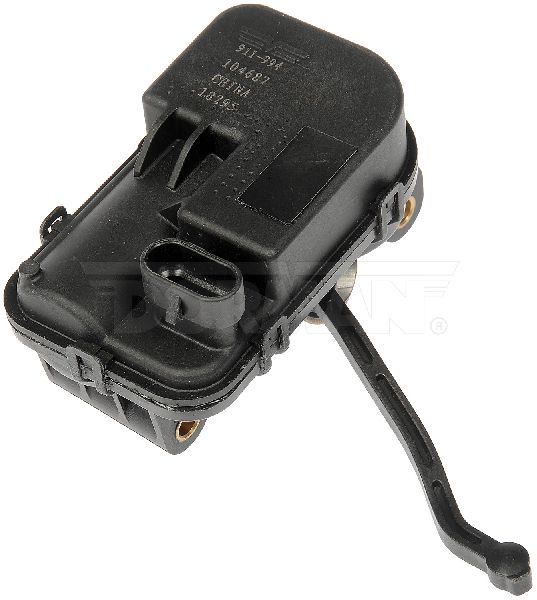
- Failed VIS Actuator Diaphragm: While the actuator (Part #29216-3C000) can fail, it's a vacuum-operated part. A leak in its diaphragm would typically cause a performance code (like P200A) rather than an electrical open circuit code (P2008). However, it's part of the system and worth inspecting for physical damage or vacuum leaks.
- Failed Powertrain Control Module (PCM): → Shop Engine Control Module (ECM) This is extremely rare. The PCM should only be considered after all other possibilities, including the wiring and all related components, have been exhaustively tested and proven to be good.
Diagnosis Steps
- Scan the vehicle for all stored trouble codes. Note if P200A or other related codes are present.
- Locate the VIS control solenoid for Bank 1 (firewall side of the engine).
- Inspect the wiring harness and connector to the solenoid for any visible damage, corrosion, or loose connections.
- With the key on, engine off, use a multimeter to check for 12-volt power at the solenoid connector. One pin should have power, the other is the ground control from the PCM.
- Use a scan tool to command the VIS solenoid on and off (actuation test). Listen for a 'click' from the solenoid and the sound of the actuator moving. If there is no click, the solenoid or its circuit is likely faulty.
- If the solenoid clicks but a rattling is heard, suspect broken flaps inside the manifold.
- If no scan tool is available, unplug the solenoid and test its resistance with a multimeter. An infinite reading means it's open and bad. A reading within spec (e.g., 15-25 ohms) suggests the solenoid coil is likely good.
- Apply vacuum directly to the VIS actuator diaphragm (Part #29216-3C000) with a hand pump to see if it holds vacuum and moves the runner linkage arm smoothly.
- If the solenoid, wiring, and actuator seem to function but the code persists, the final step is to remove the upper intake manifold to visually inspect the lower intake manifold's internal flaps for breakage.
Parts You'll Likely Need
- Lower Intake Manifold Assembly
(OEM #28310-3C750)— This is required if the internal plastic runner flaps have broken, which is a significant possibility on this engine. Part number should be verified by VIN. Other similar manifolds include 28310-3C000, 28310-3CDA0, and 28310-3C800 for different Lambda engine variants.
Trusted brands: Hyundai Genuine
OEM price range: $400-$550
Aftermarket price range: $300-$450 - Variable Intake System (VIS) Control Solenoid
(OEM #39461-3C500)— This electronic solenoid is the most likely electrical component to fail and cause the specific P2008 'open circuit' code. Part number 39461-3C400 is also used on similar models.
Trusted brands: Hyundai Genuine, Dorman
OEM price range: $60-$90
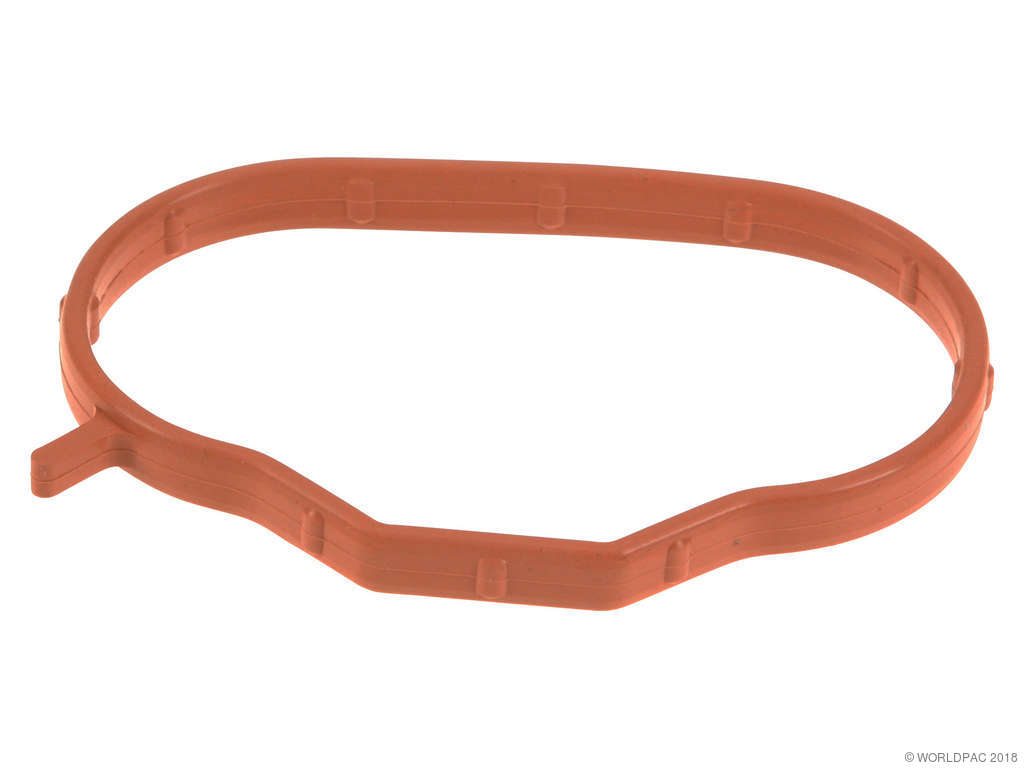
Aftermarket price range: $30-$50 - Intake Manifold Gasket Set
(OEM #28411-3C500 (Upper), 29215-3C500 (Lower))— These must be replaced anytime the intake manifold is removed for inspection or replacement.
Trusted brands: Fel-Pro, Mahle, Hyundai Genuine
OEM price range: $40-$70
Aftermarket price range: $20-$40
Related Codes That Often Appear With This One
- P200A — P200A means 'Intake Manifold Runner Performance Bank 1'. P2008 is an electrical fault, while P200A is a mechanical/performance fault. An open circuit (P2008) will prevent the system from working, causing a performance fault (P200A). They often appear together, especially if the internal flaps are broken.
- P2009 — P2009 indicates 'Intake Manifold Runner Control Circuit Low Bank 1'. This points to a short to ground in the same circuit, whereas P2008 indicates an open. Both point to an electrical issue with the Bank 1 VIS solenoid or wiring.
- P0171/P0174 — These are 'System Too Lean' codes for Bank 1 and Bank 2. If the intake manifold runner flaps are broken or stuck, it can cause an unmetered air condition or improper airflow at certain RPMs, leading to a lean condition that the PCM tries to correct.
Technical Service Bulletins (TSBs) & Recalls
- TSB 21-EM-008H: While this TSB is for 2.0L/2.4L engines in newer models, it provides valuable insight into Hyundai's diagnostic procedure for similar codes and explicitly warns against replacing the entire manifold when only an external component has failed, a distinction important for the 3.5L V6 where manifold replacement is actually common.
Platform-Specific Known Issues
- The 3.5L Lambda II V6 is known for the internal plastic flaps of the lower intake manifold failing, which is a more severe and expensive repair than the typical actuator failure seen on other engines.
- Bank 1 (firewall side) components are difficult to access due to the transverse engine layout, increasing labor time for diagnosis and repair of the solenoid or wiring.
Mechanic-Grade Diagnostic Values
- Variable Intake System (VIS) Control Solenoid Resistance — expected: 10 - 60 Ω (Ohms). A specific value for Hyundai is not published, but this is a typical range for this type of component. Some similar solenoids have been measured in the 30-36 Ω range.. Failure: A reading of 'OL' or infinite resistance indicates an open circuit inside the solenoid, which is the direct cause of a P2008 code. A reading of 0 Ω would indicate a short circuit (more likely to cause a P2009 code).
Hidden / Shadow Codes Worth Checking
- Mode $06 Data: This is not a specific code, but a diagnostic mode that allows viewing the results of the PCM's non-continuous self-tests. For an intermittent P2008 fault, checking Mode $06 can reveal if the VIS system is failing its self-test before the fault is consistent enough to keep the Check Engine Light on. (see via A professional-grade scan tool with Mode $06 functionality is required. The specific Test ID (TID) and Component ID (CID) for the VIS system are manufacturer-specific and would be listed in the scan tool's data.)
Scan Tool Commands That Help
- Hyundai GDS (Global Diagnostic System) or equivalent professional scan tool: Actuation Test for VIS (Variable Intake System) — This bidirectional command is used to force the PCM to energize the VIS control solenoid. The technician can then listen for an audible 'click' from the solenoid and the sound of the vacuum actuator moving the linkage. No click points to a failure in the solenoid or its circuit. A click followed by a rattle suggests the solenoid is working but the internal manifold flaps are broken.
Wiring & Ground Locations
- Engine Block Ground — During intake manifold removal, a key ground wire is bolted to the intake assembly itself. Additionally, a primary engine-to-chassis ground strap will be present, typically running from the engine block or cylinder head to the firewall or frame rail.. A poor or corroded main engine ground can cause a host of floating voltages and intermittent electrical faults across multiple systems. While not a direct cause of a P2008 open circuit, ensuring all engine grounds are clean and tight is a critical step in any electrical diagnosis to prevent misdiagnosis.
Real Owner Repair Stories
- YouTube user 'Merryfrankster' (2012 Hyundai Santa Fe 3.5L V6) — Check Engine Light with code P200A 'Intake Manifold Runner Performance Bank 1'.
❌ Tried (didn't work) The user performed extensive, un-detailed troubleshooting steps before concluding the manifold was the issue. He noted that a TSB and repair kit available for newer (2017+) Santa Fe models with a similar code was not applicable to the 2012 model's different intake design.
✅ What actually fixed it Complete replacement of the entire lower intake manifold assembly with a new, genuine Hyundai part. The user confirmed that after the replacement and multiple drive cycles, the check engine light did not return, validating the repair.
OEM Part Supersession History
28310-3C750 (Lower Intake Manifold)→N/A— Multiple part numbers exist for the Lambda V6 engine family, such as 28310-3C000, 28310-3CAA0, and 28310-3C800. These represent variations for different applications or model years, not a direct supersession line.
Heads up: Using the wrong intake manifold assembly can lead to fitment issues or non-functional runner flaps. It is critical to verify the correct part number using the vehicle's VIN.39461-3C400 (VIS Solenoid)→39461-3C500— Part number 39461-3C500 is the specified part for the 2011-2012 Santa Fe 3.5L. Related parts like 39461-3C100 and 39461-3C200 exist for other Hyundai V6 models, indicating slight variations.
Heads up: While electrically similar, using the wrong solenoid could result in fitment issues with the mounting bracket or vacuum hose connections. Always verify with VIN.
Model Year Variations Within This Range
- 2010-2012: The 2010 model year marked a major facelift which introduced the 276-hp 3.5L Lambda II V6 engine (G6DC), replacing the prior 3.3L V6. The 2011 and 2012 models were mechanically identical carryovers. It is important to note that TSBs and repair kits for intake runner issues on later generation Santa Fe models (e.g., 2017+) do not apply to this 2010-2012 generation due to a different intake manifold design.
Diagnostic Flowchart
Other Known Issues on This Vehicle
Issues unrelated to this code that are worth knowing about as an owner of this generation:
- Engine Failure / Excessive Oil Consumption 🔴 High — The 2012 model year is particularly noted for engine problems, including stalling and catastrophic failure, sometimes around the 100,000-mile mark. (Ref: While recalls existed for the 2.4L engine, the 3.5L V6 also has numerous owner complaints regarding engine failure.)
- Leaking Oil Pressure Sensor 🟠 Medium — A common issue where the oil pressure sensor leaks, often mimicking a more serious rear main seal leak.
- Failing AWD Coupler 🟠 Medium — On AWD models, the electronic coupler can fail, causing a binding or jerking sensation during sharp, low-speed turns (e.g., in parking lots).
- Faulty Fuel Level Sensor 🟡 Low — Common on the second generation Santa Fe, leading to inaccurate fuel gauge readings and potentially running out of gas unexpectedly.
- Transmission Speed Sensor Failure 🟠 Medium — Can cause harsh shifting, incorrect gear selection, or failure to shift. Documented in TSB 16-AT-003 for various Hyundai models of this era. (Ref: TSB 16-AT-003)
Used vs. New Parts: Buying Guide for This Vehicle
When a used part is the smart pick: For the most expensive part of this repair, the lower intake manifold, a used part from a reputable auto recycler can be a sensible choice to save significant cost. The failure is age-related (brittle plastic), so a part from a newer or lower-mileage donor vehicle is ideal.
Donor-vehicle mileage cap: roughly under 80000 miles for the part to have meaningful remaining life.
What to inspect on the donor part:
- Ask for the donor vehicle's mileage. Aim for a part with under 80,000 miles if possible.
- Visually inspect the part in person or via detailed photos. Look for any cracks in the plastic housing.
- Manually move the external actuator linkage arm. It should move smoothly without binding or gritty feelings.
- Gently shake the manifold. There should be absolutely no rattling sounds, which would indicate broken internal flaps.
OEM-only on this vehicle (don't cheap out):
- Lower Intake Manifold Assembly: While a used OEM part is viable, it is strongly recommended to use a new Genuine Hyundai part if the budget allows, as this ensures the plastic is new and not already aged. Aftermarket manifolds for this specific failure are not widely documented or reviewed by the community.
Aftermarket brands forum-validated for this vehicle:
- VIS Control Solenoid: Dorman is a commonly available aftermarket alternative to the Hyundai Genuine part.
- Intake Gaskets: Fel-Pro and Mahle are reputable, widely-used brands for intake manifold gaskets.
Brands owners have reported issues with on this vehicle:
- Unbranded/white-box intake manifold assemblies from online marketplaces should be avoided due to unknown quality control and material durability.
Real Owner Stories
Aggregated from forums and TSBs cited above. Mileages and costs reflect what owners reported in those sources.
2010 Hyundai Santa Fe GLS 3.5L V6
Symptoms: The vehicle triggered a runner control code and required a lower intake repair due to broken internal intake flaps.
What fixed it: Replacement of the lower intake manifold assembly.
Source hint: YouTube/P200A 2010 Hyundai Sante Fe GLS 3.5 P200A LOWER INTAKE REPAIR
2011 Hyundai Santa Fe 3.5L V6
Symptoms: Owner experienced a P200A code and discussed the failure of the butterfly valves inside the intake manifold.
What fixed it: Replacing the lower intake manifold assembly.
Source hint: hyundai-forums.com / '2011 Santa Fe 3.5L P200A code'
2012 Hyundai Santa Fe 3.5L V6 — ~100000 miles
Symptoms: While investigating intake issues, noted general concerns regarding stalling and catastrophic engine failure common to this model year.
What fixed it: N/A - general engine reliability report
Source hint: vehicle_specific_issues / known_issues
Related OBD-II Codes
Frequently Asked Questions
Does TSB 21-EM-008H mean I should replace my 3.5L Santa Fe's intake manifold?
I hear a rattling noise from the intake of my 2011 Santa Fe 3.5L; is this related to P2008?
Can I use parts from a Kia Sorento to fix my Santa Fe's P2008 code?
Why is the P2008 code more difficult to diagnose on the Santa Fe V6 compared to other cars?
Is there a specific solenoid I should check for the P2008 code on my 3.5L engine?
Helpful Videos
We Have This Part in Stock


The information in this article is provided for general reference and educational purposes only. Vehicle specifications, procedures, and part compatibility can vary by production date, trim level, and region. Always consult your vehicle's factory service manual and verify part numbers before purchasing or performing repairs. Safety-critical components such as airbags, seat belts, and braking systems should be installed by a qualified professional.
- Hyundai Santa Fe:
- 🧭 Diagnostic Flowchart
- 🎬 Helpful Videos
- 🛍️ Shop This Part
- What's Unique About the 2010-2012 Hyundai Santa Fe
- Symptoms You May Notice
- Most Likely Causes
- Rare But Worth Checking
- Diagnosis Steps
- Parts You'll Likely Need
- Related Codes That Often Appear With This One
- Technical Service Bulletins (TSBs) & Recalls
- Platform-Specific Known Issues
- Mechanic-Grade Diagnostic Values
- Hidden / Shadow Codes Worth Checking
- Scan Tool Commands That Help
- Wiring & Ground Locations
- Real Owner Repair Stories
- OEM Part Supersession History
- Model Year Variations Within This Range
- Other Known Issues on This Vehicle
- Used vs. New Parts: Buying Guide for This Vehicle
- Real Owner Stories
- 2010 Hyundai Santa Fe GLS 3.5L V6
- 2011 Hyundai Santa Fe 3.5L V6
- 2012 Hyundai Santa Fe 3.5L V6 — ~100000 miles
- Related OBD-II Codes
- Frequently Asked Questions
- 🎟️ Get 5% Off