

P2008 on 2017-2019 Infiniti Q60 3.0t: IMRC Solenoid Failure or TSB-Documented Software Glitch?
On a 2017-2019 Infiniti Q60 with the 3.0t engine, code P2008 is frequently caused by a software glitch in the Engine Control Module (ECM). Infiniti issued TSB ITB19-027a for this, and the primary fix is a dealer reprogram. This should be the first step before any parts are replaced. If not software, the cause is likely a failed intake manifold runner control solenoid, which is an accessible, external component.
- For the 2017-2019 Infiniti Q60, your first step for a P2008 code should be checking with a dealer about TSB ITB19-027a.
- The most likely fix is a simple ECM software update, not an expensive hardware replacement. This may cost around $180 if out of warranty.
- If the TSB doesn't apply or doesn't fix the issue, the next most common cause is a failed IMRC solenoid, which is an affordable and accessible part to replace.
- P2008 is an electrical circuit code, meaning the problem is in the wiring or the solenoid itself, not with the intake flaps being mechanically stuck.
What's Unique About the 2017-2019 Infiniti Q60
For this specific Infiniti Q60 and its platform-mate, the Q50, the P2008 code has a well-documented, non-hardware cause. Infiniti released Technical Service Bulletins (TSBs) stating that due to 'calibration errors,' the ECM can improperly store this code as a permanent DTC even when no part has failed. The official remedy in this case is not part replacement, but an ECM software update performed by a dealer. This makes it critical for owners to check for TSB applicability before replacing any parts, as the reprogram is often the complete fix.
Diagnostic Flowchart
Tap your situation to follow the diagnostic path that matches what you're seeing on this vehicle.
Symptoms You May Notice
- Check Engine Light is on
- Rough or uneven idle
- Hesitation or stumbling during acceleration
- Noticeable loss of low-end torque and power
- Reduced fuel economy
- Engine surging at low speeds
- Replacing the entire intake manifold when only the external solenoid has failed.
- Replacing the IMRC solenoid when the actual problem is the ECM software glitch covered by the TSB.
- Confusing the IMRC solenoid with the Variable Valve Timing (VVT) solenoids, which are different parts in a different location.
Most Likely Causes
- ECM Software Calibration Error 🔴 High Probability Infiniti issued TSBs #ITB19-027a and campaign bulletin #P9329 specifically for this issue, stating the ECM may improperly store a permanent DTC for P2008 due to calibration errors. This affects a wide range of 2016-2019 Q50 and Q60 models.
How to confirm: An Infiniti dealer can check your vehicle's VIN and current ECM part number against the TSB. If they match the affected list in the bulletin, the software update is the prescribed fix.
Typical fix: Reprogramming the Engine Control Module (ECM) with the updated software calibration provided by Infiniti. This is typically a 1-hour service at a dealership. Owners on forums report dealer costs for this service are around $180 if not covered by warranty.
Est. part cost: $0 - Failed Intake Manifold Runner Control (IMRC) Solenoid 🟡 Medium Probability → Shop Engine Intake Manifold The solenoid is an electronic component located in a hot engine bay, making it susceptible to failure over time due to heat cycles and vibration. The internal coil winding can break, creating an open circuit.
How to confirm: After ruling out the TSB, a mechanic can perform an active test with a scan tool to command the solenoid on and listen for a click. Alternatively, they can test for resistance across the solenoid's pins with a multimeter; an open circuit (infinite resistance) confirms failure. Visually inspect the connector first, as it's common to be unplugged during other service.
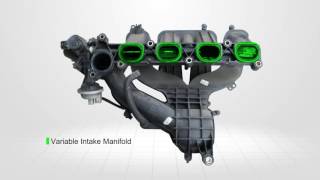
Typical fix: Replace the faulty IMRC solenoid for Bank 1. This is an external part and does not require removing the intake manifold. 🎬 Watch: How an intake runner control solenoid works
Est. part cost: $40-$185 - Wiring Harness or Connector Issue ⚪ Low Probability Wiring can be damaged by engine heat, vibration, or rodents chewing on the soy-based wire insulation. The connector itself can be accidentally disconnected during maintenance like air filter or spark plug changes.
How to confirm: Visually inspect the wiring harness leading to the IMRC solenoid for any signs of breaks, melting, or corrosion. Check that the connector is securely plugged in. A multimeter can be used to check for continuity from the ECM to the solenoid connector.
Typical fix: Repair the broken wire or replace the damaged connector pigtail.
Est. part cost: $5-$50
Rare But Worth Checking
- Failed Engine Control Module (ECM): → Shop Engine Control Module (ECM)
Diagnosis Steps
- Read the code with an OBD-II scanner to confirm P2008 is present.
- Crucial Step for Q60/Q50 Owners: Contact an Infiniti dealer or use a professional diagnostic database to check if your vehicle's VIN is covered by TSB #ITB19-027a or campaign #P9329. If it is, the ECM reprogram is the first and most likely fix.
- If the TSB does not apply, locate the IMRC solenoid for Bank 1. On the VR30DDTT, there are two identical solenoids mounted externally on the intake manifold. Bank 1 is on the passenger side of the engine.
- Inspect the electrical connector and wiring going to the Bank 1 solenoid for any obvious damage, looseness, or corrosion. Ensure it is firmly plugged in.
- If wiring appears intact, use a scan tool's active test function to command the solenoid to activate. Listen for an audible 'click'. No click suggests a dead solenoid or wiring issue.
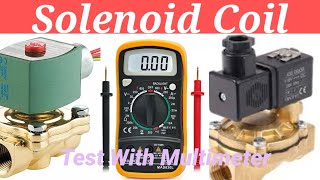
- If no scan tool is available, disconnect the solenoid and use a multimeter to measure the resistance between its two pins. A reading of 'OL' (Open Loop) or infinite resistance indicates a failed internal coil. 🎬 Watch: A quick guide on how to test the solenoid A good solenoid should have a specific resistance value (check service manual for spec, but typically between 20-50 ohms).
- If the solenoid tests good, use the multimeter to check for 12V power at the connector with the key on, engine off. If power is missing, the problem is upstream in the wiring or a fuse. If power is present, check the ground signal wire for continuity back to the ECM.
Parts You'll Likely Need
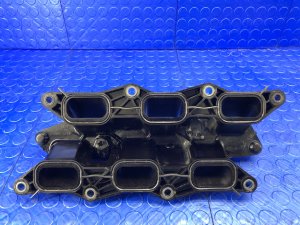
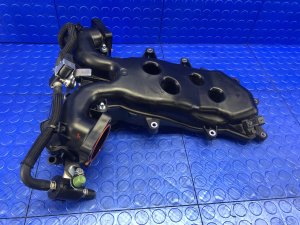
- Intake Manifold Runner Control Solenoid / Valve
(OEM #23796-3RC0A (Note: This part is often listed as a VVT solenoid but serves multiple functions on this platform, including IMRC))— This is the most common hardware failure for a P2008 code after the software issue has been ruled out. It's an electronic part that wears out from heat and time. The same part number is used for both Bank 1 and Bank 2 solenoids.
Trusted brands: Hitachi, Infiniti Genuine Parts
OEM price range: $170-$215
Aftermarket price range: $40-$125
Related Codes That Often Appear With This One
- P2006 — P2006 means 'Intake Manifold Runner Control Stuck Closed'. If the P2008 electrical fault prevents the solenoid from activating, the runner flaps will remain in their default closed position, triggering P2006 as a direct consequence.
- P0101 — This Mass Air Flow (MAF) sensor code is also mentioned in TSB ITB19-027a, indicating it can also be triggered by the same ECM calibration error.
- P0087 — This Fuel Rail Pressure code is also mentioned in TSB ITB19-027a, suggesting a link to the same ECM software issue.
Technical Service Bulletins (TSBs) & Recalls
- ITB19-027a: 'MIL ON WITH DTC P0087, P0101, P0448, OR P2008, VEHICLES REGISTERED OUTSIDE OF CALIFORNIA'. This is the key document, outlining the ECM reprogram fix.
- P9329_P9344_P934: A voluntary emissions service campaign bulletin that also calls for reprogramming the ECM due to calibration errors that may improperly store a permanent DTC for P2008.
- ITB19-027: The original version of the bulletin addressing the MIL ON condition with DTC P2008.
Platform-Specific Known Issues
- A primary issue for the 2017-2019 Q60 is an ECM software calibration error that can falsely trigger the P2008 code. Infiniti addressed this with TSBs ITB19-027a, P9329_P9344_P934, and ITB19-027, which call for an ECM reprogram.
- The TSB notes that even if another repair is performed (like replacing the solenoid), the reprogram must still be done to update how the ECM stores and allows permanent DTCs to be erased.
Mechanic-Grade Diagnostic Values
- IMRC Solenoid Coil Resistance — expected: A low resistance reading indicating continuity (specific OEM value not published, but typically 20-50 ohms for similar solenoids).. Failure: Infinite resistance or 'OL' (Open Loop) on a multimeter, which indicates a break in the internal coil winding.
- IMRC Solenoid Connector Voltage — expected: Approximately 12V with the ignition on, engine off.. Failure: 0V, indicating a problem with the power supply from the fuse or ECM.
- Engine Oil Pressure (VR30DDTT) — expected: Around 15-20 psi at idle; approximately 55 psi at wide-open throttle.. Failure: Pressure that does not exceed ~30 psi at high RPM, which may indicate a failing oil pressure control solenoid (a separate issue from P2008 but a critical engine health concern).
Scan Tool Commands That Help
- Infiniti CONSULT-III Plus: Active Test: 'SCV VSV' — To manually command the IMRC solenoid on and off to listen for a 'click', confirming if the solenoid and its wiring are functional. This is a primary step after checking for TSBs.
- Infiniti CONSULT-III Plus: Post-Reprogramming Relearn Procedures — After performing the TSB ECM reprogram, the technician MUST perform the 'Throttle Valve Closed Position', 'Idle Air Volume Learn (IAVL)', and 'Accelerator Closed Position' relearn procedures to ensure proper engine operation.
Wiring & Ground Locations
- Interior Fuse Box — Inside the cabin, on the driver's side, behind a small cover on the side of the dashboard/kick panel area.. Contains fuses for various engine and electronic control systems. A blown fuse related to the ECM or emissions components could potentially cause this code.
- Under-Hood Fuse/Relay Box — In the engine bay, typically near the battery, under a black plastic cover.. Houses the primary fuses and relays for engine components, including the main power supply to the ECM which controls the IMRC circuit.
- Engine Block Ground Strap — A braided strap or thick wire connecting the engine block/cylinder head to the firewall or frame.. A poor engine ground can cause a host of electrical issues and incorrect sensor readings. While not a direct cause of an open circuit, verifying its integrity is a fundamental step in diagnosing any electrical fault.
Real Owner Repair Stories
- YouTube user comment (Chrysler (unspecified model) with a similar intake manifold design) — Check Engine Light with code P2008, following a previous P2004.
❌ Tried (didn't work) Replacing the actuator/solenoid did not work because the new part was likely damaged by soot-covered butterfly valves.
✅ What actually fixed it The owner added a bottle of high-PEA fuel system cleaner (Gumout Regane) to the gas tank. After three key cycles, the light went off, suggesting the cleaner dissolved carbon deposits that were causing the intake flaps to stick, which may have presented as an electrical fault.
OEM Part Supersession History
23796-3RC0A→N/A— This is the current and correct part number.
Heads up: A significant point of confusion is that this exact part number is used for both the Intake Manifold Runner Control (IMRC) and the Variable Valve Timing (VVT) system. When ordering, ensure you are replacing the correct physical solenoid, as they are located in different areas of the engine despite sharing a part number.
Helpful Videos
We Have This Part in Stock

The information in this article is provided for general reference and educational purposes only. Vehicle specifications, procedures, and part compatibility can vary by production date, trim level, and region. Always consult your vehicle's factory service manual and verify part numbers before purchasing or performing repairs. Safety-critical components such as airbags, seat belts, and braking systems should be installed by a qualified professional.
- Infiniti Q60:
- 🧭 Diagnostic Flowchart
- 🎬 Helpful Videos
- 🛍️ Shop This Part
- What's Unique About the 2017-2019 Infiniti Q60
- Symptoms You May Notice
- Most Likely Causes
- Rare But Worth Checking
- Diagnosis Steps
- Parts You'll Likely Need
- Related Codes That Often Appear With This One
- Technical Service Bulletins (TSBs) & Recalls
- Platform-Specific Known Issues
- Mechanic-Grade Diagnostic Values
- Scan Tool Commands That Help
- Wiring & Ground Locations
- Real Owner Repair Stories
- OEM Part Supersession History
- 🎟️ Get 5% Off