

P2008 on 2016-2018 Nissan Maxima: Causes and Fixes for Intake Runner Control
On 2016-2018 Maximas, code P2008 is frequently caused by a software glitch in the Engine Control Module (ECM), not a failed part. The primary fix is often an ECM reprogram at a Nissan dealership as specified in Technical Service Bulletin NTB19-045b, which addresses how permanent DTCs are stored and cleared.
- For a 2016-2018 Nissan Maxima, your first step for code P2008 should be to check with a dealer about TSB NTB19-045b.
- The most likely fix is an ECM software update, not a part replacement.
- Do not replace the IMRC solenoid or other parts before ruling out the well-documented software issue.
- Driving with this code is possible, but expect poor performance and fuel economy until it is resolved.
What's Unique About the 2016-2018 Nissan MAXIMA
For this specific generation of Nissan Maxima, the P2008 code has a well-documented and unusual primary cause. Multiple Nissan Technical Service Bulletins (TSBs), including NTB19-045b, reveal that a calibration error in the Engine Control Module (ECM) can improperly store P2008 as a permanent diagnostic trouble code (P-DTC), even when no physical fault exists. The TSB clarifies that the reprogram is not a repair for the DTC itself, but an update to how the permanent DTC is stored and allowed to be erased after a repair is made. This makes it critical to check for applicable TSBs before assuming a hardware failure and replacing parts. The issue is often resolved with a simple ECM software update rather than a mechanical repair.
Diagnostic Flowchart
Tap your situation to follow the diagnostic path that matches what you're seeing on this vehicle.
Symptoms You May Notice
- Check Engine Light (MIL) is on
- Reduced engine power and torque, especially at low RPMs
- Hesitation or stumbling during acceleration
- Rough or uneven idle
- Decreased fuel economy
- Difficulty starting the engine 🎬 See how a bad VIAS valve causes starting issues
- Replacing the IMRC solenoid without first checking for the applicable TSBs regarding the ECM software update. This leads to the code returning because the root cause (the software glitch that prevents clearing the permanent DTC) was not addressed.
- Assuming the ECM needs replacement when it only requires a software update.
Most Likely Causes
- Engine Control Module (ECM) Software Calibration Error 🔴 High Probability → Shop Engine Control Module (ECM) As documented in Nissan TSBs NTB19-045b and P9328_P9343_P934, these vehicles have a known software issue where the ECM improperly stores a permanent P2008 code due to calibration errors. This prevents the code from being cleared with a standard scan tool until the ECM is updated.
How to confirm: A Nissan dealership can check the vehicle's VIN and current ECM part number against the TSBs to confirm if the software update is needed. The TSB applies if the stored DTC and the ECM part number match the tables in the bulletin.
Typical fix: Reprogramming the ECM with the updated software provided by Nissan. This is typically a labor-only procedure that takes about one hour. The TSB explicitly states to perform diagnosis and repair for the code *first*, then apply the reprogram to update how the permanent code is managed.
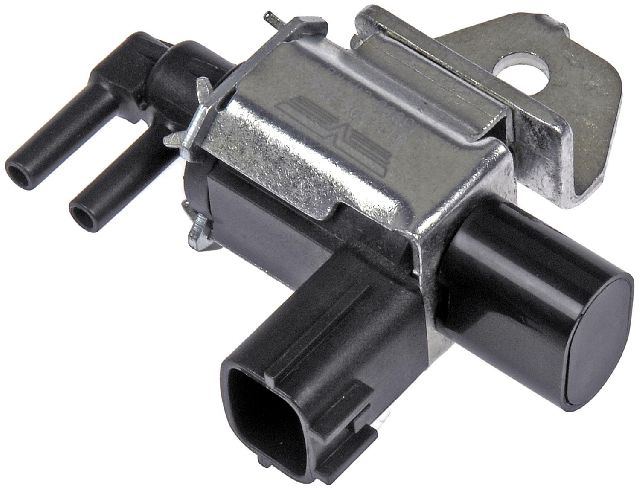
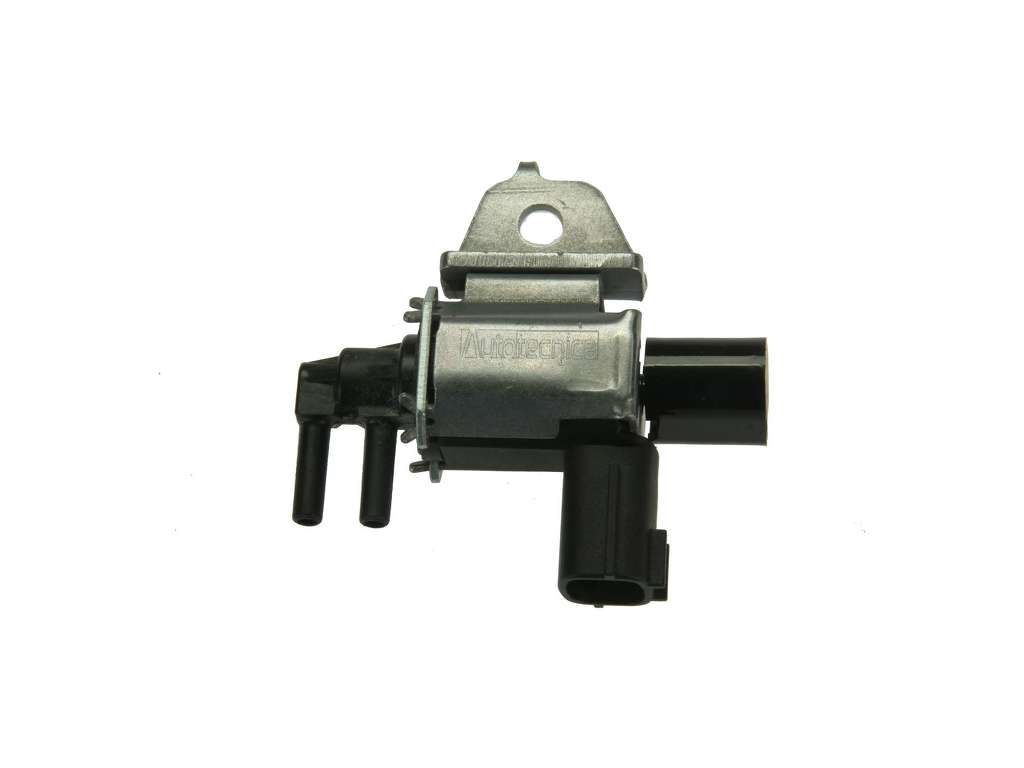
Est. part cost: $0 - Faulty Intake Manifold Runner Control (IMRC) Solenoid 🟡 Medium Probability → Shop Engine Intake Manifold Also known as the VIAS Control Solenoid Valve, this is an electromechanical part that operates in a high-heat environment and can fail over time due to an internal coil breaking or shorting. It is typically located on the upper intake manifold and is relatively easy to access.
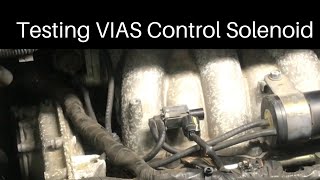
How to confirm: After ruling out the TSB, a technician can test the solenoid. This involves checking its resistance with a multimeter (a good solenoid should read between 22-30 ohms) or using a bi-directional scan tool 🎬 Watch: How to diagnose the VIAS solenoid and circuit to perform an active test to listen for a 'click'. A reading of zero or infinite ohms indicates a failed solenoid.
Typical fix: Replacement of the IMRC/VIAS solenoid valve. This is often a simple repair involving one or two bolts and disconnecting a vacuum hose 🎬 Watch this quick walkthrough for replacing the solenoid and electrical connector.
Est. part cost: $50-$150 - Wiring or Connector Issue ⚪ Low Probability Engine bay wiring is exposed to heat and vibration, which can lead to broken wires, corroded pins, or loose connectors over time. The connector for the VIAS solenoid is a common point of failure.
How to confirm: Visually inspect the wiring harness and connector leading to the IMRC solenoid for any signs of damage, corrosion, or looseness. Check for continuity and voltage at the connector with a multimeter.
Typical fix: Repairing the damaged section of the wiring harness or cleaning/replacing the connector.
Est. part cost: $5-$50
Rare But Worth Checking
- Stuck Intake Manifold Runner Flaps: → Shop Engine Intake Manifold While P2008 is an electrical code, a related mechanical issue is flaps getting stuck due to carbon buildup. This usually throws different codes (like P2006 for stuck closed), but it's part of the same system and can sometimes be a contributing factor.
- Faulty Powertrain Control Module (PCM): → Shop Engine Control Module (ECM) In very rare cases where all wiring and components test good and a reprogram does not fix the issue, the driver circuit within the PCM itself may have failed.
Diagnosis Steps
- Check for TSBs: The first and most important step for this specific vehicle is to contact a Nissan dealer or use a professional database to check if TSB NTB19-045b (or its revisions) applies to your vehicle's VIN. [⭐ MANUFACTURER TSB — highest authority]
- Diagnose the Root Cause: Per the TSB, diagnose the P2008 code as you normally would. Do not skip this step. Inspect the wiring and test the VIAS solenoid.
- Test the Solenoid: Disconnect the solenoid and measure its resistance with a multimeter. A healthy solenoid should measure approximately 22-30 ohms. If it's out of spec, replace it.
- Perform Active Test: If you have a capable bi-directional scan tool, command the IMRC/VIAS solenoid on and off. Listen for an audible click from the solenoid. No click suggests a bad solenoid or a break in the circuit.
- Inspect Wiring and Connector: If the solenoid tests good, thoroughly inspect the wiring harness and connector for breaks, corrosion, or loose pins. Check for 12V power and ground at the connector with the key on.
- Perform ECM Reprogram: If the TSB applies, after any necessary hardware repairs are made, have the ECM reprogrammed by a qualified shop or dealership. This will update the logic for clearing the permanent DTC.
- Inspect Runner Flaps: If all electrical components are working, the final step would be to inspect the intake manifold runners themselves for carbon buildup or mechanical binding, though this is less likely for an electrical P2008 code.
Parts You'll Likely Need
- Intake Manifold Runner Control Solenoid Valve (VIAS)
(OEM #14955-8J10A (supersedes 14955-8J100))— This is the most common hardware failure for this code, after the ECM software issue has been ruled out. The solenoid's internal coil can fail, creating the 'open circuit' condition. This part is also used on a wide variety of other Nissan/Infiniti vehicles.
Trusted brands: Nissan Genuine, Hitachi, Dorman
OEM price range: $100-$180
Aftermarket price range: $30-$90
Related Codes That Often Appear With This One
- P0087 — This code is listed alongside P2008 in Nissan TSBs NTB19-045b and P9328_P9343_P934 as being potentially triggered by the same ECM software error.
- P0101 — Also listed in the same Nissan TSBs (NTB19-045b, P9328_P9343_P934) as a code that can be falsely set by the ECM calibration error.
- P0448 — This EVAP system code is also mentioned in TSBs NTB19-045b and P9328_P9343_P934 as being part of the group of codes incorrectly stored by the ECM.
- P1800 — This is a very common Nissan-specific code for the VIAS Control Solenoid Valve circuit. P2008 is the generic OBD-II equivalent, and they often point to the same failure.
Technical Service Bulletins (TSBs) & Recalls
- NTB19-045b: "MIL ON WITH DTC P0087, P0101, P0448, OR P2008, VEHICLES REGISTERED OUTSIDE OF CALIFORNIA"
- P9328_P9343_P934: Mentions reprogramming the ECM for permanent DTCs P0448, P0101, P2008, or P0087 due to calibration errors.
- NTB19-045a: An earlier amendment of the TSB for the same set of DTCs.
- NTB19-045: The original TSB for the same set of DTCs.
Platform-Specific Known Issues
- A primary issue for the 2016-2018 Maxima is an ECM software calibration error that incorrectly stores P2008 as a permanent DTC. This is detailed in Nissan TSB #NTB19-045b. [⭐ MANUFACTURER TSB — highest authority]
- Another TSB, #P9328_P9343_P934, was part of a campaign in California to reprogram the ECM for the same issue, highlighting the prevalence of this software-based problem. [⭐ MANUFACTURER TSB — highest authority]
- Owner Experience: A user on Maxima.org forums with a similar generation vehicle noted that after replacing a MAF sensor for hesitation, the issue returned, and the next step recommended by a TSB was the ECM reprogram. This highlights the pattern of chasing hardware when software is the underlying issue.
Mechanic-Grade Diagnostic Values
- VIAS control solenoid resistance — expected: 22 - 30 Ohms at room temperature. Failure: A reading of zero or infinite Ohms indicates an open or shorted coil. A reading outside the specified range, even if not zero, can indicate internal damage.
- Voltage at VIAS solenoid connector (harness side) — expected: One pin should have constant battery voltage (approx. 12V) with the ignition ON. The other pin is the ground, which is supplied by the PCM to activate the solenoid.. Failure: Absence of battery voltage indicates a power supply issue (fuse, relay, or wiring). The ground signal can be tested by revving the engine (some older models activate over 2500 RPM) or using a scan tool active test; a test light connected to battery positive should flash when the PCM commands the ground.
Hidden / Shadow Codes Worth Checking
- P1800: This is the Nissan-specific code for 'VIAS Control Solenoid Valve Circuit Open' and is functionally identical to P2008. On some Nissan models, this code may be stored as a 'ghost code' without illuminating the Check Engine Light, making it visible only with a capable scan tool. (see via Nissan CONSULT scanner or professional-grade OBD-II scanner with manufacturer-specific code reading capabilities.)
Scan Tool Commands That Help
- Nissan CONSULT III Plus: Active Test for 'INT/V TIM' (Intake Valve Timing) or a similarly named VIAS function. — This is the dealer-level method to command the VIAS solenoid on and off with the engine running or key-on-engine-off. It allows a technician to listen for the solenoid's 'click' and observe live data changes, confirming the entire circuit from the ECM to the solenoid is functional.
- Professional Bi-Directional Scanner (e.g., Autel): Actuation Test > Intake Manifold Runner Control (Bank 1) — Used to command the solenoid on and off to listen for the click, verifying the solenoid and its wiring are working. If there is no click, but voltage is present at the connector, the solenoid itself has failed.
Wiring & Ground Locations
- Main Engine Ground Strap — On similar VQ35DE engines, a primary ground strap runs from the engine timing cover to the chassis frame, located near or behind the power steering reservoir.. A poor engine ground can cause a variety of floating voltages and erratic electrical behavior, including intermittent faults in sensor and actuator circuits like the VIAS solenoid.
- VIAS Solenoid Connector Wires — The two-wire connector plugging into the VIAS solenoid on the intake manifold.. One wire is power, the other is the switched ground from the PCM. On a similar Nissan V6, the switched ground wire was green with a white stripe. Checking for power and the ground signal here is the most direct test of the circuit.
"I Checked Everything" — The Actual Cause
- For the electrical code P2008, a smoke test is not a relevant diagnostic step. The equivalent scenario is 'all electrical tests pass.' If the VIAS solenoid resistance is within spec (22-30 ohms), the wiring shows good continuity, and power/ground signals are present during an active test, yet the permanent code cannot be cleared, the root cause is almost certainly the ECM software calibration error detailed in TSB NTB19-045b. The hardware is not the problem; the software's handling of the code is.
OEM Part Supersession History
14955-8J100→14955-8J10A— Standard part revision and improvement over time.
Heads up: None noted. 14955-8J10A is the correct and direct replacement for 14955-8J100.
Model Year Variations Within This Range
- 2016-2018: The 2016 Maxima introduced the 'Gen3 VQ35DE' engine, which was 61% new compared to the previous generation VQ35DE. Key changes included a new upper intake manifold with shorter and wider runners, sodium-filled exhaust valves, and redesigned timing chains. While the P2008 code's cause and diagnosis are consistent from 2016-2018, these underlying engine changes are important context compared to older Maxima models.
- 2016 vs 2018: The primary differences between these model years were related to infotainment systems (e.g., the addition of Apple CarPlay/Android Auto) and cosmetic options, not the engine or powertrain components related to code P2008.
Helpful Videos


We Have This Part in Stock

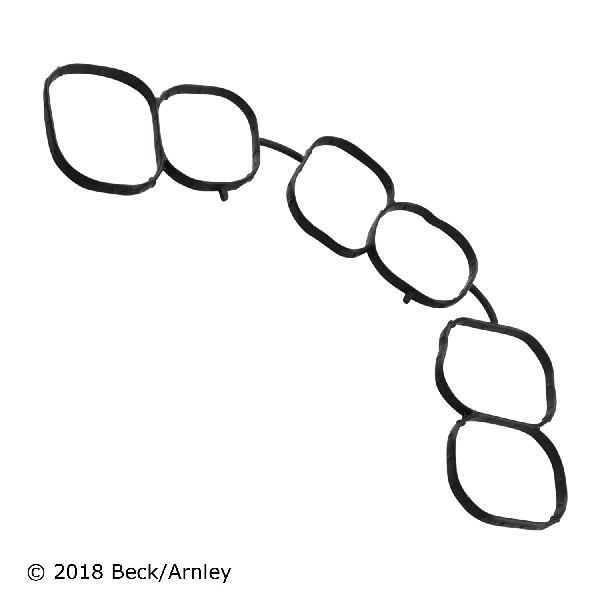
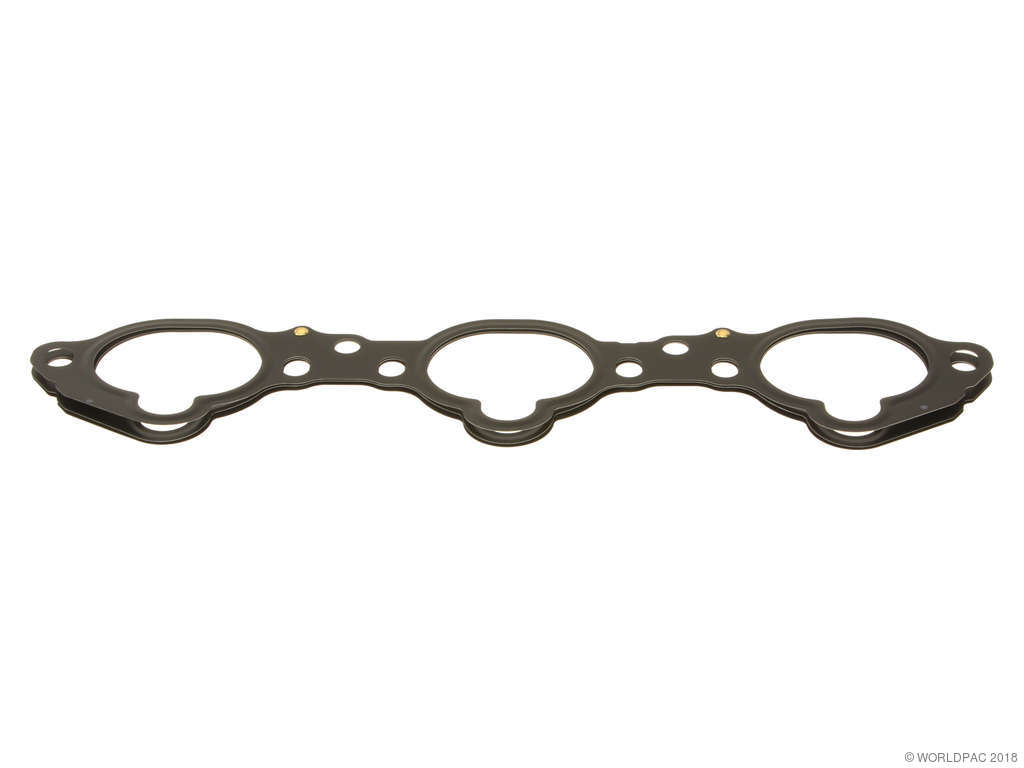

The information in this article is provided for general reference and educational purposes only. Vehicle specifications, procedures, and part compatibility can vary by production date, trim level, and region. Always consult your vehicle's factory service manual and verify part numbers before purchasing or performing repairs. Safety-critical components such as airbags, seat belts, and braking systems should be installed by a qualified professional.
- Nissan MAXIMA:
- 🧭 Diagnostic Flowchart
- 🎬 Helpful Videos
- 🛍️ Shop This Part
- What's Unique About the 2016-2018 Nissan MAXIMA
- Symptoms You May Notice
- Most Likely Causes
- Rare But Worth Checking
- Diagnosis Steps
- Parts You'll Likely Need
- Related Codes That Often Appear With This One
- Technical Service Bulletins (TSBs) & Recalls
- Platform-Specific Known Issues
- Mechanic-Grade Diagnostic Values
- Hidden / Shadow Codes Worth Checking
- Scan Tool Commands That Help
- Wiring & Ground Locations
- "I Checked Everything" — The Actual Cause
- OEM Part Supersession History
- Model Year Variations Within This Range
- 🎟️ Get 5% Off