

P2008 on 2015-2019 Nissan Pathfinder: Intake Runner Control Circuit Causes and Fixes
On a 2015-2019 Pathfinder, code P2008 is often caused by a software glitch requiring an ECM reprogram, as noted in Nissan TSBs. If not software, the next most likely cause is a failed intake manifold runner control (VIAS) solenoid located on top of the intake manifold. The solenoid is the most common hardware failure and costs about $50-$150 to replace.
- Before buying any parts for a P2008 code on a 2015-2019 Pathfinder, check if your vehicle needs an ECM software update per Nissan TSBs, especially for 2017-2019 models.
- P2008 is an ELECTRICAL circuit fault, not a mechanical one. The problem is in the wiring, the solenoid's coil, or the ECM.
- The most likely part to fail is the VIAS control solenoid for Bank 1 (firewall side), which is a relatively inexpensive and accessible part to replace on top of the engine.
- Symptoms are usually mild, such as hesitation and a slight loss of power, but should be addressed to prevent further issues and restore full performance.
What's Unique About the 2015-2019 Nissan PATHFINDER
For the 2015-2019 Pathfinder, particularly the 2017 model year, this code is frequently not a sign of a failed part. Nissan issued multiple Technical Service Bulletins (TSBs) stating that a calibration error in the Engine Control Module (ECM) can incorrectly trigger and store the P2008 code. In these cases, the actual fix is a simple software update from a Nissan dealer, not a costly parts replacement. The TSB clarifies that the reprogram updates how the permanent DTC is stored and erased after the actual fault (if any) is repaired.
Diagnostic Flowchart
Tap your situation to follow the diagnostic path that matches what you're seeing on this vehicle.
Symptoms You May Notice
- Check Engine Light is on
- Reduced engine power, especially at low RPMs
- Hesitation or stumbling when accelerating
- Rough or unstable idle
- Slightly worse fuel economy
- Possible engine surging
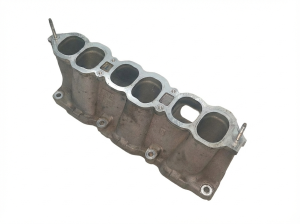
- Replacing the entire intake manifold when only the external solenoid is faulty.
- Replacing the VIAS solenoid when the actual problem is an ECM software error that requires a reprogram.
- Confusing the VIAS control solenoid with the nearby EVAP purge control solenoid, which can look similar.
Most Likely Causes
- Engine Control Module (ECM) Software Calibration Error 🔴 High Probability → Shop Engine Control Module (ECM) Nissan issued TSBs #NTB19-045b and #P9328_P9343_P934 for 2017-2019 models, indicating the ECM can improperly store this code due to a software glitch. This is a widely acknowledged issue for this platform.
How to confirm: A Nissan dealership or a shop with a Nissan-specific scan tool (CONSULT-III plus) can check the current ECM software part number against the updated versions listed in the TSB.
Typical fix: Reprogramming (re-flashing) the ECM with updated software. This is typically a dealer-only fix and may cost between $100 and $250.
Est. part cost: $0 - Faulty Intake Manifold Runner Control (VIAS) Solenoid 🟡 Medium Probability → Shop Engine Intake Manifold The solenoid is mounted directly on the hot intake manifold, and prolonged exposure to heat and engine vibration can cause its internal coil to fail, creating an open circuit. It's a common failure point across many Nissan models using the VQ35DE engine.
How to confirm: Use a scan tool's 'Active Test' to command the solenoid on and off while listening for a click. If no click, unplug it and test the two pins on the solenoid itself with a multimeter set to Ohms; a reading of 'OL' (Open Line) or outside the typical 22-30 Ohm range confirms a bad coil. You can also test for 12V power at the connector when activated by the scan tool.
Typical fix: Replace the Bank 1 VIAS control solenoid. It is located on top of the intake manifold and is accessible after removing the plastic engine cover.
Est. part cost: $50-$150 - Damaged Wiring or Loose Connector ⚪ Low Probability Engine vibration and heat can make wires brittle. Rodents are also known to chew on wiring harnesses in the engine bay. The connector can also be accidentally unplugged or not fully seated during other maintenance like air filter or spark plug changes.
How to confirm: Visually inspect the wiring harness from the ECM to the VIAS solenoid for breaks, chafe marks, or corrosion. Check that the connector is securely plugged into the solenoid. A user on a Ross-Tech forum with a similar code found the entire issue was a bad pin in the connector.
Typical fix: Repair the broken wire or clean/replace the damaged connector. Apply dielectric grease to the terminals to prevent future corrosion.
Est. part cost: $5-$25
Rare But Worth Checking
- Blown Fuse: A short in the circuit could blow the fuse that powers the IMRC system. Always check the fuse box before replacing more expensive components.
- Failed Powertrain Control Module (PCM/ECM): → Shop Engine Control Module (ECM) This is very rare, but the internal driver circuit in the ECM that controls the solenoid can fail. This should only be considered after all other possibilities (solenoid, wiring, fuse, and software) have been exhaustively ruled out. Mail-in repair services exist as an alternative to a costly new ECM.
Diagnosis Steps
- Check for TSBs: Before any other step, contact a Nissan dealer with your VIN to see if TSB #NTB19-045b or another reprogram campaign applies. If so, an ECM reprogram is the first and most likely fix.
- Visual Inspection: Remove the plastic engine cover (typically held by two 10mm bolts). Locate the VIAS control solenoid for Bank 1 (the cylinder bank closer to the firewall). Inspect its electrical connector and wiring for any obvious damage, such as cracks, corrosion, or chewed wires. Ensure the connector is firmly seated.
- Active Test: Use a bidirectional scan tool to command the Bank 1 VIAS solenoid ON and OFF. Listen for an audible 'click' from the solenoid. If it clicks, the solenoid and wiring are likely good, and the problem may be intermittent or related to the ECM software.
- Electrical Test (No Click): If no click is heard, unplug the solenoid. Use a multimeter to check for battery voltage on one pin of the connector when the solenoid is commanded ON by the scan tool. If voltage is present, the issue is likely the solenoid itself.
- Solenoid Resistance Test: With the solenoid unplugged, set a multimeter to Ohms (Ω) and measure the resistance between the two pins on the solenoid. A good solenoid should have a specific resistance (typically between 22-30 Ohms). A reading of 'OL' or infinite resistance means the internal coil is broken, and the solenoid is bad.
- Circuit Integrity Test: If voltage is missing at the connector, check the associated fuse in the fuse box. If the fuse is good, you have an open or short in the wiring between the ECM and the solenoid that must be traced and repaired.
- Final Check: If the TSB doesn't apply and the solenoid, wiring, and fuse are all confirmed to be good, the fault may lie within the ECM's internal driver circuit. This is the least likely scenario.
Parts You'll Likely Need
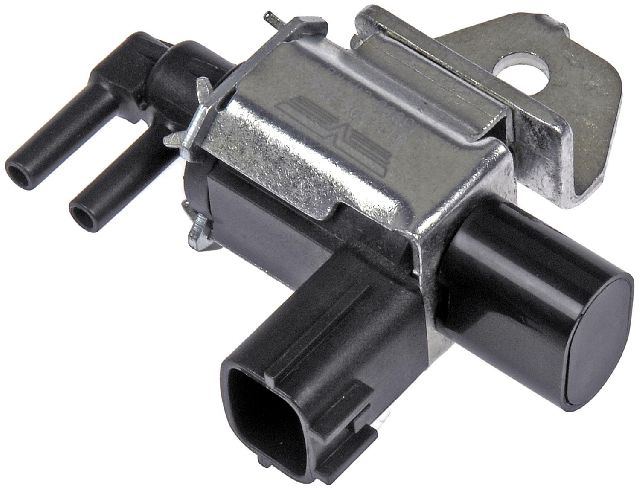
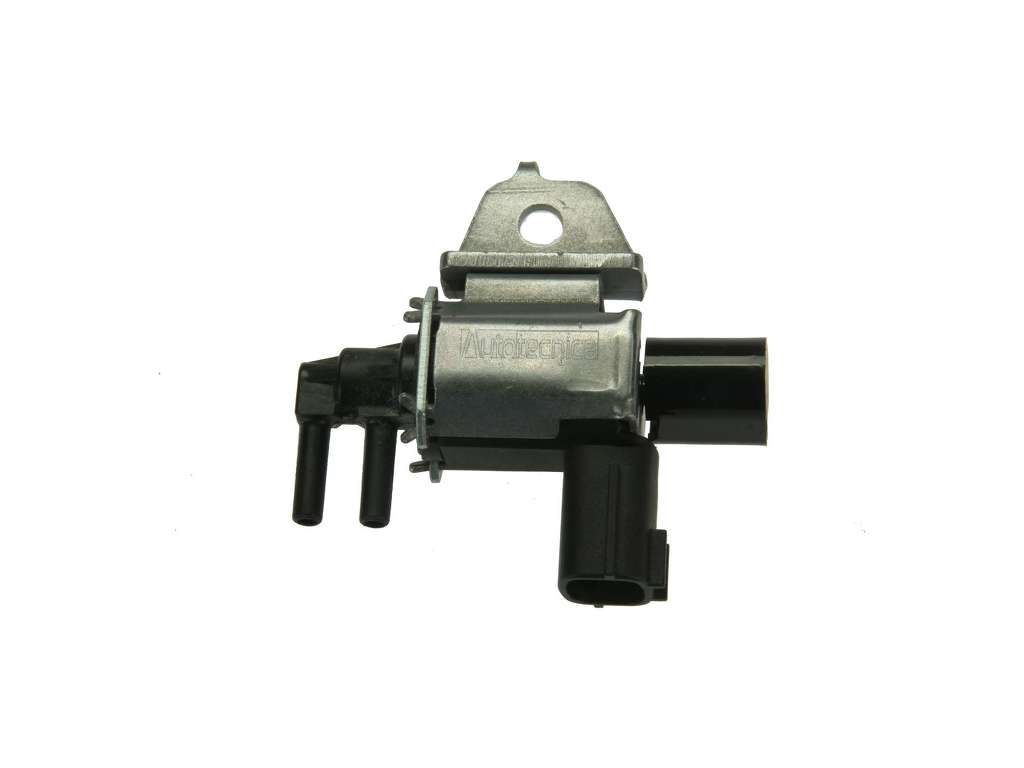
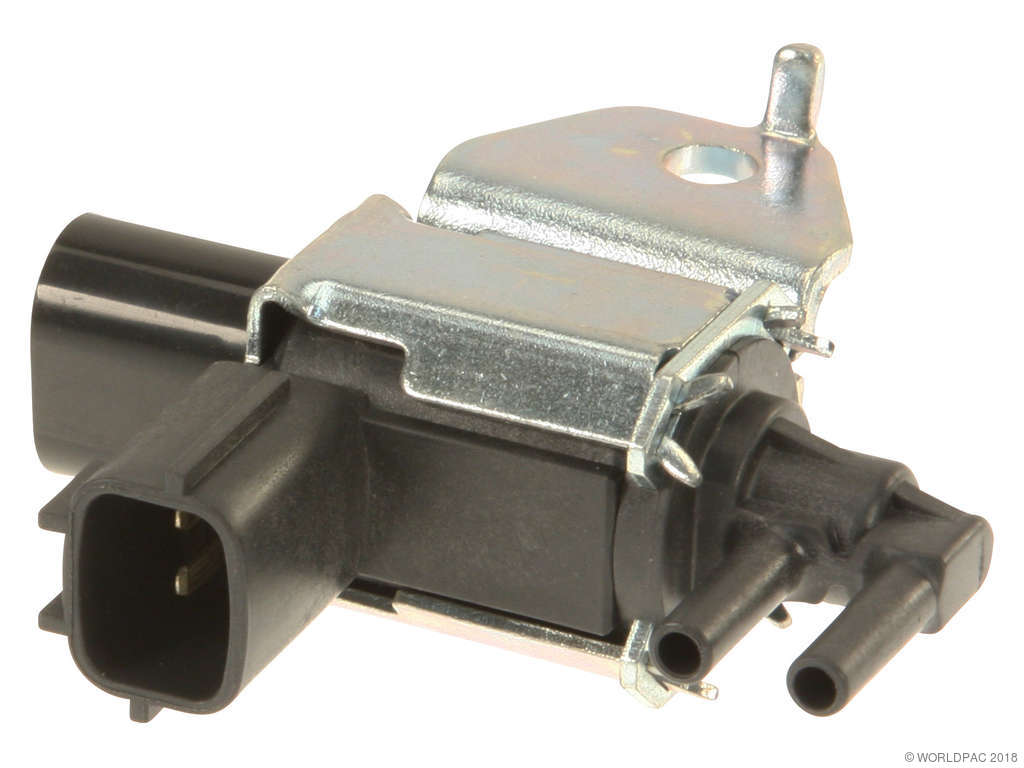
- Intake Manifold Runner Control Solenoid (VIAS Control Solenoid)
(OEM #14955-8J10A)— This solenoid is the most common part to fail in the circuit, usually due to internal coil failure from heat and age. It is used across a wide range of Nissan and Infiniti vehicles.
Trusted brands: Nissan (OEM), Dorman (P/N 911-506), Hitachi, Standard Motor Products
OEM price range: $120-$200
Aftermarket price range: $40-$100
Related Codes That Often Appear With This One
- P2006 — P2006 means 'Intake Manifold Runner Control Stuck Closed'. If the P2008 electrical fault prevents the solenoid from activating, the flaps will remain in their default closed position, which can trigger P2006. Fixing the P2008 electrical issue will usually resolve the P2006 code.
- P0087, P0101, P0448 — Nissan TSBs NTB19-045b and P9328_P9343_P934 specifically group P2008 with these other codes as being potentially caused by the same ECM calibration error that requires a software update.
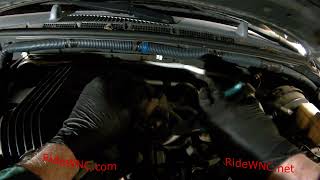
- P1800 — On many Nissan vehicles, P1800 is a manufacturer-specific code for the VIAS Control Solenoid Valve circuit. While P2008 is the generic OBD-II code, a Nissan-specific scanner might show P1800, pointing to the exact same component. 🎬 Watch: How to diagnose and test the VIAS control solenoid.
Technical Service Bulletins (TSBs) & Recalls
- NTB19-045b: MIL ON WITH DTC P0087, P0101, P0448, OR P2008. Recommends ECM reprogram for affected vehicles after diagnosis and repair. Applies to 2017-2019 Pathfinder among other models.
- P9328_P9343_P934: Notes that due to calibration errors, the ECM may improperly store a permanent DTC for P2008 and others, requiring an ECM reprogram. This was a voluntary service campaign in California.
- NTB19-045a: An earlier, superseded version of NTB19-045b.
Platform-Specific Known Issues
- On 2017-2019 models, Nissan TSB #NTB19-045b states that due to a calibration error, the ECM may improperly store a permanent DTC P2008, and the recommended repair is to reprogram the ECM. The bulletin emphasizes that this reprogram does not fix a physical fault but corrects the logic for storing and clearing the code after a repair is made.
- The 3.5L V6 (VQ35DE/VQ35DD) engine in the Pathfinder has two VIAS solenoids. P2008 refers to Bank 1, which is the bank of cylinders located against the firewall. The corresponding solenoid is the one located further back on the intake manifold.
Mechanic-Grade Diagnostic Values
- VIAS Control Solenoid Coil Resistance — expected: 22–30 Ohms at room temperature. Failure: A reading of 'OL' (Open Line) or a value significantly outside the specified range indicates a faulty solenoid coil.
- Voltage at VIAS Solenoid Connector (Solenoid Activated) — expected: Battery Voltage (approx. 12-14V). Failure: Absence of voltage when the solenoid is commanded on (via scan tool or by revving the engine over ~2500 RPM) points to a wiring issue, fuse, or ECM fault.
- Voltage on Ground-Side Control Wire (Solenoid Inactive) — expected: A small bias voltage (e.g., ~2.4V) may be present.. Failure: This is not a failure indicator, but a characteristic of the ECM's ground-switched circuit. The voltage should drop to near 0V when the solenoid is activated.
Hidden / Shadow Codes Worth Checking
- P1800: This is a Nissan-specific manufacturer code for 'VIAS Control Solenoid Valve Circuit'. It is functionally identical to the generic P2008 code and points to the same electrical fault in the same component. (see via This code is more likely to be displayed on a Nissan-specific scan tool like the CONSULT-III plus, or higher-end professional scanners, whereas basic OBD-II readers may only show the generic P2008.)
Scan Tool Commands That Help
- Nissan CONSULT-III plus or equivalent professional scan tool (e.g., Autel, Snap-on): Active Test / Actuator Test for the VIAS Control Solenoid — This function is used to manually command the VIAS solenoid on and off with the engine running or key on. It is the fastest way to confirm if the solenoid is mechanically clicking and if the control circuit from the ECM is functional. If the solenoid clicks during the test, the wiring and solenoid coil are likely good.
Wiring & Ground Locations
- E15 and E9 — Located at the left rear of the engine compartment.. These are primary ground points for the ECM. A poor or corroded ground connection at these locations can cause a variety of erratic engine control issues, including intermittent faults in sensor and actuator circuits like the one for the VIAS solenoid.
- E24 — Located at the left end of the dash.. This is another ground point for the ECM. Verifying that all ECM grounds are clean and secure is a critical step when diagnosing any circuit control code, as a bad ground can mimic a component failure.
Real Owner Repair Stories
- Reddit user in r/Justrolledintotheshop (2017 Nissan Pathfinder) — P0171 and P0174 (System Too Lean Bank 1 & 2), with fuel trims in the +30s.
❌ Tried (didn't work) A smoke test was performed and showed ZERO leaks, which would typically rule out a vacuum leak.
✅ What actually fixed it A small vacuum hose behind the intake manifold was found to have a tear that only opened up under engine vacuum, not under the positive pressure of a smoke test. Replacing the hose resolved the lean codes. While not P2008, this is a critical related issue for the platform, as brittle vacuum lines are a common problem and can affect the VIAS system's mechanical actuator, even if the P2008 code points to an electrical issue.
OEM Part Supersession History
14955-8J100→14955-8J10A— Standard part revision, likely for improved durability or material changes.
Model Year Variations Within This Range
- 2017-2019: The 2017 model year marked a mid-cycle refresh that included a new engine, the VQ35DD, which added Direct Injection Gasoline (DIG) and increased power to 284 hp from 260 hp. While the VIAS system concept is the same, some engine components and the ECM are different from the 2015-2016 models. The TSBs for the P2008 software glitch specifically apply to these later 2017-2019 models.
Helpful Videos
Used OEM Parts in Stock
New Aftermarket Parts Available


The information in this article is provided for general reference and educational purposes only. Vehicle specifications, procedures, and part compatibility can vary by production date, trim level, and region. Always consult your vehicle's factory service manual and verify part numbers before purchasing or performing repairs. Safety-critical components such as airbags, seat belts, and braking systems should be installed by a qualified professional.
- Nissan PATHFINDER:
- 🧭 Diagnostic Flowchart
- 🎬 Helpful Videos
- 🛍️ Shop This Part
- What's Unique About the 2015-2019 Nissan PATHFINDER
- Symptoms You May Notice
- Most Likely Causes
- Rare But Worth Checking
- Diagnosis Steps
- Parts You'll Likely Need
- Related Codes That Often Appear With This One
- Technical Service Bulletins (TSBs) & Recalls
- Platform-Specific Known Issues
- Mechanic-Grade Diagnostic Values
- Hidden / Shadow Codes Worth Checking
- Scan Tool Commands That Help
- Wiring & Ground Locations
- Real Owner Repair Stories
- OEM Part Supersession History
- Model Year Variations Within This Range
- 🎟️ Get 5% Off