

OBD-II Code P2015: Intake Manifold Runner Position Sensor/Switch Circuit Range/Performance
What P2015 means, why it triggers, and how to fix it for good
- Code P2015 points to a mechanical failure with the intake manifold runner linkage or actuator in 90% of cases, rather than a faulty electrical sensor.
- For 2008-2017 VW and Audi 2.0T engines, fix the common broken plastic actuator stop using a $50 aftermarket metal bracket instead of replacing the entire $800 manifold.
- Diagnose the root cause by using a bi-directional scan tool to command the actuator open and closed while monitoring the live voltage sweep from 0.5V to 4.5V.
- Driving with P2015 causes a rich air-fuel mixture that destroys the catalytic converter within 6 to 8 months, turning a minor fix into a $2,000 replacement.
What Does P2015 Mean?
The P2015 code means your Engine Control Module (ECM) detects a problem with the intake manifold runner position sensor signal. This sensor reports the position of the internal flaps controlling engine airflow. The ECM received a voltage outside the expected range, meaning the flaps are not in the correct position for the current engine speed and load.
Technical definition: The SAE/OBD-II definition is "Intake Manifold Runner Position Sensor/Switch Circuit Range/Performance (Bank 1)". The powertrain control module (PCM) commands the intake flaps to a specific position, but the sensor reports an implausible value outside the pre-programmed 0.5V to 4.5V limits. Bank 1 refers to the engine side containing cylinder #1.
Can I Drive With P2015?
Yes, But With Caution. You can drive with this code, but expect reduced engine power, poor fuel economy, and a rough idle. Diagnose and repair it within a few weeks. An improperly functioning intake runner system causes a rich air-fuel mixture, which overheats and destroys the catalytic converter over time—a repair costing $800 to $2,500. In some vehicles, the ECU triggers 'limp mode,' severely restricting engine speed and making highway driving unsafe.
Common Causes
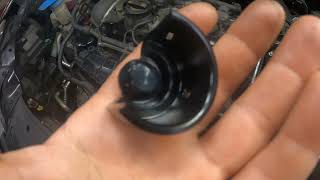
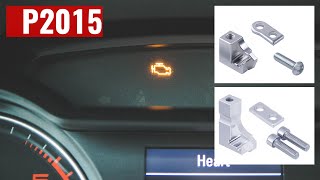
- Worn or Broken Actuator Linkage/Stop (Very Common) — This is the most frequent cause, especially on Volkswagen and Audi 2.0T TSI and TDI engines. 🎬 Watch: A quick fix for the common 2.0TSI intake fault. A small plastic piece acting as a stop for the actuator arm wears out or breaks. This allows the arm to over-rotate, sending an out-of-range signal to the computer.
- Carbon Buildup on Intake Runner Flaps (Common) — On direct-injection engines, carbon deposits build up inside the intake manifold. This buildup causes the runner flaps to stick or slow their movement, preventing them from reaching their commanded position.
- Faulty Intake Manifold Runner Control (IMRC) Actuator/Motor (Common) — The electric motor or vacuum-operated actuator moving the runner flaps fails mechanically or burns out electrically. When this happens, it cannot position the flaps correctly as commanded by the ECM.
- Vacuum Leaks (Less Common) — On systems using a vacuum-operated actuator, a cracked, disconnected, or clogged vacuum hose prevents the actuator from moving the flaps. A disconnected actuator arm also creates a large vacuum leak, triggering misfire codes alongside P2015.
- Faulty Position Sensor or Wiring (Less Common) — The sensor itself fails internally, or its wiring harness becomes damaged, corroded, or shorted due to heat and vibration. On many modern vehicles, the sensor is integrated into the actuator or manifold and cannot be replaced separately.
- Incorrect Part or ECU Calibration Issue (Rare) — Installing a non-OEM intake manifold causes the code to return if the aftermarket tolerances do not match the ECU's expectations. Rarely, an ECU software update is required to recalibrate the runner position tables.
Symptoms
- Reduced Engine Power and Acceleration — The car feels sluggish or hesitant at lower RPMs because the flaps are not in the optimal position for torque.
- Rough or Unstable Idle — The engine shakes or the RPMs fluctuate when stopped due to improperly controlled airflow.
- Poor Fuel Economy — The engine runs inefficiently because the air-fuel mixture is not optimized.
- Engine Enters 'Limp Mode' — The vehicle's computer severely limits engine power and RPMs to prevent damage, often accompanied by a flashing EPC light.
- Check Engine Light is On (also visible on scanner) — This is the most common and immediate symptom.
- Failed Emissions Test (also visible on scanner) — An active check engine light and incorrect air-fuel mixture guarantee an automatic failure during state inspections.
Diagnostic Flowchart
Tap your situation to follow the diagnostic path that matches what you're seeing on this code.
Common Fixes & Costs
- Install Aftermarket Repair Bracket (VW/Audi) — Parts: $10-$70, Labor: $50-$150, ~0.5 hr book time (DIY)
- Replace Intake Manifold Assembly — Parts: $200-$800, Labor: $300-$700, ~3 hr book time (Professional)
- Clean Intake Manifold and Valves (Carbon Cleaning) — Parts: $20-$50, Labor: $400-$800, ~5 hr book time (Professional)
- Replace Intake Manifold Runner Control Actuator/Motor — Parts: $150-$400, Labor: $100-$300, ~2.5 hr book time (Intermediate)
- Repair Wiring or Connectors — Parts: $5-$30, Labor: $100-$250, ~1.5 hr book time (Intermediate)
Used vs. New Parts: Buying Guide
When a used part is worth it: For an older vehicle (>150k miles) on a strict budget, a used intake manifold from a low-mileage donor car is a cost-effective option.
Donor-vehicle mileage cap: roughly under 80000 miles for the part to have meaningful remaining life.
Donor quality checklist:
- Verify the part number matches the original exactly.
- Source the part from a vehicle scrapped due to an accident, not engine failure.
- Visually inspect for cracks, excessive oil residue, or damage to the linkage.
Decision logic:
- If Vehicle is a VW/Audi with the common plastic stop failure → buy the aftermarket repair bracket first; it's the cheapest and most targeted fix.
- If Part has a known design flaw (like the VW/Audi plastic stop) → favor a new aftermarket part with an improved design (e.g., Dorman with a metal arm) over a used OEM part.
- If Vehicle is >120K miles and budget is tight → a used part from a donor with <80k miles is an acceptable risk.
Warranty tradeoff: Used parts offer a 30-90 day warranty covering the part only. Aftermarket new parts offer 1-year to lifetime warranties. OEM new parts installed at a dealer include a 1-2 year parts and labor warranty.
Worst-case if a used part fails: $500-$1000 if a used part fails after the warranty period, requiring a second replacement part and repeated labor.
What Happens If You Wait — Timeline
- 0-1 month: Check Engine Light illuminates. The driver notices a very slight rough idle when cold, but no major performance loss. (MPG impact: 0-5%% · Added cost: $0-$25 in wasted fuel)
- 1-4 months: A noticeable drop in fuel economy occurs. The engine feels sluggish during acceleration. The car automatically fails emissions tests. (MPG impact: 5-15%% · Added cost: $50-$150 in wasted fuel)
- 4-8 months: The engine enters 'limp mode' intermittently. The incorrect air-fuel ratio puts severe thermal stress on the catalytic converter. (MPG impact: 15-25%% · Added cost: $200-$500 (wasted fuel + risk of O2 sensor damage))
- 8+ months: Sustained operation with a rich mixture overheats and destroys the catalytic converter's internal substrate, requiring a massive repair. (MPG impact: >25%% · Added cost: $1200-$2800 (catalytic converter replacement))
Cost of Not Fixing It
- 0-1 month: Noticeable decrease in fuel economy (5-10% drop), rough idle, and sluggish acceleration. Guaranteed emissions test failure. (Added cost: $20-$50 in wasted fuel)
- 1-6 months: The incorrect air-fuel ratio overheats the catalytic converter, leading to internal damage and failure. This is the most significant financial risk. (Added cost: $1200-$2800 for catalytic converter replacement)
- 6+ months: Continued operation with a failed catalytic converter damages oxygen sensors and fouls spark plugs. (Added cost: $300-$600 for O2 sensors and tune-up)
Diagnosis Steps
- Scan for Codes and Review Live Data
Connect an OBD-II scanner. Confirm P2015 and check for related codes (P2004, P2006, P030X). View the 'commanded' vs 'actual' position of the intake runner flaps in the live data stream to see if the sensor reports any movement.
Tools: OBD-II Scanner with Live Data (Beginner) - Visual Inspection of Linkage and Vacuum Lines
Remove the engine cover. Visually inspect the actuator, linkage arm, wiring, and vacuum lines for breaks or cracks. On VW/Audi models, verify the actuator arm has not popped off the manifold.
Tools: Flashlight (Beginner) - Check Actuator Arm Play
Gently move the actuator arm by hand. If the internal plastic stop is broken, the arm has excessive play and feels loose. This confirms the most common mechanical failure.
Tools: Hands / Basic Hand Tools (Beginner) - Perform an Actuator Output Test
Using a bi-directional scan tool, command the actuator motor to open and close. Observe if the linkage moves and monitor the live data to see if the voltage matches the commanded position. This definitively tests the entire control circuit.
Tools: Advanced Bi-directional Scan Tool (Advanced) - Test Actuator with a Handheld Vacuum Pump
For vacuum-operated systems, disconnect the vacuum line from the actuator and connect a handheld pump. Apply vacuum and watch the linkage arm. If it doesn't move or hold vacuum, the actuator diaphragm is torn or the flaps are seized.
Tools: Handheld Vacuum Pump (Intermediate) - Test Position Sensor Voltage
Back-probe the sensor's signal wire with a multimeter. With the key on and engine off, manually move the actuator arm. The voltage must sweep smoothly from ~0.5V to ~4.5V. If stuck at 0V or 5V, the sensor or wiring is faulty.
Tools: Multimeter, Back-probe Pins (Intermediate) - Perform an Intake System Smoke Test
If you suspect a vacuum leak but cannot see it, pressurize the intake system with low-pressure smoke. Look for smoke escaping from cracked lines or a disconnected actuator arm pivot point.
Tools: Smoke Machine (Intermediate) - Check Waveform with an Oscilloscope
Connect an oscilloscope to the sensor's signal wire. A good sensor produces a clean square wave as the actuator moves. A glitchy waveform with sudden voltage drops indicates a failing sensor or binding flap.
Tools: Oscilloscope (Advanced)
When This Code Triggers (Freeze-Frame Conditions)
- Engine Coolant Temp: 180-200°F (82-93°C) (The fault logs when the engine is fully warmed up and operating in closed-loop fuel control.)
- RPM: 1500-3000 RPM (Sets during a transitional phase, such as light acceleration, when the ECU commands a flap position change.)
- Engine Load: 30-60% (Occurs under steady cruising or moderate acceleration, not full throttle.)
- Vehicle Speed: 35-55 mph (56-88 km/h) (Triggered during city or highway driving when intake runner flaps actively adjust to optimize torque.)
Related Codes
- P2004 — Means 'Intake Manifold Runner Control Stuck Open'. P2015 indicates an implausible signal, while P2004 indicates the flaps are physically stuck open. Having both confirms a mechanical failure.
- P2006 — Means 'Intake Manifold Runner Control Stuck Closed'. The sensor sees the flaps are stuck shut, often caused by heavy carbon buildup.
- P2017 — Means 'Intake Manifold Runner Position Sensor Circuit High'. Points specifically to an electrical fault where the voltage signal is stuck higher than the expected range, suggesting a short to power.
- P0300-P0308 — Random or specific cylinder misfire codes. A broken intake manifold linkage creates a massive vacuum leak, throwing off the air-fuel mixture and causing misfires.
Climate & Environmental Factors
- Cold Weather: Plastic components, such as the actuator linkage and internal stops, become brittle in cold temperatures. This increases the likelihood of a component breaking upon engine start-up.
- High Altitude: High altitude reduces air density, naturally decreasing engine power. The engine's control module becomes more sensitive to implausible readings from the IMRC system in thinner air, making symptoms more noticeable.
How to Talk to a Mechanic About This Code
Say this: "I have a P2015 code on my [Year, Make, Model]. I'd like to book a diagnostic. Based on my research, it's likely a mechanical issue with the intake manifold runner system. Can you please check the actuator linkage for play and inspect for carbon buildup before recommending a full manifold replacement?"
This signals you are an informed consumer. It directs the mechanic to the most common failure points first, preventing an immediate upsell to a new manifold. For VW/Audi owners, it opens the door to discussing the cheaper repair bracket.
Avoid saying:
- 'My check engine light is on, can you just fix it?' (Invites a costly, part-swapping diagnostic approach.)
- 'I think the sensor is bad.' (A common misdiagnosis that leads them down the wrong path.)
- 'Just do whatever you think is best.' (Gives up all control and makes you vulnerable to upselling.)
Questions to ask before authorizing the repair:
- Did you visually confirm a broken linkage or worn actuator stop?
- If you recommend a new manifold, why won't a less expensive repair (like the aftermarket bracket or carbon cleaning) work?
- Is the replacement part OEM or aftermarket, and what is the warranty on the part and labor?
- Will an intake flap adaptation procedure be required after the repair, and is that included in the quote?
Where to Take It: Dealer vs Independent vs Chain
- Dealer:
Recommended only if the repair is covered by warranty. Otherwise, an independent specialist is a better value.
Best for: Vehicles still under the original or extended warranty (especially the VW/Audi intake manifold warranty)., Complex electrical diagnosis or software updates requiring manufacturer-specific tools.
Downsides: Highest labor rates., Will always recommend the official full manifold replacement and refuse to install customer-supplied aftermarket repair brackets. (Typical cost: +50% vs. baseline) - Independent Shop:
Best fit. An experienced independent European auto specialist is highly familiar with this code and its most cost-effective solutions.
Best for: Out-of-warranty vehicles, especially German brands like VW, Audi, and Mercedes., Diagnosing known, common problems like P2015., Owners who want cost-effective options, such as installing an aftermarket repair bracket or performing a carbon cleaning.
Downsides: Quality and expertise vary. Look for a shop specializing in your vehicle's brand. (Typical cost: +0% vs. baseline) - Chain Shop:
AVOID. These shops are not equipped for the specific diagnostic steps required for P2015.
Best for: Simple, routine maintenance like oil changes and tire rotations.
Downsides: Technicians lack the specialized knowledge for make-specific problems like P2015., High pressure to upsell services; likely to misdiagnose the issue and recommend unnecessary part replacements. (Typical cost: -10% vs. baseline)
When to Walk Away From the Repair
If the estimated repair cost exceeds 40-50% of the car's private-party value, pause and consider alternatives to fixing it.
- Car worth $4000, fix is $2000: Walk away. A $2,000 repair on a $4,000 car is 50% of its value and rarely makes financial sense.
- Car worth $12000, fix is $1200: Fix it. The repair cost is only 10% of the vehicle's value, well below the threshold.
- Car worth $2500, fix is $900: Borderline. The repair is 36% of the car's value. If the car has other pending issues, it's time to walk away.
What Scan Tool You Need for This Code
Minimum: A scanner that reads engine trouble codes and shows live data for the intake manifold runner position.
A basic $20 code reader only gives you the P2015 code. To properly diagnose it, you must see the live data stream from the position sensor to know if it's stuck, moving erratically, or out of range.
Budget: BlueDriver Pro (~$100) — Connects to your smartphone via Bluetooth. It reads the P2015 code, provides freeze-frame data, and graphs the live data from the intake runner position sensor.
Mid-range: Foxwell NT510 Elite (~$180) — Offers manufacturer-specific diagnostics and bi-directional control. You can command the intake runner actuator to move, definitively testing the motor. It also performs adaptation procedures after part replacement.
Professional: Autel MaxiCOM MK808 / MK906BT (~$500-1200) — A professional tablet scanner offering full bi-directional control, advanced live data graphing, and OE-level functions. It performs any necessary coding after an intake manifold replacement.
Rent vs buy: Auto parts stores scan codes for free but use basic readers lacking live data. If you plan to diagnose P2015 yourself, buying a tool like the BlueDriver or Foxwell NT510 is a required investment.
How to Clear the Code After You Fix It
- Use an OBD-II scan tool to clear the P2015 code.
- Perform a complete OBD-II drive cycle to allow readiness monitors to run.
- Rescan the vehicle to ensure the code has not returned and monitors are 'Ready'.
Drive cycle (~30 minutes): Start with a cold engine. Idle for 3 minutes with the A/C and defroster on. Drive in mixed city traffic with slow accelerations. Accelerate to and maintain 55-60 mph for 5 minutes. Coast down to 20 mph without braking, then stop.
Readiness monitors affected: Catalyst monitor, O2 sensor monitor, Fuel System Monitor
Before emissions retest: drive at least 100 miles to fully set monitors.
Watch out for:
- Clearing the code without fixing the mechanical issue guarantees it will return.
- Disconnecting the battery resets all readiness monitors to 'Not Ready', resulting in an automatic emissions failure.
- Testing with a fuel tank outside the 1/4 to 3/4 range prevents the EVAP monitor from running.
Will This Fail Emissions / State Inspection?
Yes — this code typically fails an OBD-II emissions inspection.
- California: An illuminated Check Engine Light from P2015 is an automatic failure. All required OBD readiness monitors must be set to 'Ready'.
- New York: An active Check Engine Light for any emissions-related fault, including P2015, results in an automatic failure during the OBD-II port inspection.
- Texas: In the 17 counties requiring emissions testing, a vehicle with an illuminated Check Engine Light automatically fails the OBD-II inspection.
Most Commonly Affected Vehicles
- Volkswagen GTI, Jetta, Passat, CC, Tiguan (2008-2017) — Extremely common on 2.0T TSI and 2.0L TDI engines due to a failing plastic actuator stop. VW extended the warranty on the intake manifold for many of these vehicles.
- Audi A3, A4, A5, Q3, Q5, TT (2008-2017) — Shares the problematic 2.0T TSI and 2.0L TDI engines with Volkswagen. Both aluminum and plastic manifolds are affected.
- Mercedes-Benz C-Class, E-Class, ML-Class (CDI/V6 models) (2005-2014) — On OM642 diesel models, this code is caused by a failed swirl motor or broken plastic linkages controlling the swirl flaps.
- Dodge/Chrysler/Jeep Charger, 300, Grand Cherokee, Wrangler (2011-2021) — On the 3.6L Pentastar V6, P2015 is caused by a failing intake manifold runner control valve. The entire upper intake manifold assembly requires replacement.
- Hyundai Santa Fe, Tucson, i20 (2008-2012) — On diesel models, the code is triggered by a faulty Variable Swirl Actuator failing to move the swirl valve to its target position.
- Kia Sportage, Sorento (2010-2012) — Commonly caused by a defective intake manifold actuator. A modified replacement part (283202A410) resolves this.
- Chevrolet Cruze, Sonic (2011-2016) — On the 1.8L Ecotec engine, the plastic linkage arm on the intake manifold breaks or pops off.
- Subaru Impreza, WRX, Outback, Legacy (2002-2019) — Subaru uses Tumble Generator Valves (TGVs). A fault in the TGV motor triggers codes like P1086 or P1090, functionally equivalent to P2015.
- BMW 3-Series, 5-Series, X3, X5 (N52/N54/N55 engines) (2004-2015) — BMW uses DISA valves. A failure of a DISA valve flap or actuator motor causes lean codes, rattling, and loss of power (codes 2AA9, 2AAC).
Manufacturer-Specific Notes
- Volkswagen/Audi: VW issued a warranty extension (TSB 24 15 04) covering the intake manifold for up to 10 years or 120,000 miles on many 2.0T vehicles. Check with a dealer using your VIN before paying for a repair. The most popular DIY fix is an inexpensive aftermarket metal bracket that provides a new stop for the actuator.
- Mercedes-Benz: On OM642 diesel engines, the issue is the 'swirl motor' located in the 'V' of the engine. Plastic control arms become brittle from heat and break. A common DIY fix uses a 4.7k ohm resistor to trick the ECU, clearing the code but leaving flaps open.
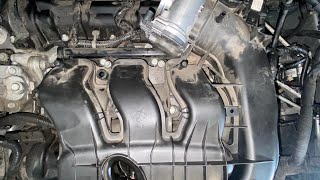
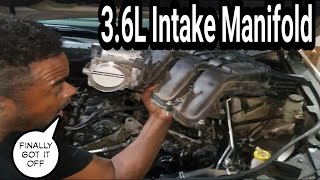
- Dodge/Chrysler/Jeep: On the 3.6L Pentastar V6, the runner control and sensor are integrated into the upper intake plenum. Mechanics must replace the entire upper manifold assembly, requiring the removal of fuel lines and electrical connectors.
- Subaru: Subaru's equivalent system is the Tumble Generator Valve (TGV). Failures produce similar symptoms to P2015 but trigger codes like P1086. A common performance modification is a 'TGV delete,' removing the internal flaps entirely and reprogramming the ECU.
Real Owner Stories
2011 VW Jetta TDI with 130K miles
Check Engine Light came on with code P2015. The car drove normally. A local shop quoted over $900 for a new intake manifold.
What they tried:
- Researched the common worn plastic stop failure on the actuator.
Outcome: Installed a $60 aftermarket metal repair bracket from Diesel Geek. The bracket limits actuator movement, preventing the 'implausible signal'. The Check Engine Light turned off permanently. The repair took 30 minutes.
Lesson: For VW/Audi 2.0L engines, the aftermarket repair bracket is a highly effective first fix. Always try this $60 solution before agreeing to a $900 manifold replacement.
2009 Audi TT 1.8T with P2015
Check Engine Light on with P2015. The owner replaced the entire intake manifold with a new aftermarket unit.
What they tried:
- Replaced the intake manifold, sensor, and actuator with a non-OEM part.
Outcome: The P2015 code returned after a 20-minute drive when revving above 3000 RPM. The actuator moved and vacuum lines were intact. The failure was due to the aftermarket part's calibration not matching the ECU's strict tolerances.
Lesson: Aftermarket intake manifolds often have quality control or compatibility issues that cause P2015 to return. Stick to OEM parts or highly reputable OE-suppliers for this specific assembly.
2008 Mercedes E320 CDI (OM642 Engine)
Car entered 'limp mode' with severely reduced power. The shop diagnosed a failed swirl motor, quoting over $1,000 for the labor-intensive replacement.
What they tried:
- Unplugged the swirl motor connector and inserted a 4.7k Ohm resistor across the two middle pins.
Outcome: The resistor tricked the ECU into thinking the motor functioned correctly. This cleared limp mode and restored normal power for less than $5.
Lesson: For the Mercedes OM642, the electronic resistor bypass is a cheap workaround to avoid a costly mechanical repair. However, it leaves the flaps in their default position, slightly impacting low-end performance.
2017 VW Tiguan 2.0T with rough idle
Vehicle had a rough idle and misfires. The owner performed a DIY carbon cleaning of the intake valves.
What they tried:
- Removed the intake manifold and cleaned heavy carbon caked on the valves.
Outcome: The rough idle vanished, but a persistent P2015 code appeared. Removing and reinstalling the manifold broke the already-brittle actuator linkage.
Lesson: Plastic intake manifold components become brittle with age. A carbon cleaning job can be the 'final straw' for a failing part. If P2015 appears right after a cleaning, suspect damage during re-installation.
How to Prevent This Code From Triggering
- Perform periodic intake valve cleaning (Every 40,000-60,000 miles) — On direct-injection engines, fuel doesn't wash over the intake valves. Carbon builds up and causes flaps to stick. Professional walnut blasting is the most effective method.
- Install an oil catch can (One-time installation) — A catch can captures oil and fuel vapors from the PCV system before they recirculate into the intake manifold, significantly reducing carbon buildup on the valves and flaps.
- Perform regular oil changes with high-quality synthetic oil (Per manufacturer's schedule (e.g., 5,000-10,000 miles)) — Synthetic oil reduces oil volatility. Less oil vapor drawn through the PCV system means fewer deposits form in the intake manifold.
- Perform occasional 'Italian tune-ups' (Monthly) — Short trips accelerate deposit formation. Spirited driving with higher RPMs increases temperatures and airflow, burning off lighter carbon deposits.
Frequently Asked Questions
Can I just replace the sensor to fix P2015?
It is unlikely that just replacing the sensor will fix the problem. The code is most often caused by a mechanical failure of the actuator linkage or flaps, not an electrical failure of the sensor itself. On most modern cars, the sensor is integrated with the actuator or the entire manifold and cannot be purchased separately.
What is the little metal bracket I see for sale online for P2015?
This is a popular aftermarket solution specifically for Volkswagen and Audi TDI and TSI vehicles. It attaches to the actuator motor and provides a new, durable stopping point for the linkage arm. This prevents the arm from moving out of its intended range, clearing the code without replacing the entire manifold.
Will cleaning my intake valves fix the P2015 code?
It fixes the issue if heavy carbon buildup is making the flaps stick. However, if the cause is a broken plastic part on the manifold itself, cleaning will not solve the problem. In some cases, the code appears for the first time after a carbon cleaning if the process disturbed a failing component.
My mechanic says I need a whole new intake manifold. Is that true?
On many cars, the sensor, actuator, and flaps are sold as one complete assembly, making full replacement the only official OEM repair. For VW/Audi, the aftermarket repair bracket is a widely used $50 alternative for the common over-rotation issue. If the code returns after replacement, suspect a faulty aftermarket part or missed vacuum connection.
What is a common misdiagnosis for P2015?
A common misdiagnosis is immediately replacing the intake manifold without confirming the root cause. The code is often triggered by a simple cracked vacuum hose, a wiring issue, or a clogged vacuum pump filter screen. Always verify actuator movement and vacuum supply before buying a $500 manifold.
The repair bracket didn't work or the code came back after replacing the manifold. Now what?
If a known good fix fails, you must perform deeper electrical and vacuum diagnostics. Check the wiring harness for damage and verify the actuator receives power, ground, and a clean ECU signal. On vacuum systems, ensure lines are clear and the vacuum pump functions correctly.
Can a bad battery cause a P2015 code?
While not a direct cause, a failing battery causes erratic behavior from sensors and modules due to low system voltage. Some owners report P2015 appearing when their battery fails and disappearing after replacement. Ensure your battery and charging system are healthy before proceeding with expensive manifold repairs.
Key Takeaways
- Code P2015 points to a mechanical failure with the intake manifold runner linkage or actuator in 90% of cases, rather than a faulty electrical sensor.
- For 2008-2017 VW and Audi 2.0T engines, fix the common broken plastic actuator stop using a $50 aftermarket metal bracket instead of replacing the entire $800 manifold.
- Diagnose the root cause by using a bi-directional scan tool to command the actuator open and closed while monitoring the live voltage sweep from 0.5V to 4.5V.
- Driving with P2015 causes a rich air-fuel mixture that destroys the catalytic converter within 6 to 8 months, turning a minor fix into a $2,000 replacement.
Helpful Videos
Shop the Parts Behind P2015
Below are the parts most often responsible for code P2015, ranked by how frequently each one is the actual culprit (per the diagnosis above). Tap any to see what we have for your vehicle.



The information in this article is provided for general reference and educational purposes only. Vehicle specifications, procedures, and part compatibility can vary by production date, trim level, and region. Always consult your vehicle's factory service manual and verify part numbers before purchasing or performing repairs. Safety-critical components such as airbags, seat belts, and braking systems should be installed by a qualified professional.
- 🧭 Diagnostic Flowchart
- 🎬 Helpful Videos
- 🛍️ Shop This Part
- What Does P2015 Mean?
- Can I Drive With P2015?
- Common Causes
- Symptoms
- Common Fixes & Costs
- Used vs. New Parts: Buying Guide
- What Happens If You Wait — Timeline
- Cost of Not Fixing It
- Diagnosis Steps
- When This Code Triggers (Freeze-Frame Conditions)
- Related Codes
- Climate & Environmental Factors
- How to Talk to a Mechanic About This Code
- Where to Take It: Dealer vs Independent vs Chain
- When to Walk Away From the Repair
- What Scan Tool You Need for This Code
- How to Clear the Code After You Fix It
- Will This Fail Emissions / State Inspection?
- Most Commonly Affected Vehicles
- Manufacturer-Specific Notes
- Real Owner Stories
- 2011 VW Jetta TDI with 130K miles
- 2009 Audi TT 1.8T with P2015
- 2008 Mercedes E320 CDI (OM642 Engine)
- 2017 VW Tiguan 2.0T with rough idle
- How to Prevent This Code From Triggering
- Frequently Asked Questions
- Can I just replace the sensor to fix P2015?
- What is the little metal bracket I see for sale online for P2015?
- Will cleaning my intake valves fix the P2015 code?
- My mechanic says I need a whole new intake manifold. Is that true?
- What is a common misdiagnosis for P2015?
- The repair bracket didn't work or the code came back after replacing the manifold. Now what?
- Can a bad battery cause a P2015 code?
- Key Takeaways
- 🎟️ Get 5% Off