

P2015 on 2005-2008 Audi A4 2.7L/3.0L TDI: Intake Runner Fault Causes and Fixes
On the V6 TDI engine (codes BKN, ASB, BPP, BSG), P2015 is almost always caused by the intake manifold's swirl flap actuator motor over-traveling due to a worn internal plastic stop. The most common, permanent, and affordable fix is an aftermarket metal repair bracket that limits the motor's movement, preventing the need for a costly intake manifold replacement. This repair can often be done in under 30 minutes with basic tools.
- P2015 on your Audi V6 TDI almost certainly means the swirl flap actuator motor is moving too far.
- Before you do anything else, purchase an aftermarket metal repair bracket for the actuator motor; this is the most likely and cheapest fix.
- Installation of the bracket is a simple DIY job for most, requiring basic tools and about 30-60 minutes.
- Do not let a repair shop replace the entire intake manifold unless they can prove the flaps themselves are broken or hopelessly clogged with carbon.
- If you also have code P2020, you will need a repair bracket for Bank 2 as well.
What's Unique About the 2005-2008 Audi A4
On the Audi 2.7L and 3.0L V6 TDI engines, the P2015 code is a notoriously common issue. It's rarely caused by a bad sensor; instead, the delicate plastic stop for the swirl flap actuator motor wears down or breaks. This allows the motor to move beyond its intended range, which the position sensor reports as an 'implausible signal' or 'range/performance' error. This widespread and predictable failure has led to a robust market for simple, inexpensive metal repair brackets designed specifically to limit the actuator's travel and permanently solve the problem without replacing the entire intake manifold. Many owners install these brackets as a preventative measure before the fault even occurs.
Symptoms You May Notice
- Check Engine Light (Malfunction Indicator Lamp) is on.
- Flashing glow plug light on the dashboard.
- Reduced engine performance or power loss.
- Rough or unstable idle.
- Decreased fuel efficiency.
- Engine may enter 'limp mode', severely limiting power.
- Increased fuel consumption.
- Replacing the entire intake manifold when only a simple repair bracket is needed. Many shops or dealers will quote a full manifold replacement, which is often unnecessary for this specific code on this engine.
- Replacing the actuator motor when the issue is only the worn internal stop. The motor is usually functioning correctly but is allowed to over-travel.
Most Likely Causes
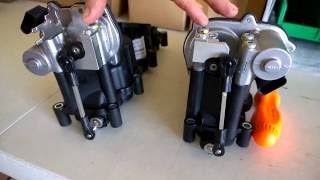
- Worn or Broken Swirl Flap Actuator Motor Stop 🔴 High Probability The original plastic stop mechanism inside the intake manifold that limits the actuator motor's travel is a known weak point that wears down or breaks over time, allowing the motor to over-rotate. This is the most common failure mode for P2015 on this engine family.
How to confirm: Visually inspect the actuator motor's linkage. If it moves excessively or seems loose, the internal stop has likely failed. A diagnostic tool (like VCDS) can confirm the position sensor is reporting an 'implausible signal' or that the actual value is out of range with the specified value (e.g., actual 100% vs specified 94%).
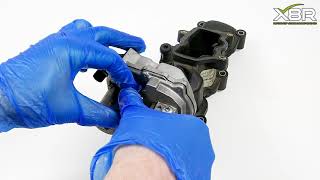
Typical fix: Install an aftermarket metal repair bracket onto the actuator motor. This bracket provides a new, durable physical stop, limiting the motor's range of motion and preventing the fault code. The fix is purely mechanical and requires no software changes; the code will often clear on its own after installation.
Est. part cost: $25-$75 - Sticking or Seized Swirl Flaps 🟡 Medium Probability Like many direct-injection diesel engines, the V6 TDI is susceptible to carbon (soot) buildup in the intake manifold. These deposits can cause the swirl flaps to become sticky or completely seize, preventing the actuator motor from moving them.
How to confirm: Attempt to move the swirl flap linkage by hand (with the engine off). If it is stiff, difficult to move, or doesn't move at all, the flaps are likely binding due to carbon. This often requires removing the intake manifold for visual inspection and cleaning. An owner on Audi-Sport.net noted this issue after performing a carbon clean, where a flap became stuck.
Typical fix: Remove the intake manifold and manually clean the carbon deposits from the manifold runners and the swirl flaps. In severe cases, the entire intake manifold may need to be replaced.
Est. part cost: $500-$1000+ - Failed Intake Manifold Runner Motor (Actuator) ⚪ Low Probability → Shop Engine Intake Manifold While less common than the linkage/stop issue, the electric motor itself or the integrated position sensor can fail internally. This can also be caused by a related issue where a deformed oil seal behind the potentiometer causes the linkage to stick (though this is more documented on FSI engines). A manufacturer service bulletin, TSB Bulletin #A0124312072273_2, notes that the MIL may illuminate with P2015 due to issues with the electric changeover valve N316.
How to confirm: Using a capable scan tool, perform an output test on the actuator motor (V157 for Bank 1). If the motor does not respond or makes grinding noises despite having good power and ground, it has likely failed.
Typical fix: Replace the intake manifold runner motor. This part is often sold as a complete unit with the position sensor.
Est. part cost: $150-$350
Rare But Worth Checking
- Wiring or Connector Issue: Damage to the wiring harness or corrosion in the connector for the actuator motor can cause an intermittent or total loss of signal, triggering the P2015 code. A user on a Reddit forum traced their swirl flap codes to a grounding issue. Always inspect the wiring for chafing or breaks before replacing parts.
Diagnosis Steps
- Scan the vehicle with an OBD-II scanner to confirm P2015 is the active code. Note any other codes, especially P2020 (Bank 2) or VAG-specific codes like 008213.
- With the engine cover removed, locate the Bank 1 intake manifold runner actuator motor. It is on the side of the intake manifold, typically in the 'V' of the engine.
- Visually inspect the actuator motor and its linkage. Check for any obvious signs of damage, such as broken plastic pieces.
- With the engine off, try to move the linkage arm by hand. Note if it feels excessively loose (indicating a broken stop) or if it's completely stuck (indicating seized flaps).
- If the linkage is loose, the most likely cause is a worn internal stop. The recommended fix is installing an aftermarket repair bracket. The installation typically takes less than 30 minutes and involves removing two T30 Torx screws, fitting the bracket, and reinstalling.
- If the linkage is seized, the swirl flaps are likely stuck with carbon buildup. This requires removal and cleaning of the intake manifold.
- If the linkage seems intact and moves freely, the issue could be the motor itself or the wiring. Use a multimeter to check for power and ground at the motor's electrical connector. Use a scan tool to command the motor to move via an output test and observe the reported position values.
- If power and ground are present but the motor doesn't move or acts erratically, the motor is faulty and needs replacement.
- If there is no power or ground, inspect the wiring harness for damage, paying close attention to the connector and grounding points.
Parts You'll Likely Need
- Intake Manifold Runner Repair Bracket — This is the most common and cost-effective fix. It attaches to the actuator motor and provides a new, hard stop to prevent the over-rotation that causes the P2015 code on V6 TDI engines.
Trusted brands: X8R, Dieselgeek, Vaico
OEM price range: N/A
Aftermarket price range: $25-$75 - Intake Manifold Runner Motor (Actuator)
(OEM #059129086 (superseded by 059129086M, 059129086D, 059129086G, 059129086J, 059129086L, 059129086K, 059129086E))— If the motor itself has failed electronically or mechanically, it will need to be replaced. This is a less common failure mode than the linkage stop.
Trusted brands: VDO, Bosch, NTY
OEM price range: $250-$400
Aftermarket price range: $150-$250 - Intake Manifold Assembly
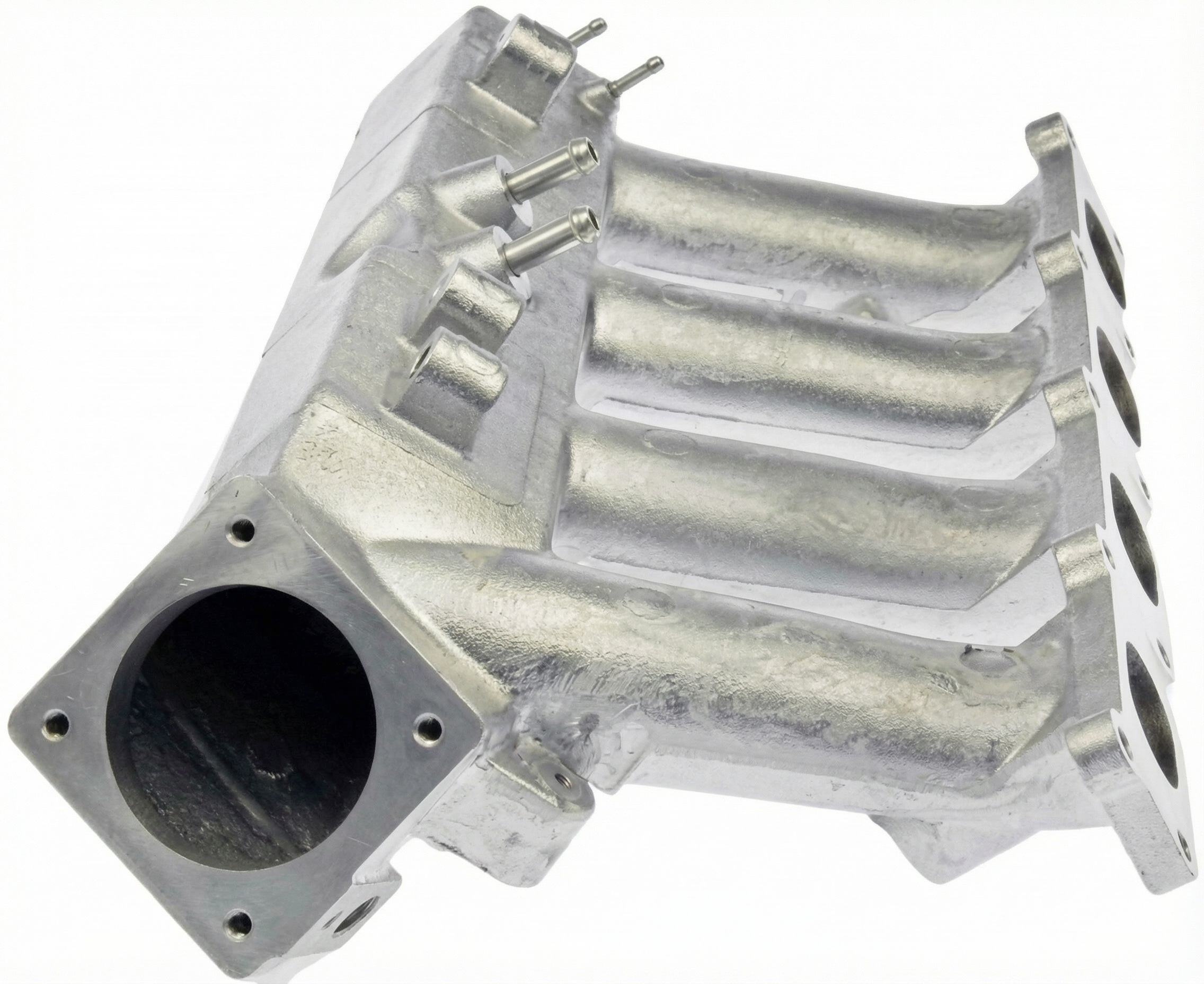
(OEM #Applicable numbers include 059129711 and 059129712 prefixes with various suffixes (e.g., AG, AL, BQ, CG, etc.).)— This is a last resort, typically only needed if the internal swirl flaps are broken or the manifold is so severely clogged with carbon that it cannot be cleaned effectively.
Trusted brands: Audi Genuine
OEM price range: $700-$1200
Aftermarket price range: $500-$800
Related Codes That Often Appear With This One
- P2020 — P2020 is the identical fault but for Bank 2 (the other cylinder bank). Since the V6 engine has two intake manifolds with identical swirl flap systems, it's common for them to fail in a similar timeframe, sometimes triggering both codes. It is recommended to install repair brackets on both banks at the same time.
- VAG 18447 / 008213 — These are VAG-specific diagnostic trouble codes that correspond to the generic OBD-II code P2015.
- P1018 — This is another VAG-specific code, meaning 'Intake Manifold Runner Control, Lower Limit Not Reached'. It points to the same fundamental swirl flap system issue and is often seen in forum discussions about this problem.
Technical Service Bulletins (TSBs) & Recalls
- {'title': 'TSB 01-13-50 / 2030192/2', 'description': 'This TSB addresses P2015/P2020 on some 2007-2011 Audi models, but specifically for 4.2L and 5.2L FSI (gasoline) engines. It attributes the fault to a deformed oil seal behind the position sensor (potentiometer) causing it to stick. While not for the TDI, it shows a related failure mechanism on a different VAG engine.'}
- {'title': 'TSB Bulletin #A0124312072273_2', 'description': 'This bulletin provides information when the MIL is on; electric changeover valve N316 - P2004, P2006, P2014, P2015.'}
Platform-Specific Known Issues
- The primary issue for the V6 TDI is the predictable failure of the actuator motor's range of motion stop, making the aftermarket repair bracket the go-to solution for thousands of owners.
Mechanic-Grade Diagnostic Values
- VCDS Measuring Block Group 142 - Runner Flap Position (act.) — expected: Value should closely match 'Runner Flap B1 Position (spec.)' and move from ~0% to ~99% during adaptation.. Failure: Actual value is stuck at one end (e.g., 99.2% or 0%) while specified value changes, or an 'ERROR' message appears in the adaptation status field.
- V157 Actuator Connector Pin 4 to Pin 1 Voltage — expected: 5V DC with key on, engine off.. Failure: No voltage or significantly lower voltage indicates a wiring or ECU problem.
- V157 Actuator Connector Pin 5 Signal Voltage — expected: Voltage should change smoothly as the actuator arm is moved by hand.. Failure: No change, erratic jumps, or no voltage suggests a failed position sensor within the actuator.
Scan Tool Commands That Help
- VCDS (VAG-COM): Engine -> Basic Settings -> Group 142 -> Go! — To run the intake manifold flap adaptation sequence. This tests the full range of motion. If it completes without error, the system is mechanically sound. If it returns 'ERROR', it confirms a mechanical fault (worn stop, stuck flaps) or a sensor range issue.
- VCDS (VAG-COM): Engine -> Output Tests -> Intake Manifold Runner (V157) — To command the actuator motor to cycle on and off. This allows for visual inspection of the motor's movement and helps determine if the motor itself is responding to ECU commands.
Wiring & Ground Locations
- V157 Actuator Connector (5-Pin) — On the intake manifold runner motor (actuator) for Bank 1.. This is the connection point for all power, ground, and signals to the component causing the fault. Pinout: Pin 1 (Ground), Pin 2 (Motor Control), Pin 3 (Motor Control), Pin 4 (5V Reference), Pin 5 (Position Signal).
- Engine Ground Strap — Typically a braided strap connecting the engine block to the chassis frame rail in the engine compartment, often near the turbo or engine mount.. A poor engine ground can cause a variety of electrical issues, including erratic sensor readings and actuator malfunctions. While not a primary cause, it should be checked for corrosion and tightness.
- Ground Point - Left A-Pillar — Inside the cabin, at the lower part of the A-pillar on the driver's side.. This is a major grounding point for various interior and engine-related control modules. A fault here could potentially affect the Engine Control Module's reference ground.
Real Owner Repair Stories
- Audi-Sport.net forum user (Audi A4 3.0 TDI (B7)) — P2015 and P2020 fault codes.
❌ Tried (didn't work) Installing aftermarket repair brackets on both intake manifold actuators.
✅ What actually fixed it The intake manifolds were removed and found to be severely restricted with carbon buildup, preventing the flaps from moving freely. A thorough manual cleaning of the carbon from the manifolds and flaps resolved the issue. - BRISKODA forum user (Skoda Octavia VRS 2.0 TDI (CEGA Engine) with plastic manifold) — P2015 fault code.
❌ Tried (didn't work) Initial installation of the X8R repair bracket resulted in a new code variant because the bracket had flexed and was not seated correctly on the motor's casting.
✅ What actually fixed it After multiple attempts, the repair bracket was correctly and securely installed, ensuring it was flush against the motor housing and not twisted. This required custom-shortened tools for access. After proper installation and clearing codes, the fault did not return.
OEM Part Supersession History
059129086→059129086D, 059129086G, 059129086J, 059129086K, 059129086L, 059129086M— Revisions to improve reliability and potentially internal components of the actuator motor.
Heads up: For the B7 2.7/3.0 TDI platform, these part numbers are generally interchangeable. However, some aftermarket replacements may require ECU software updates, while others are plug-and-play.
Model Year Variations Within This Range
- 2005-2008: While multiple engine codes exist (BKN, ASB, etc.) with different power outputs, the intake manifold and swirl flap actuator design is fundamentally the same across this platform. The P2015 failure mode and common repair are identical for all V6 TDI engines in the B7 A4.
Diagnostic Flowchart
Other Known Issues on This Vehicle
Issues unrelated to this code that are worth knowing about as an owner of this generation:
- Piezo Fuel Injector Failure 🔴 High → Shop Fuel Injector — Common on 3.0 TDI engines, can occur at various mileages. Symptoms include rough idle, misfires, smoke from exhaust, and difficulty starting.
- High-Pressure Fuel Pump (HPFP) Failure 🔴 High — A critical failure on common rail diesels. The pump can disintegrate internally, sending metal particles ('swarf') throughout the entire fuel system, requiring a costly and extensive cleaning and replacement of many components.
- Upper Front Control Arm Bushing Wear 🟠 Medium — A very common wear item on the B7 platform. Bushings degrade, causing clunking/knocking sounds over bumps, steering wander, and uneven tire wear. Typically requires replacement between 60,000-100,000 miles.
- Timing Chain Wear (2.7 TDI) 🟠 Medium — The 2.7 TDI engine can show signs of timing chain wear (stretching) after 120,000 km (approx. 75,000 miles), which can lead to engine timing issues if not addressed.
- Intake Manifold Carbon Buildup 🟠 Medium → Shop Engine Intake Manifold — Common to all TDI engines due to the EGR system. Soot builds up over time, restricting airflow and potentially causing swirl flaps to stick. Often requires manual cleaning around 80,000-120,000 miles.
Used vs. New Parts: Buying Guide for This Vehicle
When a used part is the smart pick: A used OEM actuator motor (059129086x) can be a good value, as the motor itself rarely fails. The common failure is the external stop, which is addressed by the aftermarket bracket anyway. A used part is often higher quality than a cheap, new, unbranded aftermarket motor.
Donor-vehicle mileage cap: roughly under 80000 miles for the part to have meaningful remaining life.
What to inspect on the donor part:
- Ensure it comes from a vehicle that was running and did not have P2015/P2020 codes.
- Visually inspect the connector for corrosion or broken pins.
- Check that the actuator arm moves smoothly by hand without grinding.
- Ask the seller for the part number to verify it's a compatible revision.
OEM-only on this vehicle (don't cheap out):
- Intake Manifold Assembly. Due to the high probability of carbon buildup and worn internal flap bearings, a used manifold is a significant gamble. The labor involved in replacement is too high to risk installing a part that may have the same issues.
Aftermarket brands forum-validated for this vehicle:
- Repair Brackets: X8R, Dieselgeek, Vaico.
- Actuator Motors: VDO (OEM supplier), Bosch, NTY.
Brands owners have reported issues with on this vehicle:
- Unbranded, no-name actuator motors from online marketplaces are frequently reported to have high premature failure rates.
Real Owner Stories
Aggregated from forums and TSBs cited above. Mileages and costs reflect what owners reported in those sources.
2007 Audi A4 B7 2.0 TDI
Symptoms: Flashing glow plug light and swirl flap codes.
What fixed it: Traced the issue to a bad ground in the wiring harness.
Source hint: Reddit r/tdi: 'Audi A4 problem'
2008 Audi A4 3.0 TDI
Symptoms: Fault code P1018 and sticky intake manifold flaps.
What fixed it: Explored the use of an air intake manifold flap repair bracket after dealing with carbon-related sticking.
Source hint: Audi-Sport.net: 'Air Intake Manifold Flap Repair Bracket - 3.0 TDI'
Audi Owner Report
Symptoms: The owner received an emissions failure report with the CEL code P2015.
What fixed it: The owner sought resolution by referencing a technical service bulletin that details the repair and how it should be covered under warranty (NHTSA ODI #11542990).
Source hint: NHTSA ODI #11542990
Related OBD-II Codes
Frequently Asked Questions
Does TSB 01-13-50 / 2030192/2 apply to my 2005-2008 Audi A4 2.7L/3.0L TDI?
I have a flashing glow plug light and P2015; is this common for the A4 TDI?
Can I fix the P2015 code on my 3.0L TDI without replacing the entire intake manifold?
How can I tell if my P2015 is caused by carbon buildup or a broken actuator stop?
Will the P2015 code clear itself after I install the repair bracket?
Is the P2015 issue on my Audi A4 related to the V157 motor?
Helpful Videos

Used OEM Parts in Stock
New Aftermarket Parts Available



The information in this article is provided for general reference and educational purposes only. Vehicle specifications, procedures, and part compatibility can vary by production date, trim level, and region. Always consult your vehicle's factory service manual and verify part numbers before purchasing or performing repairs. Safety-critical components such as airbags, seat belts, and braking systems should be installed by a qualified professional.
- Audi A4:
- 🧭 Diagnostic Flowchart
- 🎬 Helpful Videos
- 🛍️ Shop This Part
- What's Unique About the 2005-2008 Audi A4
- Symptoms You May Notice
- Most Likely Causes
- Rare But Worth Checking
- Diagnosis Steps
- Parts You'll Likely Need
- Related Codes That Often Appear With This One
- Technical Service Bulletins (TSBs) & Recalls
- Platform-Specific Known Issues
- Mechanic-Grade Diagnostic Values
- Scan Tool Commands That Help
- Wiring & Ground Locations
- Real Owner Repair Stories
- OEM Part Supersession History
- Model Year Variations Within This Range
- Other Known Issues on This Vehicle
- Used vs. New Parts: Buying Guide for This Vehicle
- Real Owner Stories
- 2007 Audi A4 B7 2.0 TDI
- 2008 Audi A4 3.0 TDI
- Audi Owner Report
- Related OBD-II Codes
- Frequently Asked Questions
- 🎟️ Get 5% Off