

P2015 on 2008-2012 Audi A4 3.2L V6: Intake Runner Flap Causes and Fixes
On the Audi A4 3.2L V6 FSI, code P2015 is most often caused by heavy carbon buildup on the intake manifold flaps, preventing them from moving correctly. Other causes include a faulty actuator motor/sensor or a failed vacuum solenoid. Cleaning the intake manifold is a common but labor-intensive fix. Unlike the 2.0T engine, this is not a simple bracket fix.
- P2015 on the Audi A4 3.2L V6 is a 'Range/Performance' issue with the intake runner flaps, not necessarily a failed sensor.
- The most probable cause is severe carbon buildup physically blocking the flaps from moving. The fix is a labor-intensive intake manifold cleaning.
- Before committing to a manifold removal, check the actuator linkage for free movement and test the vacuum control solenoid.
- Unlike the 2.0T engine, there is no simple repair bracket; diagnosis requires checking the mechanical, electrical, and vacuum components of the system.
- If you are not comfortable with extensive engine disassembly, the carbon cleaning procedure is best left to a professional.
What's Unique About the 2008-2012 Audi A4
Unlike the more common 2.0T engine where P2015 is typically caused by a simple broken plastic stop on the manifold that can be fixed with an external bracket, the 3.2L V6 FSI (CALA) engine faces different issues. The primary culprit for this engine is severe carbon buildup, a known characteristic of early direct injection (FSI) designs, which physically restricts the flap movement. Additionally, failures can stem from the vacuum control system or the integrated actuator/sensor unit itself, which can fail internally due to contamination from motor brush dust. Diagnosis is more complex than on the 2.0T, as it often requires manifold removal for cleaning rather than a simple external repair.
Symptoms You May Notice
- Check Engine Light is on
- Rough or uneven idle
- Reduced engine power and hesitation during acceleration
- Decreased fuel economy
- Engine may enter 'limp mode' with severely restricted power
- Audible rattling or clicking from the intake manifold area in some cases
- Replacing the intake manifold position sensor alone, when the issue is actually carbon buildup causing a mechanical restriction.
- Assuming the fix is the same as the 2.0T engine and looking for a broken stop or applying a 'repair bracket' that doesn't fit the 3.2L V6 manifold design.
- Replacing the entire intake manifold when only a carbon cleaning or a new actuator motor was necessary.
Most Likely Causes
- Excessive Carbon Buildup on Intake Manifold Flaps 🔴 High Probability → Shop Engine Intake Manifold As a direct injection (FSI) engine, fuel is sprayed directly into the cylinder, so it does not wash over and clean the intake valves and runners. Oil vapor from the PCV system bakes onto these hot surfaces, causing significant carbon deposits that physically restrict flap movement. This is a well-documented issue across all early Audi FSI engines.
How to confirm: Remove the intake manifold actuator motor and attempt to move the flap linkage by hand. If it is stiff, binding, or completely stuck, carbon buildup is the cause. Definitive proof requires removing the intake manifold for visual inspection of the ports and flaps.
Typical fix: The intake manifold must be removed from the engine. The carbon deposits are then manually and chemically cleaned from the intake ports and the runner flaps. Walnut blasting is a common and effective method used by shops. This is a labor-intensive process that also requires replacing injector seals and manifold gaskets.
Est. part cost: $50-$100 for gaskets, injector seals, and cleaning supplies - Faulty Intake Manifold Runner Actuator Motor / Position Sensor 🟡 Medium Probability → Shop Engine Intake Manifold The actuator motor and position sensor are integrated into one unit (Part No. 06E133619). Over time, carbon dust from the internal motor brushes can contaminate the Hall effect position sensor, causing incorrect readings even if the motor functions. The unit is also subject to heat and vibration, leading to eventual electronic or mechanical failure.
How to confirm: With the engine off, observe the actuator arm while an assistant turns the key to the 'on' position; you should see it cycle. Using an advanced scan tool (like VCDS), command the actuator to move via 'Basic Settings' (Group 142 for some models) and check if the sensor's 'actual' position data follows the 'specified' command. If the linkage moves freely but the sensor readings are erratic or the adaptation fails, the unit is faulty.
Typical fix: Replace the intake manifold runner actuator motor assembly. The OEM part is 06E133619.
Est. part cost: $150-$300 - Failed Vacuum Solenoid / Purge Valve ⚪ Low Probability The solenoid that controls the vacuum supply to the intake runner actuators can fail. This prevents the flaps from being commanded to move, even if the actuator motor and flaps themselves are functional. This part is a known, though less common, cause for P2015.
How to confirm: Test the solenoid (Part No. 037906283C) for proper electrical function (resistance, clicks when powered) and its ability to hold vacuum. Check the vacuum lines to and from the solenoid for cracks or leaks. Using a scan tool, you can monitor the solenoid's commanded state while checking for vacuum at the actuator.
Typical fix: Replace the faulty vacuum solenoid (often called a purge valve or N80 valve).
Est. part cost: $50-$80
Rare But Worth Checking
- Broken Intake Manifold Linkage: → Shop Engine Intake Manifold While not as common as on other Audi engines, the plastic linkage connecting the actuator motor to the flaps can still break or pop off. A visual inspection of the linkage is always a worthwhile first step.
- Wiring Harness Damage: The wiring to the actuator motor/sensor can become brittle and crack from heat and age, leading to intermittent shorts or open circuits. This can trigger P2015 and related codes like P3104. A thorough visual inspection of the harness near the actuator is recommended.
Diagnosis Steps
- Read all fault codes with an Audi-specific OBD-II scanner (like VCDS/VAG-COM) to check for related codes (P2006, P2007, P2020, P030x).
- Visually inspect the intake manifold area. Locate the actuator motor(s) (Part No. 06E133619) on the side/rear of the intake manifold.
- Check the linkage connecting the actuator motor to the manifold flaps. Is it connected and intact?
- With the engine off, have an assistant turn the ignition on (but don't start the engine). Watch the actuator arm to see if it cycles through its range of motion.
- If possible, disconnect the linkage from the actuator and try to move the flaps by hand. The movement should be smooth with minimal resistance. If it is stiff or stuck, heavy carbon buildup is the likely cause.
- If the flaps move freely, use a scan tool with live data to monitor the 'specified' vs 'actual' position of the intake runner flaps. In VCDS, this can be done in Engine -> Adv. Measuring Values. If the 'actual' value doesn't match the 'specified' value, the actuator/sensor unit is the primary suspect.
- Attempt to run the 'Intake Runner Flap Adaptation' in VCDS (Engine -> Basic Settings -> Group 142). If it returns an error, it points to a mechanical or sensor fault.
- If the actuator does not attempt to move at all, inspect the vacuum system, including the control solenoid (Part No. 037906283C) and vacuum lines, for faults.
- Inspect the wiring harness and connector at the actuator motor for any signs of damage, corrosion, or brittleness.
- If carbon buildup is confirmed, the intake manifold must be removed for cleaning. This requires new intake gaskets and fuel injector seal kits.
Parts You'll Likely Need
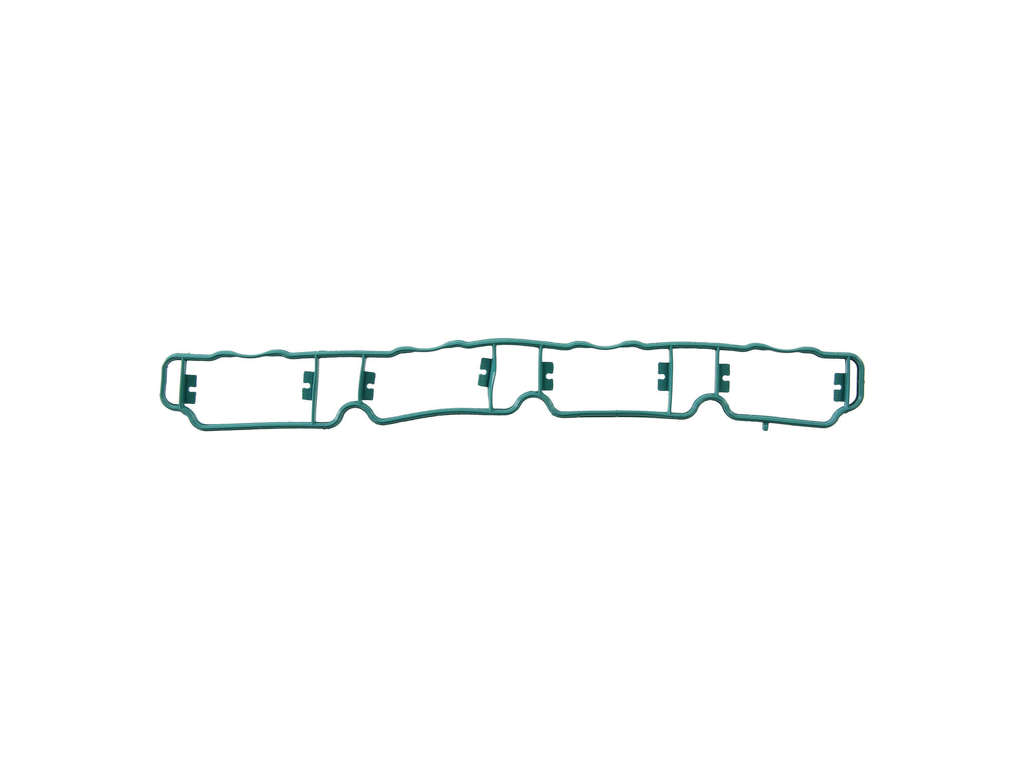
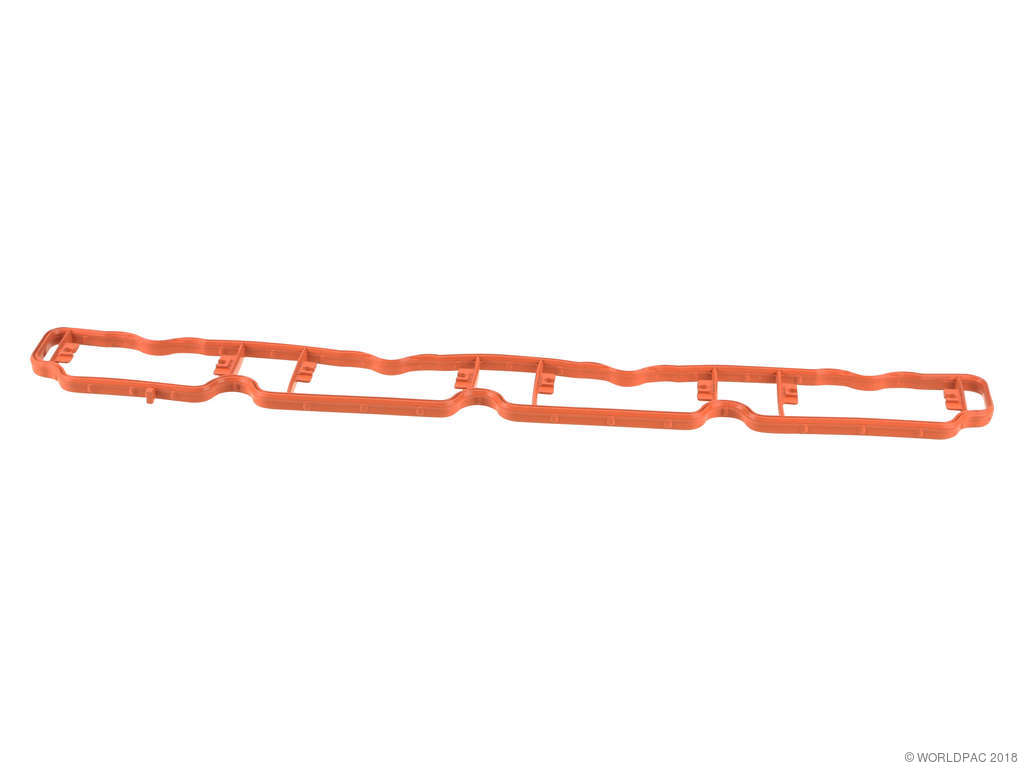
- Intake Manifold Gasket Kit
(OEM #06E198717)— Required when removing the intake manifold for carbon cleaning, which is the most common fix.
Trusted brands: Elring, Victor Reinz
OEM price range: $50-$80
Aftermarket price range: $30-$60 - Intake Manifold Runner Actuator Motor
(OEM #06E133619)— This integrated unit contains the motor and position sensor. It is the second most likely part to fail after carbon buildup becomes a problem.
Trusted brands: Audi Genuine, VDO
OEM price range: $250-$400
Aftermarket price range: $150-$250 - Purge Valve / Vacuum Solenoid
(OEM #037906283C)— This solenoid controls vacuum to the actuators and can be a specific point of failure for this code on the 3.2L engine.
Trusted brands: Pierburg, Bosch, Audi Genuine
OEM price range: $60-$90
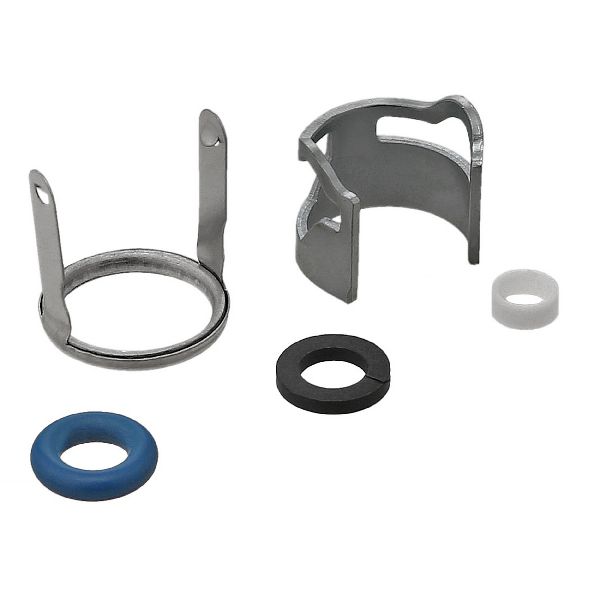
Aftermarket price range: $40-$70 - Fuel Injector Seal Kit
(OEM #06E998907G)— Must be replaced whenever the fuel injectors are removed, which is a necessary step for removing the intake manifold for carbon cleaning.
Related Codes That Often Appear With This One
- P2006 — Indicates 'Intake Manifold Runner Control Stuck Closed (Bank 1)', which is a direct result of the flaps being unable to move due to carbon buildup or a failed actuator.
- P2007 — Indicates 'Intake Manifold Runner Control Stuck Closed (Bank 2)', which would appear with P2006 on the V6 engine, pointing to a widespread issue like carbon or a systemic control failure.
- P0300-P0306 — Random or cylinder-specific misfire codes can occur due to the disturbed airflow caused by improperly positioned runner flaps or heavy carbon buildup affecting cylinder filling.
- P2020 — This is the equivalent of P2015 but for Bank 2. It's common to see both codes together on the V6 engine, indicating a fault affecting both banks.
Technical Service Bulletins (TSBs) & Recalls
- While no specific TSB for P2015 on the 3.2L was found, TSB 2019948 addresses the procedure for carbon deposit removal on FSI engines, which is the primary cause of this code.
- TSB Bulletin #A0124312072273_2 provides information for when the MIL is on specifically for the electric changeover valve N316, citing codes P2004, P2006, P2014, and P2015.
Platform-Specific Known Issues
- The 3.2L V6 FSI engine is well-known for developing heavy carbon deposits in the intake tract, which is a root cause for many drivability issues, including the P2015 code. Owners should anticipate needing a carbon cleaning service at higher mileages (typically 60,000-100,000 miles).
- A user on Reddit with a B8 A4 reported having the P2015 code appear intermittently at first, then more frequently, accompanied by a slightly rough idle every few starts, even though the flap arm seemed to move freely. This highlights how the issue can be electronic (sensor) rather than purely mechanical.
- A video by 'FixItSam' on a similar Audi engine shows how carbon dust from the actuator motor's brushes can contaminate the internal Hall effect sensor, causing the fault. He demonstrates cleaning the sensor as a potential fix before replacing the entire unit.
Mechanic-Grade Diagnostic Values
- Intake Runner Flap Position Sensor (G336) Voltage — expected: Around 4.5V when flaps are closed.. Failure: A voltage reading that is significantly out of spec, even if the sensor appears to function during adaptation tests, indicates a faulty sensor.
- VCDS Measuring Block Group 142, Fields 2 & 3 — expected: The 'Actual' and 'Specified' position values should match or closely follow each other as the engine runs or during testing.. Failure: A significant deviation between the 'Actual' and 'Specified' values points to a problem with the actuator, sensor, or a mechanical blockage.
Scan Tool Commands That Help
- VCDS (VAG-COM): Engine -> Basic Settings -> Group 142 -> ON/OFF/Next — This function runs the Intake Manifold Runner Flap Adaptation. It must be performed after replacing the intake manifold or actuator motor. If the adaptation results in an 'ERROR' message, it confirms a fault in the system (mechanical or electrical) that is preventing the flaps from reaching their specified start and end points.
- VCDS (VAG-COM): Engine -> Measuring Blocks -> Group 142 — To observe the live data of the intake runner flaps. This allows you to see the 'Specified' vs 'Actual' position in real-time. This is critical for diagnosing whether a fault is mechanical (flaps stuck, 'Actual' doesn't move) or electrical (sensor bad, 'Actual' reads incorrectly).
- VCDS (VAG-COM): Engine -> Basic Settings -> Group 140 — This is a fuel pressure release function. It should be used to safely depressurize the high-pressure fuel system before disconnecting any fuel lines, which is required for intake manifold removal.
Wiring & Ground Locations
- G12 — Located at the center of the firewall in the engine bay.. This is a primary ground point for the Engine Control Module (ECM). A corroded or loose connection here can cause a wide range of erratic engine behavior and sensor reading faults, including those related to the intake manifold runner position sensor.
- Actuator Connector (on 06E133619) — The electrical connector on the intake manifold runner actuator motor.. This connector provides power, ground, and signal lines to the integrated motor and position sensor. Technicians will test for a 5V reference and good ground at this connector's pins to rule out a wiring harness issue before replacing the expensive actuator unit.
Real Owner Repair Stories
- YouTube user on channel 'ProjectZGarage' (2015 Audi Q3 2.0T (demonstrates a similar diagnostic principle)) — P2015 error code.
❌ Tried (didn't work) The owner suspected the actuator or linkage was bad.
✅ What actually fixed it Using a hand vacuum pump, the owner tested the actuator and confirmed it could move the flaps smoothly through their full range of motion off the car. This proved the actuator motor and flap mechanics were fine. The diagnosis then pointed towards an issue with the integrated position sensor or the wiring harness, saving the cost of replacing a functional manifold or actuator motor. The final fix was to reinstall and see if the code returned, with the next step being to replace only the sensor if possible, or the actuator/sensor assembly if not. - Owner of a similar Audi model (NHTSA ODI #11542990) — Reported a P2015 code on an emissions failure report. The owner sought resolution based on a technical service bulletin detailing the repair and how it should be covered under warranty or EPA guidelines.
OEM Part Supersession History
06E133619→No direct supersession found, this part number remains current for the specified application.— N/A037906283C→No direct supersession found, this part number remains current for a wide range of VAG vehicles.— N/A
Heads up: This part is used on dozens of Audi/VW models from 2002-2025, confirming its widespread use and availability.
Diagnostic Flowchart
Other Known Issues on This Vehicle
Issues unrelated to this code that are worth knowing about as an owner of this generation:
- Timing Chain Tensioner Failure 🔴 High — Commonly occurs between 80,000-120,000 miles. Characterized by a 1-3 second chain rattle noise from the rear of the engine on cold startups. (Ref: No recall, but a widely documented issue. Failure can lead to jumped timing and catastrophic engine damage.)
- Excessive Oil Consumption 🟠 Medium — Can begin at any mileage but often worsens over time. Caused by issues with piston rings, PCV system, or various oil leaks. (Ref: No recall for the 3.2L V6, though a class-action lawsuit existed for the 2.0T engine's oil consumption.)
- Carbon Buildup on Intake Valves 🟠 Medium — A universal issue for all FSI engines. Typically requires cleaning every 60,000-100,000 miles to prevent misfires, rough idle, and performance loss. (Ref: TSB 2019948 details the cleaning procedure for FSI engines.)
- Leaking Valve Cover and Cam Girdle Seals 🟡 Low — Very common oil leak points as the engine ages. Noted in forums as predictable leak spots that need attention.
Used vs. New Parts: Buying Guide for This Vehicle
When a used part is the smart pick: A complete used intake manifold can be a cost-effective option IF it comes from a low-mileage, documented vehicle and you can visually inspect the inside for minimal carbon buildup. It is a gamble otherwise, as you may be buying the same problem you're trying to fix.
Donor-vehicle mileage cap: roughly under 60000 miles for the part to have meaningful remaining life.
What to inspect on the donor part:
- Ask for photos of the inside of the intake runners to verify the level of carbon buildup.
- Ensure all plastic linkage arms and vacuum nipples are intact and not brittle.
- Verify it comes from a vehicle that did not have the same P2015 fault code.
OEM-only on this vehicle (don't cheap out):
- Fuel Injector Seal Kit (06E998907G): Never reuse or use cheap aftermarket seals. The risk of a high-pressure fuel leak is too great.
- Intake Manifold Gaskets (06E198717): While OEM-supplier is fine, avoid no-name brands as a vacuum leak after the labor-intensive job would be frustrating.
Aftermarket brands forum-validated for this vehicle:
- VDO (for Intake Manifold Runner Actuator): VDO is the Original Equipment Manufacturer (OEM) for Audi, so this part is identical to the genuine dealer part but without the Audi logo and price markup.
- Pierburg (for Vacuum Solenoid): Pierburg is a reputable OEM supplier for many VAG vacuum and emissions components.
- Elring / Victor Reinz (for Gaskets/Seals): These are well-regarded OEM suppliers for all European makes.
Brands owners have reported issues with on this vehicle:
- Unnamed/white-box brands on marketplaces for electronic parts like the actuator motor or solenoids. These often have high failure rates, poor internal components, and may not calibrate correctly during the VCDS adaptation procedure.
Real Owner Stories
Aggregated from forums and TSBs cited above. Mileages and costs reflect what owners reported in those sources.
2009-2012 Audi A4 B8 3.2L V6 FSI
Symptoms: The P2015 code appeared intermittently at first, then became constant. It was accompanied by a slightly rough idle every few starts, even though the flap arm appeared to move freely.
What fixed it: The owner noted the issue could be electronic (sensor) rather than purely mechanical, suggesting the actuator/sensor unit was the culprit.
Source hint: Reddit r/Audi thread titled 'Audi A4 B8 P2015'
2008-2012 Audi A4 3.2L V6 FSI
Symptoms: Faulty readings from the position sensor even though the motor functioned; carbon dust from internal motor brushes contaminated the Hall effect sensor.
What fixed it: Cleaning the internal Hall effect sensor as a potential fix before replacing the entire unit.
Source hint: Video by 'FixItSam' on a similar Audi engine
Related OBD-II Codes
Frequently Asked Questions
Is there a TSB for carbon cleaning on my 3.2L FSI engine?
What is the specific part number for the intake manifold runner actuator motor on my Audi A4?
At what mileage should I expect to perform carbon cleaning on my A4 3.2L?
Can I test the intake runner flaps without a scan tool?
What is the part number for the vacuum control solenoid related to this code?
Does the P2015 code always mean I need a new intake manifold?
Used OEM Parts in Stock

New Aftermarket Parts Available



The information in this article is provided for general reference and educational purposes only. Vehicle specifications, procedures, and part compatibility can vary by production date, trim level, and region. Always consult your vehicle's factory service manual and verify part numbers before purchasing or performing repairs. Safety-critical components such as airbags, seat belts, and braking systems should be installed by a qualified professional.
- Audi A4:
- 🧭 Diagnostic Flowchart
- 🛍️ Shop This Part
- What's Unique About the 2008-2012 Audi A4
- Symptoms You May Notice
- Most Likely Causes
- Rare But Worth Checking
- Diagnosis Steps
- Parts You'll Likely Need
- Related Codes That Often Appear With This One
- Technical Service Bulletins (TSBs) & Recalls
- Platform-Specific Known Issues
- Mechanic-Grade Diagnostic Values
- Scan Tool Commands That Help
- Wiring & Ground Locations
- Real Owner Repair Stories
- OEM Part Supersession History
- Other Known Issues on This Vehicle
- Used vs. New Parts: Buying Guide for This Vehicle
- Real Owner Stories
- 2009-2012 Audi A4 B8 3.2L V6 FSI
- 2008-2012 Audi A4 3.2L V6 FSI
- Related OBD-II Codes
- Frequently Asked Questions
- 🎟️ Get 5% Off