

P2015 on 2005-2010 Chrysler 300C 3.0L CRD: Intake Runner Fault Causes & Fixes
On the 3.0L CRD engine, P2015 almost always points to a problem with the intake manifold's swirl flap system. The most common failures are the electronic swirl motor shorting out from oil contamination or the plastic control linkage breaking. A cheap and popular DIY fix is to bypass the motor with a 4.7k Ohm resistor, which tricks the ECU and clears the limp mode. Proper repairs involve replacing the linkage with a metal version, replacing the failed motor, and crucially, replacing the leaking t
- P2015 on a 3.0L CRD Chrysler 300C is almost certainly a fault in the intake swirl flap system.
- The two most likely causes are a failed swirl motor (usually from an oil leak) or a broken plastic linkage.
- Before replacing any parts, inspect the turbo inlet seal for oil leaks; replacing this cheap seal can prevent future expensive repairs.
- For a quick and cheap fix, many owners successfully use a 4.7k Ohm resistor to bypass the swirl motor, which clears the code and prevents limp mode.
- For a proper mechanical fix, use an aftermarket metal linkage kit to permanently repair the common plastic linkage failure.
What's Unique About the 2005-2010 Chrysler 300C
The 3.0L CRD engine in the 2005-2010 Chrysler 300C is a Mercedes-Benz OM642 diesel engine, used in dozens of Mercedes, Jeep, and Sprinter models. This engine is notorious for issues with its intake manifold swirl flap system. The system uses plastic components for its control linkage that become brittle from constant heat cycles and break over time. Furthermore, oil leaks from the turbo inlet seal are extremely common, and this oil drips directly onto the electronic swirl motor located in the valley of the engine, causing it to short-circuit and fail. This is considered a design flaw and a very common point of failure.
Symptoms You May Notice
- Check Engine Light is on
- Flashing red 'Electronic Throttle Control' light (lightning bolt symbol)
- Vehicle enters 'limp mode' (reduced power, will not rev over ~3000 RPM)
- Sluggish acceleration, especially at low speeds
- Reduced fuel economy
- Rough or uneven idle
- Failed emissions test
- Replacing only the swirl motor without replacing the leaking turbo inlet seal. The new motor will almost certainly fail again from oil contamination.
- Replacing the entire intake manifold assembly when only the external linkage was broken. A much cheaper linkage repair kit would have solved the problem.
- Assuming the resistor mod will fix a mechanically jammed swirl flap. The resistor only bypasses the electrical fault signal; if the flaps are stuck closed, performance issues will persist.
Most Likely Causes
- Failed Swirl Flap Motor (Intake Port Shutoff Motor) 🔴 High Probability The swirl motor is located directly beneath the turbocharger's air inlet pipe. The orange/red seal on this pipe frequently leaks oil vapor from the crankcase ventilation system, which drips onto the motor's electronics, causing it to short out and burn the internal circuit board.
How to confirm: Visually inspect the swirl motor, located in the 'V' of the engine below the turbo. Look for signs of oil contamination on its housing and electrical connector. A diagnostic scan may show codes P2010 through P2015. The presence of oil is a strong indicator of failure.
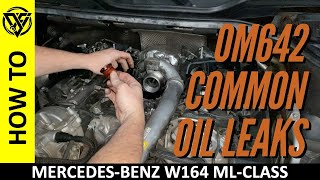
Typical fix: Replace the swirl motor and, crucially, the turbo inlet seal (often called the 'red seal' or 'orange seal') to prevent a repeat failure. A popular, 🎬 See how to replace the turbo inlet seal to stop leaks cheaper alternative is to install a 4.7k Ohm resistor into the motor's wiring harness to bypass it, which tricks the ECU into thinking the motor is functional.
Est. part cost: $150-$250 for a new motor (Pierburg is the OEM manufacturer); <$5 for a resistor; $10-$20 for the seal. - Broken Intake Manifold Runner Linkage 🔴 High Probability → Shop Engine Intake Manifold The linkage rods and clips that connect the swirl motor to the flaps inside the intake manifolds are made of plastic. Over time, constant heat cycles make them brittle, causing them to wear out, break, or pop off their mounts. The connection points can wear into an oval shape, causing excessive play and eventual failure.
How to confirm: With the engine cover off, locate the linkage arms on the front of the intake manifolds. Try to move them by hand. If they are disconnected, loose, or the plastic is visibly broken or snapped, the linkage has failed.
Typical fix: Install an aftermarket metal repair kit that replaces the flimsy plastic rods and clips. These kits are often made of billet aluminum and provide a permanent fix for the linkage itself. If the manifolds are heavily coked with carbon, they may need to be removed for cleaning or replaced entirely.
Est. part cost: $20-$60 for a metal linkage repair kit. - Carbon Buildup on Swirl Flaps 🟡 Medium Probability As with many EGR-equipped diesel engines, the combination of exhaust gas and crankcase oil vapors causes oily soot (carbon) to build up inside the intake manifold. This buildup can physically jam the swirl flaps, preventing them from moving and putting stress on the motor and linkage, leading to their failure.
How to confirm: This is difficult to confirm without removing the intake manifolds for inspection. If the swirl motor and linkage are confirmed to be good but the flaps still won't move (can be tested with a capable scan tool), heavy carbon buildup is the likely cause. In some cases, the buildup is so severe that the flaps are seized solid.
Typical fix: Remove and manually clean the intake manifolds. This is a labor-intensive job, estimated at 6-11 hours for a professional. In severe cases, the manifolds must be replaced as the flaps can be seized solid or the manifold itself damaged during cleaning.
Est. part cost: $0 for cleaning (if DIY); $800-$1500 for new manifolds.
Diagnosis Steps
- Scan the vehicle for fault codes. Note if P2015 is present along with any other related codes like P2010, P2006, or P0404.
- Remove the plastic engine cover and air intake tube connected to the turbocharger.
- Inspect the orange/red seal on the turbo inlet. If it is wet with oil or there is oil residue in the engine valley, it is leaking and must be replaced.
- Inspect the swirl motor located in the engine valley. Check its electrical connector and housing for oil saturation. Oil contamination is the primary cause of motor failure.
- Inspect the plastic linkage arms at the front of both intake manifolds. Check for any broken or disconnected rods and clips. Wiggle them to check for excessive play.
- If the linkage is intact, try to actuate it by hand. It should move with some resistance but not be completely stuck. If it's seized, the flaps are likely jammed with carbon.
- If the motor is oil-soaked or the linkage is broken, proceed with the appropriate repair.
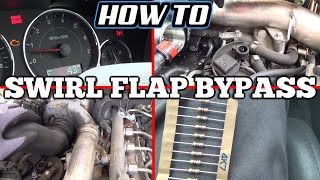
- A popular and inexpensive diagnostic/repair step is to unplug the swirl motor and plug a 4.7k Ohm resistor across the two middle pins (pins 2 and 3) of the vehicle-side harness connector. Clear the codes 🎬 Watch: How to perform the swirl flap motor resistor bypass and drive the vehicle. If the code does not return and limp mode is gone, it confirms the fault is in the motor's electronics.
Parts You'll Likely Need
- Intake Manifold Runner Linkage Repair Kit — This is the most common mechanical failure point. Aftermarket kits made of aluminum or stainless steel offer a permanent replacement for the weak OEM plastic parts.
Trusted brands: Dorman (e.g., 911-420), X8R, IDParts
OEM price range: N/A (Not sold separately by OEM)
Aftermarket price range: $20-$60 - Intake Manifold Runner Motor (Swirl Motor)
(OEM #A6421500494)— This motor frequently fails due to oil contamination from a leaking turbo inlet seal. Supersedes older part numbers like A6421500194, A6421500294, and A6421500394.
Trusted brands: Pierburg (OEM), Bosch
OEM price range: $180-$250
Aftermarket price range: $120-$180 - Intake Manifold Assembly
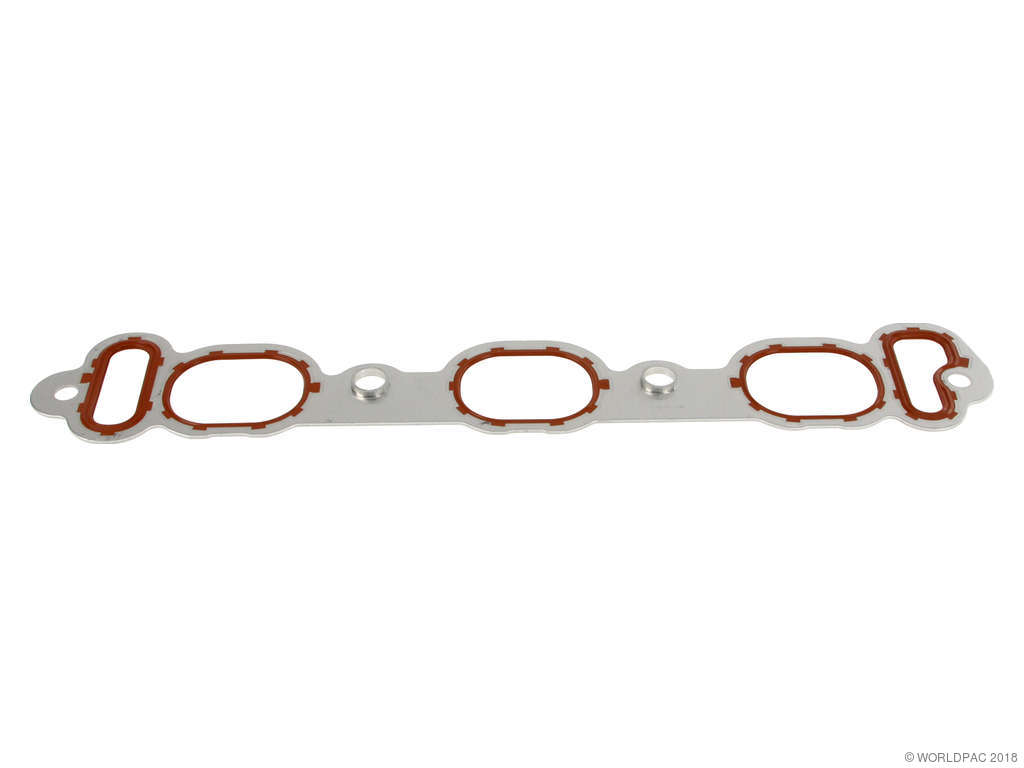
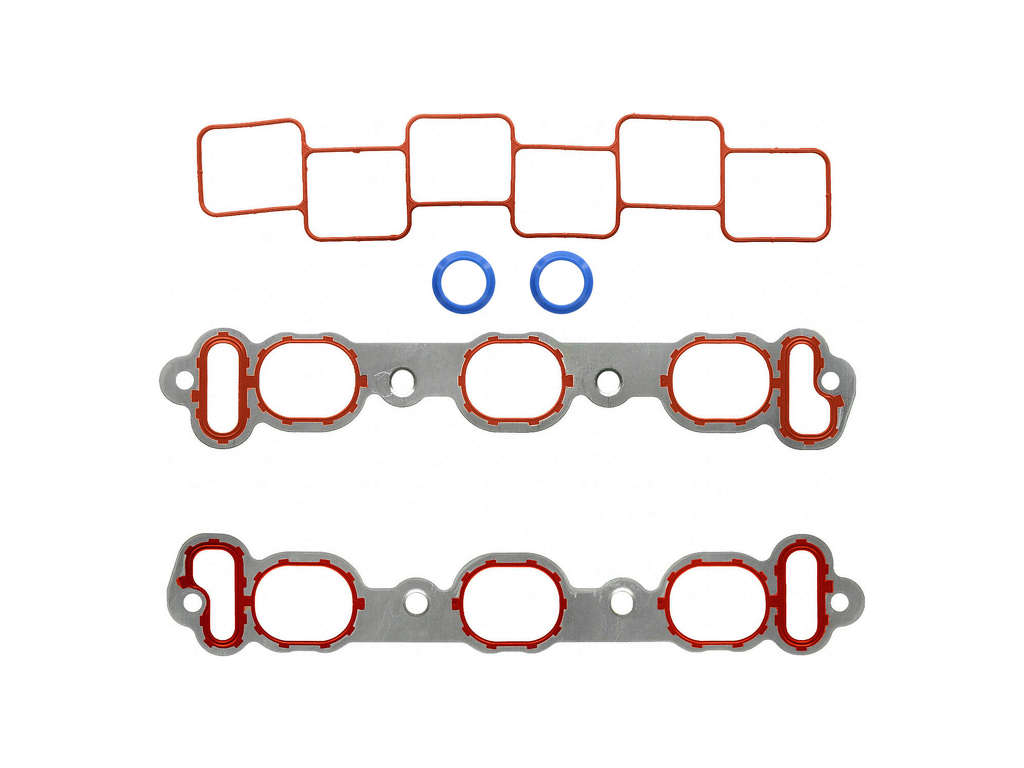
(OEM #A6420907737 (Right), A6420905437 (Left))— Required if the internal swirl flaps are seized from carbon buildup or if the plastic linkage mounts on the manifold itself are broken. Replacement is a very labor-intensive job.
Trusted brands: Genuine Mercedes-Benz/Mopar
OEM price range: $600-$800 per side
Aftermarket price range: $400-$600 per side - Turbocharger Inlet Seal
(OEM #A6420940080)— This inexpensive orange/red seal is the root cause of most swirl motor failures due to oil leaks. It should be replaced whenever servicing the swirl motor or intake.
Trusted brands: Genuine Mercedes-Benz/Mopar, Elring
OEM price range: $10-$20
Aftermarket price range: $5-$10 - 4.7k Ohm Resistor — Used for the 'resistor mod' to bypass a failed swirl motor. This is a workaround, not a true repair, but is very common and effective for eliminating the check engine light and limp mode.
OEM price range: N/A
Aftermarket price range: <$5
Related Codes That Often Appear With This One
- P2010 — This code, 'Intake Manifold Runner Control Circuit High', often appears with P2015 as it also relates to an electrical fault in the swirl motor circuit.
- P2006 — 'Intake Manifold Runner Control Stuck Closed (Bank 1)'. This code points to the flaps being physically stuck, often due to carbon buildup or broken linkage, which is a direct cause of the P2015 performance code.
- P1270 — Often seen alongside P2015 on the Jeep platform mates, also indicating a fault with the intake manifold runner control system.
Technical Service Bulletins (TSBs) & Recalls
- While not a TSB for the P2015 code directly, Mercedes-Benz document S-B-09.20/29 (June 4, 2008) discusses oil leaks from the turbocharger air intake seal, which is the root cause of the swirl motor failure.
Platform-Specific Known Issues
- The OM642 engine has a known design flaw where the turbo inlet seal leaks oil directly onto the swirl motor, causing premature failure. This is not a matter of 'if' but 'when' for many owners.
- A common, non-standard repair is the 'resistor mod,' where a 4.7k Ohm resistor is wired into the swirl motor harness across the two middle pins. This fools the ECU into thinking the motor is working, preventing limp mode and the check engine light. This is a very popular and effective bypass for a failed motor, though it leaves the swirl flaps in their default (open) position.
Mechanic-Grade Diagnostic Values
- Swirl Motor (M55) Connector Pin 3 (Signal) PWM — expected: 141 Hz frequency. Duty cycle varies from 5% (open) to 95% (closed).. Failure: No PWM signal, or the motor pulling the signal to ground, indicates a fault.
- Swirl Motor (M55) Connector Pin 2 (Power) — expected: +12V with key on.. Failure: No voltage indicates a wiring or fuse issue.
- Swirl Motor (M55) Connector Pin 1 (Ground) — expected: Good ground connection (<50 mV to chassis ground).. Failure: High resistance or voltage indicates a bad ground.
- Resistor Bypass Value — expected: 4.7k Ohm (4700 Ohms). Values between 1k and 10k Ohm may also work.. Failure: N/A. This is a test/bypass value.
Hidden / Shadow Codes Worth Checking
- 2513: M55 (Inlet port shutoff motor) positioner signals fault. This is a Mercedes-specific code that directly corresponds to the generic P2015. (see via Mercedes Star Diagnosis or other advanced European vehicle scan tools.)
Scan Tool Commands That Help
- Mercedes Star Diagnosis / WiTech: Intake Port Shutoff Motor Actuation Test — To command the swirl motor to move through its range of motion. This helps determine if the motor is functional and if the flaps are mechanically stuck, without having to physically access the motor.
- Mercedes Star Diagnosis / WiTech: Swirl Flap Adaptation Reset — After replacing the swirl motor or intake manifolds, this function should be run to teach the ECM the new end-stops of the swirl flap travel. Failure to do so can sometimes cause the code to return.
Wiring & Ground Locations
- Swirl Motor (M55) Connector — In the engine valley, below the turbocharger air inlet pipe.. This is the central connection point for all electrical diagnosis of the swirl motor. Pin 1: Ground, Pin 2: +12V Power, Pin 3: PWM Signal from ECU, Pin 4: Position Feedback to ECU. The popular resistor mod is installed between pins 2 and 3 on the harness side.
- G100 — At the left front of the engine compartment.. This is a primary engine bay ground point. A poor connection here can cause a variety of electrical issues, including erratic sensor readings for engine components like the swirl motor.
- G104 — On the right front of the engine block.. This is a main engine block ground. Since the swirl motor and other sensors ground to the engine, a compromised connection at G104 could lead to voltage offset issues and incorrect sensor performance, potentially triggering a P2015.
Real Owner Repair Stories
- MBClub UK forum user 'Charlie87' (Mercedes S320 CDI with OM642 engine (same as 300C CRD)) — Car went into limp mode, engine light came on.
❌ Tried (didn't work) Initially started the engine with the swirl motor disconnected, which resulted in limp mode.
✅ What actually fixed it Installed a 4.7k Ohm resistor across the two middle pins of the swirl motor connector plug. After 3-4 restarts, the engine light went out and the car ran normally, successfully exiting limp mode. - JeepClub.co.uk forum user 'Ammar' (2006 Jeep Grand Cherokee CRD (OM642 engine)) — Intermittent limp mode with electronic throttle control warning light, fault code P2015.
❌ Tried (didn't work) Deleting the code with a fault reader, but it would return after a couple of days., Taking it to a Jeep dealer who found no error codes during a diagnostic check (as the fault was intermittent).
✅ What actually fixed it The user was advised by other forum members that the issue was the well-known swirl motor failure due to a leaking turbo inlet seal. The recommended fix was to either replace the motor and seal or perform the 4.7k Ohm resistor bypass across pins 2 and 3 of the connector.
OEM Part Supersession History
A6421500194, A6421500294, A6421500394→A6421500494— Internal revisions to improve reliability and resistance to failure from oil contamination.
Model Year Variations Within This Range
- Later models (approx. 2008+): Some later OM642 engines were equipped with a Hall effect position sensor on the intake runner linkage itself to provide more direct feedback on flap position. The linkage rods for these manifolds have specific pickups for the sensor and are not interchangeable with the earlier, simpler rods. When ordering aftermarket metal linkage kits, it is crucial to specify the vehicle year to get the correct version.
Diagnostic Flowchart
Used vs. New Parts: Buying Guide for This Vehicle
When a used part is the smart pick: A used intake manifold assembly can be a cost-effective option if the primary failure is a broken linkage mount on the manifold itself, PROVIDED the used part is inspected thoroughly. Buying a used swirl motor is generally not recommended due to the high failure rate from oil contamination.
Donor-vehicle mileage cap: roughly under 80000 miles for the part to have meaningful remaining life.
What to inspect on the donor part:
- For intake manifolds, check for excessive carbon buildup by looking into the ports.
- Manually actuate the swirl flap linkage on the donor manifold; it should move smoothly with no binding or sticking.
- Inspect the plastic linkage pivot points on the manifold for any cracks, stress marks, or wear.
- Avoid any parts that show signs of oil saturation, especially around the swirl motor area.
OEM-only on this vehicle (don't cheap out):
- Turbo Inlet Seal (A6420940080): This part is inexpensive and absolutely critical. Given the low cost and high importance, always use a new OEM or OEM-supplier (e.g., Elring) part rather than risking a used one.
Aftermarket brands forum-validated for this vehicle:
- Pierburg: OEM manufacturer for the swirl motor (M55).
- X8R: Widely cited and reviewed positively for their metal intake runner linkage repair kits.
- IDParts: Another well-regarded supplier of metal linkage repair kits for the OM642.
Brands owners have reported issues with on this vehicle:
- Unbranded, generic linkage kits: Some owners report poor fitment or lower quality materials compared to established brands like X8R or IDParts. Specifically, some kits may not include features like a raised locating boss which helps center the rod and reduce wear.
Real Owner Stories
Aggregated from forums and TSBs cited above. Mileages and costs reflect what owners reported in those sources.
Mercedes-Benz GL320 (OM642 engine) — 250000 miles
Symptoms: Vehicle entered limp mode with a P2015 code.
What fixed it: The owner successfully used the 4.7k Ohm resistor bypass to fix limp mode, but noted the importance of first ensuring the swirl flaps were physically in the open position.
Source hint: MBWorld.org - A user with a GL320 and 250k miles successfully used the 4.7k Ohm resistor to fix limp mode from a P2015 code...
Vehicle with OM642 engine
Symptoms: Check Engine Light and/or limp mode due to a failed swirl motor.
What fixed it: A 4.7k Ohm resistor placed on the middle two pins of the swirl motor connector was confirmed as a successful bypass for the failed motor.
Source hint: MBClub.co.uk - Multiple threads (2013-2023) confirm the 4.7k Ohm resistor placed on the middle two pins of the swirl motor connector is a successful bypass...
2008 Sprinter (OM642 engine)
Symptoms: Owner reported getting code P2015 and the vehicle entering limp mode.
What fixed it: The forum post confirmed the issue is identical across platforms using the OM642 engine, though the user's specific repair was not detailed.
Source hint: Sprinter-Source.com - A user with a 2008 OM642 engine reported P2015 and limp mode, confirming the issue is identical across platforms.
Related OBD-II Codes
Frequently Asked Questions
My 300C CRD has a flashing lightning bolt light and won't rev past 3000 RPM. Is this related to the P2015 code?
I've heard about a 'resistor mod' for the P2015 code. What is it and does it actually work?
My mechanic said the swirl motor failed because of an oil leak. Is this a known issue on the 3.0L CRD engine?
Is there an official TSB from Chrysler for the P2015 swirl motor failure?
The plastic linkage arms for my swirl flaps are broken. Do I have to replace the entire expensive intake manifold?
Does this P2015 information also apply to my Jeep Grand Cherokee with the 3.0L CRD?
Helpful Videos
We Have This Part in Stock


The information in this article is provided for general reference and educational purposes only. Vehicle specifications, procedures, and part compatibility can vary by production date, trim level, and region. Always consult your vehicle's factory service manual and verify part numbers before purchasing or performing repairs. Safety-critical components such as airbags, seat belts, and braking systems should be installed by a qualified professional.
- Chrysler 300C:
- 🧭 Diagnostic Flowchart
- 🎬 Helpful Videos
- 🛍️ Shop This Part
- What's Unique About the 2005-2010 Chrysler 300C
- Symptoms You May Notice
- Most Likely Causes
- Diagnosis Steps
- Parts You'll Likely Need
- Related Codes That Often Appear With This One
- Technical Service Bulletins (TSBs) & Recalls
- Platform-Specific Known Issues
- Mechanic-Grade Diagnostic Values
- Hidden / Shadow Codes Worth Checking
- Scan Tool Commands That Help
- Wiring & Ground Locations
- Real Owner Repair Stories
- OEM Part Supersession History
- Model Year Variations Within This Range
- Used vs. New Parts: Buying Guide for This Vehicle
- Real Owner Stories
- Mercedes-Benz GL320 (OM642 engine) — 250000 miles
- Vehicle with OM642 engine
- 2008 Sprinter (OM642 engine)
- Related OBD-II Codes
- Frequently Asked Questions
- 🎟️ Get 5% Off