

P2015 on 2011-2016 Mercedes-Benz E-Class 3.5L: Intake Manifold Runner Failure Causes and Fixes
On the M276 V6 engine, code P2015 almost always indicates a mechanical failure of the intake manifold's swirl flap system, caused by a broken plastic actuator linkage. The entire intake manifold assembly (OEM Part No. A2761403101) typically needs to be replaced. Expect to pay $800-$1200 for an OEM part and 4-6 hours of labor. A cheaper, popular alternative is an aftermarket metal repair kit for the broken lever.
- P2015 on a 2011-2016 E-Class with the 3.5L V6 almost always means the intake manifold has failed mechanically due to a broken plastic linkage.
- Visually inspect the plastic levers on the front of the manifold; a break is a clear sign of failure.
- The most reliable, long-term fix is to replace the entire intake manifold assembly with an OEM or Pierburg unit (Part No. A2761403101).
- Aftermarket metal repair kits for the actuator lever are a cheaper but less comprehensive alternative that only fixes the external linkage.
- This is a labor-intensive repair (4-6 hours), but it is a well-documented and common DIY project for experienced mechanics.
What's Unique About the 2011-2016 Mercedes-Benz E-Class
The M276 engine, like its M272 predecessor, uses a variable-length intake manifold with internal flaps to optimize performance. However, the actuating mechanism and linkages for these flaps are made of plastic components that are known to become brittle and fail over time due to constant heat cycles from the engine. This is a well-documented issue, and unlike some other vehicles where the sensor itself is a common failure point, on the M276, P2015 almost always points to a mechanical failure within the intake manifold assembly itself. Failure of the PCV system (oil separator) can accelerate this process by allowing oil vapor to gum up the internal flaps, putting more stress on the plastic linkage.
Symptoms You May Notice
- Check Engine Light is on.
- Reduced engine power and sluggish acceleration.
- Poor or rough idle.
- Decreased fuel economy.
- Possible rattling noise from the engine bay, especially from the front of the manifold.
- Hesitation or stumbling under load.
- Replacing only the position sensor. The sensor is integrated into the manifold's actuator and is rarely the root cause. The problem is almost always mechanical failure of the plastic flap mechanism. 🎬 Watch: Why these plastic intake manifolds fail
- Replacing Mass Airflow (MAF) sensors. While a dirty MAF can cause performance issues, it will typically set different codes and is not the direct cause of P2015.
Most Likely Causes
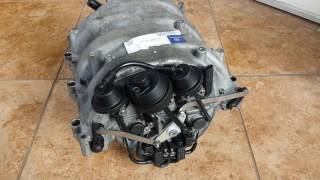
- Broken or Failed Intake Manifold Assembly 🔴 High Probability → Shop Engine Intake Manifold The internal swirl flaps and the external vacuum-actuated control levers are made of plastic that becomes brittle from engine heat and can break or wear out, causing the flaps to jam or become disconnected. This is a widely recognized failure point on M272 and M276 engines. The pivot point for the actuator lever is the most common part to snap.
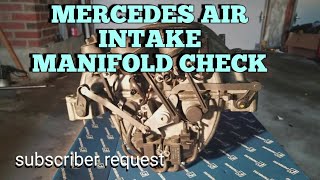
How to confirm: Visually inspect the vacuum actuators and linkage arms on the front of the intake manifold for breakage. Use a flashlight and mirror to check the pivot points. 🎬 Watch: Quick visual checks for manifold codes A broken lever or disconnected rod is a definitive sign of failure. A smoke test can also be performed to check for vacuum leaks from worn bushings or cracks in the manifold body.
Typical fix: The official and most comprehensive repair is to replace the entire intake manifold assembly. This ensures all worn plastic components (flaps, bushings, levers) are new. A popular, less expensive alternative is installing an aftermarket metal repair kit for the external lever.
Est. part cost: $800-$1200 for a complete OEM manifold, $50-$150 for a metal repair kit.
Rare But Worth Checking
- Faulty Position Sensor or Wiring: While the sensor itself is not a common failure point on this engine, it's worth checking the wiring and connector for damage or corrosion before committing to a full manifold replacement. A damaged wire could mimic a manifold failure.
- Vacuum Leak: A cracked vacuum line or a failed gasket on the manifold itself can cause a loss of vacuum to the actuators, preventing them from moving the flaps correctly. This can sometimes trigger P2015, often alongside lean codes like P2187/P2189.
Diagnosis Steps
- Confirm the P2015 code is present using an OBD-II scanner. Note any other codes like P2004 or P2006.
- Remove the top engine cover to gain visual access to the intake manifold.
- Carefully inspect the plastic actuator levers and linkages at the front of the intake manifold. Look for any visible cracks, breaks, or disconnected parts. The central pivot lever is a common failure point.
- With the engine off, try to manually move the linkage arm. If it moves freely with no resistance or is clearly broken, the manifold has failed internally.
- If the external linkage appears intact, inspect all vacuum hoses connected to the manifold and actuators for cracks, brittleness, or disconnection.
- If no obvious mechanical breaks are found, perform a smoke test on the intake system to check for hidden cracks or gasket leaks that could cause a vacuum leak.
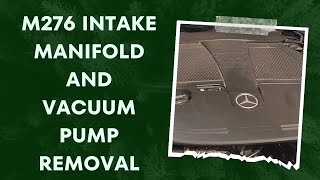
- A key tip during reassembly: Install the new green intake manifold gaskets into the cylinder head ports first, not onto the manifold itself, to prevent them from becoming unseated and causing a vacuum leak. 🎬 See this step-by-step M276 manifold removal guide
- If all mechanical parts and vacuum lines are intact, the final step would be to check the electrical connector and wiring to the position sensor/actuator for damage, though this is an uncommon cause.
Parts You'll Likely Need
- Intake Manifold Assembly
(OEM #A2761403101 (or superseded part A2761403001))— This is the primary failure point. The OEM replacement is a complete assembly that includes the manifold, internal flaps, actuators, and gaskets, resolving the issue comprehensively.
Trusted brands: Genuine Mercedes-Benz, Pierburg
OEM price range: $800-$1200
Aftermarket price range: $500-$900 - Intake Manifold Adjuster Repair Kit
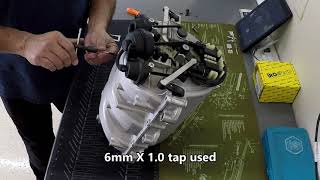
(OEM #2721402401R-PRM (URO Parts example for similar M272))— For budget-conscious repairs, aftermarket kits are available to replace just the failed external plastic lever with a more durable aluminum one. This does not address potential wear of the internal flaps and bushings, making it a less complete, though often effective, solution.
Trusted brands: URO Parts (Premium), Dorman
OEM price range: N/A
Aftermarket price range: $50-$150 - Intake Manifold Gasket Set
(OEM #2761410180)— These gaskets are single-use and must be replaced anytime the intake manifold is removed to prevent vacuum leaks.
Trusted brands: Genuine Mercedes-Benz, Elring, Victor Reinz
OEM price range: $40-$60
Aftermarket price range: $20-$40
Related Codes That Often Appear With This One
- P2004 — This code indicates the intake manifold runner flaps are stuck open, which is a direct result of the same broken plastic linkage that causes P2015.
- P2006 — This code indicates the intake manifold runner flaps are stuck closed, another direct result of the same mechanical failure within the manifold.
- P2187 / P2189 — These codes indicate the system is running too lean at idle. A cracked intake manifold or failed gaskets can cause a vacuum leak, allowing unmetered air into the engine and triggering these codes alongside P2015.
- P0300 (and related P030X misfire codes) — Improper airflow from the failed swirl flaps can lead to poor combustion in one or more cylinders, resulting in misfire codes.
Technical Service Bulletins (TSBs) & Recalls
- LI09.20-P-049195: While not for P2015 specifically, this TSB addresses problems with the intake manifold tumble flaps and actuator mechanism on M272/M273 engines, which share a similar design philosophy and failure mode with the M276.
Platform-Specific Known Issues
- The use of plastic for the swirl flap actuating mechanism is a known design weakness on the M276 engine, making this a common and expected repair as the vehicle ages, often between 80,000 and 120,000 miles.
Mechanic-Grade Diagnostic Values
- Intake Manifold Runner Position Sensor Voltage — expected: 0.5V - 4.5V. Failure: Voltage outside of this range.
- Intake Manifold Runner Position Sensor Resistance — expected: 1-5 kΩ. Failure: Resistance outside of this range.
- Swirl Flap Motor Bypass Resistor — expected: 4.7k ohm. Failure: This is not a failure indicator, but a diagnostic trick. A 4.7k ohm resistor can be bridged across specific pins (e.g., pins 2 and 3 on some models) of the motor connector to trick the ECU into thinking the motor is functional, which can help isolate the problem to the motor itself vs. the flaps or linkage.
Hidden / Shadow Codes Worth Checking
- 0524: A manufacturer-specific sub-code for 'Intake manifold swirl flap, positioner disagrees with command position.' This is a more detailed version of P2015, often visible only on dealer-level scanners like Xentry, confirming the mechanical nature of the fault. (see via Mercedes-Benz Xentry/STAR Diagnosis System)
Scan Tool Commands That Help
- Mercedes-Benz Xentry / STAR Diagnosis: Intake Manifold Runner Actuation Test — This bidirectional command allows a technician to command the swirl flaps to open and close while observing their movement and the sensor's reported position. It is used to confirm if the flaps are physically stuck or if the actuator motor is non-responsive, even if the external linkage appears intact.
- Mercedes-Benz Xentry / STAR Diagnosis: Reset adaptations — While not strictly required, it is good practice after replacing the intake manifold to reset the engine's self-adaptation values. This allows the ECU to immediately learn the airflow characteristics of the new, clean manifold, potentially improving initial performance after the repair.
Wiring & Ground Locations
- Engine to Chassis Ground Strap — Located underneath the vehicle, connecting the engine/transmission bell housing area to the chassis. This is a large, un-numbered cable critical for the starter motor and overall engine grounding.. While not a direct cause, a corroded or loose main engine ground can create electrical noise and voltage issues for all engine sensors, including the intake manifold position sensor. Its hostile location makes it prone to corrosion, especially in winter climates.
- W10 — Main battery ground point at the front strut top mount in the engine bay.. This is a primary ground distribution point. Corrosion here can cause widespread, intermittent electrical issues across the engine management system.
- W11 — Ground point for the ECU/ECM wiring assembly, located in the plastic cable duct in the engine bay.. A poor connection at this specific ground point can directly affect the ECU's ability to correctly read sensor data from components like the intake manifold position sensor.
- Intake Manifold Position Sensor Connector — The electrical connector on the intake manifold's actuator assembly, typically at the front of the manifold.. This is the direct connection for the sensor. Checking for 5V reference, signal, and ground at this connector's pins is a key diagnostic step if the mechanical linkage is confirmed to be intact.
Real Owner Repair Stories
- Reddit user on r/mercedes_benz (2010 E350 (similar M272 engine, but same fault pattern)) — P2015 and ME/Motor Electronics Module code 0524 (Bank 1) after a DIY intake manifold replacement.
❌ Tried (didn't work) The user had already replaced the entire intake manifold with a new OEM Mercedes part.
✅ What actually fixed it The user did not post a final resolution, but another highly-rated comment from a technician suggested the most common cause for a code immediately after replacement is an improperly seated intake gasket causing a vacuum leak, or a faulty new part, which is rare but possible.
OEM Part Supersession History
A2761403001→A2761403101— Part revision and update by Mercedes-Benz. The newer part number is the currently supplied replacement.
Heads up: The parts are interchangeable; A2761403101 is the correct replacement for the older number.
Diagnostic Flowchart
Other Known Issues on This Vehicle
Issues unrelated to this code that are worth knowing about as an owner of this generation:
- Timing Chain Tensioner Rattle on Startup 🔴 High — Common on earlier M276 engines (pre-2014). Caused by lack of oil pressure at the tensioners on startup due to missing check valves. If ignored, can lead to jumped timing or damage to camshaft adjusters. (Ref: Mercedes issued service bulletins to address this by installing revised tensioners and check valves.)
- High-Pressure Fuel Pump (HPFP) Failure 🟠 Medium — The HPFP can fail gradually, causing symptoms like long crank times, rough idle, hesitation, and loss of power. It is a known issue on the M276 direct-injection engine.
- Oil Leaks from Front Timing Covers 🟠 Medium — The sealant on the upper front timing covers can degrade, causing oil to leak down the front of the engine, often onto the alternator.
- Camshaft Position Sensor Oil Wicking 🔴 High — Oil can leak past the camshaft position sensor's internal seal and travel ('wick') through the wiring harness, contaminating the ECU and other electrical connectors, leading to widespread electrical faults. (Ref: Mercedes has pigtail harnesses available to isolate the ECU from a leaking sensor.)
- Water Pump and Thermostat Leaks 🟠 Medium — The water pump and plastic thermostat housing are common points for coolant leaks as the vehicle ages, typically over 80,000 miles.
Used vs. New Parts: Buying Guide for This Vehicle
When a used part is the smart pick: A used intake manifold is a risky purchase for this specific failure. Because the failure is caused by heat-cycled plastic breaking, a used part has unknown remaining life and may fail soon after installation. It only makes sense if the donor vehicle has very low mileage and the part is significantly cheaper than a new aftermarket unit.
Donor-vehicle mileage cap: roughly under 50000 miles for the part to have meaningful remaining life.
What to inspect on the donor part:
- Verify the part number matches (A2761403101 or its predecessor).
- Manually actuate the linkage arm; it should move smoothly with some resistance and no binding or looseness.
- Inspect the pivot lever for any hairline cracks, especially around the central pivot point.
- Look inside the intake ports for excessive oil residue, which could indicate the donor engine had a severe PCV issue that may have stressed the flaps.
OEM-only on this vehicle (don't cheap out):
- Intake Manifold Assembly: While not strictly OEM-only, using Genuine Mercedes-Benz or the original equipment manufacturer (Pierburg) is highly recommended for fitment and longevity.
Aftermarket brands forum-validated for this vehicle:
- Pierburg (OEM supplier for the manifold assembly)
- Elring, Victor Reinz (For intake gaskets)
Brands owners have reported issues with on this vehicle:
- URO Parts: Multiple forum posts across different car communities report issues with the quality, fitment, and longevity of URO parts, including plastic and rubber components that fail prematurely. While their metal repair kits may be an exception, their complex assemblies are generally viewed with caution by enthusiasts.
Real Owner Stories
Aggregated from forums and TSBs cited above. Mileages and costs reflect what owners reported in those sources.
2012-2016 Mercedes-Benz E-Class M276 3.5L V6 — ~100000 miles
Symptoms: The internal swirl flaps and external vacuum-actuated control levers made of plastic became brittle and snapped at the pivot point.
What fixed it: Replacement of the entire intake manifold assembly to ensure all worn plastic components like flaps, bushings, and levers were new.
Cost: $800-$1200
Source hint: vehicle_specific_issues
Mercedes-Benz E-Class (W212) M276
Symptoms: Diagnosing a related intake manifold code and preparing for a DIY fix.
What fixed it: DIY replacement using a Pierburg manifold from FCP Euro.
Source hint: MBWorld.org Thread: 'Starting my intake manifold replacement. Wish me luck guys!'
Mercedes-Benz E-Class (W212) M276
Symptoms: Vacuum leaks after a manifold reinstallation attempt.
What fixed it: Correcting the gasket installation procedure by placing the green gaskets into the engine block ports first instead of on the manifold.
Source hint: MBWorld.org Thread: 'What is the correct procedure to install m276 intake gaskets?'
Related OBD-II Codes
Frequently Asked Questions
Does TSB LI09.20-P-049195 apply to my M276 engine's P2015 code?
At what mileage should I expect the intake manifold to fail on my E350?
Can I just replace the broken plastic lever instead of the whole manifold?
What is the recommended brand if I need to replace the entire intake manifold assembly?
Is there a specific trick to installing the gaskets to avoid vacuum leaks?
Are there other parts I should replace while the intake manifold is removed?
Helpful Videos
Used OEM Parts in Stock
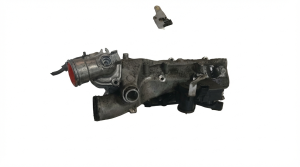
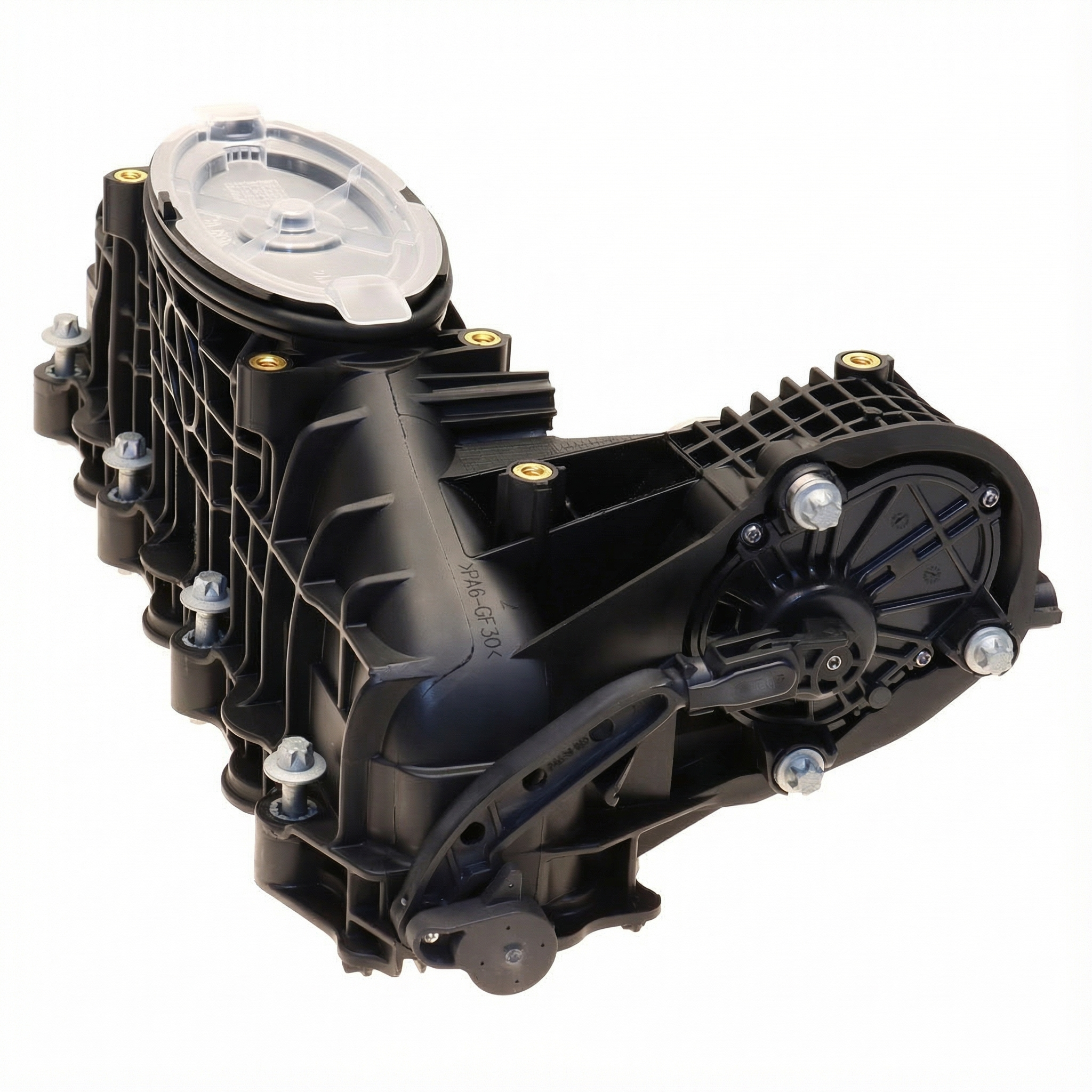
New Aftermarket Parts Available
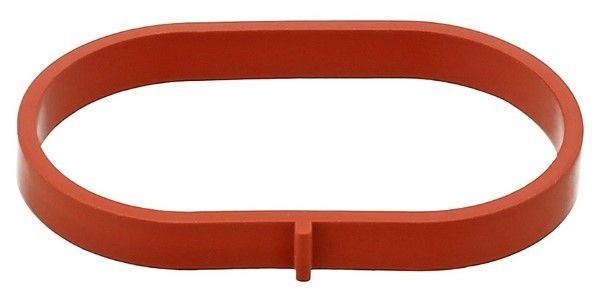

The information in this article is provided for general reference and educational purposes only. Vehicle specifications, procedures, and part compatibility can vary by production date, trim level, and region. Always consult your vehicle's factory service manual and verify part numbers before purchasing or performing repairs. Safety-critical components such as airbags, seat belts, and braking systems should be installed by a qualified professional.
- Mercedes-Benz E-Class:
- 🧭 Diagnostic Flowchart
- 🎬 Helpful Videos
- 🛍️ Shop This Part
- What's Unique About the 2011-2016 Mercedes-Benz E-Class
- Symptoms You May Notice
- Most Likely Causes
- Rare But Worth Checking
- Diagnosis Steps
- Parts You'll Likely Need
- Related Codes That Often Appear With This One
- Technical Service Bulletins (TSBs) & Recalls
- Platform-Specific Known Issues
- Mechanic-Grade Diagnostic Values
- Hidden / Shadow Codes Worth Checking
- Scan Tool Commands That Help
- Wiring & Ground Locations
- Real Owner Repair Stories
- OEM Part Supersession History
- Other Known Issues on This Vehicle
- Used vs. New Parts: Buying Guide for This Vehicle
- Real Owner Stories
- 2012-2016 Mercedes-Benz E-Class M276 3.5L V6 — ~100000 miles
- Mercedes-Benz E-Class (W212) M276
- Mercedes-Benz E-Class (W212) M276
- Related OBD-II Codes
- Frequently Asked Questions
- 🎟️ Get 5% Off