

P2015 on 2005-2011 Mercedes-Benz ML320 CDI: Swirl Flap Motor and Linkage Guide
On the Mercedes ML320 CDI with the OM642 engine, code P2015 almost always points to a problem with the intake manifold's swirl flap system. The most common failures are the plastic linkage rods breaking or the swirl flap motor (M55) itself failing, often due to an oil leak from the turbo intake seal located directly above it. An aftermarket metal linkage kit is a common, cost-effective fix for the linkage, while the motor failure often requires significant labor to replace or is bypassed with a
- P2015 on an ML320 CDI is almost always a mechanical failure of the swirl flap system, not a sensor failure.
- Before buying any parts, visually inspect the plastic linkage rods on the front of the intake manifolds for breakage. This is the most common and cheapest fix.
- Check for oil leaks around the turbo and in the engine 'V'. A failed swirl motor is often a symptom of an oil leak that must also be fixed.
- Do not let a shop replace the entire intake manifold ($$$$) if only the external plastic linkage is broken. An aftermarket metal kit is a superior and much cheaper repair.
- A DIY resistor fix can get the car out of limp mode, but it's a workaround that doesn't fix the mechanical problem and carries its own risks.
What's Unique About the 2005-2011 Mercedes-Benz ML-Class

The OM642 V6 diesel engine, used extensively across Mercedes, Jeep, and Chrysler platforms, has a well-documented weakness in its swirl flap control system. The original design uses plastic actuator rods to connect the swirl motor to the flaps; these rods become brittle from engine heat and eventually break. The compounding issue is the swirl flap motor (also called the M55 motor or Intake Port Shutoff Motor) is located in the 'V' of the engine, directly beneath the turbocharger intake pipe. The seal for this pipe (a large orange or red o-ring) frequently leaks oil, which drips directly onto the swirl motor's electronics, causing it to short out and fail. This combination of design vulnerabilities makes P2015 a very common and predictable issue on this specific engine.
Symptoms You May Notice
- Check Engine Light (CEL) is on
- Vehicle enters 'limp mode' or 'limp home mode'
- Significant loss of engine power and poor, sluggish acceleration
- Engine will not rev past 3,000 RPM
- Reduced fuel economy
- Rough or unstable idling
- In some cases, a lightning bolt symbol may appear on the dashboard (on Chrysler platform mates)
- Replacing the intake manifold position sensor first. The sensor is usually doing its job by reporting a fault; the root cause is typically the mechanical linkage or the motor itself.
- Replacing the entire intake manifold assembly when only the external linkage has failed. Aftermarket metal linkage kits can save thousands of dollars compared to a dealer repair.
- Replacing the swirl motor without fixing the oil leak from the turbo intake seal. The new motor will inevitably fail from oil contamination if the source of the leak is not addressed.
Most Likely Causes

- Broken Intake Manifold Swirl Flap Linkage Rods 🔴 High Probability → Shop Engine Intake Manifold The original Mercedes parts are made of plastic that cannot withstand the constant heat cycles of the engine bay. They become brittle and snap, disconnecting the motor from the swirl flaps. This is often the first part of the system to fail.
How to confirm: Visually inspect the linkage rods on the front of the intake manifolds after removing the engine cover. The broken black plastic pieces are often obvious. Try to move the linkage by hand; if it's disconnected or has excessive play, it has failed.
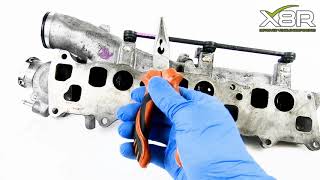
Typical fix: Replace the broken plastic rods with a more durable aftermarket metal linkage kit, often made from billet aluminum. 🎬 Watch: How to install the metal linkage upgrade kit. This is considered a permanent and cost-effective solution. Mercedes-Benz does not sell the rod separately, only the entire manifold assembly.
Est. part cost: $50-$150 for an aftermarket metal repair kit. - Failed Intake Port Shutoff Motor (Swirl Flap Motor / M55) 🔴 High Probability The motor is located in the 'V' of the engine, directly under the turbo intake pipe seal (a large orange/red o-ring) which is a notorious oil leak source. Oil drips down, saturates the motor's electronics, and causes it to short out and fail, triggering the P2015 code.
How to confirm: Visually inspect the motor for heavy oil contamination. A diagnostic scan tool (like Xentry/DAS) can attempt to actuate the motor; no response indicates failure. Access is difficult as the turbocharger and fuel filter must be removed.
Typical fix: Replace the swirl flap motor. This is a labor-intensive job (5-8 hours) requiring removal of the turbocharger. It is absolutely critical to also replace the turbo intake seals (especially the large orange one, P/N A6420940180) to fix the oil leak and prevent repeat failure of the new motor.
Est. part cost: $100-$200 for a Pierburg/Bosch OEM motor. - Carbon Buildup on Swirl Flaps 🟡 Medium Probability As with most EGR-equipped diesel engines, the OM642 ingests exhaust gases that lead to a buildup of sticky carbon and oil soot inside the intake manifolds. This buildup can cause the swirl flaps to become stiff or completely jam.
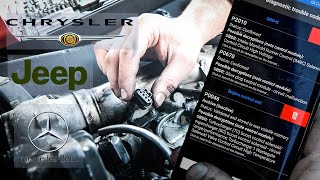
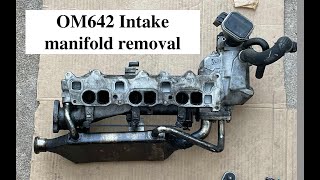
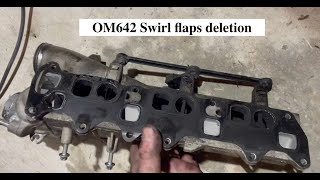
How to confirm: With the external linkage disconnected, try to move the swirl flap arms on the manifolds by hand. If they are stiff, stick, or do not move smoothly through their full range of motion, they are clogged with carbon. 🎬 See this walkthrough for removing manifolds and inspecting the flaps.
Typical fix: Remove the intake manifolds and thoroughly clean them. This is often done during an oil cooler seal replacement. If the flaps are damaged or cleaning is not possible, the entire intake manifold assembly must be replaced.
Est. part cost: $600+ per intake manifold if replacement is needed.
Rare But Worth Checking
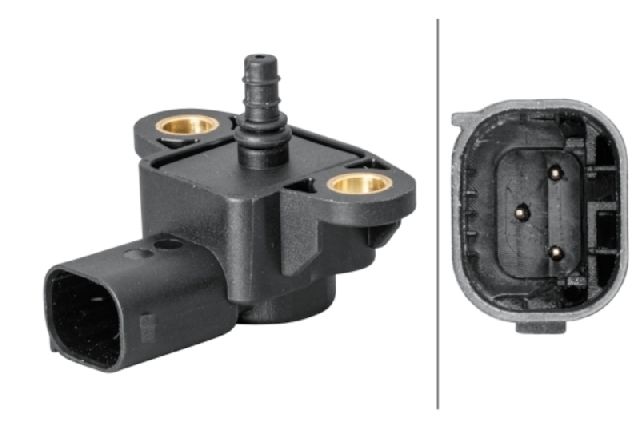
- Faulty Intake Manifold Runner Position Sensor: → Shop Engine Intake Manifold While the code directly names the sensor, the sensor itself is rarely the point of failure. It is almost always accurately reporting a mechanical problem with the linkage, motor, or stuck flaps. Do not replace the sensor unless all other mechanical components have been proven to be in perfect working order.
- Wiring Harness Damage: The wiring to the swirl flap motor can become damaged from the same oil saturation that kills the motor, or from chafing against other components. This is worth checking, especially if a new motor does not resolve the issue.
- Leaking Turbo Resonator: The plastic turbo resonator (or silencer) located after the turbo outlet can crack or have its seals fail, creating a boost leak. While this typically causes underboost codes, the associated oil spray can contribute to the contamination in the engine valley.
Diagnosis Steps

- Read fault codes with an OBD-II scanner to confirm P2015 is present. Note any other codes like P2004, P2006, etc.
- Perform a visual inspection. Remove the plastic engine cover. Check for obvious signs of broken black plastic linkage pieces on the front of the engine.
- Inspect for oil leaks. Look for oil dripping from the large orange/red turbo intake seal down into the 'V' of the engine. A heavily oil-soaked swirl motor is a strong indicator of failure.
- Check flap movement. With the engine off, try to move the swirl flap linkage by hand. If the linkage is intact, check for stiffness. If the flaps feel stuck, carbon buildup is likely. If the linkage is broken, the cause is the plastic rod.
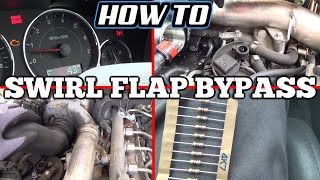
- The 'Resistor Fix' (DIY Bypass). A very common but controversial DIY fix involves unplugging the swirl motor and inserting a 4.7k Ohm (4700 Ohm) resistor between the two middle pins (pins 2 and 3) of the vehicle-side electrical connector. This tricks the ECU into thinking the motor is functional, clearing the P2015 code and taking the vehicle out of limp mode. This does not restore swirl flap function and is a bypass, not a repair. It is crucial to first verify the flaps are in the OPEN position 🎬 Watch: How to perform the budget-friendly resistor bypass fix. before attempting this.
- Professional Diagnosis. If the linkage is intact and flaps move freely, the swirl motor is the primary suspect. A technician would use a diagnostic tool like Mercedes Xentry/DAS to command the motor to actuate and observe its response to confirm failure before beginning the labor-intensive replacement.
Parts You'll Likely Need

- Intake Manifold Swirl Flap Linkage Repair Kit — This is the most common and weakest point of the system. The original plastic breaks, and a metal kit is a permanent upgrade. Not sold separately by Mercedes.
Trusted brands: X8R, IDParts, Korber Energy
OEM price range: N/A
Aftermarket price range: $50-$150 - Intake Port Shutoff Motor (Swirl Flap Motor)
(OEM #A6421500494)— This motor frequently fails due to contamination from oil leaks from above.
Trusted brands: Pierburg, Bosch
OEM price range: $150-$250
Aftermarket price range: $100-$200 - Turbo Intake Seal (Orange O-Ring)
(OEM #A6420940080)— This seal is the source of the oil leak that destroys the swirl motor. It MUST be replaced whenever the turbo intake is removed to prevent repeat failure of the motor.
Trusted brands: Mercedes-Benz (Genuine), Elring
OEM price range: $15-$30
Aftermarket price range: $5-$15 - Intake Manifold Assembly
(OEM #A6420907737 (Right), A6420905437 (Left))— Required if the internal swirl flaps are seized with carbon, broken, or if the manifold itself is cracked or damaged. This is the most expensive repair.
Trusted brands: Mercedes-Benz (Genuine)
OEM price range: $600-$900 per side
Aftermarket price range: $300-$500 per side
Related Codes That Often Appear With This One
- P2006 — This code means 'Intake Manifold Runner Control Stuck Closed', which is a direct result of the same broken linkage or stuck flap issues that cause P2015.
- P2004 — This code means 'Intake Manifold Runner Control Stuck Open', another common result of the same mechanical failures.
- P0670 — A user on a forum reported this 'Glow Plug Module Control Circuit' code alongside P2015, indicating multiple unrelated electronic issues can occur simultaneously on an aging vehicle.
Platform-Specific Known Issues
- The OM642 engine's swirl flap motor is positioned in a valley that collects leaking oil from the turbo intake pipe seal, leading to a high rate of failure for the motor.
- Mercedes-Benz does not sell the plastic linkage rods separately, forcing dealers to recommend the replacement of the entire intake manifold(s) at a cost of thousands, when a $50 aftermarket part can fix the linkage issue.
- A common DIY solution is the 'resistor mod,' where a 4.7k Ohm resistor is wired into the swirl motor connector to fool the ECU. This is widely documented in owner forums for Mercedes, Jeep, and Sprinter vehicles with the OM642 engine.
Mechanic-Grade Diagnostic Values
- M55 Swirl Motor Connector Pinout — expected: Pin 1: Ground (GND), Pin 2: +12V Supply, Pin 3: PWM Signal from ECU, Pin 4: Unused.. Failure: Absence of +12V on Pin 2 with ignition on, or no PWM signal on Pin 3 when tested with an oscilloscope, indicates a wiring or ECU issue, not necessarily a bad motor.
- M55 Swirl Motor PWM Control Signal — expected: Frequency: 141 Hz. Duty cycle varies from 5% (flaps open) to 95% (flaps closed).. Failure: A motor that does not respond to a 141 Hz PWM signal on the bench is faulty. Note: The motor will not respond to common 1-5 kHz test signals.
- Resistor Bypass Value — expected: A 4.7k Ohm (4700 Ohm) resistor is the standard value. Values between 1k and 10k Ohm may also work.. Failure: This is a bypass, not a test. It is installed between Pin 2 (+12V) and Pin 3 (Signal) on the harness connector to trick the ECU.
Hidden / Shadow Codes Worth Checking
- 2513-001: Check component M55 (Inlet port shutoff motor). Positioner signals fault. (see via Mercedes-Benz Xentry/DAS diagnostic software.)
- 2530-001: Check component M55 (Inlet port shutoff motor). Short circuit to positive. (see via Mercedes-Benz Xentry/DAS diagnostic software.)
- 2510: Check Y77/1 (Boost pressure regulator). Positioner signal fault. Often appears with M55 faults due to shared power/ground circuits. (see via Mercedes-Benz Xentry/DAS or advanced OBD-II scanner.)
Scan Tool Commands That Help
- Mercedes-Benz Xentry/DAS: Actuation of M55 (Inlet port shutoff motor) or Component Operation Check. — Use this bidirectional test to command the motor to move through its range. If the motor does not respond to the command from the scan tool, and power/ground have been verified at the connector, the motor is confirmed to be faulty. This avoids unnecessary replacement.
- Mercedes-Benz Xentry/DAS: Initial Startup / Adaptation — After replacing the M55 motor or the intake manifolds, this function may be required to teach the ECU the new component's end stops and operational range.
Wiring & Ground Locations
- M55 Motor Connector — In the 'V' of the engine, below the turbocharger air intake pipe.. This 4-pin connector is where all electrical testing for the motor occurs. Pin 1 is Ground, Pin 2 is +12V, and Pin 3 is the PWM signal wire. Pin 4 is unused. Verifying power and signal here is the primary electrical diagnostic step.
- Engine Ground Points (W10, W11/1) — Main engine ground points are typically found on the chassis rails in the engine bay, often identifiable by a collection of brown wires bolted to a single stud. For the W164, a key ground point is on the driver's side, forward of the firewall.. A poor engine ground can cause a variety of electrical faults, including actuator and sensor errors. While not a primary cause for P2015, verifying clean and tight ground connections is good practice if multiple electrical codes are present.
Real Owner Repair Stories
- MBClub.co.uk forum user (2007 ML320 CDI W164) — Check Engine Light, Limp Home Mode (turbo disabled), fault code P2015.
❌ Tried (didn't work) The user went straight for the bypass after confirming the common failure pattern.
✅ What actually fixed it The user confirmed the swirl motor was spring-loaded to the open position upon power loss. They then installed a 4.7k Ohm resistor between pins 2 and 3 of the motor's electrical connector to bypass the faulty motor. This cleared the code and restored normal engine operation, albeit without swirl flap functionality. - MBWorld.org forum user (W211 E-Class with OM642 engine) — Smelled burning plastic, then Check Engine Light appeared with codes 2530-001 (Short circuit to positive) and 2513-001 (Positioner signals fault) for the M55 motor.
❌ Tried (didn't work) Initially diagnosed as a failed motor due to oil leak, which was correct.
✅ What actually fixed it A full DIY replacement of the M55 swirl motor. The user noted the extreme difficulty in accessing the exhaust collector bolts. The old motor had a burn hole in its casing from overheating. The total cost was around $450 in parts (including a new intake manifold they accidentally broke), compared to a dealer quote of $1550.
OEM Part Supersession History
A6421500094, A6421500194, A6421500294, A6421500394→A6421500494— Revisions to improve reliability and address failure modes of the swirl flap motor (M55).A6420903237, A6420905037→A6420905437 (Left) and A6420907737 (Right)— Updates to the intake manifold design, possibly related to materials or swirl flap mechanism durability.
Heads up: It is critical to order the correct left or right side manifold. While they look similar, they are mirrored and not interchangeable.
Diagnostic Flowchart
Used vs. New Parts: Buying Guide for This Vehicle
When a used part is the smart pick: A used intake manifold can be a cost-effective option IF, and only if, it comes from a very low-mileage vehicle and can be thoroughly inspected for carbon buildup and free movement of the swirl flaps before purchase. Given the labor involved, a used part is a significant risk.
Donor-vehicle mileage cap: roughly under 40000 miles for the part to have meaningful remaining life.
What to inspect on the donor part:
- For intake manifolds, remove the sensor and inspect the inside with a borescope for carbon buildup.
- Manually actuate the swirl flap lever; it must move smoothly with no binding or sticking.
- Check for any cracks in the plastic housing, especially around mounting points.
- For a swirl motor, avoid any part with signs of oil contamination, as its electronics are likely compromised.
OEM-only on this vehicle (don't cheap out):
- Intake Port Shutoff Motor (M55): While aftermarket options exist, the OEM Pierburg unit is proven. A failed aftermarket motor requires repeating a very labor-intensive job, making the small cost savings a huge risk.
- Turbo Intake Seal: This is a critical, inexpensive part. Using a non-OEM seal that leaks will destroy the new swirl motor. Only use Genuine Mercedes or a top-tier OEM supplier like Elring.
Aftermarket brands forum-validated for this vehicle:
- Linkage Repair Kits: X8R, IDParts, and similar billet aluminum kits are considered a permanent upgrade over the OEM plastic.
- Swirl Motor: Pierburg is the Original Equipment Manufacturer (OEM). Buying a Pierburg-branded motor is equivalent to getting the genuine Mercedes part without the dealer markup.
Brands owners have reported issues with on this vehicle:
- Unbranded Resistor Bypass Mods: Some pre-made resistor bypass plugs sold online use low-quality resistors and insulation that can melt from engine bay heat, causing the fix to fail and potentially creating a fire hazard.
Real Owner Stories
Aggregated from forums and TSBs cited above. Mileages and costs reflect what owners reported in those sources.
ML320 CDI
Symptoms: The P2015 code appeared after a cold night, and the vehicle had an oil-soaked swirl motor.
What fixed it: Used a 4.7k ohm resistor fix to bypass the motor and clear the code.
Source hint: MBWorld.org Forums - Thread 'ML320 CDI code P2015'
ML-Class (W164)
Symptoms: The P2015 code appeared immediately after the owner had the 'oil cooler leak' repair performed.
What fixed it: The owner suspected a connector for the swirl flap system was not reinstalled correctly during the reassembly process.
Source hint: MBWorld.org Forums - Thread 'P2015 OBD II code'
Vehicle with OM642 Engine
Symptoms: Check Engine Light was on due to a swirl motor fault.
What fixed it: Installed a 4.7k Ohm resistor on the two middle pins of the swirl motor plug. The check engine light went out after 3-4 restarts.
Source hint: MBClub UK - Thread 'Swirl Motor Resistor Mod OM642'
Jeep Grand Cherokee WK 3.0 CRD (OM642)
Symptoms: Vehicle was in limp mode with poor acceleration.
What fixed it: Installed a 4.7k ohm resistor to bypass the swirl flap motor, which fixed the limp mode issue. The source notes that pre-made bypass plugs sold online are simply this resistor in a housing.
Cost: $0-$15
Source hint: YouTube - 'Swirl Flap Delete - Jeep Grand Cherokee WK/WH 3.0 CRD OM642' by Auto Knight
Related OBD-II Codes
Frequently Asked Questions
The Mercedes dealer wants to replace my entire intake manifold for code P2015. Is there a cheaper fix?
What is the 'resistor fix' for P2015 on my OM642 engine and is it a good idea?
My mechanic says the swirl flap motor (M55) failed because of an oil leak. Where is this leak coming from?
Can I just clean the carbon buildup from my intake manifolds instead of replacing them?
How do I know if the plastic linkage is broken versus the swirl motor itself failing?
I have a Jeep Grand Cherokee CRD with code P2015. Does this information apply to my vehicle?
Helpful Videos
Used OEM Parts in Stock
New Aftermarket Parts Available

The information in this article is provided for general reference and educational purposes only. Vehicle specifications, procedures, and part compatibility can vary by production date, trim level, and region. Always consult your vehicle's factory service manual and verify part numbers before purchasing or performing repairs. Safety-critical components such as airbags, seat belts, and braking systems should be installed by a qualified professional.
- Mercedes-Benz ML-Class:
- 🧭 Diagnostic Flowchart
- 🎬 Helpful Videos
- 🛍️ Shop This Part
- What's Unique About the 2005-2011 Mercedes-Benz ML-Class
- Symptoms You May Notice
- Most Likely Causes
- Rare But Worth Checking
- Diagnosis Steps
- Parts You'll Likely Need
- Related Codes That Often Appear With This One
- Platform-Specific Known Issues
- Mechanic-Grade Diagnostic Values
- Hidden / Shadow Codes Worth Checking
- Scan Tool Commands That Help
- Wiring & Ground Locations
- Real Owner Repair Stories
- OEM Part Supersession History
- Used vs. New Parts: Buying Guide for This Vehicle
- Real Owner Stories
- ML320 CDI
- ML-Class (W164)
- Vehicle with OM642 Engine
- Jeep Grand Cherokee WK 3.0 CRD (OM642)
- Related OBD-II Codes
- Frequently Asked Questions
- 🎟️ Get 5% Off