

P2015 on 2015-2018 Porsche Macan 3.0L V6: Intake Runner Sensor Causes and Fixes
On the 3.0L V6 Macan, P2015 usually points to a problem with the intake manifold runner control system, often caused by carbon buildup jamming the flaps or a failed vacuum actuator. The fix often involves replacing the entire intake manifold, which is a labor-intensive job. A critical final step is performing an ECU adaptation for the new sensor.
- P2015 on a 3.0L Macan is most often a mechanical problem, not an electrical one.
- The primary cause is usually carbon buildup restricting the intake flaps or a failed vacuum actuator.
- Diagnosis should start with a physical inspection and manual test of the runner linkage before assuming the sensor is bad.
- The most common and reliable fix is to replace the entire intake manifold assembly and perform a carbon cleaning service at the same time.
- This is a complex and expensive repair, not recommended for a novice DIYer.
What's Unique About the 2015-2018 Porsche Macan
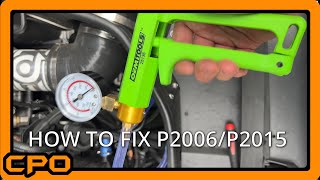
The Porsche Macan's 3.0L V6 is a direct-injection engine, which makes it prone to significant carbon buildup on the intake valves and runners. This carbon accumulation is a primary cause for the P2015 code, as it can physically restrict the movement of the intake runner flaps, causing them to stick. 🎬 Watch: How to fix stuck intake manifold runner flaps. While the code points to a sensor, the root cause is often a mechanical failure, such as a torn internal diaphragm in the vacuum actuator or a worn plastic linkage. This is a well-known issue on modern VAG (Volkswagen Auto Group) engines, including those in the Cayenne and Panamera which share this exact manifold.
Symptoms You May Notice
- Check Engine Light is on
- Reduced engine power, feeling sluggish, especially during acceleration or at high RPM (typically above 3,800 RPM).
- Rough or unstable idle
- Decreased fuel economy
- Hissing noises from the engine bay if a vacuum leak is also present
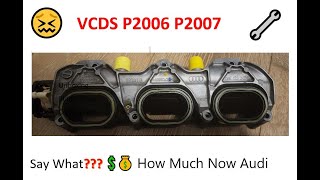
- In some related VAG models, a drive system malfunction warning may appear on the dash limiting RPMs. 🎬 See how these intake flap codes affect VAG engines.
- Replacing only the position sensor without checking for mechanical binding of the flaps or a failed actuator.
- Replacing the intake manifold but failing to perform the required ECU adaptation for the new sensor, causing the P2015 code to return immediately.
- Replacing spark plugs or ignition coils hoping to fix a rough idle, when the idle issue is caused by improper airflow from the runner system.
Most Likely Causes
- Carbon Buildup on Intake Runners/Flaps 🔴 High Probability Direct-injection engines like the Macan's 3.0L V6 are known to accumulate carbon deposits on intake components because fuel is injected directly into the cylinder, so it doesn't wash over and clean the intake valves. This soot can physically bind the flaps.
How to confirm: Visually inspect the intake runners and flaps for thick carbon deposits after removing the intake manifold. The flaps will be difficult or impossible to move by hand.
Typical fix: The intake manifold must be removed. The flaps and runners need to be thoroughly cleaned. A walnut blasting service for the intake ports and valves is highly recommended at the same time.
Est. part cost: $0 (if cleaning only), $100-$200 for gaskets - Failed Intake Manifold Runner Actuator 🔴 High Probability → Shop Engine Intake Manifold The actuator is a vacuum-operated plastic component. The most common failure is a tear in the internal rubber diaphragm, which prevents it from holding vacuum and moving the flaps against their return spring.
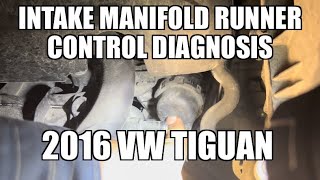
How to confirm: With the engine off, manually try to move the external linkage arm on the manifold. If it moves freely, test the actuator's vacuum port with a hand-held vacuum pump. It should hold vacuum and move the arm through its full range. 🎬 Watch: Diagnostic method for testing an inoperative runner control. If it fails to hold vacuum, the diaphragm is torn.
Typical fix: The actuator is integrated into the intake manifold assembly and not sold separately by Porsche. The standard repair is to replace the entire intake manifold. Some owners have successfully swapped an actuator from a spare manifold.
Est. part cost: $450-$800 for a new manifold - Broken or Worn Linkage 🟡 Medium Probability The plastic linkages, particularly the ball-and-socket joints that connect the actuator to the flaps, can become brittle from engine heat cycles and wear down, causing them to pop off or have excessive play.
How to confirm: Visually inspect the external linkage on the intake manifold for cracks, breaks, or disconnection from the actuator arm. Check the ball joint for a worn, rounded shape compared to a new part.
Typical fix: While aftermarket metal repair kits exist for other VAG engines (especially TDIs), for the Macan petrol engine, this often requires replacing the entire intake manifold assembly as the linkage is considered integral.
Est. part cost: $450-$800 for a new manifold - Faulty Intake Runner Position Sensor ⚪ Low Probability While the code directly names the sensor, it's less likely to be the root cause compared to the mechanical components it monitors. It's more often that the sensor is correctly reporting a mechanical problem or has lost its calibration. Oil contamination from a failing PCV system has also been suspected of causing sensor faults.
How to confirm: After confirming the flaps and actuator are working correctly, test the sensor's voltage output with a multimeter while manually moving the linkage. The voltage should change smoothly. However, the most definitive test is to attempt the ECU adaptation procedure; if it fails repeatedly with a known good mechanical system, the sensor itself may be faulty.
Typical fix: The sensor is integrated into the intake manifold and not sold separately by Porsche, requiring manifold replacement. After replacement, an ECU adaptation is mandatory.
Est. part cost: $50-$150 if available separately, otherwise cost of manifold
Rare But Worth Checking
- Wiring Harness Issue: A damaged wire or corroded connector for the position sensor or control solenoid can mimic a component failure. In one documented case on a related Audi, the sensor and camshaft position sensor connectors were accidentally swapped as they are identical, causing persistent codes. Always inspect the wiring harness leading to the intake manifold before replacing expensive parts.
- Failed PCV System: A failing PCV (Positive Crankcase Ventilation) system can lead to excessive oil being drawn into the intake manifold. This oil can contaminate sensors and potentially contribute to carbon buildup, indirectly causing the P2015 code. A Porsche technical information bulletin notes that an oil film in the intake system can be normal, especially on bank 2, and should not automatically lead to replacing the oil separator without further diagnosis of oxygen sensor codes.
Diagnosis Steps
- Scan the vehicle for all OBD-II codes. Note any other codes that are present, especially P2006, P2007, or codes for the opposite bank.
- With a diagnostic tool, monitor the live data for the intake manifold runner position (e.g., VAG MVB 143 field 3). Rev the engine quickly past 3,000-4,000 RPM and observe if the value changes from ~0% to ~100% as expected.
- With the engine off, locate the intake manifold runner control linkage for Bank 1 (passenger side).
- Visually inspect the actuator and linkage for any obvious signs of damage, such as broken plastic arms or disconnected parts.
- Gently try to move the linkage by hand. It should move smoothly through its range of motion. If it is stiff, gritty, or stuck, the cause is likely mechanical binding from carbon buildup or internal damage.
- If the linkage moves freely, use a hand-held vacuum pump to test the actuator's vacuum port. It should hold vacuum and move the linkage arm. If it doesn't, the actuator diaphragm is likely torn.
- If the mechanical parts seem to work, inspect the wiring and connector for the position sensor for damage, corrosion, or oil contamination.
- If the intake manifold is replaced, a mandatory final step is to perform the 'Intake Manifold Runner Position Sensor Adaptation' using a compatible diagnostic tool (like ODIS/VCDS or a Porsche PIWIS Tester). Failure to do this will likely result in the P2015 code persisting.
Parts You'll Likely Need
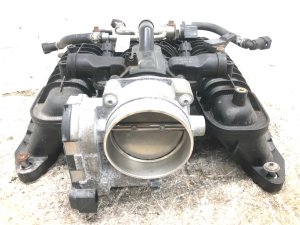
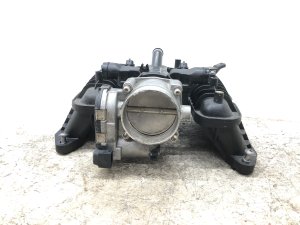
- Engine Intake Manifold
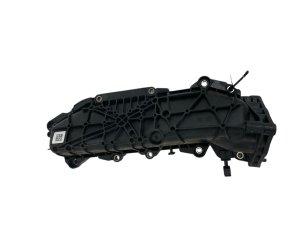
(OEM #94611001664)— This is the most common fix as the actuator, sensor, and flaps are integrated. The current part number, 94611001664, supersedes older versions 94611001661, 94611001662, and 94611001663. Failure of any one component, or severe carbon buildup, typically necessitates replacing the whole unit.
Trusted brands: Porsche (OEM)
OEM price range: $600-$900
Aftermarket price range: $450-$650 - Intake Manifold Gasket Set — These must be replaced any time the intake manifold is removed to ensure a proper seal and prevent vacuum leaks.
Trusted brands: Victor Reinz, Elring
OEM price range: $80-$120
Aftermarket price range: $40-$70
Related Codes That Often Appear With This One
- P2006 — This code means 'Intake Manifold Runner Control Stuck Closed (Bank 1)'. It is often set along with P2015 because a physically stuck flap or a failed actuator that cannot open the flaps will cause the position sensor to report a value that is out of the expected range.
- P2007 — This is the same 'Stuck Closed' code but for Bank 2 ('Intake Manifold Runner Control Stuck Closed (Bank 2)'). If both banks have significant carbon buildup or a shared vacuum system issue, you may see codes for both sides.
Technical Service Bulletins (TSBs) & Recalls
- VAG TSB V241704: While not a Porsche-specific TSB, this document for related VW/Audi engines with P2015 codes provides valuable diagnostic information, including checking for vacuum line restrictions and explicitly stating that an ODIS intake manifold adaptation process must be performed after replacement.
Platform-Specific Known Issues
- Shared Failure Across Porsche V6 Models: The 3.0L and 3.6L V6 engines in the Macan, Cayenne, and Panamera share this intake manifold design and are all known for this failure mode related to the Intake Manifold Runner Control (IMRC) system.
- Mandatory Carbon Cleaning: Due to the direct-injection design, performing a carbon cleaning (walnut blasting) of the intake ports and valves is considered a critical preventative and restorative maintenance item whenever the intake manifold is removed.
- Post-Repair ECU Adaptation Required: A critical, often-missed step after replacing the intake manifold is to perform an adaptation or basic setting procedure with a diagnostic tool. This calibrates the new position sensor to the ECU. A Reddit user on r/Audi reported the P2015 code remained after a DIY replacement until this procedure was done, a step outlined in VAG service literature.
Mechanic-Grade Diagnostic Values
- Intake Manifold Runner Position Sensor (G336) - Voltage Supply — expected: With ignition on and sensor connector unplugged: Terminal 1 to Ground should be ~5V. Terminal 3 to Ground should be Battery Voltage.. Failure: If the ~5V reference or battery voltage is not present, it indicates a wiring issue or a fault in the Engine Control Module (ECM).
- Intake Manifold Runner Position Sensor (G336) - Wiring to ECM — expected: Resistance between the sensor harness connector terminals and the corresponding terminals on the ECM (J623) connector should be 1.5 Ohms maximum.. Failure: Resistance higher than 1.5 Ohms indicates an open circuit or high resistance in the wiring harness.
Scan Tool Commands That Help
- Porsche PIWIS Tester: Reset adaptation values (for intake manifold) — This function is mandatory after replacing the intake manifold. Navigate to 'DME' (Engine Electronics) -> 'Maintenance/repairs' -> 'Reset adaptation values'. The tester will guide you through the process to teach the ECM the new sensor's range.
Wiring & Ground Locations
- Engine Bay Ground Post — On the driver's side firewall, there is a large silver-looking post that serves as a primary negative (-) ground point.. A poor ground connection at this main point can cause a variety of difficult-to-diagnose electrical issues and sensor reading errors across the engine management system.
- Intake Manifold Runner Position Sensor (G336) Connector — On the Bank 1 (passenger side) intake manifold, connected to the sensor which is part of the manifold assembly.. This is the 3-pin connector for the sensor implicated in the P2015 code. Pin 1 is the 5V reference, Pin 2 is the signal, and Pin 3 is the ground. Checking for voltage and continuity here is a primary diagnostic step.
Real Owner Repair Stories
- YouTube video by user 'Fixed! Intake Manifold Runner Stuck Closed (P2006/P2015)' (Porsche (model not specified, but with identical VAG intake manifold design)) — Check Engine Light with codes P2006 and P2015 after heavy acceleration.
❌ Tried (didn't work) The user first suspected a vacuum line or solenoid issue.
✅ What actually fixed it The user tested the vacuum actuator with a hand pump and found it would not hold vacuum. Upon disassembly of the actuator, a visible tear was found in the rubber diaphragm. The fix was to replace the vacuum actuator assembly (cannibalized from a spare manifold), which resolved the codes. - Reddit user 'indomitablebroccoli' (VAG vehicle with P2015 (likely Audi/VW, relevant to Macan)) — P2015 error code.
❌ Tried (didn't work) Replacing the intake manifold with an updated part initially did not clear the P2015 code.
✅ What actually fixed it The user confirmed that the mandatory final step is to perform an adaptation for the new Intake Manifold Runner Position Sensor (G336) using a diagnostic tester like VCDS or ODIS. Without this step, the ECU does not recognize the new sensor's range and continues to throw the fault.
OEM Part Supersession History
94611001661, 94611001662, 94611001663→94611001664— Later part numbers typically incorporate design improvements to address known failure points, such as the material of the actuator diaphragm or the durability of the plastic linkage. It is always recommended to use the latest available part number.
Diagnostic Flowchart
Used vs. New Parts: Buying Guide for This Vehicle
When a used part is the smart pick: A used OEM intake manifold can be a cost-effective option, but it carries significant risk. It only makes sense if you can thoroughly inspect it and the price is substantially lower than a new aftermarket or OEM part. The main plastic body of the manifold is durable, but the integrated components are the common failure points.
Donor-vehicle mileage cap: roughly under 50000 miles for the part to have meaningful remaining life.
What to inspect on the donor part:
- Verify the part number is the latest revision possible (e.g., 94611001664).
- Bring a hand-held vacuum pump. Connect it to the vacuum actuator port and confirm it holds vacuum without leaking down, which tests the integrity of the internal diaphragm.
- Manually operate the external linkage arm. It must move smoothly through its full range of motion with no binding, grittiness, or excessive looseness.
- Visually inspect the intake runners and flaps for heavy carbon buildup. If they are heavily caked, the part may be near the end of its service life or require extensive cleaning.
- Check all plastic linkage components and ball joints for cracks or severe wear.
OEM-only on this vehicle (don't cheap out):
- While aftermarket manifolds exist, OEM is the safest bet for fitment and quality of the integrated sensor and actuator. If the price difference is not substantial, OEM is recommended to avoid repeat labor costs.
Brands owners have reported issues with on this vehicle:
- Unbranded, no-name manifolds from online marketplaces should be avoided due to the high cost of labor for this job. A premature failure of a cheap part will be far more expensive in the long run.
Real Owner Stories
Aggregated from forums and TSBs cited above. Mileages and costs reflect what owners reported in those sources.
VAG 3.0L V6 (similar to 2015-2018 Porsche Macan)
Symptoms: Check Engine Light with code P2015 persisted even after replacing the lower intake manifold.
What fixed it: The code was only resolved after performing the mandatory ECU sensor adaptation procedure with a diagnostic tool, which had been missed during the initial DIY repair.
Source hint: Reddit (r/Audi) thread titled 'P2015 error remains after lower intake manifold replacement'
VAG V6 Engine (similar to 2015-2018 Porsche Macan)
Symptoms: Check Engine Light with codes P2006 and P2015, indicating the intake manifold runner was stuck closed.
What fixed it: A DIY diagnosis revealed a torn rubber diaphragm inside the vacuum actuator. Since the actuator is integrated, this mechanical failure requires the replacement of the entire intake manifold assembly.
Source hint: YouTube ('Fixed! Intake Manifold Runner Stuck Closed (P2006/P2015)')
Related OBD-II Codes
Frequently Asked Questions
I replaced the intake manifold on my Macan, but the P2015 Check Engine Light came back. What did I miss?
Is this P2015 issue common on other Porsche models besides the Macan?
Can I just replace the broken actuator or position sensor instead of the whole expensive intake manifold?
My mechanic is recommending a 'walnut blasting' service while fixing this code. Is that really necessary?
Is the P2015 code more likely a bad sensor or a mechanical problem?
Are there any official Porsche TSBs for the P2015 code on my 2016 Macan?
Helpful Videos
Used OEM Parts in Stock
New Aftermarket Parts Available


The information in this article is provided for general reference and educational purposes only. Vehicle specifications, procedures, and part compatibility can vary by production date, trim level, and region. Always consult your vehicle's factory service manual and verify part numbers before purchasing or performing repairs. Safety-critical components such as airbags, seat belts, and braking systems should be installed by a qualified professional.
- Porsche Macan:
- 🧭 Diagnostic Flowchart
- 🎬 Helpful Videos
- 🛍️ Shop This Part
- What's Unique About the 2015-2018 Porsche Macan
- Symptoms You May Notice
- Most Likely Causes
- Rare But Worth Checking
- Diagnosis Steps
- Parts You'll Likely Need
- Related Codes That Often Appear With This One
- Technical Service Bulletins (TSBs) & Recalls
- Platform-Specific Known Issues
- Mechanic-Grade Diagnostic Values
- Scan Tool Commands That Help
- Wiring & Ground Locations
- Real Owner Repair Stories
- OEM Part Supersession History
- Used vs. New Parts: Buying Guide for This Vehicle
- Real Owner Stories
- VAG 3.0L V6 (similar to 2015-2018 Porsche Macan)
- VAG V6 Engine (similar to 2015-2018 Porsche Macan)
- Related OBD-II Codes
- Frequently Asked Questions
- 🎟️ Get 5% Off