

P2015 on 2007-2016 Volkswagen Eos 2.0T: Intake Manifold Runner Fault Causes and Fixes
On the 2.0T gasoline engine in a VW Eos, code P2015 almost always means the intake manifold has failed due to a broken plastic actuator linkage or stop. The position sensor is correctly reporting that the flap arm is moving out of its intended range. Before paying for repairs on a TSI engine (CCTA/CBFA), check with a VW dealer if your VIN is covered by an extended warranty (10 years/120,000 miles). If not under warranty, an inexpensive aftermarket repair bracket is a common and often successful
- P2015 on a 2.0T Eos points directly to a problem with the intake manifold runner system, usually a broken plastic stop.
- For TSI engines (CCTA/CBFA), always check for extended warranty coverage with a VW dealer before paying for repairs.
- The most likely fix is replacing the entire intake manifold assembly, but for TSI engines, a much cheaper aftermarket repair bracket is often successful.
- After replacing the manifold, an ECU adaptation is mandatory.
What's Unique About the 2007-2016 Volkswagen Eos
The VW Eos from this period used two different 2.0T engines, and both are highly prone to this specific failure, but for slightly different reasons. The earlier BPY (FSI) engine and the later CCTA/CBFA (TSI) engines both integrate the failure-prone sensor and linkage mechanism into the plastic intake manifold. The plastic components are known to become brittle and break from constant heat cycles and vibration. Unlike the VW TDI diesel engines where a cheap external bracket can fix a similar code, the gasoline engines have a different failure mode, though a similar bracket-style fix is now a very common first-step repair for the TSI engines. Volkswagen acknowledged the problem on TSI engines by issuing Technical Service Bulletin 24 17 04 and an associated extended warranty.
Generation note: While the Eos is a single generation vehicle, the 2.0T engine changed. Models from 2007-2008.5 typically have the EA113 engine (code 'BPY', also known as FSI) which uses a timing belt. Models from mid-2008 to 2016 have the EA888 engine (codes 'CCTA' or 'CBFA', also known as TSI) with a timing chain. The P2015 fault is common on both engine types, but they use different intake manifold part numbers and the repair approach can differ. The popular aftermarket repair bracket is only for the TSI engines.
Symptoms You May Notice
- Check Engine Light is on
- Reduced engine power and hesitation during acceleration
- Rough or unstable idle
- Decreased fuel efficiency
- Engine may enter a low-power 'limp mode'
- Possible vacuum leak hissing noise if the actuator arm has separated
- RPMs may be slow to drop when letting off the gas or between shifts
- Hard brake pedal at low speeds if the failure causes a significant vacuum leak
- Replacing only the actuator motor. The fault is almost always with the sensor or linkage inside the manifold, not the external motor that drives it.
- Attempting to use a 'TDI repair bracket'. The common, inexpensive bracket sold to fix P2015 on VW's diesel (TDI) engines will not work on the 2.0T gasoline (TSI/FSI) engines as the failure mechanism and manifold design are different. However, specific brackets for the TSI engine are available and are a common fix.
Most Likely Causes
- Failed Intake Manifold Assembly (Broken Internal Stop/Linkage) 🔴 High Probability → Shop Engine Intake Manifold The position sensor and plastic control linkage are integrated into the intake manifold. A small plastic stop for the actuator arm breaks from heat and vibration, allowing the arm to over-travel and trigger the code. This is a well-documented design flaw on both BPY and CCTA/CBFA engines.
How to confirm: Using a diagnostic scan tool (like VCDS), check measuring block group 142. 🎬 Watch: How to diagnose P2015 using a scan tool If the flap position percentage is stuck or doesn't change when the engine is revved, the manifold has likely failed. A physical inspection is key: with the engine off, try to move the actuator arm on the driver's side of the manifold. If there is excessive play or it can be moved past its intended stop, the internal plastic limiter has broken.
Typical fix: For TSI (CCTA/CBFA) engines, the first and most common fix is to install an aftermarket metal repair bracket that provides a new, durable stop for the actuator arm. 🎬 See how to install the P2015 repair bracket If this fails, or for the BPY engine, the fix is to replace the entire intake manifold assembly. An intake manifold adaptation must be performed using a VW-specific scan tool after replacement.
Est. part cost: $40-$70 (Bracket), $250-$550 (Manifold) - Clogged Vacuum Lines or Fittings (CCTA/CBFA engines) ⚪ Low Probability The vacuum system that controls the runner flap actuator can become clogged with debris or, in some cases, coolant from a leaking water pump that has migrated through the system.
How to confirm: As outlined in VW TSB 24 17 04, inspect the vacuum lines and 'T' fittings connected to the intake manifold runner control solenoid for blockages or restrictions. If a new manifold or bracket doesn't fix the issue, check the vacuum lines for contamination.
Typical fix: Clean or replace the clogged vacuum lines or fittings. If coolant is found, the water pump may also need replacement.
Est. part cost: $10-$30
Rare But Worth Checking
- Faulty Intake Runner Control Motor/Actuator: While possible, this is less common than the manifold itself failing. The actuator is the electronic or vacuum-operated motor that moves the flaps. If the manifold and vacuum system are confirmed to be good, the motor would be the next part to test.
- Wiring Harness Damage: Damage to the wires leading to the intake manifold position sensor or actuator can cause an implausible signal. This is worth checking if a new manifold does not resolve the code. One owner found chafed wires near the actuator causing issues.
- Faulty Aftermarket Intake Manifold: → Shop Engine Intake Manifold Some owners have reported that after installing a new aftermarket manifold, the P2015 code returned immediately. This can be due to poor sensor calibration in the new part. The issue was resolved by swapping to a genuine OEM manifold.
Diagnosis Steps
- Connect an OBD-II scanner and confirm P2015 is the primary code. Note any other codes like P2004 or P2014.
- For TSI engines (CCTA/CBFA), contact a Volkswagen dealer with your VIN to check for coverage under the Intake Manifold Limited Warranty Extension (e.g., VWP-20-03), which covers the part for 10 years or 120,000 miles.
- Perform a visual and physical inspection. With the engine off, locate the actuator on the driver's side of the intake manifold. Attempt to move the linkage arm by hand. If it feels loose, has excessive play, or can be pushed past its stop, the internal plastic stop has broken. This is the most common failure.
- If the linkage seems intact, use a VW-specific scan tool (like VCDS) to view live data in measuring block group 142 for the intake manifold flaps.
- Observe the 'specified' vs 'actual' position values. If the 'actual' value is stuck (e.g., at 70% or 100%) and does not change with engine RPM, or if the adaptation status shows an error, the manifold has failed internally.
- If the physical inspection confirms a broken stop on a TSI engine, the most common first step is to install an aftermarket repair bracket.
- If a bracket or new manifold does not solve the issue, inspect the vacuum lines to the actuator for cracks, blockages, or contamination like coolant or oil.
- If all else fails, test the actuator motor itself and check the wiring harness for continuity and any signs of damage, such as chafing.
Parts You'll Likely Need
- Intake Manifold Lever Arm Fix Kit (TSI Only) — For CCTA/CBFA engines, this is the most common, cost-effective first attempt at a fix. It provides a metal stop to prevent the actuator arm from over-traveling. Often a permanent solution.
Trusted brands: Dieselgeek, ECS Tuning, URO Parts
OEM price range: N/A
Aftermarket price range: $40-$70 - Intake Manifold Assembly
(OEM #06J133201BH (for CCTA/CBFA) or 06F133201P (for BPY))— This is the definitive fix if a bracket doesn't work or for BPY engines. The assembly includes the new flaps, linkage, and position sensor. The 'BH' part is the latest revision for TSI, superseding 06J133201G, 06J133201AL, 06J133201AS, and 06J133201BD.
Trusted brands: Volkswagen Genuine, Pierburg, Dorman
OEM price range: $400-$550
Aftermarket price range: $250-$400
Related Codes That Often Appear With This One
- P2004 — This code means 'Intake Manifold Runner Control Stuck Open'. It often appears with P2015 because the same underlying mechanical or sensor failure can cause the flaps to get stuck.
- P2014 — This code indicates a general circuit fault for the position sensor. It is part of the same family of codes as P2015 and points to the same set of potential failures.
- P030x (e.g., P0300, P0301) — Cylinder misfire codes can occur if the runner flaps are stuck in a position that disrupts proper air/fuel mixture, especially at idle.
Technical Service Bulletins (TSBs) & Recalls
- VW TSB 24 17 04 / 24 17 08 (Superseded): Addresses DTCs P2004, P2014, and P2015. It provides inspection steps for vacuum lines on CCTA/CBFA engines and confirms that internal flap separation (requiring manifold replacement) is a primary cause. It also mandates an ODIS adaptation after replacement.
- VW Warranty Extension VWP-20-03: Official bulletin detailing the 10-year/120,000-mile extended warranty for the intake manifold on certain models with CCTA/CBFA engines, including the Eos.
Platform-Specific Known Issues
- An extended warranty (code VWP-20-03) was offered by Volkswagen for the intake manifold on some 2.0T TSI engines (CCTA/CBFA) for up to 10 years or 120,000 miles. Owners should always check with a VW dealer with their VIN as this is the first step before any paid repair.
Mechanic-Grade Diagnostic Values
- VCDS Live Data - Measuring Block 142 - Flap Position (%) — expected: At idle, the 'Actual Position' should be near 0-5%. As engine RPMs increase over ~3000 RPM, the value should change to 95-100%. 'Actual' and 'Specified' positions should track closely.. Failure: The 'Actual' value is stuck (e.g., at 99%) while 'Specified' is 0%, or the values have a large deviation. The adaptation status may also show 'ERROR'.
- Intake Manifold Runner Position Sensor (G336) Reference Voltage — expected: ~5.0V between the reference voltage pin (Pin 1) and the ground pin (Pin 3) at the sensor connector with Key On, Engine Off.. Failure: No voltage or significantly less than 5V points to a wiring fault or an issue with the ECU's 5V reference circuit.
- Intake Manifold Runner Position Sensor (G336) Signal Voltage — expected: The 'Runner Flap B1 Position Offset' value in VCDS should be ~4.5V at startup (flaps closed). The voltage should sweep smoothly from ~4.5V down to ~1.2V as the flaps move from closed to open.. Failure: Voltage is stuck, does not change smoothly, or the initial offset value is incorrect. This can indicate a bad sensor, even on a brand new manifold.
- G336 Sensor Wiring Harness Resistance — expected: Less than 1.5 Ohms of resistance on the signal and ground wires between the sensor connector and the ECU connector.. Failure: High resistance or an open circuit (OL) reading indicates a break or corrosion in the wire.
Scan Tool Commands That Help
- VCDS (VAG-COM) or OBDeleven: Engine (01) -> Basic Settings -> Group 142 (Intake Manifold Runner) — This is a mandatory procedure after replacing the intake manifold. It commands the ECM to cycle the flaps to learn their end-stops. The process will display 'ADP. RUN' and should finish with 'ADP. OK'. If it results in 'ERROR', a mechanical or electrical fault still exists.
- VCDS (VAG-COM) or OBDeleven: Engine (01) -> Measuring Blocks -> Group 142 — This is used for live diagnosis to monitor the 'Specified' position requested by the ECM versus the 'Actual' position reported by the G336 sensor. It's the primary way to confirm the flaps are not moving as commanded.
Wiring & Ground Locations
- G336 Sensor Connector — On the right (passenger side in US) of the plastic intake manifold, integrated into the manifold body.. This is the 3-pin connector for the position sensor itself. Testing for 5V reference, ground, and signal voltage occurs here. Damage or corrosion on these pins is a primary check.
- Ground Connection 15 — A primary ground connection located on the cylinder head.. The engine sensor harness, including the circuit for the G336 position sensor, relies on a clean engine ground. A loose or corroded ground at this point can cause erratic sensor readings and implausible signal faults across multiple systems.
- Engine Ground (G05e) — On the engine block itself, typically a strap from the block to the chassis frame rail.. This is the main ground for the entire engine. While a failure here would cause more severe issues than just a P2015, ensuring it's clean and tight is a fundamental step in diagnosing any electrical fault.
Real Owner Repair Stories
- Reddit user on r/GolfGTI (2011 VW GTI (CCTA/CBFA engine)) — P2015 Check Engine Light.
❌ Tried (didn't work) Installing an ECS Tuning aftermarket repair bracket.
✅ What actually fixed it The code returned after one week. The owner ultimately had to replace the entire intake manifold to resolve the issue permanently. - YouTube channel 'Monika Borodina' (VW Passat (TDI, but demonstrates a common TSI bracket installation error)) — Intermittent P2015 Check Engine Light.
❌ Tried (didn't work) A previous, incorrect installation of the repair bracket where it was loose and not properly hooked behind the mechanism's stop.
✅ What actually fixed it The final fix was to correctly reinstall the same repair bracket, ensuring it was securely seated behind the plastic lever stop, preventing any over-travel. The video highlights that incorrect installation is a common reason for the bracket fix failing. - Ross-Tech Forums user (2010 VW GTI) — P2015 and P2004 codes after a recent intake manifold replacement.
❌ Tried (didn't work) Smoke testing for vacuum leaks., Replacing spark plugs., Confirming actuator movement with VCDS.
✅ What actually fixed it The issue was unresolved in the thread, but the user provided extensive diagnostic data showing that even with a new manifold and no vacuum leaks, the VCDS adaptation procedure repeatedly failed with an 'ERROR' status, despite the flaps appearing to move correctly. This highlights a scenario where the problem may be electrical or related to a faulty new part. - Reddit user on r/Volkswagen (2010 VW CC 2.0TSI) — Persistent P2015 after intake manifold and throttle body replacement. Also experienced intermittent hard brake pedal at low speeds.
❌ Tried (didn't work) Carbon cleaning., Replacing the throttle body., Replacing the intake manifold.
✅ What actually fixed it The root cause was a small, clogged screen on the inside of the engine's vacuum pump. Removing this clogged screen restored proper vacuum to all systems, clearing the P2015 code and fixing the brake booster issue.
"I Checked Everything" — The Actual Cause
- A known edge case for a persistent P2015 code, even after manifold replacement, is contamination in the vacuum system. An internal failure of the engine's water pump can leak coolant into the vacuum lines that control the intake runner actuator. A smoke test would not reveal this, but inspecting the vacuum lines for moisture or residue would. The fix requires replacing the water pump and cleaning or replacing all affected vacuum lines.
- Another cause can be a restriction at the source of the vacuum. On some 2.0TSI engines, a small screen inside the main vacuum pump can become clogged with debris. This reduces vacuum supply to the runner flap solenoid, causing the P2015 code, but will not present as a leak during a smoke test. The fix involves cleaning or removing the clogged screen from the vacuum pump.
OEM Part Supersession History
06J133201G, 06J133201AL, 06J133201AS, 06J133201BD→06J133201BH— The original designs were prone to failure of the internal plastic linkage and actuator stop. The updated 'BH' version features a redesigned actuator arm and more robust internal stops to address the common failure points.
Heads up: The updated 'BH' manifold is a direct replacement for the older versions on CCTA/CBFA engines and does not require special modifications.
Model Year Variations Within This Range
- 2007-2008.5 (BPY Engine): Uses intake manifold P/N 06F133201P. The aftermarket bracket fix is NOT compatible with this engine. The only common repair is a full manifold replacement.
- 2008.5-2016 (CCTA/CBFA Engine): Uses intake manifold P/N 06J133201BH (or its predecessors). This version is compatible with the popular aftermarket repair brackets. The failure mode is typically the actuator arm over-traveling due to a broken stop.
Diagnostic Flowchart
Other Known Issues on This Vehicle
Issues unrelated to this code that are worth knowing about as an owner of this generation:
- Timing Chain Tensioner Failure (TSI Engines) 🔴 High — Common on early EA888 engines (approx. 2008-2013). Failure can occur with little warning, often between 30k-100k miles, and can lead to catastrophic engine damage. (Ref: No recall, but multiple part revisions were made. A class-action lawsuit occurred regarding this issue.)
- HPFP Cam Follower Wear (FSI Engines) 🔴 High — Very common on the BPY engine. The follower is considered a maintenance item that should be inspected every 20k-30k miles and replaced proactively to prevent damage to the high-pressure fuel pump and camshaft.
- Convertible Top Hydraulic and Seal Leaks 🟠 Medium — A common issue for the Eos model specifically. The complex hardtop mechanism has numerous seals that can dry out and leak if not maintained, and drain tubes can clog, causing water to enter the cabin or trunk.
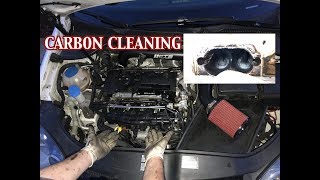
- Excessive Carbon Buildup on Intake Valves 🟠 Medium — A characteristic of all direct-injection engines (both FSI and TSI). Performance degradation is noticeable typically after 60,000-80,000 miles, requiring manual (walnut blasting) cleaning.
- Water Pump / Thermostat Housing Failure 🟠 Medium — The plastic housing is prone to cracking and leaking coolant, a common failure point on both FSI and TSI engines, often occurring after 60,000 miles. (Ref: An extended warranty was issued for some models for this part.)
Used vs. New Parts: Buying Guide for This Vehicle
When a used part is the smart pick: For this specific repair, a used intake manifold is almost never a smart choice. The part has a very high failure rate due to a known design flaw. A used part from a donor vehicle is likely to have the same wear and will probably fail soon after installation, if it hasn't failed already.
Donor-vehicle mileage cap: roughly under 30000 miles for the part to have meaningful remaining life.
What to inspect on the donor part:
- Must be the latest revision part number (06J133201BH for TSI). Do not buy older revisions.
- Physically inspect the actuator arm on the driver's side. There should be zero excessive play.
- Ask for a video of the actuator arm being moved by hand to check for smooth operation and a firm stop.
- If possible, get the VIN of the donor car to check its mileage and confirm it's from a low-mileage vehicle.
OEM-only on this vehicle (don't cheap out):
- Intake Manifold Assembly
Aftermarket brands forum-validated for this vehicle:
- Pierburg (often the OEM supplier)
- Dieselgeek (for the TSI repair bracket)
- ECS Tuning (for the TSI repair bracket)
Brands owners have reported issues with on this vehicle:
- Unbranded, low-cost intake manifolds from online marketplaces have a high rate of out-of-box failure, often due to poorly calibrated integrated sensors that will not adapt correctly.
Real Owner Stories
Aggregated from forums and TSBs cited above. Mileages and costs reflect what owners reported in those sources.
Volkswagen 2.0T TSI
Symptoms: The owner experienced a P2015 error that remained even after the lower intake manifold was replaced.
What fixed it: The issue was ultimately caused by a failed water pump leaking coolant into the vacuum lines.
Source hint: Reddit thread 'P2015 error remains after lower intake manifold...'
Volkswagen 2.0T
Symptoms: Check engine light with P2015 code; the internal plastic limiter for the actuator arm had broken.
What fixed it: Installation of a Dieselgeek repair bracket to provide a durable stop for the actuator arm.
Cost: $70-$70
Source hint: YouTube video 'VW P2015 FIXED for $70!'
Volkswagen 2.0T
Symptoms: The P2015 code persisted even after a repair bracket was installed.
What fixed it: The bracket was found to be installed incorrectly; correctly reinstalling the bracket solved the problem.
Source hint: YouTube video 'FINALLY FIXED THIS VW PROBLEM'
Related OBD-II Codes
Frequently Asked Questions
Is there an extended warranty for the intake manifold on my Volkswagen Eos?
Does TSB 24 17 04 apply to my P2015 code?
Can I fix the P2015 code on my TSI engine without replacing the entire manifold?
Why is my brake pedal hard at low speeds along with the P2015 code?
Do I need to do anything special after replacing the intake manifold on my Eos?
Could a coolant leak cause my P2015 code?
Helpful Videos
We Have This Part in Stock



The information in this article is provided for general reference and educational purposes only. Vehicle specifications, procedures, and part compatibility can vary by production date, trim level, and region. Always consult your vehicle's factory service manual and verify part numbers before purchasing or performing repairs. Safety-critical components such as airbags, seat belts, and braking systems should be installed by a qualified professional.
- Volkswagen Eos:
- 🧭 Diagnostic Flowchart
- 🎬 Helpful Videos
- 🛍️ Shop This Part
- What's Unique About the 2007-2016 Volkswagen Eos
- Symptoms You May Notice
- Most Likely Causes
- Rare But Worth Checking
- Diagnosis Steps
- Parts You'll Likely Need
- Related Codes That Often Appear With This One
- Technical Service Bulletins (TSBs) & Recalls
- Platform-Specific Known Issues
- Mechanic-Grade Diagnostic Values
- Scan Tool Commands That Help
- Wiring & Ground Locations
- Real Owner Repair Stories
- "I Checked Everything" — The Actual Cause
- OEM Part Supersession History
- Model Year Variations Within This Range
- Other Known Issues on This Vehicle
- Used vs. New Parts: Buying Guide for This Vehicle
- Real Owner Stories
- Volkswagen 2.0T TSI
- Volkswagen 2.0T
- Volkswagen 2.0T
- Related OBD-II Codes
- Frequently Asked Questions
- 🎟️ Get 5% Off