

P2015 on 2008-2015 Volkswagen Jetta: Intake Manifold Fault Causes and Fixes
On 2.0T TSI and 2.0L TDI engines, P2015 is almost always caused by a worn plastic stop on the intake manifold's actuator arm, causing it to over-rotate. The most common and affordable fix is an aftermarket metal repair bracket that limits the arm's travel, costing around $50-$80 and avoiding a full intake manifold replacement. For TSI engines, an extended warranty may cover the full manifold replacement.
- P2015 on a 2008-2015 Jetta almost always points to a mechanical issue with the intake manifold runner system, not a bad sensor.
- Before paying for repairs, check with a VW dealer if your vehicle's VIN is covered by the 10-year/120,000-mile extended warranty for the intake manifold.
- For a DIY fix, the most common and effective solution is an aftermarket metal repair bracket (~$70), which can be installed in under an hour and prevents the need for a costly manifold replacement.
- Do not ignore this code, especially on a TDI. It can prevent DPF regeneration, leading to a much more expensive repair down the line.
- If a repair bracket doesn't work, the entire intake manifold assembly will need to be replaced.
What's Unique About the 2008-2015 Volkswagen JETTA
This code is exceptionally common on VW's 2.0T TSI and 2.0L TDI engines from this era. The issue is rarely the sensor itself, but rather a simple mechanical failure. A small plastic limiter on the actuator arm linkage wears down or breaks, allowing the arm to move too far. This design flaw is so prevalent that a cottage industry of affordable aftermarket metal repair brackets has emerged, which provides a more durable stop and prevents the over-travel, often permanently fixing the code without replacing the entire manifold. For the TSI engine, VW also issued an extended warranty due to the high failure rate.
🎬 Watch: A mechanic explains why the TSI manifold fails.Diagnostic Flowchart
Tap your situation to follow the diagnostic path that matches what you're seeing on this vehicle.
Generation note: This issue affects both the Mk5 Jetta (2008-2010) and the Mk6 Jetta (2011-2015), as the problematic 2.0T TSI (CCTA/CBFA) and 2.0L TDI Common Rail (CBEA/CJAA) engines were used across these generations. The failure mechanism and repair options are consistent for both generations.
Symptoms You May Notice
- Check Engine Light (CEL) is on
- Reduced engine power or performance
- Rough or erratic idle
- Decreased fuel efficiency
- Vehicle may enter 'limp mode'
- Failed emissions test
- On TDI models, the DPF warning light may illuminate due to failed regeneration cycles.
- Audible vacuum leak hiss on TSI engines if the actuator arm pops out.
- Replacing only the position sensor. The sensor is integrated into the manifold and is not sold separately by VW. The fault is almost always mechanical, not the sensor itself.
- Replacing spark plugs or ignition coils. While these can cause a rough idle, they will not trigger a P2015 code. Misfire codes may appear alongside P2015 as a symptom of the manifold issue.
Most Likely Causes
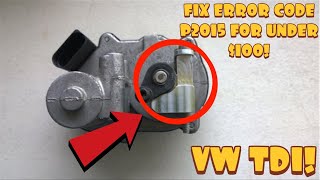
- Worn Internal Stop on Intake Manifold Actuator 🔴 High Probability → Shop Engine Intake Manifold The original actuator linkage uses a small plastic stop that is prone to wearing down or breaking over time, allowing the mechanism to over-rotate. This is a well-documented design flaw in both the TSI's plastic manifold (vacuum actuated) and the TDI's aluminum manifold (motor actuated).
How to confirm: Visually inspect the actuator on the side of the intake manifold. On the TDI, attempt to move the linkage; if it has excessive play, the stop is worn. On the TSI, the arm may be visibly disconnected from the manifold, creating a large vacuum leak. A user on Reddit with a 2012 Jetta TDI confirmed the fix after being quoted $1500 for a new manifold.
Typical fix: The most common and cost-effective fix is installing an aftermarket metal repair bracket. This bracket bolts onto the actuator assembly and provides a new, solid stopping point, preventing the arm from over-traveling. This avoids replacing the entire manifold and can often be installed in under 30 minutes.
Est. part cost: $50-$80 - Failed Intake Manifold Assembly 🟡 Medium Probability → Shop Engine Intake Manifold This is the official dealer repair, as the position sensor is integrated and not sold separately. VW issued an extended warranty for the 2.0T TSI manifold (not TDI) for up to 10 years/120,000 miles. An updated manifold (P/N 06J133201BH) features a revised pivot design. The TDI manifold (P/N 03L129711AG) can also fail internally.
How to confirm: If a repair bracket does not solve the code, or if an output test with a scan tool (like VCDS) shows the flaps are not moving correctly despite the actuator working, the manifold itself has likely failed internally. TSB 2038161 acknowledges this failure and points to an improved manifold design as the production solution.
Typical fix: Replace the entire intake manifold assembly. This is a more involved repair but is the definitive solution if the manifold is internally damaged. Check for warranty coverage with a VW dealer first by providing your VIN.
Est. part cost: $200-$500 - Carbon Buildup ⚪ Low Probability Direct injection engines like the 2.0T TSI are highly susceptible to carbon buildup on the intake valves and runners, as fuel is not sprayed over them to keep them clean. This can physically restrict the movement of the runner flaps.
How to confirm: This requires removing the intake manifold for visual inspection. Significant black, crusty deposits on the intake ports and flaps confirm the issue.
Typical fix: Perform a manual 'walnut blasting' or chemical cleaning of the intake ports and valves with the manifold removed. This is often done at the same time as an intake manifold replacement to restore lost performance.
Est. part cost: $50-$150 (for cleaning service/tools)
Rare But Worth Checking
- Failed Intake Runner Actuator Motor (V157/N316): While less common than the mechanical stop failing, the electric motor (TDI) or vacuum solenoid (TSI) itself can fail. This is more likely if the linkage arm doesn't move at all when commanded by a scan tool.
- Wiring or Connector Issue: Damaged wiring or a corroded connector for the actuator motor or position sensor can cause an implausible signal. A visual inspection of the harness is a good first step. A user on an Audi forum suggested checking for an open circuit/short.
- Restricted Vacuum Line (TSI Engines): TSB #V241704 (2045138) mentions that vacuum lines or T-fittings for the vacuum-operated TSI actuator can become clogged with debris from production or mileage, restricting movement and triggering P2015.
Diagnosis Steps
- Scan the vehicle with an OBD-II scanner to confirm P2015 is the primary code.
- Contact a VW dealer with your VIN to check for coverage under the extended intake manifold warranty (especially for 2.0T TSI engines, 10yr/120k miles).
- Visually inspect the intake manifold runner actuator on the engine. For TDI engines, it's on the front; for TSI, it's on the driver's side.
- Gently try to move the actuator arm by hand. If it feels loose or has significant play (TDI) or has popped out of the manifold (TSI), the internal stop has failed.
- If the arm seems intact, use a capable scan tool (like VCDS) to perform an output test or check measuring blocks. For TSI, check MVB 142 to see the flap position percentage change as you operate the lever by hand. For TDI, check MVB 143 field 3 while revving the engine; the value should change from 0% to 100% instantly.
- If the arm does not move, check for power and ground at the actuator motor's electrical connector.
- If the arm moves but the code returns, the most likely cause is the worn internal stop. Proceed with installing a repair bracket or replacing the manifold.
- For TSI engines, inspect the vacuum lines to the actuator for cracks, leaks, or blockages as per TSB #V241704.
Parts You'll Likely Need
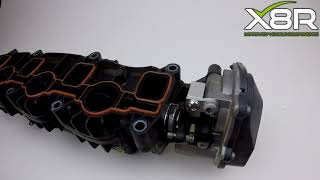
- Intake Manifold Repair Bracket — This is the most common, affordable, and often permanent fix. It creates a new metal stop for the actuator arm, preventing the over-rotation that triggers the code.
Trusted brands: Dieselgeek (TDI focus), ECS Tuning (TSI focus), X8R
OEM price range: N/A
Aftermarket price range: $50-$80 - Intake Manifold Assembly
(OEM #06J133201BH (TSI, supersedes BD, AS, AL), 03L129711AG (TDI, supersedes E))— Required if the manifold is internally damaged, cracked, or if the repair bracket does not resolve the issue. This is the official dealership repair. The OEM part is an updated design to prevent future failure.
Trusted brands: Volkswagen (OEM), Vaico, URO Parts
OEM price range: $300-$500
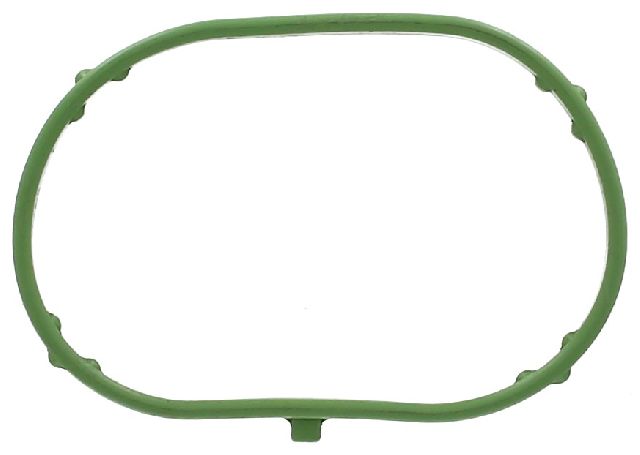
Aftermarket price range: $200-$350 - Intake Manifold Gasket
(OEM #06F129717D (TSI))— Must be replaced any time the intake manifold is removed to ensure a proper seal and prevent vacuum leaks. Often included with a new manifold assembly.
Related Codes That Often Appear With This One
- P2004 — This code for 'Intake Manifold Runner Control Stuck Open' often appears with P2015 as it relates to the same system's failure to operate correctly. TSB 2017354 mentions this code in relation to ECM updates.
- P0300-P0304 — Misfire codes can be triggered by the incorrect air/fuel mixture or vacuum leaks resulting from the faulty intake manifold, especially if the TSI actuator arm pops off.
Technical Service Bulletins (TSBs) & Recalls
- V241501 / 2038161: 'MIL ON, DTCs P2014 or P2015 Intake Manifold Faults Stored in ECM Fault Memory'. This TSB acknowledges the failure of the intake manifold and states the production solution was an 'Improved intake manifold design'.
- V241704 / 2045138: 'MIL ON DTCs P2004, P2014 and or P2015 Stored in ECM Fault Memory'. Specific to CCTA/CBFA engines, this bulletin advises inspecting vacuum lines and T-fittings for restrictions before replacing the manifold.
Platform-Specific Known Issues
- A known issue on 2011-2012 VW 2.0T TSI engines with the CCTA engine code is intake flap valve failure causing P2015 and stalling. [NHTSA ODI #11175702]
- Volkswagen issued TSB #V241501 2038161 discussing diagnosis and potential remedy for P2014 and P2015 faults. [NHTSA TSB #V241501 2038161]
- An owner of a 2010 Jetta reported a P2015 code leading to a dealer diagnosis that the intake manifold needed replacement. [NHTSA ODI #10853297]
- On TDI models, an active P2015 fault can prevent the Diesel Particulate Filter (DPF) from performing its cleaning cycle, which can lead to a clogged DPF and an additional warning light.
Mechanic-Grade Diagnostic Values
- TSI Intake Runner Flap Position Sensor (G336) Output Voltage — expected: Approximately 4.5V when flaps are closed, decreasing to ~1.2V when flaps are open.. Failure: Voltage readings are out of this specified range, even if the sensor appears to function.
- TDI V157 Actuator Motor Wiring Continuity — expected: 1.5 Ohms or less of resistance when checking continuity between the connector pins and the corresponding ECU terminals.. Failure: High resistance or an open circuit indicates a wiring problem.
Scan Tool Commands That Help
- VCDS (VAG-COM): Basic Settings for Intake Manifold Runner — After replacing the intake manifold or actuator motor, this function cycles the flaps to verify correct mechanical operation and allows the ECU to learn the new end-stop positions. Failure to adapt can cause the P2015 code to return even with new parts.
- VCDS (VAG-COM): Output Test for Intake Manifold Flap Motor (V157) — Used during diagnosis to command the actuator motor to move, confirming if the motor itself is functional and if the linkage moves through its range without binding.
Wiring & Ground Locations
- TDI V157 Motor Connector Pinout (CBEA/CJAA) — The 5-pin electrical connector on the intake manifold actuator motor at the front of the engine.. Allows a technician to test for continuity between the actuator and the ECU to rule out a wiring harness failure. Pin 1 goes to ECU Terminal 10, Pin 2 to T27, Pin 3 (ground) to T51, Pin 4 to T35, and Pin 5 to T50.
- Ground Connection 15 — A ground stud located on the cylinder head.. A poor ground at this common point can cause a variety of sensor and actuator errors, including implausible signals from the intake manifold runner system.
- Ground Connection 18 — A ground connection on the engine block.. Serves as another primary ground point for engine electronics; corrosion or looseness here can lead to intermittent electrical faults.
Real Owner Repair Stories
- Reddit user with a 2012 Jetta TDI (2012 Volkswagen Jetta TDI) — Check Engine Light with code P2015 and a separate DPF (Diesel Particulate Filter) warning light. The car would not initiate a DPF regeneration cycle.
❌ Tried (didn't work) Clearing the code with an OBD-II reader (it kept coming back)., Attempting to force a DPF regeneration by driving at sustained RPMs., A repair shop quoted $1500 for a new intake manifold and stated they could not force a DPF burn with their scan tool.
✅ What actually fixed it The owner purchased and installed the Diesel Geek repair bracket. After installation and clearing the code, the P2015 fault was resolved, and the DPF light went out on its own during a subsequent 45-minute drive, indicating that the active P2015 code was preventing the DPF regeneration. - YouTube video by 'FINALLY FIXED THIS VW PROBLEM' (Volkswagen TDI (model year not specified)) — Intermittent Check Engine Light for P2015.
❌ Tried (didn't work) The vehicle had a previous repair attempt where a P2015 bracket was installed, but it was installed incorrectly and was loose, allowing the lever to still over-travel.
✅ What actually fixed it The owner removed the incorrectly installed bracket, cleaned the electrical connector, and re-installed a new bracket correctly, ensuring it was securely hooked behind the plastic mechanism and properly tightened. This provided a solid stop for the lever and resolved the fault.
When the Usual Fixes Don't Work
- In some cases, replacing the entire intake manifold under warranty did not immediately fix the P2015 code. One owner on a forum reported that even after a dealer replaced the manifold on their MK6 GTI, the code returned. The dealer then struggled for several days to diagnose the persistent issue, even though VAG-COM tests showed the new manifold flaps were working. This suggests that while rare, the fault can sometimes lie in the wiring or ECU, even when the mechanical symptoms point directly to the common manifold failure.
OEM Part Supersession History
06J133201G, 06J133201AL, 06J133201AS, 06J133201BD→06J133201BH— The original TSI intake manifolds were prone to failure of the runner control mechanism. The 'BH' revision is the latest updated design to improve durability.03L129711E→03L129711AG— Update to the TDI aluminum intake manifold assembly. The 'AG' version is the current replacement part.
Heads up: The P2015 repair brackets are specific to either the aluminum (TDI) or plastic (TSI) manifold type and are not interchangeable.
Model Year Variations Within This Range
- 2008-2015: The 2.0T TSI engine came in two main variants: CCTA (49-state emissions) and CBFA (California emissions). The CBFA includes a secondary air injection system which adds an extra hose to the airbox and has different intake manifold geometry. While the P2015 failure is common to both, ordering a replacement manifold or intake requires confirming the engine code to ensure correct fitment.
Helpful Videos

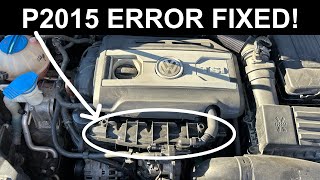
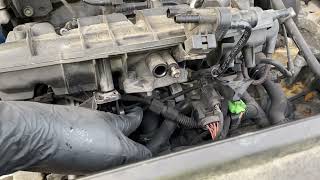
We Have This Part in Stock


The information in this article is provided for general reference and educational purposes only. Vehicle specifications, procedures, and part compatibility can vary by production date, trim level, and region. Always consult your vehicle's factory service manual and verify part numbers before purchasing or performing repairs. Safety-critical components such as airbags, seat belts, and braking systems should be installed by a qualified professional.
- Volkswagen JETTA:
- 🧭 Diagnostic Flowchart
- 🎬 Helpful Videos
- 🛍️ Shop This Part
- What's Unique About the 2008-2015 Volkswagen JETTA
- Symptoms You May Notice
- Most Likely Causes
- Rare But Worth Checking
- Diagnosis Steps
- Parts You'll Likely Need
- Related Codes That Often Appear With This One
- Technical Service Bulletins (TSBs) & Recalls
- Platform-Specific Known Issues
- Mechanic-Grade Diagnostic Values
- Scan Tool Commands That Help
- Wiring & Ground Locations
- Real Owner Repair Stories
- When the Usual Fixes Don't Work
- OEM Part Supersession History
- Model Year Variations Within This Range
- 🎟️ Get 5% Off