

P2015 on 2005-2007 Volvo XC70 D5: Swirl Flap Link Arm and Actuator Guide
On a Volvo D5 engine, P2015 is almost always caused by a small, cheap plastic link arm for the intake swirl flaps breaking or popping off. This is usually a symptom of the underlying problem: the flaps themselves are stiff or seized with carbon buildup. The part itself is under $20, but if the flaps are stuck with carbon, the repair becomes much more involved, requiring intake manifold removal.
- P2015 on your XC70 D5 almost certainly points to a problem with the swirl flap system.
- Always start with a visual inspection of the small plastic link arm on top of the engine; it's the most likely culprit and easiest fix.
- If the link arm is fine, check if the flaps themselves are seized with carbon before replacing the expensive actuator motor.
- A permanent but more involved fix is to clean the intake manifold and either repair the swirl flap assembly or install a 'delete kit'.
What's Unique About the 2005-2007 Volvo XC70
The D5244T4 engine, like many diesel engines with EGR (Exhaust Gas Recirculation), is prone to significant carbon buildup in the intake manifold. This soot, mixed with oil vapor from the crankcase ventilation system, creates a thick tar-like substance that causes the swirl flaps to become stiff or seize completely. The strain of moving these stuck flaps inevitably breaks a small, plastic control link between the actuator motor and the flap assembly. This link arm is the most common failure point triggering the P2015 code on this specific platform.
Symptoms You May Notice
- "Engine System Service Required" or similar message on the dashboard.
- Vehicle enters 'Limp Mode', with severely restricted power and RPM.
- Noticeable loss of power and sluggish acceleration, particularly at lower RPMs.
- Rough or uneven engine idle.
- Decreased fuel efficiency.
- A hissing sound from the engine bay if the link arm is disconnected and the flaps are loose.
- Visible oil leak around the swirl flap shaft where it enters the cylinder head cover, caused by wear in the flap assembly itself.
- Replacing only the link arm when the underlying cause is severely stuck flaps. The new arm will simply break or pop off again in a short amount of time.
- Assuming the actuator motor is bad without first confirming the link arm is intact and the flaps themselves move freely.
Most Likely Causes
- Broken or Disconnected Swirl Flap Link Arm 🔴 High Probability The link arm is a small plastic part that becomes brittle with engine heat cycles. It is the designed weak point that fails when the flaps become stiff, protecting the more expensive actuator motor. The ball sockets on the arm wear out, causing it to pop off.
How to confirm: Visually inspect the top of the engine. The actuator motor is visible, and you can easily see if the small plastic arm (Volvo Part No. 31216460) has popped off its ball joints or is broken. Check for excessive play.
Typical fix: Replace the link arm. It often just clips back into place. Many owners upgrade to a more robust aftermarket metal link arm. This is a very common and inexpensive repair, but it doesn't solve the root cause of stiff flaps.
Est. part cost: $10-$25 - Sticking/Seized Swirl Flaps due to Carbon Buildup 🔴 High Probability The EGR system routes exhaust soot back into the intake, which is inherent to this diesel engine's design. Over time, this soot builds up and restricts the movement of the swirl flaps.
How to confirm: With the link arm disconnected, try to move the swirl flap's ball joint lever by hand. It should move smoothly through its range of motion. If it is very stiff, gritty, or completely stuck, the intake is full of carbon.
Typical fix: The intake manifold must be removed from the engine for a thorough cleaning. This is a labor-intensive job as it requires removing the fuel injectors and high-pressure fuel lines. Alternatively, some owners opt for a 'swirl flap delete' kit, which removes the flaps entirely.
Est. part cost: $50-$150 (for gaskets, seals, and cleaning supplies) - Faulty Swirl Flap Actuator Motor 🟡 Medium Probability The motor can burn out from the high resistance of trying to move stuck swirl flaps, or it can fail electrically over time. The internal position sensor can also fail, providing an incorrect reading to the ECM.
How to confirm: If the link arm is good and the flaps move freely, the motor is the next suspect. A Volvo-specific scan tool (like VIDA) can run an activation test on the motor to see if it moves and if its internal position sensor reports correctly. Without VIDA, you can observe the motor arm while a helper starts the car; it should cycle through its range of motion.
Typical fix: Unbolt and replace the swirl flap actuator motor. Part numbers 30756099 and 30756100 have been associated with this part.
Est. part cost: $150-$300
Rare But Worth Checking
- Worn Swirl Flap Assembly: The entire internal mechanism can wear out, causing excessive play or oil leaks from the shaft. A forum user noted the control arm was very worn and wobbling on the main shaft, suggesting this as the root cause of an oil leak and repeated link arm failure. This requires replacing the entire swirl flap assembly inside the manifold (Volvo Part No. 30777650).
Diagnosis Steps
- Scan the vehicle for fault codes to confirm P2015 is the primary code. Note if any Volvo-specific codes like ECM-6805 are present, as they can be related to boost control issues influenced by the swirl flaps.
- Open the hood and remove the plastic engine cover.
- Visually inspect the swirl flap link arm (Part No. 31216460). It is a small black plastic rod connecting an electronic motor to a lever on the intake manifold. Check if it has popped off either of its ball joints or is physically broken.
- If the arm is disconnected, attempt to move the lever on the intake manifold by hand. It should pivot smoothly with minimal resistance. If it is very stiff or seized, the flaps are clogged with carbon.
- Forum Diagnostic Trick: If the arm is disconnected, some users temporarily wedge the flap lever in the fully open position (usually towards the passenger side) to see if performance improves and limp mode is disabled. This can help confirm the flap system is the source of the poor performance.
- If the arm is intact and the flaps move freely, the problem may be the actuator motor itself or its wiring.
- Use a diagnostic tool capable of bi-directional control (like Volvo VIDA) to command the swirl actuator motor to move. Observe if the motor attempts to move and check the live data from the position sensor to see if it reports a change in position. This is the most definitive test for the motor.
- If the motor does not move or the sensor reading is erratic, inspect the wiring and connector to the actuator for damage or corrosion before condemning the motor.
Parts You'll Likely Need
- Swirl Flap Link Arm
(OEM #31216460)— This is the most common failure point. It is a small plastic part that breaks under the strain of sticky swirl flaps.
Trusted brands: Volvo (Genuine), Aftermarket (Plastic or upgraded Metal versions)
OEM price range: $15-$25
Aftermarket price range: $5-$20 - Swirl Flap Actuator Motor
(OEM #30756099, 30756100)— Replaced if the motor is confirmed to be non-functional after verifying the linkage and flap movement are okay.
Trusted brands: Bosch, Volvo (Genuine)
OEM price range: $250-$400
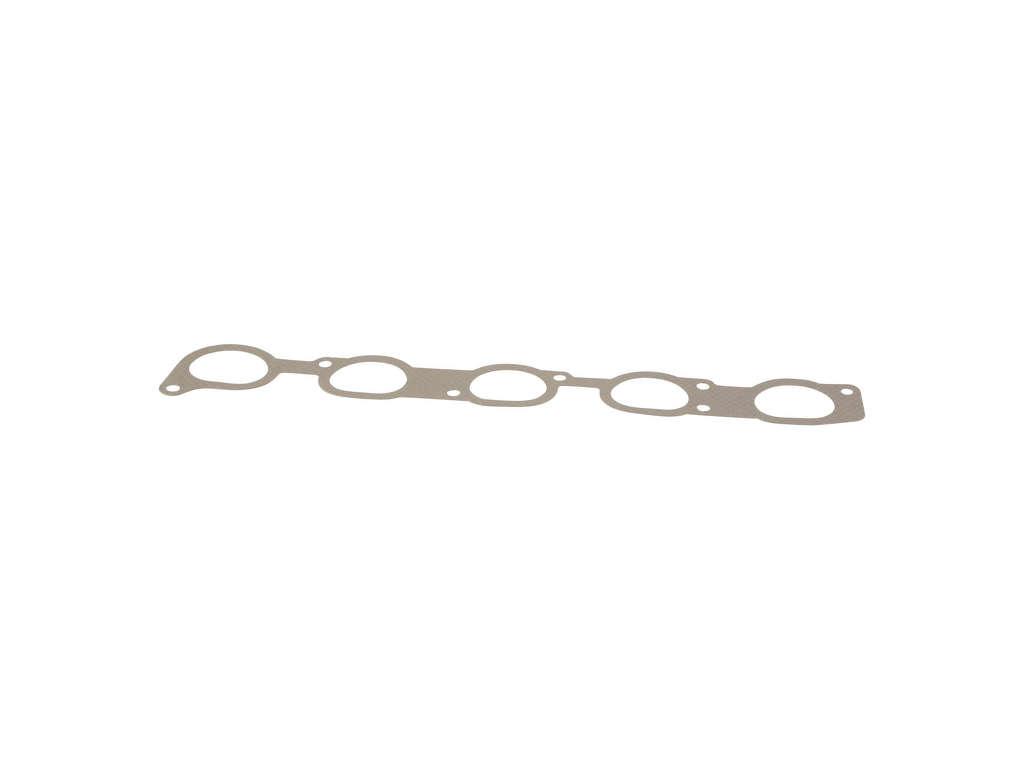
Aftermarket price range: $130-$250 - Intake Manifold Gasket & Seal Kit
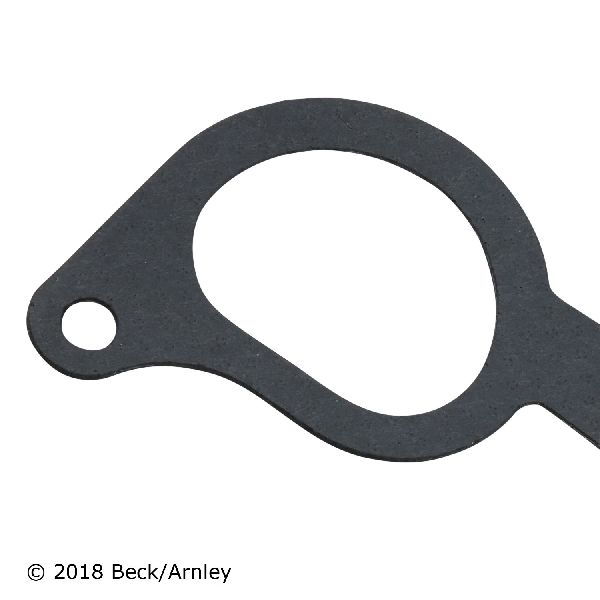
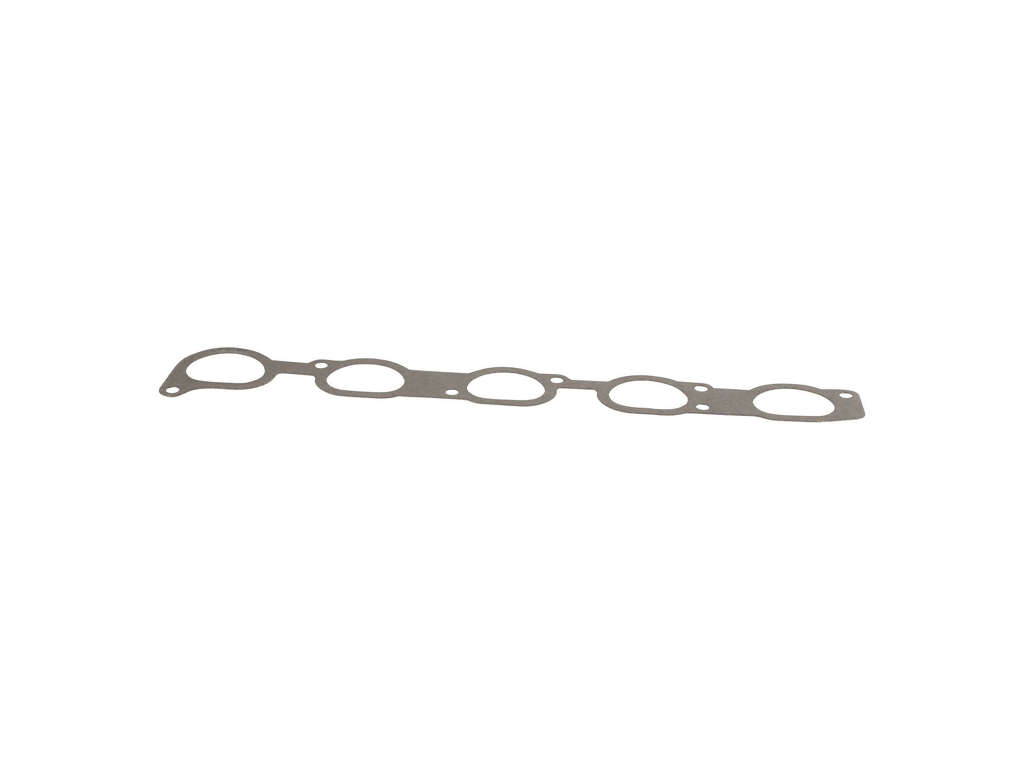
(OEM #30777600 (Gasket))— Required if the intake manifold is removed for cleaning or swirl flap replacement. A full kit should also include injector washers and seals.
Trusted brands: Volvo (Genuine), Elring, Victor Reinz
OEM price range: $40-$60
Aftermarket price range: $20-$40 - Swirl Flap Assembly/Delete Kit
(OEM #30777650 (Full Assembly))— If the internal flaps are broken, worn, or leaking oil, the entire assembly needs replacement. Alternatively, a 'delete kit' removes the flaps entirely.
Trusted brands: Volvo (Genuine Assembly), X8R (Delete Kit)
OEM price range: $150-$200
Aftermarket price range: $50-$80 (Delete Kit)
Platform-Specific Known Issues
- A popular modification for this engine is a 'swirl flap delete', where the flaps are removed entirely and the holes are plugged. This permanently prevents issues with sticking flaps but may slightly alter low-RPM engine characteristics and emissions performance. Proponents claim it improves airflow and prevents future costly repairs. Some owners who have performed the delete report no warning messages and good performance, while others note a slight decrease in performance.
- Removing the intake manifold for cleaning is a complex job on the D5 engine, requiring removal of the common rail fuel injectors. The injectors can be seized in the cylinder head and may require a special puller to remove. It is critical to label injectors so they return to the same cylinder and to replace the copper injector washers and steel clamp bolts upon reassembly.
Mechanic-Grade Diagnostic Values
- Swirl Flap Actuator Connector Voltage — expected: A user reported measuring 4.8V between two of the pins on the 5-pin connector.. Failure: No voltage or erratic voltage could indicate a wiring or ECM issue.
Hidden / Shadow Codes Worth Checking
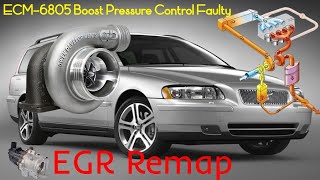
- ECM-6805: This Volvo-specific code for 'Boost Pressure Control - Faulty Flow' is often related to the swirl flap system's malfunction affecting airflow, or other vacuum system faults. It indicates the pressure measured by the boost pressure sensor is higher than the ECM's calculated desired value. (see via Volvo-specific diagnostic tools like VIDA.)
Scan Tool Commands That Help
- Volvo VIDA: Swirl Actuator Motor Activation Test — Use this function to command the actuator motor through its full range of motion to verify its operation independently of the flaps themselves. This helps isolate a faulty motor from a mechanical jam.
- Volvo VIDA: Swirl Flap Adaptation/Calibration — After replacing the actuator motor or the entire swirl flap assembly, an adaptation should be performed. This process teaches the ECM the end-points of the flap travel. Some owners report the motor over-traveling and being unable to reconnect the link arm without this reset.
Wiring & Ground Locations
- Swirl Flap Actuator Connector — On the actuator motor itself, located on the front of the intake manifold, below the plastic engine cover.. This is a 5-pin connector that provides power, ground, and returns the position sensor signal to the ECM. Damage or corrosion at this connector can cause the P2015 code. Checking for power (approx. 4.8V-5V) is a key diagnostic step.
Real Owner Repair Stories
- Volvo Owners Club Forum user (2010 XC90 D5 185bhp) — Persistent error code related to swirl flaps, even after replacing the link arm and swirl flaps.
❌ Tried (didn't work) Replaced swirl flap link arm., Replaced swirl flap assembly., Performed swirl flap adaptation with VIDA., Created a custom bump stop to prevent motor over-travel during calibration.
✅ What actually fixed it The issue was ultimately traced to a clogged fuel filter and a blocked #5 fuel injector, which were causing performance issues that were misattributed to the swirl flap system. Replacing the filter and cleaning the injector resolved the problem.
Model Year Variations Within This Range
- 2005-2009: The D5244T4 (185hp) and D5244T5 (163hp) engines used in this era are mechanically identical, including the swirl flap system. The only difference is the ECU software. This means parts like the intake manifold, swirl flaps, and actuator are interchangeable between these engine variants.
Diagnostic Flowchart
Other Known Issues on This Vehicle
Issues unrelated to this code that are worth knowing about as an owner of this generation:
- AWD Angle Gear Collar Sleeve Failure 🔴 High — Common on P2 platform AWD models, especially over 80,000 miles. The splines on the sleeve connecting the transmission to the angle gear wear out, resulting in a loss of all-wheel drive. (Ref: No recall, but it is a widely known failure. The part number for the sleeve is 31256008.)
- Driver Information Module (DIM) Failure 🟠 Medium — Very common across the P2 platform. Caused by failing solder joints on the circuit board, leading to intermittent or total loss of the instrument cluster, flickering lights, and false SRS warnings. (Ref: No recall, but numerous third-party repair services exist specifically for this issue.)
- Central Electronic Module (CEM) Failure due to Water Ingress 🔴 High — A known issue on 2005+ models where a poorly sealed cowl/plenum cover allows water to drip directly onto the CEM, causing corrosion and a wide range of bizarre electrical faults. (Ref: A Technical News Network (TNN) bulletin TNN37-35-2006-05-23 was issued regarding harness corrosion from water entry.)
- Automatic Transmission Valve Body Failure / Harsh Shifting 🟠 Medium — Common on Aisin-Warner transmissions used in these models, particularly after 60,000-100,000 miles. Symptoms include harsh shifts (especially 2-3), flaring, and a 'bang' when shifting into Drive or Reverse. (Ref: Software updates were released by Volvo to address shift quality, but often the mechanical valve body itself is worn.)
- Front Control Arm Bushing Failure 🟡 Low — The large hydraulic bushings on the front control arms frequently fail, leading to knocking or squeaking noises over bumps, imprecise steering, and uneven tire wear. Considered a regular wear item.
Used vs. New Parts: Buying Guide for This Vehicle
When a used part is the smart pick: A complete used intake manifold assembly can be a cost-effective option if the donor vehicle has low mileage and you can verify the flaps move freely. A used actuator motor is also a viable option if it can be tested or comes from a reputable source.
Donor-vehicle mileage cap: roughly under 100000 miles for the part to have meaningful remaining life.
What to inspect on the donor part:
- For a used intake manifold, look into the intake ports and try to move the swirl flap lever by hand. It should be smooth with no grittiness or binding.
- Check the plastic housing of the manifold for any cracks or signs of heat damage.
- For a used actuator motor, ensure the connector pins are clean and straight, and the plastic housing is not cracked.
- Verify the part number on the used component matches the original part.
OEM-only on this vehicle (don't cheap out):
- While aftermarket actuators exist, using a genuine Volvo or OEM Bosch unit is often recommended to ensure correct communication with the ECM and avoid electrical issues.
Aftermarket brands forum-validated for this vehicle:
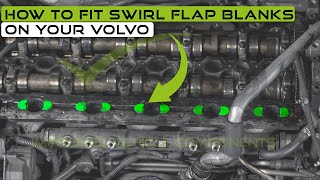
- X8R: A well-known brand for swirl flap 'delete' kits, which include plugs to blank off the flap ports in the manifold.
- Upgraded metal link arms are widely available from various aftermarket sellers and are considered a durable alternative to the OEM plastic part.
Brands owners have reported issues with on this vehicle:
- Be cautious with unbranded, exceptionally cheap electronic parts like the actuator motor from online marketplaces, as their internal sensors may not meet OEM specifications, leading to persistent codes.
Real Owner Stories
Aggregated from forums and TSBs cited above. Mileages and costs reflect what owners reported in those sources.
2005-2007 Volvo XC70 D5
Symptoms: The owner was debating the pros and cons of deleting the swirl flaps versus a full repair; some noticed little difference in performance after the delete while others preferred a full repair to maintain factory specs.
What fixed it: Swirl flap delete kit (removing flaps and plugging holes).
Source hint: volvoforums.org.uk: 'Swirl flap delete' (https://www.volvoforums.org.uk/showthread.php?t=259695)
2005-2007 Volvo XC70 D5
Symptoms: The owner documented a detailed guide for replacing the entire swirl flap assembly, noting the difficulty of the process and the necessity of removing the fuel injectors.
What fixed it: Replacement of the entire swirl flap assembly and cleaning of the intake system.
Source hint: volvoforums.org.uk: 'D5 Swirl Flap Assembly replacement guide' (https://www.volvoforums.org.uk/showthread.php?t=275037)
Related OBD-II Codes
Frequently Asked Questions
My XC70 D5 has a 'Engine System Service Required' message and is in limp mode; could it just be a plastic arm?
Can I just clip the link arm back onto my 2006 XC70 D5 to fix the P2015 code?
Is there a way to confirm if my swirl flaps are seized without taking the engine apart?
I've heard about a 'swirl flap delete' for the D5 engine; what are the downsides?
Why does cleaning the intake manifold on my 2.4L Diesel cost so much in labor?
What part numbers should I look for if I need to replace the swirl flap actuator motor?
Helpful Videos
We Have This Part in Stock




The information in this article is provided for general reference and educational purposes only. Vehicle specifications, procedures, and part compatibility can vary by production date, trim level, and region. Always consult your vehicle's factory service manual and verify part numbers before purchasing or performing repairs. Safety-critical components such as airbags, seat belts, and braking systems should be installed by a qualified professional.
- Volvo XC70:
- 🧭 Diagnostic Flowchart
- 🎬 Helpful Videos
- 🛍️ Shop This Part
- What's Unique About the 2005-2007 Volvo XC70
- Symptoms You May Notice
- Most Likely Causes
- Rare But Worth Checking
- Diagnosis Steps
- Parts You'll Likely Need
- Platform-Specific Known Issues
- Mechanic-Grade Diagnostic Values
- Hidden / Shadow Codes Worth Checking
- Scan Tool Commands That Help
- Wiring & Ground Locations
- Real Owner Repair Stories
- Model Year Variations Within This Range
- Other Known Issues on This Vehicle
- Used vs. New Parts: Buying Guide for This Vehicle
- Real Owner Stories
- 2005-2007 Volvo XC70 D5
- 2005-2007 Volvo XC70 D5
- Related OBD-II Codes
- Frequently Asked Questions
- 🎟️ Get 5% Off