

OBD-II Code P2016: Intake Manifold Runner Position Sensor Circuit Low
What P2016 means, why it triggers, and how to fix it
- P2016 triggers when the Bank 1 intake manifold runner position sensor sends a voltage signal near 0 volts, indicating a short circuit or failed sensor.
- A damaged wiring harness shorting to ground causes over 50% of P2016 codes; perform a 0-volt 'unplug test' before buying a replacement sensor.
- Expect a 10-15% drop in fuel economy, rough idling between 600-800 RPM, and sluggish acceleration from a stop until repaired.
- Check for extended warranties (like VW/Audi's 10-year/120,000-mile manifold coverage) or software updates (Ram TSB #18-103-16) before authorizing an $800+ intake manifold replacement.
What Does P2016 Mean?

The Powertrain Control Module (PCM) detected a problem with the intake manifold runner control (IMRC) system on engine bank 1. The voltage signal from the position sensor dropped below the specified threshold (near 0 volts), indicating a short circuit or a failed sensor. The IMRC uses flaps inside the intake manifold to control airflow, optimizing power and fuel economy at different engine speeds.
Technical definition: Intake Manifold Runner Position Sensor/Switch Circuit Low Bank 1. The Engine Control Module (ECM) detects the voltage signal from the Bank 1 intake manifold runner position sensor is near 0 volts. The ECM interprets this low voltage as a signal wire shorted to ground or an internal sensor failure.
Can I Drive With P2016?
Yes, But With Caution. Yes, you can drive, but expect reduced engine power, poor acceleration, and bad gas mileage. The engine feels sluggish at low speeds. Prolonged driving risks catalytic converter damage, potentially adding $1,200 to the repair bill. Some vehicles enter a restricted 'limp mode,' making highway driving unsafe.
Common Causes

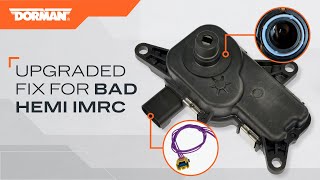
- Damaged wiring harness or connector (Very Common) — The signal wire's insulation rubs through against a metal bracket or the engine block, causing a direct short to ground. 🎬 Watch: How to restore damaged IMRC wiring with a repair kit. Loose or corroded connector pins also bridge the signal and ground circuits, forcing a 0-volt reading.
- Faulty Intake Manifold Runner Position Sensor (Common) — The sensor fails internally, sending a constant low voltage signal (near 0 volts) to the computer regardless of flap position.
- Broken IMRC actuator linkage or lever (Common) — The plastic linkage connecting the actuator motor to the runner flap rod becomes brittle and breaks. The motor moves, but the flaps remain stationary, causing a disagreement between commanded and actual position that faults the sensor circuit.
- Carbon buildup on intake runner flaps (Common) — In direct-injection engines, carbon deposits build up on the runner flaps, causing them to stick or bind. 🎬 Watch: How to fix stuck runners with carb cleaner. This prevents the actuator from moving them through their full range, stressing the sensor.
- Failed Intake Manifold Runner Control (IMRC) actuator/motor (Less Common) — The motor that moves the runner flaps burns out. If the position sensor is integrated into this actuator assembly, the entire unit requires replacement.
- Software Calibration Mismatch (Rare) — The PCM calibration tables for the IMRC sensor are incorrect, causing the module to misinterpret a normal voltage signal as too low. A PCM software update (reflash) resolves this, notably on 2013-2015 Ram 1500 models.
- Vacuum Leaks (Rare) — In vacuum-operated IMRC systems, a torn diaphragm or leaking vacuum line prevents the actuator from moving the runners correctly, triggering a sensor fault.
- Faulty Powertrain Control Module (PCM) (Very Rare) — The engine computer has an internal fault in the circuit that reads the sensor's voltage. Rule out all wiring and sensor issues before condemning the PCM.
Symptoms

- Reduced engine power and hesitation — The car feels sluggish, flat, or stumbles when accelerating from a stop because the intake runners are stuck in the wrong position for low-speed airflow.
- Rough or unstable idle — The engine idles unevenly or shakes, typically fluctuating between 600-800 RPM.
- Worse fuel economy — The engine burns fuel inefficiently, resulting in a noticeable 10-15% drop in miles per gallon.
- Check Engine Light is on (also visible on scanner) — The primary and most immediate indicator of a P2016 fault.
Diagnostic Flowchart

Tap your situation to follow the diagnostic path that matches what you're seeing on this code.
Common Fixes & Costs
- Repairing or replacing the wiring harness — Parts: $10-$50, Labor: $100-$300, ~2.0 hr book time (Intermediate)
- Replacing the Intake Manifold Runner Position Sensor — Parts: $50-$150, Labor: $100-$200, ~1.0 hr book time (DIY)
- Replacing the Intake Manifold Runner Control Actuator/Motor
— Parts: $150-$300, Labor: $150-$400, ~2.0 hr book time
(Intermediate)
Ram 1500 (5.7L HEMI): OEM Mopar: 53022137AL (Alt: Dorman: 68513)
Hyundai (2.4L): OEM Hyundai: 28321-2G000 (Alt: Walker) - Replacing the entire intake manifold assembly
— Parts: $250-$700, Labor: $300-$600, ~3.5 hr book time
(Professional)
VW/Audi (2.0T TSI): OEM VAG: 06J133201BH (Alt: Elring, Vaico) - Cleaning carbon buildup from intake manifold and runners — Parts: $20-$50, Labor: $250-$600, ~4.0 hr book time (Advanced)
- Reprogramming or Replacing the PCM — Parts: $600-$900, Labor: $150-$250, ~1.5 hr book time (Professional)
Used vs. New Parts: Buying Guide
When a used part is worth it: For a high-cost, integrated intake manifold assembly on a vehicle with over 150,000 miles, a used part from a reputable salvage yard is a budget-friendly option. Never buy a used standalone sensor or actuator.
Donor-vehicle mileage cap: roughly under 80000 miles for the part to have meaningful remaining life.
Donor quality checklist:
- Verify the donor vehicle was not scrapped due to engine fire or emissions failure.
- Inspect plastic linkages and vacuum ports for brittleness or hairline cracks.
- Match the OEM part number exactly to avoid calibration mismatches.
Decision logic:
- If The part is a standalone sensor or actuator and costs < $200 new → Buy new. The labor to replace a failed used part outweighs the small initial savings.
- If The part is a complete intake manifold on a vehicle with < 100K miles → Buy a new OEM or high-quality aftermarket part for longevity and warranty.
- If The vehicle is > 150K miles and the budget is the primary concern → Buy a used manifold, but ensure it includes at least a 90-day warranty.
Warranty tradeoff: Used salvage parts offer a 30-90 day functional warranty. New aftermarket parts offer 1-year to limited lifetime warranties. New OEM parts carry a 12-month/12,000-mile warranty.
Worst-case if a used part fails: $400-$1000 if a used intake manifold fails after installation, due to repeated labor costs.
What Happens If You Wait — Timeline
- 0-1 month: Check Engine Light illuminates. IMRC flaps are stuck, causing a rough idle and slight hesitation when accelerating. (MPG impact: 3-8%% · Added cost: $20-50 in wasted fuel)
- 1-4 months: Engine performance noticeably suffers. Power loss is apparent at low speeds, and the vehicle may enter a power-limiting 'limp mode'. (MPG impact: 8-15%% · Added cost: $50-150 in wasted fuel)
- 4-8 months: Sustained incorrect air-fuel mixture accelerates carbon buildup throughout the engine and strains the catalytic converter. (MPG impact: 10-20%% · Added cost: $150-300 in wasted fuel)
- 8+ months: Long-term operation with an improper air-fuel ratio causes the catalytic converter to overheat and fail internally. The vehicle fails emissions testing. (MPG impact: 15-25%% · Added cost: $1200-$2800 for catalytic converter replacement)
Cost of Not Fixing It
- 0-1 month: Noticeable 10-15% drop in fuel economy, poor acceleration, and rough idling. (Added cost: Negligible, other than increased fuel costs.)
- 1-6 months: Running with an incorrect air-fuel ratio accelerates carbon buildup and begins overheating the catalytic converter. (Added cost: $0)
- 6+ months: Sustained improper combustion causes catalytic converter failure, requiring a costly replacement and causing an emissions test failure. (Added cost: $1200-$2800)
Diagnosis Steps
- Scan for Codes & Review Freeze Frame Data
Use an OBD-II scanner to confirm P2016 and check for related codes (P2004, P2015, P2017). Review freeze frame data to identify engine conditions (RPM, load, temp) when the fault occurred. Do not clear codes yet.
Tools: OBD-II Scanner (Beginner) - Visually Inspect the IMRC System
Inspect the Bank 1 intake manifold area. Check the wiring harness for melted insulation, chafing, or pinching against the engine block. Verify the electrical connector is tight and corrosion-free. Look for cracked or broken plastic actuator linkages.
Tools: Flashlight (Beginner) - Check Sensor Live Data Voltage
Using a scan tool with live data, monitor the IMRC Position Sensor PID. A healthy sensor shows a smooth voltage sweep (0.5V to 4.5V) as engine RPM changes. For P2016, the voltage is likely stuck near 0V.
Tools: OBD-II Scanner with Live Data (Intermediate) - Perform the 'Unplug Test'
With the ignition off, unplug the IMRC position sensor. Turn the ignition on (engine off) and check codes. If P2016 changes to a 'Circuit High' code (P2017), the sensor is internally shorted and needs replacement. If P2016 remains, the wiring harness or PCM is at fault.
Tools: OBD-II Scanner (Intermediate) - Check for a Short to Ground (Wiggle Test)
With the scanner displaying live sensor voltage (stuck near 0V), turn the ignition on. Vigorously wiggle the wiring harness from the sensor to the PCM. If the voltage jumps above 0V, you found the exact location of the short in the harness.
Tools: OBD-II Scanner with Live Data (Intermediate) - Command the IMRC Actuator with a Scan Tool
Use bi-directional controls to command the IMRC actuator open and closed. If the motor moves but the sensor reading stays at 0V, the sensor is bad. If the motor doesn't move, the actuator is faulty or lacks power.
Tools: Bi-directional Scan Tool (Advanced) - Test Sensor Circuit Voltages with a Multimeter
Unplug the sensor. Ignition on, engine off. Test the harness pins: you need a 5V reference from the PCM, a ground (near 0V), and a signal wire (~5V when unplugged). If the signal wire reads 0V, it is shorted to ground. Verify ground circuit resistance to the battery negative is under 1 ohm.
Tools: Multimeter (Advanced) - PRO TIP: Analyze the Sensor with an Oscilloscope
Connect an oscilloscope to the signal wire to view real-time voltage. A P2016 fault shows a flat line near 0V. Glitches or dropouts in the waveform while wiggling the harness instantly reveal intermittent shorts that a multimeter updates too slowly to catch.
Tools: Oscilloscope (Professional)
When This Code Triggers (Freeze-Frame Conditions)
- Engine Coolant Temp: 180-210°F (Fully warmed up)
- RPM: 1500-3000 (Steady cruise or light acceleration)
- Engine Load: 25-60% (The PCM is actively commanding the IMRC system)
- Vehicle Speed: 30-60 mph (City or highway driving)
Related Codes
- P2017 — The direct opposite of P2016. It means the sensor circuit voltage is too high (stuck at ~5V), caused by an open circuit or short to power. If unplugging the sensor changes P2016 to P2017, the wiring is good and the sensor is bad.
- P2015 — Indicates a 'Range/Performance' issue. The sensor provides a signal, but it is implausible (e.g., reporting flaps open when commanded closed). This points to a mechanical issue like sticking flaps rather than an electrical short.
- P2004 — Means the Intake Manifold Runner Control is stuck open. If P2016 appears alongside P2004, a physically stuck flap likely caused the sensor's internal components to short out.
- P2014 — A general 'Circuit Malfunction' code indicating an erratic or missing signal. P2016 is a more precise diagnosis, pointing specifically to a signal shorted to ground.
Climate & Environmental Factors
- Cold Weather: Extreme cold makes plastic components, such as the IMRC actuator linkage and wiring insulation, brittle and highly susceptible to snapping during engine startup.
- High Engine Bay Heat: Prolonged exposure to high heat degrades the sensor's wiring harness insulation, leading to cracking and eventual short circuits to ground.
How to Talk to a Mechanic About This Code
Say this: "I have an active P2016 code. I need you to perform an unplug test and check the signal wire for a short to ground before quoting me for a new sensor or intake manifold."
This proves you understand the common failure points (wiring vs. sensor) and prevents a shop from immediately quoting an $800 intake manifold replacement without proper electrical diagnosis.
Avoid saying:
- 'My check engine light is on, can you just fix it?'
- 'I think I need a new intake manifold.'
- 'Just do whatever you think is best.'
Questions to ask before authorizing the repair:
- Did you perform the 'unplug test'? Did the code change to P2017 or stay as P2016?
- If you are recommending a sensor replacement, how did you rule out a short in the wiring harness?
- Did you check for any applicable Technical Service Bulletins or extended warranties for this part?
- Can you show me the damaged wiring or explain the test results that condemn the sensor?
- What is the warranty on the proposed repair, including both parts and labor?
Where to Take It: Dealer vs Independent vs Chain
- Dealer:
Recommended only for specific brands with known warranty extensions (VW/Audi/Ram). Otherwise, an independent shop is a better value.
Best for: Vehicles under powertrain or emissions warranty., VW, Audi, or Ram vehicles with known TSBs or extended warranties for this specific part., Complex electrical issues that an independent shop failed to diagnose.
Downsides: Highest labor rates., Defaults to replacing the entire intake manifold assembly rather than attempting an affordable wiring repair. (Typical cost: +50% vs. baseline) - Independent Shop:
Best overall fit. A qualified independent shop is well-equipped to diagnose the sensor vs. wiring issue and is more likely to perform a cost-saving wiring repair.
Best for: Out-of-warranty vehicles where cost is a factor., Diagnosing and repairing common wiring harness shorts., Vehicles not known for specific P2016-related warranty extensions.
Downsides: Diagnostic skill varies widely; look for ASE certifications in electrical systems., May lack access to the latest manufacturer software updates. (Typical cost: +0% vs. baseline) - Chain Shop:
Avoid. The risk of misdiagnosis or overselling is too high for a code that frequently requires wiring harness troubleshooting.
Best for: Simple, clear-cut repairs like replacing a separate, easily accessible sensor.
Downsides: Technician skill varies dramatically., Unlikely to perform the in-depth electrical testing required to differentiate a wiring short from a bad sensor., High pressure to sell parts leads to unnecessary manifold replacements. (Typical cost: -10% vs. baseline)
When to Walk Away From the Repair
If the estimated repair cost for the P2016 issue exceeds 40-50% of your car's private-party value, it is time to consider selling or trading it in.
- Car worth $5000, fix is $800: Fix it. This repair cost is well within a reasonable threshold for a car of this value.
- Car worth $3500, fix is $1600: Borderline / Walk away. The repair is nearly 50% of the car's value. Unless the car is otherwise in perfect condition, it is not a wise investment.
- Car worth $2000, fix is $1500: Walk away. The repair cost is 75% of the car's value. It makes no financial sense.
What Scan Tool You Need for This Code
Minimum: OBD-II scanner with Live Data streaming.
A basic $20 code reader only shows the P2016 code. It cannot display live sensor voltage, which is mandatory for performing the 'Unplug Test' or 'Wiggle Test' to distinguish a wiring short from a bad sensor.
Budget: BlueDriver Pro or TOPDON TopScan (~$100) — Connects to your smartphone and displays live sensor voltage. This is the absolute minimum required to watch voltage changes during diagnostic tests.
Mid-range: Foxwell NT510 Elite or Launch CRP919X (~$180) — Adds bi-directional control. Allows you to command the IMRC actuator motor open and closed directly from the tool, definitively testing if the actuator works or if the flaps are stuck.
Professional: Autel MaxiCOM MK808S (~$359) — Provides a professional-level tablet with fast bi-directional controls and deep system access for testing the actuator, monitoring data, and performing recalibrations after a repair.
Rent vs buy: Buy a budget pick (under $100). Renting a basic reader confirms the code, but proper DIY diagnosis of P2016 requires live data to avoid guessing on expensive parts.
How to Clear the Code After You Fix It
- Use an OBD-II scan tool to clear the P2016 fault code.
- Perform a complete drive cycle to allow readiness monitors to run.
- Rescan to ensure the code does not return.
Drive cycle (~30 minutes): Start the engine cold (after sitting 8+ hours). Idle for 3 minutes. Drive for 20 minutes with a mix of stop-and-go city driving and steady highway speeds (55 mph for 5 minutes). Allow the vehicle to cool down completely.
Readiness monitors affected: Catalyst Monitor, Evaporative System Monitor, Oxygen (O2) Sensor Monitor
Before emissions retest: drive at least 100 miles to fully set monitors.
Watch out for:
- Clearing the code with a scanner does not fix the underlying short circuit; the code returns immediately.
- Disconnecting the battery resets all readiness monitors, guaranteeing an emissions test failure until a full drive cycle is completed.
- Failing to drive under the specific highway and city conditions required to set the Catalyst Monitor to 'Ready'.
Will This Fail Emissions / State Inspection?
Yes — this code typically fails an OBD-II emissions inspection.
- California: An illuminated Check Engine Light is an automatic smog check failure. All OBD-II readiness monitors must be 'Ready' to pass. A drive cycle of 100+ miles is required after repair.
- New York: An active P2016 code and illuminated Check Engine Light causes an automatic failure during the OBD-II emissions portion of the NYS safety inspection.
- Texas: An illuminated Check Engine Light is an automatic failure. Texas allows only one readiness monitor to be 'Not Ready' for model years 2001 and newer.
Most Commonly Affected Vehicles
- Ram 1500 (with 5.7L HEMI) (2013-2020) — The factory wiring harness to the sensor is too short and stretches or breaks due to engine vibration. A PCM reflash is required per TSB #18-103-16 for 2013-2015 models before replacing hardware.
- Volkswagen Jetta, GTI, Passat (with 2.0T engine) (2008-2015) — Prone to intake manifold runner motor failure or sticking flaps from carbon buildup, requiring a full intake manifold replacement. An extended warranty (10 years/120k miles) often covers this.
- Audi A3, A4, Q5 (with 2.0T engine) (2008-2016) — Shares the VW 2.0T engine issues. The sensor is integrated into the manifold, forcing a complete $800-$1500 manifold replacement. Check for extended warranty coverage.
- Hyundai Sonata, Tucson, Santa Fe (2011-2020) — Suffers from a broken plastic linkage on the variable swirl control actuator, preventing flap movement and triggering related sensor codes.
- BMW 3-Series, 5-Series, X-Series (Diesel) (2014-2019) — Diesel models experience severe carbon buildup on swirl flaps, causing them to stick or fail. Often requires replacing the entire intake manifold.
- Ford Focus, Fusion (with 2.0L GDI engine) (2012-2018) — The IMRC system fails due to a faulty actuator motor or sticking flaps. The actuator is frequently sold only as part of the complete intake manifold assembly.
- Dodge Caliber, Avenger, Journey (2007-2017) — Equipped with the 2.4L World Engine, these commonly suffer from a failed intake manifold runner control valve, necessitating a full intake manifold replacement.
- Jeep Patriot, Compass (2007-2017) — Sharing the 2.4L engine with Dodge, these experience identical intake runner control system failures, requiring full manifold replacement.
Manufacturer-Specific Notes
- Ram/Dodge (Chrysler): On 5.7L HEMI engines, the intake runner valve wiring harness is notoriously short. Engine movement breaks the wires, directly causing P2016. Always check TSB #18-103-16 REV. B for a required PCM software update.
- Volkswagen/Audi: On 2.0T TSI engines, the position sensor is integrated into the intake manifold. When it fails, the entire manifold must be replaced. VW/Audi issued a 10-year/120,000-mile extended warranty for this specific failure.
- Hyundai/Kia: On 2.4L GDI engines, the plastic control lever on the actuator motor cracks or breaks. The motor operates without moving the flaps. The lever/actuator is often available separately from the manifold.
- Mercedes-Benz: Caused by a failure of the 'Intake Port Shutoff Motor'. The plastic linkages controlling the flaps break, or the motor itself fails, frequently requiring a complete intake manifold replacement.
Real Owner Stories
2013 Ram 1500 5.7L at 170K miles
Intermittent Check Engine Light for P1004 (related performance code), with a shudder felt under load.
What they tried:
- A dealership replaced the Short Runner Valve (SRV) actuator, but the code returned.
Outcome: A technician found the MAP sensor wiring, running in the same harness as the SRV wiring, had melted and shorted. Repairing the melted wiring resolved the SRV-related code.
Lesson: On Ram trucks, the wiring harness at the back of the intake is a known weak point. A fault in an adjacent sensor's wiring triggers IMRC codes; inspect the entire harness, not just the IMRC connector.
2015 VW GTI (MK7) at ~50K miles
Check Engine Light came on with code P2015 (Range/Performance), a common precursor to P2016.
What they tried:
- Owner attempted to install an aftermarket ECS repair kit to fix the actuator's range of motion, but the code remained.
Outcome: The issue required a full intake manifold replacement. The sensor is integrated into the manifold, making component repair impossible.
Lesson: For VW/Audi 2.0T engines, the position sensor is part of the intake manifold. Check with a dealer for extended warranty coverage (10 years/120,000 miles) before paying out of pocket.
2015 Ram 1500 at 50K miles
P2016 code appeared immediately after installing a Pedal Commander throttle response controller.
What they tried:
- Owner uninstalled the aftermarket part and cleared the code, but the Check Engine Light returned intermittently.
Outcome: The owner discovered a connector at the back of the intake manifold was disturbed during the installation.
Lesson: If P2016 appears immediately after installing an aftermarket electronic part or completing major engine work, a disturbed connector or pinched wire is the most likely cause.
Audi A4 (B8) with torn diaphragm
Car threw P2006 (Stuck Closed) and P2015 (Range/Performance) after heavy acceleration.
What they tried:
- Troubleshooting revealed a lack of vacuum to the actuator.
Outcome: The owner disassembled the actuator and found a tear in the vacuum diaphragm. The fix required swapping the part from a spare intake manifold.
Lesson: For vacuum-actuated IMRC systems, mechanical failures like a torn diaphragm cause the flaps to fail, leading to sensor codes. Always verify vacuum supply before replacing electrical parts.
How to Prevent This Code From Triggering
- Use a quality fuel system cleaner with PEA detergents (Every 3,000-5,000 miles) — Prevents carbon deposit formation on intake valves and runners, a primary cause of sticking flaps in direct-injection (GDI) engines.
- Perform periodic professional intake cleaning service (Every 30,000-60,000 miles) — Fuel detergents don't wash the intake valves on GDI engines. Professional walnut blasting is the only way to remove heavy carbon buildup that binds IMRC flaps.
- Ensure regular oil changes with high-quality synthetic oil (Per manufacturer's schedule) — Reduces oil vapors routed through the PCV system into the intake, minimizing the primary source of carbon deposits.
- Occasionally perform an 'Italian Tune-Up' (Once a month) — Sustained higher RPM driving increases heat and airflow, burning off light carbon deposits from the intake system before they accumulate.
- Regularly inspect wiring and connectors (During routine oil changes) — Visually checking the IMRC wiring harness for chafing or heat damage catches electrical failures before they cause a short circuit.
Frequently Asked Questions
Can I just clean the intake manifold to fix P2016?
No. While cleaning fixes sticking flaps, P2016 indicates the sensor or wiring has already failed electrically. Cleaning alone will not resolve a short circuit.
My mechanic replaced the sensor, but the code came back. What now?
The problem is almost certainly a short in the wiring harness. The signal wire is touching ground somewhere between the sensor connector and the PCM. A 'wiggle test' on the harness while watching live data pinpoints the short.
What are the most common misdiagnosis mistakes for P2016?
The biggest mistake is replacing the sensor or manifold without testing the wiring circuit first. Another error is ignoring manufacturer TSBs (like the Ram PCM reflash) or extended warranties (VW/Audi manifold program) before paying for repairs.
Where is the P2016 sensor located?
It is located on the side or back of the intake manifold, attached to the pivot rod for the runner flaps. On VW/Audi 2.0T and Ram 5.7L engines, it is integrated directly into the actuator motor or manifold assembly.
Is P2016 a serious code?
It is moderately serious. It won't leave you stranded immediately, but it severely degrades engine performance, ruins fuel economy, and eventually destroys the catalytic converter if ignored.
What does 'Bank 1' mean?
On V-shaped engines, 'Bank 1' is the side of the engine containing the #1 cylinder. For inline 4-cylinder engines, there is only one bank, so it is always Bank 1.
Will replacing the sensor definitely fix the code?
Not necessarily. P2016 is very often caused by a short in the wiring harness. You must perform the 'unplug test' to verify the wiring is intact before spending money on a new sensor.
Can a bad battery cause a P2016 code?
While less common for this specific code, a failing battery causes unpredictable electronic issues due to unstable voltage. Test your battery and alternator if you experience multiple random electrical faults.
Key Takeaways
- P2016 triggers when the Bank 1 intake manifold runner position sensor sends a voltage signal near 0 volts, indicating a short circuit or failed sensor.
- A damaged wiring harness shorting to ground causes over 50% of P2016 codes; perform a 0-volt 'unplug test' before buying a replacement sensor.
- Expect a 10-15% drop in fuel economy, rough idling between 600-800 RPM, and sluggish acceleration from a stop until repaired.
- Check for extended warranties (like VW/Audi's 10-year/120,000-mile manifold coverage) or software updates (Ram TSB #18-103-16) before authorizing an $800+ intake manifold replacement.
Helpful Videos
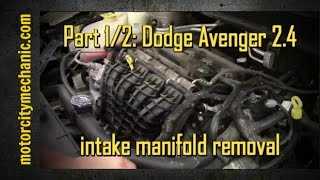
Shop the Parts Behind P2016
Below are the parts most often responsible for code P2016, ranked by how frequently each one is the actual culprit (per the diagnosis above). Tap any to see what we have for your vehicle.

The information in this article is provided for general reference and educational purposes only. Vehicle specifications, procedures, and part compatibility can vary by production date, trim level, and region. Always consult your vehicle's factory service manual and verify part numbers before purchasing or performing repairs. Safety-critical components such as airbags, seat belts, and braking systems should be installed by a qualified professional.
- 🧭 Diagnostic Flowchart
- 🎬 Helpful Videos
- 🛍️ Shop This Part
- What Does P2016 Mean?
- Can I Drive With P2016?
- Common Causes
- Symptoms
- Common Fixes & Costs
- Used vs. New Parts: Buying Guide
- What Happens If You Wait — Timeline
- Cost of Not Fixing It
- Diagnosis Steps
- When This Code Triggers (Freeze-Frame Conditions)
- Related Codes
- Climate & Environmental Factors
- How to Talk to a Mechanic About This Code
- Where to Take It: Dealer vs Independent vs Chain
- When to Walk Away From the Repair
- What Scan Tool You Need for This Code
- How to Clear the Code After You Fix It
- Will This Fail Emissions / State Inspection?
- Most Commonly Affected Vehicles
- Manufacturer-Specific Notes
- Real Owner Stories
- 2013 Ram 1500 5.7L at 170K miles
- 2015 VW GTI (MK7) at ~50K miles
- 2015 Ram 1500 at 50K miles
- Audi A4 (B8) with torn diaphragm
- How to Prevent This Code From Triggering
- Frequently Asked Questions
- Can I just clean the intake manifold to fix P2016?
- My mechanic replaced the sensor, but the code came back. What now?
- What are the most common misdiagnosis mistakes for P2016?
- Where is the P2016 sensor located?
- Is P2016 a serious code?
- What does 'Bank 1' mean?
- Will replacing the sensor definitely fix the code?
- Can a bad battery cause a P2016 code?
- Key Takeaways
- 🎟️ Get 5% Off