

OBD-II Code P2019: Intake Manifold Runner Position Sensor/Switch Circuit (Bank 2)
What P2019 means, why it triggers, and how to fix it
- Code P2019 indicates the engine computer cannot verify the position of the intake manifold runner flaps on Bank 2, disrupting the air-fuel mixture.
- Carbon buildup physically jamming the runner flaps is the leading cause on direct-injection engines, requiring a $500-$1,000 walnut blasting service to fix.
- On Ford 5.0L V8 and Mercedes M272 V6 engines, a snapped plastic linkage arm is the primary culprit, necessitating a full $800-$1,400 intake manifold replacement.
- Never replace the electronic position sensor without first manually testing the runner flaps; replacing a good sensor on a mechanically stuck flap is the most common $300 misdiagnosis.
- Driving with an active P2019 code drops fuel economy by 2-4 MPG and risks destroying the catalytic converter within 6 months, turning a moderate repair into a $2,500+ expense.
What Does P2019 Mean?
P2019 means your car's main computer (PCM) detects a problem with the sensor monitoring the intake manifold runners on Bank 2. These small flaps adjust air passage length to improve engine performance and efficiency at different speeds. The code sets when the sensor's signal is out of range, doesn't match the command, or performs erratically, leaving the computer blind to the flaps' actual position.
Technical definition: Intake Manifold Runner Position Sensor/Switch Circuit Range/Performance (Bank 2). The Powertrain Control Module (PCM) detects an out-of-range or erratic electrical signal from the intake manifold runner position sensor on the engine bank opposite cylinder #1.
Can I Drive With P2019?
Yes, But With Caution. Yes, but you will experience reduced engine power, a rough idle, and worse gas mileage. Fix it soon. Short-distance driving is permitted, but ignoring it long-term causes severe issues like catalytic converter damage from a persistently rich fuel mixture, costing $800 to $2,500 to repair.
Common Causes
- Carbon buildup on intake runner flaps (Very Common) — On direct-injection (GDI/TSI) engines, carbon deposits build up on the intake flaps, causing them to stick, bind, or fail to close. This is the most frequent cause on European makes like Audi, VW, and Mercedes-Benz.
- Broken intake manifold runner linkage or flaps (Common) — The physical plastic or metal components of the runner system, such as the control shaft, linkage clips, or the flaps themselves, snap under stress. This is a highly documented failure on Ford 5.0L V8 and Mercedes-Benz M272 V6 engines.
- Faulty Intake Manifold Runner Position Sensor (Common) — The sensor fails internally from heat, vibration, or wear, sending incorrect, erratic, or dead voltage signals to the computer. 🎬 Watch: How to test the runner position sensor circuit with a multimeter.
- Failed Intake Manifold Runner Control (IMRC) actuator/solenoid (Common) — The electric motor or vacuum solenoid that moves the runner flaps burns out or fails, leaving the flaps stuck in one position regardless of computer commands.
- Damaged wiring, corrosion, or loose connectors (Common) — Wires leading to the sensor fray, short to power/ground, or break. Connectors loosen or suffer water intrusion and corrosion, interrupting the 5V reference signal.
- Vacuum leaks (Less Common) — If the runner flaps are vacuum-operated, a cracked, brittle, or disconnected vacuum line prevents them from moving correctly.
- Low Battery Voltage (Rare) — An undercharged or failing battery causes erratic behavior in electronic sensors and actuators, including the IMRC system, triggering false codes.
- Faulty Powertrain Control Module (PCM) (Very Rare) — The PCM suffers a corrupted algorithm or a failing internal driver circuit, preventing it from interpreting a valid sensor signal. Consider this only after exhausting all other possibilities.
Symptoms
- Check Engine Light illuminates immediately — The car's computer triggers the check engine light on the dashboard to alert you of the system fault.
- Reduced engine power and poor acceleration — The car feels sluggish and hesitates during acceleration, especially above 2,500 RPM, because the engine lacks optimal airflow.
- Rough or unstable idle — The engine shakes and RPMs fluctuate by more than 100 RPM when stopped.
- Worse fuel economy — Fuel economy drops by 2-4 MPG due to inefficient airflow and combustion.
- Engine enters 'limp mode' — The computer restricts vehicle speed to 45-55 mph to prevent internal engine damage.
- Audible clicking or buzzing from the engine bay — The IMRC actuator motor clicks or buzzes as it struggles to move jammed runner flaps.
Diagnostic Flowchart
Tap your situation to follow the diagnostic path that matches what you're seeing on this code.
Common Fixes & Costs
- Cleaning carbon buildup from the intake manifold and flaps — Parts: $20-$50, Labor: $400-$1000, ~5 hr book time (Professional)
- Replacing the entire intake manifold assembly
— Parts: $300-$1250, Labor: $300-$800, ~4 hr book time
(Professional)
: OEM 06H133201AT (Alt: Pierburg, Vaico ($350-$800))
: OEM FL3Z-9424-J (Alt: Dorman 615-916 ($300-$700))
: OEM A2721402401 (Alt: Pierburg 524551 ($400-$900)) - Replacing the Intake Manifold Runner Position Sensor
— Parts: $40-$150, Labor: $100-$200, ~1.5 hr book time
(Intermediate)
: OEM Motorcraft (varies by year) (Alt: Standard Motor Products IMA120) - Replacing the IMRC actuator/solenoid
— Parts: $100-$400, Labor: $100-$300, ~2.5 hr book time
(Intermediate)
: OEM Motorcraft (varies by year) (Alt: Standard Motor Products IMA120/IMA121) - Repairing damaged wiring or connectors — Parts: $10-$30, Labor: $100-$250, ~2 hr book time (DIY)
DIY vs Professional
- Repairing damaged wiring or connectors — Beginner:
- Replacing the Intake Manifold Runner Position Sensor — Beginner:
- Replacing the IMRC actuator/solenoid — Beginner:
- Replacing the entire intake manifold assembly — Beginner:
- Cleaning carbon buildup (Walnut Blasting) — Beginner:
Used vs. New Parts: Buying Guide
When a used part is worth it: A used intake manifold from a low-mileage vehicle is a cost-effective option for older, high-mileage vehicles where a new OEM part is cost-prohibitive.
Donor-vehicle mileage cap: roughly under 80000 miles for the part to have meaningful remaining life.
Donor quality checklist:
- Visually inspect for cracks around bolt holes and coolant passages.
- Use a straightedge to check for warped mating surfaces.
- Look inside for heavy sludge or metal fragments, indicating the donor engine failed catastrophically.
- Ensure all linkage components are intact and move freely.
Decision logic:
- If Vehicle is < 80K miles AND a new aftermarket part is < $400 → Buy new; the risk of a used part isn't worth the small savings.
- If Vehicle is > 150K miles AND budget is the primary concern → A carefully inspected used part is an acceptable risk.
- If The failure mode is known to be plastic fatigue (e.g., broken internal linkage) → Strongly favor a new part, as a used one is near the same failure point.
Warranty tradeoff: Used parts from salvage yards offer a 30-90 day functional warranty. New aftermarket parts come with a 1-year to limited lifetime warranty. New OEM parts carry the manufacturer's standard 1-2 year warranty.
Worst-case if a used part fails: $800-$1500 if a used part is defective, requiring paying for labor a second time plus the cost of another part.
What Happens If You Wait — Timeline
- 0-1 month: Check Engine Light illuminates. Driver notices a subtle hesitation during acceleration or a slightly rough idle, particularly on cold starts. (MPG impact: 0-5%% · Added cost: $0-40 in wasted fuel)
- 1-4 months: Engine performance becomes noticeably worse. Sluggish acceleration, especially above 2,500 RPM, is consistent. Fuel economy drops by a measurable 2-4 MPG. (MPG impact: 5-10%% · Added cost: $50-150 in wasted fuel)
- 4-12 months: The imbalanced air/fuel mixture affects other components. Misfire codes (P030x) appear. The catalytic converter is subjected to thermal stress from unburned fuel, reducing its efficiency. (MPG impact: 10-15%% · Added cost: $800-$2500 (risk of catalytic converter damage becomes significant))
- 12+ months: Catastrophic failure becomes a real possibility. The catalytic converter clogs or melts. In mechanical failure cases, a piece of the plastic runner flap breaks off and is ingested by the engine, causing severe internal damage. (MPG impact: 15-25%% · Added cost: $2500-$6000+ (cost of catalytic converter and/or major engine repair))
Cost of Not Fixing It
- 0-1 month: Noticeable drop in fuel economy (typically 5-10% or 2-4 MPG), rough idle, and poor acceleration. (Added cost: $20-$60 in wasted fuel per month.)
- 1-6 months: The incorrect air/fuel mixture causes the catalytic converter to overheat, leading to reduced efficiency and eventual failure. (Added cost: $1200-$2800 for catalytic converter replacement.)
- 6+ months: Prolonged misfires damage spark plugs and ignition coils. A broken runner flap can be ingested into a cylinder, causing catastrophic engine damage. (Added cost: $4000+ for major engine repair or replacement.)
Diagnosis Steps
- Read the Codes and Freeze Frame Data
Use an OBD-II scanner to confirm P2019 is active. Check for related codes (P2004, P2014, misfires) and review freeze frame data to see engine conditions (RPM, load) when the fault occurred.
Tools: OBD-II Scanner (Beginner) - Perform a Detailed Visual Inspection
Inspect the Bank 2 intake manifold runner sensor, actuator, and linkage. Look for broken plastic parts, disconnected arms, or damaged wiring. Check all small vacuum lines connected to the intake manifold for cracks.
Tools: Flashlight, Inspection Mirror (Beginner) - PRO TIP: Manually Test for Sticking Flaps
Disconnect the linkage from the IMRC actuator motor. Move the runner flap linkage by hand. It must move smoothly with minimal resistance. If it feels crunchy, binds, or is completely stuck, the problem is mechanical (carbon buildup or broken internal parts), and the intake manifold requires removal.
Tools: Pliers or basic hand tools (Intermediate) - Observe Live Sensor Data (Comparison Test)
Use a scan tool with live data. Display the IMRC position sensor data for both Bank 1 and Bank 2. While snapping the throttle, both readings must change smoothly and mirror each other. If Bank 2 is stuck or erratic while Bank 1 moves, the fault is isolated to the Bank 2 circuit.
Tools: Advanced OBD-II Scanner (Intermediate) - Test the Actuator with a Scan Tool
Use bi-directional controls to command the Bank 2 IMRC actuator open and closed. You must hear/see it move and see the corresponding sensor position change in live data. If it fails to respond, the actuator, wiring, or PCM driver is faulty.
Tools: Bi-directional OBD-II Scanner (Intermediate) - PRO TIP: Test the Sensor Circuit Voltage
Disconnect the sensor (ignition on, engine off). Check for a 5-volt reference signal and a good ground. Reconnect and back-probe the signal wire. Voltage must sweep smoothly between 0.5V and 4.5V as flaps move manually. Readings stuck >4.5V or <0.5V confirm an internal sensor failure.
Tools: Digital Multimeter, Back-probe kit (Advanced) - ADVANCED: Sensor Resistance Test
Disconnect the sensor and measure resistance (Ohms) between terminals. Check for continuity between the sensor connector and the ECM connector; resistance must be <1.5 Ohms. An 'OL' reading indicates an open circuit in the wiring harness.
Tools: Digital Multimeter, Vehicle-specific repair manual (Advanced) - Check for Carbon Buildup
If flaps bind (Step 3), remove the intake manifold. Visually inspect the intake ports and runner flaps for heavy, baked-on carbon deposits. This definitively confirms carbon buildup as the root cause.
Tools: Basic hand tools (sockets, wrenches), Borescope (Advanced) - Perform a Smoke Test for Vacuum Leaks
If a lean code (P0174) is present, introduce smoke into the intake system. Look for smoke escaping from manifold gaskets, runner flap shafts, or vacuum hoses to identify leaks.
Tools: Smoke Machine (Advanced)
When This Code Triggers (Freeze-Frame Conditions)
- Engine Coolant Temp: 180-200°F (The fault logs when the engine is fully warmed up.)
- RPM: 1500-2500 RPM (Occurs during steady-state cruise or light acceleration, not at idle or full throttle.)
- Engine Load: 20-50% (The PCM actively commands the runners under moderate engine load.)
- Vehicle Speed: 35-60 mph (The code sets during city or highway cruise conditions.)
Related Codes
- P2004 — Identical 'Intake Manifold Runner Control Stuck Open' code for Bank 1. Seeing P2004 and P2019 together strongly suggests a systemic problem affecting both cylinder banks, such as heavy carbon buildup or a widespread vacuum leak.
- P2014 — The partner 'Circuit Malfunction' code for Bank 1. P2014 points specifically to an electrical fault. P2019 is a 'Range/Performance' code, which is electrical OR mechanical. Diagnosis for P2019 must verify mechanical movement.
- P0300-P0308 — Cylinder misfire codes. A stuck intake runner on Bank 2 disrupts the air/fuel mixture, causing misfires. If you have P2019 alongside misfire codes only for Bank 2 cylinders (e.g., P0302, P0304, P0306), the IMRC fault is the root cause.
- P0174 — System Too Lean (Bank 2). If runner flaps stick in a position that creates a vacuum leak around the flap shaft seals, unmetered air enters the manifold. Diagnosing P2019 alongside P0174 requires a smoke machine test.
Climate & Environmental Factors
- Cold Weather: Cold starts exacerbate carbon buildup issues. Dense carbon deposits become brittle in freezing temperatures, increasing the chance of flaps jamming during the initial warm-up phase.
- Humidity / Water: High humidity or water intrusion corrodes the IMRC sensor connector, increasing electrical resistance and triggering erratic signal codes.
How to Talk to a Mechanic About This Code
Say this: "I have a P2019 code on my [Make, Model, Year]. I need a diagnostic to determine if the cause is electrical, like the sensor or wiring, or a mechanical issue, like stuck runner flaps from carbon buildup. Please verify the flaps move freely before recommending any part replacements."
This signals you understand the common failure modes and directs the technician to check for the most common misdiagnosis: replacing a sensor when the flaps are physically jammed. It prevents unnecessary parts replacement.
Avoid saying:
- 'Just fix whatever's wrong'
- 'My check engine light is on, can you look at it?'
- 'Whatever you recommend'
Questions to ask before authorizing the repair:
- Did you manually test the runner flap linkage to confirm it moves smoothly without binding?
- If the flaps are stuck, what is the cost for carbon cleaning versus replacing the entire intake manifold?
- If you recommend a new sensor or actuator, how did you confirm the flaps themselves are not the problem?
- Will you provide a printout of the freeze-frame data stored with the code?
- What is the warranty on this specific repair and the parts used?
Where to Take It: Dealer vs Independent vs Chain
- Dealer:
Best for: Vehicles still under powertrain or emissions warranty., Complex, manufacturer-specific quirks, especially on German brands (VW, Audi, Mercedes) known for carbon issues or specific linkage failures., Recalls or Technical Service Bulletins (TSBs) related to the intake manifold.
Downsides: Labor rates are 1.5-2x higher than independent shops., Dealers default to replacing the entire intake manifold assembly, which is significantly more expensive than cleaning or a targeted repair. (Typical cost: +50% vs. baseline) - Independent Shop:
Excellent fit. A specialty shop familiar with carbon buildup on GDI engines is more willing than a dealer to perform a $500-$1,000 cleaning service instead of a $1,500 full manifold replacement.
Best for: Out-of-warranty vehicles where cost is a major factor., Finding a shop that performs carbon cleaning (walnut blasting) instead of a full manifold replacement., Vehicles with well-known P2019 issues (e.g., Ford 5.0L linkage, VW/Audi carbon buildup).
Downsides: Quality varies; you must find a reputable shop with experience in GDI engines or your specific vehicle brand., A generalist shop lacks specialized tools like walnut blasters. (Typical cost: +0% vs. baseline) - Chain Shop:
Use with caution. Acceptable for a simple external sensor swap if the diagnosis is certain. AVOID for the initial diagnosis or any repair requiring intake manifold service.
Best for: Simple, accessible, and clearly diagnosed external sensor or wiring repairs.
Downsides: High potential for misdiagnosis; technicians frequently replace the sensor without checking for mechanically stuck flaps., Lacks the specialized tools or expertise for intake manifold removal or carbon cleaning. (Typical cost: -10% vs. baseline)
When to Walk Away From the Repair
If the estimated repair cost exceeds 40% of the car's private-party value (check Kelley Blue Book or Edmunds), seriously consider selling or trading it in.
- Car worth $4000, fix is $1800: Walk away. The repair cost is 45% of the vehicle's value, making it an unsound investment.
- Car worth $15000, fix is $1200: Fix it. The repair cost is only 8% of the car's value and restores critical performance and fuel economy.
- Car worth $3000, fix is $400: Fix it. This is a relatively low-cost repair necessary for the vehicle to run correctly and pass emissions.
What Scan Tool You Need for This Code
Minimum: A scanner that displays and graphs live data PIDs (Parameter IDs).
A basic $20 code reader only confirms the P2019 code exists. It cannot display live sensor voltage or command the actuator to move—critical steps to isolate the sensor, actuator, or flaps. Without this data, you are guessing.
Budget: XTool A30M / Thinkdiag2 (~$150) — These smartphone-based tools offer full system diagnostics, live data graphing, and bi-directional control to run active tests on the IMRC actuator, providing professional-level data for a DIY price.
Mid-range: Foxwell NT510 Elite / Autel MaxiCOM MK808S (~$200-450) — Handheld tablet-style scanners providing robust live data, all-system scanning, and strong bi-directional controls to command the IMRC actuator open and closed.
Professional: Autel MaxiSys Series / Launch X431 Series (~$500-1500) — Provides full OEM-level diagnostic functions, including advanced coding, topology mapping, and the fastest data processing for complex diagnostics.
Rent vs buy: If this is a one-time diagnosis, auto parts stores like AutoZone and O'Reilly loan scanners for free after a refundable deposit. Buy a scanner only if you perform diagnostics multiple times per year.
How to Clear the Code After You Fix It
- Reconnect the battery if disconnected for the repair.
- Use an OBD-II scan tool to manually clear all diagnostic trouble codes.
- Perform a complete OBD-II drive cycle to allow readiness monitors to run.
Drive cycle (~30 minutes): A generic drive cycle includes a cold start (engine off for 6+ hours), a 5-minute idle period, 10-15 minutes of mixed city/highway driving including steady cruising between 40-60 mph, and several coast-down periods without using the brake.
Readiness monitors affected: Catalyst monitor, Oxygen (O2) sensor monitor, EGR System
Before emissions retest: drive at least 100 miles to fully set monitors.
Watch out for:
- Disconnecting the battery clears the code but resets all readiness monitors to 'Not Ready,' causing an immediate emissions test failure.
- The code returns quickly, sometimes within one drive cycle, if the underlying mechanical or electrical fault was not repaired.
Will This Fail Emissions / State Inspection?
Yes — this code typically fails an OBD-II emissions inspection.
- California: An active Check Engine Light results in an automatic smog check failure. After repair, a full drive cycle must be completed to set readiness monitors before a re-test.
- New York: The NYVIP3 inspection includes an OBD-II scan. An active P2019 code causes the vehicle to fail the emissions portion of the inspection.
- Texas: In the 17 counties requiring emissions testing, a vehicle with an illuminated Check Engine Light for P2019 fails the inspection.
Most Commonly Affected Vehicles
- Audi A4, A6, Q5 (2005-2016) — Models with 2.0T and 3.2L engines are highly prone to carbon buildup on the intake flaps. Carbon cleaning is required around 60k miles.
- Volkswagen GTI, Jetta, CC, Tiguan (2008-2017) — VW models with direct-injection (TSI) engines frequently experience heavy carbon deposits that jam the runner flaps.
- Ford F-150, Mustang (2011-2018) — On 5.0L 'Coyote' V8s, the plastic linkage arm on the intake manifold snaps, causing runner control codes. A full intake manifold replacement costs $800-$1400 at a dealer.
- Mercedes-Benz C-Class (C300), E-Class (E350) with M272 V6 (2006-2012) — These vehicles suffer from broken plastic actuator levers on the intake manifold, requiring a full intake manifold replacement.
- Dodge/Chrysler/Jeep Various with 3.6L Pentastar V6 (2011-2019) — The code points to a faulty IMRC actuator or sensor. Parts are integrated, requiring replacement as a unit.
- Chevrolet Cruze, Sonic (2011-2019) — Models with 1.8L and 1.4L engines experience issues with the intake manifold tuning (IMT) valve. Failure requires full manifold replacement.
- Hyundai / Kia Sonata, Optima, Tucson, Sportage (2011-2018) — Vehicles equipped with the 2.4L GDI engine are susceptible to carbon buildup that jams the IMRC system.
- BMW Various with N52 engines (e.g., 328i, 528i, X3, X5) (2006-2013) — These models use a 'DISA' valve system. The plastic gears on the DISA flap actuators strip, causing codes related to intake runner control.
Manufacturer-Specific Notes
- Ford: On the 5.0L V8, the code is caused by a physically broken plastic control shaft on the manifold itself, not the sensor. Replacing the manifold fixes it, but double-check all vacuum connections to prevent the code from returning.
- Volkswagen/Audi: Carbon buildup is the primary cause. Shops recommend walnut blasting the intake ports every 60,000-80,000 miles. Fuel additives are ineffective because fuel doesn't wash over the intake valves on direct-injection engines.
- Mercedes-Benz: On the M272 V6 engine, a small plastic lever connecting the actuator to the swirl flaps snaps. While cheap repair kits exist, shops recommend replacing the entire intake manifold for a durable fix.
- General Motors (Chevrolet): On 1.4L and 1.8L engines, the intake manifold tuning (IMT) valve assembly is integrated into the plastic intake manifold. Failure requires replacing the entire manifold assembly.
Real Owner Stories
2017 Ford F-150 5.0L at 143K miles
Check engine light was on for P2019, which the owner ignored. Later, the truck went into limp mode and displayed transmission-related codes (P0720, P061B).
What they tried:
- Initially ignored the P2019 code.
- After limp mode occurred, the codes cleared temporarily after a restart, but the issue remained.
Outcome: Forum advice pointed to P2019 being a separate issue from the transmission codes, related to a faulty position sensor or wiring on the intake manifold. The owner inspected the wiring and connector for the IMRC system on Bank 2.
Lesson: Ignoring P2019 is risky. While it may not cause immediate catastrophic failure, it leads to other systems acting up and masks more severe problems.
2013 VW GTI (MK6) at 67K miles
Owner experienced hard cold starts, shuttering between 3000-4500 RPM, and misfires on all cylinders. The primary code was for a faulty intake flapper actuator.
What they tried:
- Diagnosis at the dealership confirmed a failed intake manifold, covered under an extended warranty.
Outcome: Since the intake manifold had to be removed, the owner paid for a carbon cleaning service at the same time for a reduced labor cost of $425. This resolved the running issues.
Lesson: If a repair requires removing the intake manifold, it is highly cost-effective to perform a carbon cleaning service simultaneously, as most of the labor cost is already covered.
Mercedes-Benz E350 (M272 V6) with unknown mileage
Check engine light on due to the common intake manifold runner problem. The owner needed to make an emergency 100-mile round trip.
What they tried:
- The owner considered using an inexpensive aftermarket repair kit for the broken plastic linkage lever.
Outcome: The cheap repair kit is a temporary fix for the lever but doesn't solve the underlying carbon issue, making eventual flap failure more likely. A full manifold replacement is the recommended long-term solution.
Lesson: On engines like the Mercedes M272, a broken linkage is a symptom. The root cause is binding flaps due to carbon. A cheap lever repair kit carries the risk of eventual, catastrophic engine damage when a flap breaks off.
How to Prevent This Code From Triggering
- Perform periodic intake valve cleaning (Every 60,000-80,000 miles) — On GDI engines, fuel does not wash over the intake valves, allowing oil vapors and soot to bake on. This buildup is the #1 cause of sticking runner flaps. Professional walnut blasting is the most effective removal method.
- Install an oil catch can (Once, then empty every oil change) — An oil catch can captures oil and water vapor before it enters the intake tract and bakes onto the runner flaps and valves, directly reducing the primary source of carbon buildup.
- Use high-quality, low-SAPS engine oil (Every oil change (4,000-5,000 miles for GDI)) — Low SAPS oils produce fewer deposits when burned. Frequent oil changes on GDI engines prevent oil breakdown and excess vapors routed through the PCV system into the intake.
- Ensure PCV system is functioning correctly (Inspect every 30,000 miles) — A clogged PCV valve increases pressure in the crankcase, forcing oil vapor into the intake manifold and accelerating carbon buildup. A functional PCV system properly vents these gases.
Frequently Asked Questions
What is Bank 2?
Bank 2 is the side of a V-shaped engine (V6 or V8) that does not contain cylinder #1. Inline 4-cylinder or straight-6 engines only have one bank and will not trigger this specific code.
Can I fix P2019 myself?
Simple fixes like repairing a broken wire or replacing an accessible sensor are DIY-friendly. However, fixing carbon buildup or a broken internal manifold part requires professional tools like walnut blasters or bi-directional scanners.
What happens if I ignore the P2019 code?
Ignoring it causes poor engine performance, bad fuel economy, and failed emissions tests. Over time, running in a non-optimal state causes unburned fuel to overheat and destroy the catalytic converter, a $1,200+ repair.
How much does it cost to fix P2019?
A simple wiring repair costs $150-$250, while replacing the position sensor runs $140-$350. A full intake manifold replacement ranges from $600 to $1,800. Professional carbon cleaning (walnut blasting) typically costs $500 to $1,000.
Will a fuel additive or 'Italian tune-up' fix carbon buildup?
No. Heavy, baked-on carbon deposits sit on the intake runners and valves, which are not washed by fuel in direct-injection engines. The only effective solution is physical removal via media blasting with the intake manifold removed.
What is a common misdiagnosis for P2019?
Mechanics frequently replace the IMRC position sensor without checking if the runner flaps are physically stuck from carbon buildup or broken linkage. The sensor is often just accurately reporting that the flap cannot move. Always verify mechanical movement before replacing electronic parts.
Can I just clean the IMRC position sensor?
No. The position sensor is a sealed electronic component that fails internally. While you should clean dirt or oil from its external electrical connector, a failed sensor must be replaced.
Can a P2019 code clear itself?
If the fault is intermittent, the code clears after several successful drive cycles. However, the underlying mechanical or electrical issue almost always returns. A proper diagnosis is required to prevent long-term damage.
Key Takeaways
- Code P2019 indicates the engine computer cannot verify the position of the intake manifold runner flaps on Bank 2, disrupting the air-fuel mixture.
- Carbon buildup physically jamming the runner flaps is the leading cause on direct-injection engines, requiring a $500-$1,000 walnut blasting service to fix.
- On Ford 5.0L V8 and Mercedes M272 V6 engines, a snapped plastic linkage arm is the primary culprit, necessitating a full $800-$1,400 intake manifold replacement.
- Never replace the electronic position sensor without first manually testing the runner flaps; replacing a good sensor on a mechanically stuck flap is the most common $300 misdiagnosis.
- Driving with an active P2019 code drops fuel economy by 2-4 MPG and risks destroying the catalytic converter within 6 months, turning a moderate repair into a $2,500+ expense.
Helpful Videos
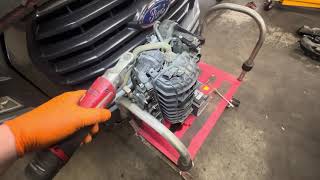
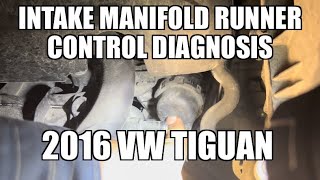
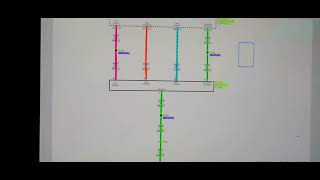
Shop the Parts Behind P2019
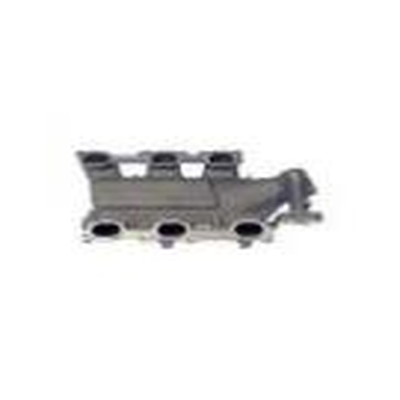
Below are the parts most often responsible for code P2019, ranked by how frequently each one is the actual culprit (per the diagnosis above). Tap any to see what we have for your vehicle.

The information in this article is provided for general reference and educational purposes only. Vehicle specifications, procedures, and part compatibility can vary by production date, trim level, and region. Always consult your vehicle's factory service manual and verify part numbers before purchasing or performing repairs. Safety-critical components such as airbags, seat belts, and braking systems should be installed by a qualified professional.
- 🧭 Diagnostic Flowchart
- 🎬 Helpful Videos
- 🛍️ Shop This Part
- What Does P2019 Mean?
- Can I Drive With P2019?
- Common Causes
- Symptoms
- Common Fixes & Costs
- DIY vs Professional
- Used vs. New Parts: Buying Guide
- What Happens If You Wait — Timeline
- Cost of Not Fixing It
- Diagnosis Steps
- When This Code Triggers (Freeze-Frame Conditions)
- Related Codes
- Climate & Environmental Factors
- How to Talk to a Mechanic About This Code
- Where to Take It: Dealer vs Independent vs Chain
- When to Walk Away From the Repair
- What Scan Tool You Need for This Code
- How to Clear the Code After You Fix It
- Will This Fail Emissions / State Inspection?
- Most Commonly Affected Vehicles
- Manufacturer-Specific Notes
- Real Owner Stories
- 2017 Ford F-150 5.0L at 143K miles
- 2013 VW GTI (MK6) at 67K miles
- Mercedes-Benz E350 (M272 V6) with unknown mileage
- How to Prevent This Code From Triggering
- Frequently Asked Questions
- What is Bank 2?
- Can I fix P2019 myself?
- What happens if I ignore the P2019 code?
- How much does it cost to fix P2019?
- Will a fuel additive or 'Italian tune-up' fix carbon buildup?
- What is a common misdiagnosis for P2019?
- Can I just clean the IMRC position sensor?
- Can a P2019 code clear itself?
- Key Takeaways
- 🎟️ Get 5% Off