

OBD-II Code P2023: Intake Runner Signal Problem (Bank 2)
What P2023 means, why it triggers, and how to fix it
- Code P2023 indicates the engine computer is receiving an erratic or dropping voltage signal from the Bank 2 intake manifold runner position sensor.
- Inspect the wiring harness and plastic actuator linkages first, as broken clips or chafed wires cause over 50% of P2023 faults.
- Driving with an active P2023 code drops fuel economy by 5-15% and causes noticeable engine hesitation during acceleration.
- Perform a live-data 'wiggle test' on the sensor connector before spending $500+ on a new intake manifold or actuator.
- Fix this issue within 1 to 4 months to prevent unburnt fuel from destroying your catalytic converter, a repair costing upwards of $1,500.
What Does P2023 Mean?
Your car's Powertrain Control Module (PCM) is receiving an erratic or dropping signal from the position sensor monitoring the intake manifold runners on engine bank 2. These runners are flaps inside the air intake that open and close to optimize airflow for power and efficiency. When the computer receives a choppy signal, it loses track of the flaps' position, disrupting the air-fuel ratio and causing immediate performance problems.
Technical definition: Intake Manifold Runner Position Sensor/Switch Circuit Intermittent Bank 2. The PCM detects an intermittent open circuit, loss of continuity, or electrical irregularity in the position sensor's circuit for the cylinder bank opposite cylinder #1.
Can I Drive With P2023?
Yes, But With Caution. You can drive for short distances, but prolonged driving is not recommended. An intermittent signal causes an incorrect air-fuel mixture, leading to poor performance, reduced fuel economy, and engine hesitation. Over time, this creates severe carbon buildup and destroys the catalytic converter from unburnt fuel, a repair costing between $800 and $2,500. Diagnose the issue within 30 days to avoid catastrophic exhaust system damage.
Common Causes
- Wiring or Connector Problems (Very Common) — The wiring harness to the position sensor degrades from engine heat and vibration. Wires become brittle, chafed, or melted, while connector pins corrode or loosen, causing a jumpy signal.
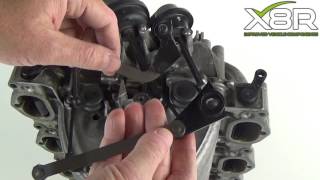
- Broken Plastic Linkage or Actuator Arms (Very Common) — Modern intake manifolds use plastic linkage and arms to connect the actuator motor to the runner flaps. These parts become brittle from heat cycles and snap, disconnecting the flaps from the actuator and sending an unexpected position signal to the PCM.
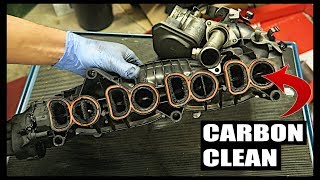
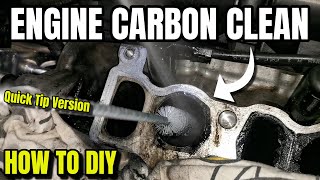
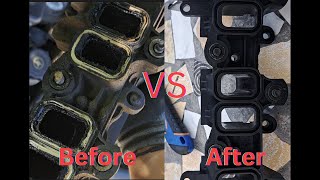
- Carbon Buildup on Runner Flaps (Common) — On direct-injection engines, sticky carbon deposits accumulate on the runner flaps. This gunk causes the flaps to bind or move slowly. The sensor reports this erratic movement, which the PCM interprets as an intermittent signal fault. 🎬 Watch: Step-by-step guide to cleaning carbon buildup from intake runners.
- Faulty Intake Manifold Runner Position Sensor (Common) — The sensor contains moving parts that wear out over time. Internal failure causes it to send incorrect or dropping voltage signals back to the PCM.
- Failing Intake Manifold Runner Control (IMRC) Actuator (Less Common) — The electric motor moving the runner flaps fails internally. If the actuator stutters or binds, the sensor reports a position out of sync with the PCM's command.
- Vacuum Leaks (Less Common) — In vacuum-operated systems, a cracked or disconnected vacuum line prevents the actuator from moving the flaps smoothly, resulting in erratic position feedback.
- Faulty Powertrain Control Module (PCM) (Rare) — The vehicle's main computer suffers an internal driver fault or software glitch. Rule out all mechanical and wiring issues before replacing the PCM.
Symptoms
- Check Engine Light is On — A steady Check Engine Light (MIL) illuminates on the dashboard. It flashes briefly during the intermittent fault.
- Loss of Power or Sluggishness — The vehicle feels sluggish or unresponsive for a few seconds, especially during acceleration when the runners actuate.
- Rough or Unstable Idle — The engine idles unevenly, causing the RPM needle to bounce. This is highly noticeable on cold starts.
- Poor Fuel Economy — Inefficient engine operation decreases average MPG, requiring more frequent fill-ups.
- Hesitation or Throttle Lag — A noticeable delay occurs between pressing the gas pedal and the engine responding.
Diagnostic Flowchart
Tap your situation to follow the diagnostic path that matches what you're seeing on this code.
Common Fixes & Costs
- Repairing Damaged Wiring or Cleaning Connectors — Parts: $10-$30, Labor: $100-$200, ~1.5 hr book time (Intermediate)
- Replacing the Intake Manifold Runner Control Actuator — Parts: $150-$500, Labor: $200-$400, ~3 hr book time (Intermediate)
- Replacing the Intake Manifold Runner Position Sensor — Parts: $75-$250, Labor: $100-$300, ~2 hr book time (Intermediate)
- Intake Manifold Cleaning (Professional Carbon Removal) — Parts: $20-$50, Labor: $300-$700, ~5.5 hr book time (Professional)
- Replacing the Entire Intake Manifold Assembly — Parts: $450-$1,500, Labor: $350-$700, ~4.5 hr book time (Professional)
Used vs. New Parts: Buying Guide
When a used part is worth it: For a complete intake manifold assembly, a used part from a verified low-mileage (under 80k miles) donor vehicle offers significant savings.
Donor-vehicle mileage cap: roughly under 80000 miles for the part to have meaningful remaining life.
Donor quality checklist:
- Verify the donor vehicle's VIN to check for accident history and ensure it wasn't scrapped for engine or emissions failure.
- Match the part number exactly. Superseded part numbers may not have different wiring or vacuum connections.
- Avoid parts from regions with heavy road salt usage (Rust Belt) as corrosion affects electronic components and connectors.
Decision logic:
- If The individual sensor or actuator is available new for under $250 → Buy new. The savings from a used part are not worth the risk and lack of warranty.
- If The vehicle has over 150,000 miles and the required fix is a complete intake manifold assembly → A used part is a reasonable choice to save money, but expect a shorter remaining lifespan.
- If The part has a known high-failure rate due to wear (e.g., plastic linkages on Ford/Mercedes) → Strongly favor a new OEM or high-quality aftermarket part, as a used part fails soon after installation.
Warranty tradeoff: Used parts from salvage yards typically come with a 30-90 day warranty on the part only (no labor). New aftermarket parts usually offer a 1-year to limited lifetime warranty. New OEM parts carry a 1-2 year warranty.
Worst-case if a used part fails: $800-$1500 if a used intake manifold fails after the warranty period, requiring a second replacement part plus 3-5 hours of repeat labor.
What Happens If You Wait — Timeline
- 0-1 month: Check Engine Light is on. You notice a very slight rough idle on cold starts or a brief hesitation when accelerating, but it's not consistent. (MPG impact: 0-5%% · Added cost: $0-$40 in wasted fuel)
- 1-4 months: Symptoms become consistent. The rough idle is noticeable even when warm, and there's a clear loss of power at certain RPMs. The engine runs with a consistently incorrect air-fuel mixture, causing excess fuel to enter the exhaust. (MPG impact: 5-10%% · Added cost: $40-$150 in wasted fuel)
- 4-8 months: The rich fuel mixture overheats the catalytic converter. You smell rotten eggs from the exhaust after a long drive. The catalyst substrate melts and clogs, causing significant exhaust backpressure. (MPG impact: 10-20%% · Added cost: $1,200-$2,800 (catalytic converter replacement is now required))
- 8+ months: Catastrophic failure is imminent. The catalytic converter becomes completely blocked, causing the engine to stall or not start. Alternatively, a broken piece of the plastic runner mechanism inside the manifold falls into a cylinder, causing severe engine damage. (MPG impact: 20-35%+% · Added cost: $3,000-$8,000+ (cost of catalytic converter plus potential for major engine repair))
Cost of Not Fixing It
- 0-1 month: Noticeable drop in fuel economy (5-15%), rough idle, and poor acceleration. (Added cost: $20-$60 in wasted fuel.)
- 1-6 months: Incorrect air-fuel ratios force unburnt fuel into the exhaust, overheating and destroying the catalytic converter. (Added cost: $1200-$2800 for catalytic converter replacement.)
- 6+ months: Severe carbon buildup causes misfires. Broken runner mechanism pieces enter cylinders, causing catastrophic engine failure. (Added cost: $3000-$8000+ for engine rebuild or replacement.)
Diagnosis Steps
- Read the Codes and Freeze Frame Data
Use an OBD-II scanner to confirm P2023. Check for related codes (P2004-P2007, P2021, P2022) and review freeze frame data to identify engine conditions when the fault occurred.
Tools: OBD-II Scanner (Beginner) - Visually Inspect the System
Inspect the wiring harness and connector at the Bank 2 IMRC position sensor. Look for chafed wires, corroded pins, and broken plastic actuator linkages.
Tools: Flashlight, Inspection Mirror (Beginner) - Monitor Live Sensor Data and Perform a 'Wiggle Test'
View live data from the Bank 2 runner position sensor (IMRCS2) using an advanced scanner. Carefully wiggle the wiring harness and connector. If the voltage reading jumps erratically or drops to zero, repair the loose connection or broken wire.
Tools: Advanced OBD-II Scanner (Intermediate) - Command the Actuator with a Scan Tool
Use a bi-directional scanner to command the Bank 2 IMRC actuator open and closed. Visually confirm the linkage moves smoothly. Erratic or zero movement points to a bad actuator or circuit.
Tools: Bi-Directional Scan Tool (Intermediate) - Check for Sticking Runner Flaps
Access the actuator linkage and move it by hand. It must move smoothly without binding. Binding confirms severe carbon buildup or internal manifold failure.
Tools: Basic Hand Tools (Advanced) - Test the Sensor Circuit with a Multimeter
Disconnect the sensor. With key on, engine off, verify a 5-volt reference signal and ground from the PCM using a multimeter.
Tools: Digital Multimeter (Intermediate) - Advanced Test: Verify Sensor Voltage Sweep
Connect a multimeter to the sensor's signal wire. Manually move the runner linkage and watch the voltage. A functional sensor shows a smooth sweep between 0.5V and 4.5V. Drops to 0V indicate sensor failure.
Tools: Digital Multimeter (Advanced) - Advanced Test: Measure Sensor Resistance
With the key off, measure resistance across the disconnected sensor terminals. Compare to factory specs (e.g., Honda requires >9.5 kΩ). Infinite or near-zero readings confirm failure.
Tools: Digital Multimeter with Ohms function (Advanced) - Pro Tip: Use a Digital Oscilloscope for Definitive Diagnosis
Connect a lab scope to the sensor signal wire. A faulty sensor or wire shows sharp dropouts or noise on the waveform as the flaps move, catching glitches a multimeter misses.
Tools: Automotive Oscilloscope (Professional) - Pro Tip: Perform an Actuator Duty Cycle Test
Monitor the PCM's command signal to the actuator alongside the sensor's feedback signal. This proves whether the actuator fails to respond to the PCM, isolating the actuator from the sensor.
Tools: Automotive Oscilloscope (Professional)
When This Code Triggers (Freeze-Frame Conditions)
- Engine Coolant Temp: 180-205°F (Engine at full operating temperature.)
- RPM: 1500-3000 RPM (During light acceleration or steady cruise when IMRC is commanded to move.)
- Engine Load: 30-60% (Moderate engine load, not idle and not full throttle.)
- Vehicle Speed: 35-60 mph (Steady state city or highway driving.)
Related Codes
- P2022 — Indicates consistently high circuit voltage (short to power). P2023 is intermittent. P2022 is a constant short; P2023 is a loose wire or sticking mechanical part.
- P2021 — Indicates consistently low circuit voltage (short to ground). P2021 is a permanently grounded wire; P2023 is a broken wire or internal sensor failure that comes and goes.
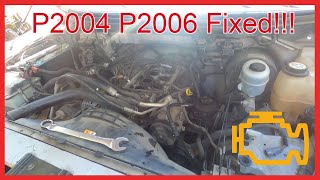
- P2006 / P2007 — Indicates the runner control is stuck closed. P2023 alongside these codes proves the flaps are physically stuck (e.g., carbon buildup), causing the sensor to report erratic electrical signals as the actuator struggles.
- P2004 / P2005 — Indicates the runner control is stuck open. Similar to P2006/P2007, this points to a mechanical blockage causing erratic electrical feedback.
Climate & Environmental Factors
- Cold Weather: Low temperatures cause plastic IMRC components to undergo a 'glass transition,' becoming hard and brittle. Actuator linkages and clips snap under standard operating stress.
- High Humidity: Moisture intrusion corrodes electrical connectors, causing intermittent signals. On turbocharged engines, condensation pools in the intake, causing misfires that mimic IMRC faults.
How to Talk to a Mechanic About This Code
Say this: "I have a P2023 code and authorize one hour of diagnostic time. Please focus on testing the IMRC sensor, actuator, and wiring for Bank 2. I need to know if it's an electrical short, mechanical binding, or a failed component."
This prevents the shop from jumping to the most expensive conclusion (replacing the intake manifold). Specifying initial steps guides them toward a logical process and controls cost.
Avoid saying:
- 'Just fix whatever's wrong'
- 'My check engine light is on, can you look at it?'
- 'I think I need a new intake manifold.'
Questions to ask before authorizing the repair:
- Did you perform a 'wiggle test' on the harness and see the sensor voltage drop out?
- Did the actuator move smoothly when commanded with a scan tool?
- Can you show me the broken part or carbon buildup?
- Is this part available separately, or does it require a full assembly?
- What is your warranty on this specific repair?
Where to Take It: Dealer vs Independent vs Chain
- Dealer:
Best for: Vehicles under warranty or extended warranty (common for VW/Audi manifolds)., Complex issues on Mercedes/BMW requiring specialized knowledge., When a TSB points to a specific software update.
Downsides: Highest labor rates., Defaults to replacing entire assemblies rather than smaller, failed components. (Typical cost: +60% vs. baseline) - Independent Shop:
Best fit. An experienced independent mechanic diagnoses electrical vs. mechanical faults efficiently and attempts component-level repairs before suggesting a new manifold.
Best for: Out-of-warranty vehicles with common failures (wiring, carbon buildup)., Domestic or Japanese brands., Getting a second opinion on a dealer quote.
Downsides: Quality varies greatly. Look for ASE certifications and positive diagnostic reviews., Lacks access to the very latest manufacturer software updates. (Typical cost: +0% vs. baseline) - Chain Shop:
Avoid for initial diagnosis. Chain shops lack advanced diagnostic tools for intermittent electrical faults and frequently replace parts unnecessarily.
Best for: Reading codes for free., Simple part replacements if self-diagnosed.
Downsides: Technician skill is highly variable., Lacks advanced diagnostic tools for intermittent electrical faults., High pressure to upsell unrelated services. (Typical cost: -10% vs. baseline)
When to Walk Away From the Repair
If the estimated repair cost exceeds 40-50% of your car's private-party value, consider selling or trading it in.
- Car worth $4000, fix is $2000: Borderline. The repair is 50% of the car's value. Get a second opinion before proceeding. If other major repairs are also needed, walk away.
- Car worth $12000, fix is $1800: Fix it. The repair is only 15% of the car's value and well below the threshold.
- Car worth $2500, fix is $1500: Walk away. The repair is 60% of the car's value. You face another expensive repair soon on a vehicle of this value.
What Scan Tool You Need for This Code
Minimum: A scanner that reads live data streams, specifically the voltage from the IMRC position sensor.
A basic $20 reader only shows 'P2023'. It cannot display live sensor voltage, which is essential for a 'wiggle test'. Without live data, you are guessing what to replace.
Budget: BlueDriver Pro (~$119) — Connects to your smartphone and provides live data graphing for the IMRC sensor. Watch voltage in real-time while wiggling wires to catch intermittent dropouts.
Mid-range: Foxwell NT510 Elite (~$199) — Offers bidirectional control to command the IMRC actuator open and closed directly from the tool. This is the definitive test for a sticking actuator motor.
Professional: Autel MaxiCOM MK808BT / MK900BT (~$500-1200) — Provides full bidirectional control and graphs multiple data streams simultaneously (commanded vs. actual position). Catches fast intermittent glitches cheaper scanners miss.
How to Clear the Code After You Fix It
- Use an OBD-II scan tool to clear the fault codes.
- Perform a complete OBD-II drive cycle to allow readiness monitors to run.
- Verify the code does not return after the drive cycle.
Drive cycle (~30 minutes): Perform from a cold start (vehicle sat overnight). Start engine and idle for 2-3 minutes. Drive at a steady speed of 55-60 mph for 5-10 minutes. Perform several moderate accelerations and decelerations. Allow the vehicle to cool down completely and repeat if monitors are not set.
Readiness monitors affected: Catalyst Monitor, Oxygen (O2) Sensor Monitor, Comprehensive Component Monitor
Before emissions retest: drive at least 100 miles to fully set monitors.
Watch out for:
- Simply clearing the code with a scanner does not fix the underlying mechanical or electrical problem, and the code returns immediately.
- Disconnecting the battery clears the code but resets all OBD-II readiness monitors, causing an immediate emissions test failure.
Will This Fail Emissions / State Inspection?
Yes — this code typically fails an OBD-II emissions inspection.
- California: An active Check Engine Light triggers an automatic failure. After repairs, complete a drive cycle to set readiness monitors before re-testing.
- New York: The inspection includes an OBD-II scan. An illuminated MIL for P2023 fails the emissions portion immediately.
- Texas: In emissions-testing counties, an active P2023 code and illuminated Check Engine Light guarantees failure.
Most Commonly Affected Vehicles
- Audi A4, A5, Q5, Q3 (2009-2017) — Common on 2.0T TSI engines. The issue is often a failed position sensor or carbon buildup. VW/Audi extended the warranty on some intake manifolds to 10 years/120,000 miles for related code P2015.
- Volkswagen GTI, Jetta, Passat, Tiguan (2008-2016) — The 2.0T TSI engine's intake manifold has a plastic actuator arm that wears out. Aftermarket metal repair brackets are available as a low-cost fix. An extended warranty for the intake manifold is available on many models.
- Dodge Charger, Magnum, Ram 1500 (2006-2014) — V6 and V8 models experience this code due to faulty actuators. The factory wiring harness to the actuator is too short, causing stress and failure; TSB 18-003-10 addresses this.
- Mercedes-Benz C-Class (W203/W204), E-Class (W211), ML-Class (W164) (2006-2012) — The plastic lever for the tumble flaps breaks inside the complex intake manifold on M272/M273 V6/V8 engines. This almost always requires a full intake manifold replacement.
- Ford F-150, Mustang, Explorer (2011-2017) — On 3.7L V6 and 5.0L V8 engines, the plastic clips on the IMRC actuator linkage are a known failure point. Often the entire manifold assembly is replaced as individual parts are not sold separately.
- Hyundai Santa Fe, Sonata, Genesis Coupe (2009-2015) — Often seen on V6 models where carbon buildup or a failing actuator causes intermittent runner control issues. The sensor is integrated with the actuator.
- BMW 3-Series (E90), 5-Series (E60) (2006-2013) — Associated with the DISA (Differentiated Intake System) valve. A failing or rattling DISA flap causes intermittent signal codes and requires replacing the DISA valve assembly.
- Subaru Legacy, Outback, Forester (2013-2019) — On 2.5L engines, Tumble Generator Valve (TGV) issues present similar symptoms. An intermittent sensor signal logs P2023, requiring TGV motor or sensor replacement.
Manufacturer-Specific Notes
- Mercedes-Benz: On M272/M273 engines, the plastic tumble flap lever breaks. Aftermarket metal repair kits exist, but internal flap wear usually dictates full manifold replacement.
- Ford / Dodge / Chrysler: The position sensor is integrated into the IMRC actuator assembly, requiring full unit replacement. Dodge TSB 18-003-10 addresses a short wiring harness causing premature failure.
- Volkswagen / Audi: Carbon buildup frequently jams runner flaps on TSI/FSI engines. VW/Audi extended the intake manifold warranty (10 years/120,000 miles) for related code P2015 on many 2.0T models.
- Nissan: On e-Power systems, P2023 anecdotally links to EVAP Leak Detection Pump (LDP) issues. Use a scanner with manufacturer-specific definitions to avoid misdiagnosis.
Real Owner Stories
2013 Ram 1500 5.7L at 115K miles
Check Engine Light came on with P2023. Truck had a slight hesitation and rough idle, especially when cold. Fuel economy dropped by about 2 MPG.
What they tried:
- Initially ignored the code, but the rough idle became worse.
- A mechanic suggested replacing the entire intake manifold for $1,200.
- Owner researched online forums and found Dodge TSB 18-003-10, which describes a short wiring harness to the IMRC actuator.
Outcome: Owner purchased an aftermarket Dorman actuator (part # 911-933) which came with a longer wiring pigtail. He replaced the actuator himself in about 2 hours. The total cost was $180 for the part. The code cleared and did not return.
Lesson: Always check for Technical Service Bulletins (TSBs) related to your specific code and vehicle. The problem is often a known design flaw with a simpler, cheaper fix than replacing a major component.
2010 Audi A4 2.0T at 85K miles
Car suddenly went into limp mode with the EPC light and Check Engine Light on. Codes P2023 and P2015 were present. The car had a very rough idle and no power.
What they tried:
- Cleared codes, but they returned immediately on startup.
- Replaced the Bank 2 position sensor, but the problem persisted.
- Took the car to an independent VW/Audi specialist.
Outcome: The specialist diagnosed severe carbon buildup on the intake runner flaps, causing them to stick. The entire intake manifold was replaced with a revised OEM part (06J133201BH). The owner also found out their vehicle was covered under an extended warranty (10 years/120,000 miles) for code P2015 and was able to get the repair reimbursed by an Audi dealer.
Lesson: On VW/Audi 2.0T engines, IMRC codes are very often caused by carbon buildup or a failed manifold, not just a bad sensor. Always check for extended warranties related to this common issue before paying for repairs.
2008 Mercedes E350 (M272) at 130K miles
Car had a noticeable lack of power when accelerating but no Check Engine Light initially. Eventually, code P2006 (Intake Runner Control Stuck Closed) appeared.
What they tried:
- A shop quoted $2,500 to replace the intake manifold.
- Owner purchased an aftermarket metal lever repair kit online for $50 to fix the known broken plastic linkage.
- After installing the repair kit, the P2006 code was gone, but a new P2023 code appeared, and the car ran worse.
Outcome: The owner discovered that while trying to fix the external linkage, the internal flaps, which were already brittle and gummed up with carbon, had been damaged. The strain of the new metal lever on the old, sticky flaps caused an intermittent signal. The entire intake manifold had to be replaced anyway.
Lesson: On high-mileage Mercedes M272/M273 engines, the external linkage repair kits are often a temporary fix. The root cause is typically internal wear and carbon buildup, and replacing the entire manifold is the only long-term solution to avoid repeat failures and potential engine damage from broken flaps.
How to Prevent This Code From Triggering
- Use Top Tier certified gasoline (Every fill-up) — Top Tier gas contains a higher concentration of detergents that help clean fuel injectors and, in port-injected engines, the back of intake valves. This reduces the formation of carbon deposits that cause runner flaps to stick.
- Perform periodic intake system cleaning (Every 30,000-50,000 miles) — On direct-injection engines, fuel doesn't wash over the intake valves, leading to carbon buildup. A professional chemical cleaning or walnut shell blasting service removes these deposits from the intake ports and runner flaps, preventing them from sticking or binding.
- Service the Positive Crankcase Ventilation (PCV) system (Every 60,000-80,000 miles) — A failing PCV system allows excessive oil vapor and combustion byproducts into the intake manifold. This oil vapor bakes onto the hot surfaces of the intake runners and valves, creating the sticky carbon deposits that cause the flaps to fail. Replacing the PCV valve is an inexpensive way to reduce this contamination.
- Install protective heat shielding on wiring (Once, during other repairs) — The IMRC sensor and actuator wiring are often routed near hot engine components. Over time, heat degrades the plastic insulation, leading to brittle wires and intermittent shorts. Adding a high-temperature heat sleeve or wrap over the harness prevents this degradation and extends the life of the electrical components.
Frequently Asked Questions
What is 'Bank 2'?
Bank 2 is the engine side opposite the #1 cylinder. On V6 or V8 engines, it is one of the two cylinder heads. Inline engines only have Bank 1, so they cannot trigger P2023.
What is the most common misdiagnosis for P2023?
Mechanics often replace the position sensor without testing. Because the code is 'intermittent', the root cause is usually a loose wire or sticking runner flap. Always perform a wiggle test and check for mechanical binding first.
Can I just clean the carbon out to fix it?
Yes, if carbon buildup prevents the flaps from moving. A professional intake cleaning service like walnut blasting resolves this. However, if the linkage or sensor is already damaged, cleaning will not fix the broken parts.
Can P2023 cause a misfire?
Yes. Incorrect runner positions disrupt cylinder airflow, creating an improper air/fuel mixture. This lean or rich condition causes engine misfires, triggering codes like P0300-P0308.
Can a bad gas cap cause a P2023 code?
No. A loose gas cap triggers evaporative emissions (EVAP) codes like P0455 or P0457, not P2023.
Will I pass an emissions test with a P2023 code?
No. An active P2023 code illuminates the Check Engine Light, causing an automatic emissions test failure. The IMRC system is critical for emission controls.
Why is replacing the whole intake manifold so expensive?
The manifold itself costs $500+, and replacement takes 3-6 hours of labor. The job requires disconnecting fuel lines, injectors, and sensors. Modern designs integrate sensors and actuators into the manifold, forcing full replacement for a single failed component.
Key Takeaways
- Code P2023 indicates the engine computer is receiving an erratic or dropping voltage signal from the Bank 2 intake manifold runner position sensor.
- Inspect the wiring harness and plastic actuator linkages first, as broken clips or chafed wires cause over 50% of P2023 faults.
- Driving with an active P2023 code drops fuel economy by 5-15% and causes noticeable engine hesitation during acceleration.
- Perform a live-data 'wiggle test' on the sensor connector before spending $500+ on a new intake manifold or actuator.
- Fix this issue within 1 to 4 months to prevent unburnt fuel from destroying your catalytic converter, a repair costing upwards of $1,500.
Helpful Videos

Shop the Parts Behind P2023
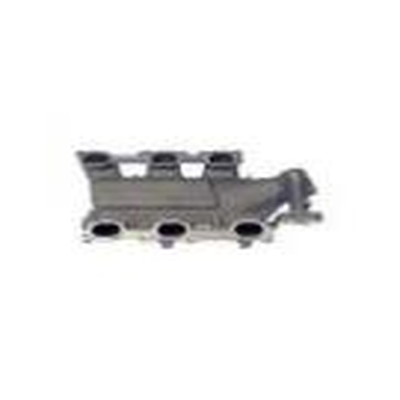
Below are the parts most often responsible for code P2023, ranked by how frequently each one is the actual culprit (per the diagnosis above). Tap any to see what we have for your vehicle.

The information in this article is provided for general reference and educational purposes only. Vehicle specifications, procedures, and part compatibility can vary by production date, trim level, and region. Always consult your vehicle's factory service manual and verify part numbers before purchasing or performing repairs. Safety-critical components such as airbags, seat belts, and braking systems should be installed by a qualified professional.
- 🧭 Diagnostic Flowchart
- 🎬 Helpful Videos
- 🛍️ Shop This Part
- What Does P2023 Mean?
- Can I Drive With P2023?
- Common Causes
- Symptoms
- Common Fixes & Costs
- Used vs. New Parts: Buying Guide
- What Happens If You Wait — Timeline
- Cost of Not Fixing It
- Diagnosis Steps
- When This Code Triggers (Freeze-Frame Conditions)
- Related Codes
- Climate & Environmental Factors
- How to Talk to a Mechanic About This Code
- Where to Take It: Dealer vs Independent vs Chain
- When to Walk Away From the Repair
- What Scan Tool You Need for This Code
- How to Clear the Code After You Fix It
- Will This Fail Emissions / State Inspection?
- Most Commonly Affected Vehicles
- Manufacturer-Specific Notes
- Real Owner Stories
- 2013 Ram 1500 5.7L at 115K miles
- 2010 Audi A4 2.0T at 85K miles
- 2008 Mercedes E350 (M272) at 130K miles
- How to Prevent This Code From Triggering
- Frequently Asked Questions
- What is 'Bank 2'?
- What is the most common misdiagnosis for P2023?
- Can I just clean the carbon out to fix it?
- Can P2023 cause a misfire?
- Can a bad gas cap cause a P2023 code?
- Will I pass an emissions test with a P2023 code?
- Why is replacing the whole intake manifold so expensive?
- Key Takeaways
- 🎟️ Get 5% Off