

OBD-II Code P2043: Reductant Temperature Sensor Circuit Range/Performance
What P2043 means, why it triggers, and how to fix it
- P2043 indicates the Powertrain Control Module (PCM) detects an illogical reading from the DEF temperature sensor, a critical component that prevents fluid from freezing at 12°F (-11°C).
- The most common fix is replacing the entire reductant heater and sender assembly inside the DEF tank, costing between $600 and $1,500 for parts and labor.
- Ignoring P2043 triggers a mileage countdown that eventually forces the vehicle into a 5-50 mph "limp mode" until the system is repaired and reset.
- Always check for Technical Service Bulletins (TSBs) before buying parts; Ford 6.7L diesels frequently resolve this code with a simple $150-$250 PCM software update.
What Does P2043 Mean?
P2043 means your vehicle's Powertrain Control Module (PCM) is receiving an illogical or erratic signal from the temperature sensor in your Diesel Exhaust Fluid (DEF) tank. This sensor is crucial because the DEF system must keep the fluid from freezing in cold weather (12°F / -11°C). If the computer cannot trust the temperature reading, it disables the DEF system to prevent damage, leading to increased emissions and eventual power reduction.
Technical definition: The official SAE/OBD-II definition is "Reductant Temperature Sensor 'A' Circuit Range/Performance". This indicates the PCM detected the voltage signal from the reductant temperature sensor is outside the expected range or performing erratically. 🎬 Watch: A quick overview of diagnosing the P2043 circuit error. For example, Ford triggers P2043 if there is a difference of more than 20°C (68°F) between the reductant temperature sensor and the ambient/engine coolant temperature after a 6-hour cold soak.
Can I Drive With P2043?
Yes, But With Caution. You can drive for a short time, but your vehicle will eventually enter a speed-limited "limp mode" to force a repair. Ignoring the code is risky; continued driving causes expensive collateral damage. An inoperative DEF heater leads to a frozen and damaged DEF pump ($500+), while incorrect DEF injection timing harms the Selective Catalytic Reduction (SCR) catalyst ($2000+). Get it diagnosed immediately to avoid being stranded.
Common Causes
- Failed Reductant Heater and Sender Assembly (Very Common) — On most modern diesel trucks, the temperature sensor is integrated into the DEF heater and level sender assembly inside the tank. This entire unit is the most common point of failure due to internal sensor degradation from constant heating and cooling cycles.
- PCM Software Calibration Issue (Common) — The sensor and wiring are often fine, but the PCM's software calibration is too sensitive. Manufacturers like Ford have issued Technical Service Bulletins (TSBs) to resolve this code with a simple PCM reprogram.
- Wiring Harness or Connector Issues (Common) — Wiring leading to the DEF tank is exposed to road salt, moisture, and debris. This causes corrosion (white or green crusty buildup), chafed insulation, or broken ground wires, leading to an incorrect voltage signal.
- Contaminated or Old Diesel Exhaust Fluid (DEF) (Less Common) — Using poor-quality or old DEF leads to crystallization. This fouls the sensor, insulating it and preventing accurate temperature readings.
- Failed Powertrain Control Module (PCM) (Rare) — In rare cases, the internal circuits of the PCM that process the signal from the temperature sensor fail. This is only considered after ruling out the sensor, wiring, and software updates.
Symptoms
- DEF or Emissions System Warning Message — Your dashboard displays messages like "DEF System Fault," "SCR Fault," or "Exhaust Fluid System Fault" alongside the Check Engine Light.
- Reduced Engine Power (Limp Mode) — After a warning countdown, the PCM limits the vehicle's speed (e.g., to 50 mph, then 5 mph) until the fault is repaired.
- Increased Fuel Consumption — The engine runs less efficiently as it compensates for the emissions system fault, causing a 5-10% drop in fuel economy.
- Failed Emissions Test — With the SCR system disabled, your vehicle produces excessive NOx emissions and automatically fails an OBD-II emissions inspection.
Diagnostic Flowchart
Tap your situation to follow the diagnostic path that matches what you're seeing on this code.
Common Fixes & Costs
- Replace Reductant Heater and Sender Assembly — Parts: $300-$900, Labor: $250-$500, ~2.5 hr book time (Intermediate)
- Reprogram Powertrain Control Module (PCM) — Parts: $0, Labor: $150-$250, ~1 hr book time (Professional)
- Repair Damaged Wiring or Clean Connector — Parts: $10-$50, Labor: $150-$300, ~1.5 hr book time (Intermediate)
- Replace Powertrain Control Module (PCM) — Parts: $600-$900, Labor: $200-$300, ~2 hr book time (Professional)
Used vs. New Parts: Buying Guide
When a used part is worth it: Given the high failure rate from thermal stress and DEF corrosion, buying a used Reductant Heater and Sender Assembly is never recommended. It only makes sense as a last resort for a high-mileage vehicle on a strict budget.
Donor-vehicle mileage cap: roughly under 60000 miles for the part to have meaningful remaining life.
Donor quality checklist:
- Verify the donor vehicle was not scrapped for emissions-related failures.
- Avoid parts from the 'Salt Belt' or coastal areas due to the high risk of connector corrosion.
- Match the OEM part number exactly. Superseded or aftermarket parts may have compatibility issues.
- Visually inspect the electrical connector for any signs of white, crusty DEF residue or green corrosion.
Decision logic:
- If Vehicle is under 120K miles → Buy a new OEM part. Check for extended warranty coverage first, as the repair is often free.
- If Part is under $400 new (aftermarket) → Buy a new aftermarket part from a reputable brand (e.g., Dorman, Spectra Premium). Savings on a used part do not justify the risk.
- If Vehicle is over 150K miles AND budget is the primary concern → A used part from a low-mileage, non-rust-belt donor is a high-risk option with a short lifespan.
Warranty tradeoff: Used parts typically have a 30-90 day warranty at best. New aftermarket parts often come with a 1-year to limited lifetime warranty. New OEM parts carry a 1-2 year warranty.
Worst-case if a used part fails: $400-$800 if a used or cheap aftermarket part fails prematurely, requiring repeat labor costs plus the cost of another replacement part.
What Happens If You Wait — Timeline
- 0-50 miles: Check Engine Light and DEF system warning light illuminates. No immediate performance issues are felt. (MPG impact: 0-5%% · Added cost: $0)
- 50-200 miles: A mileage-based countdown begins, warning of impending power reduction. In cold weather, DEF freezes, risking pump damage. (MPG impact: 5-10%% · Added cost: $0 - $50 in wasted fuel. Potential for $500+ if the DEF pump is damaged by freezing.)
- After countdown expires: Vehicle enters severe limp mode. Speed is limited to 50 mph, then 5 mph, making the vehicle unusable. (MPG impact: 10%+% · Added cost: $500 - $1200 (Cost of a tow, plus potential replacement of a damaged DEF pump or tank).)
- 3+ months of continued (limped) operation: Operating with a disabled SCR system causes soot and unburnt DEF to saturate and destroy the SCR catalyst brick. (MPG impact: 10-15%% · Added cost: $2000 - $3000+ (Cost to replace the SCR catalyst assembly, which was damaged as a direct result of ignoring the initial P2043 fault).)
Cost of Not Fixing It
- Immediate (0-1 month): Annoying check engine light and DEF system warnings. In cold weather, DEF fluid freezes, preventing the truck from starting or entering limp mode quickly. (Added cost: $0)
- Short Term (1-3 months): Vehicle enters a speed-limited limp mode (50 mph, then 5 mph) after a mileage countdown. If DEF freezes due to a failed heater, it expands and cracks the DEF tank or pump. (Added cost: $500 - $1200)
- Long Term (3+ months): Consistently incorrect DEF injection causes the SCR catalyst to become saturated with soot or fail completely. This is the most expensive component in the emissions system. (Added cost: $2000 - $3000)
Diagnosis Steps
- Check for Other Codes and TSBs
Read all stored codes. Codes like P205C (Circuit Low) or P205D (Circuit High) point to hard electrical faults. Search for Technical Service Bulletins (TSBs) for your specific vehicle, as a software update is often the primary fix.
Tools: OBD-II Scanner (Beginner) - Perform a "Cold Soak" Rationality Check
After the vehicle sits overnight (6+ hours), compare the Reductant Temperature reading with the Ambient Air Temperature and Engine Coolant Temperature. All three must be within a few degrees. A difference of more than 20°C (68°F) means the sensor failed its plausibility check.
Tools: Advanced OBD-II Scanner (with live data) (Beginner) - Visually Inspect and "Wiggle Test" Wiring
Inspect the main electrical connector on the DEF tank for white/green corrosion or damaged pins. While graphing the reductant temperature on a scan tool, wiggle the wiring harness. Erratic temperature jumps confirm a loose connection or broken wire.
Tools: Flashlight, Advanced OBD-II Scanner (with live data) (Intermediate) - Test Sensor Voltage and Continuity
With the key on, engine off, backprobe the sensor connector. Verify the 5V reference voltage and ground. The signal wire voltage must be between 0.5V and 4.5V. Disconnect the PCM and check for continuity (less than 1 ohm) on the signal and ground wires.
Tools: Digital Multimeter (DVOM), Vehicle-specific wiring diagram (Advanced) - Test Sensor and Heater Resistance
Measure the resistance across the sensor's terminals and compare it to the manufacturer's specification chart (e.g., 10 kΩ at 77°F). Next, measure resistance between the two larger heater element pins; a reading outside 1-5 ohms indicates a failed heater.
Tools: Digital Multimeter (DVOM), Manufacturer's service manual (Advanced) - Command Heater Activation via Scan Tool
Command the reductant heater to turn on. Monitor the reductant temperature on the live data stream. A steady temperature increase confirms the heater and sensor work. No change points to a failed assembly.
Tools: Advanced Bidirectional OBD-II Scanner (Professional) - Test DEF Quality with a Refractometer
If electrical tests pass, test the DEF urea concentration. It must be exactly 32.5%. If the fluid is old or contaminated, drain the tank and refill with fresh fluid.
Tools: DEF Refractometer or Test Strips (Intermediate)
When This Code Triggers (Freeze-Frame Conditions)
- Rationality Check Trigger: After 6+ hour cold soak (The PCM compares the DEF temperature sensor reading against the ambient air and engine coolant temperature sensors before startup.)
- Engine Coolant Temp: 180-210°F (During normal operation, the PCM continuously monitors the sensor for erratic behavior while the engine is fully warmed up.)
- RPM: 1200-2200 (The fault is detected during steady-state cruising or light acceleration.)
- Vehicle Speed: 45-65 mph (Logged during highway driving when the SCR system actively manages emissions.)
Related Codes
- P205C — Indicates signal voltage is below a specific threshold (<0.1V), suggesting a short to ground or open circuit. P2043 is a logic test failure, while P205C is a direct electrical fault.
- P205D — Indicates signal voltage is above a specific threshold (>4.5V), suggesting a short to power.
- P2045 — Indicates the sensor signal is dropping out or fluctuating rapidly, caused by a loose wire, failing sensor, or corroded connector.
- P2002 — A secondary effect. If the SCR system fails due to P2043, it prevents DPF regeneration, leading to this efficiency code.
Climate & Environmental Factors
- Cold Climates: The DEF heater activates frequently to prevent fluid from freezing at 12°F (-11°C), causing severe thermal stress and a high failure rate of the heater/sensor assembly.
- Road Salt / High Humidity: Salt spray and moisture attack the wiring harness and connectors for the DEF tank assembly, leading to shorts and open circuits.
How to Talk to a Mechanic About This Code
Say this: "I have a P2043 code. Please check for TSBs and perform a cold-soak rationality test before recommending a part replacement."
Directs the technician to follow a logical diagnostic path, starting with software and wiring before assuming the expensive heater assembly failed.
Avoid saying:
- 'My check engine light is on, can you look at it?'
- 'My truck says Service DEF System, just fix it.'
- 'I think I need a new DEF heater, can you give me a price?'
Questions to ask before authorizing the repair:
- Did the DEF temperature fail the cold-soak rationality check?
- Did you inspect the wiring harness?
- Is there a TSB for a PCM reflash?
- Does the estimate include a Reductant System Reset?
- What is the warranty on the replacement part and the labor?
Where to Take It: Dealer vs Independent vs Chain
- Dealer:
Best first stop if the vehicle is under warranty or is a Ford/Ram with a known TSB. The repair is often free.
Best for: Vehicles under the federal emissions warranty (8 years/80,000 miles) or a manufacturer-specific extended warranty/recall (e.g., Ford, GM, Ram)., Cases where a known TSB requires a PCM reflash, as they have guaranteed access to the latest software., Complex diagnoses on newer (less than 5 years old) or European diesel vehicles (Mercedes, BMW, Audi).
Downsides: Highest labor rates, often 1.5-2x that of an independent shop., May be quick to replace the entire expensive assembly without thoroughly checking for cheaper fixes like wiring damage. (Typical cost: +50% vs. baseline) - Independent Shop:
Excellent choice for out-of-warranty repairs, provided you choose a diesel emissions specialist with the tools to perform a system reset.
Best for: Out-of-warranty vehicles, especially common domestic trucks (Ford, GM, Ram)., Situations where the cause is likely a straightforward part replacement or wiring repair., Cost-conscious owners.
Downsides: Shop must be a well-equipped diesel specialist; a general auto shop may lack the specific scan tools or experience., May not have access to the very latest manufacturer software for PCM reflashes. (Typical cost: +0% vs. baseline) - Chain Shop:
AVOID. They lack the specific knowledge for TSBs and advanced scan tools required for proper diagnosis and system resets.
Best for: Simple services like oil changes and tires.
Downsides: Technician skill and diagnostic equipment for complex diesel emissions systems are highly variable and often lacking., High pressure to meet sales targets can lead to misdiagnosis and unnecessary upselling. (Typical cost: -10% vs. baseline)
When to Walk Away From the Repair
If the estimated repair cost exceeds 40-50% of the vehicle's private-party value, consider your options.
- Car worth $20000, fix is $1500: Fix it. The repair cost is well below the 50% threshold and restores full function to a valuable vehicle.
- Car worth $8000, fix is $2500: Borderline. The repair is significant relative to the vehicle's value. Get a second opinion and evaluate the truck's overall condition before proceeding.
- Car worth $4000, fix is $2000: Walk away. A 50% investment in an older, lower-value vehicle is risky. Other age-related failures are likely.
What Scan Tool You Need for This Code
Minimum: A scan tool that reads live data for the reductant temperature sensor.
A basic $20 code reader cannot show live temperature data, which is essential for cold soak and wiggle tests.
Budget: BlueDriver Pro or Ancel BD310 (~$100) — Connects to your smartphone to read codes and graph live sensor data.
Mid-range: Foxwell NT604 Elite or Launch CRP129 EVO (~$140) — Offers full system diagnostics and special functions, including the Reductant System Reset.
Professional: Autel MaxiCOM MK808 / Launch X431 CRP919XBT (~$450-800) — Provides full bidirectional control to command the DEF heater on and perform all OEM-level resets.
Rent vs buy: For a one-time P2043 code, using a local auto parts store's free loaner tool to confirm the code is a good first step, but they often lack live data. If you plan to do the diagnosis yourself, buying a budget pick like BlueDriver is a worthwhile investment. If the repair requires a 'DEF System Reset', you will likely need a mid-range or professional tool, or have a shop perform the reset for you after you replace the part.
How to Clear the Code After You Fix It
- Perform the physical repair (e.g., replace the DEF heater assembly).
- Reconnect the battery if it was disconnected.
- Use an advanced OBD-II scan tool to perform a 'Reductant System Reset' or similar function.
- Clear all Diagnostic Trouble Codes (DTCs) with the scan tool.
Drive cycle (~30 minutes): Cold start and idle for 3 minutes. Drive in stop-and-go traffic for 15 minutes. Drive at a steady highway speed (55-60 mph) for 20 minutes. Allow the vehicle to cool down completely. The SCR system monitor must run and pass to clear a permanent code.
Readiness monitors affected: Catalyst Monitor, SCR System Monitor, Oxygen Sensor Monitor
Before emissions retest: drive at least 100 miles to fully set monitors.
Watch out for:
- Clearing the code with a basic scanner does not turn off warning lights; a 'DEF System Reset' is required.
- Not completing the full drive cycle leaves readiness monitors incomplete.
- The code returns if a wiring issue was misdiagnosed as a bad sensor.
Will This Fail Emissions / State Inspection?
Yes — this code typically fails an OBD-II emissions inspection.
- California: An active P2043 code is an automatic failure. CARB requires all emissions-related readiness monitors to be 'Ready'.
- New York: The NY VIP2 inspection includes an OBD-II scan. A check engine light with P2043 results in an immediate failure.
- Texas: In the 17 counties requiring emissions testing, P2043 causes a failure. Readiness monitors must be set after repair.
Most Commonly Affected Vehicles
- Ford F-250/F-350/F-450 Super Duty (2011-2016) — Extremely common issue. Ford issued TSB 18-2190 for this exact problem. Part numbers are BC3Z-5J225-L (pickups) and BC3Z-5J225-M (chassis cabs).
- GMC / Chevrolet Sierra / Silverado 2500HD/3500HD (2011-2016) — Trucks with the LML Duramax frequently experience DEF heater/sensor assembly failure. GM offered special coverage (N192210260) extending the warranty to 10 years/120,000 miles for some 2016 models.
- Mercedes-Benz Sprinter (2010-2016) — The DEF temperature sensor is a frequent failure item. The replacement heater assembly approaches $1000. Wiring harness chafing near the DEF tank is also a known issue.
- Ram 2500/3500 (2013-2018) — Cummins engines suffer from DEF sensor assembly failures. This is often covered under 'Emissions Recall 67A', extending the warranty to 10 years/120,000 miles.
- BMW 328d, X5 xDrive35d, and other diesel models (2009-2018) — BMW SCR systems are highly susceptible to this code, typically pointing to a failure within the DEF tank's sensor assembly or wiring harness integrity.
- Volkswagen / Audi TDI Models (e.g., Jetta, Golf, Passat, Q7) (2009-2015) — TDI engines frequently set this code due to a failed reductant temperature sensor integrated into the DEF tank assembly.
- Chevrolet Cruze Diesel (2014-2018) — Smaller diesel vehicles experience P2043 caused by the same failure of the DEF tank heater/sensor unit.
Manufacturer-Specific Notes
- Ford: Per TSB 18-2190, if P2043 is the ONLY code stored in a 2011-2015 6.7L Power Stroke, the official fix is a PCM reprogram. If P205C or P205D are present, the heater assembly must be replaced.
- General Motors (Chevrolet/GMC): The temperature sensor is part of the 'Reservoir Kit, Emission Reduction Fluid Tank'. GM issued Special Coverage Adjustment N192210260, extending the warranty to 10 years/120,000 miles for certain 2016 HD trucks.
- Ram (Cummins): Check eligibility for 'Emissions Recall 67A'. The 'DEF Supply Module, Pump, & Temperature Sensor Unit' is covered for up to 10 years/120,000 miles, making the repair free at a dealership.
- Mercedes-Benz / BMW: The wiring harness leading to the DEF tank is a known weak point. It chafes against the chassis, leading to intermittent shorts that trigger P2043 before the sensor fails.
Real Owner Stories
2014 Ford F-350 at 45k miles - The TSB Fix
Check Engine Light came on. A scan revealed only code P2043, marked as a 'historic fault'. Clearing the code resulted in it returning the next day.
What they tried:
- Initially cleared the code, but it returned.
- Researched forums and discovered the common failure of the DEF heater/temp sensor assembly and the existence of a relevant Technical Service Bulletin (TSB).
Outcome: Owner learned that for a 2011-2015 Powerstroke with ONLY a P2043 code, Ford TSB 18-2190 directs a PCM reprogram. The repair was a simple software update at the dealer, saving hundreds.
Lesson: Always check for TSBs, especially on Ford trucks. If P2043 appears alone, a PCM reprogram costing $150-$250 is often the only fix needed.
2015 Mercedes-Benz Sprinter - A Wiring Issue
The Check Engine Light was on and the vehicle was running rough. A scan showed P2043 along with other SCR system codes.
What they tried:
- A visual inspection of the DEF system components and wiring was performed.
Outcome: Technician found the wiring harness chafing against the chassis near the DEF tank. Repairing the wiring cleared the code, proving the value of a visual inspection before replacing parts.
Lesson: On vehicles like the Sprinter known for wiring issues, always perform a thorough visual and 'wiggle test' of the harness before condemning the expensive heater/sensor assembly.
2012 GMC Sierra 2500HD - Intermittent Winter Failure
Owner experienced a P2043 code and '50 mph speed limit' warning intermittently, primarily during the first cold snap of winter. The issue would sometimes disappear on warmer days.
What they tried:
- The owner suspected a wiring issue due to the intermittent nature and performed a 'wiggle test' on the DEF tank connector while a friend watched the live temperature data on a scan tool.
- The test revealed no change, pointing away from a loose connection.
Outcome: Intermittent fault occurred only in cold weather. Owner replaced the entire DEF heater/sender assembly (GM P/N 84412924), resolving the code permanently.
Lesson: An intermittent fault that only occurs in cold weather strongly points to a failure of the heater or the temperature sensor itself, as the system is under the most stress when trying to prevent DEF from freezing.
How to Prevent This Code From Triggering
- Use High-Quality, Fresh DEF (Every fill-up) — Use DEF meeting ISO 22241 standards from a sealed container. Old fluid leads to urea crystallization.
- Practice Clean Filling Procedures (Every fill-up) — Wipe the area around the DEF fill cap before opening to prevent dirt from entering the tank.
- Inspect and Clean Undercarriage Connectors (Annually or every oil change) — Visually inspect the main electrical connector at the DEF tank for corrosion. Apply dielectric grease to seal it from moisture.
- Replace the DEF Pump Filter (Every 3 years or 100,000 miles) — Replacing this small filter is cheap insurance against contamination that damages the entire system.
- Avoid Long-Term Storage with a Partially Full Tank (During seasonal storage) — A full DEF tank has less surface area for air, reducing water evaporation and fluid degradation.
Frequently Asked Questions
Can I just replace the temperature sensor instead of the whole assembly?
No. On most affected vehicles, the temperature sensor is permanently molded into the larger reductant heater and sender assembly. You must replace the entire unit.
What happens if I ignore code P2043?
Your truck gives a series of warnings with a mileage countdown. Once the countdown ends, the vehicle's speed is severely limited (usually to 50 mph, then 5 mph) until repaired. Prolonged neglect damages other expensive emissions components.
Will bad DEF fluid cause this code?
Yes. Old, contaminated, or poor-quality DEF crystallizes on the sensor, insulating it and causing incorrect temperature readings. Drain the tank and refill with fresh, high-quality DEF.
What is a common misdiagnosis for P2043?
A frequent mistake is confusing the reductant temperature sensor (inside the DEF tank) with an exhaust gas temperature (EGT) sensor in the exhaust pipe. P2043 specifically refers to the DEF fluid temperature.
My scanner says P2043 is a 'permanent' code and won't let me clear it. What do I do?
A 'Permanent DTC' cannot be cleared with a standard scan tool. You must perform the correct repair and drive the vehicle through a specific cycle. Once the computer runs its self-test and confirms the fix, it clears the code automatically.
Is this repair covered by warranty?
It is often covered under the federally mandated emissions warranty. Manufacturers like Ram, Ford, and GM offer extended warranties or special coverage programs for this specific part. Always check with your dealer using your VIN.
How do I reset the DEF warning after the repair?
Simply clearing the code is not enough. Many vehicles require a specific 'Reductant System Reset' procedure using an advanced scan tool. Failing to do this causes warning messages and limp mode to persist.
Can a weak battery cause a P2043 code?
While unlikely to be the direct cause, low system voltage creates unpredictable behavior in electronic modules. It causes a control module to receive data interpreted as a performance fault. Ensure your battery is healthy before diagnosing complex codes.
How can I prevent P2043 from happening?
Reduce the risk by using only high-quality, fresh DEF and periodically inspecting the wiring harness near the DEF tank for damage or corrosion.
Can P2043 clear itself without a repair?
No. P2043 is an emissions-related fault requiring a repair. The code becomes inactive temporarily if the fault is intermittent, but the Check Engine Light returns as soon as the condition is met again.
Key Takeaways
- P2043 indicates the Powertrain Control Module (PCM) detects an illogical reading from the DEF temperature sensor, a critical component that prevents fluid from freezing at 12°F (-11°C).
- The most common fix is replacing the entire reductant heater and sender assembly inside the DEF tank, costing between $600 and $1,500 for parts and labor.
- Ignoring P2043 triggers a mileage countdown that eventually forces the vehicle into a 5-50 mph "limp mode" until the system is repaired and reset.
- Always check for Technical Service Bulletins (TSBs) before buying parts; Ford 6.7L diesels frequently resolve this code with a simple $150-$250 PCM software update.
Helpful Videos

Shop the Parts Behind P2043
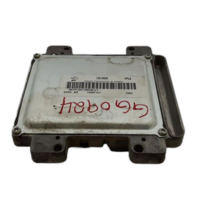
Below are the parts most often responsible for code P2043, ranked by how frequently each one is the actual culprit (per the diagnosis above). Tap any to see what we have for your vehicle.


The information in this article is provided for general reference and educational purposes only. Vehicle specifications, procedures, and part compatibility can vary by production date, trim level, and region. Always consult your vehicle's factory service manual and verify part numbers before purchasing or performing repairs. Safety-critical components such as airbags, seat belts, and braking systems should be installed by a qualified professional.
- 🧭 Diagnostic Flowchart
- 🎬 Helpful Videos
- 🛍️ Shop This Part
- What Does P2043 Mean?
- Can I Drive With P2043?
- Common Causes
- Symptoms
- Common Fixes & Costs
- Used vs. New Parts: Buying Guide
- What Happens If You Wait — Timeline
- Cost of Not Fixing It
- Diagnosis Steps
- When This Code Triggers (Freeze-Frame Conditions)
- Related Codes
- Climate & Environmental Factors
- How to Talk to a Mechanic About This Code
- Where to Take It: Dealer vs Independent vs Chain
- When to Walk Away From the Repair
- What Scan Tool You Need for This Code
- How to Clear the Code After You Fix It
- Will This Fail Emissions / State Inspection?
- Most Commonly Affected Vehicles
- Manufacturer-Specific Notes
- Real Owner Stories
- 2014 Ford F-350 at 45k miles - The TSB Fix
- 2015 Mercedes-Benz Sprinter - A Wiring Issue
- 2012 GMC Sierra 2500HD - Intermittent Winter Failure
- How to Prevent This Code From Triggering
- Frequently Asked Questions
- Can I just replace the temperature sensor instead of the whole assembly?
- What happens if I ignore code P2043?
- Will bad DEF fluid cause this code?
- What is a common misdiagnosis for P2043?
- My scanner says P2043 is a 'permanent' code and won't let me clear it. What do I do?
- Is this repair covered by warranty?
- How do I reset the DEF warning after the repair?
- Can a weak battery cause a P2043 code?
- How can I prevent P2043 from happening?
- Can P2043 clear itself without a repair?
- Key Takeaways
- 🎟️ Get 5% Off