

OBD-II Code P2066: Fuel Level Sensor 'B' Performance
What P2066 means, why it triggers, and how to fix it
- P2066 indicates the secondary fuel level sensor ('Sensor B') is sending an illogical voltage reading to the engine computer.
- Check for Technical Service Bulletins (TSBs) first; 2014-2016 Ram trucks frequently resolve this code with a $150-$200 dealer software update.
- On GM trucks and Corvettes with saddle tanks, test the fuel transfer pump before spending $800+ to replace the fuel level sensor.
- Track your mileage using the trip odometer immediately, as running the tank dry causes permanent fuel pump damage costing upwards of $1,000.
What Does P2066 Mean?
P2066 means the Powertrain Control Module (PCM) is receiving an illogical signal from the secondary fuel level sensor. Vehicles with large or dual-section 'saddle' tanks use two sensors for accurate fuel readings. This code triggers when the signal from the second sensor (Sensor 'B') sticks, drops out, or fails to match the primary sensor (Sensor 'A') as fuel is consumed.
Technical definition: Fuel Level Sensor 'B' Performance. The Powertrain Control Module (PCM) detects that the voltage signal from the 'B' fuel level sensor is irrational, stuck, or does not correlate with other inputs. The PCM triggers the code when the sensor's reported level fails to change after a calculated amount of fuel is consumed, or when the difference between sensor 'A' and 'B' exceeds a programmed threshold (e.g., 7 gallons) for a set duration.
Can I Drive With P2066?
Yes, But With Caution. Yes, the vehicle is safe to drive because this code does not affect engine performance. However, the fuel gauge becomes unreliable, creating a high risk of unexpectedly running out of fuel. Running the tank dry causes the fuel pump to overheat and fail, adding an $800-$1500 repair cost. Track fuel usage with the trip odometer and seek repair promptly.
Common Causes
- Faulty Fuel Level Sensor 'B' (Very Common) — The sensor itself, a float connected to a variable resistor, is the most frequent failure point. The resistor card wears out and creates dead spots, or the float arm physically sticks.
- Outdated Powertrain Control Module (PCM) Software (Common) — On 2014-2016 Ram trucks, the factory software logic is overly sensitive and incorrectly triggers P2066. A software update (reflash) from a dealer is the required fix.
- Damaged Wiring or Corroded Connectors (Common) — The wiring harness to the fuel tank suffers damage from road debris, heat, or chafing. The electrical connector on the fuel pump module is highly susceptible to moisture and corrosion, disrupting the signal.
- Failed Fuel Transfer Pump / Siphon Jet Pump (Less Common) — In vehicles with saddle-style tanks (many GM, Dodge, and Corvette models), a separate pump transfers fuel between tank sections. If this pump fails, fuel levels become uneven, causing the two sensors to send conflicting signals.
- Poor Chassis Ground Connection (Less Common) — The fuel pump module relies on a solid ground connection to the vehicle's frame. A corroded or loose ground strap causes erratic voltage readings.
- Faulty Instrument Cluster (Rare) — In some vehicles, the fuel level signal is processed by the instrument cluster before reaching the PCM. A malfunction within the cluster's circuitry alters the signal.
- Faulty Powertrain Control Module (PCM) (Very Rare) — It is extremely uncommon for the PCM to fail. Exhaustively rule out the sensor, wiring, grounds, and software before suspecting the PCM.
Symptoms
- Check Engine Light is On — The Malfunction Indicator Lamp (MIL) illuminates on the dashboard.
- Inaccurate or Erratic Fuel Gauge — The fuel gauge sticks on full or empty, jumps randomly, or shows a clearly incorrect level.
- Incorrect 'Distance to Empty' Display — The digital display estimating remaining mileage shows an inaccurate number or dashes ('---').
- Low Fuel Warning Light Stays On — The low fuel light remains on constantly, even immediately after filling the tank.
- Engine Stalls Unexpectedly — The inaccurate gauge leads the driver to believe there is fuel, but the tank is actually empty, causing a stall.
Diagnostic Flowchart
Tap your situation to follow the diagnostic path that matches what you're seeing on this code.
Common Fixes & Costs
- Reprogram (Reflash) the Powertrain Control Module — Parts: $0, Labor: $150-$200, ~1.0 hr book time (Professional)
- Replace the Entire Fuel Pump Module Assembly
— Parts: $300-$800, Labor: $300-$800, ~3.0 hr book time
(Professional)
2014-2016 Ram 2500/3500: OEM
2007-2013 Chevrolet Silverado/GMC Sierra: OEM - Replace the Fuel Level Sending Unit Only
— Parts: $100-$250, Labor: $300-$800, ~4.0 hr book time
(Professional)
2005-2013 Chevrolet Corvette (C6) Right/Passenger Side: OEM - Repair Wiring or Clean/Replace Connector — Parts: $10-$50, Labor: $100-$200, ~1.5 hr book time (Intermediate)
- Clean or Repair Chassis Ground Connection — Parts: $5-$15, Labor: $50-$100, ~0.5 hr book time (Intermediate)
Used vs. New Parts: Buying Guide
When a used part is worth it: A used fuel pump module from a low-mileage, accident-damaged vehicle is a budget-friendly option for an older, high-mileage car where the cost of a new OEM part is prohibitive. It is a gamble, as the sending unit is a known wear item.
Donor-vehicle mileage cap: roughly under 60000 miles for the part to have meaningful remaining life.
Donor quality checklist:
- Verify the donor vehicle's mileage and that it was not scrapped for a fuel system or electrical issue.
- Match the part number exactly, including any revisions. Incompatible electronics cause further issues.
- Inspect the electrical connector on the used part for any signs of corrosion or heat damage.
Decision logic:
- If Vehicle is under 100K miles or still under warranty → Buy a new OEM or high-quality aftermarket part to ensure longevity and reliability.
- If Vehicle is over 150K miles AND budget is the primary concern → A low-mileage used part is a reasonable risk, but understand it may not last as long as a new part.
- If The labor cost is high (e.g., on a Corvette where the tank must be dropped) → Always buy a new part. The risk of paying for the extensive labor twice if a used part fails outweighs the initial savings.
Warranty tradeoff: Used parts from a salvage yard typically come with a 30-90 day warranty covering only the part. New aftermarket parts often have a 1-year to limited lifetime warranty. New OEM parts offer the best warranty, especially if installed by a dealer.
Worst-case if a used part fails: $600-$1500 if a used part fails after the warranty period, as you pay for the part and the labor all over again.
What Happens If You Wait — Timeline
- 0-1 month: Code P2066 is set, Check Engine Light is on. Fuel gauge becomes unreliable, gets stuck, or drops to empty intermittently. Low fuel light turns on regardless of tank level. (MPG impact: 0%% · Added cost: $0)
- 1-3 months: The risk of running out of fuel increases. The first time the tank runs completely dry, the fuel pump is starved of cooling and lubrication, causing accelerated wear. (MPG impact: 0%% · Added cost: $50-$150 (for towing or roadside fuel delivery))
- 3-9 months: Repeatedly running the tank low or empty causes the fuel pump to overheat regularly. The pump begins to whine, and the vehicle hesitates or has trouble starting as the pump weakens. (MPG impact: 0-5% (due to inconsistent fuel pressure)% · Added cost: $0 (but fuel pump failure is imminent))
- 9+ months: The fuel pump fails completely from cumulative heat damage. The engine cranks but will not start. The vehicle is undrivable and requires a tow. (MPG impact: 100% (vehicle does not run)% · Added cost: $800-$1500 (for full fuel pump module replacement and labor))
Cost of Not Fixing It
- Immediate: Inaccurate fuel gauge and constant risk of running out of fuel, which leaves you stranded. (Added cost: $0-$150 (for towing))
- 1-6 Months: Repeatedly running the fuel tank low starves the in-tank fuel pump of its cooling and lubrication. This causes the pump to overheat and wear out prematurely. (Added cost: $0)
- 6+ Months: Complete failure of the fuel pump due to overheating. The vehicle will not start, requiring a tow and a full fuel pump module replacement. (Added cost: $800-$1500)
Diagnosis Steps
- Read Codes and Review Freeze Frame Data
Use an OBD-II scanner to confirm P2066 is present. Analyze the freeze frame data to see the vehicle's state (fuel level, speed) at the exact moment the code set. Do not clear codes yet.
Tools: OBD-II Scanner (Beginner) - Check for Technical Service Bulletins (TSBs)
Search for TSBs related to P2066 for your specific vehicle. Ram trucks have well-documented software issues (TSBs #18-096-16, #18-042-15) fixed with a PCM reflash. This step saves hundreds of dollars in unnecessary parts.
Tools: Internet Access, TSB Database (Beginner) - Analyze Live Sensor Data
Use an advanced scanner to view live data for 'Fuel Level Sensor A' and 'Fuel Level Sensor B'. Readings must decrease smoothly as you drive. If sensor 'B' is stuck at a specific voltage or moves erratically while sensor 'A' behaves normally, the 'B' sensor is the primary suspect.
Tools: Advanced OBD-II Scanner (Intermediate) - Test the Fuel Transfer Pump (If Equipped)
On vehicles with saddle tanks, use a bi-directional scanner to command the fuel transfer pump on. You must hear the pump run and see the fuel level percentages change on your live data screen. If not, the transfer pump is the culprit.
Tools: Bi-directional OBD-II Scanner (Professional) - Inspect Wiring, Connectors, and Grounds
Visually inspect the wiring harness to the fuel tank for cuts or chafing. Unplug the connector at the tank and check for corrosion. Locate and inspect the main chassis ground for the fuel system for tightness and corrosion.
Tools: Flashlight, Safety Glasses (Intermediate) - Test the Sensor's Resistance
Disconnect the fuel pump module connector. Using a multimeter, measure the resistance across the pins for sensor 'B'. Check a service manual for exact specs. An open circuit (OL) or a reading that doesn't change when rocking the vehicle indicates a bad sensor.
Tools: Multimeter, Vehicle-specific repair manual (Advanced) - Perform a Voltage Drop Test on the Ground Circuit
Set your multimeter to DC Volts. Connect the positive lead to the battery's negative terminal and the negative lead to the sensor's ground pin at the connector. With the key on, the reading must be less than 0.1 volts (100mV). A higher reading indicates a poor ground.
Tools: Multimeter (Advanced) - Analyze the Sensor Signal with an Oscilloscope
Connect an oscilloscope to the sensor's signal wire. A good sensor produces a stable voltage line that changes smoothly. A bad sensor shows a 'noisy' pattern with sudden voltage spikes or dropouts as the float moves across a worn resistor.
Tools: Oscilloscope (Professional)
When This Code Triggers (Freeze-Frame Conditions)
- Engine Coolant Temp: 180-210°F (The engine is fully warmed up and operating in closed loop.)
- RPM: 1200-2500 (The code sets during steady-state driving, not during hard acceleration or deceleration.)
- Vehicle Speed: 30-65 mph (The PCM uses a period of consistent speed to run rationality checks on the fuel level sensors.)
- Fuel Level: < 75% (The fault is detected when there is room in the tank for fuel levels to change and slosh, particularly in saddle tanks.)
Related Codes
- P2065 — P2065 ('Fuel Level Sensor 'B' Circuit Malfunction') indicates a direct electrical fault like an open or short. P2066 is a 'Performance' code, meaning the signal is present but irrational.
- P2068 — P2068 ('Fuel Level Sensor 'B' Circuit Low') indicates the voltage from the sensor is below the specified range, suggesting a short to ground. Diagnosis focuses on finding a short in the signal wire.
- P0461, P0462, P0463 — These codes relate to the primary fuel level sensor ('A'). Seeing one of these with P2066 strongly suggests a system-wide problem like a shared power/ground issue, a faulty instrument cluster, or a failing PCM.
- P2636 — This code means 'Fuel Transfer Pump 'B' Flow/Performance' and is common on GM vehicles with P2066. If you see both codes, the fuel transfer pump is almost certainly the root cause.
Climate & Environmental Factors
- High Humidity / Road Salt: These conditions significantly accelerate corrosion on electrical connectors, wiring harnesses, and chassis ground points. Vehicles in the 'Salt Belt' are highly susceptible to P2066 codes caused by corroded connectors.
- Extreme Cold: Extreme cold makes wiring insulation brittle and prone to cracking if disturbed. It also slightly changes electrical resistance values, pushing a borderline sensor past the threshold to trigger a fault code.
How to Talk to a Mechanic About This Code
Say this: "I have a P2066 code and an inaccurate fuel gauge. Before we consider replacing the fuel pump assembly, I'd like to request a specific diagnostic approach. Can you please start by checking for any Technical Service Bulletins for a PCM software update, especially if it's a Ram truck? If it's a GM vehicle, could you also test the fuel transfer pump's function? I'd like to rule out these common issues before authorizing more expensive repairs."
This signals to the mechanic that you are informed about the common, less-expensive causes of P2066. It directs them to check for software updates (a cheap fix for Ram) and transfer pump issues (common on GM) before defaulting to a full, costly fuel pump module replacement.
Avoid saying:
- 'My check engine light is on, can you just fix it?'
- 'I think I need a new fuel pump.'
- 'Just do whatever you think is best.'
Questions to ask before authorizing the repair:
- Did you check for a software reflash TSB for my vehicle's make and model?
- How did you test the fuel level sensor? Did you check its resistance or view its live data compared to Sensor 'A'?
- If my vehicle has a saddle tank, how did you confirm the fuel transfer pump is working correctly?
- If you are recommending a part replacement, how did you rule out a simpler wiring, connector, or ground issue?
- What is the warranty on the recommended parts and the labor for this repair?
Where to Take It: Dealer vs Independent vs Chain
- Dealer:
Recommended, and often required, for Ram trucks with known software issues. A strong choice for other makes if you want to ensure access to all TSBs and specialized tools.
Best for: 2014-2016 Ram trucks where a PCM software reflash is the most common fix., Vehicles still under a powertrain or extended warranty., Complex diagnoses involving manufacturer-specific tools (like testing fuel transfer pumps).
Downsides: Typically the highest labor rates., May default to replacing the entire fuel pump module rather than a more targeted, cheaper repair. (Typical cost: +50% vs. baseline) - Independent Shop:
Good choice, but vet the shop first. Ask if they are comfortable diagnosing saddle tank fuel systems and if they have the tools to test transfer pumps or check for software updates.
Best for: Out-of-warranty vehicles where the cause is likely a standard hardware failure (sensor, wiring)., Owners looking for a balance between expertise and cost.
Downsides: Quality and diagnostic capabilities vary widely. Ensure the shop has access to professional databases (like Alldata) for TSBs and has advanced diagnostic scanners., May not be able to perform a PCM reflash, requiring a separate trip to the dealer. (Typical cost: +0% vs. baseline) - Chain Shop:
Not Recommended. The complexity of diagnosing software, transfer pumps, and wiring is beyond the scope of most chain shops. The risk of an expensive, incorrect repair is high.
Best for: Simple, unrelated maintenance like oil changes or tires.
Downsides: High risk of misdiagnosis. Technicians lack the specific experience for fuel system issues beyond a basic sensor swap., Dropping a fuel tank is a high-stakes job; inexperience leads to fuel leaks or broken components. (Typical cost: -10% vs. baseline)
When to Walk Away From the Repair
If the estimated repair cost for the most likely, expensive fix (a full fuel pump module replacement, ~$1200-$1800) exceeds 40-50% of your car's private-party value, you should pause and consider your options.
- Car worth $15000, fix is $1400: Fix it. The repair cost is less than 10% of the vehicle's value and is a necessary repair for usability.
- Car worth $4000, fix is $1400: Borderline. The repair is ~35% of the car's value. Get a second opinion to confirm a full pump replacement is truly needed before proceeding.
- Car worth $2500, fix is $1400: Walk away. The repair cost is over 50% of the car's value. It is not economically sensible to perform this repair.
- Car worth $20000, fix is $150: Fix it. If the diagnosis is a simple software reflash, it's a minor cost that fully restores vehicle function.
What Scan Tool You Need for This Code
Minimum: A scanner that reads and graphs live data for manufacturer-specific PIDs, allowing you to view 'Fuel Level Sensor A' and 'Fuel Level Sensor B' simultaneously.
A basic $20 code reader only shows the P2066 code. It cannot display the live data streams from both fuel sensors, which is the most critical step to see if Sensor 'B' is stuck, erratic, or not tracking with Sensor 'A'. Without live data, you are flying blind.
Budget: BlueDriver Pro (~$99) — Connects to your smartphone and displays/graphs multiple live data PIDs, including the necessary fuel level sensor inputs. This confirms a sensor is misbehaving before paying for a professional diagnosis.
Mid-range: Foxwell NT510 Elite (~$180) — Adds bi-directional control. This is crucial for diagnosing GM vehicles, as it allows you to command the fuel transfer pump to run, directly testing its function. This feature definitively identifies the root cause and prevents unnecessary sensor replacement.
Professional: Autel MaxiCOM MK808 / MK808S (~$500) — Offers full bi-directional control for comprehensive testing of components like the fuel transfer pump, along with a user-friendly interface and broad vehicle coverage. It provides OEM-level diagnostic functions for a thorough analysis of the entire fuel system.
Rent vs buy: Rent for a simple code read, but BUY for P2066. Most parts store rental tools are basic readers that lack the essential live data and bi-directional functions needed for this code. Investing in a tool like the BlueDriver or Foxwell is more cost-effective than paying for a single shop diagnosis.
How to Clear the Code After You Fix It
- Use an OBD-II scan tool to clear the P2066 trouble code.
- Ensure the fuel tank is between 1/4 and 3/4 full.
- Perform a complete OBD-II drive cycle to allow readiness monitors to run.
Drive cycle (~30 minutes): A general drive cycle includes a cold start (engine sitting overnight), followed by 2-3 minutes of idling. Perform 10-15 minutes of mixed driving, including steady cruising at highway speeds (55-65 mph). Allow the vehicle to cool down. Repeat if necessary.
Readiness monitors affected: Comprehensive Component Monitor, Catalyst Monitor, Evaporative System Monitor, Oxygen Sensor Monitor
Before emissions retest: drive at least 100 miles to fully set monitors.
Watch out for:
- Clearing the code right before an emissions test results in a 'Not Ready' failure. Drive 50-100 miles over several trips to set the monitors.
- Disconnecting the battery clears the code but resets all onboard memory, forcing the drive cycle to be completed from scratch.
Will This Fail Emissions / State Inspection?
Yes — this code typically fails an OBD-II emissions inspection.
- California: An illuminated Check Engine Light results in an automatic smog check failure. After repair, a full drive cycle must be completed to set all readiness monitors before a retest is possible.
- New York: The NYS DMV emissions inspection includes an OBD-II scan. An active P2066 code causes the vehicle to fail the inspection.
- Texas: In the 17 Texas counties requiring emissions testing, an illuminated Check Engine Light is an automatic failure.
Most Commonly Affected Vehicles
- Ram 2500/3500 (2014-2016) — Highly prone to P2066 due to PCM software glitches. TSBs #18-096-16 and #18-042-15 fix this. The gauge often fails between 1/2 and 3/4 tank. Check ground G304 on the frame rail before replacing parts.
- Chevrolet / GMC Silverado / Sierra (2004-2014) — Commonly caused by a failed fuel transfer pump (siphon jet pump) in the saddle tank, or a failure of the secondary sensor itself.
- Chevrolet Corvette (C6) (2005-2013) — The right-side sensor ('B') fails often because the right tank empties first, leaving the sensor un-immersed in fuel, which accelerates wear. Aggressive cornering with less than a half tank triggers the code.
- Dodge Durango (2011-2015) — Models with the saddle-style fuel tank experience this code when the siphon tube between the two halves of the tank gets clogged, disconnected, or the transfer pump fails.
- Mercedes-Benz C-Class (W205) (2015-2021) — P2066 points to a failing fuel level sensor integrated with the fuel pump, requiring replacement of the entire assembly.
- Subaru Impreza, Outback (2008-2014) — These models experience failures of the secondary fuel level sensor. Directly testing the sensor's resistance is the key diagnostic step.
- Ford Focus (2012-2013) — These models have a higher-than-average number of reported issues with the fuel level sensor circuit performance, often related to wiring or the sensor itself.
- Chevrolet Cruze (2011-2012) — Known to have problems with the fuel level sensor circuit that trigger a P2066 code, similar to the Ford Focus of the same era.
Manufacturer-Specific Notes
- Ram / Dodge / Chrysler: Always check for a PCM software update. TSBs #18-096-16 and #18-042-15 address this code directly. A dealer reflash is a very common fix and must be performed before replacing any hardware.
- General Motors (Chevrolet / GMC): On trucks and Corvettes with saddle tanks, the fuel transfer system (siphon jet pump) is a primary suspect. A failed transfer pump causes P2066 and often P2636. Always test the transfer system before condemning the level sensor.
- Mitsubishi: The ECM sets P2066 using a unique logic: it compares calculated fuel consumption (based on injector on-time) with the change in the fuel level sensor's reading. If the readings diverge significantly, it flags the code.
- Subaru: On models like the Outback and Impreza, the dual-sensor system is common. Diagnosis comes down to a straightforward resistance test of the secondary sensor. Software issues are not a common cause.
Real Owner Stories
2014 Ram 2500 at 75K miles
Check Engine Light came on, fuel gauge stuck at 3/4 tank then dropped to empty. Low fuel light on.
What they tried:
- Mechanic quoted $1,200 to replace the fuel pump module.
- Owner researched forums and found TSB #18-096-16.
Outcome: Took the truck to a dealership. They performed a PCM reflash for $150. The code was resolved and the fuel gauge started working correctly immediately.
Lesson: Always check for Technical Service Bulletins (TSBs) on Ram trucks before replacing any hardware for P2066. A simple software update saves over $1,000.
2008 Chevrolet Corvette C6 at 33K miles
During aggressive driving with 1/3 tank of fuel, the gauge dropped to empty and 'Service Fuel System' appeared on the DIC.
What they tried:
- Cleared the P2066 code with a scanner, which restored gauge function temporarily.
- Added a bottle of Techron fuel system cleaner to the tank.
Outcome: The problem returned. The issue was a dirty/worn sending unit in the right-side fuel tank. The permanent fix required dropping the tank and replacing the sensor.
Lesson: On C6 Corvettes, the right-side sensor ('B') fails often because the right tank empties first, leaving the sensor exposed and accelerating wear. Replacement is usually necessary.
2011 Chevrolet Silverado with 150K miles
P2066 code present along with P2636 (Fuel Transfer Pump Flow/Performance). Fuel gauge was inaccurate.
What they tried:
- Initially suspected the fuel level sensor.
- Noticed both codes were present, pointing to a system issue.
Outcome: The root cause was a failed siphon jet pump (the transfer pump) inside the tank. Replacing the transfer pump assembly resolved both codes.
Lesson: If P2066 appears with P2636 on a GM vehicle, the fuel transfer system is the primary suspect. The P2066 code is a symptom of the transfer pump's failure to balance fuel levels.
2006 Chrysler 300C with unknown mileage
Fuel gauge was consistently inaccurate and reading low, triggering a P2066 code.
What they tried:
- Owner correctly identified that Sensor 'B' was on the transfer pump side of the saddle tank.
Outcome: The issue was confirmed to be a faulty level sensor on the secondary (transfer) side. The fix required replacing the sending unit/transfer pump assembly on that side of the tank.
Lesson: On vehicles with saddle tanks like the Chrysler 300, P2066 correctly points to the secondary sensor. Diagnosis is confirmed by testing the resistance of the suspected sensor before dropping the tank.
How to Prevent This Code From Triggering
- Keep fuel level above 1/4 tank (Always) — The gasoline in the tank cools and lubricates the electric fuel pump and sending unit components. Consistently running the tank low causes the pump to overheat and the sending unit contacts to wear prematurely.
- Use a quality fuel system cleaner with PEA (Polyetheramine) (Every 3,000-5,000 miles) — Additives like Chevron Techron clean sulfur deposits and other contaminants from the fuel sending unit's resistor card, preventing inaccurate readings and 'dead spots'.
- Use Top Tier certified gasoline (Every fill-up) — Top Tier gasolines contain a higher level of detergents that keep the entire fuel system, including the sending units, clean from deposits that cause mechanical sticking or electrical faults.
- Apply dielectric grease to under-vehicle connectors (During service or repair) — In areas with road salt or high humidity, applying dielectric grease to the fuel pump connector and chassis ground connection prevents moisture intrusion and corrosion.
Frequently Asked Questions
What are common mistakes when diagnosing P2066?
The biggest mistake is immediately replacing the fuel level sensor without checking for software TSBs or testing the fuel transfer pump. Always review freeze frame data before clearing the code to preserve vital diagnostic clues.
Why does my fuel gauge only fail when the tank is half full?
The float arm spends most of its time in the middle range, causing that specific section of the variable resistor to wear out first. When the float passes over this worn 'dead spot,' the signal drops out and triggers the code.
Can I just use my trip odometer to track fuel instead of fixing this?
You can temporarily use the trip odometer as a backup. However, accidentally running the tank completely dry causes the fuel pump to overheat and fail, leading to a much more expensive repair.
Is replacing the fuel level sensor a DIY job?
No, this is generally a job for a professional. It requires dropping the heavy fuel tank or lifting the truck bed, exposing you to flammable gasoline fumes and requiring specialized lock ring tools.
Will a fuel additive or cleaner fix a stuck fuel level sensor?
No. While additives like Techron clean minor sulfur deposits, they cannot repair a physically worn-out resistor card or a broken float mechanism, which are the actual causes of a persistent P2066.
What is the difference between Fuel Level Sensor 'A' and 'B'?
Sensor 'A' is the primary fuel level sensor located on the main fuel pump assembly. Sensor 'B' is a secondary sensor on the opposite side of a large or 'saddle' shaped tank, used to calculate a composite fuel level.
Key Takeaways
- P2066 indicates the secondary fuel level sensor ('Sensor B') is sending an illogical voltage reading to the engine computer.
- Check for Technical Service Bulletins (TSBs) first; 2014-2016 Ram trucks frequently resolve this code with a $150-$200 dealer software update.
- On GM trucks and Corvettes with saddle tanks, test the fuel transfer pump before spending $800+ to replace the fuel level sensor.
- Track your mileage using the trip odometer immediately, as running the tank dry causes permanent fuel pump damage costing upwards of $1,000.
Helpful Videos
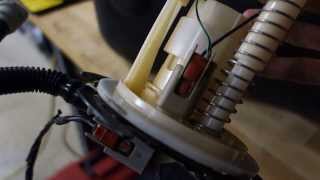

Shop the Parts Behind P2066
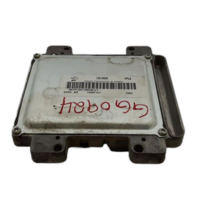
Below are the parts most often responsible for code P2066, ranked by how frequently each one is the actual culprit (per the diagnosis above). Tap any to see what we have for your vehicle.



The information in this article is provided for general reference and educational purposes only. Vehicle specifications, procedures, and part compatibility can vary by production date, trim level, and region. Always consult your vehicle's factory service manual and verify part numbers before purchasing or performing repairs. Safety-critical components such as airbags, seat belts, and braking systems should be installed by a qualified professional.
- 🧭 Diagnostic Flowchart
- 🎬 Helpful Videos
- 🛍️ Shop This Part
- What Does P2066 Mean?
- Can I Drive With P2066?
- Common Causes
- Symptoms
- Common Fixes & Costs
- Used vs. New Parts: Buying Guide
- What Happens If You Wait — Timeline
- Cost of Not Fixing It
- Diagnosis Steps
- When This Code Triggers (Freeze-Frame Conditions)
- Related Codes
- Climate & Environmental Factors
- How to Talk to a Mechanic About This Code
- Where to Take It: Dealer vs Independent vs Chain
- When to Walk Away From the Repair
- What Scan Tool You Need for This Code
- How to Clear the Code After You Fix It
- Will This Fail Emissions / State Inspection?
- Most Commonly Affected Vehicles
- Manufacturer-Specific Notes
- Real Owner Stories
- 2014 Ram 2500 at 75K miles
- 2008 Chevrolet Corvette C6 at 33K miles
- 2011 Chevrolet Silverado with 150K miles
- 2006 Chrysler 300C with unknown mileage
- How to Prevent This Code From Triggering
- Frequently Asked Questions
- What are common mistakes when diagnosing P2066?
- Why does my fuel gauge only fail when the tank is half full?
- Can I just use my trip odometer to track fuel instead of fixing this?
- Is replacing the fuel level sensor a DIY job?
- Will a fuel additive or cleaner fix a stuck fuel level sensor?
- What is the difference between Fuel Level Sensor 'A' and 'B'?
- Key Takeaways
- 🎟️ Get 5% Off