

P2068 on 2016-2020 Volkswagen Passat: Fuel Level Sensor 'B' Causes and Fixes
P2068 on a VW Passat means the secondary fuel level sensor (Sensor 'B') is sending an abnormally high voltage signal, causing an inaccurate fuel gauge. This is most often due to a faulty fuel level sending unit inside the 'saddle' style fuel tank. Other causes include wiring damage at the fuel pump connector or a poor ground. Expect to pay $100-$250 for an aftermarket sensor and replace it yourself, or $400-$700 at a shop.
- P2068 points to a problem with the secondary fuel level sensor, usually causing an incorrect fuel gauge reading.
- The most likely fix is replacing the 'B' fuel level sending unit, which is located inside the fuel tank but is often a separate part from the main fuel pump.
- Always check the wiring and connector at the fuel tank access panel for corrosion before buying parts.
- If you also have a P0463 code, the problem is systemic. It could be wiring shared by both sensors or an issue preventing fuel transfer between the two halves of the tank.
- Part numbers differ between the 2016-2019 and 2020 models, so always confirm the correct part for your car's VIN.
What's Unique About the 2016-2020 Volkswagen PASSAT
The 2016-2020 Passat range covers two different vehicle platforms, which can affect parts and procedures. Models from 2016-2019 are the North American (NMS) generation, while the 2020 model year introduced the newer MQB platform. Sensor 'B' is typically the sender-only unit on the driver's side of the tank, while Sensor 'A' is integrated with the main fuel pump on the passenger side. This code is frequently seen with P0463 (Fuel Level Sensor 'A' Circuit High), as noted in VW Technical Service Bulletins. 🎬 Watch: A quick overview of fixing the P2068 error code. A GM TSB for similar vehicles suggests that when both codes appear, it can be caused by a blocked transfer jet on the primary fuel pump, which prevents fuel from being siphoned from the 'B' side of the tank to the 'A' side. On VWs, this siphon system ensures fuel from the driver's side (where sensor 'B' is) is pulled over to the passenger side where the main pump resides, eventually causing the 'B' side to empty first.
Diagnostic Flowchart
Tap your situation to follow the diagnostic path that matches what you're seeing on this vehicle.
Generation note: This range covers the facelifted NMS platform (2016-2019) and the first year of the MQB platform (2020). While the function of the fuel level sensors is the same, the specific part numbers for the sending units and fuel pumps are different between these generations. For example, some MQB platform vehicles use a fuel pump assembly with part number 5Q0919051BH. Always verify parts using your vehicle's VIN. The NMS Passat was specifically designed for the North American market to be larger and less expensive to produce than its European counterpart.
Symptoms You May Notice
- Check Engine Light is on.
- Fuel gauge reads inaccurately (e.g., stuck on full, stuck on empty, or fluctuates wildly).
- Fuel gauge reads full when the tank is known to be low.
- The 'distance to empty' display is inaccurate or shows dashes.
- Low fuel warning light may illuminate even with a full tank, or not at all when the tank is empty.
- In some Audi models sharing platforms, a "tank system: malfunction" message may appear on the instrument cluster.
- Replacing the entire fuel pump assembly when only the separate, and much cheaper, sending unit has failed. Sensor 'B' is usually a standalone part.
- Replacing the instrument cluster. While it displays the fuel level, it is rarely the cause of a sensor circuit fault.
- Replacing the wrong sending unit. Sensor 'B' is typically the auxiliary sender on the driver's side, not the one integrated into the main fuel pump on the passenger side.
Most Likely Causes
- Faulty Fuel Level Sending Unit ('B' Sensor) 🔴 High Probability → Shop Fuel Tank Sending Unit The resistive strip or float mechanism on the sending unit can wear out, get stuck, or fail over time, causing it to send an incorrect voltage signal. An open circuit within the sender's resistor will also cause a 'Circuit High' reading.
How to confirm: Access the sending unit, which is typically under the rear seat on the driver's side. Disconnect it and measure the resistance with a multimeter while manually moving the float arm. 🎬 See how to test and replace a fuel level sensor. The resistance should change smoothly. For many VWs, the range is approximately 73 Ohms at empty and 10 Ohms at full. A reading that is erratic, stuck, or shows an open circuit (infinite resistance) indicates a failed sensor.
Typical fix: Replace the faulty fuel level sending unit (Sensor 'B'). It is often sold as a separate component from the main fuel pump but is located inside the tank. It's also recommended to replace the large rubber gasket/seal for the access port to prevent fuel vapor leaks.
Est. part cost: $100-$250 - Damaged Wiring or Corroded Connector 🟡 Medium Probability The wiring and connectors for the fuel pump and sending units are located under the rear seat and can be susceptible to moisture, corrosion, or physical damage, especially if the access cover is not sealed properly.
How to confirm: Visually inspect the wiring harness and connector at the top of the fuel tank access panel. Look for any signs of corrosion (green or white powder), pinched wires, or loose pins. A short to power on the signal wire or an open in the ground circuit will cause a 'Circuit High' code. One owner found the internal connector inside the tank was not fully plugged in, causing an open circuit.
Typical fix: Clean the corroded connector terminals with a specialized electronic cleaner and a small brush. If the wiring is damaged, it will need to be repaired or the connector pigtail replaced.
Est. part cost: $10-$50 - Poor Ground Connection ⚪ Low Probability The fuel tank and its components rely on a solid ground connection to the vehicle's chassis. Rust or a loose connection can create high resistance in the ground path, leading to incorrect voltage readings.
How to confirm: Locate the ground strap for the fuel tank or fuel pump assembly. Check that it is clean, tight, and free of corrosion. Use a multimeter to test for high resistance between the sending unit's ground pin and a known good chassis ground. The voltage drop should be 100 millivolts (0.1V) or less.
Typical fix: Clean the grounding point on the chassis and the terminal on the ground strap with a wire brush. Secure the connection tightly.
Est. part cost: $0-$5
Rare But Worth Checking
- Blocked Fuel Transfer Jet: A GM TSB for vehicles with saddle tanks and the same codes (P2068 & P0463) points to a blocked transfer jet (siphon) on the primary fuel pump. This prevents fuel from being pulled from the 'B' side of the tank to the 'A' side where the main pump is. The 'B' sensor would read full while the 'A' sensor reads empty, which can trigger faults for both. This creates an imbalance that the PCM can flag as a fault.
- Faulty Instrument Cluster or Powertrain Control Module (PCM): This is very rare. Before suspecting a control module, all other possibilities like the sensor, wiring, and grounds must be exhaustively ruled out.
Diagnosis Steps
- Scan the vehicle for all OBD-II codes. Confirm if P2068 is present alone or with P0463.
- Check the fuel gauge. Note its behavior: is it stuck full, empty, or erratic?
- Gain access to the fuel pump/sending unit access panels, which are located under the rear seat cushions. You typically just pull up firmly on the front of the seat bottom to release it.
- Disconnect the battery before working on the fuel system.
- Sensor 'B' is usually on the driver's side. Inspect the electrical connector on top of the access cover for corrosion, moisture, or damage. Clean as necessary.
- If the connector looks good, reconnect the battery and use a multimeter to test the voltage and ground signals at the Sensor 'B' connector. A 'Circuit High' code means you will likely find a voltage higher than the specified range (e.g., above 5V) or an open ground.
- If signals are incorrect, trace the wiring back towards the control module to find the fault.
- If signals appear correct at the connector, the sending unit itself is the most likely culprit. Disconnect the battery again, remove the sending unit from the tank, and test its resistance by moving the float arm up and down. The reading should be smooth and within the specified range 🎬 Watch: Step-by-step guide for replacing a VW fuel level sensor. (e.g., ~10-73 ohms for many VWs). If it's erratic or open, the sender is bad.
- Replace the faulty component, clear the codes, and test drive to ensure the fuel gauge reads correctly.
Parts You'll Likely Need
- Fuel Level Sending Unit (Sensor B)
(OEM #Varies (e.g., 3C8919051A, 3AA919051L). Must verify with VIN.)— This is the most common failure point for P2068. The internal resistor fails, sending an incorrect signal.
Trusted brands: VDO, Bosch, Delphi, Genuine VW
OEM price range: $250-$400
Aftermarket price range: $100-$200 - Fuel Tank Sending Unit Seal / Gasket
(OEM #e.g., 1J0919133B)— This rubber seal should always be replaced when the sending unit is removed to prevent dangerous fuel vapor leaks and ensure a proper seal.
Trusted brands: Genuine VW, Elring, Vaico
OEM price range: $15-$30
Aftermarket price range: $5-$15
Related Codes That Often Appear With This One
- P0463 — P0463 is for 'Fuel Level Sensor 'A' Circuit High'. Since the Passat has two sensors, a problem with the wiring harness, ground, or a systemic issue like a blocked transfer jet can cause both codes to appear together. VW TSBs VIN4APIN20201112 and VIN4APIN20201021 both list these codes appearing together. A GM TSB also confirms that a fuel transfer issue between the two halves of the saddle tank can trigger faults for both sensors.
Technical Service Bulletins (TSBs) & Recalls
- VIN4APIN20201112: Notes customer complaints of MIL-on with P0463 and P2068.
- VIN4APIN20201021: Notes customer complaints of MIL-on with P0463 and P2068.
Platform-Specific Known Issues
- Volkswagen issued Technical Service Bulletins (TSBs) VIN4APIN20201112 and VIN4APIN20201021 that mention customer complaints of the check engine light being on with codes P0463 and P2068 stored, indicating this is a known issue.
- On some TDI models, owners have experienced fuel gauge failure after a battery issue or jump start, leading to sender replacement.
- Access is under the rear seat bottom cushion, which is held in by clips and can be pulled upwards to remove.
Mechanic-Grade Diagnostic Values
- Fuel Level Sender Resistance — expected: Approximately 73 Ohms at empty and 10 Ohms at full. The reading should change smoothly as the float arm is moved.. Failure: Readings are erratic, do not change, or show infinite resistance (open circuit).
- Sensor Ground Circuit Voltage Drop — expected: Less than 100 millivolts (0.1V).. Failure: A voltage reading higher than 0.1V indicates high resistance in the ground path.
- Sensor Signal Voltage — expected: A variable voltage that changes with fuel level. A 'Circuit High' code is often set when the voltage exceeds 5V for a specified duration.. Failure: Voltage is stuck high (e.g., at 5V) regardless of float position, or there is an open circuit.
Scan Tool Commands That Help
- VCDS (VAG-COM): Instrument Cluster (17) -> Output Tests (03) — To perform a sweep test of the instrument cluster gauges, including the fuel gauge. This helps confirm if the gauge needle itself is physically able to move, ruling out a stuck needle.
- VCDS (VAG-COM): Instrument Cluster (17) -> Measuring Blocks / Adv. Meas. Values — To view live data from the fuel level sensors, such as resistance in Ohms and calculated fuel level in liters for both Sensor 1 (G) and Sensor 2 (G169). This allows you to see the values the car's computer is receiving without disassembly.
- VCDS (VAG-COM): Instrument Cluster (17) -> Adaptation (10) — To perform a calibration of the fuel gauge display. This is typically used to adjust the reserve warning or offset the needle slightly, but it can be useful after replacing a sender if the reading is slightly off. The default value is often 128 and can be adjusted in small increments.
Wiring & Ground Locations
- Fuel Pump / Sender Ground — The ground wire for the fuel pump and sending units is typically a brown wire in the connector at the access panel under the rear seat. The chassis ground point itself may be under the center console or near the A-pillar.. A poor ground connection is a common cause of a 'Circuit High' fault, as it prevents the sensor's signal voltage from being pulled down correctly, leading to an artificially high reading.
- J538 - Fuel Pump Control Module — On many modern VWs, this module is located near or mounted on the fuel tank, accessible from under the rear seat. On some models, it may be under the right rear seat.. The fuel level sender may wire into the J538 module, which then communicates with the instrument cluster. A fault in this module or its wiring could potentially cause sensor reading issues.
- Ground Point 15 — On the cylinder head.. While not directly for the fuel pump, ensuring all major engine and body grounds are clean and tight is a crucial step in diagnosing any electrical fault, as a bad main ground can cause floating voltages across multiple systems.
Real Owner Repair Stories
- Ross-Tech Forums user (VW Golf (similar platform/system)) — Fuel gauge dropped to empty and stayed there. Fault code B103E 1B - Fuel Level Sensor 1, Resistance Too High.
❌ Tried (didn't work) Replacing the fuel pump/sender assembly did not fix the issue; the new and old units tested with similar, correct resistance ranges (50-200 ohms). A battery reset (touching leads together) worked temporarily for 6 months.
✅ What actually fixed it The user found that after replacing the pump, the entire instrument cluster went dead. After unplugging and replugging the cluster, the fuel gauge started working again, suggesting the root cause was an intermittent fault within the instrument cluster itself or its connection, not the sender unit.
OEM Part Supersession History
3AA919051L, 3AA919051C, 3C0919051P, 3C0919051G, 3C0919051AK, 3C0919051AE→3C8919051A— Part has been updated/revised by the manufacturer over time.
Heads up: These part numbers are often associated with the main fuel pump and Sensor 'A' assembly for the Passat B6/B7/CC platform. While P2068 is for Sensor 'B', issues with the main pump's transfer jet can trigger this code. Always verify the correct part number for the standalone Sensor 'B' using the vehicle's VIN.
Model Year Variations Within This Range
- 2016-2019: These models are based on the North American Market-specific NMS platform, which is a separate lineage from the European Passat B8.
- 2020: The 2020 Passat for the North American market was a significant refresh but remained on the older NMS platform, while the Chinese Passat moved to the newer MQB platform. This can lead to confusion, but for the specified vehicle range, parts are generally based on the NMS architecture.
Helpful Videos
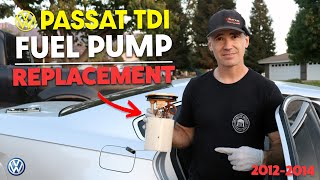
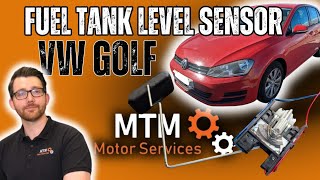

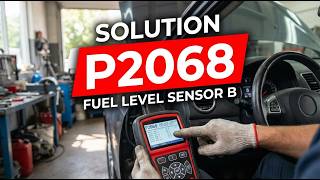
We Have This Part in Stock


The information in this article is provided for general reference and educational purposes only. Vehicle specifications, procedures, and part compatibility can vary by production date, trim level, and region. Always consult your vehicle's factory service manual and verify part numbers before purchasing or performing repairs. Safety-critical components such as airbags, seat belts, and braking systems should be installed by a qualified professional.
- Volkswagen PASSAT:
- 🧭 Diagnostic Flowchart
- 🎬 Helpful Videos
- 🛍️ Shop This Part
- What's Unique About the 2016-2020 Volkswagen PASSAT
- Symptoms You May Notice
- Most Likely Causes
- Rare But Worth Checking
- Diagnosis Steps
- Parts You'll Likely Need
- Related Codes That Often Appear With This One
- Technical Service Bulletins (TSBs) & Recalls
- Platform-Specific Known Issues
- Mechanic-Grade Diagnostic Values
- Scan Tool Commands That Help
- Wiring & Ground Locations
- Real Owner Repair Stories
- OEM Part Supersession History
- Model Year Variations Within This Range
- 🎟️ Get 5% Off