

P2074 on 2011-2015 Ford F-450 SD 6.7L: Air Filter, MAP Sensor, and Software Fixes
On a 6.7L Power Stroke, P2074 is most often caused by a dirty air filter or a soot-clogged MAP sensor. Start by replacing the air filter and cleaning the MAP sensor and its port before considering more complex repairs. A PCM software update from a dealer may also be required. Boost leaks from the cold-side CAC pipe are another common culprit.
- Always check and/or replace the engine air filter first when you see code P2074. It is the easiest and a very common solution.
- The second step should be to remove and clean the MAP sensor and its port in the intake manifold, which frequently gets clogged with soot.
- Do not immediately assume a sensor is bad. This code is often caused by simple maintenance issues (air filter) or upstream problems (soot buildup, software).
- If simple fixes don't work, a PCM software update from a dealer may be required as per Ford's own service bulletins.
What's Unique About the 2011-2015 Ford F-450 SD
On the 6.7L Power Stroke engine, this code is exceptionally common and often not due to a failed sensor. The platform's EGR (Exhaust Gas Recirculation) system can cause significant soot buildup in the intake manifold, which directly clogs the small port for the MAP sensor, leading to false readings. The sensor itself may be fine, but it cannot read pressure through a wall of soot. Ford has also issued multiple Technical Service Bulletins (TSBs) acknowledging that a simple dirty air filter or a software glitch in the PCM can trigger this specific code, making these platform-specific issues that should be checked first.
Diagnostic Flowchart
Tap your situation to follow the diagnostic path that matches what you're seeing on this vehicle.
Symptoms You May Notice
- Check Engine Light is on
- Reduced engine power (limp mode)
- Poor or slow acceleration
- Hesitation when trying to accelerate
- Audible 'whoosh' sound under acceleration, indicating a boost leak
- Replacing the Mass Airflow (MAF) sensor immediately. While a MAF sensor can fail, it is less common for this code on this engine than a dirty air filter, a clogged MAP sensor, or a software issue. Owners often replace the MAF sensor only to have the code return.
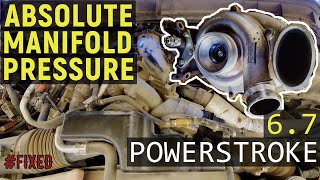
- Replacing the MAP sensor without cleaning the port. A new sensor will not work if the hole it reads through is completely blocked with soot. 🎬 Watch: How to clean a soot-clogged MAP sensor and port
Most Likely Causes
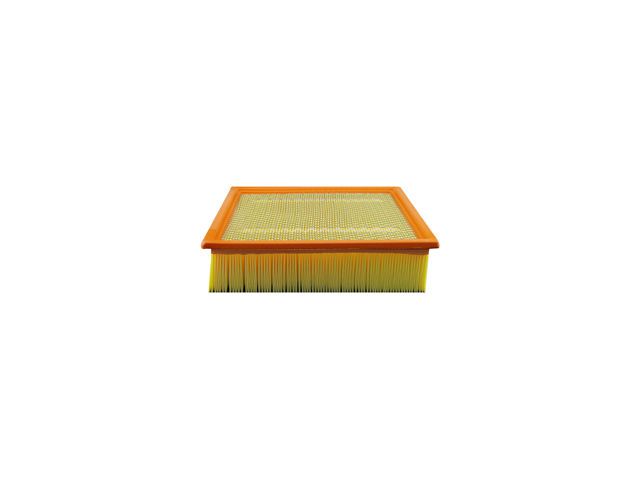
- Dirty or Clogged Engine Air Filter 🔴 High Probability → Shop Air Cleaner Assembly Ford TSB SSM 47597 directly calls this out as a primary cause. A restricted filter prevents the required amount of air from entering the engine, directly causing the correlation error. The PCM sees the throttle open, but the MAF reading doesn't rise as expected.
How to confirm: Visually inspect the engine air filter. If it is dark, full of debris, or has not been changed in over 15,000 miles, it is likely restricted.
Typical fix: Replace the engine air filter. TSB SSM 47597 also recommends performing a 'MAF Parameter Reset' with a diagnostic tool after replacement.
Est. part cost: $25-$50 - Soot-Clogged MAP Sensor and Port 🔴 High Probability → Shop Manifold Absolute Pressure Sensor The 6.7L Power Stroke's EGR system recirculates exhaust gas containing soot. This soot accumulates in the plastic intake manifold and clogs the small opening for the MAP sensor, preventing it from accurately reading pressure.
How to confirm: Remove the MAP sensor from the top of the intake manifold (held by one 8mm or 9/32" bolt). Inspect the sensor's tip and the port it sits in for heavy black soot buildup. The port may be completely blocked.
Typical fix: Carefully clean the soot from the sensor tip using MAF sensor cleaner. Gently and carefully clean the port in the intake manifold with a pick, small screwdriver, or a drill bit twisted by hand to break up the carbon. Do not drop debris into the manifold. If cleaning doesn't work, replace the sensor.
Est. part cost: $50-$120 - Outdated Powertrain Control Module (PCM) Software 🟡 Medium Probability → Shop Engine Control Module (ECM) Ford has released multiple TSBs (e.g., TSB 22-2115) stating that the original PCM software logic is too sensitive and can set P2074 incorrectly, often alongside P2073.
How to confirm: A Ford dealer or a qualified shop with a Ford diagnostic tool (like FDRS) can check the current software version of your PCM against the latest available version.
Typical fix: Reprogram the PCM to the latest software version. This must be done by a dealer or a properly equipped independent shop.
Est. part cost: $0 (if under warranty) - $150 - Cracked or Loose Charge Air Cooler (CAC) Pipe 🟡 Medium Probability → Shop Intercooler The plastic 'cold side' pipe that connects the intercooler to the throttle body is known to develop cracks or have its retaining clips fail, creating a boost leak. This means pressurized air measured by the MAF sensor escapes before reaching the MAP sensor.
How to confirm: Visually inspect all CAC (intercooler) hoses and connections, especially the plastic pipe leading to the engine intake. Squeeze the rubber sections to check for hidden splits. Check for cracks, loose clamps, or signs of oil mist which indicate a leak. A smoke test may be required to find smaller leaks.
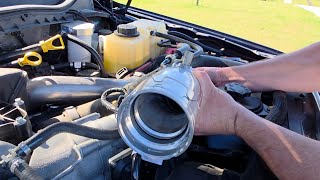
Typical fix: Replace the cracked pipe or secure the loose connection. Many owners upgrade to more durable aftermarket metal or silicone pipes. 🎬 See this walkthrough for replacing a cracked cold side hose
Est. part cost: $100-$250 - Dirty or Sticking Throttle Body ⚪ Low Probability Similar to the MAP sensor, the throttle body can accumulate soot and carbon from the EGR system, causing the butterfly valve to stick or move slowly. This creates a mismatch between the commanded throttle position and the actual airflow.
How to confirm: Remove the intake piping from the throttle body and inspect the valve and bore for black buildup. Manually move the plate to check for any binding or sticking.
Typical fix: Clean the throttle body bore and plate with a dedicated throttle body cleaner and a soft brush. A throttle relearn procedure may be needed afterward.
Est. part cost: $10-$20 (for cleaner)
Rare But Worth Checking
- Damaged Wiring or Connector to MAF/MAP Sensor: → Shop Manifold Absolute Pressure Sensor
Diagnosis Steps
- Check the engine air filter. If it's dirty, replace it. Per TSB SSM 47597, this is a primary cause. Clear codes and drive.
- Remove the MAP sensor located on the top of the plastic intake manifold, near the firewall. It is held by a single 8mm or 9/32" bolt.
- Inspect the sensor tip and its port in the manifold for soot buildup. The port is often completely blocked.
- Clean the sensor's tip carefully with MAF sensor cleaner. Gently clean the port using a pick, small screwdriver, or a drill bit twisted by hand to break up the carbon. Vacuum out any loose debris.
- Reinstall the sensor, clear the codes, and test drive under heavy load.
- If the code persists, thoroughly inspect all charge air cooler (intercooler) piping between the turbo, intercooler, and intake manifold. Pay close attention to the plastic cold-side pipe for cracks or loose connections. A smoke test is the most effective way to find leaks.
- Contact a Ford dealer or qualified shop to check if your vehicle has the latest PCM software. Reference TSB 22-2115. A software update may be the required fix.
- Inspect and clean the throttle body if it shows signs of carbon buildup.
- If all other steps fail, inspect the wiring and connectors for the MAP and MAF sensors for damage or loose pins before considering sensor replacement.
Parts You'll Likely Need
- Engine Air Filter
(OEM #BC3Z-9601-A / FA-1902)— A restricted air filter is a primary cause of this code, as documented by Ford TSB SSM 47597.
Trusted brands: Motorcraft, WIX, Donaldson, Baldwin
OEM price range: $35-$50
Aftermarket price range: $25-$40 - Manifold Absolute Pressure (MAP) Sensor
(OEM #BC3Z-9F479-B / CX2432 (replaces BC3Z-9F479-A))— This sensor's port is prone to clogging with soot. While cleaning often works, if the sensor is damaged during cleaning or fails electrically, it will need replacement.
Trusted brands: Motorcraft, Bosch, Standard Motor Products (SMP)
OEM price range: $80-$120
Aftermarket price range: $50-$90 - MAF Sensor Cleaner — Required for safely cleaning the MAP sensor without damaging its sensitive electronic components. Do not use brake or carburetor cleaner.
Trusted brands: CRC, Liqui Moly, WD-40 Specialist
OEM price range: $10-$15
Aftermarket price range: $10-$15
Related Codes That Often Appear With This One
- P2073 — P2073 is the same correlation error but specified for 'at Idle' instead of 'at Higher Load'. They share the same root causes (especially a clogged MAP sensor or software issue) and are often mentioned together in Ford TSBs.
- P0299 — P0299 indicates a 'Turbocharger Underboost' condition. A large boost leak from a cracked charge air cooler pipe can trigger both P0299 and P2074 simultaneously, as the measured air is escaping before it can build pressure in the manifold.
Technical Service Bulletins (TSBs) & Recalls
- SSM 47597: Notes that a dirty air filter can cause P2074 and to avoid replacing the PCM. It also specifies to perform a MAF parameter reset.
- TSB 22-2115: States that P2073 and P2074 can be caused by a software issue in the PCM and the fix is to reprogram the module.
- 23B63 / 22N14 S1: Customer satisfaction programs related to state inspection failures due to P2073/P2074, often leading to a PCM reflash.
Platform-Specific Known Issues
- TSB SSM 47597: Air Filter & MAF Reset: → Shop Air Cleaner Assembly Ford explicitly states that P2074 may be caused by a dirty air filter. The TSB warns technicians not to replace the PCM or MAF sensor for this code alone, but instead to replace the filter if needed and perform a MAF parameter reset using a diagnostic tool.
- TSB 22-2115: PCM Software Update: This bulletin notes that codes P2073 and/or P2074 can be caused by overly sensitive software logic in the PCM. The official fix is to reprogram the module to the latest calibration, which a dealer must perform.
- MAP Sensor Port Clogging: → Shop Manifold Absolute Pressure Sensor The location of the MAP sensor on the 6.7L Power Stroke's plastic upper intake manifold makes it highly susceptible to clogging from the EGR system. This is widely considered the most common cause of P2073/P2074 on this platform, as documented in countless owner forums and repair videos.
Mechanic-Grade Diagnostic Values
- Adaptive Mass Airflow (AMA) Learned Value — expected: Within +20% and -20% of modeled airflow under load.. Failure: If the final stored value is greater than a +20% or less than a -20% deviation, the P2074 fault is set.
- MAP Sensor Voltage (Key On, Engine Off) — expected: 2.0V to 2.5V (for turbocharged models at sea level).. Failure: Voltage significantly outside this range indicates a sensor or wiring issue. This reading should correlate with the BARO (Barometric) sensor reading.
- MAP, BARO, and EBP Sensor Correlation (Key On, Engine Off) — expected: All three sensors should read atmospheric pressure and have very similar voltage outputs.. Failure: A biased sensor is identified if its voltage is more than 0.65V different from the other two sensors.
Scan Tool Commands That Help
- Ford IDS / FORScan: Reset/Clear MAF Sensor Adaptation — This function must be performed after replacing the MAF sensor or reprogramming the PCM to clear learned offset values and allow the system to relearn airflow characteristics. It is explicitly required by Ford TSBs.
- Ford IDS or equivalent: Live Data Graphing: MAP, MAF, and Throttle Position — During a test drive under load, graphing these three parameters simultaneously allows a technician to visually confirm the mismatch. As throttle position and MAF readings increase, the MAP reading will fail to rise as expected if a leak or restriction is present.
Wiring & Ground Locations
- MAP Sensor Connector — On top of the upper intake manifold, near the firewall.. The connector provides the MAP sensor with a 5-volt reference, a ground, and a path for the signal wire back to the PCM. Damage to these wires or pins will cause incorrect readings and trigger correlation codes.
- PCM Body Connector — This is one of the three large connectors on the Powertrain Control Module (PCM).. The main power and ground connections for the PCM run through the body connector. Corrosion or a poor connection here can cause a wide range of issues, including sensor data problems.
Real Owner Repair Stories
- YouTube channel 'Power Stroke Tech Talk w/ A-Rod' (2017 Ford F-Series 6.7L (demonstrates a principle applicable to 2011-2015)) — Check engine light, reduced power, multiple codes including P0401 (EGR Flow Insufficient).
❌ Tried (didn't work) Replaced CCV box for an oil leak., Performed multiple DPF regens., Disassembled and inspected EGR cooler (it was clean)., Checked the air filter and found it was dirty, but replacing it did not solve the root problem.
✅ What actually fixed it The technician eventually found a severe, overlooked restriction elsewhere in the intake system, not just the air filter. The pinpoint test for the codes instructed to 'check for intake restrictions' as a first step, which he initially interpreted as only the air filter. The final fix was clearing the deeper blockage.
"I Checked Everything" — The Actual Cause
- In a documented repair, a technician chased multiple codes (P0401, P20EE) that share root causes with P2074. The initial diagnostic steps, including checking for intake restrictions, were performed partially by only inspecting the air filter. After extensive diagnostics, the root cause was discovered to be a severe restriction further down in the intake tract that was missed initially and would not be found by a standard smoke test for leaks.
OEM Part Supersession History
BC3Z-9F479-A→BC3Z-9F479-B (Motorcraft CX2432)— Standard part revision update by the manufacturer.
Model Year Variations Within This Range
- 2011-2014 vs. 2015: The turbocharger and its control strategy changed significantly. 2011-2014 models use a Single-Sequential Turbo (SST), while 2015 models switched to a larger, more conventional Garrett GT37 single turbo. This affects airflow dynamics and how the engine builds boost, which can influence the conditions under which a P2074 correlation fault may occur.
Helpful Videos
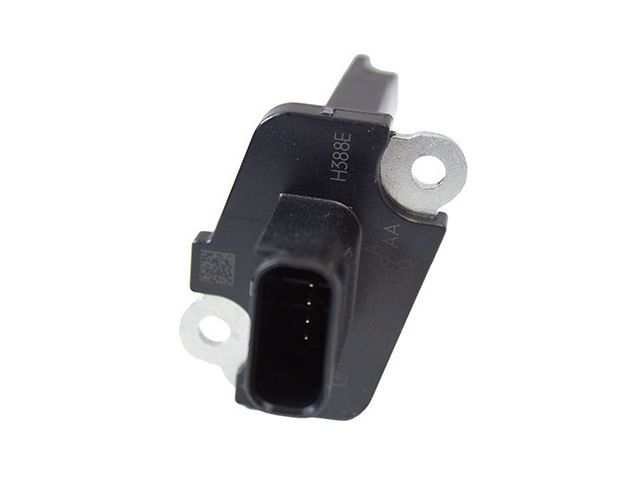
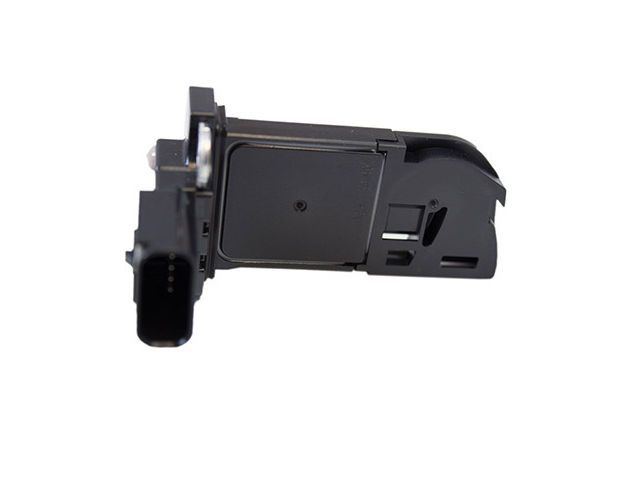
We Have This Part in Stock



The information in this article is provided for general reference and educational purposes only. Vehicle specifications, procedures, and part compatibility can vary by production date, trim level, and region. Always consult your vehicle's factory service manual and verify part numbers before purchasing or performing repairs. Safety-critical components such as airbags, seat belts, and braking systems should be installed by a qualified professional.
- Ford F-450 SD:
- 🧭 Diagnostic Flowchart
- 🎬 Helpful Videos
- 🛍️ Shop This Part
- What's Unique About the 2011-2015 Ford F-450 SD
- Symptoms You May Notice
- Most Likely Causes
- Rare But Worth Checking
- Diagnosis Steps
- Parts You'll Likely Need
- Related Codes That Often Appear With This One
- Technical Service Bulletins (TSBs) & Recalls
- Platform-Specific Known Issues
- Mechanic-Grade Diagnostic Values
- Scan Tool Commands That Help
- Wiring & Ground Locations
- Real Owner Repair Stories
- "I Checked Everything" — The Actual Cause
- OEM Part Supersession History
- Model Year Variations Within This Range
- 🎟️ Get 5% Off