

OBD-II Code P2084: Exhaust Gas Temperature Sensor Performance Issue
What P2084 means, why it triggers, and how to fix it
- Replace the Bank 1, Sensor 2 Exhaust Gas Temperature (EGT) sensor to resolve the most common cause of code P2084.
- Stop driving within 50 miles of this code appearing to prevent a clogged Diesel Particulate Filter (DPF) and a potential $2,000+ replacement bill.
- Check for Technical Service Bulletins (TSBs) before buying parts; 2014-2016 Ram/Jeep EcoDiesels often only need a PCM software update.
- Perform a 'cold soak' test by letting the engine sit overnight and verifying all EGT sensors read within 5°F of ambient temperature on a scanner.
What Does P2084 Mean?
The Powertrain Control Module (PCM) detected an erratic or implausible signal from the exhaust gas temperature (EGT) sensor labeled 'Bank 1, Sensor 2.' This sensor is failing to report the expected temperature for current engine conditions. This failure directly disables the Diesel Particulate Filter (DPF) regeneration cycle.
Technical definition: Exhaust Gas Temperature (EGT) Sensor Circuit Range/Performance Bank 1 Sensor 2. The PCM determined the EGT sensor's voltage signal is outside the predetermined range, stagnant, or implausible compared to other EGT sensors. The PCM relies on this specific sensor to trigger DPF regeneration and prevent exhaust overheating.
Can I Drive With P2084?
Yes, But With Caution. You can drive briefly, but fix this immediately. Ignoring P2084 prevents your diesel particulate filter (DPF) from regenerating. Driving over 50 miles with this code causes a completely clogged DPF, turning a $150 sensor replacement into a $2,000 to $8,000 major repair.
Common Causes
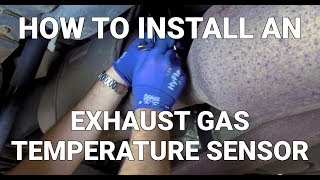
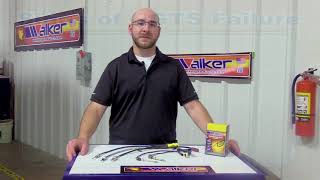
- Faulty Exhaust Gas Temperature (EGT) Sensor (Very Common) — The EGT sensor is the primary point of failure. 🎬 Watch: Step-by-step guide to installing a new EGT sensor. Constant exposure to extreme heat, vibration, and exhaust contaminants degrades and destroys the internal resistor.
- Outdated PCM Software (Common) — Original PCM software on 2014-2016 Ram 1500 and Jeep Grand Cherokee EcoDiesel models is overly sensitive. Manufacturers released Technical Service Bulletins (TSBs) with software updates to correct the logic and clear this code.
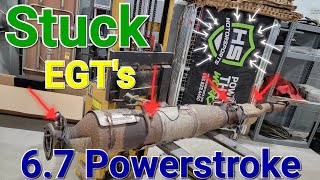
- Damaged Wiring or Connectors (Common) — Wiring and connectors under the vehicle suffer damage from road debris, corrosion, or melting exhaust heat, causing shorts or open circuits. On 2011-2014 Ford 6.7L diesels, an improper factory crimp on the harness connector creates high resistance (TSB 14-0108). 🎬 See these expert tips for removing a stuck Ford sensor.
- Excessive Soot/Carbon Buildup on Sensor (Common) — A thick layer of soot builds up on the sensor's tip, insulating it. This causes the sensor to respond slowly to temperature changes or read artificially low.
- Exhaust System Leaks (Less Common) — A crack or leak upstream of the EGT sensor draws cooler outside air into the exhaust stream. This forces the sensor to report an out-of-range low temperature.
- Faulty EGR System (Rare) — A stuck EGR valve drastically 🎬 Watch: How to test and replace a faulty EGR sensor. alters exhaust temperatures. This triggers a plausibility code if the EGT sensor reads a temperature the PCM knows is impossible for current conditions.
- Aftermarket Exhaust Systems (Rare) — Installing an aftermarket exhaust alters backpressure and thermal characteristics. The EGT sensor reports accurate values, but the stock PCM calibration flags them as out of range.
- Faulty Powertrain Control Module (PCM) (Very Rare) — PCM failure is extremely rare. Rule out the sensor, wiring, and software updates entirely before considering a PCM replacement.
Symptoms
- Check Engine Light is On — This is the most frequent and often the only initial symptom the driver notices.
- Reduced Engine Performance / Limp Mode — The vehicle enters a reduced power 'limp mode' to protect the engine and emissions components from heat damage or excessive backpressure.
- Reduced Fuel Economy — The engine consumes more fuel because the PCM defaults to a rich fuel mixture to protect the catalyst when temperature data is missing.
- Failed Emissions Test — An active P2084 code and an illuminated Check Engine Light result in an automatic failure of a state OBD-II emissions inspection.
- White or Black Smoke from Exhaust — Incorrect EGT readings force improper fuel mixture adjustments, resulting in visible smoke from the tailpipe.
- DPF Regeneration Disabled / Warning Light (also visible on scanner) — The PCM disables the DPF cleaning process (regeneration) because it cannot trust the temperature data. A separate DPF warning light illuminates shortly after.
Diagnostic Flowchart
Tap your situation to follow the diagnostic path that matches what you're seeing on this code.
Common Fixes & Costs
- Replace the EGT Sensor (Bank 1, Sensor 2) — Parts: $80-$150, Labor: $100-$200, ~1 hr book time (DIY)
- Update PCM Software — Parts: $0, Labor: $100-$200, ~1 hr book time (Professional)
- Repair Damaged Wiring or Connector — Parts: $20-$60, Labor: $150-$300, ~2 hr book time (Intermediate)
- Repair Exhaust Leak — Parts: $25-$100, Labor: $125-$300, ~1.5 hr book time (Intermediate)
Used vs. New Parts: Buying Guide
When a used part is worth it: Buying a used EGT sensor is never recommended. They are wear-and-tear components exposed to extreme heat cycles. The minimal savings do not justify the risk of premature failure.
Donor-vehicle mileage cap: roughly under 40000 miles for the part to have meaningful remaining life.
Donor quality checklist:
- Visually inspect for corrosion, damaged threads, or a frayed wiring pigtail.
- Match the part number exactly; sensors are calibrated for specific emissions systems.
Decision logic:
- If The cost of a new OEM or quality aftermarket sensor is under $250. → Always buy new. The reliability and warranty outweigh the small savings of a used part.
- If The part is a known high-failure item for your vehicle model. → Buy a new OEM or reputable aftermarket (e.g., Bosch, Denso) part to ensure longevity.
Warranty tradeoff: Used parts offer a 30-day warranty at best. New aftermarket sensors include a 1-year to limited lifetime warranty.
Worst-case if a used part fails: $250-$500 if a used sensor fails shortly after installation, requiring a second part purchase and repeat labor charges.
What Happens If You Wait — Timeline
- 0-2 weeks: Code P2084 sets and the Check Engine Light illuminates. The PCM disables active DPF regeneration. No drivability symptoms are present yet. (MPG impact: 0-3%% · Added cost: $0)
- 2-4 weeks: Soot accumulates in the DPF beyond normal capacity. The DPF restriction warning light illuminates. Fuel economy drops as exhaust backpressure increases. (MPG impact: 3-8%% · Added cost: $50-$150 in wasted fuel)
- 1-3 months: The DPF is heavily saturated. The vehicle enters 'limp mode' to prevent engine damage. A forced stationary regeneration at a shop is required. (MPG impact: 10-20%% · Added cost: $300-$700 for a forced regeneration attempt.)
- 3+ months: The DPF is permanently clogged with hardened soot and ash. Extreme backpressure damages turbocharger seals. The DPF must be replaced. (MPG impact: 20%+% · Added cost: $2,000-$8,000+ for DPF and potential turbocharger replacement.)
Cost of Not Fixing It
- 0-2 weeks: DPF regeneration is disabled. Fuel economy decreases by 3-8%. (Added cost: $50-$150 in extra fuel costs.)
- 1-3 months: The DPF becomes heavily saturated with soot. The vehicle enters limp mode, requiring a forced stationary regeneration at a dealership. (Added cost: $300-$700 for a forced regeneration service.)
- 3+ months: The DPF becomes completely clogged and permanently damaged. Extreme backpressure damages the turbocharger. (Added cost: $2,000-$8,000+ for DPF and potential turbocharger replacement.)
Diagnosis Steps
- Read Codes and Review Freeze Frame Data
Use an OBD-II scanner to confirm P2084 is active. Check for related codes (e.g., P2002, P2080). Analyze the freeze-frame data to see the exact engine conditions when the fault occurred.
Tools: OBD-II Scanner (Beginner) - Check for Technical Service Bulletins (TSBs)
Search online for TSBs related to your specific year, make, and model. For Ram/Jeep EcoDiesels and Ford Power Strokes, a software update or wiring pigtail repair is the documented fix.
Tools: Computer or Smartphone with Internet Access (Beginner) - PRO TIP: Monitor Live Data (Cold Soak Test)
Let the vehicle sit overnight. Connect a scanner and view live data for all EGT sensors without starting the engine. They must all read within 5°F of ambient air temperature. If Bank 1 Sensor 2 reads a default (-40°F) or an extreme high value, the sensor is dead.
Tools: Advanced OBD-II Scanner (Intermediate) - Visually Inspect the Sensor and Wiring
Locate EGT Bank 1, Sensor 2 (usually at the DPF inlet). Inspect the sensor body, connector, and wiring harness for melting, chafing, or corrosion. Inspect the exhaust pipe upstream for soot trails indicating a leak.
Tools: Flashlight, Safety Glasses (Beginner) - Test the Sensor's Resistance
Disconnect the sensor and use a multimeter set to Ohms (Ω) to measure resistance across the two pins. Compare to manufacturer specs (e.g., 200-240 ohms at 70°F for EcoDiesels). Infinite resistance (open) or zero resistance (short) confirms a failed sensor.
Tools: Digital Multimeter (Intermediate) - Dynamic Sensor Test with Heat Gun
Remove the EGT sensor but leave it electrically connected. Monitor its temperature on a scan tool while gently heating the tip with a heat gun. The temperature must rise smoothly and quickly. Erratic or slow responses indicate a failing sensor.
Tools: Heat Gun, Scan Tool, Basic Hand Tools (Intermediate) - Test Circuit Voltage and Continuity
If the sensor passes, test the wiring. Turn the ignition on (engine off) and check for a 5-volt reference signal at the harness connector. Perform a continuity test on the signal and ground wires from the sensor connector back to the PCM to find breaks or shorts.
Tools: Digital Multimeter, Vehicle-Specific Wiring Diagram (Advanced)
When This Code Triggers (Freeze-Frame Conditions)
- Engine Coolant Temp: 170-200°F (75-95°C) (Fully warmed up, stable operating temperature.)
- RPM: 1200-2500 (Steady-state cruise or light acceleration.)
- Engine Load: 25-70% (Vehicle is under moderate load, not idling or at full throttle.)
- Vehicle Speed: 40-65 mph (Sustained highway or city cruise speeds.)
Related Codes
- P2080 — Code for Bank 1, Sensor 1. If P2080 and P2084 appear together, it indicates a shared wiring issue, a major exhaust leak, or a PCM software fault, not dual sensor failure.
- P2085 — Indicates an intermittent electrical signal from Bank 1, Sensor 2. P2084 is a performance fault, while P2085 means the circuit is physically cutting out.
- P2002 / P0420 — DPF or Catalyst Efficiency Below Threshold. A faulty EGT sensor provides bad data, preventing DPF regeneration and triggering these codes. Always fix EGT codes first.
- P2086 — The equivalent code for Bank 2, Sensor 2 on V-style engines. Seeing both P2084 and P2086 points to a common cause like a PCM software issue.
Climate & Environmental Factors
- Cold Climates: Cold starts expose slow-responding sensors. The PCM expects a rapid temperature rise on startup; a sluggish sensor deviates from the curve and triggers the code.
- High Humidity / Road Salt (Rust Belt): Salt and moisture accelerate corrosion on the sensor threads, making removal difficult, and corrode connector pins, causing electrical shorts.
How to Talk to a Mechanic About This Code
Say this: "I have an active P2084 code. Can you check for any software-related TSBs for my VIN and perform a cold-start live data check to compare all EGT sensor readings before recommending a part replacement?"
This directs the technician to perform specific, efficient tests and prevents them from replacing a part without diagnosing underlying software or wiring issues.
Avoid saying:
- 'My check engine light is on, can you look at it?' (Invites a costly, open-ended diagnostic process).
- 'Just replace the EGT sensor.' (Prevents proper diagnosis of wiring or software).
- 'I think it's an oxygen sensor.' (Leads to misdiagnosis, as EGT and O2 sensors are different).
Questions to ask before authorizing the repair:
- Did the cold-start live data check show that EGT Bank 1 Sensor 2 was reading incorrectly compared to ambient temperature?
- Did you inspect the wiring harness and connector for melting or corrosion?
- If a software update is available, is it covered under any emissions warranty or recall?
Where to Take It: Dealer vs Independent vs Chain
- Dealer:
The best first stop for specific makes (VW, Ram, Jeep) due to warranty extensions and software updates. For all others, use an independent shop.
Best for: Vehicles under warranty., VW/Audi TDI (2009-2015) and Ram/Jeep EcoDiesel (2014-2016) models with known TSBs or extended warranties., When a specific PCM software flash is the required first step.
Downsides: Highest labor rates, often 40-65% more than independent shops. (Typical cost: +50% vs. baseline) - Independent Shop:
Excellent choice for most out-of-warranty vehicles. Ensure they can perform proper live data diagnostics on diesel emissions systems.
Best for: Out-of-warranty vehicles requiring a straightforward sensor or wiring repair.
Downsides: May not have access to the latest manufacturer-specific software updates. (Typical cost: +0% vs. baseline) - Chain Shop:
Not recommended. The risk of misdiagnosis or an incomplete repair is high.
Best for: Simple, unrelated maintenance like oil changes or tires.
Downsides: Technicians often lack specific diesel emissions diagnostic experience., High risk of replacing the sensor without diagnosing underlying wiring or software issues. (Typical cost: -10% vs. baseline)
When to Walk Away From the Repair
If the estimated repair cost exceeds 40-50% of the car's private-party value, evaluate your options.
- Car worth $8000, fix is $350: Fix it. This is a standard repair cost and well below the threshold.
- Car worth $6000, fix is $4000: Walk away. The high cost indicates the DPF is clogged and needs replacement. The repair is over 65% of the car's value.
- Car worth $3000, fix is $1800: Walk away. The repair cost is 60% of the vehicle's value, making it a poor investment.
What Scan Tool You Need for This Code
Minimum: An OBD-II scanner that can read and graph live sensor data.
A basic $20 code reader cannot display live temperature data from the EGT sensors, which is essential for performing the 'cold soak' test to confirm the sensor is faulty.
Budget: BlueDriver Pro (~$99) — Connects to your smartphone and displays live data for all EGT sensors, allowing you to perform key diagnostic tests yourself.
Mid-range: Foxwell NT510 Elite (~$180) — A handheld scanner providing live data graphing and manufacturer-specific functions, including advanced resets needed after a repair.
Professional: Autel MaxiCOM MK808 (~$450) — Offers full-system, bidirectional diagnostics to help diagnose complex wiring or module issues triggering P2084.
Rent vs buy: Auto parts stores offer free loaner tools, but basic scanners may not provide live data. Buying a tool like the BlueDriver Pro is a worthwhile investment for diesel owners.
How to Clear the Code After You Fix It
- Reconnect battery if disconnected during repair.
- Use an OBD-II scan tool to clear the diagnostic trouble codes (DTCs).
- Perform a complete OBD-II drive cycle to allow readiness monitors to run.
Drive cycle (~20 minutes): Cold start the engine and idle for 5 minutes. Drive for 15 minutes with steady-speed cruising (50-60 mph) and moderate accelerations. Idle for 2 minutes before shutting down.
Readiness monitors affected: Catalyst monitor, Exhaust Gas Sensor monitor, Comprehensive Component Monitor (CCM)
Before emissions retest: drive at least 50 miles to fully set monitors.
Watch out for:
- Clearing the code without performing a drive cycle leaves readiness monitors incomplete, causing an automatic emissions test failure.
- The code returns immediately if the root cause (faulty sensor, wiring issue) is not repaired.
Will This Fail Emissions / State Inspection?
Yes — this code typically fails an OBD-II emissions inspection.
- California: An active P2084 code causes an immediate smog check failure. All OBD readiness monitors must be set to 'Ready' to pass.
- New York: An illuminated Check Engine Light and an active P2084 code result in an automatic NYS DMV emissions test failure.
- Texas: In the 17 counties requiring emissions testing, a vehicle with code P2084 fails the OBD portion of the inspection.
Most Commonly Affected Vehicles
- Ram 1500 EcoDiesel (2014-2016) — Highly susceptible. TSBs mandate a PCM software update as a primary fix before replacing parts.
- Jeep Grand Cherokee EcoDiesel (2014-2016) — Shares the same engine and software issues as the Ram 1500.
- Ford F-Series Super Duty (Diesel) (2008-2016) — TSB 14-0108 for 2011-2014 6.7L models identifies a faulty wiring harness connector crimp as a primary cause.
- Volkswagen Jetta, Golf, Passat (TDI models) (2009-2015) — EGT sensor failures are frequent. Repairs are often covered under the extended 'Dieselgate' emissions warranty.
- Chevrolet / GMC Cruze (Diesel), Silverado/Sierra HD (2011-2018) — Triggers P2084 due to sensor failure, wiring issues near the exhaust, or heavy soot buildup.
- BMW Various Diesel Models (e.g., 335d, X5 xDrive35d) (2009-2013) — Known for EGT sensor failures and brittle wiring harnesses from extreme heat cycles.
- Hyundai / Kia Santa Fe, Veracruz, Sorento (Diesel) (2007-2012) — Sets P2084 when the sensor signal is out of range during Catalytic Particulate Filter monitoring.
- Subaru Forester, Outback (Diesel) (2008-2014) — European and Australian market Boxer Diesels log this code due to straightforward EGT sensor failure.
Manufacturer-Specific Notes
- Ram / Jeep (Stellantis): For 2014-2016 3.0L EcoDiesels, a PCM software update is the mandatory first step. The AEM emissions recall warranty often covers diagnosis and sensor replacement.
- Ford: On 6.7L Power Strokes, TSB 14-0108 identifies an improper crimp on the body-side harness connector. The official fix is replacing the connector with a pigtail, not the sensor.
- Volkswagen / Audi: On 2009-2015 TDI models, this repair is almost always covered by the transferable 'Dieselgate' Extended Emissions Warranty, which covers all EGT sensors and labor.
Real Owner Stories
2014 Jeep Grand Cherokee EcoDiesel at 115K miles
Check Engine Light came on with code P2084. No other symptoms were present.
What they tried:
- The owner took the vehicle to a dealer to check for software updates. TSB 18-023-15 REV. C was found and the PCM was reprogrammed.
- The code returned a week later. The owner performed a 'cold soak' test and found Bank 1 Sensor 2 reading 85°F on a 40°F morning, while other sensors read ambient temperature.
- The owner replaced the EGT sensor (Mopar P/N 68211210AA).
Outcome: Replacing the sensor and clearing the code resolved the issue permanently. DPF regeneration cycles resumed normally.
Lesson: Always check for TSBs related to PCM software first on EcoDiesels. However, a software update doesn't fix a physically broken sensor. The 'cold soak' test confirms hardware failure.
2013 Ford F-250 6.7L Power Stroke at 88K miles
The truck threw a P2084 code along with P2080 and P242A while towing.
What they tried:
- The owner suspected a sensor failure but searched forums first.
- They found Ford TSB 14-0108, describing an improper crimp on the body-side wiring harness connector causing multiple EGT codes.
- The owner inspected the harness connector and found visible corrosion on a pin.
Outcome: The owner spliced in the updated Ford pigtail connector using heat-shrink butt connectors. All codes cleared and the repair cost under $50.
Lesson: Multiple simultaneous sensor codes indicate a wiring or software issue, not multiple failed sensors. Search for TSBs specific to your codes before buying parts.
2012 VW Jetta TDI at 130K miles
P2084 code appeared right before a state emissions test.
What they tried:
- The owner called a VW dealership with their VIN.
- The dealer confirmed the vehicle was covered under the 'Dieselgate' Extended Emissions Warranty.
Outcome: The dealership diagnosed a failed EGT sensor and replaced it. The entire cost of diagnosis, parts, and labor was covered 100% by the extended warranty.
Lesson: For any 2009-2015 VW/Audi TDI, check your 'Dieselgate' warranty status first. It covers the entire emissions system and saves hundreds of dollars.
2018 Chevy Cruze Diesel at 75K miles
The Check Engine Light for P2084 appeared intermittently during cold weather.
What they tried:
- The owner cleaned the EGT sensor, but the code returned.
- They replaced the EGT sensor with an aftermarket part. The code still returned.
- A shop monitored live data while wiggling the wiring harness and found the sensor's voltage dropped out when the harness moved.
Outcome: The shop repaired a brittle section of the wiring harness near the exhaust. The intermittent code was permanently resolved.
Lesson: Intermittent codes often point to a wiring or connection issue. Wiggling the harness while monitoring live data is the best way to find these faults.
How to Prevent This Code From Triggering
- Use high-quality, low-ash diesel engine oil (e.g., API CJ-4/CK-4) (Every oil change) — Incorrect oil increases ash buildup in the DPF, forcing hotter and more frequent regeneration cycles that destroy EGT sensors.
- Drive at sustained highway speeds (At least once per week for 30-45 minutes) — Short trips prevent the exhaust from reaching temperatures required for passive DPF regeneration. Highway driving allows the system to clean itself efficiently, reducing heat stress on sensors.
- Use high-quality diesel fuel and replace fuel filters (Per manufacturer maintenance schedule) — Poor fuel and clogged filters create excessive soot during combustion, clogging the DPF faster and insulating the EGT sensors.
- Do not interrupt active DPF regeneration cycles (As needed) — Shutting the engine off mid-cycle causes incomplete soot burn-off. This leads to more intense regens in the future, accelerating EGT sensor wear.
Frequently Asked Questions
What does 'Bank 1, Sensor 2' mean?
'Bank 1' is the side of the engine with cylinder #1. 'Sensor 2' indicates its position downstream in the exhaust, typically located right at the inlet of the DPF assembly.
What are the most common misdiagnosis mistakes for P2084?
The top mistakes are replacing an oxygen (O2) sensor instead of the EGT sensor, replacing the wrong EGT sensor (Sensor 1 instead of 2), or ignoring manufacturer software update TSBs.
How can I easily test the EGT sensor at home?
Let the vehicle sit overnight, then use a scanner to read live data for all EGT sensors without starting the engine. They must all read within 5°F of the ambient air temperature. If Sensor 2 shows a wildly different value like -40°F or 1000°F, it is defective.
Can I clean an EGT sensor?
Cleaning heavy soot off a sensor with compressed air is rarely a permanent fix. The code is triggered by an internal electrical failure of the sensor's resistor, requiring replacement.
Is the EGT sensor the same as an oxygen (O2) sensor?
No. An EGT sensor measures exhaust temperature, while an O2 sensor measures oxygen content. They look similar and are located near each other, leading to frequent misidentification.
Is P2084 covered under the diesel emissions warranty?
Yes, frequently. VW TDIs under the 'Dieselgate' settlement and Ram/Jeep EcoDiesels with the AEM recall have comprehensive extended warranties covering EGT sensors.
How hard is it to replace an EGT sensor myself?
It is manageable for a DIYer, but the primary risk is the sensor seizing in the exhaust pipe due to rust. Liberally apply penetrating oil and use a dedicated EGT sensor socket to avoid rounding the nut.
Will this code go away by itself?
No. P2084 indicates a confirmed hardware, wiring, or software fault that must be repaired and cleared with a scanner.
Key Takeaways
- Replace the Bank 1, Sensor 2 Exhaust Gas Temperature (EGT) sensor to resolve the most common cause of code P2084.
- Stop driving within 50 miles of this code appearing to prevent a clogged Diesel Particulate Filter (DPF) and a potential $2,000+ replacement bill.
- Check for Technical Service Bulletins (TSBs) before buying parts; 2014-2016 Ram/Jeep EcoDiesels often only need a PCM software update.
- Perform a 'cold soak' test by letting the engine sit overnight and verifying all EGT sensors read within 5°F of ambient temperature on a scanner.
Helpful Videos

Shop the Parts Behind P2084
Below are the parts most often responsible for code P2084, ranked by how frequently each one is the actual culprit (per the diagnosis above). Tap any to see what we have for your vehicle.


The information in this article is provided for general reference and educational purposes only. Vehicle specifications, procedures, and part compatibility can vary by production date, trim level, and region. Always consult your vehicle's factory service manual and verify part numbers before purchasing or performing repairs. Safety-critical components such as airbags, seat belts, and braking systems should be installed by a qualified professional.
- 🧭 Diagnostic Flowchart
- 🎬 Helpful Videos
- 🛍️ Shop This Part
- What Does P2084 Mean?
- Can I Drive With P2084?
- Common Causes
- Symptoms
- Common Fixes & Costs
- Used vs. New Parts: Buying Guide
- What Happens If You Wait — Timeline
- Cost of Not Fixing It
- Diagnosis Steps
- When This Code Triggers (Freeze-Frame Conditions)
- Related Codes
- Climate & Environmental Factors
- How to Talk to a Mechanic About This Code
- Where to Take It: Dealer vs Independent vs Chain
- When to Walk Away From the Repair
- What Scan Tool You Need for This Code
- How to Clear the Code After You Fix It
- Will This Fail Emissions / State Inspection?
- Most Commonly Affected Vehicles
- Manufacturer-Specific Notes
- Real Owner Stories
- 2014 Jeep Grand Cherokee EcoDiesel at 115K miles
- 2013 Ford F-250 6.7L Power Stroke at 88K miles
- 2012 VW Jetta TDI at 130K miles
- 2018 Chevy Cruze Diesel at 75K miles
- How to Prevent This Code From Triggering
- Frequently Asked Questions
- What does 'Bank 1, Sensor 2' mean?
- What are the most common misdiagnosis mistakes for P2084?
- How can I easily test the EGT sensor at home?
- Can I clean an EGT sensor?
- Is the EGT sensor the same as an oxygen (O2) sensor?
- Is P2084 covered under the diesel emissions warranty?
- How hard is it to replace an EGT sensor myself?
- Will this code go away by itself?
- Key Takeaways
- 🎟️ Get 5% Off