

OBD-II Code P2085: Exhaust Gas Temperature Sensor Circuit Intermittent (Bank 2, Sensor 1)
What P2085 means, why it triggers, and how to fix it
- Always inspect the EGT sensor wiring harness first, as corroded connectors cause over 50% of P2085 intermittent faults.
- Limit driving to under 100 miles with an active P2085 code to prevent your vehicle from entering a permanent 50-mph limp mode.
- Fix this code immediately on diesel engines to restore the DPF regeneration cycle and avoid a $2,000 filter replacement.
- Use a digital multimeter to verify the EGT sensor resistance reads between 150 and 220 Ohms when cold before buying replacement parts.
- Perform a live-data 'wiggle test' on the sensor harness; if the temperature reading spikes to 2000°F or drops to -40°F, you have found the broken wire.
What Does P2085 Mean?
P2085 means your Powertrain Control Module (PCM) is receiving an irregular or dropping signal from the Exhaust Gas Temperature (EGT) sensor on 'Bank 2, Sensor 1'. The PCM uses this sensor to protect the engine from heat damage and manage the DPF regeneration cycle in diesel vehicles.
Technical definition: The SAE/OBD-II definition is 'Exhaust Gas Temperature (EGT) Sensor Circuit Intermittent - Bank 2 Sensor 1.' The PCM expects a continuous voltage signal corresponding to exhaust temperature. Any interruption triggers this code.
Can I Drive With P2085?
Yes, But With Caution. Yes, you can drive short distances, but fix it immediately. Your vehicle will likely enter a reduced power 'limp mode.' Ignoring the code prevents the Diesel Particulate Filter (DPF) from regenerating. Driving more than 100 miles causes a clogged DPF or catalytic converter, turning a minor sensor issue into a $2,500 repair.
Common Causes
- Damaged or corroded wiring and connectors (Very Common) — The EGT sensor wiring lives in a harsh, high-heat environment under the car. Wires become brittle, insulation melts, and connectors corrode from road salt, causing the signal to cut out.
- Failed Exhaust Gas Temperature (EGT) Sensor (Common) — Extreme temperature cycles and vibration cause the sensor's internal components to break down, creating an internal short or open circuit that leads to intermittent readings.
- Poor ground connection (Less Common) — A corroded ground connection for the EGT circuit introduces electrical noise or unstable voltage, which the PCM interprets as an intermittent signal.
- Aftermarket exhaust system without EGT provisions (Less Common) — Installing a high-performance exhaust system that lacks a proper EGT sensor bung triggers this code because the computer detects missing or nonsensical readings.
- Exhaust leaks near the sensor (Less Common) — A crack in the exhaust manifold near the EGT sensor lets in outside air, causing temperature readings to fluctuate wildly and triggering an intermittent fault.
- Contamination of the sensor tip (Rare) — Oil or antifreeze leaks can coat the EGT sensor tip. This buildup insulates the sensor, causing inaccurate temperatures and intermittent codes as the contamination heats and cools.
- Powertrain Control Module (PCM) failure or software glitch (Rare) — Internal solder joints in the PCM can fail, or a software bug can misinterpret a valid signal. This requires a dealer software update or module replacement.
Symptoms
- Check Engine Light is on — The light illuminates steadily on your dashboard. On VW/Audi models, the glow plug light flashes instead.
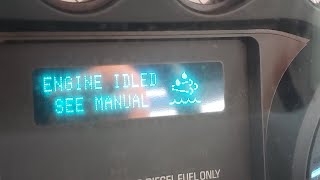
- Reduced engine power or 'limp mode' — The computer limits engine power to protect the turbocharger and exhaust components from overheating. You will feel a severe loss of acceleration.
- Decreased fuel economy — Unreliable temperature data forces the engine to run a rich fuel strategy or trigger unnecessary DPF regeneration cycles, wasting fuel.
- Increased black smoke from exhaust — Incorrect EGT readings cause poor combustion, resulting in visible black smoke during acceleration in diesel vehicles.
- Diesel Particulate Filter (DPF) regeneration failure (also visible on scanner) — On diesel vehicles, a faulty EGT sensor halts the DPF cleaning process, leading to a clogged filter and secondary warning lights.
Diagnostic Flowchart
Tap your situation to follow the diagnostic path that matches what you're seeing on this code.
Common Fixes & Costs
- Cleaning corroded connectors and applying dielectric grease — Parts: $5 - $15, Labor: $75 - $150, ~0.5 hr book time (DIY)
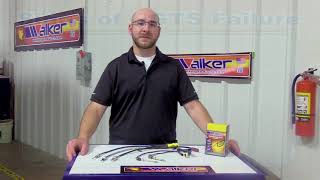
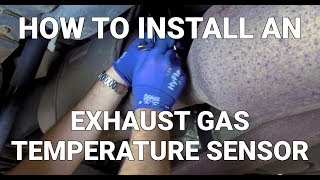
- Replacing the Exhaust Gas Temperature (EGT) Sensor — Parts: $70 - $220, Labor: $100 - $250, ~1.0 hr book time (DIY)
- Repairing damaged wiring — Parts: $10 - $30, Labor: $100 - $200, ~1.5 hr book time (Intermediate)
- Updating or reprogramming the Powertrain Control Module (PCM) — Parts: $0, Labor: $150 - $250, ~1.0 hr book time (Professional)
- Replacing the Powertrain Control Module (PCM) — Parts: $600 - $1500, Labor: $150 - $300, ~1.5 hr book time (Professional)
Used vs. New Parts: Buying Guide
When a used part is worth it: Never buy a used EGT sensor. They are wear items in a harsh environment, and the minor savings do not justify paying labor twice when it fails.
Donor-vehicle mileage cap: roughly under 50000 miles for the part to have meaningful remaining life.
Donor quality checklist:
- Verify the exact part number, as identical-looking sensors have different resistance curves.
- Avoid parts from rust-belt states due to connector corrosion.
- Inspect for physical damage to the probe.
Decision logic:
- If A new OEM or quality aftermarket sensor costs under $250. → Always buy new for the warranty and reliability.
- If The part is a cheap, unbranded aftermarket sensor. → Avoid it. Poor accuracy causes DPF regeneration failures.
Warranty tradeoff: Used parts offer a 30-day warranty. New aftermarket sensors offer 1-year to lifetime warranties. OEM parts carry a 1-2 year warranty.
Worst-case if a used part fails: $500 if a cheap sensor fails, requiring repeat labor and a new part.
What Happens If You Wait — Timeline
- 0-1 month: Check Engine Light illuminates intermittently. No major drivability symptoms occur. (MPG impact: 0-5%% · Added cost: $25)
- 1-3 months: Vehicle enters limp mode intermittently. DPF regeneration is disabled, and the engine runs a rich fuel strategy. (MPG impact: 5-15%% · Added cost: $150)
- 3-6 months: The DPF becomes partially clogged with soot. Acceleration is noticeably poor, and P2463 codes appear. (MPG impact: 15-25%% · Added cost: $1,700 - $3,000)
- 6+ months: The DPF completely clogs, creating extreme backpressure that damages the turbocharger. The vehicle will not start or drive. (MPG impact: >25%% · Added cost: $2,000 - $5,000)
Cost of Not Fixing It
- 0-1 month: Reduced fuel economy by 5-10% and intermittent entry into 'limp mode' with reduced power. (Added cost: $25)
- 1-6 months: On diesel vehicles, the DPF fails to regenerate, leading to severe clogging and secondary warning lights. (Added cost: $1,700 - $3,000)
- 6+ months: A completely clogged DPF creates extreme backpressure, requiring replacement and potentially damaging the turbocharger. (Added cost: $2,000 - $5,000)
Diagnosis Steps
- Verify the Code and Review Freeze Frame Data
Use an OBD-II scanner to confirm P2085 is active. Review the freeze frame data to see the engine RPM, speed, and temperature when the fault occurred, providing clues about the intermittent trigger.
Tools: OBD-II Scanner (Beginner) - Thorough Visual Inspection
Safely raise the vehicle and locate the EGT sensor on Bank 2 (the side without cylinder #1). Inspect the wiring harness for melting, chafing, or frame rubbing. Check the connector for loose pins or green corrosion.
Tools: Jack and jack stands, flashlight (Beginner) - Perform a 'Wiggle Test' with Live Data
With the engine running, view live EGT data for Bank 2, Sensor 1 on your scanner. Wiggle the sensor's connector and wiring harness. If the temperature jumps to extreme values (like -40°F or 2000°F), you found the intermittent connection.
Tools: OBD-II Scanner with live data, heat-resistant gloves (Intermediate) - Check for Voltage and Ground at the Connector
Disconnect the sensor with the key 'On' and engine off. Use a multimeter on the harness connector. One pin must have a 5-volt reference signal, and the other a solid ground (under 100mV). If either is missing, the wiring to the PCM is faulty.
Tools: Digital multimeter (Intermediate) - Test the Sensor's Resistance
Disconnect the sensor and measure resistance across its two pins. A cold sensor typically reads 150-220 Ohms. If it reads under 50 Ohms or infinite (OL), replace it. Heat the tip with a heat gun; resistance must change smoothly without jumping.
Tools: Digital multimeter, heat gun (Intermediate) - Check Ground Integrity
Locate the shared emissions ground point on the engine block or frame. Remove the bolt and clean the terminal and mounting surface with a wire brush. Poor grounds cause erratic readings across multiple sensors.
Tools: Wire brush, basic hand tools (Intermediate) - Test the Circuit for Continuity
If missing voltage or ground, disconnect the battery and PCM connector. Check for continuity between the sensor connector pins and the PCM pins. Infinite resistance means a broken wire requiring repair.
Tools: Digital multimeter, vehicle-specific wiring diagram (Advanced) - [PRO TIP] Analyze Live Data for Normal Ranges
Monitor the 'EGT B2S1' PID. At idle, expect 300°F-500°F. During highway cruise, expect 600°F-900°F. During DPF regeneration, temperatures exceed 1100°F. A stuck or nonsensical value points to a hard fault.
Tools: OBD-II Scanner with live data (Advanced) - [PRO TIP] Use an Oscilloscope to Analyze the Signal
Back-probe the signal wire at the PCM with the engine running. A drop to 0V indicates a short to ground or open signal wire. A spike to 5V indicates an open ground wire. This definitively separates wiring issues from sensor failures.
Tools: Oscilloscope, back-probe pins (Advanced)
When This Code Triggers (Freeze-Frame Conditions)
- Engine Coolant Temp: 180-200°F (82-93°C) (The fault typically appears once the engine reaches full operating temperature.)
- Engine RPM: 1500-2500 RPM (The code sets during steady-state cruise where engine vibrations expose intermittent wire connections.)
- Engine Load: 30-60% (Moderate engine load, such as climbing a grade, triggers the fault.)
- Vehicle Speed: 35-65 mph (The intermittent failure occurs most often at sustained city or highway speeds.)
Related Codes
- P2084 — P2084 is 'Range/Performance,' while P2085 is 'Circuit Intermittent.' P2085 sets when the signal disappears completely (open circuit), while P2084 sets when the signal is present but illogical.
- P0544 — This is the identical code for Bank 1. Diagnosis is exactly the same, just performed on the opposite side of the engine.
- P2463 — Indicates DPF Soot Accumulation. A faulty EGT sensor (P2085) prevents DPF regeneration, causing soot buildup. Fix P2085 first to allow regeneration to resume.
- P0420 — Indicates Catalyst System Efficiency Below Threshold. An incorrect EGT reading makes the PCM think the catalytic converter failed. Fix P2085 before condemning the converter.
Climate & Environmental Factors
- Road Salt and High Humidity: Vehicles in the 'Salt Belt' or coastal areas are significantly more prone to P2085. Salt and moisture accelerate corrosion inside the EGT sensor's electrical connector, the leading cause of this intermittent fault.
How to Talk to a Mechanic About This Code
Say this: "I have an intermittent P2085 code for the Bank 2 EGT sensor. Please start by inspecting the wiring harness and connector for corrosion, and perform a wiggle test with live data before recommending a sensor replacement."
This directs the technician to check the wiring first, preventing them from immediately replacing a good sensor and saving you money on unnecessary parts.
Avoid saying:
- 'My check engine light is on, can you just fix it?'
- 'I need a new temperature sensor.'
- 'Just do whatever you think is best.'
Questions to ask before authorizing the repair:
- Did you find the intermittent fault in the wiring, the connector, or the sensor?
- Can you show me the damaged wiring or corroded connector?
- Are you using an OEM or aftermarket sensor, and what is the warranty?
Where to Take It: Dealer vs Independent vs Chain
- Dealer:
Use only if the vehicle is under warranty or requires a software update.
Best for: Vehicles under powertrain or emissions warranty., Known manufacturer software issues requiring a PCM update.
Downsides: Highest labor rates., May recommend replacing an entire wiring harness instead of repairing a single wire. (Typical cost: +50% vs. baseline) - Independent Shop:
Best fit. An experienced independent technician traces intermittent electrical faults without replacing unnecessary parts.
Best for: Out-of-warranty vehicles., Diagnosing and repairing common wiring and connector issues.
Downsides: Diagnostic skill varies. Look for ASE certifications in electrical systems. (Typical cost: +0% vs. baseline) - Chain Shop:
Avoid for initial diagnosis of intermittent electrical codes.
Best for: Simple parts replacement if you already diagnosed a bad sensor.
Downsides: Lacks experience for nuanced electrical diagnosis., High pressure to upsell sensors without checking wiring. (Typical cost: -10% vs. baseline)
When to Walk Away From the Repair
If the total repair cost exceeds 50% of your car's private-party value, consider selling the vehicle.
- Car worth $4000, fix is $2000: Borderline. Get a second opinion before authorizing, as another major repair could total the car.
- Car worth $12000, fix is $500: Fix it. The repair is a minor investment to keep a valuable car running.
- Car worth $2500, fix is $1500: Walk away. It is not financially sensible to invest this much into an older, low-value car.
What Scan Tool You Need for This Code
Minimum: A scanner that reads and graphs live sensor data to perform a 'wiggle test'.
A $20 code reader cannot display live EGT sensor voltage, making it impossible to see the signal drop out in real-time.
Budget: Ancel BD310 or BlueDriver Pro (~$60-120) — Connects to your smartphone to graph live EGT voltage while you inspect the wiring.
Mid-range: Innova 5610 or Foxwell NT510 Elite (~$150-350) — Offers robust live data, freeze frame data, and manufacturer-specific codes.
Professional: Autel MaxiCOM MK808BT or XTOOL D8S (~$450-800) — Provides full bidirectional control to command modules and test circuits directly.
Rent vs buy: Borrow a scanner from an auto parts store for a one-time diagnosis. Buy a budget Bluetooth scanner if you perform regular maintenance.
How to Clear the Code After You Fix It
- Reconnect the battery if disconnected.
- Use an OBD-II scan tool to erase the P2085 fault code.
- Perform a complete drive cycle to set the readiness monitors.
Drive cycle (~30 minutes): Start cold, idle for 5 minutes, drive 15 minutes in stop-and-go traffic, drive 10 minutes at a steady 55-60 mph, and let the engine cool completely.
Readiness monitors affected: Catalyst Monitor, Oxygen Sensor Monitor, Exhaust Gas Sensor Monitor
Before emissions retest: drive at least 100 miles to fully set monitors.
Watch out for:
- Disconnecting the battery clears the light but resets all monitors to 'Not Ready', causing an automatic emissions failure.
- If the corroded wire is not properly fixed, the code returns immediately during the drive cycle.
- Certain Ford diesels require a manufacturer-defined drive cycle to clear the code permanently.
Will This Fail Emissions / State Inspection?
Yes — this code typically fails an OBD-II emissions inspection.
- California: An active P2085 causes an automatic failure. A comprehensive drive cycle must set readiness monitors before a retest.
- New York: Any active check engine light results in an immediate emissions inspection failure.
- Texas: In the 17 counties requiring emissions testing, an active P2085 code constitutes an automatic failure.
Most Commonly Affected Vehicles
- Ford F-250/F-350 with 6.7L Power Stroke (2011-2016) — These trucks set a P2085 code that sometimes cannot be cleared without a PCM software update or specific drive cycle, even after replacing the sensor (Ford TSB 45187).
- Volkswagen Touareg V6 TDI (2009-2015) — EGT sensors fail frequently due to high DPF heat. Many are covered by the 'Dieselgate' Extended Emissions Warranty.
- Dodge/Ram 2500/3500 with Cummins Diesel (2007-2018) — Harness and connector issues are common. The wiring is exposed to extreme heat and vibration, causing the connector to become brittle and fail.
- Chevrolet/GMC Silverado/Sierra with 6.6L Duramax Diesel (2011-2016) — EGT sensor failures frequently cause limp mode. A faulty ground connection for the emissions system is a known cause for this code.
- Subaru Impreza WRX/STI (2002-2014) — The up-pipe EGT sensor is a common failure item. Owners installing catless up-pipes often remove the sensor and install a 2.2k Ohm resistor to prevent the CEL.
- Mercedes-Benz Sprinter (2010-2018) — Complex diesel emissions systems feature multiple EGT sensors prone to failure, triggering intermittent circuit codes.
- Nissan Rogue (2014-2020) — The 2.5L engine EGT sensor frequently seizes in the exhaust pipe, making replacement difficult without a torch.
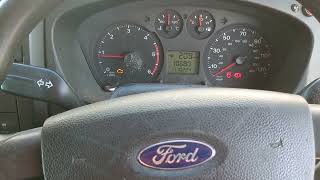
- Ford Transit with 2.2L Diesel (2012-2016) — Wiring to the exhaust sensors breaks at the multi-plugs on the subframe. Ford provides a repair loom (part number 4514833) to fix this.
Manufacturer-Specific Notes
- Ford: On 6.7L Power Stroke engines (2015-2016), P2085 cannot be cleared with a scan tool and requires a specific drive cycle to extinguish the light after repair.
- Volkswagen/Audi: The glow plug light flashes when P2085 is active. 2009-2015 TDI models may have free coverage under the 'Extended Emissions Warranty' for up to 10 years/120,000 miles.
- General Motors (GMC/Chevrolet): On Duramax diesels, P2085 is often caused by a faulty ground connection. Cleaning all ground points on the frame and engine block is a mandatory diagnostic step.
- Ford Transit: On 2.2L diesels, the exhaust sensor wiring harness breaks at the subframe multi-plugs. Use Ford repair loom 4514833 to fix this known issue.
Real Owner Stories
2016 Ford F-350 6.7L Power Stroke at 59.5K miles
Check Engine Light illuminated with a mix of codes including P2085, P202E, and P220A. The light later went off by itself.
What they tried:
- Reset the DTCs with a scan tool, but they remained as historical codes.
Outcome: A cluster of intermittent codes points to a single harness connection issue. Since the truck did not enter limp mode, the cause was a temporary bad connection in the main harness.
Lesson: Multiple intermittent emissions codes appearing simultaneously indicate a main electrical harness issue rather than multiple failed sensors.
Ford Transit with 2.2L Diesel
Vehicle ran poorly, emitted white smoke, and triggered an active P2085 code.
What they tried:
- Posted on a forum seeking advice for the code and engine noise.
Outcome: Forum experts identified a known issue with the exhaust sensor wiring loom. The owner purchased and installed Ford repair loom 4514833 to fix the broken wires.
Lesson: Check model-specific forums for known failure points. A manufacturer repair kit saves hours of diagnostic time.
Modified Subaru WRX/Legacy GT
Owner installed a catless up-pipe, removing the EGT sensor and causing a Check Engine Light.
What they tried:
- Installed a 2.2k Ohm, 0.5-watt resistor into the vehicle-side harness connector.
Outcome: The resistor tricked the ECU into reading a normal temperature, clearing the code. This is a common modification in the tuning community.
Lesson: Aftermarket exhausts trigger EGT codes by removing the sensor. While resistors clear the code on modified cars, they bypass safety features and are not a repair for stock vehicles.
How to Prevent This Code From Triggering
- Apply dielectric grease to the EGT sensor connector (Every 2-3 years in Salt Belt regions) — Dielectric grease seals the pins from moisture and road salt, preventing the corrosion that causes 50% of P2085 codes.
- Ensure completion of DPF regeneration cycles (Weekly) — Driving at highway speeds for 30 minutes allows the exhaust to get hot enough to complete a DPF regen cycle, preventing soot buildup.
- Visually inspect exhaust sensor wiring (During every oil change) — Securing loose wires prevents them from chafing against the frame or melting on the exhaust.
- Use high-quality diesel fuel (Every fill-up) — Quality fuel ensures a cleaner burn, reducing soot production and lessening the load on emissions sensors.
Frequently Asked Questions
What are the most common misdiagnoses for P2085?
The most common mistake is replacing the EGT sensor when the actual problem is the wiring or connector. Another error is confusing the EGT sensor with an O2 sensor, which performs a completely different function.
Can I replace the EGT sensor myself?
Yes, this is a DIY-friendly repair. The sensor screws into the exhaust pipe but often rusts in place. Use a flare nut wrench, penetrating oil, and heat to remove it without stripping the threads.
What is 'Bank 2' and 'Sensor 1'?
Bank 2 is the side of the engine that does not contain cylinder number 1. Sensor 1 means it is the first sensor in the exhaust stream, located before the catalytic converter.
Will P2085 clear itself?
The Check Engine Light may turn off temporarily if the intermittent electrical connection stabilizes. However, the underlying corroded pin or frayed wire still exists, and the light will return.
How much does it cost to fix P2085?
Costs depend on the root cause. A simple connector cleaning costs under $150, while replacing the EGT sensor ranges from $200 to $500 at a shop. If the PCM requires replacement, expect bills exceeding $1,000.
Is an EGT sensor the same as an Oxygen (O2) sensor?
No. An EGT sensor measures only the temperature of the exhaust gas. An O2 sensor measures the amount of unburned oxygen in the exhaust.
What happens if you ignore a P2085 code?
Ignoring P2085 on a diesel prevents DPF regeneration. This leads to a clogged filter that costs over $2,000 to replace, alongside reduced fuel economy and engine performance.
Can I trick the EGT sensor to clear the code?
Some owners install a 2.2k Ohm resistor in the connector to fool the ECU into reading a normal temperature. This bypasses a critical safety system and is not recommended for stock vehicles.
Key Takeaways
- Always inspect the EGT sensor wiring harness first, as corroded connectors cause over 50% of P2085 intermittent faults.
- Limit driving to under 100 miles with an active P2085 code to prevent your vehicle from entering a permanent 50-mph limp mode.
- Fix this code immediately on diesel engines to restore the DPF regeneration cycle and avoid a $2,000 filter replacement.
- Use a digital multimeter to verify the EGT sensor resistance reads between 150 and 220 Ohms when cold before buying replacement parts.
- Perform a live-data 'wiggle test' on the sensor harness; if the temperature reading spikes to 2000°F or drops to -40°F, you have found the broken wire.
Helpful Videos
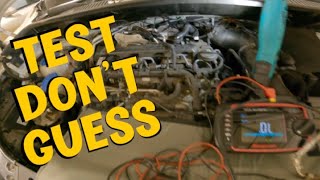
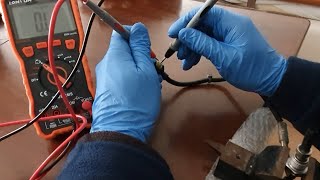
Shop the Parts Behind P2085
Below are the parts most often responsible for code P2085, ranked by how frequently each one is the actual culprit (per the diagnosis above). Tap any to see what we have for your vehicle.



The information in this article is provided for general reference and educational purposes only. Vehicle specifications, procedures, and part compatibility can vary by production date, trim level, and region. Always consult your vehicle's factory service manual and verify part numbers before purchasing or performing repairs. Safety-critical components such as airbags, seat belts, and braking systems should be installed by a qualified professional.
- 🧭 Diagnostic Flowchart
- 🎬 Helpful Videos
- 🛍️ Shop This Part
- What Does P2085 Mean?
- Can I Drive With P2085?
- Common Causes
- Symptoms
- Common Fixes & Costs
- Used vs. New Parts: Buying Guide
- What Happens If You Wait — Timeline
- Cost of Not Fixing It
- Diagnosis Steps
- When This Code Triggers (Freeze-Frame Conditions)
- Related Codes
- Climate & Environmental Factors
- How to Talk to a Mechanic About This Code
- Where to Take It: Dealer vs Independent vs Chain
- When to Walk Away From the Repair
- What Scan Tool You Need for This Code
- How to Clear the Code After You Fix It
- Will This Fail Emissions / State Inspection?
- Most Commonly Affected Vehicles
- Manufacturer-Specific Notes
- Real Owner Stories
- 2016 Ford F-350 6.7L Power Stroke at 59.5K miles
- Ford Transit with 2.2L Diesel
- Modified Subaru WRX/Legacy GT
- How to Prevent This Code From Triggering
- Frequently Asked Questions
- What are the most common misdiagnoses for P2085?
- Can I replace the EGT sensor myself?
- What is 'Bank 2' and 'Sensor 1'?
- Will P2085 clear itself?
- How much does it cost to fix P2085?
- Is an EGT sensor the same as an Oxygen (O2) sensor?
- What happens if you ignore a P2085 code?
- Can I trick the EGT sensor to clear the code?
- Key Takeaways
- 🎟️ Get 5% Off