

OBD-II Code P2089: Intake Camshaft Actuator Control Circuit High (Bank 1)
What P2089 means, why it triggers, and how to fix it
- P2089 triggers when the Powertrain Control Module detects over 5 volts on the Bank 1 intake camshaft actuator circuit, indicating a short to power or a failed solenoid.
- Check your engine oil immediately; low or sludge-filled oil starves the VVT system of hydraulic pressure and is the leading non-electrical cause of this code.
- Test the VVT solenoid's internal resistance with a multimeter; a reading outside the typical 5-15 Ohm range confirms the part has failed and requires replacement.
- Do not drive long distances with an active P2089; the resulting incorrect valve timing dumps unburnt fuel into the exhaust, destroying a $1,500 catalytic converter within months.
What Does P2089 Mean?

The Powertrain Control Module (PCM) detects excessively high voltage in the Bank 1 intake camshaft actuator control circuit. The Variable Valve Timing (VVT) system uses this actuator to adjust valve timing for optimal power and efficiency. The PCM sends a Pulse Width Modulated (PWM) signal to the actuator. It triggers P2089 when the return voltage on that control line exceeds 5 volts, meaning the computer has lost control of the engine timing on that bank.
Technical definition: The official SAE/OBD-II definition is 'A' Camshaft Position Actuator Control Circuit High (Bank 1).
Can I Drive With P2089?

Yes, But With Caution. You can drive, but limit distance and speed. You will experience poor performance, rough idling, and bad gas mileage. Ignoring this causes catalytic converter failure, costing $800-$2500. Get it diagnosed immediately.
Common Causes

- Faulty 'A' Camshaft Position Actuator Solenoid (Very Common) — The electronic oil control valve fails internally from an electrical short or increased resistance, causing the high voltage reading.
- Low, Dirty, or Sludged Engine Oil (Very Common) — The VVT system relies on hydraulic oil pressure. Low oil, incorrect viscosity, or severe sludge blocks the solenoid's fine mesh screens, starving the system and forcing the PCM to log a circuit fault while overcompensating.
- Wiring or Connector Damage (Common) — Engine heat and vibration damage the wiring harness. A control wire shorted to a 5V or 12V power source, melted insulation, or corroded connector pins directly causes the high voltage condition.
- Stretched Timing Chain or Worn Belt (Less Common) — Timing chains stretch over time, creating a mismatch between crankshaft and camshaft positions. The PCM's continuous effort to command the actuator to its limit to compensate triggers circuit codes.
- Incorrect Mechanical Engine Timing (Less Common) — If the timing chain or belt skips a tooth, or was installed incorrectly during a recent repair, the camshaft's physical position will not match the computer's expectations.
- Faulty Powertrain Control Module (PCM) or Software (Rare) — The internal PCM driver controlling the actuator fails and sends a constant high voltage signal, or outdated software misinterprets normal voltage fluctuations.
Symptoms
- Check Engine Light is On — The PCM illuminates the Malfunction Indicator Lamp (MIL) immediately upon detecting the high voltage fault.
- Rough Idle and Stalling — The engine runs unevenly, shakes at a stop, or stalls completely during low-speed maneuvers due to incorrect valve timing.
- Poor Acceleration and Hesitation — The vehicle feels sluggish, hesitates, and stutters during acceleration because the engine cannot adjust valve timing for optimal power.
- Decreased Fuel Economy — Incorrect valve timing forces the engine to run inefficiently, burning 5-15% more gasoline than usual.
- Hard Starting or No-Start — The engine takes extra cranks to start. If the camshaft is stuck in an extreme position, the engine will not start at all.
- Rattling or Ticking Noises from Engine — A rattling or ticking sound on startup indicates a starved VVT system or a failing mechanical phaser.
Diagnostic Flowchart

Tap your situation to follow the diagnostic path that matches what you're seeing on this code.
Common Fixes & Costs
- Replace Camshaft Position Actuator Solenoid (Oil Control Valve) — Parts: $40-$150, Labor: $80-$200, ~1.2 hr book time (Intermediate)
- Engine Oil and Filter Change — Parts: $40-$80, Labor: $30-$60, ~0.5 hr book time (DIY)
- Repair or Replace Damaged Wiring/Connector — Parts: $10-$50, Labor: $150-$300, ~2 hr book time (Intermediate)
- Replace or Reprogram Powertrain Control Module (PCM) — Parts: $0-$1500, Labor: $100-$300, ~1.5 hr book time (Professional)
DIY vs Professional
- Replace Camshaft Position Actuator Solenoid — Beginner: Yes
Tools: Basic socket/wrench set, torque wrench, rags. - Engine Oil and Filter Change — Beginner: Yes
Tools: Wrench for drain plug, oil filter wrench, drain pan, funnel. - Repair or Replace Damaged Wiring/Connector — Beginner: No
Tools: Multimeter, wire strippers, crimpers, heat shrink tubing, soldering iron. - Replace or Reprogram Powertrain Control Module (PCM) — Beginner: No
Tools: Professional scan tool for programming.
Used vs. New Parts: Buying Guide
When a used part is worth it: Buying a used VVT solenoid is not recommended. The part is inexpensive new, and a used part carries a high risk of internal electrical failure or sludge contamination.
Donor-vehicle mileage cap: roughly under 40000 miles for the part to have meaningful remaining life.
Donor quality checklist:
- Source from a low-mileage vehicle totaled in a collision, not scrapped for engine failure.
- Match the part number exactly; manufacturers frequently update these parts.
- Visually inspect the screen for sludge, though internal electrical condition is impossible to verify.
Decision logic:
- If The cost of a new OEM or reputable aftermarket solenoid is under $150 → Always buy new. The labor to replace a failed used part negates any savings.
- If The vehicle is over 20 years old and the part is discontinued → A tested, low-mileage used part from a reputable salvage yard is the only option.
- If The part is electronic with a known failure rate → Favor new to get the latest revisions and a clean service life.
Warranty tradeoff: Used parts typically have a 30-90 day warranty. New aftermarket parts offer a 1-year to limited lifetime warranty. New OEM parts carry a 1-2 year warranty.
Worst-case if a used part fails: $200-$400 if a used solenoid fails after installation, covering repeat labor costs and the price of another part.
Cost of Not Fixing It
- 0-1 month: Noticeable drop in fuel economy (5-15%), rough idle, and poor acceleration. Potential for stalling in traffic. (Added cost: Negligible, other than increased fuel costs.)
- 1-6 months: Incorrect valve timing forces unburnt fuel into the exhaust, causing the catalytic converter to overheat and fail. This also damages oxygen sensors. (Added cost: $800-$2800)
- 6+ months: Risk of internal engine damage. Severe timing issues cause piston-to-valve contact on interference engines. Long-term poor combustion leads to heavy carbon buildup. (Added cost: $3000+)
Diagnosis Steps
- Check Engine Oil Level and Condition
Pull the dipstick to verify the oil level is correct and the oil is clean. Dirty or low oil is the leading non-electrical cause of VVT system codes.
Tools: Rag or paper towel (Beginner) - Scan for Codes and Review Freeze Frame Data
Use an OBD-II scanner to confirm P2089 is present and look for related codes (e.g., P0010, P0011, P0300). Note the freeze-frame data to see engine conditions when the code set.
Tools: OBD-II Scanner (Beginner) - Inspect the Wiring and Connector
Locate the 'A' (intake) camshaft position actuator solenoid on Bank 1. Inspect its electrical connector and wiring harness for corrosion, loose pins, oil contamination, or melted insulation.
Tools: Flashlight (Beginner) - Test the Control Circuit for Short to Voltage
With ignition on (engine off), disconnect the solenoid. Probe the control wire pin on the harness side with a multimeter set to DC volts (black lead to ground). A reading of 12V or 5V confirms a short to power in the harness.
Tools: Multimeter (Intermediate) - Test the Solenoid's Internal Resistance
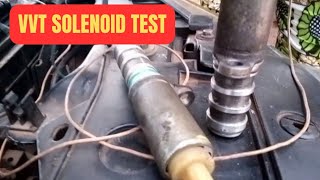
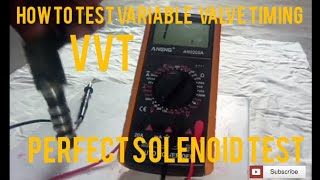
With ignition off, measure resistance across the two pins on the disconnected solenoid. A reading outside the typical 5-15 Ohms range (like OL or near 0) confirms internal failure requiring replacement.
Tools: Multimeter (Intermediate) - Command Actuator with a Bi-Directional Scanner
Command the VVT solenoid duty cycle from 0% to 100% while idling. If the 'Actual Camshaft Position' PID does not change and engine idle remains steady, the solenoid or mechanical phaser has failed.
Tools: Advanced Bi-Directional Scan Tool (Advanced) - Analyze the PWM Signal with an Oscilloscope
Connect an oscilloscope to the solenoid's control wire. With the engine running, you should see a square wave (200-1000 Hz). A flat line at battery voltage or 5V indicates a faulty PCM driver.
Tools: Oscilloscope (Advanced) - Check Mechanical Engine Timing
If the code appeared after a recent repair, or if all electrical tests pass, access the timing belt or chain to ensure all timing marks on the crankshaft and camshafts are perfectly aligned.
Tools: Socket set, wrenches, engine-specific timing tools (Advanced)
When This Code Triggers (Freeze-Frame Conditions)
- Engine Coolant Temp: 180-210°F (Fully warmed up)
- RPM: 1500-2500 (Light acceleration or steady cruise)
- Engine Load: 30-60% (Moderate engine load, when VVT is actively adjusting)
- Vehicle Speed: 35-60 mph (City or highway driving)
Related Codes
- P2088 — The direct opposite code, indicating 'A' Camshaft Position Actuator Control Circuit Low. P2089 means a short to power, while P2088 means a short to ground or an open circuit.
- P0010 — A general circuit malfunction code for the Bank 1 intake camshaft actuator. If you have both, the underlying cause is almost certainly electrical.
- P0011 — Indicates Bank 1 intake camshaft timing is over-advanced. P2089 causes P0011 because the high voltage condition forces the actuator into an uncontrollable position. Fix P2089 first.
- P0301 — A misfire code for cylinder #1. Incorrect valve timing on Bank 1 causes incomplete combustion and misfires. P2089 directly leads to P0301.
Climate & Environmental Factors
- Cold Weather: Extreme cold thickens engine oil, slowing the VVT actuator's movement and triggering circuit or performance codes on startup. It also promotes 'cold milky sludge' from condensation.
- Hot Weather / High Engine Load: Sustained high temperatures accelerate oil breakdown, forming 'black sludge' that clogs the fine mesh screens of the VVT solenoids.
- Frequent Short Trips: Short trips prevent the engine from reaching full operating temperature, allowing water vapor to condense in the crankcase and mix with oil to form sludge.
How to Talk to a Mechanic About This Code
Say this: "I have an OBD-II code P2089, 'Camshaft Actuator Control Circuit High on Bank 1'. I've checked the oil level and condition. Please perform a diagnostic that includes testing the actuator solenoid's resistance and checking the control circuit for a short to voltage."
This directs the mechanic to the most likely electrical faults and prevents them from recommending an oil change or replacing the wrong part, like the camshaft position sensor.
Avoid saying:
- 'Just fix whatever's wrong'
- 'My check engine light is on, can you look at it?'
- 'Whatever you recommend'
Questions to ask before authorizing the repair:
- Did you test the control circuit for a short to voltage? What was the reading?
- What was the resistance measurement of the solenoid, and how does it compare to the manufacturer's specification?
- If the wiring is the issue, can you show me where the damage is?
- What is the warranty on the recommended parts and labor?
Where to Take It: Dealer vs Independent vs Chain
- Dealer:
Recommended if your vehicle is under warranty or has a known manufacturer-specific issue. Otherwise, an independent shop is more cost-effective.
Best for: Vehicles still under powertrain or emissions warranty., Complex manufacturer-specific issues, like a required PCM reflash or known timing chain problems., Repairs on German brands (BMW, Audi) requiring specialized tools and software.
Downsides: Significantly higher labor and parts cost compared to independent shops., May recommend replacing a larger assembly when only a small component has failed. (Typical cost: +50% vs. baseline) - Independent Shop:
Best fit for most situations. A competent independent technician can diagnose and repair the underlying electrical issue effectively and for a reasonable price.
Best for: Out-of-warranty vehicles where cost is a primary concern., Common diagnostic codes like P2089 that have well-understood causes and fixes., Building a relationship with a technician who gets to know your vehicle.
Downsides: Quality and expertise vary widely; vet the shop through reviews and ASE certifications., May lack the latest specialized tools for very new or complex vehicles. (Typical cost: +0% vs. baseline) - Chain Shop:
Acceptable for a first-step oil change. AVOID for the actual diagnosis of a circuit code like P2089, as it requires specific electrical testing beyond their standard service model.
Best for: Simple, routine maintenance like an oil and filter change.
Downsides: Technician skill varies dramatically; they lack experience for proper electrical diagnosis., High pressure to upsell unnecessary services or parts., May misdiagnose a circuit code and replace the sensor instead of the actuator solenoid. (Typical cost: -10% vs. baseline)
When to Walk Away From the Repair
If the total estimated repair cost exceeds 40-50% of the car's current private-party value, seriously consider selling or trading in the vehicle instead of repairing it.
- Car worth $4000, fix is $350: Fix it. This is a common and relatively inexpensive repair, well below the threshold.
- Car worth $4000, fix is $1800: Borderline. This cost suggests a more serious issue like a PCM or timing chain. Get a second opinion before authorizing the repair.
- Car worth $2500, fix is $1800: Walk away. The repair cost is a huge percentage of the car's value. It is not economically viable.
What Scan Tool You Need for This Code
Minimum: A scanner that reads and clears codes, and displays live data streams (PIDs). A basic code reader is not enough.
A $20 code reader only tells you the P2089 code exists. It cannot show live data (commanded vs. actual cam angle) needed to see if the solenoid responds, nor can it perform bi-directional tests.
Budget: BlueDriver Pro Scan Tool (~$99) — Connects to your smartphone to read/clear codes, view freeze frame data, and graph live data PIDs to see if the camshaft angle changes in response to PCM commands.
Mid-range: Autel MaxiCOM MK808S (~$340) — Provides full system diagnostics and bi-directional control. This allows you to directly command the VVT solenoid on and off to confirm if it works without removing it.
Professional: Innova 5610 / Foxwell NT809 (~$400-600) — Offers robust bi-directional controls, advanced service functions, and access to manufacturer-specific OEM data for a deeper level of diagnostic capability.
Rent vs buy: For a one-time diagnosis, auto parts stores like AutoZone scan codes for free or offer a loaner tool program. Buying makes sense if you perform your own diagnostics regularly.
How to Clear the Code After You Fix It
- Use an OBD-II scan tool to clear the P2089 code.
- Perform a complete drive cycle to allow the vehicle's readiness monitors to run.
Drive cycle (~30 minutes): Start the engine from a cold start. Idle for 2-3 minutes. Drive for 15-20 minutes with a mix of stop-and-go city driving and steady highway speed (around 55 mph for 5-10 minutes). Allow the vehicle to cool down completely.
Readiness monitors affected: Catalyst monitor, Oxygen (O2) sensor monitor, EGR System, Evaporative (EVAP) System
Before emissions retest: drive at least 100 miles to fully set monitors.
Watch out for:
- Disconnecting the battery clears the code but resets all readiness monitors, guaranteeing an emissions test failure until a full drive cycle is completed.
- The code returns immediately if the underlying electrical fault (like a short to power) is not repaired.
Will This Fail Emissions / State Inspection?
Yes — this code typically fails an OBD-II emissions inspection.
- California: An active P2089 code causes an automatic failure. All readiness monitors must be set to 'Ready' before a test can be passed, requiring a proper drive cycle after repair.
- New York: A vehicle with an illuminated Check Engine Light automatically fails the emissions inspection.
- Texas: In the 17 counties requiring emissions testing, an active P2089 code results in a failed test.
Most Commonly Affected Vehicles
- Chevrolet Cruze, Malibu, Equinox (2010-2018) — Very common on GM's Ecotec engines. Often appears with P0010/P0011. High-mileage models may also have stretched timing chains.
- GMC Terrain, Acadia (2010-2018) — Shares engines and platforms with Chevrolet, making them prone to the same VVT solenoid failures.
- Hyundai Sonata, Santa Fe, Elantra (2011-2020) — Often related to faulty oil control valves or sludge buildup. Some models were subject to recalls for engine issues.
- Kia Sorento, Sportage, Optima (2011-2020) — Frequently points to a faulty oil control valve. Oil sludge is a major contributing factor even on maintained vehicles.
- Ford F-150, Explorer, Focus (2011-2018) — On Ti-VCT engines, this indicates a bad VCT solenoid or wiring. A rattling noise on startup points to a failing camshaft phaser.
- Dodge Ram 1500, Charger, Durango (2009-2016) — On HEMI engines, this links to the oil control valve or sludge buildup from insufficient maintenance.
- Subaru Forester, Outback, Impreza (2011-2017) — If the code appears after a timing belt service, incorrect mechanical timing is highly suspect.
- BMW 3-Series, 5-Series, X3, X5 (2007-2015) — Often related to a faulty VANOS solenoid. Technicians recommend replacing intake and exhaust solenoids in pairs.
Manufacturer-Specific Notes
- General Motors (Chevy, GMC, Buick, Cadillac): P2089 frequently appears with P0010 and P0011. Technicians replace both intake and exhaust VVT solenoids simultaneously. A stretched timing chain is a known underlying cause on 2.8L/3.6L V6 engines.
- Ford: On Ti-VCT engines, P2089 accompanied by a rattling noise on startup strongly indicates a failing camshaft phaser, not just the solenoid. Replacing only the solenoid will not fix the noise.
- Kia/Hyundai: Widespread issues with oil sludge buildup on Theta II engines begin with VVT codes. Check with a dealer for warranty coverage under NHTSA Campaign 17V226000 before paying for repairs.
- Subaru: If this code appears after a timing belt service, the mechanical timing is off by a tooth. The timing marks must be re-verified before replacing any parts.
Real Owner Stories
2012 Chevy Cruze 1.8L at 115K miles
Check Engine Light came on with codes P2089 and P0011. Car had a rough idle and felt sluggish.
What they tried:
- Ignored the light until the car started stalling at stop signs.
- Checked oil; level was fine but dark.
- Replaced the intake VVT solenoid.
Outcome: Replacing the solenoid fixed the rough idle and stalling. Power returned to normal. Total cost was $50 for an aftermarket solenoid.
Lesson: For GM Ecotec engines, P2089 is commonly the solenoid itself. It is a cheap, easy fix that solves the problem immediately when paired with P0011.
2013 Hyundai Elantra at 85K miles
P2089 code appeared. Owner was diligent with 5,000-mile synthetic oil changes. No major symptoms.
What they tried:
- Replaced the Camshaft Position Sensor based on parts store advice. Code returned within a day.
- Took it to a mechanic who tested the actuator solenoid and found internal resistance out of spec.
Outcome: The mechanic replaced the VVT Actuator Solenoid for $180. The code cleared and did not return.
Lesson: Do not confuse the Camshaft Position Sensor with the Camshaft Position Actuator Solenoid. Misdiagnosis wastes money on the wrong part.
2011 Subaru Forester at 130K miles
Car threw a P2089 code immediately after a DIY timing belt replacement.
What they tried:
- Checked the harness and connector for the AVCS solenoid with a multimeter. Everything tested fine.
- Replaced the AVCS solenoid, but the code returned instantly.
Outcome: Realized the mechanical timing was incorrect. Re-disassembled the front of the engine and found the intake cam on Bank 1 was off by a single tooth. Aligning the marks fixed the code.
Lesson: If P2089 appears immediately after a timing belt service, the cause is incorrect mechanical timing. Re-verify all timing marks before replacing electrical components.
How to Prevent This Code From Triggering
- Use high-quality full synthetic engine oil (Every oil change) — Synthetic oils resist thermal breakdown and oxidation, the primary causes of sludge formation. Clean oil is essential for VVT hydraulic operation.
- Follow manufacturer's 'severe' service interval for oil changes (Every 3,000-5,000 miles) — Frequent short trips, stop-and-go traffic, or extreme temperatures require the 'severe' schedule to remove contaminants before they clog VVT solenoid screens.
- Avoid prolonged idling and frequent short trips (Daily habit) — Short trips prevent engine oil from reaching temperatures high enough to burn off condensed moisture and fuel vapor, preventing sludge creation.
- Perform a preventative engine flush before an oil change on high-mileage vehicles (Once, or every 50K miles if at risk) — On engines with a history of neglect, an engine flush dissolves deposits that clog the tiny passages and screens of a new VVT solenoid.
Frequently Asked Questions
What does 'Bank 1' and 'A' Camshaft mean?
'Bank 1' is the side of the engine containing cylinder #1. 'A' refers to the intake camshaft, which controls the valves letting the air-fuel mixture into the engine.
Can a simple oil change really fix a P2089 code?
Yes. If low oil level, incorrect viscosity, or dirty oil impedes the solenoid's movement, a fresh oil and filter change restores proper function and clears the code.
Should I clean the VVT solenoid or just replace it?
Cleaning the solenoid and its screen is rarely a permanent fix. Because P2089 is a 'circuit high' code, it indicates an internal electrical failure that cleaning cannot resolve. Replacement is the only reliable repair.
What is the most common misdiagnosis for P2089?
The most common mistake is replacing the camshaft position sensor instead of the camshaft position actuator solenoid. The sensor reads the cam's position, while the actuator moves it. P2089 specifically refers to the actuator's control circuit.
I just replaced my timing belt and now I have this code. What happened?
The engine's mechanical timing was set incorrectly during the repair. The timing is off by one or more teeth, requiring disassembly to align all timing marks correctly.
What does a bad VVT solenoid sound like?
A failing VVT system produces a rattling or ticking noise from the top of the engine. This sound is most noticeable on a cold start and mimics a noisy lifter.
Can a bad VVT solenoid cause a no-start condition?
Yes. If the solenoid fails and forces the camshaft phaser into a heavily advanced or retarded position, it throws off compression and ignition timing enough to prevent starting.
Why is the repair cost for a PCM so high?
The PCM is the vehicle's main computer, making the part expensive. It also requires specialized programming by a dealer to sync with your vehicle's VIN and security system, adding significant labor costs.
Key Takeaways
- P2089 triggers when the Powertrain Control Module detects over 5 volts on the Bank 1 intake camshaft actuator circuit, indicating a short to power or a failed solenoid.
- Check your engine oil immediately; low or sludge-filled oil starves the VVT system of hydraulic pressure and is the leading non-electrical cause of this code.
- Test the VVT solenoid's internal resistance with a multimeter; a reading outside the typical 5-15 Ohm range confirms the part has failed and requires replacement.
- Do not drive long distances with an active P2089; the resulting incorrect valve timing dumps unburnt fuel into the exhaust, destroying a $1,500 catalytic converter within months.
Helpful Videos

Shop the Parts Behind P2089
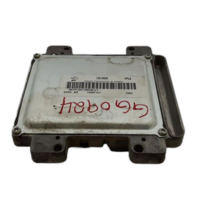
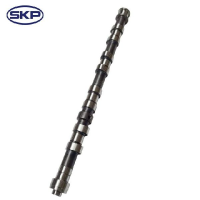
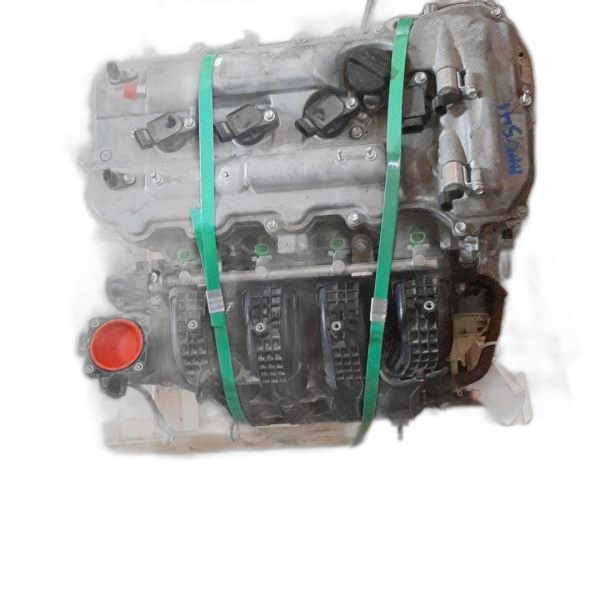
Below are the parts most often responsible for code P2089, ranked by how frequently each one is the actual culprit (per the diagnosis above). Tap any to see what we have for your vehicle.

The information in this article is provided for general reference and educational purposes only. Vehicle specifications, procedures, and part compatibility can vary by production date, trim level, and region. Always consult your vehicle's factory service manual and verify part numbers before purchasing or performing repairs. Safety-critical components such as airbags, seat belts, and braking systems should be installed by a qualified professional.
- 🧭 Diagnostic Flowchart
- 🎬 Helpful Videos
- 🛍️ Shop This Part
- What Does P2089 Mean?
- Can I Drive With P2089?
- Common Causes
- Symptoms
- Common Fixes & Costs
- DIY vs Professional
- Used vs. New Parts: Buying Guide
- Cost of Not Fixing It
- Diagnosis Steps
- When This Code Triggers (Freeze-Frame Conditions)
- Related Codes
- Climate & Environmental Factors
- How to Talk to a Mechanic About This Code
- Where to Take It: Dealer vs Independent vs Chain
- When to Walk Away From the Repair
- What Scan Tool You Need for This Code
- How to Clear the Code After You Fix It
- Will This Fail Emissions / State Inspection?
- Most Commonly Affected Vehicles
- Manufacturer-Specific Notes
- Real Owner Stories
- 2012 Chevy Cruze 1.8L at 115K miles
- 2013 Hyundai Elantra at 85K miles
- 2011 Subaru Forester at 130K miles
- How to Prevent This Code From Triggering
- Frequently Asked Questions
- What does 'Bank 1' and 'A' Camshaft mean?
- Can a simple oil change really fix a P2089 code?
- Should I clean the VVT solenoid or just replace it?
- What is the most common misdiagnosis for P2089?
- I just replaced my timing belt and now I have this code. What happened?
- What does a bad VVT solenoid sound like?
- Can a bad VVT solenoid cause a no-start condition?
- Why is the repair cost for a PCM so high?
- Key Takeaways
- 🎟️ Get 5% Off