

P2096 on 2012-2018 Audi A6 3.0T: Causes and Fixes for Post-Catalyst Lean Condition
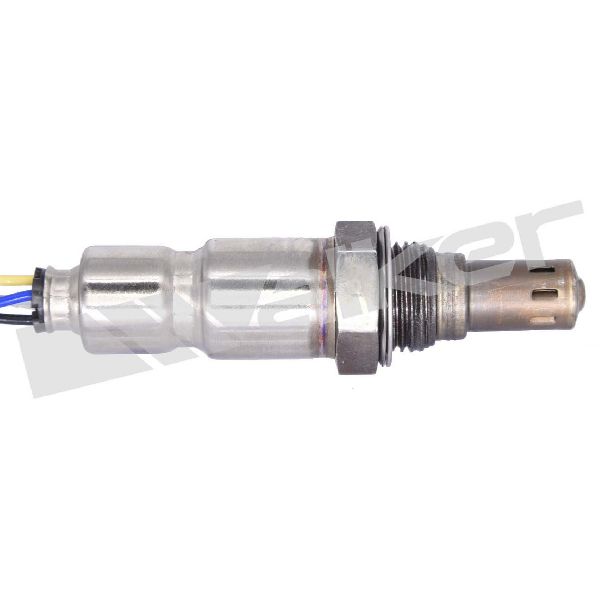
On a 2012-2018 Audi A6 3.0T, code P2096 is almost always caused by a failing post-catalyst (downstream) oxygen sensor on Bank 1. Replacing this sensor is the most common fix. Expect to pay ~$90-$180 for an OEM-quality sensor from a brand like Bosch, which is the original equipment supplier.
- For the Audi A6 3.0T, P2096 almost always means the passenger-side, post-catalyst O2 sensor has failed, a fact backed by Audi's own TSB 2046611/5.
- Before replacing the sensor, perform a quick visual and auditory inspection for obvious exhaust leaks between the engine and the sensor.
- Do not replace the expensive catalytic converter; the problem is almost certainly the sensor or a leak.
- This is a DIY-friendly repair for those with basic tools, including a 22mm oxygen sensor socket. The main challenge can be accessing the connector in the transmission tunnel.
- Driving with the code is generally safe in the short term, but it will cause an automatic failure on an emissions test.
What's Unique About the 2012-2018 Audi A6
While P2096 can be caused by many issues on other cars, on VAG platforms of this era, including the A6 3.0T, the code is very frequently triggered by the post-catalyst oxygen sensor itself failing due to age and contamination. An Audi Technical Service Bulletin (TSB 2046611/5) confirms this is a known issue, advising direct replacement of the sensor due to internal contamination of its reference duct. This makes diagnosis more straightforward compared to vehicles where vacuum or exhaust leaks are more probable primary causes.
Symptoms You May Notice
- Check Engine Light is on
- Vehicle will fail an emissions test
- In rare cases, a slight decrease in fuel economy
- Usually, no noticeable drivability issues like rough idling or poor acceleration.
- Replacing the catalytic converter when the actual fault is an inexpensive O2 sensor or exhaust leak.
- Replacing the upstream (pre-catalyst) oxygen sensor instead of the downstream (post-catalyst) one that is responsible for this code. TSB 2046611/5 specifically warns against this.
Most Likely Causes
- Faulty Post-Catalyst Oxygen Sensor (Bank 1, Sensor 2) 🔴 High Probability → Shop Oxygen Sensor A known issue on Audi platforms of this era, specifically due to internal sensor contamination, as documented in TSB 2046611/5. The sensor's reference duct gets contaminated, leading to false lean readings.
How to confirm: Use an OBD-II scanner to monitor the live voltage data for 'Bank 1, Sensor 2'. A healthy sensor on a warm, idling engine should show a relatively stable voltage. If the voltage is stuck low (e.g., below 0.2V) or not responding, the sensor has likely failed. Given the TSB, if no obvious exhaust leaks are found, the sensor is the prime suspect.
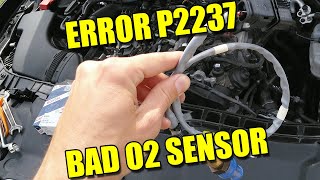
Typical fix: Replace the Bank 1, Sensor 2 oxygen sensor. It is located on the passenger-side exhaust pipe, after the catalytic converter. The connector is often located high in the transmission tunnel and may need to be accessed by feel.
Est. part cost: $90-$180 - Exhaust Leak 🟡 Medium Probability Exhaust components like flex pipes and gaskets are exposed to heat, moisture, and road salt, causing them to degrade and leak over time. A leak between the upstream and downstream O2 sensors can introduce outside air, fooling the sensor into a lean reading.
How to confirm: Visually inspect the exhaust system from the engine to the rear O2 sensor for black soot marks, especially around flanges and the flexible joint. A professional smoke test is the most effective way to pinpoint small leaks. You can also listen for hissing or ticking noises from the exhaust when the engine is running.
Typical fix: Repair the leak. This may involve replacing a gasket, tightening bolts, or welding a cracked pipe or replacing a faulty flex pipe.
Est. part cost: $10-$100
Rare But Worth Checking
- Engine Vacuum Leak: A significant vacuum leak (e.g., from a cracked intake manifold or bad PCV valve) can cause a true lean condition that the post-catalyst sensor detects. This would likely be accompanied by other codes like P0171 (System Too Lean Bank 1) and noticeable drivability issues like a rough idle.
- Failing Catalytic Converter: → Shop Catalytic Converter While possible, it is rare for a failing converter to cause only P2096. This is usually a last resort after all other causes, especially the O2 sensor and exhaust leaks, have been ruled out. A clogged converter might also be a possibility in rare cases.
- Fuel Delivery Issue: A weak fuel pump, clogged filter, or faulty fuel pressure regulator could cause a genuine lean condition across the engine, but this would typically affect both banks and trigger other codes and more severe symptoms.
Diagnosis Steps
- Scan for Codes: Connect an OBD-II scanner to confirm P2096 is the primary code and check for any other related codes.
- Inspect for Exhaust Leaks: Visually inspect the exhaust system on Bank 1 (passenger side) for any signs of leaks, such as black soot around gaskets or cracks in the pipes, especially before the rear O2 sensor. Listen for ticking or hissing sounds. A professional smoke test is the definitive way to find leaks.
- Analyze Live Sensor Data: Use the scanner's live data function to observe the voltage from 'O2 Sensor Bank 1, Sensor 2'. At operating temperature and a steady RPM, this sensor's voltage should be relatively stable (typically between 0.5V and 0.8V). If it's stuck low (e.g., < 0.2V), it points to a lean reading, which could be a bad sensor or an actual leak.
- Inspect Sensor Wiring: Visually inspect the wiring and connector for the Bank 1, Sensor 2 for any signs of damage, melting, or corrosion.
- Replace the Oxygen Sensor: If no exhaust leaks or wiring issues are found, the post-catalyst oxygen sensor is the most likely cause per TSB 2046611/5 and should be replaced.
Parts You'll Likely Need
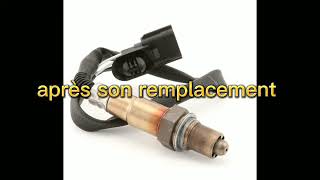
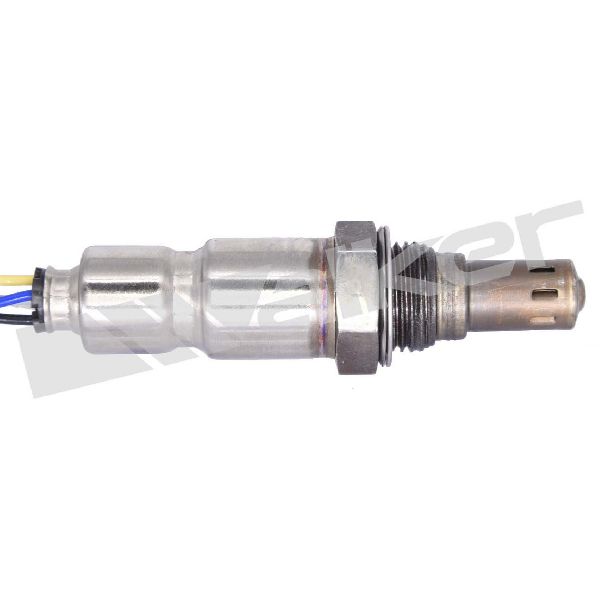
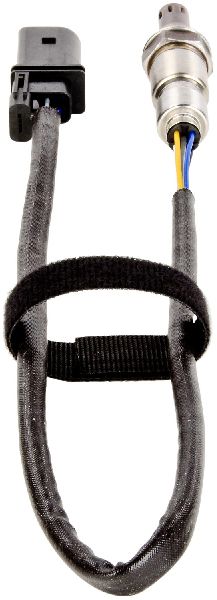
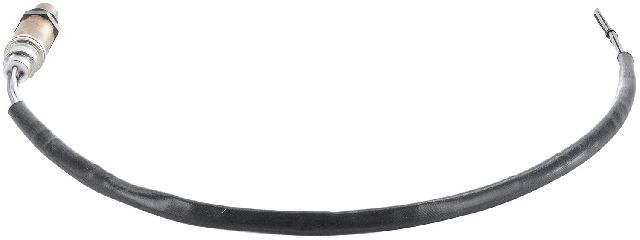
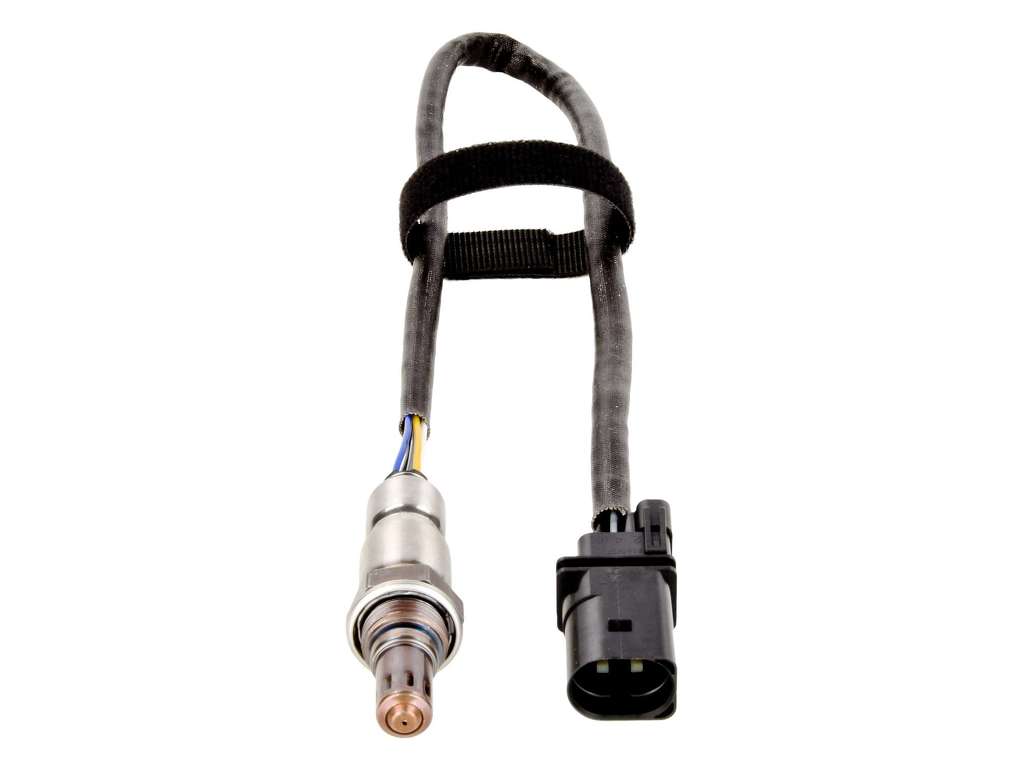
- Post-Catalyst Oxygen Sensor (Bank 1, Sensor 2)
(OEM #4H0906262G, 4H0906262P)— This sensor is the most common failure point for code P2096 on this specific vehicle, often due to internal contamination as per Audi TSB 2046611/5.
Trusted brands: Bosch (OEM Supplier), NGK/NTK
OEM price range: $150-$250
Aftermarket price range: $90-$150
Related Codes That Often Appear With This One
- P2098 — This is the equivalent code for Bank 2 ('Post Catalyst Fuel Trim System Too Lean Bank 2'). If both appear, it could point to a systemic issue like a vacuum leak or fuel delivery problem, though TSB 2046611/5 notes to replace both sensors if both codes are present.
- P2270 — Stands for 'O2 Sensor Signal Stuck Lean Bank 1 Sensor 2'. This code points directly to the same sensor and reinforces the diagnosis of a failed sensor.
- P013F — Stands for 'O2 Sensor Delayed Response - Lean to Rich Bank 1 Sensor 2'. This also indicates a slow or failing downstream oxygen sensor.
- P0420 — Stands for 'Catalyst System Efficiency Below Threshold (Bank 1)'. This code may appear if the faulty downstream sensor provides incorrect data for a long time, making the ECM unable to properly monitor catalytic converter health.
Technical Service Bulletins (TSBs) & Recalls
- TSB 2046611/5 (also listed as 01 19 01): Documents that for P2096 or P2098, the cause is a contaminated post-catalyst O2 sensor and that only this sensor should be replaced. It explicitly warns against replacing other components. The TSB applies across multiple Audi engines, including the 3.0T.
Platform-Specific Known Issues
- source — An AudiWorld forum member with a 2013 S8 (similar 4.0T engine, but same TSB applies) experienced a P2096 code that appeared after gassing up. The owner cleared the code and it did not immediately return, raising questions about whether it could be a temporary issue or related to fuel quality. This highlights that while the sensor is the likely culprit, the code can sometimes be intermittent at first.
- DIY Repair Story: Connector Location is Key: An owner on a forum noted that when replacing the downstream O2 sensor on their C7 A6 3.0T, the most difficult part was locating and accessing the electrical connector, which is tucked high up in the transmission tunnel and must be disconnected by feel.
Mechanic-Grade Diagnostic Values
- Downstream O2 Sensor (Bank 1, Sensor 2) Voltage — expected: Relatively stable voltage between 0.6V and 0.8V on a warm, running engine at steady RPM.. Failure: Voltage is stuck low (below 0.2V - 0.3V), indicating a lean condition or failed sensor.
- O2 Sensor Heater Circuit Resistance — expected: Typically between 2-15 ohms when the sensor is cold.. Failure: A reading of 'OL' (infinite resistance) indicates an open circuit in the heater, requiring sensor replacement.
- VCDS Live Data (Post-Cat Sensor) — expected: In VCDS, monitoring Measuring Value Blocks (MVB) for Groups 030-049 should show a steady voltage around 0.6-0.8V for a healthy B1S2 sensor.. Failure: The voltage for Bank 1 Sensor 2 is stuck below 0.2V and does not respond to changes.
Scan Tool Commands That Help
- VCDS (VAG-COM): Basic Setting - IDE00466: Resetting of oxygen sensor adaptation values — This function should be used after replacing an oxygen sensor to clear the old learned fuel trim adjustments from the ECU. This allows the system to re-learn with the new sensor's feedback. It is typically performed with the key on and engine off.
Wiring & Ground Locations
- Bank 1 Sensor 2 Connector — Under the vehicle on the passenger side, mounted to a bracket near the transmission cross-member. It is typically a 4-pin or 6-pin black connector.. This is the primary connection point for the sensor. It is exposed to road debris and heat, making it a potential point of failure due to corrosion or damage, which can cause the P2096 code.
- Main Engine Ground Strap — On the C7 platform, a key ground point runs from the passenger side (US) engine mount area to a stud on the frame rail.. A corroded or loose main engine ground can cause unstable voltage and erratic sensor readings throughout the engine management system. While not the most common cause, it should be checked if sensor and wiring tests are inconclusive.
OEM Part Supersession History
4H0906262G→4H0906262P— Standard part revision by the manufacturer, likely for improved durability or material changes.
Heads up: The parts are cross-compatible. 4H0906262P is the direct replacement for 4H0906262G.
Model Year Variations Within This Range
- 2012-2015 (Pre-Facelift) vs. 2016-2018 (Facelift/C7.5): The C7 platform received a facelift for the 2016 model year (often called C7.5). While the core engine architecture remained, the supercharged 3.0L V6 received power bumps: 310 hp (2012-2015), 333 hp (2016-2017), and 340 hp (2018). These changes are primarily via software and do not fundamentally alter the diagnosis for P2096, as the exhaust and sensor hardware remained consistent.
Diagnostic Flowchart
Other Known Issues on This Vehicle
Issues unrelated to this code that are worth knowing about as an owner of this generation:
- PCV Valve Failure 🟠 Medium — Common after 60,000-80,000 miles. Can cause rough idle, oil consumption, and a whistling noise.
- Water Pump & Thermostat Leaks 🟠 Medium — Water pumps, often with plastic impellers, are a known weak spot and can leak coolant. Early C7 models were more prone. Often replaced together. (Ref: Some earlier models had service actions/bulletins for thermostat issues.)
- Intake Valve Carbon Buildup 🟠 Medium — A universal issue for direct-injection (FSI/TFSI) engines. Causes misfires, hesitation, and loss of power. Typically requires cleaning every 60,000-100,000 miles. (Ref: A warranty extension for secondary air port cleaning exists for some models, which is related but not a direct fix for valve buildup.)
- Timing Chain Tensioner Rattle 🟡 Low — A brief (~1-2 second) rattle on cold start is very common and often considered benign by Audi, though updated tensioners exist. Actual chain failure is rare with good maintenance. (Ref: TSB 2039995/2 addresses the rattling noise and provides part numbers for updated tensioners.)
Used vs. New Parts: Buying Guide for This Vehicle
When a used part is the smart pick: For this specific repair, buying a used oxygen sensor is not recommended. They are wear-and-tear items with a finite lifespan, and a used part may fail soon after installation or provide inaccurate readings, causing the code to return.
Donor-vehicle mileage cap: roughly under 80000 miles for the part to have meaningful remaining life.
What to inspect on the donor part:
- If buying other used exhaust components (pipes, gaskets), inspect for heavy rust, cracks at welds, and integrity of flex joints.
- For a used catalytic converter (if required), check for any rattling (indicating broken internal substrate) and ensure it comes from a vehicle in a region with strict emissions standards to improve chances of it being effective.
OEM-only on this vehicle (don't cheap out):
- Oxygen Sensor: It is strongly recommended to use an OEM (Genuine Audi) or OEM-supplier (Bosch, NTK/NGK) sensor. Forum consensus for VAG vehicles indicates that generic, unbranded aftermarket sensors often have incorrect resistance or response rates, leading to persistent codes.
- Catalytic Converter: If replacement is necessary, aftermarket converters for modern Audis are notoriously hit-or-miss and can fail to meet the ECU's strict efficiency monitoring, causing a P0420 code to appear. A high-quality OEM or top-tier aftermarket unit is advised.
Aftermarket brands forum-validated for this vehicle:
- Bosch (is the OEM supplier for this part)
- NGK / NTK
- Denso
Brands owners have reported issues with on this vehicle:
- Unbranded or generic 'white-box' sensors from online marketplaces are frequently cited in forums as being problematic and a waste of money for this platform.
Real Owner Stories
Aggregated from forums and TSBs cited above. Mileages and costs reflect what owners reported in those sources.
2013 Audi S8 4.0T
Symptoms: The Check Engine Light appeared shortly after gassing up the vehicle. The owner cleared the code and it did not immediately return, suggesting an intermittent fault.
What fixed it: The owner monitored the issue after clearing the code, though the TSB 2046611/5 indicates the sensor is the eventual fix.
Source hint: AudiWorld forum thread titled 'P2096 Check Engine Light'
Audi A6 C7 3.0T
Symptoms: Check Engine Light with code P2096; no major drivability issues but difficulty reaching the sensor hardware.
What fixed it: Replacement of the downstream O2 sensor, specifically navigating the difficult connector location high in the transmission tunnel.
Source hint: DIY Repair Story: Connector Location is Key
Related OBD-II Codes
Frequently Asked Questions
Does TSB 2046611/5 apply to my 2012-2018 Audi A6 with the 3.0T engine?
Which specific sensor should I replace for a P2096 code on my A6?
Can I use a generic aftermarket O2 sensor to fix this issue?
Where is the electrical connector for the Bank 1, Sensor 2 located?
Is it possible that my P2096 code is caused by carbon buildup?
Should I replace both the upstream and downstream sensors at the same time?
Helpful Videos
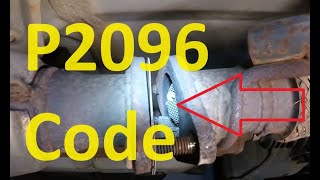
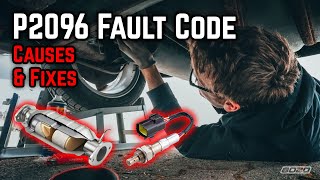
We Have This Part in Stock

The information in this article is provided for general reference and educational purposes only. Vehicle specifications, procedures, and part compatibility can vary by production date, trim level, and region. Always consult your vehicle's factory service manual and verify part numbers before purchasing or performing repairs. Safety-critical components such as airbags, seat belts, and braking systems should be installed by a qualified professional.
- Audi A6:
- 🧭 Diagnostic Flowchart
- 🎬 Helpful Videos
- 🛍️ Shop This Part
- What's Unique About the 2012-2018 Audi A6
- Symptoms You May Notice
- Most Likely Causes
- Rare But Worth Checking
- Diagnosis Steps
- Parts You'll Likely Need
- Related Codes That Often Appear With This One
- Technical Service Bulletins (TSBs) & Recalls
- Platform-Specific Known Issues
- Mechanic-Grade Diagnostic Values
- Scan Tool Commands That Help
- Wiring & Ground Locations
- OEM Part Supersession History
- Model Year Variations Within This Range
- Other Known Issues on This Vehicle
- Used vs. New Parts: Buying Guide for This Vehicle
- Real Owner Stories
- 2013 Audi S8 4.0T
- Audi A6 C7 3.0T
- Related OBD-II Codes
- Frequently Asked Questions
- 🎟️ Get 5% Off