

P2096 on 2009-2012 Audi Q5 3.2L: Causes and Fixes for Post-Catalyst Lean Condition
For the 2009-2012 Audi Q5 with the 3.2L V6 engine, code P2096 is most often caused by a failing post-catalyst (downstream) oxygen sensor on Bank 1. An Audi Technical Service Bulletin (TSB 2046611/5) confirms this is a known issue due to internal sensor contamination. An exhaust leak before the sensor is the second most likely cause. Expect to pay around $70-$150 for a quality aftermarket sensor (Bosch is the OEM supplier) and $150-$250 for a genuine Audi part.
- P2096 on a 2009-2012 Audi Q5 3.2L points to a lean condition detected after the catalytic converter on the passenger-side (Bank 1).
- An official Audi TSB (2046611/5) strongly suggests the most likely cause is a faulty post-catalyst (downstream) oxygen sensor due to internal contamination.
- Do not replace the upstream O2 sensor or the catalytic converter until the downstream sensor and any potential exhaust leaks have been ruled out.
- Bosch is the OEM supplier for the oxygen sensor (part #06E906265Q), providing a cost-effective alternative to dealer parts.
- Owners of this vehicle should also be aware of other platform-wide issues like carbon buildup and timing chain tensioner wear, which are significant but separate maintenance concerns.
What's Unique About the 2009-2012 Audi Q5
On this specific Audi platform, a Technical Service Bulletin (TSB 2046611/5) has been issued that directly addresses the P2096 code. The TSB notes that the internal reference duct of the post-catalyst oxygen sensor can become contaminated, leading to false lean readings. It specifically advises technicians to replace the post-catalyst (downstream) O2 sensor for the affected bank and to ignore any other related O2 sensor codes that may be present, as they are likely triggered by the faulty downstream sensor. This makes a faulty sensor the primary suspect, more so than on other vehicles where exhaust or vacuum leaks might be equally probable.
Symptoms You May Notice
- Check Engine Light (MIL) is on.
- Reduced fuel economy.
- Rough or unstable idle.
- Hesitation during acceleration.
- A louder or different exhaust noise if a leak is the cause.
- Stalling under light throttle.
- Replacing the pre-catalyst (upstream) oxygen sensor. The TSB specifically warns against this, as the downstream sensor is the root cause.
- Replacing the catalytic converter when the actual problem is an exhaust leak or a faulty sensor.
- Assuming a fuel delivery problem without first checking for exhaust leaks and testing the O2 sensor.
- Ignoring the TSB and following generic P2096 diagnostic procedures, leading to unnecessary parts replacement.
Most Likely Causes
- Failing Post-Catalyst Oxygen Sensor (Bank 1, Sensor 2) 🔴 High Probability → Shop Oxygen Sensor An Audi TSB (2046611/5) directly identifies contamination within the sensor's internal reference duct as a known issue causing this code. Age and exposure to harsh exhaust conditions, carbon, and soot also contribute to sensor failure.
How to confirm: Review live sensor data with an OBD-II scanner. A healthy post-catalyst sensor should show a relatively stable voltage. If the voltage is stuck low (e.g., below 0.2V), and no exhaust leaks are present, the sensor is likely faulty. Given the TSB, this is the most probable cause and the first part to suspect.
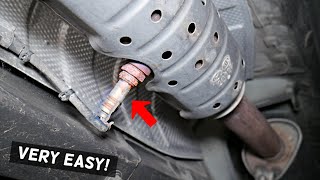
Typical fix: Replace the Bank 1 (passenger side) downstream (post-catalyst) oxygen sensor. 🎬 See this video to find the Bank 1 Sensor 2 location. Bosch is the original equipment manufacturer for Audi, so a Bosch-branded sensor is a reliable choice.
Est. part cost: $70-$250 - Exhaust Leak 🟡 Medium Probability Exhaust components like flex pipes and gaskets can degrade over time from rust and heat cycles, allowing unmetered air to enter the exhaust stream before the O2 sensor, which creates a false lean reading.
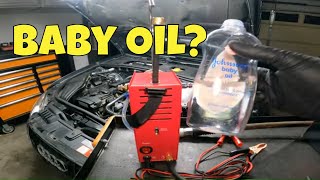
How to confirm: Perform a visual inspection of the exhaust system from the engine to the rear O2 sensor, looking for black soot marks, cracks, or rust holes. A smoke test is the most definitive way to find small leaks. 🎬 Watch how to use a smoke tester to find hidden leaks. Listen for ticking or hissing noises that are more prominent when the engine is cold.
Typical fix: Repair the leak. This may involve replacing a gasket, welding a crack, or replacing a section of pipe like the flex pipe.
Est. part cost: $20-$300 - Vacuum Leak ⚪ Low Probability Aging plastic and rubber hoses in the intake system, particularly the PCV (Positive Crankcase Ventilation) system, can crack and allow unmetered air into the engine. While this typically sets a P0171 code first, it can contribute to a P2096.
How to confirm: A smoke test of the intake system is the most effective way to identify the source of a vacuum leak. Listen for hissing sounds around the engine bay at idle. A failing PCV can also cause a whistling sound.
Typical fix: Replace the cracked or broken vacuum hose or gasket. The PCV valve itself is a common failure point.
Est. part cost: $15-$150
Rare But Worth Checking
- Fuel Delivery Issues: Problems like a weak fuel pump, clogged fuel filter, or dirty/leaking injectors can cause a true lean condition. However, these issues would typically affect both engine banks and likely trigger other codes, such as P0171 (System Too Lean) or fuel pressure codes, before P2096 appears alone.
- Failing Catalytic Converter: → Shop Catalytic Converter While a failing catalytic converter can trigger this code, it's more likely to set a P0420 (Catalyst System Efficiency Below Threshold) code. P2096 should only lead to a catalytic converter diagnosis after all other possibilities, especially the O2 sensor and exhaust leaks, have been exhausted.
- Engine Control Module (ECM) Fault: → Shop Engine Control Module (ECM) In very rare cases, a software glitch or internal failure in the ECM can cause it to misinterpret sensor data and set a false P2096 code. This should be considered a last resort after all other hardware has been verified.
Diagnosis Steps
- Scan the vehicle for all stored trouble codes. Confirm that P2096 is present. Note any other codes, especially P0137 or P0171.
- Follow the guidance of Audi TSB 2046611/5. The primary suspect is the post-catalyst O2 sensor on Bank 1.
- Perform a thorough visual inspection of the exhaust system for leaks. Look for soot trails, cracks, or listen for hissing/ticking noises, especially when the engine is cold. Pay close attention to the exhaust manifold gaskets and flex pipe section.
- If a leak is suspected, perform a smoke test on the exhaust system to pinpoint its exact location. This is the most reliable method.
- If no exhaust leaks are found, use a scan tool to monitor the live data for the Bank 1, Sensor 2 (post-catalyst) oxygen sensor. A healthy sensor should have a fairly steady voltage reading (typically above 0.5V). If the reading is stuck low (e.g., below 0.2V), it confirms the lean signal being sent to the ECU.
- Inspect the wiring and connector for the Bank 1, Sensor 2 for any damage, corrosion, or loose connections. The harness runs under the car and is susceptible to damage.
- Given the TSB, if no exhaust leaks or wiring issues are found, the most likely cause is a faulty oxygen sensor. Replace the Bank 1, Sensor 2.
- After the repair, clear all fault codes and perform a drive cycle to ensure the code does not return.
Parts You'll Likely Need
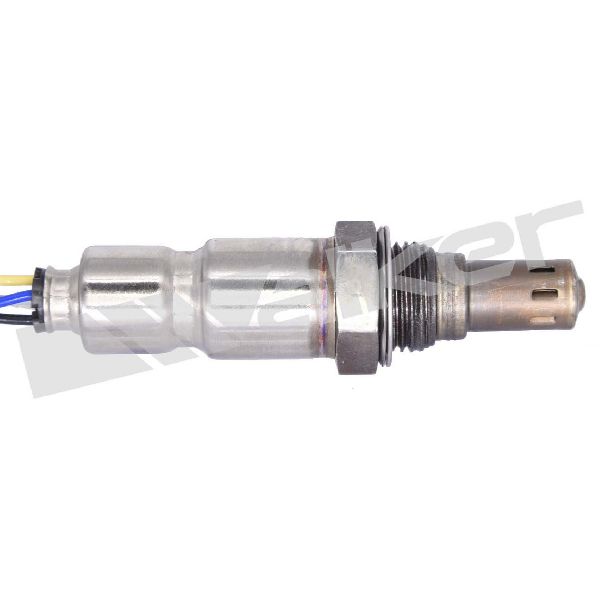
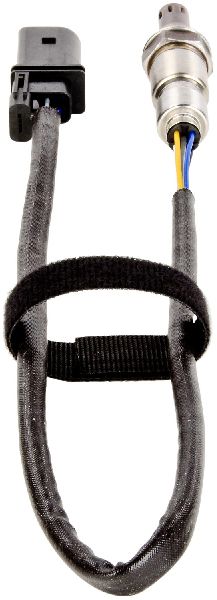
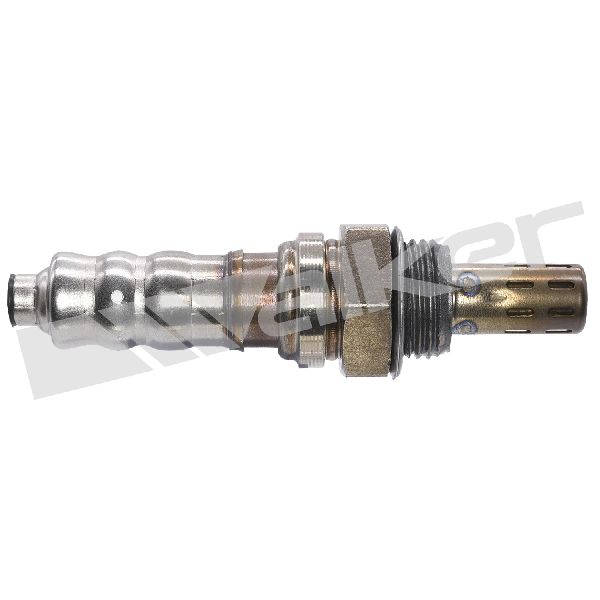
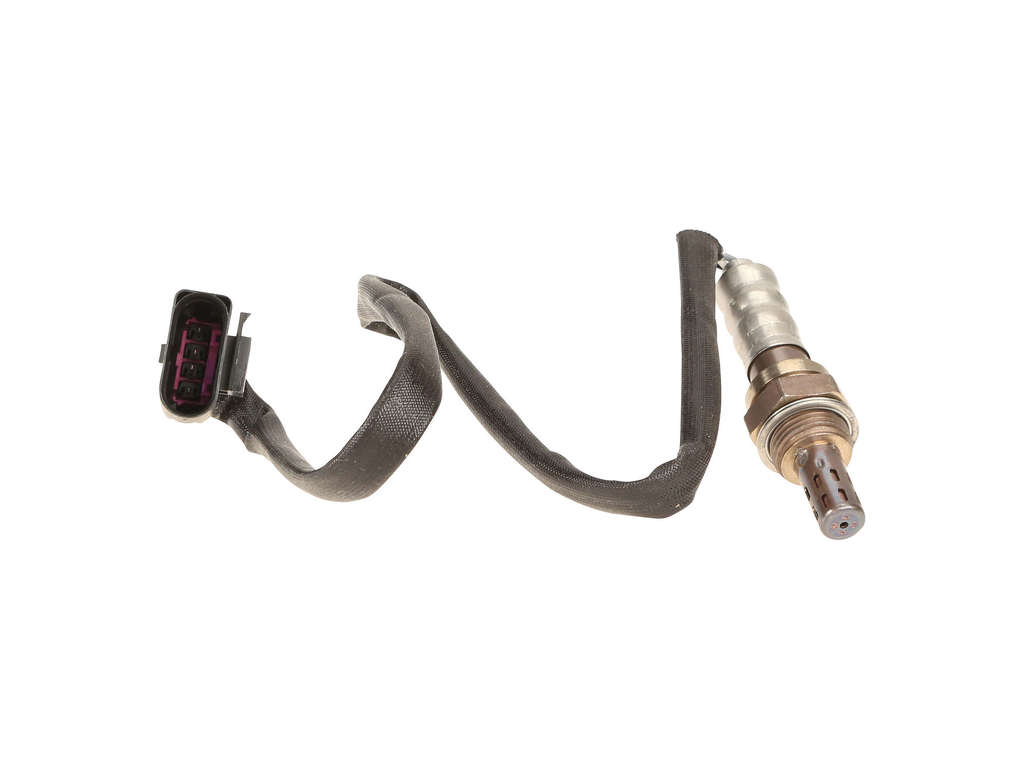
- Post-Catalyst Oxygen Sensor (Bank 1, Sensor 2)
(OEM #06E906265Q)— This is the most common cause of P2096 on this vehicle, as identified by Audi's own Technical Service Bulletin (2046611/5) due to internal contamination.
Trusted brands: Bosch (OEM Supplier), NGK/NTK, Denso
OEM price range: $150-$250
Aftermarket price range: $70-$150 - Exhaust Gaskets or Flex Pipe — If an exhaust leak is found to be the cause, these are the most common components that fail and require replacement.
Trusted brands: Walker Exhaust, Bosal, Eberspacher
OEM price range: $50-$400
Aftermarket price range: $30-$200
Related Codes That Often Appear With This One
- P0137 — P0137 indicates 'O2 Sensor Circuit Low Voltage (Bank 1, Sensor 2)'. This is a direct electrical fault code for the same sensor that reports the lean condition for P2096. Seeing them together strongly points to a failed sensor or wiring issue.
- P0171 — P0171 indicates 'System Too Lean (Bank 1)'. If you see this code alongside P2096, it suggests a true lean condition exists (like a vacuum leak) that is being detected by both the upstream and downstream O2 sensors, rather than just a faulty downstream sensor.
- P2098 — P2098 is the equivalent code for Bank 2 ('Post Catalyst Fuel Trim System Too Lean Bank 2'). If both P2096 and P2098 are present, it points towards a systemic issue affecting both banks, such as a major vacuum leak, fuel delivery problem, or an issue with the MAF sensor.
Technical Service Bulletins (TSBs) & Recalls
- Audi TSB 2046611/5: Addresses P2096 and P2098 codes, identifying internal contamination of the post-catalyst O2 sensor's reference duct as the cause and recommending its replacement. It explicitly warns against replacing the pre-catalyst sensor.
Platform-Specific Known Issues
- The 3.2L CALB engine is a direct-injection (FSI) motor, which makes it highly susceptible to carbon buildup on the intake valves. This is not a direct cause of P2096 but is a major maintenance item for any owner.
- The timing chains are located on the rear of the engine, meaning that any service related to them (like tensioner replacement) is extremely labor-intensive as it often requires engine or transmission removal.
Mechanic-Grade Diagnostic Values
- Post-Catalyst O2 Sensor Heater Element Resistance — expected: 2.5 to 15 Ohms at ~68°F (20°C).. Failure: A reading of infinite resistance (OL - Open Loop) or zero Ohms (short circuit) indicates a failed heater element.
- O2 Sensor Heater Circuit Voltage (at harness connector) — expected: Approximately 12V (battery voltage) with Key On, Engine Off.. Failure: No voltage or significantly low voltage points to a problem with the fuse, relay, or wiring, not the sensor itself.
- High-Pressure Fuel Pump (HPFP) Pressure — expected: System requires 100-120 bar (1450-1740 PSI). A healthy pump should hold steady and can peak around 180 bar under load.. Failure: Pressure dropping significantly below 100 bar under load (e.g., to 45 bar) indicates a failing HPFP. This will typically set a P0087 code but can be an edge-case cause for a lean condition.
- VCDS Long-Term Fuel Trim (LTFT) - Bank 1 — expected: Using Measuring Block 032, the values for idle and partial load should adapt and change after driving.. Failure: If the values in Measuring Block 032 remain at 0% after clearing codes and a drive cycle, it indicates the ECU is not re-learning fuel trims correctly.
Scan Tool Commands That Help
- VCDS (VAG-COM): Engine -> Basic Settings -> Group 037 (or similar) — To run the oxygen sensor test cycle. This can help verify sensor operation after an installation or during diagnosis.
- VCDS (VAG-COM): Engine -> Adaptation -> Channel 00 -> Read, Save, Done — This is a procedure to reset all basic adaptations for the engine controller. It should be performed after replacing a component like an oxygen sensor to force the ECU to relearn its operating parameters from a clean slate.
- VCDS (VAG-COM): Engine -> Output Tests (DTM) — Allows for the manual activation of individual components, such as the O2 sensor heater circuit. This is used to confirm if the wiring, fuse, and ECU driver are capable of powering the heater, isolating the fault to the sensor itself if the circuit tests good.
- VCDS (VAG-COM): Engine -> Advanced Measuring Blocks — To graph both upstream and downstream O2 sensor voltages simultaneously. This allows a technician to visually confirm if the downstream sensor is mimicking the upstream sensor (indicating a bad catalyst) or if it's stuck low (indicating a lean reading or bad sensor). Use Measuring Blocks 032 and 033 to start.
Wiring & Ground Locations
- 12 — In the engine compartment, on the left side frame rail/firewall area.. This is a primary engine ground. A loose or corroded connection here can cause unstable voltage and erratic signals for all engine sensors, including the oxygen sensors.
- 615 — On the left suspension strut tower in the engine bay.. Another critical chassis ground point in the engine bay. Poor contact can lead to floating grounds and incorrect sensor readings.
- 671 / 672 — On the left front longitudinal member (frame rail), potentially behind the wheel well liner.. These grounds are essential for components located on the front-left side of the engine and chassis. Verifying they are clean and tight is a key step in diagnosing any electrical fault.
- 685 — On the right front longitudinal member (frame rail), behind the wheel housing liner.. As Bank 1 is on the right (passenger) side, this ground point is particularly relevant for the Bank 1 sensors. A fault here could directly impact the B1S2 sensor circuit.
- O2 Sensor Heater Circuit Pins — On the 6-pin connector for the oxygen sensor itself.. On many VAG sensors, the two same-colored wires (often white) are for the heater circuit. Resistance should be tested across these two pins (Pins 3 and 4 are commonly cited).
OEM Part Supersession History
06E906265Q→06E906265Q (current)— This is the current and most commonly cited OEM part number for the Bank 1 downstream sensor. No supersession history was found, indicating this part number has been stable.
Heads up: Bosch (part #18026) and NTK (part #25197) are OEM or OEM-equivalent suppliers for this part.
Model Year Variations Within This Range
- 2009-2012: A forum user confirmed that a 2012 3.2L CALB engine was a direct, identical replacement for a failed engine in a 2010 Q5. This suggests that despite what some salvage yard databases may claim, the core engine assembly remained mechanically unchanged throughout its use in the Q5.
- 2009-2012: The 3.2L V6 engine was exclusively paired with a 6-speed automatic transmission. The 2.0T engine, available from 2011-2012, was paired with an 8-speed automatic. This does not affect the P2096 diagnosis but is a key platform difference.
Diagnostic Flowchart
Other Known Issues on This Vehicle
Issues unrelated to this code that are worth knowing about as an owner of this generation:
- Intake Valve Carbon Buildup 🔴 High — Common on all FSI/TSI direct injection engines, typically requires cleaning every 60,000-80,000 miles. Symptoms include rough idle, misfires, and reduced power. (Ref: Audi has issued warranty extensions for this issue on some models, but not a formal recall.)
- Timing Chain Tensioner Failure 🔴 High — The timing chains are at the rear of the engine. A rattling noise on startup is the primary symptom. Failure can cause catastrophic engine damage. While not as common as on the 2.0T, it is a known issue.
- Oil Consumption / Leaks 🟠 Medium — Can be caused by a failing PCV valve, worn piston rings, or leaking gaskets like the valve cover or cam girdle seals.
- Plastic Cooling System Components 🟠 Medium — The water pump, thermostat housing, and various coolant pipes are made of plastic and can become brittle and crack over time, leading to coolant leaks.
Used vs. New Parts: Buying Guide for This Vehicle
When a used part is the smart pick: Used parts are generally not recommended for this repair, as the primary causes are wear-items. The only exception might be a section of exhaust pipe if the original is cracked and a used one from a dry-climate, low-mileage vehicle is available without rust.
Donor-vehicle mileage cap: roughly under 80000 miles for the part to have meaningful remaining life.
What to inspect on the donor part:
- For exhaust components, inspect for any signs of rust, especially at welds and flanges.
- Ensure there are no cracks or signs of extreme heat stress (discoloration).
- Verify the part comes from the exact same engine (3.2L V6) and not a 2.0T or 3.0T.
OEM-only on this vehicle (don't cheap out):
- Oxygen Sensor: It is strongly recommended to use an OEM (Genuine Audi) or OEM-supplier (Bosch, NTK) sensor. Forum consensus for VAG vehicles indicates that generic aftermarket sensors often have incorrect resistance or response rates, leading to persistent codes.
- Catalytic Converter: If the converter is diagnosed as the fault, an OEM unit is the only reliable fix. Aftermarket converters for modern European cars frequently fail to meet the strict efficiency monitoring of the ECU, causing a P0420 code to appear shortly after installation.
Aftermarket brands forum-validated for this vehicle:
- Bosch (OEM Supplier, part #18026)
- NTK (OEM Supplier, part #25197)
Brands owners have reported issues with on this vehicle:
- Unbranded, 'white-box', or generic parts store sensors are frequently reported to fail quickly or not work at all on Audi platforms.
Real Owner Stories
Aggregated from forums and TSBs cited above. Mileages and costs reflect what owners reported in those sources.
2010 Audi S8 (VAG Platform)
Symptoms: Check Engine Light (MIL) illuminated with code P2096.
What fixed it: Replacement of the post-catalyst oxygen sensor as discussed in relation to the TSB for this platform.
Source hint: AudiWorld Forums - 'P2096 Check Engine Light' (https://www.audiworld.com/forums/a8-s8-d4-platform-discussion-193/p2096-check-engine-light-2974418/)
2009-2012 Audi Q5 3.2L V6
Symptoms: P2096 and P2098 codes present; internal contamination of the sensor's reference duct.
What fixed it: Replacement of the post-catalyst O2 sensor; the TSB specifically warned not to replace the pre-catalyst sensor.
Source hint: Audi TSB 2046611/5
Related OBD-II Codes
Frequently Asked Questions
Does Audi TSB 2046611/5 apply to my 2009-2012 Q5 with the 3.2L V6?
Should I replace the front (pre-catalyst) oxygen sensor to fix P2096 on my CALB engine?
Which brand of oxygen sensor should I use for my Audi Q5 3.2L?
Can a failing PCV valve cause a P2096 code on the 3.2L V6?
Is the P2096 code related to the carbon buildup issues common on the CALB engine?
Could a loud exhaust noise be related to my Check Engine Light?
Helpful Videos

We Have This Part in Stock

The information in this article is provided for general reference and educational purposes only. Vehicle specifications, procedures, and part compatibility can vary by production date, trim level, and region. Always consult your vehicle's factory service manual and verify part numbers before purchasing or performing repairs. Safety-critical components such as airbags, seat belts, and braking systems should be installed by a qualified professional.
- Audi Q5:
- 🧭 Diagnostic Flowchart
- 🎬 Helpful Videos
- 🛍️ Shop This Part
- What's Unique About the 2009-2012 Audi Q5
- Symptoms You May Notice
- Most Likely Causes
- Rare But Worth Checking
- Diagnosis Steps
- Parts You'll Likely Need
- Related Codes That Often Appear With This One
- Technical Service Bulletins (TSBs) & Recalls
- Platform-Specific Known Issues
- Mechanic-Grade Diagnostic Values
- Scan Tool Commands That Help
- Wiring & Ground Locations
- OEM Part Supersession History
- Model Year Variations Within This Range
- Other Known Issues on This Vehicle
- Used vs. New Parts: Buying Guide for This Vehicle
- Real Owner Stories
- 2010 Audi S8 (VAG Platform)
- 2009-2012 Audi Q5 3.2L V6
- Related OBD-II Codes
- Frequently Asked Questions
- 🎟️ Get 5% Off