

P2096 on 2014-2017 Chevrolet Corvette: Causes and Fixes for Lean Fuel Trim Bank 1
P2096 means the exhaust on Bank 1 (driver's side) is too lean. The most common hardware causes are an exhaust leak or a bad rear oxygen sensor. However, a GM Technical Service Bulletin (TSB) states this code can be triggered by a specific 'tapping' driving style, which may not require any repair.
- First, consider your driving style. If you frequently tap the gas to hold your speed, this code may be a false alarm per GM TSB PIP5467A.
- The most common hardware fault for P2096 is an exhaust leak between the engine and the rear O2 sensor. Check all gaskets and connections carefully.
- If no leaks are found, the next most likely culprit is a failing post-catalyst (downstream) O2 sensor on the driver's side.
- This code is especially common on Corvettes with aftermarket headers, x-pipes, or tunes, often due to small leaks or the need for a software adjustment.
What's Unique About the 2014-2017 Chevrolet CORVETTE
For the C7 Corvette, this code has a very specific quirk documented by General Motors. A Technical Service Bulletin (TSB) explains that P2096 can be set simply by a 'digital' driving style, where the driver rapidly taps the accelerator on and off to maintain speed. In these cases, GM considers it a normal operating characteristic, and there may be no faulty part to replace. This is a critical first consideration before beginning any repairs.
🎬 Watch: A breakdown of what this code means and how to fix it.Diagnostic Flowchart
Tap your situation to follow the diagnostic path that matches what you're seeing on this vehicle.
Symptoms You May Notice
- Check Engine Light is the most common and often only symptom.
- Reduced fuel economy.
- Rough or unstable idle.
- Hesitation during acceleration.
- Glowing red catalytic converter (in severe cases where a rich condition is commanded to compensate, or if misfires occur).
- Replacing the oxygen sensor when the actual problem is a small, hard-to-see exhaust leak.
- Replacing expensive parts like catalytic converters before ruling out the driving style issue described in TSB PIP5467A.
- Assuming a major engine problem when the code appears after installing an aftermarket exhaust, where it's often a leak at a connection or a tuning issue.
Most Likely Causes
- Exhaust Leak 🔴 High Probability Leaks can occur at manifold gaskets, the flange connection between the manifold and front pipe, or weld points. They are especially common after installing aftermarket headers or exhaust systems.
How to confirm: Perform a visual inspection of the exhaust system from the engine to the post-cat O2 sensor for black soot marks or cracks. A smoke test is the most effective way to pinpoint a leak. 🎬 See this simple trick to find exhaust leaks quickly. You may also feel air escaping or hear a ticking/hissing sound with the engine running.
Typical fix: Replace the leaking gasket (e.g., manifold or flange gasket) or repair the cracked pipe. On aftermarket systems, this may involve re-torquing clamps or applying high-temp sealant.
Est. part cost: $20-$100 - Faulty Post-Catalyst (Downstream) Oxygen Sensor 🟡 Medium Probability → Shop Oxygen Sensor O2 sensors degrade over time and can send inaccurate lean readings to the ECM. They are also prone to seizing in the exhaust pipe, making removal difficult; penetrating oil and heat may be required.
How to confirm: Use an OBD-II scanner to monitor the live data for the Bank 1 Sensor 2 voltage. A healthy sensor should show a relatively stable voltage (typically 0.6V-0.8V). If it's stuck low (below 0.2V) or mirrors the upstream sensor's fluctuations, it's likely faulty.
Typical fix: Replace the Bank 1, Sensor 2 oxygen sensor. Be prepared for a difficult removal.
Est. part cost: $50-$150 - Digital Driving Style (TSB Verified) 🟡 Medium Probability As per GM TSB #PIP5467A, the engine calibration is sensitive to rapid on-off throttle inputs used to maintain speed, which can trigger the code without a hardware fault. This is noted as a 'normal vehicle operating characteristic'.
How to confirm: If no exhaust leaks or sensor faults are found, consider your driving habits. Does the code appear after periods of light, tapping throttle application? If so, this is the likely cause.
Typical fix: No repair is needed. Modifying driving style to be smoother with throttle inputs may prevent the code from returning. Reset the code and monitor.
Est. part cost: $0 - Intake System Vacuum Leak ⚪ Low Probability Leaks in intake manifold gaskets or vacuum hoses can introduce unmetered air, causing a lean condition across the engine. This will typically set a P0171 code as well.
How to confirm: Perform a smoke test on the intake system to find the source of the leak. Listening for a whistling sound near the intake manifold at idle can also reveal a leak.
Typical fix: Replace the faulty gasket or hose.
Est. part cost: $10-$200
Rare But Worth Checking
- Fuel Delivery Issue: A clogged fuel injector, weak fuel pump, or failing fuel pressure regulator can cause a true lean condition.
- Failing Catalytic Converter: → Shop Catalytic Converter A damaged or inefficient catalytic converter can sometimes cause erratic readings from the post-cat O2 sensor.
- Aftermarket Modifications: Aftermarket headers or cat-delete pipes change exhaust flow dynamics and can trigger this code. Often, a custom tune is required to disable the rear O2 sensor monitoring or adjust fuel trims. Sometimes an O2 sensor extender or 'fouler' is used as a mechanical workaround.
Diagnosis Steps
- Read the code with an OBD-II scanner and note any other codes present, especially P2098 or P0171.
- Be aware of TSB #PIP5467A. If no other symptoms are present, consider if your driving style involves 'tapping' the accelerator. If so, clear the code and see if it returns with smoother driving.
- Thoroughly inspect the Bank 1 (driver's side) exhaust system for leaks. A smoke test is the most reliable method. Pay close attention to gaskets at the manifold and collector flanges.
- Use a scanner to observe live data for the Bank 1 Sensor 2 (downstream) O2 sensor. The voltage should be relatively steady. If it reads very low (e.g., <0.2V) or fluctuates wildly like the upstream sensor, it is suspect.
- If P0171 is also present, prioritize checking for vacuum leaks in the intake system using a smoke machine or by listening for hissing sounds.
- If no leaks are found and the sensor appears to function, investigate the fuel system for low pressure or clogged injectors.
- If the vehicle has aftermarket modifications like headers or a tune, the issue may lie there. A small leak at a new connection is common. Consult the installer or tuner, as a software adjustment may be necessary.
Parts You'll Likely Need
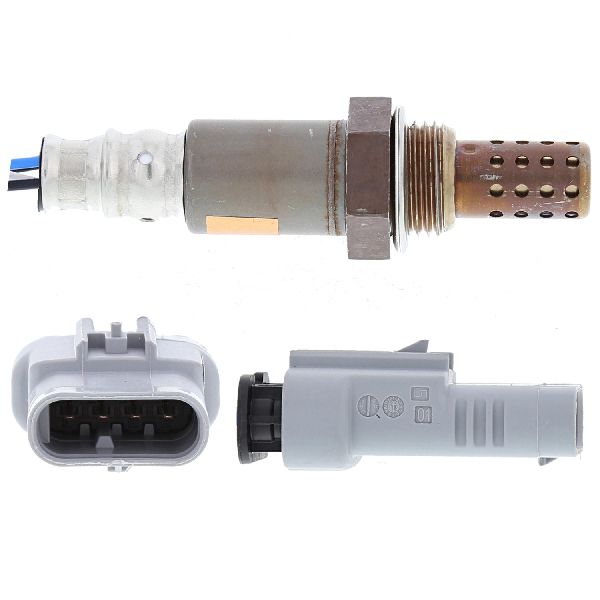
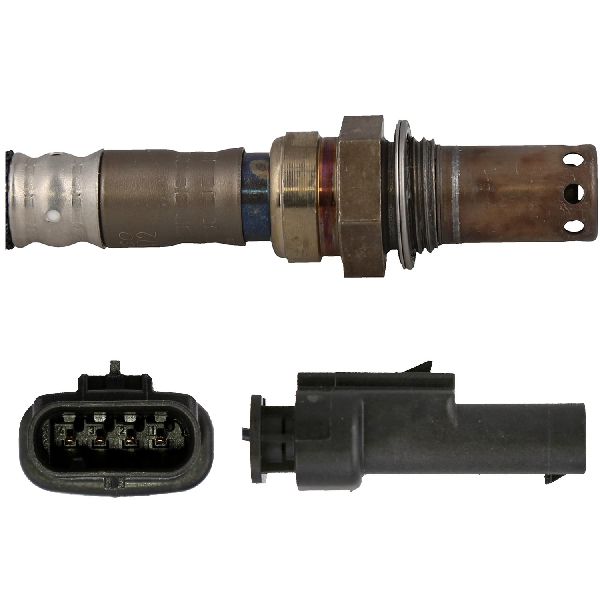
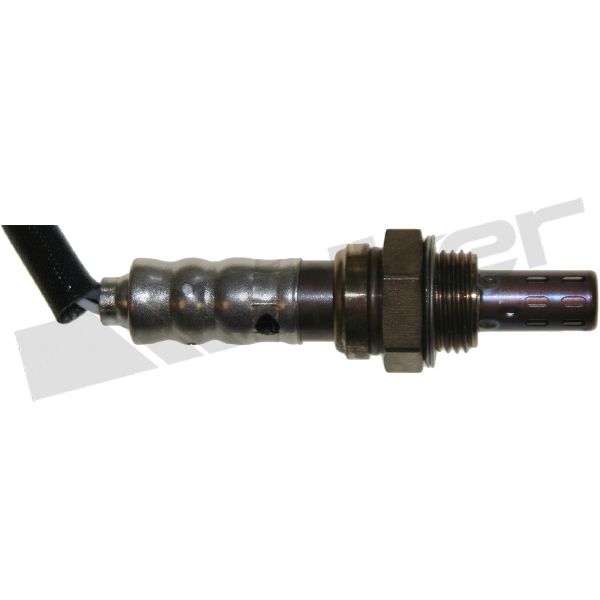
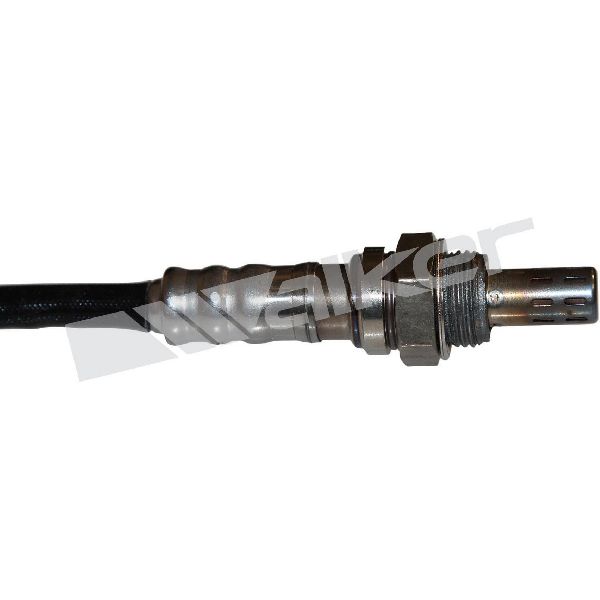
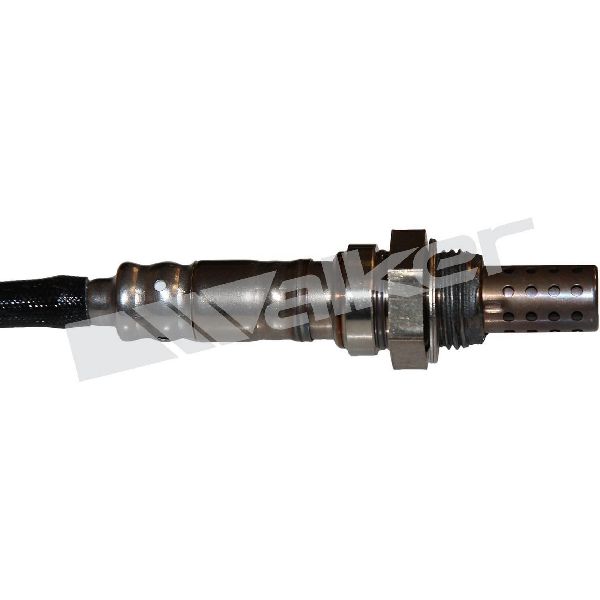
- Post-Catalyst Oxygen Sensor (Bank 1, Sensor 2)
(OEM #12655678)— This sensor is the primary input for this code. 🎬 Watch: How to diagnose and fix post-catalyst fuel trim issues. If it fails, it can send false lean signals. Note: This downstream sensor is different from the upstream sensor (part #12655677).
Trusted brands: ACDelco, Denso, NTK, Bosch
OEM price range: $60-$100
Aftermarket price range: $40-$70 - Exhaust Manifold Gasket
(OEM #12657093)— A common source of exhaust leaks at the cylinder head that trigger a false lean reading. This part fits most Gen V LT engines.
Trusted brands: ACDelco, Fel-Pro
OEM price range: $30-$50
Aftermarket price range: $15-$30 - Exhaust Manifold to Front Pipe Gasket
(OEM #15272179)— This 'donut' style gasket is another common leak point between the stock exhaust manifold and the catalytic converter pipe.
Trusted brands: ACDelco, Walker
OEM price range: $35-$55
Aftermarket price range: $20-$40
Related Codes That Often Appear With This One
- P2098 — This is the identical code for Bank 2 (passenger side). They often appear together, especially if the cause is the driving style mentioned in the TSB or an issue affecting the whole engine like a vacuum leak.
- P0171 — This code indicates 'System Too Lean Bank 1' as detected by the *pre-catalyst* oxygen sensor. If you have both codes, it points more strongly to a true lean condition like a vacuum or exhaust leak before the first O2 sensor, or a fuel delivery problem.
Technical Service Bulletins (TSBs) & Recalls
- PIP5467A: States that customers may experience a Check Engine Light with codes P2096 and P2098, which can be set when the driver taps the accelerator pedal on-off to maintain speed. It is considered a normal vehicle operating characteristic.
Platform-Specific Known Issues
- TSB #PIP5467A documents that P2096 and P2098 can be set by a 'digital' driving style (tapping the gas pedal) and may not indicate a component failure. The bulletin notes this may be seen on models with the 8L90 automatic transmission and that GM considers it a normal operating characteristic.
Mechanic-Grade Diagnostic Values
- Downstream O2 Sensor (HO2S B1S2) Voltage — expected: Relatively stable voltage between 0.6V and 0.8V on a warm, running engine at steady RPM.. Failure: Voltage is stuck low (below 0.2V) or fluctuates rapidly, mirroring the upstream sensor. A scan tool should show the parameter between 50-1,050 mV (0.05V - 1.05V) during operation.
- O2 Sensor Low Signal Circuit Resistance — expected: Less than 2.0 ohms.. Failure: Resistance of 2.0 ohms or greater indicates an open or high resistance in the circuit, requiring wire tracing and repair.
- Long Term Fuel Trim (LTFT) Bank 1 — expected: Ideally close to 0%, but a value between -10% and +10% is generally considered acceptable.. Failure: A persistently high positive value (e.g., >10%) confirms the ECM is adding fuel to compensate for a lean condition. P2096 sets when the post-catalyst trim reaches its limit.
Scan Tool Commands That Help
- GDS2 / Professional Scan Tool: Fuel Trim Reset — After a repair (like fixing a vacuum leak or replacing an injector), this function should be used to clear the learned long-term fuel trim values. On these GM vehicles, simply clearing the DTC will not reset the fuel trims.
Wiring & Ground Locations
- G103 / G105 — On the engine block, driver's side. G103 is often described as being on the front of the engine, while G105 is on the lower block.. These are primary engine ground points. Poor grounding here can cause erratic sensor readings and affect the Engine Control Module (K20) and its sensor inputs, including the O2 sensors.
- G303 — The main battery negative cable connection point on the vehicle's frame in the rear of the car.. This is the master ground for the entire electrical system. Corrosion or a loose connection here can cause widespread, difficult-to-diagnose electrical issues.
- Passenger Fender Well Ground Stud — A stud on the passenger side inner fender well, located just to the rear of the air filter housing.. This is a common and accessible grounding point in the engine bay for various components. Ensuring it is clean and tight is good practice when chasing electrical faults.
- K20 — This is the service designation for the Engine Control Module (ECM).. All O2 sensor signals are processed by the K20 ECM. When performing circuit tests, wires are checked for continuity and shorts back to the ECM's harness connector.
Real Owner Repair Stories
- CorvetteForum user Dave01GT (C7 Corvette) — P0131 and P0151 (O2 sensor low voltage codes), which are related to the lean condition that can lead to P2096.
❌ Tried (didn't work) Replacing both front O2 sensors., Replacing the oil pressure sensor (for a separate code)., Repairing burnt O2 sensor wiring.
✅ What actually fixed it Found that an intake manifold gasket had moved out of place during installation, causing a significant vacuum leak that triggered the O2 sensor codes. - CorvetteForum user (2015 C7 Z51) — Long Term Fuel Trim on Bank 1 (driver's side) was -5% to -8%, while Bank 2 was near 0%. No check engine light, but a noticeable deviation between banks.
❌ Tried (didn't work) N/A, owner was monitoring data after a repair.
✅ What actually fixed it The owner had recently replaced the four fuel injectors on Bank 1 only. The consensus was that the trim deviation was normal and acceptable (within +/-10%) due to the slight flow difference between the new injectors on Bank 1 and the original injectors on Bank 2. No repair was necessary.
"I Checked Everything" — The Actual Cause
- In one documented case, a technician would find no exhaust leaks via a smoke test, yet the lean code persisted. The actual cause was a displaced intake manifold gasket creating a vacuum leak. This is often missed because the code P2096 points to the post-catalyst exhaust system, diverting attention from the intake side of the engine.
Model Year Variations Within This Range
- 2015-2017: The TSB #PIP5467A, which points to a 'digital' driving style causing P2096/P2098, specifically mentions models with the 8L90 8-speed automatic transmission (RPO M5U). This transmission was introduced for the 2015 model year. The 2014 model used a 6-speed 6L80 automatic. Therefore, the TSB is most applicable to 2015 and newer C7s.
Helpful Videos

We Have This Part in Stock

The information in this article is provided for general reference and educational purposes only. Vehicle specifications, procedures, and part compatibility can vary by production date, trim level, and region. Always consult your vehicle's factory service manual and verify part numbers before purchasing or performing repairs. Safety-critical components such as airbags, seat belts, and braking systems should be installed by a qualified professional.
- Chevrolet CORVETTE:
- 🧭 Diagnostic Flowchart
- 🎬 Helpful Videos
- 🛍️ Shop This Part
- What's Unique About the 2014-2017 Chevrolet CORVETTE
- Symptoms You May Notice
- Most Likely Causes
- Rare But Worth Checking
- Diagnosis Steps
- Parts You'll Likely Need
- Related Codes That Often Appear With This One
- Technical Service Bulletins (TSBs) & Recalls
- Platform-Specific Known Issues
- Mechanic-Grade Diagnostic Values
- Scan Tool Commands That Help
- Wiring & Ground Locations
- Real Owner Repair Stories
- "I Checked Everything" — The Actual Cause
- Model Year Variations Within This Range
- 🎟️ Get 5% Off