

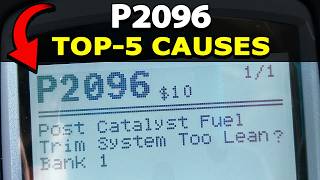
P2096 on 2014-2019 Chevrolet Corvette: Lean Fuel Trim Causes and Fixes
On a C7 Corvette, P2096 is often caused by an exhaust leak before the rear O2 sensor or a faulty sensor itself. However, first check GM TSB #PIP5467A (and later revisions), as a 'tapping' driving style can trigger this code with no actual fault. If a part is needed, the most likely is the rear O2 sensor (driver's side), costing ~$60 for an OEM part. Aftermarket exhausts are a very common trigger for this code.
- First, rule out the driving style issue described in TSB #PIP5467A before spending any money on parts.
- The most common hardware fault is an exhaust leak. Thoroughly inspect the exhaust system, especially if you have aftermarket parts.
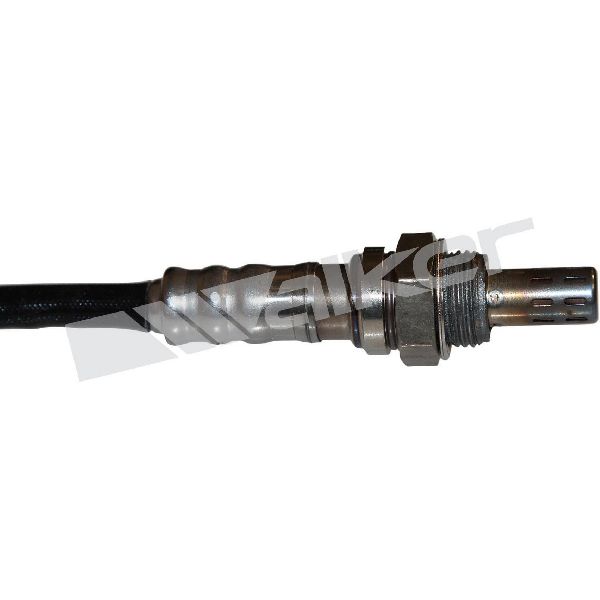
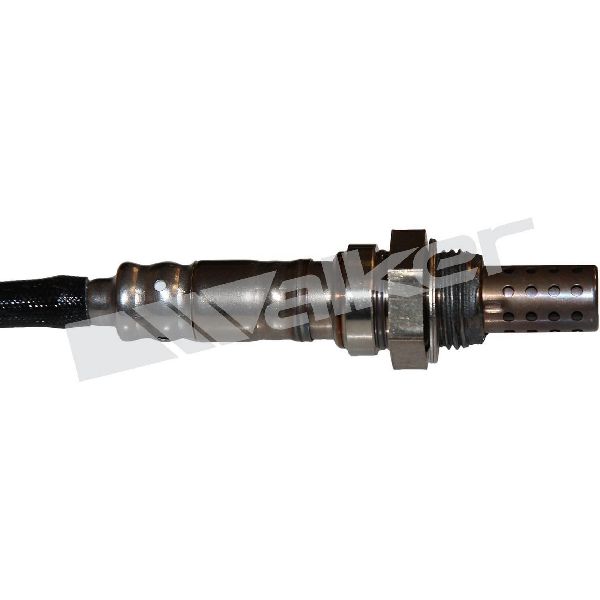
- If there are no leaks, the next most likely culprit is the Bank 1 downstream (post-catalyst) O2 sensor, GM part #12655678.
- Do not immediately assume you need a new catalytic converter; this is a less common cause and should be diagnosed last.
What's Unique About the 2014-2019 Chevrolet Corvette
For the C7 Corvette, this code has a unique quirk documented by General Motors in Technical Service Bulletin (TSB) #PIP5467A and its subsequent revisions (B, C, D, E). The TSB, covering model years 2014-2017, states that P2096 can be set by a 'digital' driving style where the driver rapidly taps the accelerator on and off to maintain speed. In these instances, GM considers it a normal operating characteristic, and no repair may be necessary. This should always be the first consideration before diagnosing hardware faults, as many owners have confirmed that changing to smoother throttle inputs resolves the issue.
Symptoms You May Notice
- Check Engine Light is on
- Reduced fuel economy
- Slightly rough idle or stumbling at idle
- Hesitation during acceleration
- Audible ticking or hissing from an exhaust leak
- Black soot around exhaust flanges or connections indicating a leak
- Immediately replacing the oxygen sensor without first checking for exhaust leaks. A leak will cause the new sensor to read lean as well, and the code will return.
- Replacing fuel system components like injectors or the fuel pump. While fuel issues can cause lean conditions, they typically trigger upstream lean codes (like P0171) first and are less common causes for an isolated P2096.
- Using an O2 sensor spacer or 'fouler' on aftermarket exhausts. While sometimes used to prevent a P0420 (catalyst efficiency) code, they can sometimes cause a P2096 by pulling the sensor too far out of the exhaust stream, leading it to read falsely lean.
Most Likely Causes
- Exhaust Leak 🔴 High Probability Leaks are common at gasket connections (manifold, collectors) and are frequently introduced when installing aftermarket headers or x-pipes, which are popular modifications for this vehicle. The connection between the catalytic converter and the x-pipe is a frequent culprit. Even small, pinhole leaks can introduce enough oxygen to trigger the code.
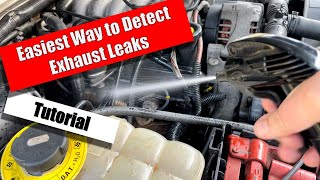
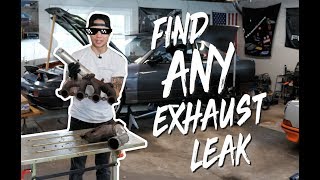
How to confirm: Perform a visual inspection of the exhaust system from the engine to the rear O2 sensors. Look for black soot trails at flanges. Listen for ticking or hissing sounds that are most obvious on a cold start. The most effective method is to use a smoke machine to introduce smoke into the exhaust (with the engine off) and watch for where it escapes. 🎬 Watch: How to find any exhaust leak in minutes.
Typical fix: Replace the leaking gasket or tighten the loose connection. For aftermarket systems, this may involve re-torquing clamps or applying high-temperature copper exhaust sealant to the joints.
Est. part cost: $20-$100 - Faulty Downstream Oxygen Sensor (Bank 1, Sensor 2) 🟡 Medium Probability → Shop Oxygen Sensor Oxygen sensors are wear items that degrade over time, leading to inaccurate readings. Their position in the hot exhaust stream makes them susceptible to failure. Contamination from fuel additives or engine byproducts can also cause failure.
How to confirm: After ruling out exhaust leaks, test the sensor. Using a capable OBD-II scanner, monitor the voltage of the Bank 1 Sensor 2. A healthy downstream sensor on a warm, running engine at steady RPM should show a relatively stable voltage, typically between 0.45V and 0.7V. If it's stuck low (e.g., < 0.2V) or mimics the rapid up-and-down switching of the upstream sensor, it's likely faulty.
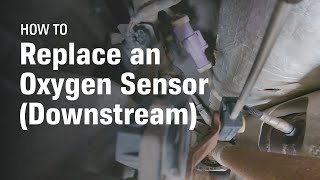
Typical fix: Replace the Bank 1, Sensor 2 (downstream/post-cat) oxygen sensor. This is located on the driver's side, after the catalytic converter. 🎬 See this walkthrough on replacing a downstream oxygen sensor.
Est. part cost: $50-$90 - Driving Style (TSB #PIP5467A) 🟡 Medium Probability GM has identified that a specific 'on-off-on-off' tapping of the accelerator pedal to maintain speed can falsely trigger this code on 2014-2017 models. This is not a fault but a characteristic of the engine management software's sensitivity. As noted in Bulletin #PIP5467, engineering has determined that driving "digitally" by tapping the pedal can lead to repeat MIL illumination.
How to confirm: Review your driving habits. If you frequently use a light, tapping motion on the gas pedal at cruising speeds, this may be the cause. Clear the code and drive with smoother, more consistent throttle application to see if it returns. Several owners on forums have confirmed this resolves the issue.
Typical fix: Modify driving style to use smoother, more consistent throttle application. No parts are replaced.
Est. part cost: $0
Rare But Worth Checking
- Intake System Vacuum Leak: While this code points to the exhaust, a significant unmetered air leak from a source like a loose PCV hose, a displaced intake manifold gasket, or a cracked air intake tube can create a true lean condition that triggers P2096. This is often overlooked but will typically set a P0171 code as well.
- Inefficient Catalytic Converter: → Shop Catalytic Converter If the catalytic converter on Bank 1 is failing, it may not be processing exhaust gases correctly, causing the downstream O2 sensor to read a lean condition. This is usually a higher-mileage failure and can sometimes be diagnosed by checking for a significant temperature increase from the converter's inlet to its outlet with an infrared thermometer. A glowing red converter under load is a definitive sign of a clog.
- Fuel Delivery Issue: A clogged fuel injector on Bank 1, a failing fuel pump, or a faulty fuel pressure regulator can cause a true lean condition. This would usually be accompanied by other codes like P0171 (System Too Lean Bank 1) and potentially misfire codes.
Diagnosis Steps
- Check for TSB #PIP5467A and its revisions. Consider if your driving style involves 'tapping' the accelerator. If so, clear the code and adjust driving habits before proceeding.
- Perform a thorough inspection for exhaust leaks, especially if aftermarket components are installed. Listen for hissing/ticking sounds. A smoke test is the most reliable method to find small leaks at gaskets and clamps.
- If no leaks are found, use a scan tool to observe the live data for the Bank 1 Sensor 2 (downstream) oxygen sensor. A healthy sensor's voltage should be relatively steady (e.g., 0.45V-0.7V) on a warm engine at a steady cruise. A voltage stuck below 0.2V indicates a lean reading or faulty sensor.
- Inspect the O2 sensor's wiring and connector for any damage, corrosion, or loose connections. Ensure the harness is not melted on the exhaust.
- If the sensor and exhaust are confirmed to be good, perform a smoke test on the engine's intake system to check for vacuum leaks from gaskets, the PCV system, or intake hoses.
- Check fuel trims (Short Term and Long Term) with a scan tool. High positive numbers for Long Term Fuel Trim (e.g., > +10%) confirm the computer is adding fuel to combat a persistent lean condition. If both banks have high trims, the issue is likely a vacuum leak affecting the whole engine.
- As a final step, if all else fails, the catalytic converter's efficiency should be tested. This can be done by comparing upstream and downstream O2 sensor readings or by using an infrared thermometer to check for a temperature rise across the converter.
Parts You'll Likely Need
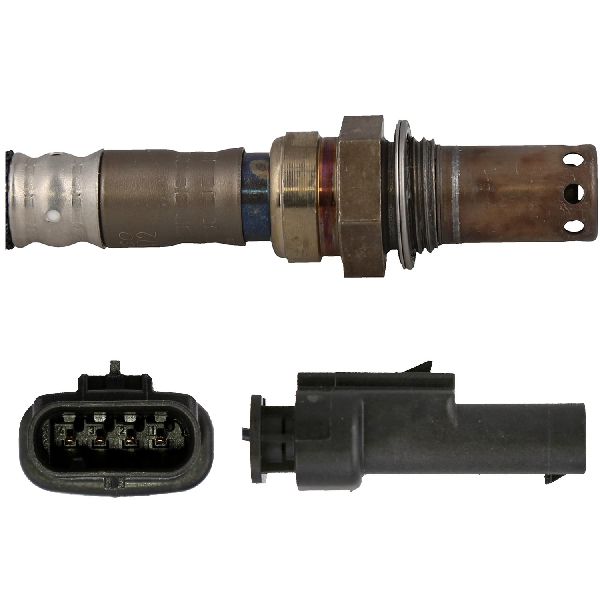
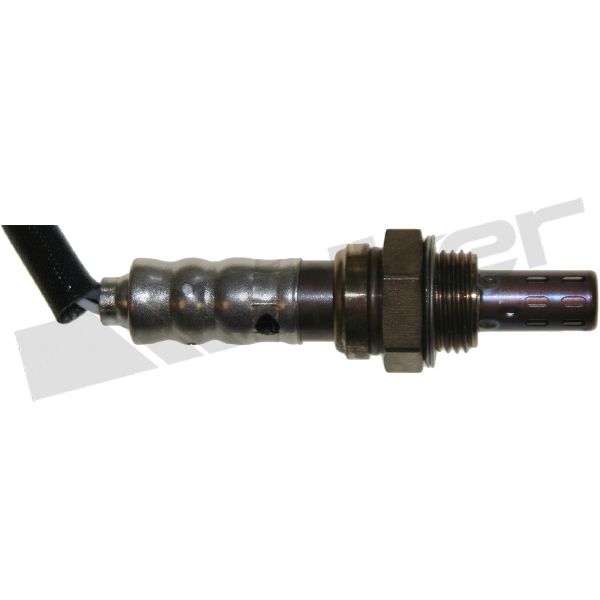
- Downstream Oxygen Sensor (Bank 1, Sensor 2)
(OEM #12655678)— This sensor is the primary input for this code. After exhaust leaks are ruled out, a degraded sensor is the most common hardware failure.
Trusted brands: ACDelco (GM Genuine), Bosch, Denso, NGK/NTK
OEM price range: $60-$90
Aftermarket price range: $40-$70 - Exhaust Manifold Gasket
(OEM #12657093)— A common source for exhaust leaks that introduce unmetered air and cause a false lean reading at the manifold-to-head connection.
Trusted brands: ACDelco, Fel-Pro
OEM price range: $25-$40
Aftermarket price range: $15-$30
Related Codes That Often Appear With This One
- P2098 — This is the identical code but for Bank 2 (passenger side). Seeing both P2096 and P2098 together points towards a systemic issue like the driving style mentioned in the TSB, a major vacuum leak, or issues with an aftermarket x-pipe affecting both banks. 🎬 Watch: A mechanic explains what P2096 and P2098 mean together.
- P0171 — This code means 'System Too Lean (Bank 1)' based on the *upstream* O2 sensor. If you have a significant vacuum leak or a fuel delivery problem, it's common to see both P0171 and P2096 together as both sensors detect the lean condition.
Technical Service Bulletins (TSBs) & Recalls
- PIP5467A (and subsequent revisions B, C, D, E): Explains that repeat P2096 and P2098 codes can be set by a specific driving style (tapping the accelerator) and may not indicate a vehicle fault. Applies to 2014-2017 models.
- Bulletin #PIP5467: Notes that customers may experience MIL illumination with repeat diagnostic codes P2096 and P2098 when the driver taps the accelerator pedal (on - off - on - off) to maintain speed.
Platform-Specific Known Issues
- TSB #PIP5467A: A 'tapping' or 'digital' driving style can set a false P2096 code on 2014-2017 models, which GM considers a normal characteristic requiring no repair.
- Aftermarket Exhaust: This code is very common on Corvettes with aftermarket headers or x-pipes, often due to small, hard-to-find leaks at the new connection points. Sometimes a custom tune is required to adjust the sensitivity of the rear O2 sensor monitoring, or the monitoring is disabled entirely (for off-road use only).
Mechanic-Grade Diagnostic Values
- Downstream O2 Sensor (Bank 1, Sensor 2) Voltage — expected: Relatively steady voltage between 0.45V and 0.7V on a warm, running engine at a steady RPM.. Failure: Voltage is stuck low, near 0.1V - 0.2V, indicating a persistent lean reading.
- Long Term Fuel Trim (LTFT) Bank 1 — expected: Typically fluctuates between -10% and +10%.. Failure: Sustained positive value greater than +10% to +15% confirms the ECM is compensating for a persistent lean condition.
- O2 Sensor Heater Circuit Resistance — expected: Between 4 and 14 Ohms when tested across the two heater circuit pins on the sensor connector.. Failure: Resistance is outside of the expected range, indicating a faulty internal heater.
- O2 Sensor Circuit to ECM Resistance — expected: Less than 1.0 Ω.. Failure: Resistance is greater than 1.0 Ω, indicating excessive resistance in the wiring harness or a poor connection.
Real Owner Repair Stories
- CorvetteForum user (2015 Corvette Z51 M7) — Check Engine Light with code P2096 appeared immediately after one specific modification.
❌ Tried (didn't work) Taking it to the dealer, who confirmed all O2 sensors were functioning correctly.
✅ What actually fixed it The code was directly caused by the installation of a catless Borla x-pipe. The problem did not exist with ARH mid-length headers and high-flow cats, but started the moment the catless x-pipe was added, pointing to a change in exhaust flow/composition that the stock tune could not handle. - CorvetteForum user (2014 Corvette with an ECS supercharger) — P2096 and P2098 codes appeared consistently about 10 miles after a custom tune was performed.
❌ Tried (didn't work) The tuner suggested just turning the codes off, which the owner and other forum members advised against.
✅ What actually fixed it The consensus diagnosis was that the codes were not from the tune itself, but from a physical vacuum or exhaust leak introduced during the supercharger installation. The tune likely made the system more sensitive or unable to compensate for the leak, but the root cause was determined to be unmetered air entering the system.
"I Checked Everything" — The Actual Cause
- The most prominent example for this vehicle is documented in GM TSB #PIP5467A, where the entire exhaust and fuel system can be in perfect condition (passing a smoke test), yet the P2096 code is repeatedly set due to a 'tapping' or 'digital' driving style. The actual cause is the ECM's sensitivity in 2014-2017 models, not a physical fault.
OEM Part Supersession History
12629434→12657093— Standard part evolution. The replacement part (12657093) is a multi-layer steel (MLS) gasket, providing a robust seal for high-heat Gen V LT engine applications.
Model Year Variations Within This Range
- 2014-2017: These model years are specifically called out in TSB #PIP5467A for setting a false P2096 due to a 'tapping' accelerator driving style. Models from 2018-2019 are not included in the bulletin, suggesting a possible change in ECM software sensitivity.
- 2014-2016: Models with automatic transmissions in this range were equipped with a riveted flex plate design that was prone to loosening and failure, which was later updated to a more robust bolted design.
- 2017-2019: For the 2017 model year, GM eliminated the Active Fuel Management (AFM) valves in the exhaust system for Z51 and Grand Sport models due to melting issues. This represents a physical change to the exhaust system compared to 2014-2016 models.
Diagnostic Flowchart
Other Known Issues on This Vehicle
Issues unrelated to this code that are worth knowing about as an owner of this generation:
- A8 (8L90) Automatic Transmission Shudder 🔴 High — Very common on 2015-2019 models with the 8-speed automatic. Often appears as a vibration or shudder during light acceleration. (Ref: TSB #18-NA-355 recommends a 'triple flush' with an updated Mobil 1 synthetic transmission fluid.)
- Cracked Wheels (Grand Sport & Z06) 🔴 High — Widespread on 2015-2019 Z06 and 2017-2019 Grand Sport models. Cast aluminum wheels are prone to bending and cracking from normal road impacts like potholes. (Ref: No TSB/recall, but multiple class-action lawsuits were filed. GM eventually created a reimbursement program for some owners.)
- Torque Tube Bearing/Coupler Failure 🟠 Medium — Reported across all C7 model years, but seems more prevalent in earlier (2014-2015) models. Can cause rattling, vibration, or a grinding noise. (Ref: GM issued a heat shield (P/N 23229542) for models after mid-2015 to mitigate heat damage to the internal rubber couplers and bearings.)
- Overheating on Track (Z06) 🟠 Medium — Primarily affects 2015-2016 Z06 models during sustained high-performance driving, leading the car to enter limp mode. (Ref: No recall, but GM made hardware changes in later model years (e.g., redesigned hood, different supercharger cover) to improve cooling.)
- Infotainment System Glitches/Failure 🟡 Low — Reported intermittently across all model years. Symptoms include a flickering or black screen. (Ref: No specific TSB, but a common cause is a loose wiring connection to the HMI module behind the driver's side kick panel.)
Used vs. New Parts: Buying Guide for This Vehicle
When a used part is the smart pick: Used parts are a reasonable choice for major structural exhaust components like the x-pipe or exhaust manifolds, provided they are inspected for cracks and severe corrosion. These parts have no electronic or wear components.
Donor-vehicle mileage cap: roughly under 75000 miles for the part to have meaningful remaining life.
What to inspect on the donor part:
- For exhaust pipes/manifolds: Check all welds for cracks.
- Look for any signs of impact damage or flattened sections that could restrict flow.
- Ensure flanges are flat and not excessively pitted or rusted where the gasket seals.
- Verify O2 sensor bungs have clean, undamaged threads.
OEM-only on this vehicle (don't cheap out):
- Oxygen Sensor: While not strictly 'OEM-only', using a cheap, no-name aftermarket O2 sensor is a common cause of repeat failures. Sticking to GM Genuine (ACDelco) or a reputable OE supplier like Denso or NTK is strongly recommended to ensure accurate readings.
Aftermarket brands forum-validated for this vehicle:
- O2 Sensors: ACDelco, Denso, NTK (also known as NGK), Bosch.
- Exhaust Gaskets: Fel-Pro is a widely trusted aftermarket brand for gaskets as an alternative to OEM.
Brands owners have reported issues with on this vehicle:
- General 'universal' or unbranded oxygen sensors are frequently reported as being problematic or having a short service life.
Real Owner Stories
Aggregated from forums and TSBs cited above. Mileages and costs reflect what owners reported in those sources.
2014-2017 Chevrolet Corvette LT1 V8
Symptoms: Repeat P2096 and P2098 codes being set despite no mechanical fault found.
What fixed it: Modified driving style to use smoother, more consistent throttle application instead of 'tapping' the accelerator pedal.
Source hint: TSB #PIP5467A
2015 Chevrolet Corvette LT1 V8
Symptoms: Check Engine Light with code P2096 appearing after modifications.
What fixed it: Traced to small leaks at the connection points of aftermarket headers and x-pipes; resolved by ensuring tight seals at flanges.
Source hint: CorvetteForum.com
Related OBD-II Codes
Frequently Asked Questions
Does TSB #PIP5467A apply to my 2018 Corvette LT1?
I just installed an aftermarket x-pipe and now have a P2096 code. Is this common?
Where is the Bank 1 Sensor 2 oxygen sensor located on my C7 Corvette?
Can my driving style actually cause a Check Engine Light on a 2014-2017 Corvette?
What should the voltage reading be for a healthy downstream O2 sensor on an LT1 engine?
Is there a specific sealant recommended for fixing exhaust leaks on aftermarket headers?
Helpful Videos
We Have This Part in Stock

The information in this article is provided for general reference and educational purposes only. Vehicle specifications, procedures, and part compatibility can vary by production date, trim level, and region. Always consult your vehicle's factory service manual and verify part numbers before purchasing or performing repairs. Safety-critical components such as airbags, seat belts, and braking systems should be installed by a qualified professional.
- Chevrolet Corvette:
- 🧭 Diagnostic Flowchart
- 🎬 Helpful Videos
- 🛍️ Shop This Part
- What's Unique About the 2014-2019 Chevrolet Corvette
- Symptoms You May Notice
- Most Likely Causes
- Rare But Worth Checking
- Diagnosis Steps
- Parts You'll Likely Need
- Related Codes That Often Appear With This One
- Technical Service Bulletins (TSBs) & Recalls
- Platform-Specific Known Issues
- Mechanic-Grade Diagnostic Values
- Real Owner Repair Stories
- "I Checked Everything" — The Actual Cause
- OEM Part Supersession History
- Model Year Variations Within This Range
- Other Known Issues on This Vehicle
- Used vs. New Parts: Buying Guide for This Vehicle
- Real Owner Stories
- 2014-2017 Chevrolet Corvette LT1 V8
- 2015 Chevrolet Corvette LT1 V8
- Related OBD-II Codes
- Frequently Asked Questions
- 🎟️ Get 5% Off