

P2096 on 2015-2017 Chrysler 200 2.4L: Causes for Post-Catalyst Lean Condition
For the 2015-2017 Chrysler 200 with the 2.4L engine, code P2096 is most often caused by an exhaust leak before the downstream O2 sensor (e.g., a cracked manifold) or a faulty downstream O2 sensor itself. A thorough inspection for exhaust leaks is the critical first step before replacing any parts. Outdated PCM software is another, less common, cause that should be investigated before replacing expensive components.
- Do not replace any parts until you have thoroughly inspected the exhaust system for leaks, especially the exhaust manifold.
- A smoke test is the most reliable way to find a small exhaust leak.
- This code refers to the downstream (post-catalyst) O2 sensor; do not mistakenly replace the upstream sensor.
- Monitor your engine oil level closely, as excessive consumption is a known issue with this engine and can cause this and other emissions-related codes.
What's Unique About the 2015-2017 Chrysler 200
The Chrysler 200 shares its 2.4L MultiAir 'Tigershark' engine with several other FCA/Stellantis vehicles like the Jeep Cherokee, Compass, and Dodge Dart. This platform is particularly prone to exhaust leaks from cracked exhaust manifolds and failed flex pipes, which can fool the downstream O2 sensor into reporting a lean condition. Additionally, this engine has a well-documented history of excessive oil consumption, which can contaminate and damage oxygen sensors and the catalytic converter over time, potentially leading to this code. 🎬 Watch: A helpful breakdown of what P2096 means for your engine. FCA has also released PCM software updates to address erroneously set P2096 codes on this engine platform.
Symptoms You May Notice
- Check Engine Light is on
- Reduced fuel economy
- Rough or unstable idle
- Poor acceleration or hesitation
- Audible ticking or hissing noise from the engine bay, especially when cold (a classic sign of an exhaust manifold leak).
- Replacing the upstream (pre-catalyst) oxygen sensor instead of the downstream (post-catalyst) sensor.
- Replacing the oxygen sensor without first thoroughly checking for exhaust leaks, which are the most common cause on this engine.
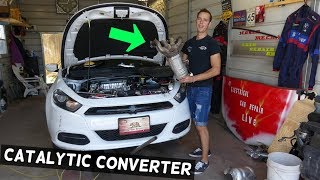
- Replacing the catalytic converter before diagnosing leaks, sensors, or software. This is an expensive and often unnecessary repair. 🎬 Watch: How to remove and replace the catalytic converter if needed.
Most Likely Causes
- Exhaust System Leak (before downstream O2 sensor) 🔴 High Probability The 2.4L Tigershark engine family is notorious for developing cracks in the exhaust manifold and leaks at the flex pipe or gaskets. This is the most common cause of P2096 on this platform.
How to confirm: Perform a visual inspection of the exhaust manifold (located on the front of the engine) and downpipe for cracks or black soot trails. Listen for a ticking or hissing sound when the engine is cold that may quiet down as the metal expands. A smoke test is the most effective method to pinpoint the exact location of a leak.
Typical fix: Replace the cracked or leaking component. This often involves replacing the exhaust manifold and its gasket. In some cases, a leaking flex pipe may need to be welded or replaced.
Est. part cost: $20-$600 - Failing Downstream Oxygen (O2) Sensor 🟡 Medium Probability → Shop Oxygen Sensor O2 sensors are wear items that degrade over time. The widespread oil consumption issue on this engine can also foul the sensor with contaminants, causing it to fail prematurely and send inaccurate lean readings.
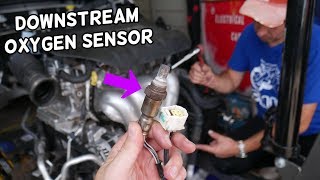
How to confirm: Using a scan tool, monitor the live data for the downstream O2 sensor (Bank 1, Sensor 2). A healthy sensor on a warm, running engine should show a relatively stable voltage, typically fluctuating slowly between 0.6V and 0.8V. If the voltage is stuck low (e.g., below 0.2V) or is not responding, and no exhaust leaks are present, the sensor is likely faulty. 🎬 See this walkthrough on how to replace the downstream oxygen sensor.
Typical fix: Replace the downstream (post-catalyst) oxygen sensor.
Est. part cost: $80-$200 - Outdated Powertrain Control Module (PCM) Software ⚪ Low Probability → Shop Engine Control Module (ECM) FCA has issued software updates to correct overly sensitive diagnostic parameters that can trigger this code erroneously. TSB 18-023-16 specifically addresses powertrain diagnostic and system improvements for the 2.4L engine.
How to confirm: A Chrysler dealership or a well-equipped independent shop with a wiTECH tool can check if the vehicle's PCM software is up-to-date by comparing it against the latest available versions from FCA.
Typical fix: Update or 'reflash' the PCM with the latest manufacturer software. This is a dealer or specialty shop-only repair.
Est. part cost: $0-$200
Rare But Worth Checking
- Failing Catalytic Converter: → Shop Catalytic Converter While not the most common cause, a partially clogged or inefficient converter can trigger P2096. This was a known issue on platform mates like the Jeep Compass, covered by Emissions Recall U90. This should only be considered after definitively ruling out exhaust leaks, O2 sensor issues, and software updates.
- Intake System Vacuum Leak: A significant leak in the intake manifold, vacuum hoses, or gaskets can create a true lean condition. This is usually accompanied by code P0171 (System Too Lean), which would point the diagnosis toward the intake or fuel system rather than an exhaust issue.
- Fuel Delivery Issues: A weak fuel pump or clogged injectors can cause a lean condition. However, this would typically affect the entire system and set a P0171 code first, as the upstream O2 sensor would detect the problem immediately.
Diagnosis Steps
- Check for any other stored trouble codes. If P0171 is present, focus on finding vacuum leaks or fuel delivery issues first.
- Thoroughly inspect the exhaust system for leaks. Start the engine when it's cold and listen for a distinct 'ticking' or 'puffing' sound from the exhaust manifold area. Look for black soot trails around gaskets or cracks in the manifold itself.
- If no obvious leaks are found, perform a smoke test on the exhaust system to find hard-to-see cracks or gasket failures. This is the most reliable method.
- If no leaks are present, use a scan tool to monitor the live voltage data from the downstream O2 sensor (Bank 1 Sensor 2). At operating temperature and a steady 2500 RPM, the voltage should be relatively stable, typically above 0.5V. If it's stuck below 0.2V, the sensor is likely bad or there's a massive leak.
- Inspect the O2 sensor's wiring and connector for any damage, corrosion, or looseness. On some FCA vehicles, oil leaks from above can contaminate the connector.
- If exhaust and sensor diagnostics are inconclusive, contact a Chrysler dealership to check for available PCM software updates, specifically referencing TSB 18-023-16.
- As a final step, if all else fails, perform tests to check for a failing catalytic converter or low fuel pressure.
Parts You'll Likely Need
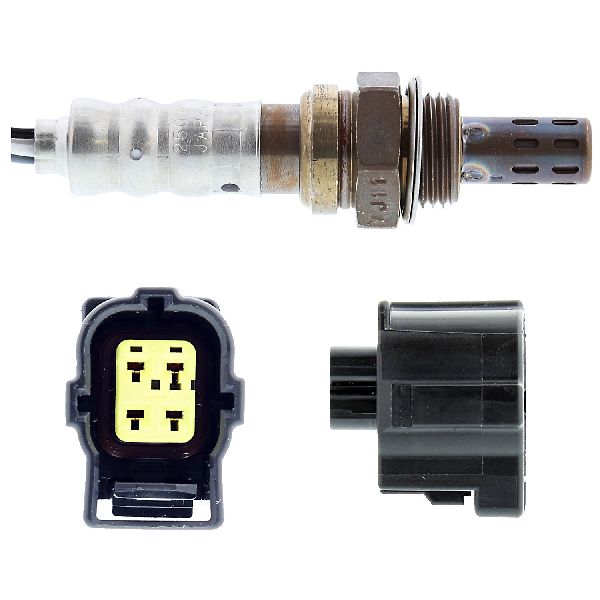
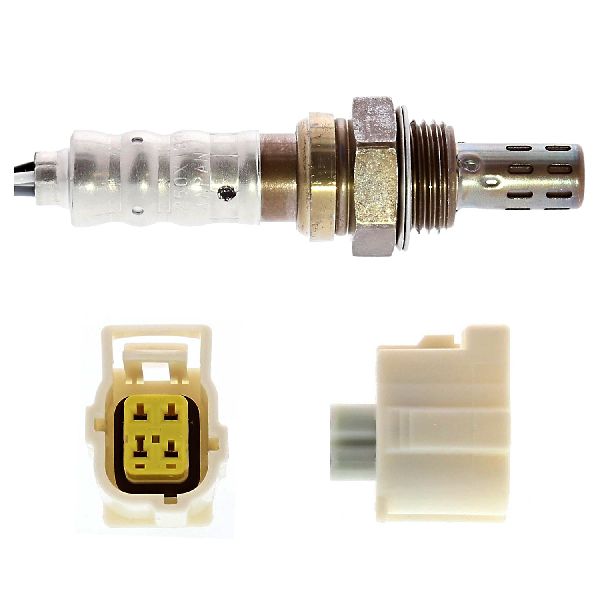
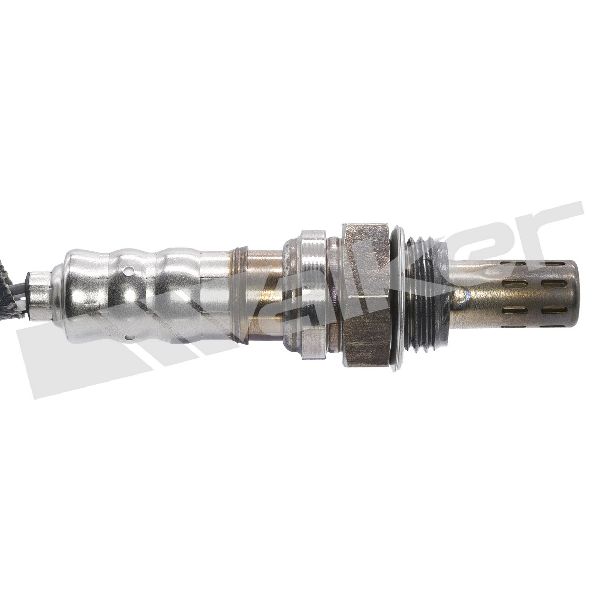
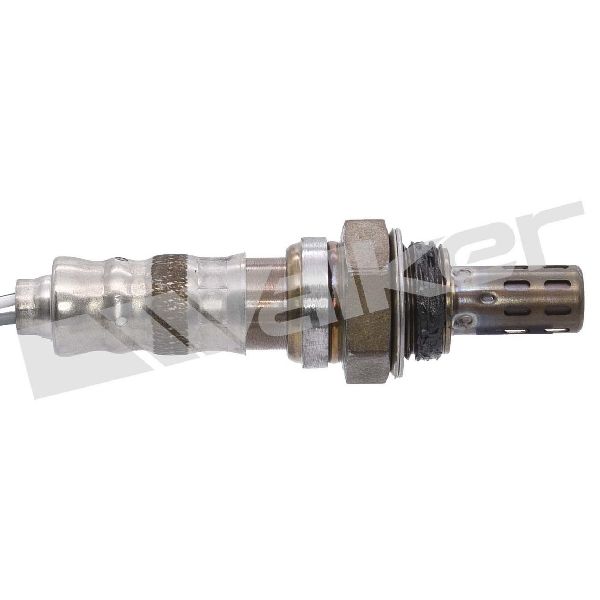
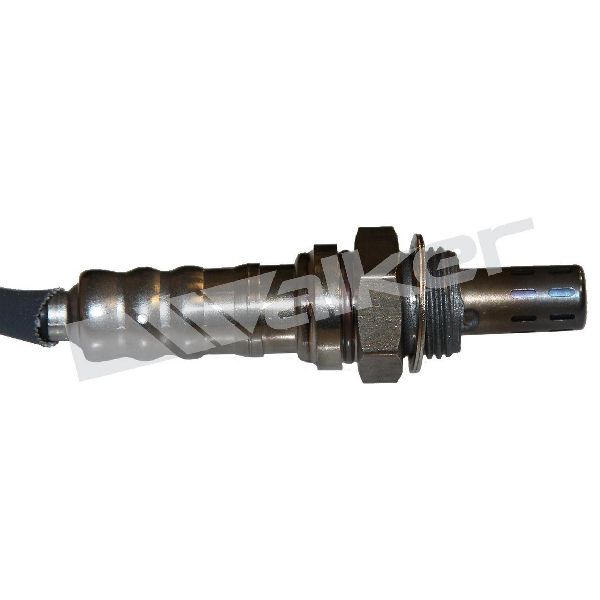
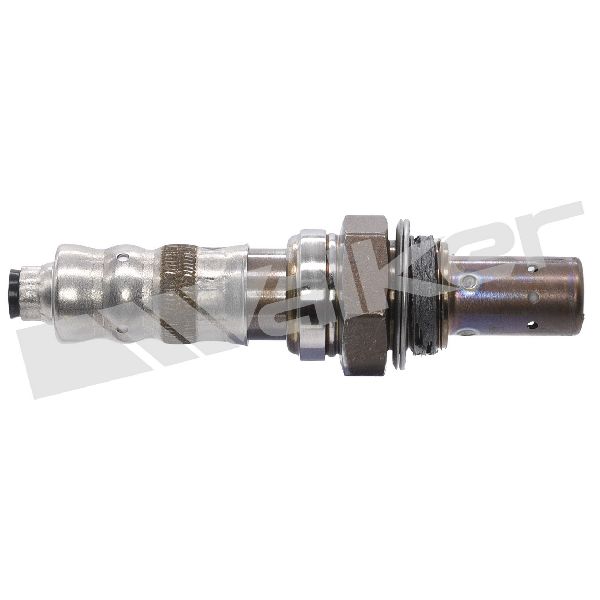
- Downstream Oxygen Sensor (Bank 1, Sensor 2)
(OEM #5149180AB)— This sensor provides the direct reading that triggers the P2096 code. It is a common wear-and-tear item that can also be damaged by oil contamination from the engine's known consumption issues.
Trusted brands: Mopar, Denso (e.g., 234-4545), NTK, Bosch
OEM price range: $120-$185
Aftermarket price range: $70-$150 - Exhaust Manifold Gasket
(OEM #68246551AA)— A leak at the exhaust manifold is a very common cause for this code on the 2.4L MultiAir engine. The gasket must be replaced if the manifold is removed for inspection or replacement.
Trusted brands: Mopar, Fel-Pro, Victor Reinz
OEM price range: $18-$30
Aftermarket price range: $15-$25 - Exhaust Manifold
(OEM #68193382AB)— The manifold itself is prone to cracking on this engine, creating a significant exhaust leak that is a primary cause of code P2096.
Trusted brands: Mopar, Dorman (e.g., 674-369)
OEM price range: $400-$600
Aftermarket price range: $150-$350
Related Codes That Often Appear With This One
- P0420 — Catalyst System Efficiency Below Threshold. A failing catalytic converter or a significant exhaust leak can trigger both P0420 and P2096.
- P0171 — System Too Lean (Bank 1). If a major vacuum leak or fuel delivery issue is the root cause, it will create a lean condition detected by both the upstream and downstream O2 sensors, triggering both codes. The presence of P0171 suggests the problem is engine-wide, not just isolated to the post-catalyst reading.
Technical Service Bulletins (TSBs) & Recalls
- TSB 09-003-23: Acknowledges potential for excessive oil consumption in the 2.4L engine and provides a warranty extension. This is an indirect cause of sensor and catalyst failure.
- TSB 18-023-16: Involves reprogramming the PCM with updated software to correct various diagnostic and system issues, which can include false P2096 codes.
Platform-Specific Known Issues
- The 2.4L MultiAir 'Tigershark' engine is known for cracked exhaust manifolds, which are a primary cause of P2096.
- This engine platform is also subject to excessive oil consumption issues (see TSB 09-003-23), which can foul and destroy the O2 sensors and catalytic converter over time. This issue led to a class-action lawsuit.
- Some platform mates received an 'Emissions Recall U90' for premature catalytic converter failure; this issue may also affect the Chrysler 200, making the catalyst a more likely point of failure than on other vehicles.
- An outdated PCM software version can cause this code to be set incorrectly. TSB 18-023-16 was released to address this and other powertrain issues.
Mechanic-Grade Diagnostic Values
- Downstream O2 Sensor (B1S2) Voltage at steady 2,500 RPM — expected: Relatively stable voltage between 0.5V and 0.8V.. Failure: Voltage is stuck low (less than 0.2V) or does not respond to changes in engine conditions.
- Downstream O2 Sensor Heater Element Resistance — expected: 4.5 to 14.5 Ohms when measured at the sensor connector (cold).. Failure: An open circuit (OL/infinite resistance) or a reading significantly outside the specified range.
- Fuel Pressure (at fuel rail) — expected: 55 to 61 PSI.. Failure: Pressure is significantly below 55 PSI, indicating a potential weak fuel pump or clogged filter.
Scan Tool Commands That Help
- wiTECH or equivalent professional scan tool: O2 Sensor Heater Test — This is a bidirectional test that commands the O2 sensor's internal heater on and off to verify the integrity of the heater circuit, which is crucial for the sensor to reach operating temperature quickly and provide accurate readings.
- wiTECH or equivalent professional scan tool: Fuel Trim / O2 Sensor Adaptation Reset — After replacing an O2 sensor or fixing a significant exhaust/vacuum leak, the PCM may retain old, incorrect fuel trim values. A simple code clear may not be enough; resetting adaptations forces the PCM to relearn the fuel strategy with the new/repaired components, preventing the code from returning immediately.
Wiring & Ground Locations
- G909A — On the left side of the engine compartment.. This is a primary engine ground point. A loose or corroded connection here can cause erratic voltage and signal issues for multiple engine sensors, including the oxygen sensors, leading to false codes.
- G905A — In the engine compartment, below the left headlight assembly.. This is another key engine compartment ground. Poor grounding at this location is known to cause a variety of difficult-to-diagnose electrical and sensor faults on this platform.
- Downstream O2 Sensor Connector (C106) — Attached to the catalytic converter assembly at the rear of the engine bay, accessible from under the hood.. This is the primary point for all electrical tests (voltage, resistance, continuity) of the downstream O2 sensor. An electrical diagram is needed to identify the specific pins for the heater and signal circuits.
Real Owner Repair Stories
- Dodge Dart Forum user report (shared 2.4L MultiAir engine) (2014 Dodge Dart Rallye 2.4L) — Persistent P2096 lean code after multiple attempted fixes.
❌ Tried (didn't work) Replacing the downstream O2 sensor, Replacing the MAP sensor, Cleaning the throttle body
✅ What actually fixed it The root cause was a failed PCV system integrated into the valve cover, which was sucking oil into the intake and contaminating the sensors. Replacing the entire valve cover assembly resolved the issue. - Chrysler Sebring / 200 Convertible Club forum user (Chrysler Sebring/200 (year not specified)) — Check Engine Light with code P2096 returned 35-50 miles after repair.
❌ Tried (didn't work) Replacing all four oxygen sensors initially.
✅ What actually fixed it After taking the vehicle to a garage for diagnosis, it was determined that one of the brand new oxygen sensors installed was defective from the factory. Replacing the faulty new sensor with another new one permanently fixed the code.
"I Checked Everything" — The Actual Cause
- On the broader 2.4L MultiAir engine family, a persistent P2096 with no leaks found via a smoke test has been traced to a failed internal PCV valve in the valve cover. This failure causes oil to be pulled into the intake, fouling the O2 sensors and catalytic converter. The fix is to replace the entire valve cover assembly, as the PCV component is not serviced separately.
- In some cases on related FCA platforms, a hairline crack in a catalytic converter weld was the root cause. The crack was too small to be detected by a cold smoke test but would open up when the exhaust reached operating temperature, allowing air to be pulled in and trigger the lean code.
OEM Part Supersession History
5149180AA→5149180AB— Standard part revision by the manufacturer for the downstream oxygen sensor.
Diagnostic Flowchart
Other Known Issues on This Vehicle
Issues unrelated to this code that are worth knowing about as an owner of this generation:
- ZF 9-Speed Automatic Transmission Malfunction 🔴 High — Extremely common on 2015 models. Issues include harsh/erratic shifting, lurching, and unexpectedly shifting into neutral. Onset can be from low mileage. (Ref: Multiple TSBs (e.g., 21-019-17, 21-013-16) and a recall (NHTSA 16V-529) were issued for software updates and wiring harness repairs.)
- Excessive Oil Consumption 🔴 High — Widespread issue affecting the 2.4L Tigershark engine, often consuming a quart of oil in as little as 1,000 miles. This led to a class-action lawsuit. (Ref: TSB 09-003-23 extends the warranty for this issue, and Customer Service Notifications (CSN) W20, W80, and W84 were released to address it.)
- Engine Stalling / Shutting Off While Driving 🔴 High — Frequently reported problem, often linked to the oil consumption issue causing low oil pressure, but also tied to transmission and electronic faults.
- Random Active Head Restraint (AHR) Deployment 🟠 Medium — The plastic brackets holding the AHR can become brittle and break, causing the head restraints to deploy without a collision. (Ref: Subject of a class-action lawsuit.)
Used vs. New Parts: Buying Guide for This Vehicle
When a used part is the smart pick: For this repair, using a used part is generally not recommended for sensors but can be a cost-effective option for a complete exhaust manifold if it comes from a low-mileage, non-corroded donor vehicle. Given the high cost of a new OEM manifold, a used one can be a viable alternative.
Donor-vehicle mileage cap: roughly under 50000 miles for the part to have meaningful remaining life.
What to inspect on the donor part:
- For an exhaust manifold: Inspect thoroughly for any hairline cracks, especially around the collector welds and flange.
- Check for excessive rust or corrosion, particularly in vehicles from salt-belt regions.
- Ensure all mounting studs are intact and not broken off.
- For any part: Verify the donor vehicle was not involved in a front-end collision that could have stressed the component.
OEM-only on this vehicle (don't cheap out):
- Catalytic Converter: Aftermarket catalytic converters for this platform have a reputation for failing to meet the PCM's strict efficiency monitoring, often leading to a P0420 code shortly after installation. The U90 recall on platform mates used only OEM parts for this reason.
- PCM Software Update: This can only be performed by a dealership or a specialty shop with a licensed wiTECH scan tool and a subscription to FCA's network.
Aftermarket brands forum-validated for this vehicle:
- Oxygen Sensors: NTK and Denso are widely regarded as OEM suppliers or of equivalent quality and are recommended for this platform.
- Exhaust Manifold: Dorman (e.g., 674-369) is a common aftermarket alternative that often includes new gaskets and hardware.
Brands owners have reported issues with on this vehicle:
- Unnamed 'white-box' or ultra-cheap oxygen sensors from online marketplaces are frequently reported by mechanics to have high Dead-On-Arrival (DOA) rates or fail prematurely, sometimes causing the code to return within weeks or months.
Real Owner Stories
Aggregated from forums and TSBs cited above. Mileages and costs reflect what owners reported in those sources.
2015-2017 Chrysler 200 2.4L
Symptoms: Had the P2096 code for months. Replaced the O2 sensor, but there was no change in the code.
What fixed it: Performed a smoke test and found a hairline crack in the exhaust manifold. Replaced the manifold and the code stayed gone.
Source hint: 200forums.com thread regarding P2096 causes
2014-2020 Jeep Cherokee (KL) 2.4L
Symptoms: P2096 code triggered; owner observed a failed flex pipe and cracked manifold during inspection.
What fixed it: Replacement of the cracked exhaust manifold and failed flex pipe.
Source hint: Jeep Cherokee Forums (cherokeeforum.com) discussion on Tigershark engine family failures
Related OBD-II Codes
Frequently Asked Questions
Does TSB 18-023-16 apply to my 2015 Chrysler 200 with the 2.4L engine?
Could my Chrysler 200's high oil consumption be causing the P2096 code?
I hear a ticking noise from the engine bay when my Chrysler 200 is cold; is this related to P2096?
Is there a recall for the catalytic converter on the Chrysler 200 that might cause this code?
Can I fix the P2096 code by just replacing the downstream O2 sensor?
What is the estimated cost to fix a cracked exhaust manifold on a 2.4L Chrysler 200?
Helpful Videos
![How to Fix P2096 Engine Code in 4 Minutes [2 DIY Methods / Only $9.53]](https://img.youtube.com/vi/-id6j6Bm5Fk/mqdefault.jpg)
We Have This Part in Stock

The information in this article is provided for general reference and educational purposes only. Vehicle specifications, procedures, and part compatibility can vary by production date, trim level, and region. Always consult your vehicle's factory service manual and verify part numbers before purchasing or performing repairs. Safety-critical components such as airbags, seat belts, and braking systems should be installed by a qualified professional.
- Chrysler 200:
- 🧭 Diagnostic Flowchart
- 🎬 Helpful Videos
- 🛍️ Shop This Part
- What's Unique About the 2015-2017 Chrysler 200
- Symptoms You May Notice
- Most Likely Causes
- Rare But Worth Checking
- Diagnosis Steps
- Parts You'll Likely Need
- Related Codes That Often Appear With This One
- Technical Service Bulletins (TSBs) & Recalls
- Platform-Specific Known Issues
- Mechanic-Grade Diagnostic Values
- Scan Tool Commands That Help
- Wiring & Ground Locations
- Real Owner Repair Stories
- "I Checked Everything" — The Actual Cause
- OEM Part Supersession History
- Other Known Issues on This Vehicle
- Used vs. New Parts: Buying Guide for This Vehicle
- Real Owner Stories
- 2015-2017 Chrysler 200 2.4L
- 2014-2020 Jeep Cherokee (KL) 2.4L
- Related OBD-II Codes
- Frequently Asked Questions
- 🎟️ Get 5% Off