

P2096 on 2017-2024 Chrysler Pacifica 3.6L: Post-Catalyst Lean Code Causes and Fixes
On the 3.6L Pentastar V6 in the Pacifica, code P2096 is most often caused by a leaking valve cover gasket on the rear cylinder bank (Bank 1) dripping oil onto the downstream oxygen sensor. The oil contaminates a small reference air vent on the sensor, causing false lean readings. The correct fix is to replace both the leaking valve cover gasket and the contaminated O2 sensor. A secondary common cause is an exhaust leak between the engine and the sensor. DIY parts cost around $100-$200.
- Before buying any parts, your first step must be to inspect the rear valve cover for an oil leak. This is the #1 cause of P2096 on this van.
- If you find an oil leak, you must replace both the valve cover gasket and the downstream O2 sensor at the same time.
- If there are no oil leaks, the next most likely cause is an exhaust leak between the engine and the sensor.
- Do not replace the expensive catalytic converter unless all other possibilities (oil leak, exhaust leak, sensor failure) have been completely ruled out.
What's Unique About the 2017-2024 Chrysler Pacifica
The 3.6L Pentastar V6, while used across many Chrysler, Dodge, Jeep, and Ram vehicles, has a very specific and well-documented issue that is the leading cause of P2096. The valve cover gasket on Bank 1 (the rear bank on the Pacifica) is prone to leaking oil. Due to the engine's design, this oil drips directly onto the downstream oxygen (O2) sensor and its wiring harness. The oil soaks the sensor and clogs a tiny vent hole it uses to sample ambient air for reference. When this reference is blocked, the sensor sends a false lean signal to the computer. This issue is so common across the Pentastar platform that it should be the first thing you check.
Symptoms You May Notice
- Check Engine Light is on
- Reduced fuel economy
- Vehicle may fail an emissions test
- Smell of rotten eggs from the exhaust, especially if accompanied by other issues.
- In some cases, rough idling or hesitation, though often there are no drivability symptoms.
- Replacing only the oxygen sensor without addressing the valve cover oil leak. The new sensor will become contaminated and fail again, often within a few weeks or months.
- Replacing the catalytic converter. The converter is rarely the root cause of P2096; it's usually an exhaust leak, oil leak, or sensor issue causing the code.
- Replacing the upstream (Sensor 1) oxygen sensor instead of the downstream (Sensor 2) sensor, which is the one that triggers this specific code.
Most Likely Causes
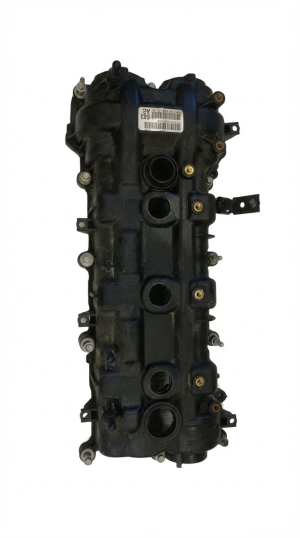
- Leaking Bank 1 (Rear) Valve Cover Gasket 🔴 High Probability → Shop Engine Valve Cover This is a widely documented failure on the 3.6L Pentastar engine, cited in multiple TSBs for various models. The gasket material degrades, and due to its location on the rear bank, leaking oil drips directly onto the Bank 1, Sensor 2 oxygen sensor, contaminating it.
How to confirm: Visually inspect the rear valve cover (closest to the firewall) for signs of fresh or caked-on oil. This may require a flashlight and an inspection mirror. Trace the path down the side of the engine block toward the exhaust and the downstream O2 sensor and its wiring harness. If oil is present, this is the confirmed cause.
Typical fix: Replace the Bank 1 valve cover gasket AND the oil-contaminated downstream (Sensor 2) oxygen sensor. It is critical to replace both parts, as a new gasket won't fix a fouled sensor, and a new sensor will quickly be ruined by the continuing oil leak. Accessing the rear valve cover requires removing the upper intake manifold. 🎬 Watch: 2019 Pacifica valve cover gasket replacement walkthrough
Est. part cost: $60-$150 - Exhaust Leak 🟡 Medium Probability Exhaust components like manifold gaskets and flex pipes are subject to rust and vibration. Leaks can develop at gaskets or from cracks in the manifold or pipes, allowing unmetered outside air to enter the exhaust stream before the O2 sensor, causing a false lean reading.
How to confirm: Listen for a ticking or puffing noise from the engine bay, especially when the engine is cold, which may quiet down as the metal expands. A mechanic can perform a smoke test, 🎬 Watch: How to diagnose and fix a P2096 lean code introducing smoke into the exhaust system to visually identify the source of any leaks.
Typical fix: Replace the leaking gasket (e.g., exhaust manifold gasket) or repair/replace the cracked exhaust component.
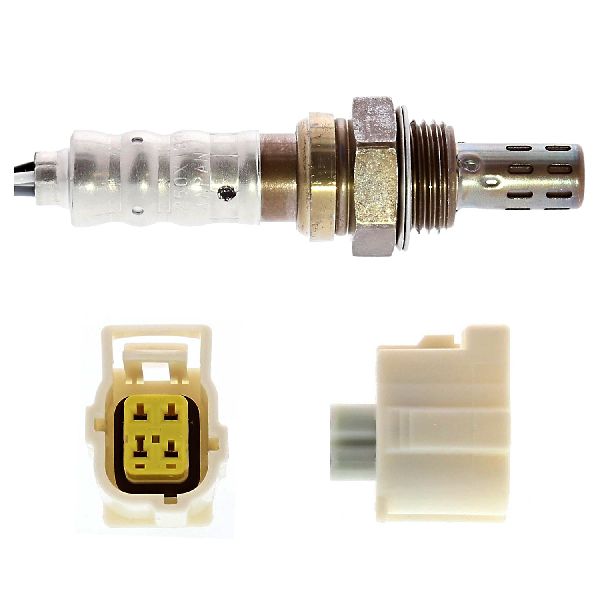
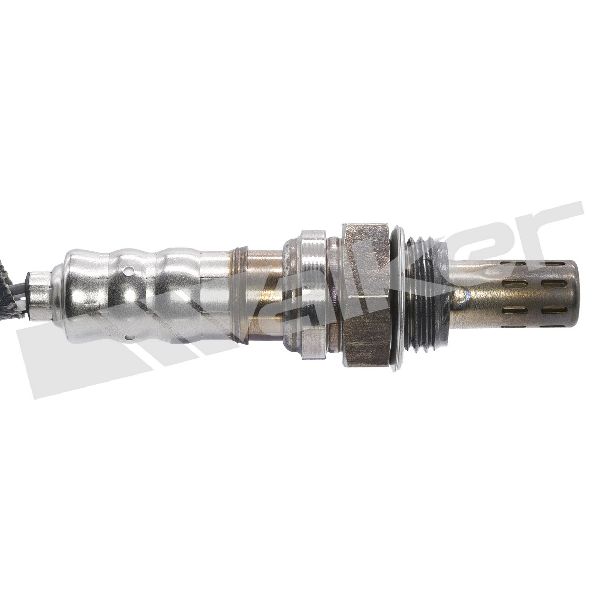
Est. part cost: $15-$300 - Failed Downstream Oxygen Sensor (Bank 1, Sensor 2) 🟡 Medium Probability → Shop Oxygen Sensor O2 sensors are wear-and-tear items that operate in a harsh environment. They can fail internally from age or contamination even without an obvious oil leak. Their typical lifespan is around 70,000-100,000 miles.
How to confirm: After ruling out all leaks, test the sensor's function using an OBD-II scanner with live data. A healthy downstream sensor should show a relatively stable voltage. If the voltage is stuck low (e.g., under 0.2V) or is not responding, the sensor has likely failed.
Typical fix: Replace the Bank 1, Sensor 2 oxygen sensor. Accessing the rear sensor on the Pacifica is difficult and typically requires removing the upper intake manifold for clearance.
Est. part cost: $50-$130
Rare But Worth Checking
- Intake Vacuum Leak: A significant leak in the intake manifold, PCV system, or a vacuum hose can create a true lean condition that affects the entire engine, which the post-catalyst sensor will detect. This is usually accompanied by other codes like P0171.
- Fuel Delivery Issue: A weak fuel pump, clogged filter, or a faulty fuel pressure regulator can cause a true lean condition. This is less likely than leaks or sensor failure and would typically present with more severe drivability issues and additional codes.
- Failing Catalytic Converter: → Shop Catalytic Converter While a failing converter can trigger this code, it's more often the victim of the lean condition rather than the cause. A damaged converter may not be able to properly store oxygen, leading to erratic readings. This should be the last item to consider after all other possibilities are exhausted.
- PCM Software Issue: On some related platforms like the 2015 Jeep Grand Cherokee, outdated PCM software was known to erroneously trigger P2096. While less documented for the Pacifica specifically, checking for available PCM updates with a dealer is a valid diagnostic step if other causes aren't found. Manufacturer TSB #18-073-20 and TSB #18-084-16 for related 3.6L models confirm that software enhancements are often released to address P2096 and air-fuel ratio imbalances.
Diagnosis Steps
- Check for other stored trouble codes that could point to a root cause (e.g., P0171, P0137).
- Perform a thorough visual inspection of the Bank 1 (rear) valve cover for any signs of an oil leak. Use an inspection mirror and flashlight. Trace the path down to the exhaust manifold and the downstream O2 sensor. If oil is present, this is the most likely cause.
- If no oil leak is found, start the engine when it is cold and listen carefully for any ticking or hissing sounds from the exhaust manifolds or flex pipe, which would indicate an exhaust leak.
- If no obvious leaks are found, use an OBD-II scanner to monitor live data for the Bank 1, Sensor 2 oxygen sensor. The voltage should be relatively stable on a warm, running engine. If it is stuck low (under 0.2V), it confirms the lean reading the PCM is seeing.
- To definitively find hard-to-see exhaust or intake leaks, perform a smoke test. This involves injecting smoke into the intake and/or exhaust system and looking for where it escapes.
- Check with a Chrysler dealer or using a professional scan tool for any available Powertrain Control Module (PCM) software updates, as these can sometimes resolve false codes.
- Only after ruling out all leaks and software issues should you consider a fuel delivery problem or a failing catalytic converter.
Parts You'll Likely Need
- Bank 1 Valve Cover Gasket
(OEM #5184596AE)— This is the source of the most common cause for P2096 on the 3.6L Pentastar: an oil leak that contaminates the O2 sensor. This part number supersedes 5184596AD.
Trusted brands: Mopar, Fel-Pro, Mahle
OEM price range: $25-$50
Aftermarket price range: $15-$35 - Downstream Oxygen Sensor (Bank 1, Sensor 2)
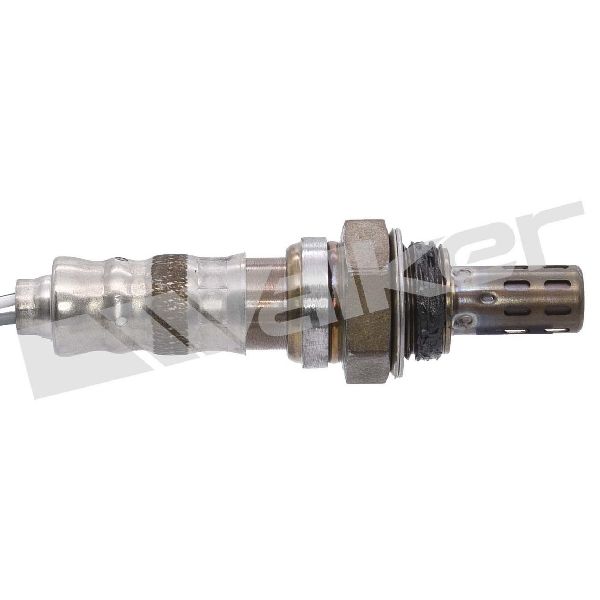
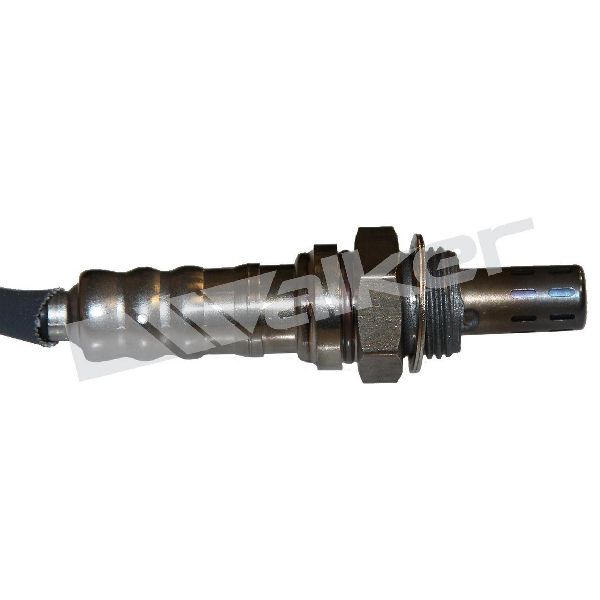
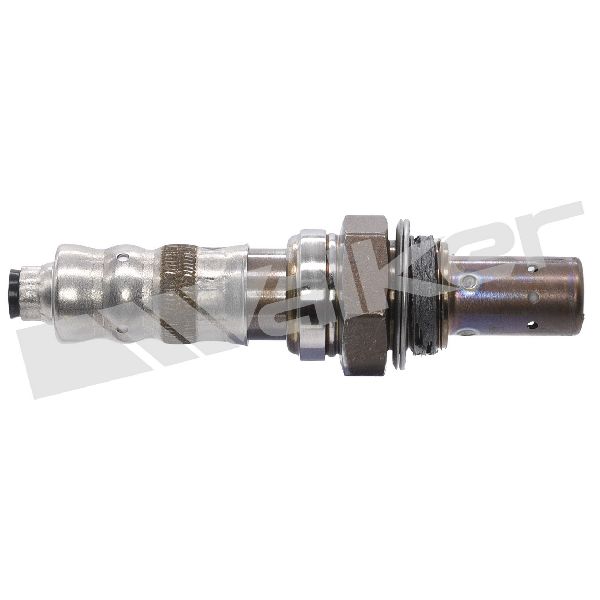
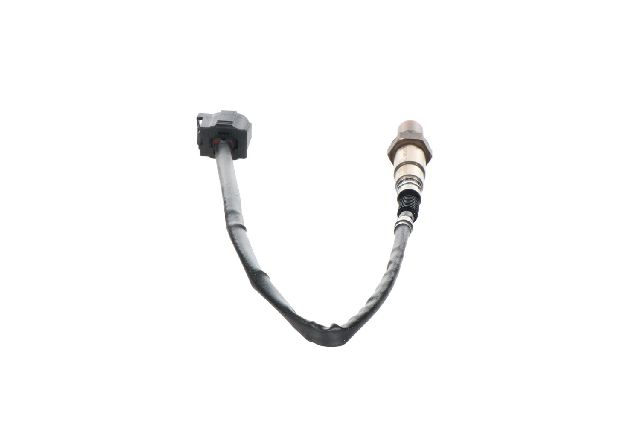
(OEM #5149171AB)— This is the sensor that provides the reading for the P2096 code. It must be replaced if it has been contaminated by a valve cover oil leak or has failed from normal wear. This part number supersedes 5149171AA and 68066160AA.
Trusted brands: Mopar, NTK, Denso, Bosch
OEM price range: $80-$130
Aftermarket price range: $50-$90 - Exhaust Manifold Gasket
(OEM #68093232AA)— Needed if an exhaust leak is found between the cylinder head and the exhaust manifold, which is a common location for leaks that cause this code.
Trusted brands: Mopar, Fel-Pro
OEM price range: $15-$30
Aftermarket price range: $10-$20
Related Codes That Often Appear With This One
- P0137 — 'O2 Sensor Circuit Low Voltage (Bank 1, Sensor 2)'. This code can be triggered by the same root causes, 🎬 See how to fix P2096 and P0137 codes on a Pentastar engine such as an oil leak shorting the sensor connector, a large exhaust leak, or an internally failed sensor.
- P0171 — 'System Too Lean (Bank 1)'. Seeing this code with P2096 strongly suggests a true lean condition caused by a significant vacuum leak or a fuel delivery problem affecting the entire cylinder bank, rather than just an isolated post-catalyst sensor issue.
- P0420 — 'Catalyst System Efficiency Below Threshold (Bank 1)'. This code indicates a failing catalytic converter. It can appear alongside P2096 if a long-term lean condition has overheated and damaged the converter.
Technical Service Bulletins (TSBs) & Recalls
- 9003790: Notes oil leaking from the valve cover onto the O2 sensor as a cause for P2096 and other related codes on 3.6L engines.
- TSB Bulletin #9003790: Specifically instructs technicians to verify if the leak source is a gasket that is pinched, out of position, rolled, or cut.
- TSB Bulletin #18-094-16: Identifies P2096 as "Downstream Fuel Trim System 1 Lean" and associates it with potential software or circuit issues on related Chrysler platforms.
Platform-Specific Known Issues
- Chrysler TSB #9003790 for the 3.6L engine explicitly links P2096 to an oil leak from the Bank 1 valve cover contaminating the downstream O2 sensor.
Mechanic-Grade Diagnostic Values
- Downstream O2 Sensor Voltage (B1S2) — expected: Relatively stable between 0.5V and 0.8V on a warm engine at steady RPM.. Failure: Voltage is stuck low (below 0.2V) or fluctuating rapidly like an upstream sensor.
- Fuel Pressure (Key On, Engine Off) — expected: Approximately 58 psi +/- 5 psi.. Failure: Pressure is significantly below 53 psi, indicating a weak fuel pump or clogged filter.
- Long Term Fuel Trim (Bank 1) — expected: Within +/- 10%.. Failure: Stuck at a high positive value (e.g., +25% or more) as the PCM attempts to compensate for the perceived lean condition.
- O2 Sensor Circuit Voltage (Connector Disconnected) — expected: With the sensor disconnected and ignition on, the signal circuit pin at the harness connector should read approximately 5.0V.. Failure: Voltage significantly different from 5.0V indicates a wiring issue or a problem with the PCM.
Scan Tool Commands That Help
- wiTECH (Chrysler Dealer Tool): Reset Fuel Trim Adaptations — After replacing a component like an O2 sensor or fixing a major leak, this function should be used to clear the PCM's learned long-term adjustments and force it to relearn, confirming the fix.
- wiTECH (Chrysler Dealer Tool): O2 Sensor Heater Test — This bidirectional command manually activates the sensor's internal heater, allowing a technician to verify the integrity of the heater circuit by observing the voltage response.
Wiring & Ground Locations
- B1S2 Connector Pin 3 (Signal) — On the 4-pin connector for the rear (Bank 1) downstream O2 sensor.. This is the (K141) O2 Sensor 1/2 Signal circuit. Technicians can back-probe this pin to check the voltage directly from the sensor or perform a jump test to the ground return pin to verify wiring integrity back to the PCM.
- O2 Sensor Harness Routing — The harness for the Bank 1 downstream sensor runs down the rear of the engine, near the exhaust manifold and transmission.. This area is directly in the drip path of a leaking rear valve cover. The harness connector itself can become saturated with oil, causing short circuits or poor connections that mimic a failed sensor. It is also susceptible to melting if it comes into contact with hot exhaust components.
Real Owner Repair Stories
- PacificaForums user (Chrysler Pacifica, ~85,000 miles) — Check Engine Light with code P2096.
❌ Tried (didn't work) Initial dealer diagnosis led to replacing only the Bank 1, Sensor 2 oxygen sensor. The code returned shortly after.
✅ What actually fixed it A second inspection revealed oil residue on the newly replaced O2 sensor. The final, successful repair involved replacing the leaking rear (Bank 1) valve cover gasket AND replacing the oil-contaminated O2 sensor for a second time. - Dodge/Chrysler forum user with 3.6L Pentastar (Dodge Durango (same engine family)) — Persistent P2096 code for several months.
❌ Tried (didn't work) Replaced both upstream and downstream O2 sensors., Performed a smoke test on the exhaust system while cold, which showed no leaks.
✅ What actually fixed it The root cause was a hairline crack on the exhaust manifold near the collector flange. The crack was nearly invisible when cold but would open up as the exhaust heated up, allowing air to be drawn in. This was missed by the initial smoke test. Replacing the exhaust manifold resolved the code.
"I Checked Everything" — The Actual Cause
- In some documented cases on the 3.6L Pentastar, a smoke test performed on a cold engine may not reveal a hairline crack in the exhaust manifold. The crack only opens sufficiently to leak air when the metal expands at full operating temperature, leading to a P2096 code that is difficult to diagnose. The fix is to replace the cracked manifold.
OEM Part Supersession History
5149171AA, 68066160AA→5149171AB— Standard part revision and consolidation by the manufacturer.
Heads up: While these parts are generally interchangeable for the application, it is always best to use the latest revision (5149171AB) or verify with a VIN. Some forums also report 68144248AA as a valid alternative.5184596AD→5184596AE— Updated gasket material or design to improve sealing and longevity.
Model Year Variations Within This Range
- 2017-2024: The gasoline-only Pacifica uses the standard 3.6L Pentastar V6. The Pacifica Hybrid uses a modified Atkinson-cycle version of the 3.6L engine with a different exhaust system (e-CVT). This guide and its common causes are specific to the non-hybrid, gasoline model.
- 2021-2024: A facelift occurred for the 2021 model year, which included revised styling and new infotainment (Uconnect 5), but no significant changes were made to the core 3.6L gasoline powertrain or exhaust layout that would alter the causes or diagnosis of code P2096.
Diagnostic Flowchart
Other Known Issues on This Vehicle
Issues unrelated to this code that are worth knowing about as an owner of this generation:
- ZF 9-Speed Transmission Harsh Shifting / Lurching 🟠 Medium — Very common, especially on 2017-2020 models. Can occur at any mileage. Often presents as harsh 1-2 shifts or clunking when stopping. (Ref: Multiple software update TSBs exist (e.g., 21-006-21). Some owners report temporary fixes by performing a transmission reset procedure.)
- Engine Start-Stop (ESS) System Faults 🟡 Low — Common issue where the ESS system becomes unavailable, often due to a failing auxiliary battery that supports the system.
- 3.6L Pentastar 'Tick' / Rocker Arm Failure 🔴 High — A known issue across the entire Pentastar engine family, typically occurring at higher mileage (70k-150k miles). Caused by premature wear of rocker arm bearings. (Ref: Subject of class-action lawsuits. Repair involves replacing rocker arms and sometimes camshafts.)
- Infotainment System Glitches 🟡 Low — Frequently reported issues include the Uconnect screen freezing, becoming unresponsive, or having Bluetooth connectivity problems. (Ref: Software updates are sometimes available to fix bugs.)
- Premature Paint Bubbling/Peeling 🟡 Low — Some owners, particularly of 2017-2018 models, report paint bubbling and peeling, most commonly on the aluminum hood.
Used vs. New Parts: Buying Guide for This Vehicle
When a used part is the smart pick: For this repair, a used exhaust manifold from a low-mileage, non-salt-belt vehicle can be a cost-effective choice if the original is found to be cracked. A used valve cover is also acceptable, provided it is inspected for warpage and cleaned thoroughly before installing a new gasket.
Donor-vehicle mileage cap: roughly under 60000 miles for the part to have meaningful remaining life.
What to inspect on the donor part:
- For exhaust manifolds, check for any visible hairline cracks, especially around welds and flanges.
- Ensure all mounting studs are intact and not excessively rusted or broken.
- For a valve cover, place it on a known flat surface to check for warpage that could prevent a good seal.
OEM-only on this vehicle (don't cheap out):
- Catalytic Converter: Aftermarket catalytic converters for this platform are widely reported to have lower efficiency and may fail to resolve emissions codes or trigger a P0420 code soon after installation.
Aftermarket brands forum-validated for this vehicle:
- O2 Sensors: NTK (often the OEM supplier) and Denso are highly recommended by mechanics and forum users for reliability.
- Gaskets: Fel-Pro is a well-regarded brand for valve cover and exhaust gaskets, often providing complete kits.
Brands owners have reported issues with on this vehicle:
- Avoid unbranded, 'white-box' oxygen sensors from online marketplaces. They have a high rate of being dead-on-arrival or failing within a very short period.
Real Owner Stories
Aggregated from forums and TSBs cited above. Mileages and costs reflect what owners reported in those sources.
2017-2024 Chrysler Pacifica 3.6L
Symptoms: The owner reported the P2096 code and noted that after clearing it, the code remained in the ECU as a 'Permanent' status.
What fixed it: The code eventually cleared itself after a specific number of drive cycles, which is considered normal behavior for this ECU.
Source hint: Reddit r/MechanicAdvice
2017-2024 Chrysler Pacifica 3.6L
Symptoms: Check engine light with code P2096.
What fixed it: Replacement of the downstream oxygen sensor.
Cost: $500-$600
Source hint: Reddit r/MechanicAdvice
Related OBD-II Codes
Frequently Asked Questions
Is there a specific Technical Service Bulletin for the P2096 code on the 3.6L Pentastar engine?
Why does the rear valve cover gasket cause a P2096 code on my Pacifica?
Can I just replace the oxygen sensor to fix the P2096 code?
Why is it so difficult to replace the Bank 1, Sensor 2 oxygen sensor on the Pacifica?
I cleared the P2096 code but it still shows up on my scanner. Is my tool broken?
Could a ticking sound from my engine bay be related to the P2096 code?
Helpful Videos
Used OEM Parts in Stock
New Aftermarket Parts Available

The information in this article is provided for general reference and educational purposes only. Vehicle specifications, procedures, and part compatibility can vary by production date, trim level, and region. Always consult your vehicle's factory service manual and verify part numbers before purchasing or performing repairs. Safety-critical components such as airbags, seat belts, and braking systems should be installed by a qualified professional.
- Chrysler Pacifica:
- 🧭 Diagnostic Flowchart
- 🎬 Helpful Videos
- 🛍️ Shop This Part
- What's Unique About the 2017-2024 Chrysler Pacifica
- Symptoms You May Notice
- Most Likely Causes
- Rare But Worth Checking
- Diagnosis Steps
- Parts You'll Likely Need
- Related Codes That Often Appear With This One
- Technical Service Bulletins (TSBs) & Recalls
- Platform-Specific Known Issues
- Mechanic-Grade Diagnostic Values
- Scan Tool Commands That Help
- Wiring & Ground Locations
- Real Owner Repair Stories
- "I Checked Everything" — The Actual Cause
- OEM Part Supersession History
- Model Year Variations Within This Range
- Other Known Issues on This Vehicle
- Used vs. New Parts: Buying Guide for This Vehicle
- Real Owner Stories
- 2017-2024 Chrysler Pacifica 3.6L
- 2017-2024 Chrysler Pacifica 3.6L
- Related OBD-II Codes
- Frequently Asked Questions
- 🎟️ Get 5% Off