

P2096 on 2013-2020 Dodge Charger: Lean Fuel Trim Causes and Fixes
P2096 on a Dodge Charger most often points to an exhaust leak before the downstream O2 sensor or the need for a PCM software update as specified in manufacturer TSBs. Before replacing sensors, thoroughly inspect the exhaust for leaks (especially manifold gaskets/bolts on HEMIs) and check with a dealer about available software flashes, as this can prevent unnecessary parts replacement.
- P2096 means the exhaust is too lean (too much oxygen) after the catalytic converter on Bank 1.
- For the 2013-2020 Charger, always check for manufacturer software updates (TSBs) before replacing any parts.
- The most common physical causes are exhaust leaks before the rear O2 sensor, followed by vacuum leaks and a faulty O2 sensor itself.
- Do not replace the catalytic converter unless all other possibilities have been thoroughly ruled out.
- Diagnosing this code involves a logical process: check for TSBs, inspect for leaks (exhaust and vacuum), then test sensors and fuel delivery.
What's Unique About the 2013-2020 Dodge CHARGER
For Dodge Chargers, a P2096 code doesn't just point to the usual suspects like exhaust leaks or bad sensors. Dodge has issued multiple Technical Service Bulletins (TSBs) indicating that this code can be triggered by software glitches that are overly sensitive. In many cases, a simple PCM reflash at the dealership is the correct fix, especially if the code appears alongside others like P219A/B or various misfire codes. Ignoring this possibility can lead to expensive and unnecessary parts replacement, a common complaint on owner forums. Furthermore, HEMI engines (5.7L, 6.4L) in these vehicles are known for exhaust manifold bolts breaking, causing a tell-tale exhaust leak that is a primary cause of P2096.
Diagnostic Flowchart
Tap your situation to follow the diagnostic path that matches what you're seeing on this vehicle.
Symptoms You May Notice
- Check Engine Light illuminated
- Reduced fuel economy
- Rough or uneven idle
- Hesitation or stumbling during acceleration
- Noticeable loss of engine power
- Engine misfires
- An engine 'buck or delay' feeling at low speeds, as noted in TSB #18-046-15
- A ticking or puffing sound from the engine bay, especially when cold, indicating an exhaust manifold leak. 🎬 Watch: Hear what a HEMI exhaust manifold leak sounds like.
- Replacing the downstream O2 sensor without first checking for exhaust leaks. An exhaust leak will cause a new sensor to read lean as well, and the code will return. This is the most common mistake.
- Replacing the catalytic converter when the actual problem is a much cheaper exhaust leak, vacuum leak, or faulty sensor.
- Ignoring the possibility of a required PCM software update and instead chasing phantom mechanical issues.
Most Likely Causes
- Exhaust System Leak 🔴 High Probability Leaks are the most common cause. On HEMI engines (5.7L, 6.4L), the exhaust manifold bolts are prone to breaking, causing a leak at the manifold gasket. Leaks can also develop at welds, flex pipes, or other gaskets due to heat cycles and corrosion. Even a small leak allows outside air to be pulled into the exhaust, fooling the O2 sensor into a false lean reading.
How to confirm: Listen for a ticking sound from the engine bay that may disappear as the engine warms up and the metal expands. Visually inspect the exhaust from the engine manifold to the catalytic converter for black soot, cracks, or broken bolts. A smoke test is the most definitive way to find a leak.
Typical fix: Repair the leak. This often involves replacing broken exhaust manifold bolts and the corresponding gasket. 🎬 See this walkthrough on fixing a HEMI 5.7 exhaust manifold leak. In other cases, it may require welding a crack or replacing a section of pipe or a flange gasket.
Est. part cost: $20-$250 - Outdated Powertrain Control Module (PCM) Software 🔴 High Probability → Shop Engine Control Module (ECM) Manufacturer TSBs #18-073-20, #18-084-16, and #18-046-15 explicitly state that a software update is available to address this code, often because the original software is too sensitive. This is a well-documented issue for Chrysler/Dodge vehicles.
How to confirm: A Dodge dealership or a well-equipped independent shop with a subscription to OEM tools (like WiTECH) can check your vehicle's current software version against available updates by VIN.
Typical fix: Flashing the PCM with the latest manufacturer software. This should be covered if the vehicle is under the federal emissions warranty (8 years/80,000 miles).
Est. part cost: $0-$250 - Faulty Downstream Oxygen (O2) Sensor 🟡 Medium Probability → Shop Oxygen Sensor O2 sensors are wear items that degrade over time, typically lasting 60,000 to 90,000 miles. Contamination from engine fluids or fuel additives can also cause premature failure. However, this part is often replaced unnecessarily when the root cause is an exhaust leak.
How to confirm: Use a scan tool to monitor the Bank 1 Sensor 2 voltage. It should be relatively stable (e.g., 0.6-0.8V) on a warm engine with a healthy catalytic converter. If it's stuck low (e.g., <0.2V) or fluctuating wildly like the upstream sensor, the sensor is likely bad (assuming no exhaust leaks).
Typical fix: Replace the Bank 1, Sensor 2 (downstream) oxygen sensor. Ensure you are replacing the correct sensor, as there are four total on V8 models.
Est. part cost: $40-$120 - Engine Vacuum Leak 🟡 Medium Probability Vacuum hoses and intake gaskets can become brittle and crack with age and heat, allowing unmetered air into the engine. On HEMI engines, intake manifold bolts have been known to loosen over time, creating a leak.
How to confirm: Listen for a hissing sound around the engine bay at idle. Spraying short bursts of brake cleaner near suspected areas will cause a momentary change in engine RPM if a leak is present. A smoke test is the most reliable method.
Typical fix: Replace the leaking vacuum hose or gasket. On HEMI engines, this may involve re-torquing the intake manifold bolts to the correct specification (e.g., 108 in-lbs).
Est. part cost: $5-$150 - Fuel Delivery Issue ⚪ Low Probability A weak fuel pump or clogged injectors can cause a true lean condition across one or more cylinders. While less common for an isolated P2096, it's a possibility, especially on higher mileage vehicles.
How to confirm: Connect a fuel pressure gauge to the fuel rail and verify the pressure is within OEM specifications (e.g., around 58 psi for many models). Clogged injectors can be diagnosed by observing spark plug condition (a white, ashy plug indicates a lean cylinder) or performing a flow test.
Typical fix: Replace the failing fuel pump, clogged fuel filter, or clean/replace the faulty fuel injectors.
Est. part cost: $50-$700
Rare But Worth Checking
- Failing Catalytic Converter: → Shop Catalytic Converter While a P0420 code is more common for a bad converter, a partially clogged or inefficient converter can sometimes trigger a P2096. This should be considered only after all other causes, especially exhaust leaks and O2 sensors, have been ruled out. A glowing red converter after a drive is a strong sign of a clog.
Diagnosis Steps
- Check for TSBs: Before any other step, check with a Dodge dealer if your VIN has any open recalls or applicable TSBs related to PCM software for P2096. This is a known issue for this platform.
- Scan for Other Codes: Use an OBD-II scanner to see if any other codes are present. Codes like P0171, P0300, or P219A can point you toward the root cause.
- Inspect for Exhaust Leaks: This is the most likely cause. With the engine cool, start it and listen for any ticking or puffing sounds from the exhaust manifolds and downpipes, especially on a cold start. For HEMI engines, pay close attention to the manifold-to-head area for broken bolts. A smoke test is the most effective method to find elusive leaks.
- Inspect for Vacuum Leaks: Listen for hissing noises around the intake manifold, vacuum lines, and PCV valve. Use a smoke machine or the carb cleaner method to pinpoint leaks. Check intake manifold bolt torque on HEMI engines.
- Analyze O2 Sensor Live Data: Use a scan tool to graph the voltage of the Bank 1 Sensor 1 (upstream) and Bank 1 Sensor 2 (downstream) sensors. The upstream sensor should fluctuate rapidly between ~0.1V and ~0.9V. The downstream sensor should be relatively steady above 0.5V. If it's stuck low (<0.2V), suspect a leak or bad sensor.
- Test Fuel Pressure: Rule out a fuel delivery problem by connecting a fuel pressure gauge and comparing the reading to your vehicle's specifications (typically ~58 psi).
- Inspect Spark Plugs: Pull the spark plugs on Bank 1. If one or more are white and ashy, it points to a lean condition in those specific cylinders, possibly from a clogged injector.
- Consider the Catalytic Converter: Only after all the above steps have been exhausted should you suspect a failing catalytic converter. An infrared thermometer can be used to check for a significant temperature drop across the converter, which indicates inefficiency.
Parts You'll Likely Need
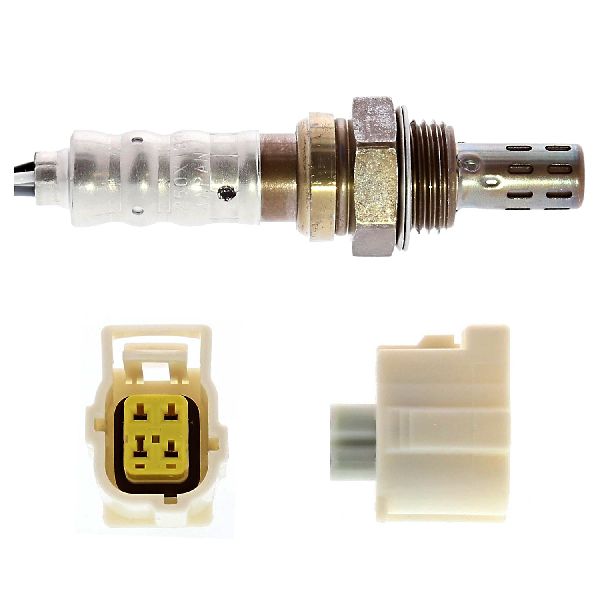
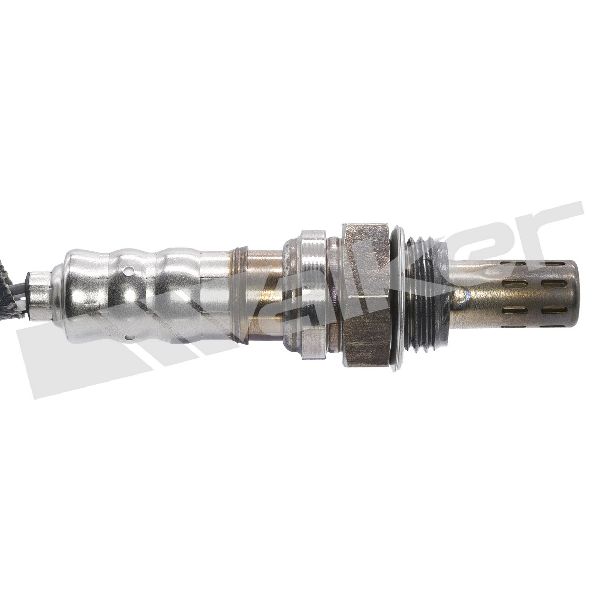
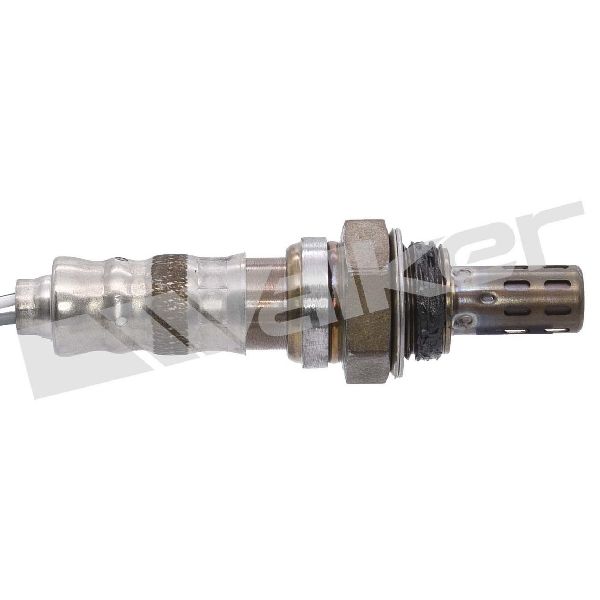
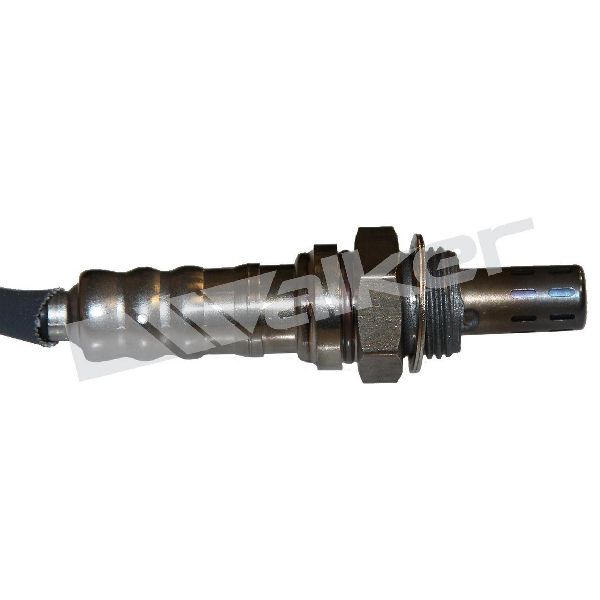
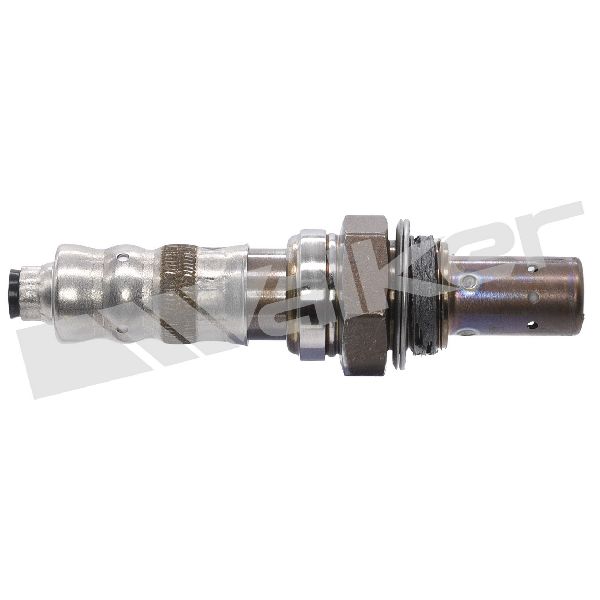
- Downstream Oxygen Sensor (Bank 1, Sensor 2)
(OEM #Mopar 05149171AB (Verify fitment for specific engine/year))— This sensor is the primary reporter for the code and can fail over time, giving false lean readings. It is often misdiagnosed as the cause when an exhaust leak is present.
Trusted brands: Mopar, NTK, Denso, Bosch
OEM price range: $80-$150
Aftermarket price range: $40-$90 - Exhaust Manifold Gasket & Bolt Kit — A very common source of exhaust leaks on HEMI engines that trigger a false lean reading for the P2096 code due to broken manifold bolts.
Trusted brands: Mopar, Fel-Pro, Dorman
OEM price range: $50-$100
Aftermarket price range: $25-$60
Related Codes That Often Appear With This One
- P0300 — A random misfire dumps unburnt oxygen into the exhaust, which the downstream sensor reads as a lean condition. This is cited in TSB #18-073-20.
- P219A / P219B — These codes indicate an air-fuel ratio imbalance between cylinders on a bank. This underlying issue can cause the overall downstream reading to be lean. These are cited in TSBs #18-073-20 and #18-046-15.
- P0171 — This code means the *upstream* sensor on Bank 1 is detecting a lean condition. If you have both P0171 and P2096, it strongly suggests a true lean condition caused by a vacuum leak or fuel delivery issue, not just an exhaust leak or bad downstream sensor.
- P0420 — This code indicates low catalyst efficiency. It can appear with P2096 if the catalytic converter is failing and unable to properly store and use oxygen.
Technical Service Bulletins (TSBs) & Recalls
- 18-073-20
- 18-084-16
- 18-046-15
- 18-094-16
- 18-039-15 REV-A
Platform-Specific Known Issues
- HEMI Exhaust Manifold Bolt Failure: → Shop Exhaust Manifold The 5.7L and 6.4L HEMI engines used in the Charger are notorious for the steel exhaust manifold bolts breaking off in the aluminum cylinder heads due to thermal stress. This creates an exhaust leak right at the manifold, which is a primary cause of the P2096 code. The tell-tale sign is a ticking noise from the engine bay on a cold start that may go away as the engine warms up and the metal expands to seal the leak temporarily.
- Overly Sensitive PCM Software: As documented in multiple TSBs, the factory PCM calibration on these vehicles can be too sensitive to minor fluctuations in the exhaust stream, leading to false P2096 codes even when no significant mechanical fault exists. A dealership software update often resolves the issue by widening the acceptable parameters.
Mechanic-Grade Diagnostic Values
- Fuel Pressure (HEMI V8 Engines) — expected: ~58 psi (4 bar) at the fuel rail.. Failure: Significantly lower pressure indicates a weak fuel pump or clogged filter. Significantly higher pressure could indicate a problem with the in-tank regulator bleed-off, especially with aftermarket pumps.
- Downstream O2 Sensor (Bank 1, Sensor 2) Voltage — expected: Relatively stable voltage, typically between 0.5V and 0.8V on a fully warmed-up engine at steady RPM.. Failure: Voltage is stuck low (e.g., < 0.2V), indicating a lean reading. This points to an exhaust leak, a vacuum leak, or a faulty sensor. Voltage fluctuating rapidly similar to the upstream sensor indicates a failing catalytic converter.
Wiring & Ground Locations
- O2 Sensor Heater Circuit Identification — At the oxygen sensor electrical connector.. A common diagnostic step is to verify the O2 sensor's heater circuit is receiving power and has a good ground, as a non-heating sensor can give inaccurate readings. Without a wiring diagram, the heater circuit wires can often be identified as they are typically the two wires of the same color (e.g., two black wires). Alternatively, the connector terminals for the heater circuit are often silver-plated, while the signal wires use gold-plated terminals.
OEM Part Supersession History
5149171AA→5149171AB— Standard part revision or improvement by the manufacturer.
Model Year Variations Within This Range
- 2013-2014 vs 2015-2020: The Dodge Charger received a significant cosmetic and interior refresh for the 2015 model year, which updated nearly every body panel. However, the core powertrains remained. The P2096 code and its primary causes (exhaust leaks, software updates) are known to affect models both before and after this refresh, as evidenced by the date ranges of the manufacturer TSBs.
Helpful Videos
We Have This Part in Stock


The information in this article is provided for general reference and educational purposes only. Vehicle specifications, procedures, and part compatibility can vary by production date, trim level, and region. Always consult your vehicle's factory service manual and verify part numbers before purchasing or performing repairs. Safety-critical components such as airbags, seat belts, and braking systems should be installed by a qualified professional.
- Dodge CHARGER:
- 🧭 Diagnostic Flowchart
- 🎬 Helpful Videos
- 🛍️ Shop This Part
- What's Unique About the 2013-2020 Dodge CHARGER
- Symptoms You May Notice
- Most Likely Causes
- Rare But Worth Checking
- Diagnosis Steps
- Parts You'll Likely Need
- Related Codes That Often Appear With This One
- Technical Service Bulletins (TSBs) & Recalls
- Platform-Specific Known Issues
- Mechanic-Grade Diagnostic Values
- Wiring & Ground Locations
- OEM Part Supersession History
- Model Year Variations Within This Range
- 🎟️ Get 5% Off