

P2096 on 2010-2011 Dodge Dakota: Causes for Post Catalyst Lean Code
On a 2010-2011 Dodge Dakota, code P2096 is most often caused by an exhaust leak before the downstream oxygen sensor or a failing sensor itself. A very common failure point is broken exhaust manifold bolts on the driver's side. Expect to pay $100-$250 for a sensor replacement or a similar amount for an exhaust repair, though costs can increase if broken bolts need extraction.
- P2096 on a 2010-2011 Dakota means the driver's side downstream O2 sensor is detecting a lean condition.
- The most likely cause is an exhaust leak somewhere between the engine and the sensor. Inspect the exhaust manifold and gaskets carefully.
- If there are no leaks, the next most likely cause is a faulty downstream O2 sensor.
- When replacing the O2 sensor, use a reputable brand like Denso or NTK to ensure compatibility with your truck's computer.
- Unlike other Dodge trucks, a software update is not a known fix for this code on the Dakota.
What's Unique About the 2010-2011 Dodge DAKOTA
The 2010-2011 models represent the end of the third generation Dakota. Unlike other Dodge trucks like the Ram 1500 with the 5.7L engine, there are no common Technical Service Bulletins (TSBs) that point to a software reflash as a primary fix for this code on the Dakota's 3.7L V6 or 4.7L V8 engines. For the Dakota and its platform mates (Durango, Grand Cherokee), the cause is almost always a physical component. A particularly common failure is the two rearmost exhaust manifold bolts on the driver's side shearing off, causing a leak that is sometimes too minor to hear easily but significant enough to trigger the code. Owners report that these trucks can be particularly sensitive to the brand of oxygen sensor used, with Denso and NTK being the preferred choices to avoid compatibility issues.
Diagnostic Flowchart
Tap your situation to follow the diagnostic path that matches what you're seeing on this vehicle.
Symptoms You May Notice
- Check Engine Light is on
- Reduced fuel economy
- Rough or unstable idle
- Hesitation or poor acceleration
- Shuddering at part throttle
- Faint exhaust ticking or 'putt-putt' sound, especially when the engine is cold
- Replacing the upstream (pre-catalyst) O2 sensor when the code is for the downstream (post-catalyst) system.
- Replacing the O2 sensor when the root cause is an exhaust leak tricking the sensor into reading lean. This is a very common mistake, as evidenced by a forum user whose dealer replaced the sensor first, only to later find a crack in the catalytic converter.
Most Likely Causes
- Exhaust Leak 🔴 High Probability Exhaust components on the 3.7L and 4.7L engines are known to fail. The constant heat cycles can cause the rear exhaust manifold bolts (closest to the firewall) to break, creating a leak at the gasket. Cracks can also form in the manifold itself or the catalytic converter housing.
How to confirm: Start the engine when it is completely cold and listen in the driver's side wheel well for a distinct ticking or 'putt-putt' sound that may diminish as the engine warms up and the metal expands. Visually inspect the exhaust manifold on the driver's side for black soot trails near the cylinder head, which indicates a gasket leak. A smoke test is the most definitive way to find a leak.
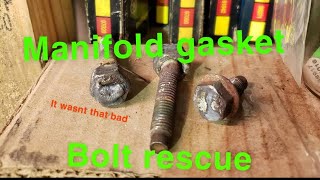
Typical fix: Replace the leaking gasket and any broken manifold bolts. This can be a difficult DIY job if the bolts are broken flush with the cylinder head, as they will need to be extracted. 🎬 See this walkthrough for replacing a leaky exhaust manifold gasket. In some cases, the manifold itself may be cracked and require replacement.
Est. part cost: $20-$300 - Failing Downstream Oxygen (O2) Sensor 🟡 Medium Probability → Shop Oxygen Sensor O2 sensors are wear items with a finite lifespan. They can become contaminated or slow to respond, sending incorrect lean readings to the computer.
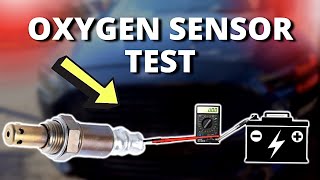
How to confirm: Use a scan tool to monitor the voltage of the Bank 1, Sensor 2 (downstream) O2 sensor. A healthy sensor will show a relatively steady voltage (typically 0.5V-0.8V). If it's stuck low (below 0.45V) or has erratic readings, it's likely faulty. Before replacing, check the sensor's wiring and connector for damage. 🎬 Watch this guide on how to test an oxygen sensor.
Typical fix: Replace the Bank 1, Sensor 2 oxygen sensor. It is highly recommended to use an OEM-equivalent brand like Denso or NTK, as some aftermarket brands have been reported to cause persistent issues on these trucks.
Est. part cost: $50-$150 - Vacuum Leak ⚪ Low Probability Rubber and plastic vacuum hoses can become brittle and crack with age, allowing unmetered air to enter the engine. While this typically sets an upstream lean code (P0171) first, a significant leak can also affect downstream readings.
How to confirm: Perform a smoke test by introducing smoke into the intake system and watching for where it escapes. Listen for a whistling sound at idle.
Typical fix: Replace the cracked or disconnected vacuum hose.
Est. part cost: $5-$50
Rare But Worth Checking
- Failing Catalytic Converter: → Shop Catalytic Converter While less common, a physically damaged or inefficient catalytic converter can sometimes cause a P2096 code. This is often accompanied by other codes like P0420.
- Poor O2 Sensor Ground: → Shop Oxygen Sensor A technician on a forum noted that rotted exhaust ground straps or heavily corroded pipes can cause a poor ground for the O2 sensor body, leading to incorrect readings.
Diagnosis Steps
- Scan for any other trouble codes to get more context. Codes like P0171 or P0420 can point you in the right direction.
- When the engine is cold, start it and listen carefully in the driver's side front wheel well for a 'putt-putt' or ticking noise that indicates an exhaust manifold leak.
- Visually inspect the exhaust system on Bank 1 (driver's side) from the exhaust manifold to the downstream O2 sensor. Look for cracks, rust, and black soot indicating a leak. Pay close attention to the rearmost manifold bolts.
- Use a scan tool to observe the live data for the Bank 1 Sensor 2 (downstream) O2 sensor. The voltage should be relatively stable. If it's stuck low (e.g., under 0.2V), it confirms a lean reading.
- Compare the Bank 1 downstream sensor reading to the Bank 2 downstream sensor. If Bank 2 is stable and Bank 1 is stuck lean, it isolates the problem to Bank 1.
- If an exhaust leak is not obvious, consider performing a smoke test on the exhaust system (with pressure not exceeding 4 psi) to definitively locate any leaks.
- If no exhaust leaks are found, test the O2 sensor itself and its wiring. If the sensor and wiring are good, check for vacuum leaks using a smoke machine on the intake side.
- As a final, less likely check, inspect fuel pressure and consider a dirty fuel injector on Bank 1.
Parts You'll Likely Need
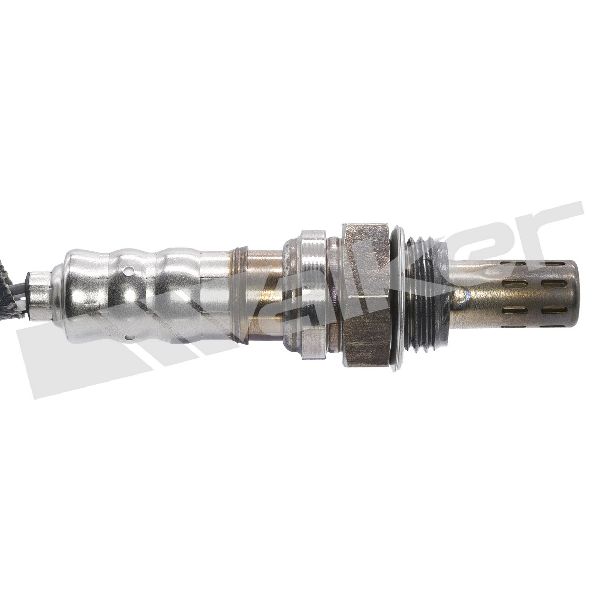
- Downstream Oxygen Sensor (Bank 1, Sensor 2)
(OEM #Mopar 56029050AA)— This sensor is responsible for the reading that triggers the code. It can fail due to age or contamination.
Trusted brands: NTK 23159, Denso 234-4587
OEM price range: $100-$180
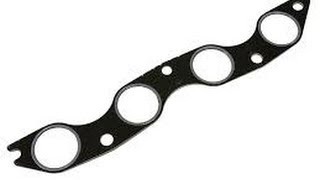
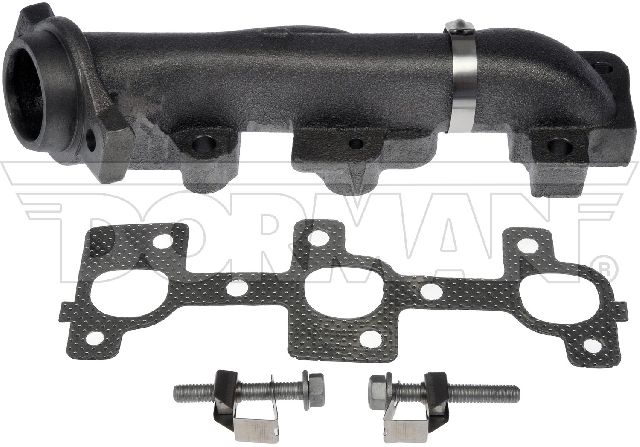
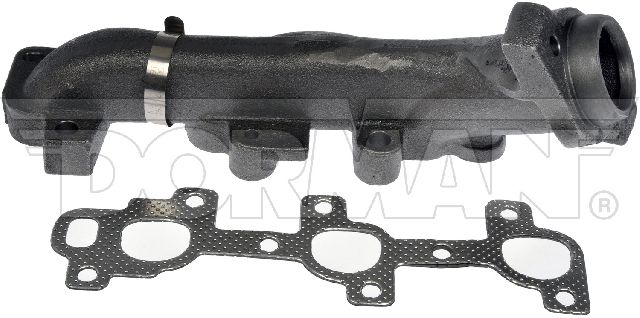
Aftermarket price range: $50-$120 - Exhaust Manifold Gasket — A common failure point for exhaust leaks at the cylinder head, which is a primary cause of P2096 on this platform.
Trusted brands: Fel-Pro, Mahle
OEM price range: $25-$50
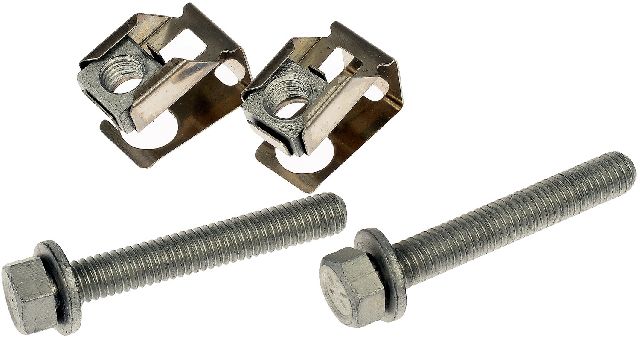
Aftermarket price range: $15-$30 - Exhaust Manifold Bolt Kit — The original bolts, especially the rear two, are prone to shearing off and must be replaced when repairing a manifold gasket leak.
Trusted brands: Dorman, Mopar
OEM price range: $30-$60
Aftermarket price range: $20-$40
Related Codes That Often Appear With This One
- P0171 — This code indicates 'System Too Lean (Bank 1)' as detected by the *upstream* sensor. If both appear, it points to a more significant issue like a large vacuum leak or fuel delivery problem affecting the entire bank.
- P0420 — This code means 'Catalyst System Efficiency Below Threshold (Bank 1)'. If seen with P2096, it strongly suggests the catalytic converter itself may be failing or there is a significant exhaust leak between the two sensors.
Technical Service Bulletins (TSBs) & Recalls
- 18-066-16: Defines P2096 as 'Downstream Fuel Trim System 1 Lean (5.7L Engines)' but applies to other Dodge models, not the Dakota.
- 18-066-16 REV. A: Re-confirms the definition of P2096 for Dodge vehicles.
- 18-092-15: Lists P2096 in a group of possible DTCs for other Dodge models, but the reference is specific to the 5.7L engine, although the TSB covers software updates for 3.7L/4.7L engines for other issues.
Platform-Specific Known Issues
- The provided NHTSA TSBs (#18-066-16, #18-092-15) that mention P2096 are for other Dodge vehicles with the 5.7L engine and are not directly applicable to the 3.7L or 4.7L engines found in the 2010-2011 Dakota. While TSB 18-092-15 does apply to 3.7L/4.7L engines for other software updates, the P2096 mention is specific to the 5.7L.
- Owners strongly recommend using Denso or NTK brand oxygen sensors, as these trucks are known to be incompatible with some other aftermarket brands, leading to persistent codes.
- A very frequent point of failure is the rearmost exhaust manifold bolts on the driver's side (Bank 1) shearing off, causing a hard-to-detect exhaust leak.
Mechanic-Grade Diagnostic Values
- Downstream O2 Sensor Heater Element Resistance — expected: 4 to 6 ohms at ambient temperature.. Failure: A reading of 0 ohms (short circuit) or infinite/OL (open circuit).
- Downstream O2 Sensor Voltage (at idle, healthy catalytic converter) — expected: Relatively steady voltage between 0.5V and 0.8V.. Failure: Voltage stuck low (below 0.45V) indicates a lean condition or faulty sensor.
- Long Term Fuel Trim (Bank 1) — expected: Between -10% and +10%.. Failure: A high positive percentage confirms the PCM is adding fuel to compensate for a lean condition.
Wiring & Ground Locations
- G103 — At the right front of the engine compartment.. This is a primary engine compartment ground. A poor connection here can cause erratic behavior from various sensors, including the PCM's reference for the oxygen sensors.
- G105 — On the left front of the engine.. This ground is directly on the engine block and is critical for components mounted to the engine, ensuring a stable ground path for sensors.
- Engine to Chassis/Firewall Ground Strap — Typically a braided strap from the back of the cylinder head or engine block to the firewall or frame rail.. Ensures the engine block (which grounds the O2 sensor body via the exhaust) has a solid connection to the chassis and battery negative. Corrosion or a loose connection can create a voltage offset, leading to incorrect O2 sensor readings.
- Downstream O2 Sensor Connector (Bank 1, Sensor 2) — On the driver's side of the vehicle, after the catalytic converter. It is a 4-wire female connector.. This is the connection point for testing the sensor's heater resistance and signal voltage. The connector and its wiring are susceptible to damage from road debris and heat.
Real Owner Repair Stories
- DodgeForum.com user 'redlinegw' (2008 Dodge Dakota 4.7L V8 with 35k miles) — Shuddering at part throttle, followed by Check Engine Light.
❌ Tried (didn't work) The dealer initially replaced an oxygen sensor, but the light came back on after a few days.
✅ What actually fixed it A small crack was found in the driver's side catalytic converter. Replacing the catalytic converter under warranty resolved the P2096 code.
When the Usual Fixes Don't Work
- In one documented case for a similar year Dakota, the dealer first replaced the oxygen sensor, which is a common and logical first step. However, this did not fix the problem. The P2096 code returned, and further diagnosis revealed the true cause was a small crack in the catalytic converter. This highlights the importance of not stopping diagnosis at the sensor, even though it is a frequent failure point, and underscores the prevalence of exhaust leaks (including the converter housing itself) as the root cause on this platform.
OEM Part Supersession History
56029050AA→This part number appears to be the current and widely used Mopar part for this application, fitting a broad range of Chrysler/Dodge/Jeep vehicles from 2004-2011.— N/A
Heads up: While this is the correct OEM part, be aware that the connector is grey and has 4 pins. Always verify the connector style and wire length (~19 inches) on your specific vehicle before ordering.
Model Year Variations Within This Range
- 2011: For the 2011 model year, the truck was officially marketed as the 'Ram Dakota' instead of the 'Dodge Dakota' as part of the Ram brand spin-off. However, the mechanicals, including the 3.7L V6 and 4.7L V8 engines and their emissions systems, remained largely unchanged from 2010.
Helpful Videos
We Have This Part in Stock


The information in this article is provided for general reference and educational purposes only. Vehicle specifications, procedures, and part compatibility can vary by production date, trim level, and region. Always consult your vehicle's factory service manual and verify part numbers before purchasing or performing repairs. Safety-critical components such as airbags, seat belts, and braking systems should be installed by a qualified professional.
- Dodge DAKOTA:
- 🧭 Diagnostic Flowchart
- 🎬 Helpful Videos
- 🛍️ Shop This Part
- What's Unique About the 2010-2011 Dodge DAKOTA
- Symptoms You May Notice
- Most Likely Causes
- Rare But Worth Checking
- Diagnosis Steps
- Parts You'll Likely Need
- Related Codes That Often Appear With This One
- Technical Service Bulletins (TSBs) & Recalls
- Platform-Specific Known Issues
- Mechanic-Grade Diagnostic Values
- Wiring & Ground Locations
- Real Owner Repair Stories
- When the Usual Fixes Don't Work
- OEM Part Supersession History
- Model Year Variations Within This Range
- 🎟️ Get 5% Off