

P2096 on 2011 Dodge RAM 2500 5.7L: Post-Catalyst Lean Condition Causes and Fixes
For a 2011 Ram 2500 with the 5.7L HEMI, code P2096 is most often caused by an exhaust leak, typically from broken exhaust manifold bolts which create an audible 'Hemi tick' when cold. Before replacing parts, check if TSB #18-066-16 has been performed, as a PCM software update may be the fix. Otherwise, a faulty downstream oxygen sensor is another likely cause.
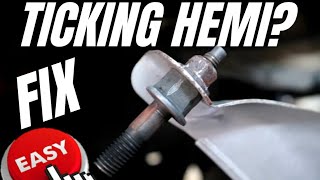
- The most common cause for P2096 on this truck is an exhaust leak, specifically from broken passenger-side exhaust manifold bolts. Listen for a 'tick' on cold starts.
- Before replacing any parts, check with a dealer to see if your truck's computer software has been updated per TSB #18-066-16, as this can be a simple software fix.
- If no leaks are found and the software is current, the next most likely culprit is a failing downstream oxygen sensor (Bank 1, Sensor 2).
- Do not immediately assume the catalytic converter is bad; it is rarely the cause compared to leaks, sensors, or software issues.
- This code refers to the sensor on the passenger side, after the catalytic converter. Do not confuse it with the upstream sensor.
What's Unique About the 2011-2011 Dodge RAM 2500
The 2011 Ram with the 5.7L HEMI engine is subject to a specific Technical Service Bulletin (TSB #18-066-16 REV. A) that addresses a false P2096 code with a software update for the Powertrain Control Module (PCM). This should be investigated before replacing parts. Additionally, this engine is well-known for its exhaust manifold bolts breaking due to heat cycles and warping manifolds. This creates an exhaust leak that is a primary cause of this code, often identifiable by a distinct 'Hemi tick' sound when the engine is cold that may quiet down as the metal expands and partially seals the leak.
Diagnostic Flowchart
Tap your situation to follow the diagnostic path that matches what you're seeing on this vehicle.
Symptoms You May Notice
- Check Engine Light is on
- Reduced fuel economy
- Audible ticking or puffing sound from the engine bay, especially when cold, that may quiet down as the engine warms up
- Rough idle
- Poor acceleration
- Exhaust smell in the engine bay or cabin
- Replacing the oxygen sensor when the root cause is an exhaust leak. The sensor may be accurately reporting the extra oxygen from the leak.
- Replacing the upstream oxygen sensor (Bank 1, Sensor 1) instead of the downstream sensor (Bank 1, Sensor 2) that is reporting the code.
- Replacing the catalytic converter before thoroughly checking for exhaust leaks and verifying sensor function.
- Assuming the 'Hemi tick' is a valvetrain or lifter issue when it is actually a classic symptom of an exhaust manifold leak.
Most Likely Causes
- Exhaust Leak (especially broken manifold bolts) 🔴 High Probability The 5.7L HEMI is notorious for exhaust manifold bolts rusting and breaking due to constant, intense heat cycles which can also warp the cast iron manifold itself. The rear bolts are often the first to fail. This creates a gap allowing outside air to be sucked into the exhaust, fooling the O2 sensor.
How to confirm: Listen for a 'ticking' or puffing sound from the passenger-side wheel well, which is most obvious on a cold start. You may also see black soot trails around the manifold where it meets the cylinder head. A definitive diagnosis can be made with a smoke test or by pressurizing the exhaust system (to no more than 4 psi) and spraying soapy water on the manifold flange.
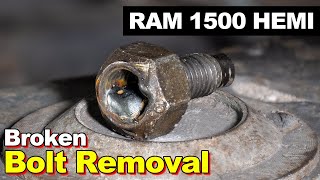
Typical fix: The broken bolts must be extracted 🎬 Watch: Step-by-step guide to extracting broken Hemi manifold bolts. and the exhaust manifold gasket replaced. It is highly recommended to replace the manifold itself if it is warped, which is common. Many owners opt for aftermarket manifolds from brands like Dorman, which are sometimes considered heavier-duty than OEM. It is also wise to replace all manifold bolts, not just the broken ones.
Est. part cost: $20-$250 - Faulty Downstream Oxygen Sensor (Bank 1, Sensor 2) 🟡 Medium Probability → Shop Oxygen Sensor Oxygen sensors are wear items that degrade over time from heat and contaminants, eventually providing inaccurate readings. Their position under the truck exposes them to road debris and moisture, which can damage wiring or the connector.
How to confirm: Use a scan tool to monitor the voltage of the Bank 1 Sensor 2. 🎬 See how to diagnose P2096 using a scan tool. It should fluctuate slowly and steadily. If it's stuck at a low voltage (e.g., below 0.2V) or not responding, it's likely faulty. Before replacing, visually inspect the wiring and connector for any melting, chafing, or corrosion.
Typical fix: Replace the Bank 1, Sensor 2 oxygen sensor. It is located on the passenger side of the vehicle, after the catalytic converter. Using an O2 sensor socket makes removal easier. Reputable brands like NTK and Denso are often recommended on forums.
Est. part cost: $40-$110 - Outdated Powertrain Control Module (PCM) Software ⚪ Low Probability → Shop Engine Control Module (ECM) Manufacturer TSB #18-066-16 REV. A specifically lists P2096 as a code that can be resolved by a PCM software update on 2011 5.7L engines. The update adjusts the sensitivity of the diagnostic routine.
How to confirm: A Dodge dealership or a qualified shop with a wiTECH scan tool can check the current software calibration ID against the latest version listed in the TSB. This should be a primary check before replacing any hardware.
Typical fix: Reprogram the PCM with the latest software version. This must be done by a dealer or properly equipped independent shop. The flash process itself takes only a few minutes. 🎬 Watch: A deep dive into what P2096 means and how to fix it.
Est. part cost: $100-$250
Rare But Worth Checking
- Clogged or Failing Catalytic Converter: → Shop Catalytic Converter While not common, a partially clogged or inefficient converter can sometimes cause downstream fuel trim codes. This should be considered after all other causes are ruled out. A failing converter may glow red after the engine has been running.
- Fuel Delivery Issues: A weak fuel pump, clogged fuel filter, or dirty injector could cause a true lean condition, but this would typically trigger other codes like P0171 (System Too Lean Bank 1) as well.
- Intake/Vacuum Leak: A leak in the air intake system or a bad intake manifold gasket can introduce unmetered air, but this usually sets a P0171 code first. A smoke test is the best way to diagnose this.
Diagnosis Steps
- Check with a dealer if TSB #18-066-16 REV. A has been performed. If not, a PCM update is the first logical step and may be the required fix.
- Thoroughly inspect the exhaust system for leaks, paying close attention to the passenger-side exhaust manifold for signs of broken bolts or soot trails. A cold start is often the best time to hear a leak.
- If no leaks are apparent, use a scan tool to observe live data for the Bank 1, Sensor 2 oxygen sensor. The voltage should fluctuate slowly. A flat, low voltage reading (stuck below ~0.2V) points to a lean condition or a failed sensor.
- Compare the voltage readings of the Bank 1 Sensor 2 and Bank 2 Sensor 2. If they behave differently under similar conditions, the issue is isolated to Bank 1.
- Before replacing the sensor, inspect its wiring and connector for any damage, melting, or corrosion. Wiggle the harness while monitoring live data to check for intermittent connections.
- If an exhaust leak is ruled out and the PCM software is up to date, the most likely remaining cause is a faulty oxygen sensor.
Parts You'll Likely Need
- Downstream Oxygen Sensor (Bank 1, Sensor 2)
(OEM #56029049AA)— This sensor is what reports the P2096 code and is a common failure item. It is located on the passenger side, after the catalytic converter.
Trusted brands: Mopar, NTK, Denso, Bosch
OEM price range: $90-$180
Aftermarket price range: $40-$110 - Exhaust Manifold Gasket and Bolt Kit
(OEM #5045496AA (Gasket))— Required when repairing a leak at the exhaust manifold, which is a very common cause of P2096 on the 5.7L HEMI due to broken bolts. It is best practice to replace the manifold itself if warped, along with all new bolts.
Trusted brands: Mopar, Fel-Pro, Dorman
OEM price range: $50-$100
Aftermarket price range: $20-$60
Related Codes That Often Appear With This One
- P2098 — This is the identical code for Bank 2 (driver's side). If both appear together, it points towards a common issue like a PCM software problem, fuel pressure, or a vacuum leak affecting the entire engine.
- P0171 — This code for 'System Too Lean (Bank 1)' indicates the upstream O2 sensor is also seeing a lean condition. If seen with P2096, it may point more strongly to a vacuum leak or fuel delivery problem rather than a simple exhaust leak post-combustion.
- P0137 — This code indicates 'O2 Sensor Circuit Low Voltage (Bank 1, Sensor 2)'. Its presence strongly suggests the sensor itself or its wiring has an electrical fault, making it the primary suspect over an exhaust leak.
Technical Service Bulletins (TSBs) & Recalls
- 18-066-16 REV. A: Supersedes the original TSB. Involves reprogramming the PCM with upda
Platform-Specific Known Issues
- A PCM software update is available under TSB #18-066-16 REV. A to correct false P2096 codes, which should be the first diagnostic check.
- The 5.7L HEMI engine is widely known for exhaust manifold bolts breaking, causing a leak that triggers this specific code. This is often called the 'Hemi tick'.
- When repairing broken manifold bolts, it is critical to check if the manifold itself has warped; replacing a warped manifold is often necessary for a permanent fix.
Mechanic-Grade Diagnostic Values
- Downstream O2 Sensor (Bank 1, Sensor 2) Voltage at Idle — expected: A steady voltage between 0.5V and 0.9V on a fully warmed-up engine. Some sources report normal readings between 0.78V and 0.84V.. Failure: Voltage is stuck low (below 0.2V) or fluctuates rapidly like an upstream sensor.
- O2 Sensor Heater Element Resistance — expected: A reading between 2 and 16 ohms, depending on the specific sensor. The key is to not have an open circuit (infinite resistance).. Failure: No reading (open circuit) on a multimeter indicates a broken heater element, requiring sensor replacement.
- Fuel Pressure (Key On, Engine Off) — expected: Approximately 57 PSI.. Failure: Significantly lower pressure indicates a potential weak fuel pump or clogged filter, though this would likely set other codes first.
- O2 Sensor Signal Circuit Voltage (Key On, Sensor Disconnected) — expected: Approximately 5.0 volts should be present at the harness connector coming from the PCM.. Failure: No voltage or incorrect voltage points to a wiring or PCM issue rather than a sensor failure.
Scan Tool Commands That Help
- wiTECH: PCM VERIFICATION TEST — After a repair (like fixing an exhaust leak or replacing a sensor), this function is used to confirm the fault is resolved and allows the PCM to relearn parameters.
- wiTECH or equivalent: O2 Sensor Heater Actuation — This command forces the O2 sensor heater on, allowing a technician to monitor the sensor's voltage response from a cold state to confirm heater functionality.
Wiring & Ground Locations
- Bank 1 Sensor 2 O2 Sensor Connector — On the passenger side of the vehicle, on the exhaust pipe after the catalytic converter. The harness connects up toward the rear of the transmission.. This is the primary connector for the sensor reporting the P2096 code. It should be inspected for damage, melting, or corrosion before replacing the sensor.
- PCM Connector Pins (for B1S2) — At the Powertrain Control Module (PCM) in the engine bay. While specific pin numbers for the 2011 5.7L were not found in searches, a typical 4-wire sensor has circuits for heater power, heater ground, sensor signal, and sensor return/ground. Service manuals strongly advise against probing PCM connectors directly to avoid terminal damage.. In rare cases of persistent issues with no other cause found, checking for continuity and voltage at the PCM connector can identify a wiring harness break or a faulty PCM driver.
Real Owner Repair Stories
- RamForum.com user 'Lui_5793' (2011 Ram 1500 5.7L Hemi) — Check Engine Light with code P2096 immediately after having the dealer replace bad lifters and the PCV valve.
❌ Tried (didn't work) The user self-diagnosed several components to rule them out before returning to the dealer. They confirmed O2 sensor voltages were under 1V, MAP sensor vacuum was responsive, and catalytic converters were heating to 900 degrees.
✅ What actually fixed it The user confirmed fuel pressure was a steady 57 PSI, helping to rule out a fuel delivery issue as the cause for the P2096 code. The final resolution was not posted, but the diagnostic data provided is valuable.
OEM Part Supersession History
56029049AA→56029049AA (no supersession found)— This part number appears to be the current and original part for a wide range of Chrysler/Dodge/Jeep/Ram vehicles, including the 2011 Ram 5.7L. It is used for both upstream and downstream positions depending on the application.
Heads up: This part is listed for multiple positions (upstream/downstream, left/right). It is critical to verify the specific application, as wire harness length can differ. One vendor notes the overall length is approximately 12.75 inches.
Helpful Videos
![How to Fix P2096 Engine Code in 4 Minutes [2 DIY Methods / Only $9.53]](https://img.youtube.com/vi/-id6j6Bm5Fk/mqdefault.jpg)

The information in this article is provided for general reference and educational purposes only. Vehicle specifications, procedures, and part compatibility can vary by production date, trim level, and region. Always consult your vehicle's factory service manual and verify part numbers before purchasing or performing repairs. Safety-critical components such as airbags, seat belts, and braking systems should be installed by a qualified professional.
- Dodge RAM 2500:
- 🧭 Diagnostic Flowchart
- 🎬 Helpful Videos
- What's Unique About the 2011-2011 Dodge RAM 2500
- Symptoms You May Notice
- Most Likely Causes
- Rare But Worth Checking
- Diagnosis Steps
- Parts You'll Likely Need
- Related Codes That Often Appear With This One
- Technical Service Bulletins (TSBs) & Recalls
- Platform-Specific Known Issues
- Mechanic-Grade Diagnostic Values
- Scan Tool Commands That Help
- Wiring & Ground Locations
- Real Owner Repair Stories
- OEM Part Supersession History
- 🎟️ Get 5% Off