

P2096 on 2011-2014 Ford Edge 3.5L: Causes for Post-Catalyst Lean Code
On a 2011-2014 Ford Edge 3.5L, P2096 is most often caused by an exhaust leak before the rear-most oxygen sensor or a failing sensor itself. The woven metal flex pipe is a common failure point for leaks. Inspect the exhaust system for leaks before replacing the Bank 1, Sensor 2 O2 sensor, which costs about $50-$90 for an aftermarket part or $100-$150 for OEM.
- P2096 on your Ford Edge means the rear oxygen sensor on the firewall side of the engine is detecting a lean condition.
- Before buying any parts, thoroughly inspect the exhaust system for leaks between the engine and the rear O2 sensor. This is a very common cause.
- If no leaks are found, the most likely culprit is the Bank 1, Sensor 2 oxygen sensor itself.
- If you also have a P0171 code, the problem is more likely a vacuum leak or a fuel delivery issue affecting the whole engine bank.
- Be aware that this engine has a known issue with its internal water pump, which is an expensive repair and can destroy the engine if it fails.
What's Unique About the 2011-2014 Ford Edge
For the 3.5L V6 in the Ford Edge, Bank 1 is the cylinder bank located against the firewall, making access to its components slightly more difficult than Bank 2, which faces the radiator. While P2096 is a standard emissions code, owners 🎬 Watch: A quick breakdown of P2096 causes and fixes. of this engine should be aware of a significant, unrelated design issue: the internal water pump. Driven by the timing chain, its failure can cause coolant to leak directly into the engine oil, leading to catastrophic engine damage.
Symptoms You May Notice
- Check Engine Light is on
- Reduced fuel economy
- Rough or unstable idle
- Poor acceleration or loss of power
- Audible ticking or hissing from the engine bay or under the vehicle, especially when cold
- Immediately replacing the downstream oxygen sensor without first checking for exhaust leaks. An exhaust leak, especially from a cracked flex pipe, is a very common cause and will make a new sensor report the same lean condition.
- Replacing the wrong oxygen sensor. This code is for Bank 1 (firewall side), Sensor 2 (downstream, after the catalytic converter).
Most Likely Causes
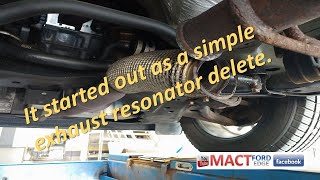
- Exhaust Leak 🔴 High Probability Exhaust components like gaskets and flex pipes can degrade over time from heat cycles and corrosion. On this platform, the woven metal flex pipe between the manifold and catalytic converter is a known weak point that can crack 🎬 Watch: How to repair a leaking Ford Edge flex pipe. and allow outside air to be sucked into the exhaust stream, fooling the O2 sensor.
How to confirm: With the engine running (and cool), listen for hissing or ticking sounds from the exhaust manifolds and pipes on the firewall side of the engine. A common method is to temporarily block the tailpipe with a rag; this will increase pressure and make leaks more audible. A visual inspection for black soot trails around exhaust joints or cracks in the flex pipe can also pinpoint a leak. A smoke test is the most definitive method.
Typical fix: Repair the source of the leak. This often involves replacing a leaking gasket (like the exhaust manifold or flange gasket) or cutting out and welding in a new flex pipe section.
Est. part cost: $20-$150 - Failing Downstream Oxygen Sensor (Bank 1, Sensor 2) 🟡 Medium Probability → Shop Oxygen Sensor Oxygen sensors are wear items with a finite lifespan, typically 80,000-100,000 miles. Contamination from engine byproducts or simple age can cause them to become slow or inaccurate, sending false lean readings. Manufacturer bulletin SSM 50230 notes that on some Ford models, this code may be triggered by a faulty exhaust gas oxygen sensor seal, requiring an updated sensor.
How to confirm: Use an OBD-II scanner with live data capabilities. Observe the voltage of the Bank 1, Sensor 2 O2 sensor. A healthy downstream sensor should show a relatively steady voltage (e.g., 0.4V - 0.8V) when the engine is warm. If it's stuck low (e.g., below 0.2V) or mimics the rapid fluctuations of the upstream sensor, it is likely faulty.
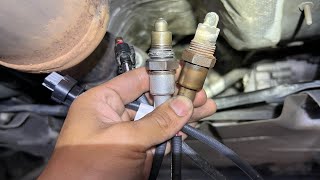
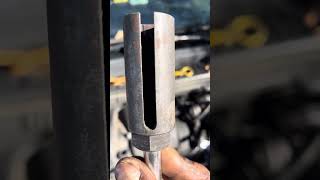
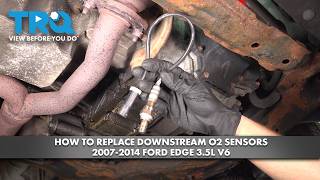
Typical fix: Replace the Bank 1, Sensor 2 oxygen sensor. It is located on the rear (firewall side) exhaust pipe, after the catalytic converter. Access can be tight. 🎬 See this walkthrough for replacing the Bank 1 downstream sensor. Using an OEM Motorcraft sensor is highly recommended by owners to avoid compatibility issues.
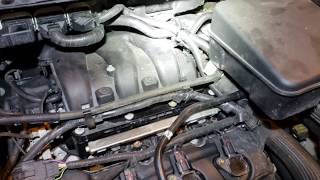
Est. part cost: $50-$150 - Vacuum Leak ⚪ Low Probability The large, flexible air intake tube (snorkel) between the air filter box and throttle body is a known failure point. Cracks can develop in the accordion sections due to age and heat, allowing unmetered air into the engine. Degraded intake manifold gaskets and PCV hoses are also potential sources.
How to confirm: Listen for a hissing sound around the engine bay at idle. You can spray short bursts of brake cleaner or use an unlit propane torch near suspected leak points (intake manifold gaskets, vacuum lines, intake snorkel); a change in engine idle indicates a leak has been found. A smoke test is the most reliable method.
Typical fix: Replace the cracked hose (especially the air intake tube) or faulty gasket.
Est. part cost: $10-$100 - Fuel Delivery Issue ⚪ Low Probability
How to confirm: Connect a fuel pressure gauge to the fuel rail. For 2008 and later models, a T-adapter is required as there is no service port on the rail. Check that the pressure is within the manufacturer's specified range of 58 PSI (400 kPa) with the engine running. Clogged injectors are harder to test and are usually diagnosed by eliminating other causes first.
Typical fix: Replace the failing component, such as the fuel pump, fuel filter, or clogged fuel injector(s).
Est. part cost: $50-$400
Rare But Worth Checking
- Failing Catalytic Converter: → Shop Catalytic Converter While a failing converter more commonly causes a P0420 code, a partially clogged or inefficient converter can sometimes lead to incorrect oxygen readings downstream, triggering P2096. TSB 21-2366 for other Ford models indicates that software parameters or catalyst monitors can sometimes be the root cause of this lean code.
- Failing Upstream Oxygen Sensor (Bank 1, Sensor 1): → Shop Oxygen Sensor A faulty upstream O2 sensor can provide bad data to the PCM, causing incorrect fuel adjustments that result in a lean condition detected by the downstream sensor. On some Ford platforms, a bad upstream sensor is a known cause for a downstream code.
- PCM (Powertrain Control Module) Issue: While rare for this specific code, Ford PCMs from this era can be damaged by failed ignition coils, leading to various codes and running issues. This is usually accompanied by misfire codes (P0351-P0356). A PCM recalibration may also be a potential fix in some cases. Manufacturer bulletin SSM 46159 notes that for some 3.5L GTDI engines, P2096 may be due to incorrect calibration values setting a system DTC instead of a component-specific one.
- Engine Oil Migration: According to Bulletin #16-0031 for the Ford Escape, P2096 can sometimes be caused by engine oil migrating from the vehicle's harness into the electrical connectors, though this is more common on specific EcoBoost platforms.
Diagnosis Steps
- Scan for Codes: Use an OBD-II scanner to confirm P2096 and check for any other related codes like P0171 or P0420. Review freeze frame data to see the engine conditions when the code was set.
- Inspect for Exhaust Leaks: This is the most critical first step. Visually and audibly inspect the entire Bank 1 (firewall side) exhaust system from the engine manifold to the downstream O2 sensor. Pay extremely close attention to the braided flex pipe section for cracks or soot marks.
- Inspect for Vacuum Leaks: Check all vacuum hoses and especially the large ribbed air intake tube between the airbox and throttle body for cracks or damage. Listen for hissing sounds at idle.
- Analyze O2 Sensor Live Data: Use a scanner to monitor the voltage of both upstream (B1S1) and downstream (B1S2) oxygen sensors. B1S1 should fluctuate rapidly between ~0.1V and ~0.9V. B1S2 should be relatively stable and steady (e.g., >0.5V). If B1S2 is stuck low (<0.3V) or fluctuating wildly, it points to a bad sensor or a significant exhaust leak.
- Test Fuel System: If no leaks are found, test the fuel pressure. On this model, you must tee a gauge into the fuel line. The pressure should be 58 PSI (400 kPa) at idle. After shutdown, pressure should not drop more than 8 PSI in five minutes.
- Replace Parts: Based on your findings, replace the leaking gasket, faulty sensor, or other identified component. After repair, clear codes using a scan tool and perform a drive cycle to verify the fix.
Parts You'll Likely Need
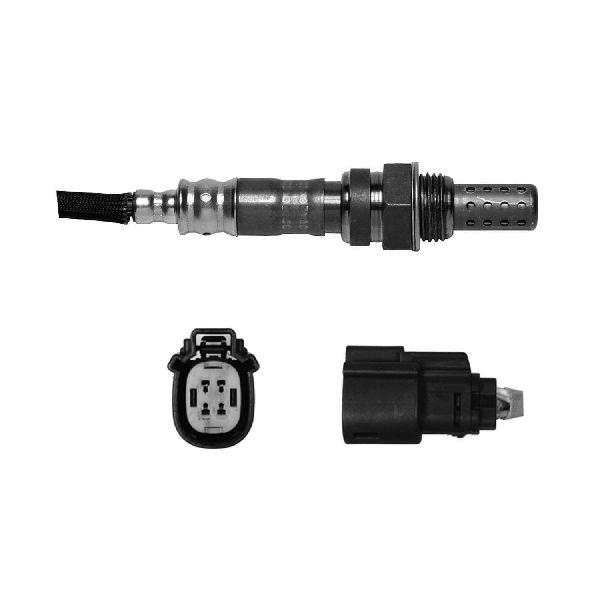
- Downstream Oxygen Sensor (Bank 1, Sensor 2)
(OEM #BE5Z-9G444-C)— This sensor is the direct cause of the code when it fails. It is located on the rear exhaust bank (near the firewall), after the catalytic converter. Multiple sources confirm this part number for the application.
Trusted brands: Motorcraft, Denso, NTK, Bosch
OEM price range: $100-$150
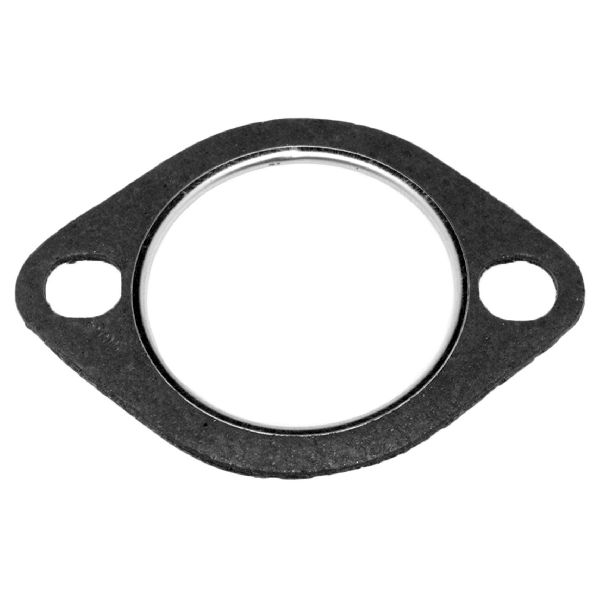
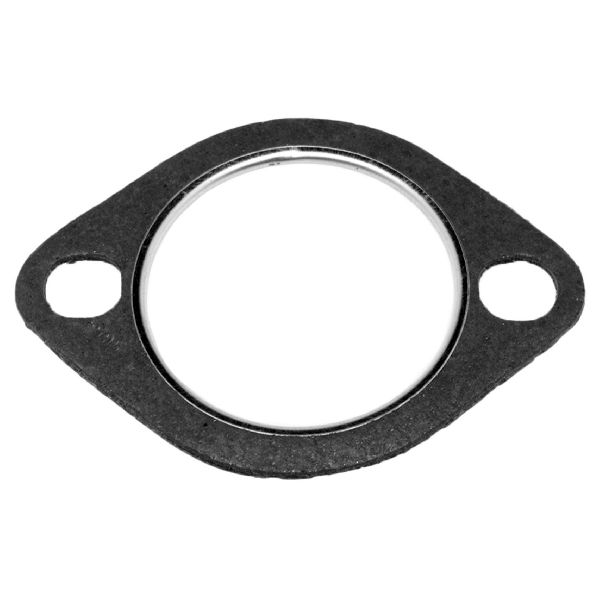
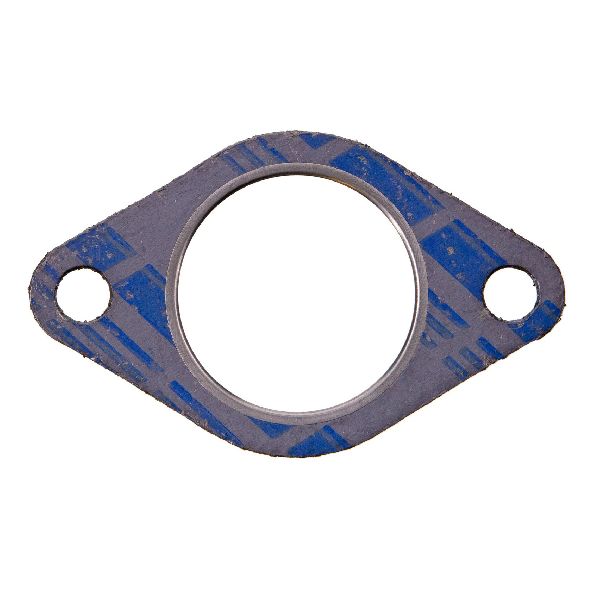
Aftermarket price range: $50-$90 - Exhaust Manifold Gasket — If an exhaust leak is found at the manifold, this gasket must be replaced.
Trusted brands: Fel-Pro, Mahle, Motorcraft
OEM price range: $25-$50
Aftermarket price range: $15-$30 - Exhaust Flex Pipe — This flexible, braided section of the exhaust is a common failure point for cracks, causing leaks that trigger P2096. It often requires being cut and welded in.
Trusted brands: Walker, AP Exhaust
OEM price range: N/A (part of a larger assembly)
Aftermarket price range: $30-$80 (universal part)
Related Codes That Often Appear With This One
- P0171 — This code means 'System Too Lean (Bank 1)' and is detected by the *upstream* O2 sensor. If you have both P0171 and P2096, it strongly suggests a true engine running lean condition (like a vacuum leak or fuel delivery problem) affecting the entire bank, rather than just an isolated exhaust leak or bad downstream sensor.
- P0420 — This code means 'Catalyst System Efficiency Below Threshold (Bank 1)'. It can appear with P2096 if the catalytic converter is failing and is the root cause of the abnormal oxygen readings.
- P0302 — As noted in NHTSA ODI #11618319, a persistent P2096 code can eventually be accompanied by misfire codes if the underlying lean condition is not addressed.
Technical Service Bulletins (TSBs) & Recalls
- No specific TSBs were found directly for P2096 on the 2011-2014 Ford Edge 3.5L. A related Special Service Message, SSM 46159, was issued for P2096 on some 2016 models with the 3.5L GTDI engine, noting it may be due to incorrect calibration values.
- Bulletin #16-0031 describes a condition where engine oil migrating from the valve cover area into the harness can trigger P2096.
- Bulletin #TSB 21-2366 notes that P2096 may be stored in the PCM due to various software parameters or catalyst monitor issues on related Ford platforms.
- Bulletin #SSM 50230 identifies that an exhaust gas oxygen sensor seal failure can trigger P2096, requiring an updated sensor part.
Platform-Specific Known Issues
- The 3.5L Ti-VCT engine in this platform uses an internal, timing-chain-driven water pump. A known failure point, it can leak coolant directly into the engine oil. If this occurs, it can cause rapid and catastrophic engine failure. While not a direct cause of P2096, owners should be vigilant about monitoring coolant levels and checking for milky-looking oil.
Mechanic-Grade Diagnostic Values
- Fuel Pressure (Low-Pressure Side) — expected: 400 kPa (58 psi) with engine running.. Failure: Pressure significantly below spec indicates a weak fuel pump or clogged filter. After engine off, pressure should not drop more than 8 psi in 5 minutes; a larger drop suggests a leak.
- Downstream O2 Sensor (B1S2) Voltage — expected: Relatively stable voltage between 0.45V and 0.55V on a warm engine with a healthy catalytic converter.. Failure: Voltage stuck low (below 0.3V) indicates a lean condition or failed sensor. Voltage fluctuating rapidly like the upstream sensor indicates a failing catalytic converter.
- Long Term Fuel Trim (LTFT - Bank 1) — expected: Close to 0%, typically within +/- 5%.. Failure: Sustained positive values above +10% show the PCM is compensating for a lean condition. Values exceeding +20-25% will typically trigger the P2096 code.
- O2 Sensor Heater Element Resistance — expected: Between 3 and 30 Ohms when the sensor is cold. Many Ford sensors are in the 5-15 Ohm range.. Failure: An open circuit (infinite resistance/OL) or a direct short (near 0 Ohms) indicates a failed heater element within the sensor.
Scan Tool Commands That Help
- Ford IDS (Integrated Diagnostic System): Datalogger — To monitor and graph live data PIDs such as O2 sensor voltages, short-term fuel trims (STFT), and long-term fuel trims (LTFT) to identify performance anomalies.
- Ford IDS (Integrated Diagnostic System): Reset KAM (Keep Alive Memory) — After a repair (like replacing a fuel injector or fixing a major vacuum leak) to clear the long-term learned fuel trim adjustments and force the PCM to relearn.
- Ford IDS (or equivalent high-level scanner): Power Balance Test — To identify which specific cylinder is underperforming, which can help isolate a single faulty fuel injector that may be causing a lean condition on the entire bank.
- Ford IDS (or equivalent high-level scanner): Freeze Frame Data Retrieval — This is a critical first step to see the exact engine operating conditions (speed, load, temperature) at the moment the P2096 code was triggered, which helps in recreating the fault during diagnosis.
Wiring & Ground Locations
- O2 Sensor Fuses (Under-hood) — In the Battery Junction Box (under the hood, driver's side). Check fuses #67, #68, #69, #70, #86, and #90 as they relate to engine management and O2 sensor heater circuits.. A blown fuse for the O2 sensor heater circuit can cause the sensor to respond slowly or inaccurately, potentially contributing to a lean code. The heater brings the sensor to operating temperature quickly.
- O2 Sensor Fuse (Interior) — In the interior fuse box (under the dash, driver's side). Check fuse #18.. This fuse is also part of the power supply for the oxygen sensors. A loss of power can cause the sensor to malfunction.
- C175B Connector — This is a major 90-pin connector for the Powertrain Control Module (PCM).. The signal and heater circuit wires for the O2 sensors pass through this main connector. Corrosion or a backed-out pin in this connector could cause a loss of signal or power to the sensor, mimicking a sensor failure.
"I Checked Everything" — The Actual Cause
- A warped plastic intake manifold was found to be the cause of a persistent, hard-to-diagnose vacuum leak. Even with a new gasket, the manifold surface was no longer perfectly flat, allowing unmetered air to enter. This type of leak may not show up easily on a smoke test if the warpage is minor. The fix required replacing the entire intake manifold.
- Improper torque sequence on the intake manifold bolts after a different repair (like a valve cover gasket replacement) can cause a vacuum leak. The manifold must be tightened down in the specific sequence recommended by the manufacturer to ensure even pressure on the gasket.
OEM Part Supersession History
BE5Z-9G444-C→DY-1174 (Motorcraft Service Number)— This is the corresponding service part number from Ford's Motorcraft brand for the same OEM component.
Model Year Variations Within This Range
- 2011-2014: The 2011 model year facelift introduced a revised electrical system compared to the 2007-2010 models. This means fuse box layouts and some wiring are different. Technicians must use a wiring diagram specific to the 2011-2014 range for accurate diagnosis.
Diagnostic Flowchart
Other Known Issues on This Vehicle
Issues unrelated to this code that are worth knowing about as an owner of this generation:
- Internal Water Pump Failure 🔴 High — A known design flaw. Can fail without warning, often between 80,000 and 150,000 miles. Failure allows coolant to mix with engine oil, leading to catastrophic engine damage.
- Power Transfer Unit (PTU) Failure (AWD Models) 🔴 High — Common on AWD models. The PTU is located next to the hot exhaust, causing its 'lifetime' fluid to break down. This leads to overheating, seal failure, and eventual gear destruction. Symptoms include a burning gear oil smell and grinding noises. Preventative fluid changes every 30,000 miles are recommended.
- Door Ajar Sensor Failure 🟡 Low — Extremely common. The sensor switch inside the door latch assembly fails, causing the 'Door Ajar' light to stay on, interior lights to remain on (draining the battery), and doors not to lock automatically. (Ref: TSB 18-2013)
- Cracked Air Intake Tube / Throttle Body Issues 🟠 Medium — The flexible air intake hose often cracks in its ribbed sections, causing vacuum leaks and codes like P0171/P0174 and P0101. Separately, the throttle body can become heavily carboned-up, causing rough idle and stalling.
- MyFord Touch / SYNC System Glitches 🟡 Low — Widespread complaints for the 2011-2014 model years. The system is known for being slow, freezing, and having unresponsive voice commands.
- Brake Booster Failure 🔴 High — Some owners report a hard brake pedal and loss of power braking assist, which has been linked to a failing brake booster.
Used vs. New Parts: Buying Guide for This Vehicle
When a used part is the smart pick: For this repair, used parts are generally not recommended for sensors. However, obtaining a used OEM intake manifold from a low-mileage donor vehicle could be a cost-effective solution if the original is found to be cracked or warped.
Donor-vehicle mileage cap: roughly under 80000 miles for the part to have meaningful remaining life.
What to inspect on the donor part:
- For an intake manifold, inspect the gasket surfaces for any signs of warpage, deep scratches, or cracks, especially around the bolt holes.
- For any used electrical part, check connectors for corrosion, bent pins, or brittle plastic.
- Verify the donor vehicle was not in a front-end collision that could have stressed the component.
OEM-only on this vehicle (don't cheap out):
- Oxygen Sensor: While not strictly 'OEM-only', using the OEM Motorcraft sensor (or a direct OEM supplier like Bosch or NTK) is highly recommended. Cheaper aftermarket sensors are known to have a higher rate of out-of-box failure or incompatibility with Ford's PCM logic.
Aftermarket brands forum-validated for this vehicle:
- Bosch (often the original equipment manufacturer for Ford)
- NTK
- Denso
Brands owners have reported issues with on this vehicle:
- Generic, unbranded 'economy' sensors sold on online marketplaces are frequently reported in forums to fail prematurely or provide incorrect readings, causing the code to return.
Real Owner Stories
Aggregated from forums and TSBs cited above. Mileages and costs reflect what owners reported in those sources.
2011-2014 Ford Edge 3.5L V6 — ~150000 miles
Symptoms: Owner noted the 3.5L V6 is generally robust but emphasized the water pump and PTU as primary failure points to watch for at high mileage.
What fixed it: Preventative maintenance including coolant flushes every 30,000 miles was recommended to avoid catastrophic failure, though P2096 specifically requires addressing exhaust or sensor issues.
Source hint: Reddit r/FordEdge
2011-2014 Ford Edge 3.5L V6
Symptoms: The 'Door Ajar' sensor was mentioned as a frequent electrical nuisance leading to a dead battery, though unrelated to the engine performance codes.
What fixed it: While the user was discussing general platform reliability, the P2096 fix on this platform typically involves replacing the Bank 1, Sensor 2 oxygen sensor or repairing the flex pipe.
Source hint: FordEdgeForum.com
Ford 3.5L V6 (Platform Mate)
Symptoms: The user initially checked for vacuum leaks to resolve a P2096 code but was unsuccessful.
What fixed it: The discussion highlighted that exhaust leaks are often the more direct and common cause to investigate first for this specific code.
Source hint: F150forum.com
Ford Owner Report — 82,000 miles
Symptoms: An owner reported that their engine light came on with code P2096. After driving with the code for a while, the vehicle began misfiring and eventually threw an additional code, P0302.
What fixed it: Diagnosis and repair were required at 82k miles to address the lean condition before it caused further drivability issues.
Source hint: NHTSA ODI #11618319
Related OBD-II Codes
Frequently Asked Questions
Does SSM 46159 apply to my 2011-2014 Ford Edge 3.5L with a P2096 code?
Which oxygen sensor should I replace for a P2096 code on my Edge?
Is there a specific part of the exhaust on the 3.5L Edge known for causing this code?
Can a vacuum leak on the intake snorkel cause P2096 on this vehicle?
I hear a ticking sound from the firewall side when the engine is cold; is this related to P2096?
Should I be worried about my water pump while diagnosing this exhaust code?
Helpful Videos
We Have This Part in Stock


The information in this article is provided for general reference and educational purposes only. Vehicle specifications, procedures, and part compatibility can vary by production date, trim level, and region. Always consult your vehicle's factory service manual and verify part numbers before purchasing or performing repairs. Safety-critical components such as airbags, seat belts, and braking systems should be installed by a qualified professional.
- Ford Edge:
- 🧭 Diagnostic Flowchart
- 🎬 Helpful Videos
- 🛍️ Shop This Part
- What's Unique About the 2011-2014 Ford Edge
- Symptoms You May Notice
- Most Likely Causes
- Rare But Worth Checking
- Diagnosis Steps
- Parts You'll Likely Need
- Related Codes That Often Appear With This One
- Technical Service Bulletins (TSBs) & Recalls
- Platform-Specific Known Issues
- Mechanic-Grade Diagnostic Values
- Scan Tool Commands That Help
- Wiring & Ground Locations
- "I Checked Everything" — The Actual Cause
- OEM Part Supersession History
- Model Year Variations Within This Range
- Other Known Issues on This Vehicle
- Used vs. New Parts: Buying Guide for This Vehicle
- Real Owner Stories
- 2011-2014 Ford Edge 3.5L V6 — ~150000 miles
- 2011-2014 Ford Edge 3.5L V6
- Ford 3.5L V6 (Platform Mate)
- Ford Owner Report — 82,000 miles
- Related OBD-II Codes
- Frequently Asked Questions
- 🎟️ Get 5% Off